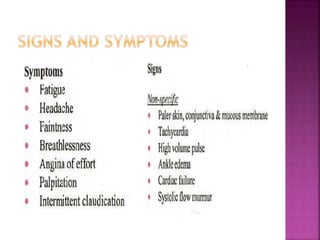
BMLB
DR: ABDKADIR DAAHIR JAAMA
UNIVERSITY OF HAGEYSIA 2019
Anemia is the blood disorder, characterized by
the reduction in:
1. Red blood cell (RBC) count
2. Hemoglobin content
3. Packed cell volume (PVC).
 This occurs because of
I. Decreased production of RBC
II. Increased destruction of RBC
III. Excess loss of blood from the body
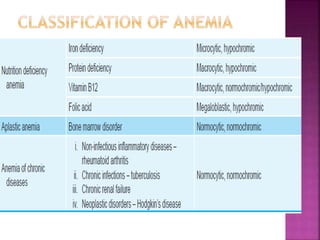
Anemia is classified by two methods:
1. Morphological classification
2. Etiological classification.
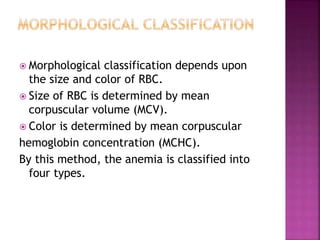
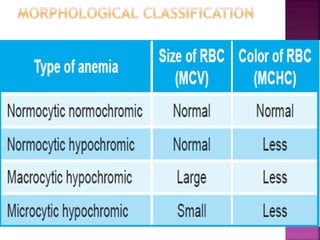
 Morphological classification depends upon
the size and color of RBC.
 Size of RBC is determined by mean
corpuscular volume (MCV).
 Color is determined by mean corpuscular
hemoglobin concentration (MCHC).
By this method, the anemia is classified into
four types.
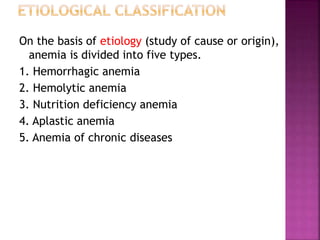
On the basis of etiology (study of cause or origin),
anemia is divided into five types.
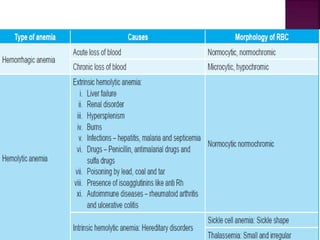
1. Hemorrhagic anemia
2. Hemolytic anemia
3. Nutrition deficiency anemia
4. Aplastic anemia
5. Anemia of chronic diseases
 Hemorrhage refers to excessive loss of blood.
Anemia due to hemorrhage is known as
hemorrhagic anemia. It occurs both in acute
and chronic hemorrhagic conditions.
 Acute hemorrhage refers to sudden loss of a
large quantity of blood as in the case of
accident. Within about 24 hours after the
hemorrhage, the plasma portion of blood is
replaced. However, the replacement of RBCs
does not occur quickly and it takes at least 4
to 6 weeks.
 Chronic hemorrhage it refers to loss of
blood by internal or external bleeding , over
a long period of time.
 It occurs in conditions like peptic ulcer,
purpura, hemophilia and menorrhagia.
 Due to continuous loss of blood, lot of iron is
lost from the body causing iron deficiency.
 Hemolysis means destruction of RBCs.
Anemia due to excessive hemolysis which is
not compensated by increased RBC
production is called hemolytic anemia.
 It is classified into two types:
A. Extrinsic hemolytic anemia.
B. Intrinsic hemolytic anemia.
It is the type of anemia caused by destruction of
RBCs by external factors.
 Healthy RBCs are hemolized by factors outside
the blood cells such as antibodies, chemicals and
drugs.
 Extrinsic hemolytic anemia is also called
autoimmune hemolytic anemia.
Common causes of external hemolytic anemia:
i. Liver failure
ii. Renal disorder
iii. Splenomegaly
IV. Hemolytic disease of newborn.
 It is the type of anemia caused by
destruction of RBCs because of the defective
RBCs.
 There is production of unhealthy RBCs,
which are short lived and are destroyed
soon.
 Intrinsic hemolytic anemia is often inherited
and it includes sickle cell anemia and
thalassemia.
 Anemia that occurs due to deficiency of a
nutritive substance necessary for
erythropoiesis is called nutrition deficiency
anemia.
 The substances which are necessary for
erythropoiesis are iron, proteins and vitamins
like C, B12 and folic acid. The types of
nutrition deficiency anemia are:
 Iron deficiency anemia is the most common
type of anemia.
 It develops due to inadequate availability of
iron for hemoglobin synthesis. RBCs are
microcytic and hypochromic.
Causes of iron deficiency anemia:
i. Loss of blood
ii. Decreased intake of iron
iii. Poor absorption of iron from intestineiv.
IV. Increased demand for iron in conditions like
growth and pregnancy.
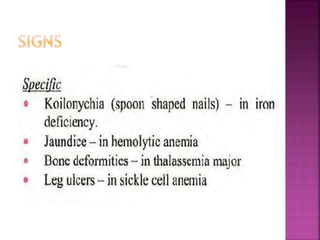
 Features of iron deficiency anemia: Features
of iron deficiency anemia are brittle nails,
spoonshaped nails (koilonychias), brittle
hair, atrophy of papilla in tongue and
dysphagia (difficulty in swallowing).
 Aplastic anemia is due to the disorder of red bone
marrow.
 Red bone marrow is reduced and replaced by fatty
tissues. Bone marrow disorder occurs in the
following conditions:
i. Repeated exposure to Xray or gamma ray radiation.
ii. Presence of bacterial toxins, quinine, gold salts,
benzene, radium, etc.
iii. Tuberculosis.
iv. Viral infections like hepatitis and HIV infections.
 Anemia of chronic diseases is the second
common type of anemia (next to iron
deficiency anemia).
 It is characterized by short lifespan of
RBCs, caused by disturbance in iron
metabolism or resistance to erythropoietin
action
Common causes anemia of chronic diseases:
i. Noninfectious inflammatory diseases such as
rheumatoid arthritis (chronic inflammatory
autoimmune disorder affecting joints).
ii. Chronic infections like tuberculosis
(infection caused by Mycobacterium
tuberculosis) and abscess (collection of pus
in the infected tissue) in lungs.
iii. Chronic renal failure, in which the
erythropoietin secretion decreases (since
erythropoietin is necessary for the
stimulation of bone marrow to produce RBCs,
its deficiency causes anemia).
iv. Neoplastic disorders (abnormal and
disorganized growth in tissue or organ)
Anemia
Anemia
Anemia
Anemia

Anemia

  • 1.
    BMLB DR: ABDKADIR DAAHIRJAAMA UNIVERSITY OF HAGEYSIA 2019
  • 2.
    Anemia is theblood disorder, characterized by the reduction in: 1. Red blood cell (RBC) count 2. Hemoglobin content 3. Packed cell volume (PVC).  This occurs because of I. Decreased production of RBC II. Increased destruction of RBC III. Excess loss of blood from the body
  • 3.
    Anemia is classifiedby two methods: 1. Morphological classification 2. Etiological classification.
  • 4.
     Morphological classificationdepends upon the size and color of RBC.  Size of RBC is determined by mean corpuscular volume (MCV).  Color is determined by mean corpuscular hemoglobin concentration (MCHC). By this method, the anemia is classified into four types.
  • 6.
    On the basisof etiology (study of cause or origin), anemia is divided into five types. 1. Hemorrhagic anemia 2. Hemolytic anemia 3. Nutrition deficiency anemia 4. Aplastic anemia 5. Anemia of chronic diseases
  • 7.
     Hemorrhage refersto excessive loss of blood. Anemia due to hemorrhage is known as hemorrhagic anemia. It occurs both in acute and chronic hemorrhagic conditions.  Acute hemorrhage refers to sudden loss of a large quantity of blood as in the case of accident. Within about 24 hours after the hemorrhage, the plasma portion of blood is replaced. However, the replacement of RBCs does not occur quickly and it takes at least 4 to 6 weeks.
  • 8.
     Chronic hemorrhageit refers to loss of blood by internal or external bleeding , over a long period of time.  It occurs in conditions like peptic ulcer, purpura, hemophilia and menorrhagia.  Due to continuous loss of blood, lot of iron is lost from the body causing iron deficiency.
  • 9.
     Hemolysis meansdestruction of RBCs. Anemia due to excessive hemolysis which is not compensated by increased RBC production is called hemolytic anemia.  It is classified into two types: A. Extrinsic hemolytic anemia. B. Intrinsic hemolytic anemia.
  • 10.
    It is thetype of anemia caused by destruction of RBCs by external factors.  Healthy RBCs are hemolized by factors outside the blood cells such as antibodies, chemicals and drugs.  Extrinsic hemolytic anemia is also called autoimmune hemolytic anemia. Common causes of external hemolytic anemia: i. Liver failure ii. Renal disorder iii. Splenomegaly IV. Hemolytic disease of newborn.
  • 11.
     It isthe type of anemia caused by destruction of RBCs because of the defective RBCs.  There is production of unhealthy RBCs, which are short lived and are destroyed soon.  Intrinsic hemolytic anemia is often inherited and it includes sickle cell anemia and thalassemia.
  • 12.
     Anemia thatoccurs due to deficiency of a nutritive substance necessary for erythropoiesis is called nutrition deficiency anemia.  The substances which are necessary for erythropoiesis are iron, proteins and vitamins like C, B12 and folic acid. The types of nutrition deficiency anemia are:
  • 13.
     Iron deficiencyanemia is the most common type of anemia.  It develops due to inadequate availability of iron for hemoglobin synthesis. RBCs are microcytic and hypochromic. Causes of iron deficiency anemia: i. Loss of blood ii. Decreased intake of iron iii. Poor absorption of iron from intestineiv. IV. Increased demand for iron in conditions like growth and pregnancy.
  • 14.
     Features ofiron deficiency anemia: Features of iron deficiency anemia are brittle nails, spoonshaped nails (koilonychias), brittle hair, atrophy of papilla in tongue and dysphagia (difficulty in swallowing).
  • 15.
     Aplastic anemiais due to the disorder of red bone marrow.  Red bone marrow is reduced and replaced by fatty tissues. Bone marrow disorder occurs in the following conditions: i. Repeated exposure to Xray or gamma ray radiation. ii. Presence of bacterial toxins, quinine, gold salts, benzene, radium, etc. iii. Tuberculosis. iv. Viral infections like hepatitis and HIV infections.
  • 16.
     Anemia ofchronic diseases is the second common type of anemia (next to iron deficiency anemia).  It is characterized by short lifespan of RBCs, caused by disturbance in iron metabolism or resistance to erythropoietin action
  • 17.
    Common causes anemiaof chronic diseases: i. Noninfectious inflammatory diseases such as rheumatoid arthritis (chronic inflammatory autoimmune disorder affecting joints). ii. Chronic infections like tuberculosis (infection caused by Mycobacterium tuberculosis) and abscess (collection of pus in the infected tissue) in lungs.
  • 18.
    iii. Chronic renalfailure, in which the erythropoietin secretion decreases (since erythropoietin is necessary for the stimulation of bone marrow to produce RBCs, its deficiency causes anemia). iv. Neoplastic disorders (abnormal and disorganized growth in tissue or organ)