Android
Android Operating System
 Linux-based OS developed by the Open Handset Alliance (OHA)
 Created by Android, Inc., which was bought by Google in 2005.
 Google teamed up with other companies to form the Open Handset Alliance
(OHA).
Reason to choose Android
 Enriching the Community of Android Developers.
 Developer-Friendly Tools and Integration Technologies.
 Futuristic Advancements.
 An Effective Marketplace.
 Great Return on Investment (ROI).
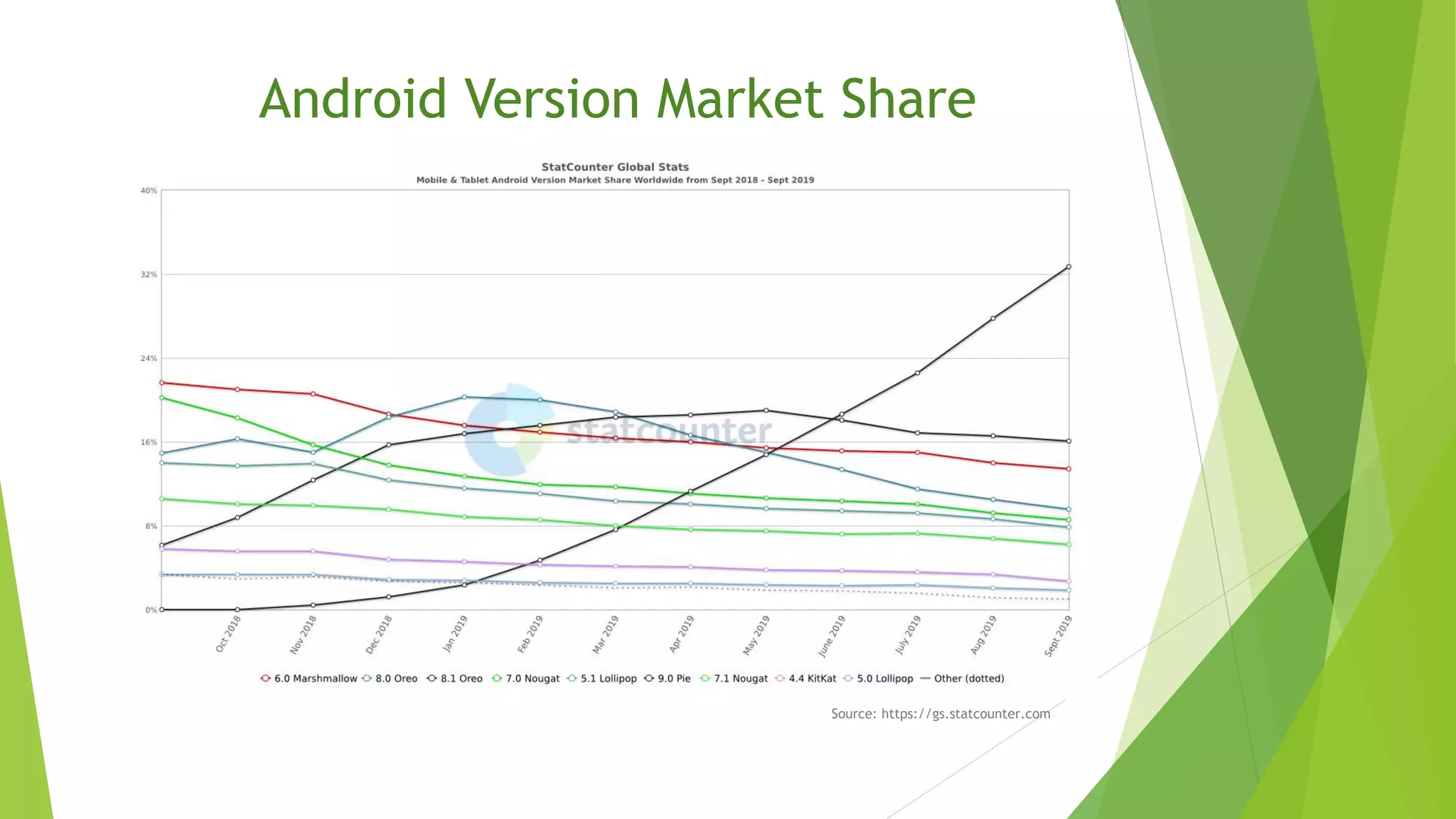
Android Version Market Share
Source: https://gs.statcounter.com
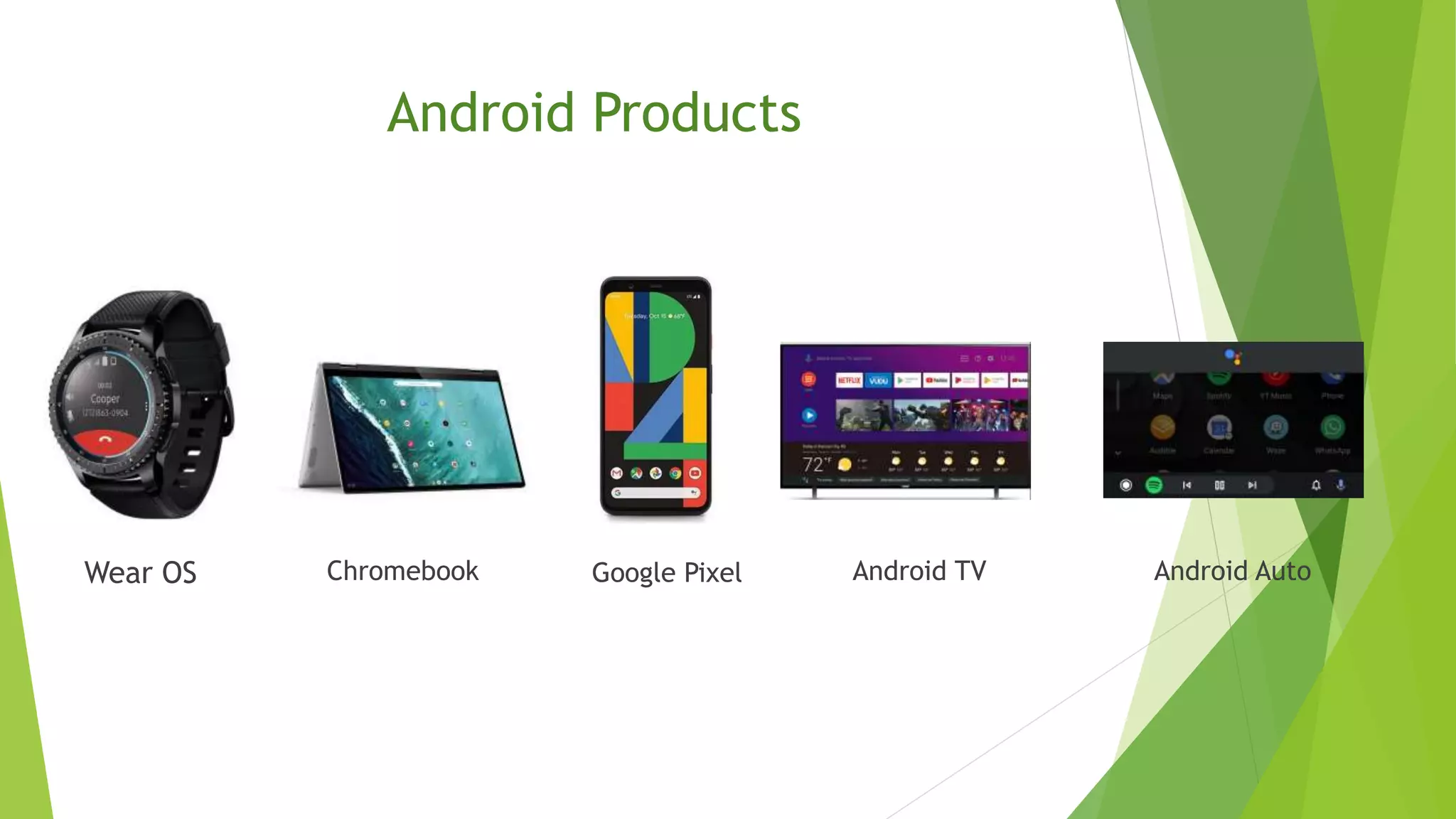
Android Products
Wear OS Chromebook Android TVGoogle Pixel Android Auto
Open Hand Alliance
 A business alliance that was created for the purpose of developing open mobile device
standards.
 The OHA has approximately 80 member companies, including HTC, Dell, Intel,
Motorola, Qualcomm and Google.
 The OHA's main product is the Android platform - the world's most popular smartphone
platform.
 Members share a commitment to expanding the commercial viability of open platform
development.
 Lower overall handset costs.
 Developer-friendly environment.
 Post-development.
Open Hand Alliance
OHA member companies back the open platform concept for a number of reasons,
as follows:
Why Do OEMs Create Custom Android Skins?
 Differentiation
 User retention
 Include additional services
 Push the envelope
 Skins should not be a dramatic topic
GMS Certification
 GMS stands for Google Mobile Services.
 Google applications which pack the very essence of Google itself in its
configuration – Google Search, YouTube, Gmail, Chrome etc,.
 Smooth functionality of Google Apps without any App crashes.
 The device must pass the test from the compatibility test suit (CTS).
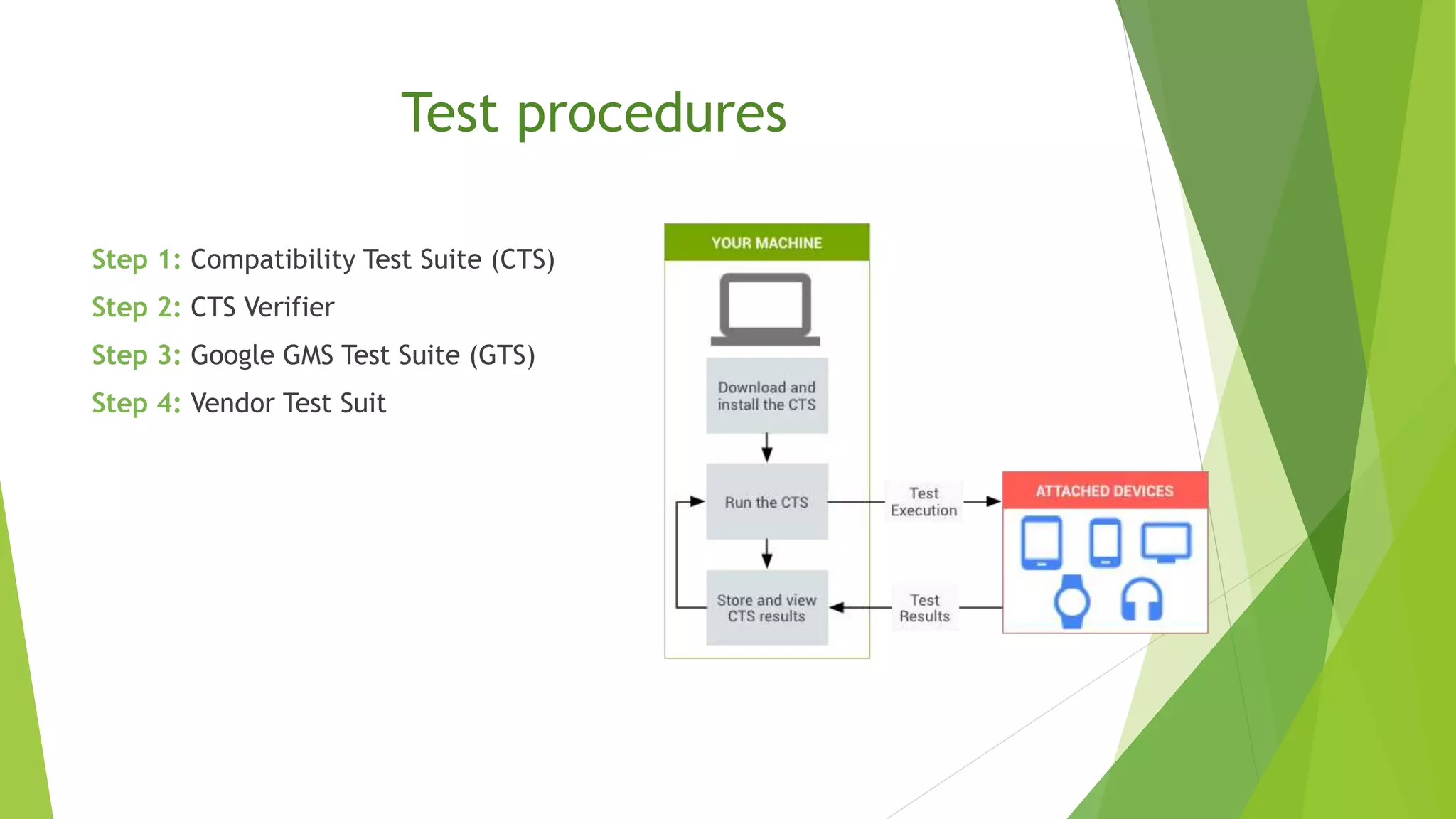
Test procedures
Step 1: Compatibility Test Suite (CTS)
Step 2: CTS Verifier
Step 3: Google GMS Test Suite (GTS)
Step 4: Vendor Test Suit
Android Skins
 Stock Android / Pixel UI by Google
 Android One
 OxygenOS By OnePlus
 OneUI By Samsung
 EMUI By Huawei
 MIUI By Xiaomi
 ZenUI By Asus
 Sony Xperia UI by Sony
 ColorOS By OPPO
Android Apps
 Single installable unit which can be started and used independently.
 Designed for a smartphone or a tablet PC running on the Android OS.
 Android apps are uploaded and published on the Android Market which is Play Store.
 Android Market features both free and priced apps.
 Android apps are written in the Java programming language.
Android Programming Language
 Apps are developed using Java or Kotlin.
 IDEs for Android Development
-> Android Studio
-> Eclipse
-> IntelliJ IDEA
-> NetBeans
 SDKs enables developers to create applications for Android platform.
Other Frameworks
 React Native
 Flutter
 Ionic
 Xamarin
 Adobe PhoneGap
 Mobile Angular UI
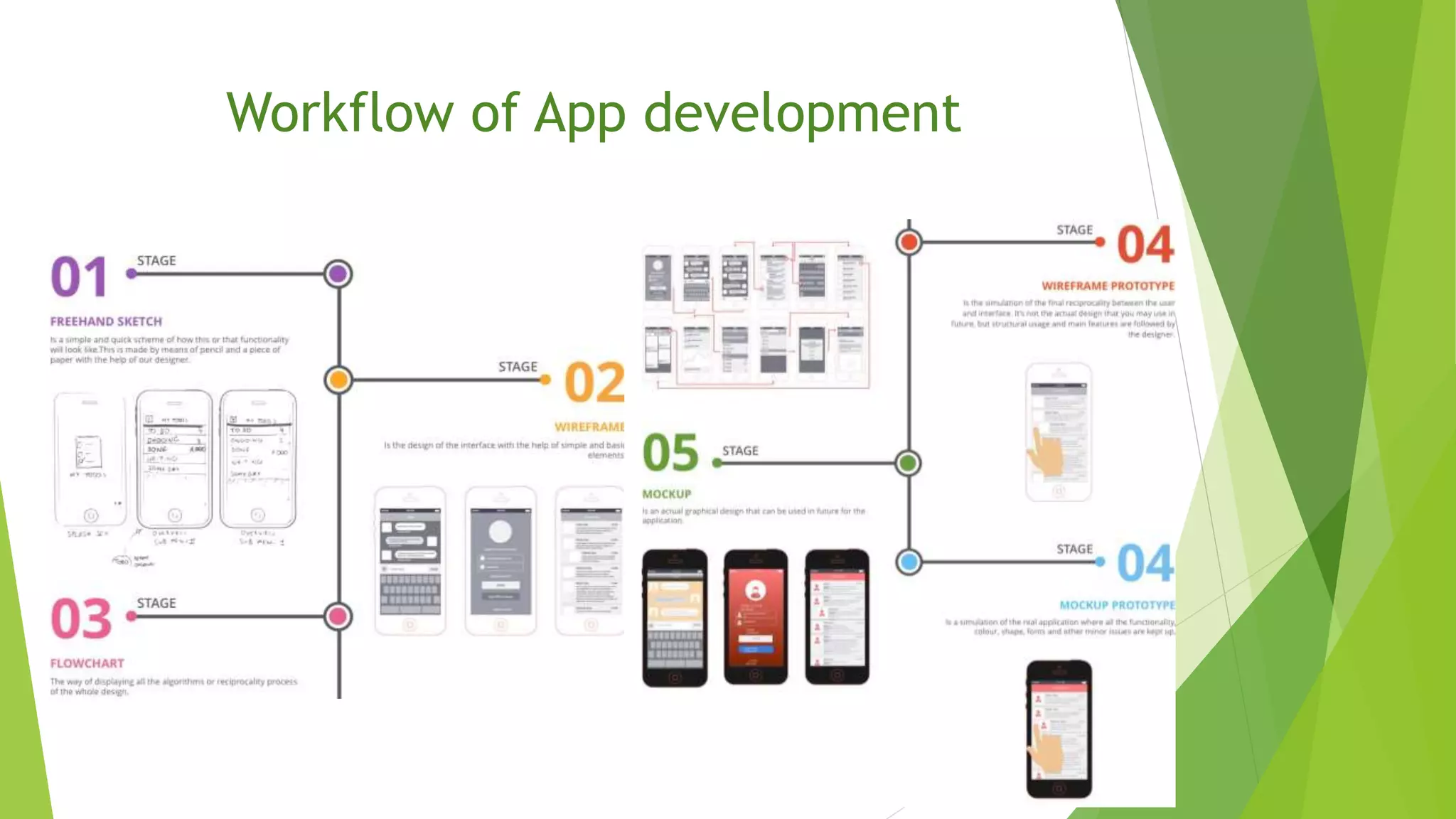
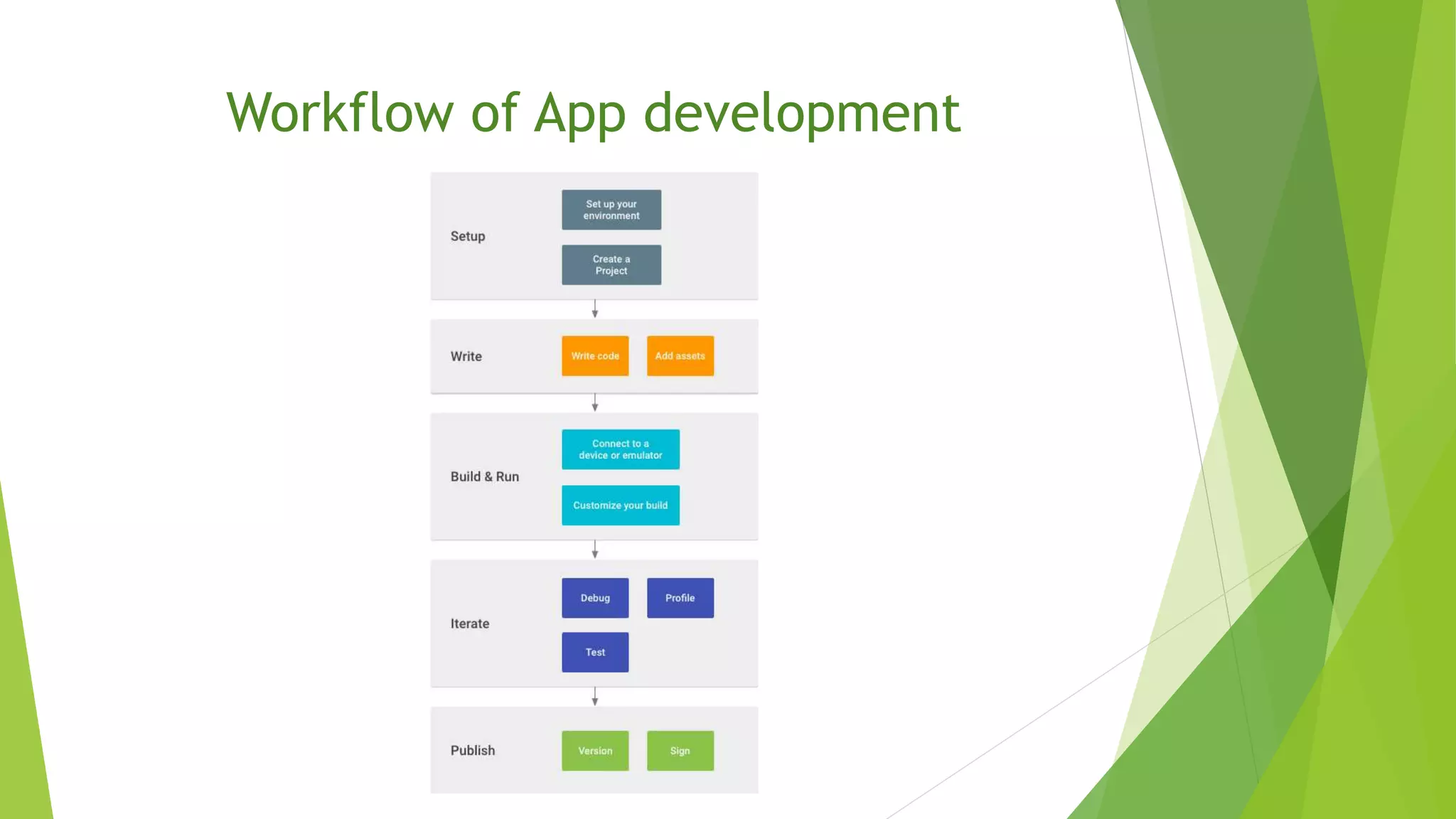
Workflow of App development
Android Apps - Types
There are 3 types of apps:
1. Native Apps
 iOS on Objective-C or Swift
 Android on Java
 Windows Phone on Net
2. Hybrid Apps
3. Web Apps
Conclusion
Due to advantages of Android like:
Multitasking, Ease of notification, Access to millions of Apps, Widgets,
Access to install custom ROM and the biggest factor ̶ Google support, it
has attracted the users all over the globe and has changed the concept
“CellPhones” to “SmartPhones” and thus it has commercially acquired a
huge market which is still Expanding.
Thank You!!!

Android

  • 1.
  • 2.
    Android Operating System Linux-based OS developed by the Open Handset Alliance (OHA)  Created by Android, Inc., which was bought by Google in 2005.  Google teamed up with other companies to form the Open Handset Alliance (OHA).
  • 3.
    Reason to chooseAndroid  Enriching the Community of Android Developers.  Developer-Friendly Tools and Integration Technologies.  Futuristic Advancements.  An Effective Marketplace.  Great Return on Investment (ROI).
  • 4.
    Android Version MarketShare Source: https://gs.statcounter.com
  • 5.
    Android Products Wear OSChromebook Android TVGoogle Pixel Android Auto
  • 6.
    Open Hand Alliance A business alliance that was created for the purpose of developing open mobile device standards.  The OHA has approximately 80 member companies, including HTC, Dell, Intel, Motorola, Qualcomm and Google.  The OHA's main product is the Android platform - the world's most popular smartphone platform.  Members share a commitment to expanding the commercial viability of open platform development.
  • 7.
     Lower overallhandset costs.  Developer-friendly environment.  Post-development. Open Hand Alliance OHA member companies back the open platform concept for a number of reasons, as follows:
  • 8.
    Why Do OEMsCreate Custom Android Skins?  Differentiation  User retention  Include additional services  Push the envelope  Skins should not be a dramatic topic
  • 9.
    GMS Certification  GMSstands for Google Mobile Services.  Google applications which pack the very essence of Google itself in its configuration – Google Search, YouTube, Gmail, Chrome etc,.  Smooth functionality of Google Apps without any App crashes.  The device must pass the test from the compatibility test suit (CTS).
  • 10.
    Test procedures Step 1:Compatibility Test Suite (CTS) Step 2: CTS Verifier Step 3: Google GMS Test Suite (GTS) Step 4: Vendor Test Suit
  • 11.
    Android Skins  StockAndroid / Pixel UI by Google  Android One  OxygenOS By OnePlus  OneUI By Samsung  EMUI By Huawei  MIUI By Xiaomi  ZenUI By Asus  Sony Xperia UI by Sony  ColorOS By OPPO
  • 12.
    Android Apps  Singleinstallable unit which can be started and used independently.  Designed for a smartphone or a tablet PC running on the Android OS.  Android apps are uploaded and published on the Android Market which is Play Store.  Android Market features both free and priced apps.  Android apps are written in the Java programming language.
  • 13.
    Android Programming Language Apps are developed using Java or Kotlin.  IDEs for Android Development -> Android Studio -> Eclipse -> IntelliJ IDEA -> NetBeans  SDKs enables developers to create applications for Android platform.
  • 14.
    Other Frameworks  ReactNative  Flutter  Ionic  Xamarin  Adobe PhoneGap  Mobile Angular UI
  • 15.
    Workflow of Appdevelopment
  • 16.
    Workflow of Appdevelopment
  • 17.
    Android Apps -Types There are 3 types of apps: 1. Native Apps  iOS on Objective-C or Swift  Android on Java  Windows Phone on Net 2. Hybrid Apps 3. Web Apps
  • 18.
    Conclusion Due to advantagesof Android like: Multitasking, Ease of notification, Access to millions of Apps, Widgets, Access to install custom ROM and the biggest factor ̶ Google support, it has attracted the users all over the globe and has changed the concept “CellPhones” to “SmartPhones” and thus it has commercially acquired a huge market which is still Expanding.
  • 19.