Present By:- Harendra Chauhan
ď‚›INTRODUCTION
ď‚›HISTROY
ď‚›FEATURES OF ANDROID
ď‚› ARCHITECHTURE OF ANDROID
ď‚› VERSIONS OF ANDROID
ANDRIOD
ď‚› It is a open source software platform and
operating system for mobile devices
ď‚› Based on the Linux kernel
ď‚› Developed by Google and later the Open
Handset Alliance (OHA)
ď‚› Android is a software package and linux
based operating system.
Open Handset Alliance(OHA)
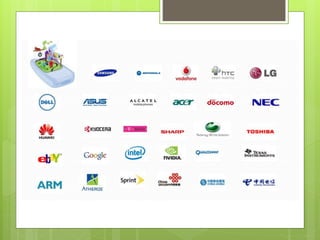
ď‚› It's a consortium of 84 companies such as google,
samsung,Garmin, Ebay, Intel etc.
ď‚› It was established on 5th November, 2007, led by Google.
ď‚› It is committed to advance open standards, provide
services and deploy handsets using the Android Platform.
ď‚› This group of companies are allowed to use source code
of Android and develop applications.
HISTROY
ď‚› Initially, Andy Rubin, , Rich Miner, Nick Sears founded
Android Incorporation in Palo Alto, California, United States in
October, 2003.
ď‚› In 17th August 2005, Google acquired android Incorporation.
Since then, it is in the subsidiary of Google Incorporation.
ď‚› In 2007, Google announces the development of android OS.
ď‚› In 2008, HTC launched the first android mobile
ď‚› Android 1.0 (Angel Cake) launched the first android version
in 2008
FEATURES OF
ANDROID
ď‚› Android can run multiple apps at the same time.
ď‚› Android has better app market.
ď‚› support optimized graphics VGA, 2D graphics and
3D graphics.
ď‚› Easy to Understand
ď‚› Android lets you change your setting faster
ď‚› Easy deployment to mobile device
ARCHITECHTU
RE
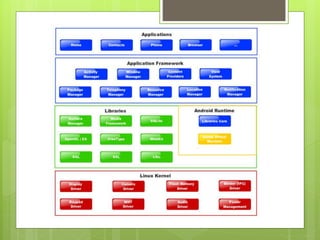
 The software stack is split into Four Layers:: •
• The application layer
• The application framework
• The libraries and runtime
• The kernel
Linux kernel
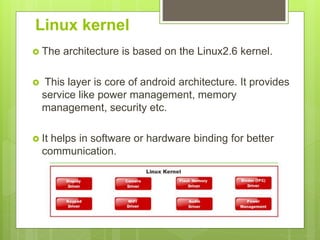
ď‚› The architecture is based on the Linux2.6 kernel.
ď‚› This layer is core of android architecture. It provides
service like power management, memory
management, security etc.
ď‚› It helps in software or hardware binding for better
communication.
NATIVE
LIBRARIES
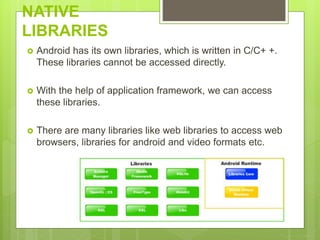
ď‚› Android has its own libraries, which is written in C/C+ +.
These libraries cannot be accessed directly.
ď‚› With the help of application framework, we can access
these libraries.
ď‚› There are many libraries like web libraries to access web
browsers, libraries for android and video formats etc.
Android Run
Time
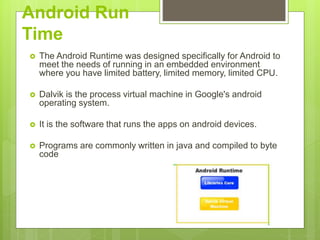
ď‚› The Android Runtime was designed specifically for Android to
meet the needs of running in an embedded environment
where you have limited battery, limited memory, limited CPU.
ď‚› Dalvik is the process virtual machine in Google's android
operating system.
ď‚› It is the software that runs the apps on android devices.
ď‚› Programs are commonly written in java and compiled to byte
code
Countid.
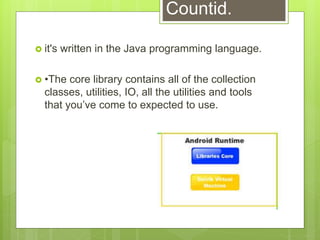
ď‚› it's written in the Java programming language.
 •The core library contains all of the collection
classes, utilities, IO, all the utilities and tools
that you’ve come to expected to use.
Application Framework
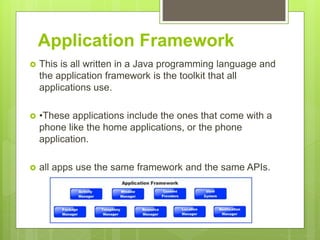
ď‚› This is all written in a Java programming language and
the application framework is the toolkit that all
applications use.
 •These applications include the ones that come with a
phone like the home applications, or the phone
application.
ď‚› all apps use the same framework and the same APIs.
APPLICATION LAYER
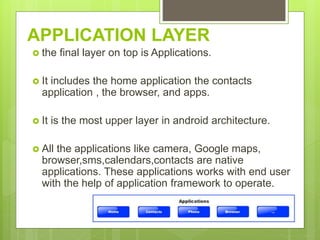
ď‚› the final layer on top is Applications.
ď‚› It includes the home application the contacts
application , the browser, and apps.
ď‚› It is the most upper layer in android architecture.
ď‚› All the applications like camera, Google maps,
browser,sms,calendars,contacts are native
applications. These applications works with end user
with the help of application framework to operate.
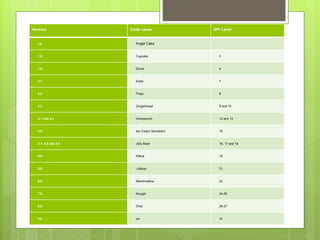
Version Code name API Level
1.0 Angel Cake
1.5 Cupcake 3
1.6 Donut 4
2.1 Eclair 7
2.2 Froyo 8
2.3 Gingerbread 9 and 10
3.1 and 3.3 Honeycomb 12 and 13
4.0 Ice Cream Sandwitch 15
4.1, 4.2 and 4.3 Jelly Bean 16, 17 and 18
4.4 KitKat 19
5.0 Lollipop 21
6.0 Marshmallow 23
7.0 Nougat 24-25
8.0 Oreo 26-27
9.0 pie 28
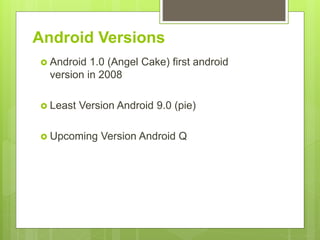
Android Versions
ď‚› Android 1.0 (Angel Cake) first android
version in 2008
ď‚› Least Version Android 9.0 (pie)
ď‚› Upcoming Version Android Q

Android

  • 1.
  • 2.
    ď‚›INTRODUCTION ď‚›HISTROY ď‚›FEATURES OF ANDROID ď‚›ARCHITECHTURE OF ANDROID ď‚› VERSIONS OF ANDROID
  • 3.
    ANDRIOD ď‚› It isa open source software platform and operating system for mobile devices ď‚› Based on the Linux kernel ď‚› Developed by Google and later the Open Handset Alliance (OHA) ď‚› Android is a software package and linux based operating system.
  • 4.
    Open Handset Alliance(OHA) ď‚›It's a consortium of 84 companies such as google, samsung,Garmin, Ebay, Intel etc. ď‚› It was established on 5th November, 2007, led by Google. ď‚› It is committed to advance open standards, provide services and deploy handsets using the Android Platform. ď‚› This group of companies are allowed to use source code of Android and develop applications.
  • 6.
    HISTROY ď‚› Initially, AndyRubin, , Rich Miner, Nick Sears founded Android Incorporation in Palo Alto, California, United States in October, 2003. ď‚› In 17th August 2005, Google acquired android Incorporation. Since then, it is in the subsidiary of Google Incorporation. ď‚› In 2007, Google announces the development of android OS. ď‚› In 2008, HTC launched the first android mobile ď‚› Android 1.0 (Angel Cake) launched the first android version in 2008
  • 7.
    FEATURES OF ANDROID ď‚› Androidcan run multiple apps at the same time. ď‚› Android has better app market. ď‚› support optimized graphics VGA, 2D graphics and 3D graphics. ď‚› Easy to Understand ď‚› Android lets you change your setting faster ď‚› Easy deployment to mobile device
  • 8.
    ARCHITECHTU RE  The softwarestack is split into Four Layers:: • • The application layer • The application framework • The libraries and runtime • The kernel
  • 10.
    Linux kernel ď‚› Thearchitecture is based on the Linux2.6 kernel. ď‚› This layer is core of android architecture. It provides service like power management, memory management, security etc. ď‚› It helps in software or hardware binding for better communication.
  • 11.
    NATIVE LIBRARIES ď‚› Android hasits own libraries, which is written in C/C+ +. These libraries cannot be accessed directly. ď‚› With the help of application framework, we can access these libraries. ď‚› There are many libraries like web libraries to access web browsers, libraries for android and video formats etc.
  • 12.
    Android Run Time ď‚› TheAndroid Runtime was designed specifically for Android to meet the needs of running in an embedded environment where you have limited battery, limited memory, limited CPU. ď‚› Dalvik is the process virtual machine in Google's android operating system. ď‚› It is the software that runs the apps on android devices. ď‚› Programs are commonly written in java and compiled to byte code
  • 13.
    Countid.  it's writtenin the Java programming language.  •The core library contains all of the collection classes, utilities, IO, all the utilities and tools that you’ve come to expected to use.
  • 14.
    Application Framework  Thisis all written in a Java programming language and the application framework is the toolkit that all applications use.  •These applications include the ones that come with a phone like the home applications, or the phone application.  all apps use the same framework and the same APIs.
  • 15.
    APPLICATION LAYER ď‚› thefinal layer on top is Applications. ď‚› It includes the home application the contacts application , the browser, and apps. ď‚› It is the most upper layer in android architecture. ď‚› All the applications like camera, Google maps, browser,sms,calendars,contacts are native applications. These applications works with end user with the help of application framework to operate.
  • 16.
    Version Code nameAPI Level 1.0 Angel Cake 1.5 Cupcake 3 1.6 Donut 4 2.1 Eclair 7 2.2 Froyo 8 2.3 Gingerbread 9 and 10 3.1 and 3.3 Honeycomb 12 and 13 4.0 Ice Cream Sandwitch 15 4.1, 4.2 and 4.3 Jelly Bean 16, 17 and 18 4.4 KitKat 19 5.0 Lollipop 21 6.0 Marshmallow 23 7.0 Nougat 24-25 8.0 Oreo 26-27 9.0 pie 28
  • 17.
    Android Versions ď‚› Android1.0 (Angel Cake) first android version in 2008 ď‚› Least Version Android 9.0 (pie) ď‚› Upcoming Version Android Q