
Androgens and Anabolic
Steroids
Going to discuss
 Androgens
 Anti androgens
 Anabolic steroids
 Pharmacotherapy of erectile dysfunction
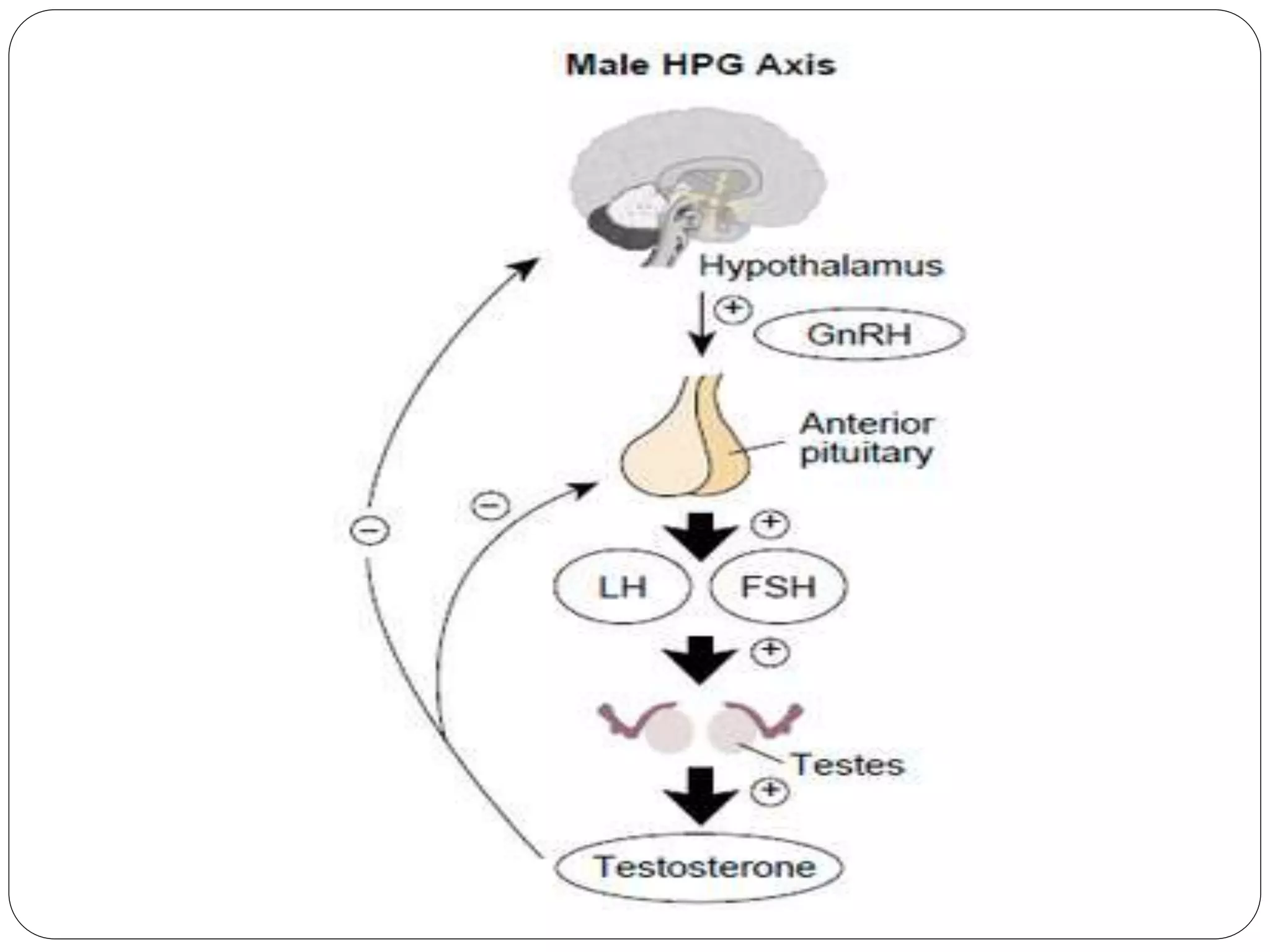
Physiological Synthesis of Androgens
 Manufacture by testis (initiated by luteinizing
hormone) and adrenal cortex, and to a lesser degree
by the ovaries.
 Androgen Receptor (AR) exists in reproductive as
well as non-reproductive tissue (i.e. skeletal muscle,
etc).
 Specificity of action varies based on testosterone derivative
structure.
 Action at tissue or organ also depends on AR quantity. For
example, prostate has 25X more AR than skeletal muscle
 Androgens are substances that cause secondary sexual
characters in the male.
 Natural Androgens: Testes of adult male secretes 5-
12mg testosterone daily (synthesized from
cholesterol).
 A part of testosterone is converted to
dihydrotestosterone (more active) in extraglandular
tissues by the enzyme steroid 5α-reductase.
 Adrenal cortex produces dehydroepiandrosterone and
androstenedione (weak androgens).
 Synthetic androgens: Methyltestosterone, fluoxy-
mesterone are 17–alkyl derivatives of testosterone.
 Orally active, have submaximal efficacy and potential
to cause cholistatic jaundice.
 Other orally active synthetic androgens are
testosterone undecanoate and mesterolone.
Actions and effects
 Sex organs and secondary sex characters:
Testosterone is responsible for all the changes that
occur in a boy at puberty:
1. Growth of genitals.
2. Growth of hair.
3. Larynx grows and voice deepens.
4. Behavioural effects like increased physical vigour,
aggresiveness etc.,
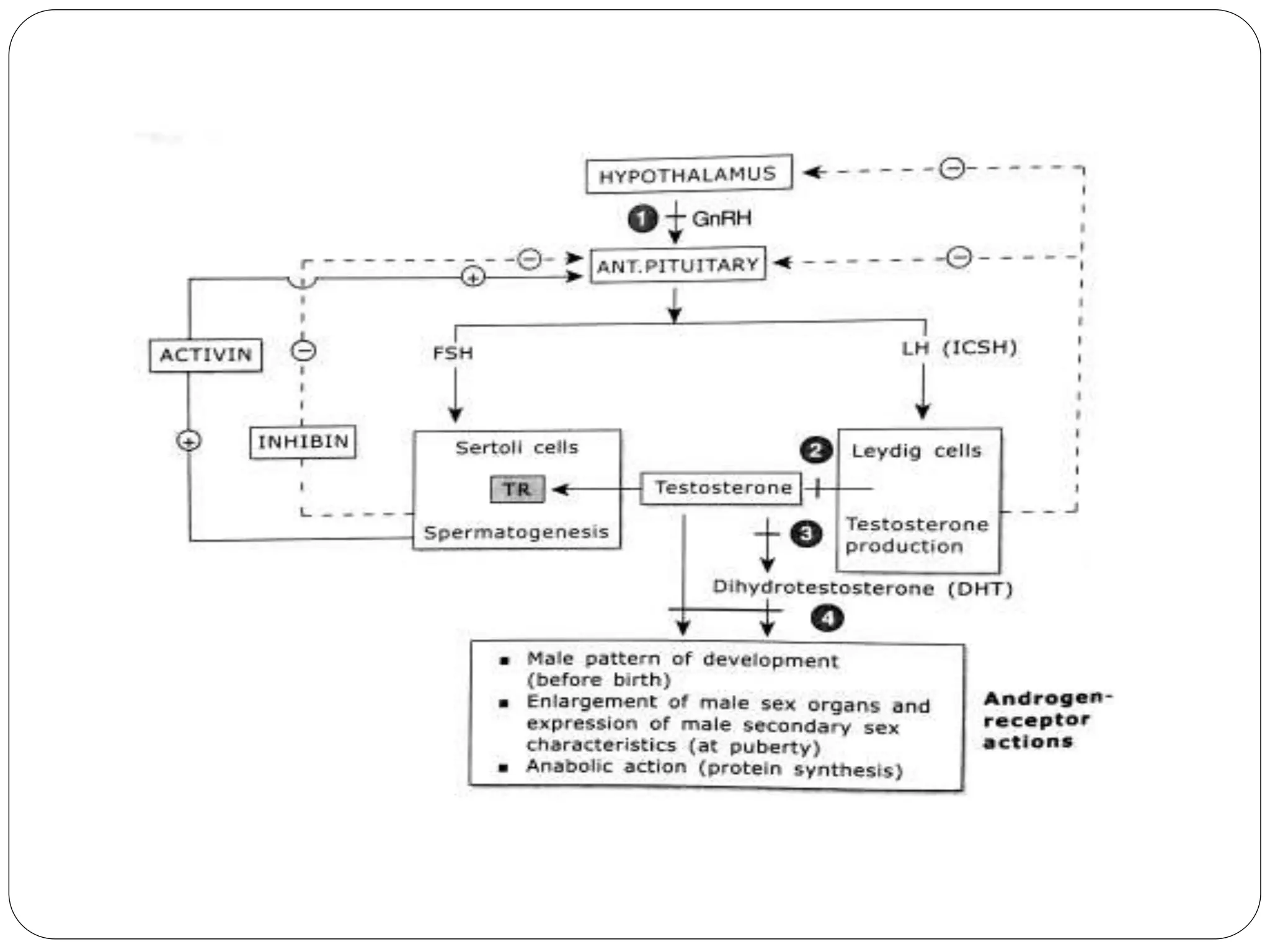
 Testes: Testosterone is responsible for
spermatogenesis and maturation of spermatozoa.
 Skeleton and skeletal muscles (anabolic):
Testosterone is responsible for pubertal growth in
boys and to a smaller extent in girls. Testosterone
also promotes muscle building if aided by exercise.
• Erythropoiesis: Testosterone accelerates
erythropoiesis by increasing erythropoietin levels.
 CNS: feedback control of FSH and LH with inhibin-B
and activin; increase in libido; aggressiveness.
 In females: suppression of ovulation, irregular
menstruation, Hirsutism, deepening of voice,
frontal baldness, enlargement of clitoris and
prominent musculature
Mechanism of action:
 It is regarded as a prohormone.
 Converted to dihydrotestosterone which binds to
cytoplasmic receptor more avidly and this is more
active in binding to DNA.
 Thus DNA transcription is enhanced and effects are
expressed through protein synthesis.
Androgen preparations
 Testosterone propionate
 Testosterone enanthate
 Testosterone cypionate
 Methyl Testosterone
 Fluoxymesterone
 Methandrostenolone
 Oxymetholone
 Nandrolone
 Stanozolol
 Oxadrolone
Pharmacokinetics
 Testosterone is inactive orally due to high first pass
metabolism.
 Given I.M it has short duration of action.
 98% is bound to sex hormone binding-
globulin(SHBG) and to albumin.
 Plasma t1/2 is 10-20 min.
 Methyl testosterone and fluoxytestosterone are
metabolised slowly and have longer duration.
Side Effects and toxic effects
 Virilisation, menstural irregularities in women.
 Acne in males and females.
 Oligozoospermia, precocious puberty with
shortening of stature.
 Cholistatic jaundice , heptic carcinoma.
 Lowering of HDL and rise in LDL is observed.
 Anabolic steroid abuse (26-30 times more)
Contraindication
 Pregnancy, lactating mother
 Carcinoma of prostrate
 Dysfunctional breast, liver kidney
 HT, CHF
 Elder people
 Migraine and Diabetes
Uses
 Hypogonadism (Male, female): Primary or
Secondary respond to androgen treatment.
 Hypopituitarism
 Improve libido: low doses only
 AIDS related muscle wasting
 Hereditary angioneurotic edema: increase
synthesis of complement esterase inhibitors.
 Aging: improve bone mineralisation.
 Stimulate erythrocyte production- but replaced by
recombinant erythropoietin
 For osteoporosis – but replaced by
bisphosphonates
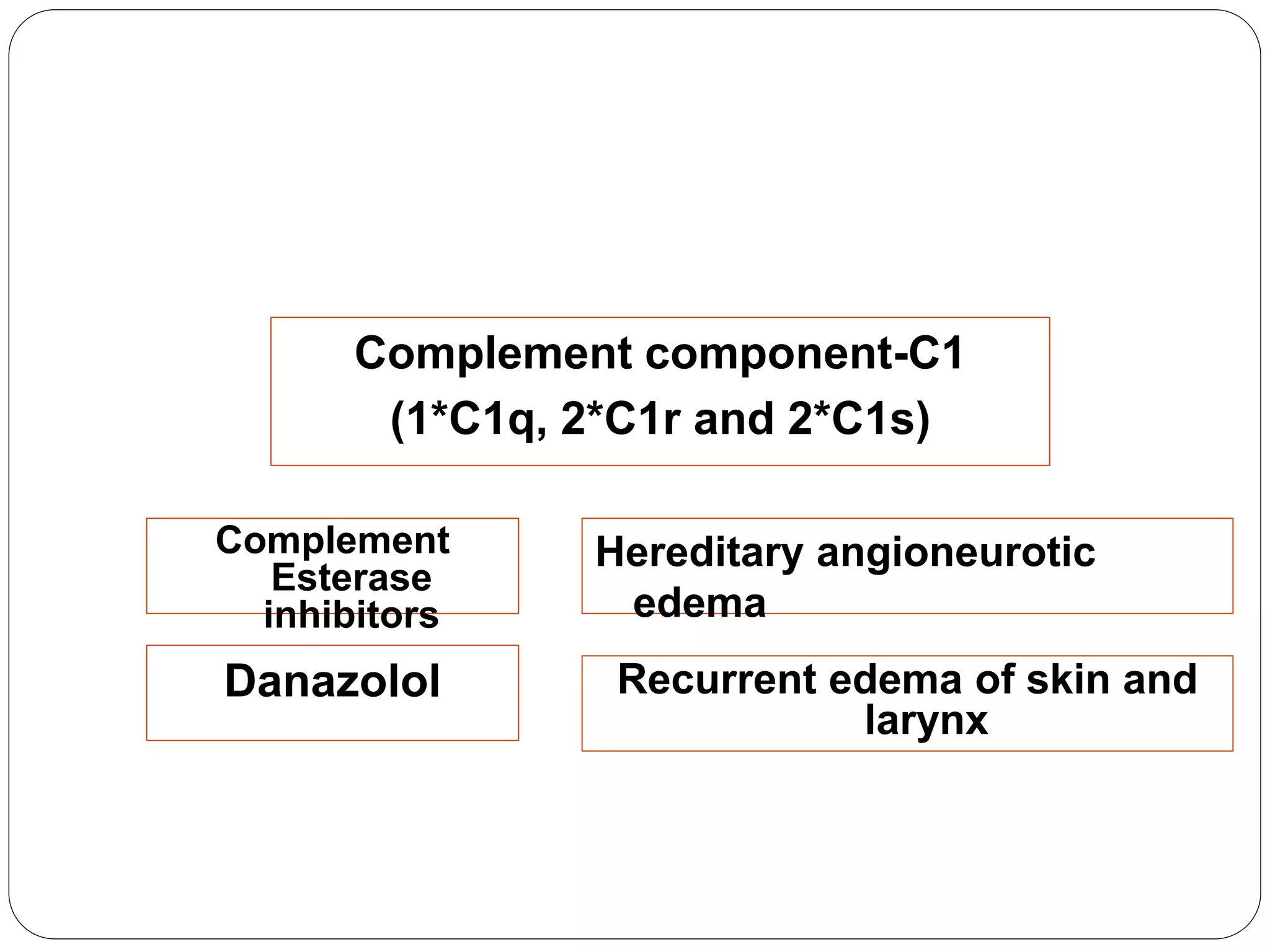
Complement component-C1
(1*C1q, 2*C1r and 2*C1s)
Complement
Esterase
inhibitors
Hereditary angioneurotic
edema
Danazolol Recurrent edema of skin and
larynx
Anabolic Steroids
 These are synthetic androgens with high anabolic
and low androgenic activity. Drugs are:
 Testosterone
 Androstenedione.
 Stanozolol (Winstrol)
 Nandrolone (Deca-Durabolin)
 Methandrosteolone (Dianabol)
Uses
 Catabolic states : Acute illness, severe trauma,
major surgery etc., Only short term treatment is
useful.
 Renal insufficiency.
 Osteoporosis.
 Sub optimal growth in boys.
 To enhance physical activity in athletes (dope test).
Why Abuse AAS(anabolic
androgenic steroid)?
Most common reason: improve athletic
performance.
Also, to gain rapid and substantial muscle size
and/or reduce body fat in an effort to attain a
desired physical appearance (12)
 Reinforcement issues: in addition to initial physical
gains, androgen receptors in the brain stimulate
feelings of euphoria and increased aggressiveness.
Additional use is perpetuated as one becomes less
receptive to outside opinion and resorts to aggressive
behavior to continue the cycle (1).
AAS reduce recovery time between periods of
strenuous metabolic activity (8), but evidence
remains minimal (13).
Side Effects of AAS
Mild – increased sexual drive, acne, increased body
hair and baldness, aggressive behavior.
Prolonged use interferes with ability to naturally
produce testosterone in the face of withdrawal.
Common problems of AAS due to chronic abuse
also include hypertension, atherosclerosis, blood
clotting, jaundice, hepatic carcinoma, tendon
damage, and reduced fertility in males.
Severe life threatening side effects include heart
attacks and liver cancer.
SARMs
 First generation drugs are being developed since
2003
 Ostarine - osteoporosis
 Anabolic effects without androgenic effects
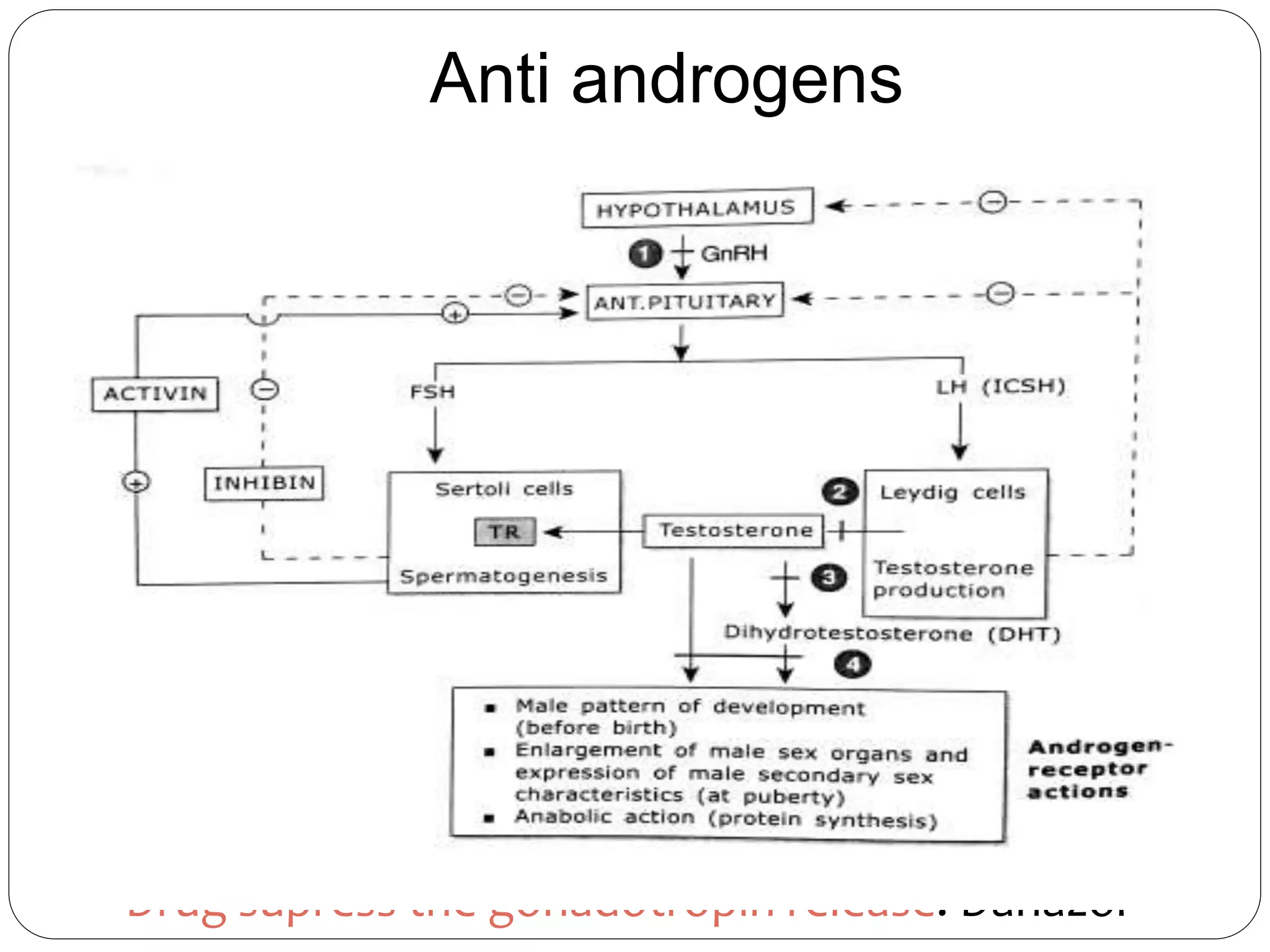
Anti androgens
 GnRH analogues: Leuprolide, Nafareli, Buserelin,
Deslorelin and Goserelin
 Androgen synthesis inhibitors: Ketoconazole
 5α reductase inhibitors: Finasteride, Dutasteride,
Turosteride, bexlosteride and izonsteride.
 Androgen receptor antagonists: Flutamide,
Bicalutamide and nilutamide.
 Drug supress the gonadotropin release: Danazol
GnRH analogues
Uses
 Precatious puberty
 Polycystic ovarian disease
 Prostatic, breast carcinoma
Ketoconazole
 800-1600mg/day
 Inhibits biosynthesis of testosterone
5α reductase inhibitors:
 Finasteride : Specific to 5α reductase type 2
isoenzyme in male urogenital tract. Circulating and
prostatic dihydrotestosterone concentration is
lowered.
 Used in benign prostatic hyperplasia, most useful
along with α1 blockers.
 Also used in male pattern baldness.
 t1/2 is 4-8 hrs.
 Dutasteride : congener of finestride inhibits both
type 1 and 2 5α reductase and reduces
dihydrotestosterone.
 Metabolised by CYP3A4 and is very long acting (~9
weeks)
 Approved for use in BHP.
Androgen receptor antagonists
 Flutamide : A non-steroidal drug having specific
anti-androgenic activity. Its active metabolite
2-hydroxyflutamide competitively blocks
androgen action on accessory sex organs and
pituitary.
 Used in metastatic prostatic carcinoma, female
hirsutism.
 Adv : Gynaecomastia, breast tenderness.
 Bicalutamide: congener of flutamide with more
potency and longer duration of action.
 Used in metastatic carcinoma of prostate.
 Side effects are hot flashes ,chills, edema,loose
stools.
 Less hepatotoxic than flutamide.
Drug suppress the gonadotropin release
 Danazol: The main action is suppression of
gonadotropin (LH , FSH) from pituitary in both
males and females inhibition of
testicular/ovarian function .
 t1/2 is 12-18 hrs.
 Uses : Endometriosis, Menorrhagia, Fibrocystic
breast disease and Hereditary angioneurotic
edema .
Pharmacotherapy of erectile
dysfunction
 Drugs cause erectile dysfunction: beta blockers, clonidine, methyl dopa,
thaizid ediuretics, phenothaizines (antipsychotic), SSRIs, MAOIs, BZPs, antiandrogens, alcohol,
opioids and nicotine.
 Phosphodiesterase-5 inhibitors: Sildenafil, tadalafil and
vardenafil (as Oral drugs)
 PGE1 analogue: Alprostadil (as intracavernosal
injection)
 Dapoxetin (SSRI) – an adjuvant drug
 Transcutaneous application of glyceryl trinitrate,
papaverin, minoxidil
 Herbal agents: Ginseng, kava, ginkgo biloba
THANK YOU

Androgens and antiandrogens

  • 1.
  • 2.
    Going to discuss Androgens  Anti androgens  Anabolic steroids  Pharmacotherapy of erectile dysfunction
  • 4.
    Physiological Synthesis ofAndrogens  Manufacture by testis (initiated by luteinizing hormone) and adrenal cortex, and to a lesser degree by the ovaries.  Androgen Receptor (AR) exists in reproductive as well as non-reproductive tissue (i.e. skeletal muscle, etc).  Specificity of action varies based on testosterone derivative structure.  Action at tissue or organ also depends on AR quantity. For example, prostate has 25X more AR than skeletal muscle
  • 6.
     Androgens aresubstances that cause secondary sexual characters in the male.  Natural Androgens: Testes of adult male secretes 5- 12mg testosterone daily (synthesized from cholesterol).  A part of testosterone is converted to dihydrotestosterone (more active) in extraglandular tissues by the enzyme steroid 5α-reductase.  Adrenal cortex produces dehydroepiandrosterone and androstenedione (weak androgens).
  • 7.
     Synthetic androgens:Methyltestosterone, fluoxy- mesterone are 17–alkyl derivatives of testosterone.  Orally active, have submaximal efficacy and potential to cause cholistatic jaundice.  Other orally active synthetic androgens are testosterone undecanoate and mesterolone.
  • 8.
    Actions and effects Sex organs and secondary sex characters: Testosterone is responsible for all the changes that occur in a boy at puberty: 1. Growth of genitals. 2. Growth of hair. 3. Larynx grows and voice deepens. 4. Behavioural effects like increased physical vigour, aggresiveness etc.,
  • 9.
     Testes: Testosteroneis responsible for spermatogenesis and maturation of spermatozoa.  Skeleton and skeletal muscles (anabolic): Testosterone is responsible for pubertal growth in boys and to a smaller extent in girls. Testosterone also promotes muscle building if aided by exercise. • Erythropoiesis: Testosterone accelerates erythropoiesis by increasing erythropoietin levels.
  • 10.
     CNS: feedbackcontrol of FSH and LH with inhibin-B and activin; increase in libido; aggressiveness.  In females: suppression of ovulation, irregular menstruation, Hirsutism, deepening of voice, frontal baldness, enlargement of clitoris and prominent musculature
  • 11.
    Mechanism of action: It is regarded as a prohormone.  Converted to dihydrotestosterone which binds to cytoplasmic receptor more avidly and this is more active in binding to DNA.  Thus DNA transcription is enhanced and effects are expressed through protein synthesis.
  • 12.
    Androgen preparations  Testosteronepropionate  Testosterone enanthate  Testosterone cypionate  Methyl Testosterone  Fluoxymesterone  Methandrostenolone  Oxymetholone  Nandrolone  Stanozolol  Oxadrolone
  • 13.
    Pharmacokinetics  Testosterone isinactive orally due to high first pass metabolism.  Given I.M it has short duration of action.  98% is bound to sex hormone binding- globulin(SHBG) and to albumin.  Plasma t1/2 is 10-20 min.  Methyl testosterone and fluoxytestosterone are metabolised slowly and have longer duration.
  • 14.
    Side Effects andtoxic effects  Virilisation, menstural irregularities in women.  Acne in males and females.  Oligozoospermia, precocious puberty with shortening of stature.  Cholistatic jaundice , heptic carcinoma.  Lowering of HDL and rise in LDL is observed.  Anabolic steroid abuse (26-30 times more)
  • 15.
    Contraindication  Pregnancy, lactatingmother  Carcinoma of prostrate  Dysfunctional breast, liver kidney  HT, CHF  Elder people  Migraine and Diabetes
  • 16.
    Uses  Hypogonadism (Male,female): Primary or Secondary respond to androgen treatment.  Hypopituitarism  Improve libido: low doses only  AIDS related muscle wasting  Hereditary angioneurotic edema: increase synthesis of complement esterase inhibitors.  Aging: improve bone mineralisation.  Stimulate erythrocyte production- but replaced by recombinant erythropoietin  For osteoporosis – but replaced by bisphosphonates
  • 17.
    Complement component-C1 (1*C1q, 2*C1rand 2*C1s) Complement Esterase inhibitors Hereditary angioneurotic edema Danazolol Recurrent edema of skin and larynx
  • 18.
    Anabolic Steroids  Theseare synthetic androgens with high anabolic and low androgenic activity. Drugs are:  Testosterone  Androstenedione.  Stanozolol (Winstrol)  Nandrolone (Deca-Durabolin)  Methandrosteolone (Dianabol)
  • 19.
    Uses  Catabolic states: Acute illness, severe trauma, major surgery etc., Only short term treatment is useful.  Renal insufficiency.  Osteoporosis.  Sub optimal growth in boys.  To enhance physical activity in athletes (dope test).
  • 20.
    Why Abuse AAS(anabolic androgenicsteroid)? Most common reason: improve athletic performance. Also, to gain rapid and substantial muscle size and/or reduce body fat in an effort to attain a desired physical appearance (12)  Reinforcement issues: in addition to initial physical gains, androgen receptors in the brain stimulate feelings of euphoria and increased aggressiveness. Additional use is perpetuated as one becomes less receptive to outside opinion and resorts to aggressive behavior to continue the cycle (1). AAS reduce recovery time between periods of strenuous metabolic activity (8), but evidence remains minimal (13).
  • 21.
    Side Effects ofAAS Mild – increased sexual drive, acne, increased body hair and baldness, aggressive behavior. Prolonged use interferes with ability to naturally produce testosterone in the face of withdrawal. Common problems of AAS due to chronic abuse also include hypertension, atherosclerosis, blood clotting, jaundice, hepatic carcinoma, tendon damage, and reduced fertility in males. Severe life threatening side effects include heart attacks and liver cancer.
  • 22.
    SARMs  First generationdrugs are being developed since 2003  Ostarine - osteoporosis  Anabolic effects without androgenic effects
  • 23.
    Anti androgens  GnRHanalogues: Leuprolide, Nafareli, Buserelin, Deslorelin and Goserelin  Androgen synthesis inhibitors: Ketoconazole  5α reductase inhibitors: Finasteride, Dutasteride, Turosteride, bexlosteride and izonsteride.  Androgen receptor antagonists: Flutamide, Bicalutamide and nilutamide.  Drug supress the gonadotropin release: Danazol
  • 24.
    GnRH analogues Uses  Precatiouspuberty  Polycystic ovarian disease  Prostatic, breast carcinoma
  • 25.
  • 26.
    5α reductase inhibitors: Finasteride : Specific to 5α reductase type 2 isoenzyme in male urogenital tract. Circulating and prostatic dihydrotestosterone concentration is lowered.  Used in benign prostatic hyperplasia, most useful along with α1 blockers.  Also used in male pattern baldness.  t1/2 is 4-8 hrs.
  • 27.
     Dutasteride :congener of finestride inhibits both type 1 and 2 5α reductase and reduces dihydrotestosterone.  Metabolised by CYP3A4 and is very long acting (~9 weeks)  Approved for use in BHP.
  • 28.
    Androgen receptor antagonists Flutamide : A non-steroidal drug having specific anti-androgenic activity. Its active metabolite 2-hydroxyflutamide competitively blocks androgen action on accessory sex organs and pituitary.  Used in metastatic prostatic carcinoma, female hirsutism.  Adv : Gynaecomastia, breast tenderness.
  • 29.
     Bicalutamide: congenerof flutamide with more potency and longer duration of action.  Used in metastatic carcinoma of prostate.  Side effects are hot flashes ,chills, edema,loose stools.  Less hepatotoxic than flutamide.
  • 30.
    Drug suppress thegonadotropin release  Danazol: The main action is suppression of gonadotropin (LH , FSH) from pituitary in both males and females inhibition of testicular/ovarian function .  t1/2 is 12-18 hrs.  Uses : Endometriosis, Menorrhagia, Fibrocystic breast disease and Hereditary angioneurotic edema .
  • 31.
    Pharmacotherapy of erectile dysfunction Drugs cause erectile dysfunction: beta blockers, clonidine, methyl dopa, thaizid ediuretics, phenothaizines (antipsychotic), SSRIs, MAOIs, BZPs, antiandrogens, alcohol, opioids and nicotine.  Phosphodiesterase-5 inhibitors: Sildenafil, tadalafil and vardenafil (as Oral drugs)  PGE1 analogue: Alprostadil (as intracavernosal injection)  Dapoxetin (SSRI) – an adjuvant drug  Transcutaneous application of glyceryl trinitrate, papaverin, minoxidil  Herbal agents: Ginseng, kava, ginkgo biloba
  • 32.

Editor's Notes

  • #15 * Virilization: the development of male physical characteristics (such as muscle bulk, body hair, and deep voice) in a female or precociously in a boy, typically as a result of excess androgen production. *  Precocious puberty is when a child's body begins changing into that of an adult (puberty) too soon. When puberty begins before age 8 in girls and before age 9 in boys, it is considered precocious puberty
  • #17 * Hypogonadism in adult males may alter certain masculine physical characteristics and impair normal reproductive function. Signs and symptoms may include:・Erectile dysfunction・Infertility・Decrease in beard and body hair growth・Increase in body fat・Decrease in size or firmness of testicles・Decrease in muscle mass・Development of breast tissue・Loss of bone mass (osteoporosis ) * Complement component C1 circulates in the plasma as a huge, inactive protein complex containing one C1q subunit, two C1rsubunits and two C1s subunits. The C1q subunit can bind to the Fc regions of two antigen-specific antibodies that have bound in close proximity to antigen fixed on the surface of a pathogen. This binding activates the C1r subunits such that they activate the C1s subunits. The activated C1s subunits can then cleave serum C4 into C4a and C4b. C4a diffuses away while C4b attaches to proteins on the surface of the pathogen and then binds serum C2. This interaction causes C2 to become susceptible to cleavage by C1s, generating C2a and C2b. C2a remains bound to C4b, while C2b diffuses away. The C4bC2a structure is known as the classical C3 convertase. C3 convertase cleaves serum C3 into C3a and the key molecule C3b. C3b binds to C4bC2a to form another enzyme complex called the classical C5 convertase.
  • #31 * menorrhagia: abnormally heavy bleeding at menstruation.