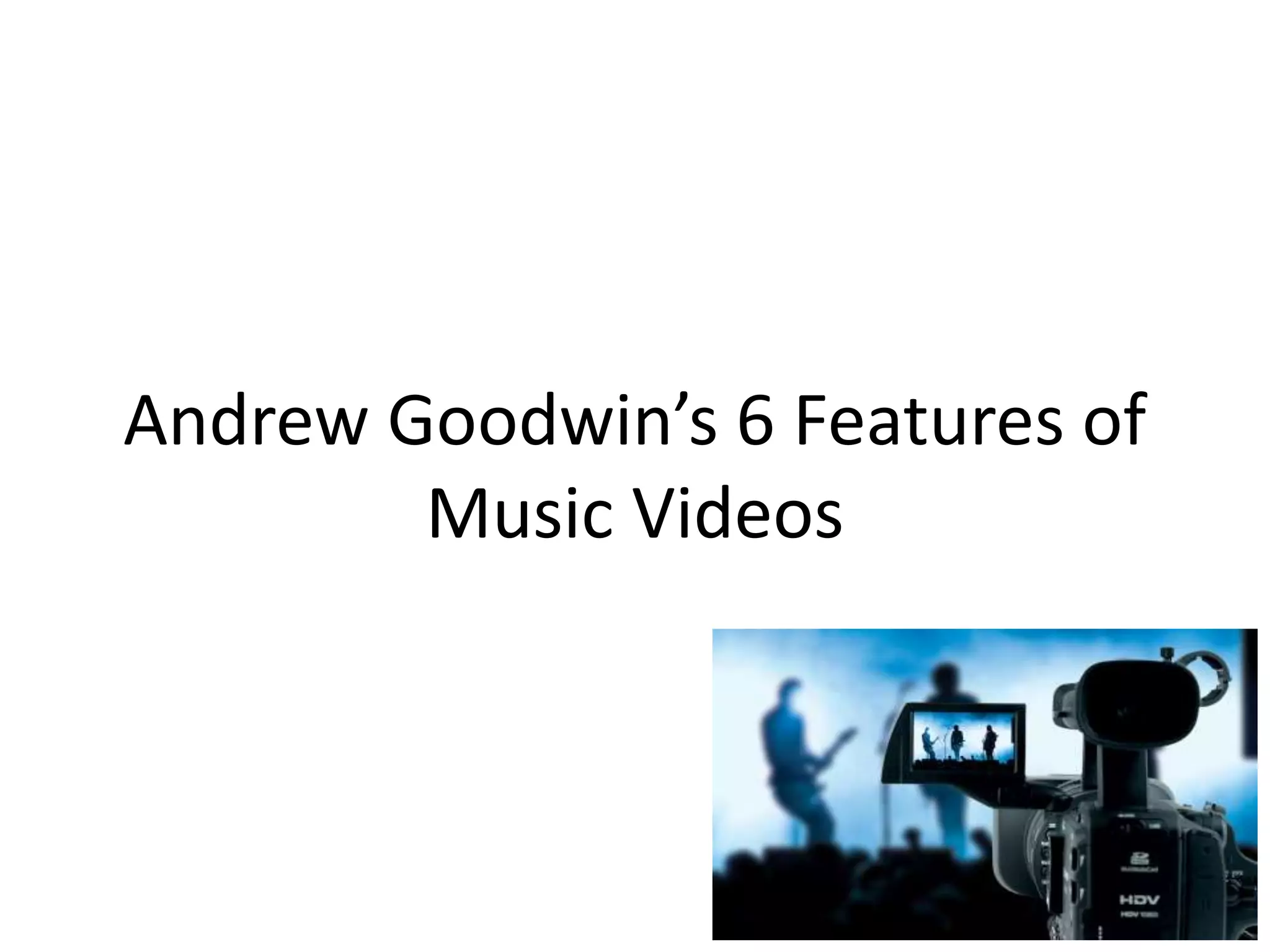
Andrew Goodwin’s 6 Features of
Music Videos
Features
1. Music videos demonstrate genre characteristics – Similar genres have similar
styles
2. There is a relationship between lyrics and visuals
3. There is a relationship between music and visuals
4. The demands of the record label will include the need for lots of close ups of
the artist
5. There is frequently reference to notion of looking (screens within screens)
and particularly voyeuristic treatment of the female body
6. There is often intertextual reference to other forms of media
1
• Music videos can also link to film genres, known as
intertextuality, for example, many rock songs are influenced
by horror films
• The convention explains how Goodwin noticed a music
video’s visuals either had a complete similarity or had direct
contrast to the lyrics of the song.
• The artist or actor in the video would represent the music
lyrics, for example a ‘sad’ song would show the artist or actors
with a dull, upset facial expressions or body movements.
2
• Secondly Goodwin noticed that the visuals
within a video may be edited to match the
pace of the song, to be in time with the lyrics.
3
• Goodwin recognized artists repeat
themselves, with actions, or a repeated show
of a certain outfit or prop, emphasizing their
‘trademark’ making their song recognizable.
• This is also used as a marketing strategy so the
video and song is remembered for years.
• The location is also known to also represent
the genre.
4
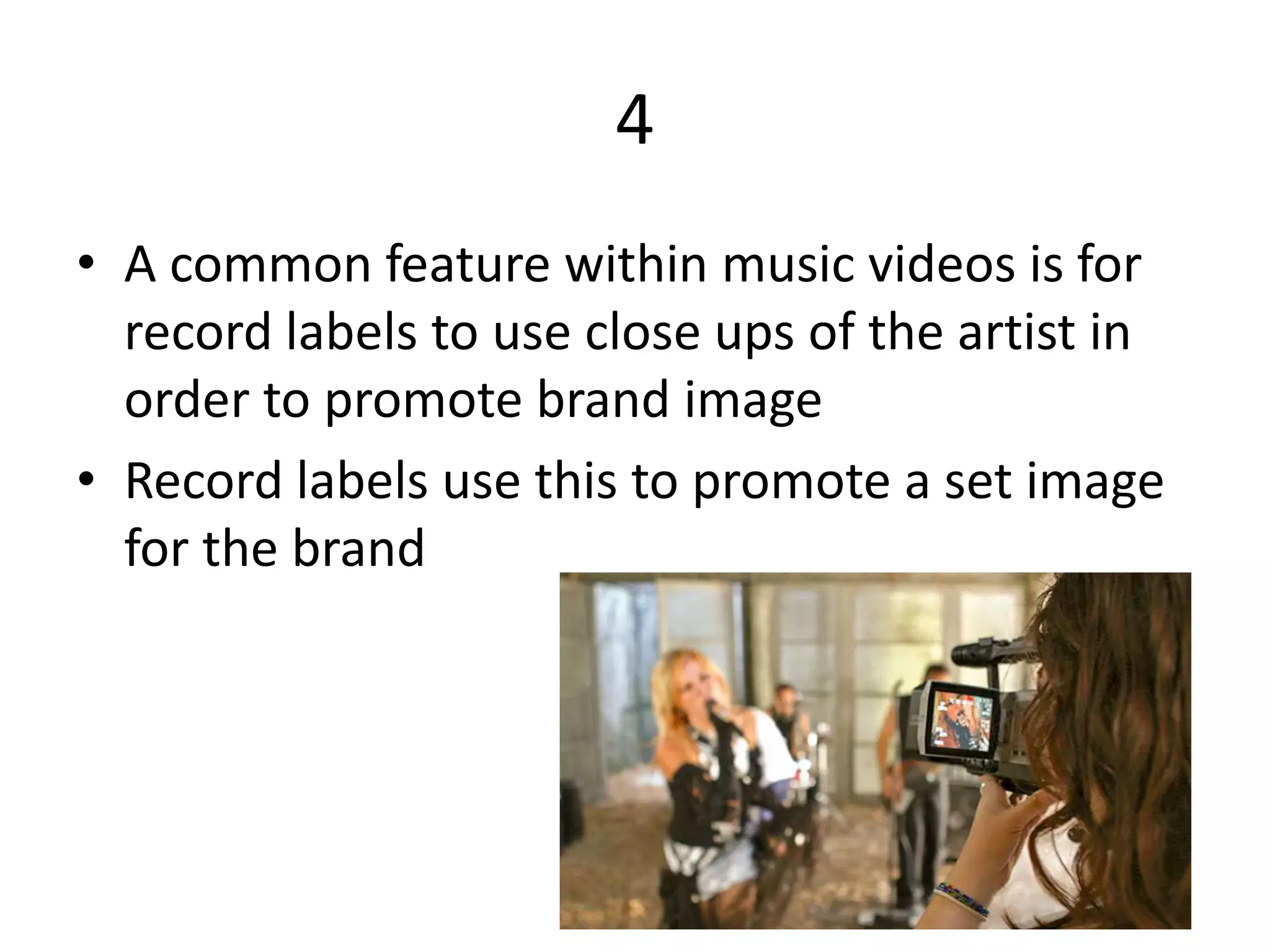
• A common feature within music videos is for
record labels to use close ups of the artist in
order to promote brand image
• Record labels use this to promote a set image
for the brand
5
• Laura Mulvey’s Male Gaze Theory can be an
example of this, as female artists sometimes
have provocative angles used in their video to
sexualize the artist.
• This often means a voyeuristic view, and
objectification of women, along with the artist
looking directly into the camera, creating a
‘bond’ with them and the audience.
6
• Music videos sometimes have reference to
other forms of media, most commonly film
• TV and other music videos can also be used
for this

Andrew goodwin's 6 features of music videos

  • 1.
    Andrew Goodwin’s 6Features of Music Videos
  • 2.
    Features 1. Music videosdemonstrate genre characteristics – Similar genres have similar styles 2. There is a relationship between lyrics and visuals 3. There is a relationship between music and visuals 4. The demands of the record label will include the need for lots of close ups of the artist 5. There is frequently reference to notion of looking (screens within screens) and particularly voyeuristic treatment of the female body 6. There is often intertextual reference to other forms of media
  • 3.
    1 • Music videoscan also link to film genres, known as intertextuality, for example, many rock songs are influenced by horror films • The convention explains how Goodwin noticed a music video’s visuals either had a complete similarity or had direct contrast to the lyrics of the song. • The artist or actor in the video would represent the music lyrics, for example a ‘sad’ song would show the artist or actors with a dull, upset facial expressions or body movements.
  • 4.
    2 • Secondly Goodwinnoticed that the visuals within a video may be edited to match the pace of the song, to be in time with the lyrics.
  • 5.
    3 • Goodwin recognizedartists repeat themselves, with actions, or a repeated show of a certain outfit or prop, emphasizing their ‘trademark’ making their song recognizable. • This is also used as a marketing strategy so the video and song is remembered for years. • The location is also known to also represent the genre.
  • 6.
    4 • A commonfeature within music videos is for record labels to use close ups of the artist in order to promote brand image • Record labels use this to promote a set image for the brand
  • 7.
    5 • Laura Mulvey’sMale Gaze Theory can be an example of this, as female artists sometimes have provocative angles used in their video to sexualize the artist. • This often means a voyeuristic view, and objectification of women, along with the artist looking directly into the camera, creating a ‘bond’ with them and the audience.
  • 8.
    6 • Music videossometimes have reference to other forms of media, most commonly film • TV and other music videos can also be used for this