This slide is used for start page and chaptering.
Insert your image here
(The image should cover the whole grey square by doing that you automatically follow the new graphic manual)
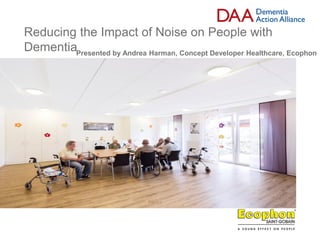
Reducing the Impact of Noise on People with
DementiaPresented by Andrea Harman, Concept Developer Healthcare, Ecophon
Example of
the type of
photo
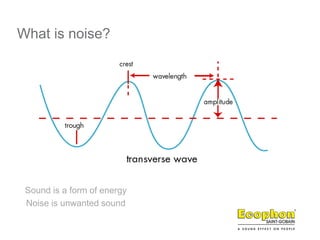
What is noise?
Sound is a form of energy
Noise is unwanted sound
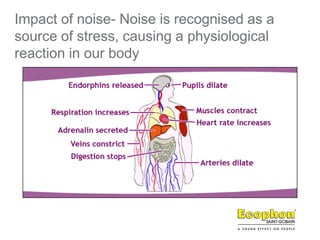
Impact of noise- Noise is recognised as a
source of stress, causing a physiological
reaction in our body
We also have a psychological reaction to
noise
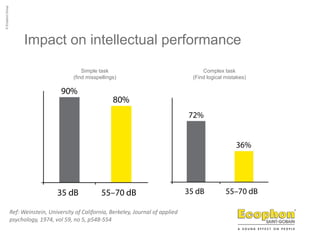
Impact on intellectual performance
Simple task
(find misspellings)
Complex task
(Find logical mistakes)
Ref: Weinstein, University of California, Berkeley, Journal of applied
psychology, 1974, vol 59, no 5, p548-554
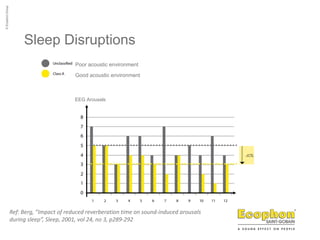
Sleep Disruptions
EEG Arousals
Ref: Berg, ”Impact of reduced reverberation time on sound-induced arousals
during sleep”, Sleep, 2001, vol 24, no 3, p289-292
Poor acoustic environment
Good acoustic environment
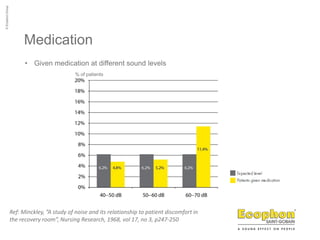
Medication
• Given medication at different sound levels
% of patients
Ref: Minckley, ”A study of noise and its relationship to patient discomfort in
the recovery room”, Nursing Research, 1968, vol 17, no 3, p247-250
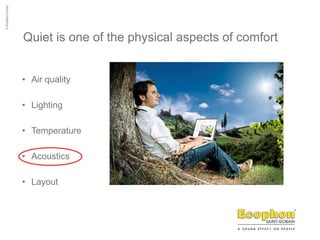
Quiet is one of the physical aspects of comfort
• Air quality
• Lighting
• Temperature
• Acoustics
• Layout
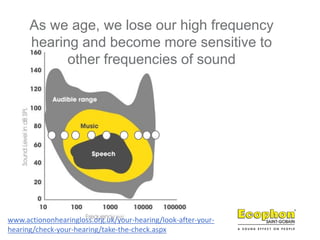
As we age, we lose our high frequency
hearing and become more sensitive to
other frequencies of sound
www.actiononhearingloss.org.uk/your-hearing/look-after-your-
hearing/check-your-hearing/take-the-check.aspx
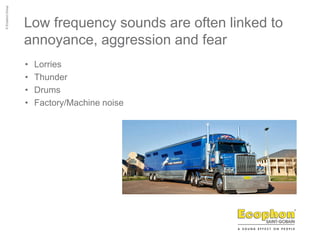
Low frequency sounds are often linked to
annoyance, aggression and fear
• Lorries
• Thunder
• Drums
• Factory/Machine noise
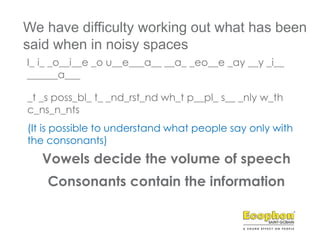
Consonants contain the information
Vowels decide the volume of speech
I_ i_ _o__i__e _o u__e___a__ __a_ _eo__e _ay __y _i__
______a___
We have difficulty working out what has been
said when in noisy spaces
_t _s poss_bl_ t_ _nd_rst_nd wh_t p__pl_ s__ _nly w_th
c_ns_n_nts
(It is possible to understand what people say only with
the consonants)
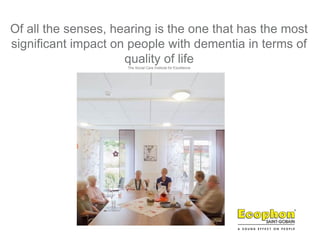
Of all the senses, hearing is the one that has the most
significant impact on people with dementia in terms of
quality of life
The Social Care Institute for Excellence
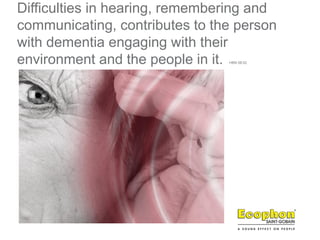
Difficulties in hearing, remembering and
communicating, contributes to the person
with dementia engaging with their
environment and the people in it. HBN 08:02
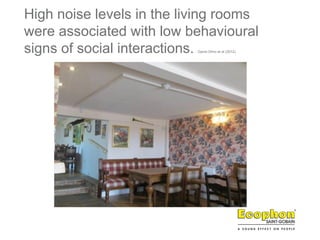
High noise levels in the living rooms
were associated with low behavioural
signs of social interactions. Garre-Olmo et al (2012)
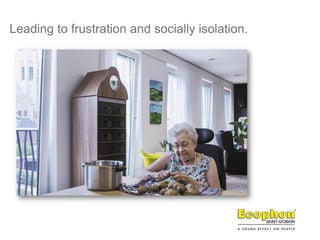
Leading to frustration and socially isolation.
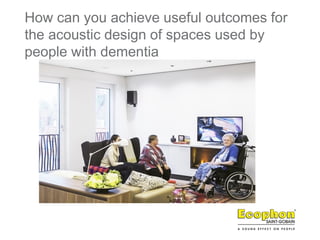
How can you achieve useful outcomes for
the acoustic design of spaces used by
people with dementia
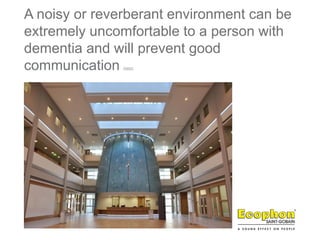
A noisy or reverberant environment can be
extremely uncomfortable to a person with
dementia and will prevent good
communication DSDC
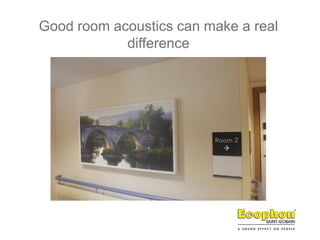
Good room acoustics can make a real
difference
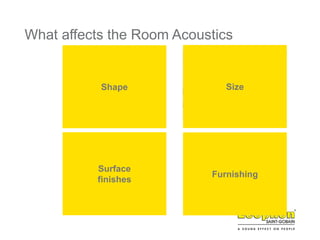
Furnishing
Shape Size
Surface
finishes
What affects the Room Acoustics
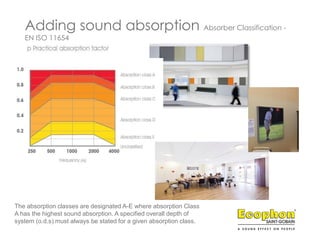
Adding sound absorption Absorber Classification -
EN ISO 11654
The absorption classes are designated A-E where absorption Class
A has the highest sound absorption. A specified overall depth of
system (o.d.s) must always be stated for a given absorption class.
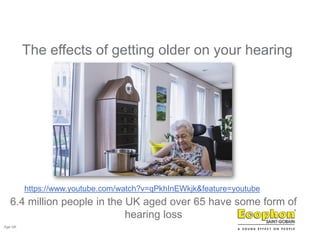
The effects of getting older on your hearing
6.4 million people in the UK aged over 65 have some form of
hearing loss
Age UK
https://www.youtube.com/watch?v=qPkhInEWkjk&feature=youtube
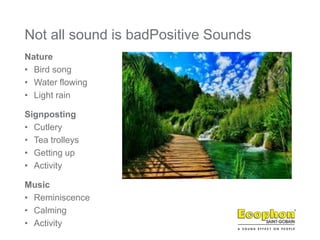
Not all sound is badPositive Sounds
Nature
• Bird song
• Water flowing
• Light rain
Signposting
• Cutlery
• Tea trolleys
• Getting up
• Activity
Music
• Reminiscence
• Calming
• Activity
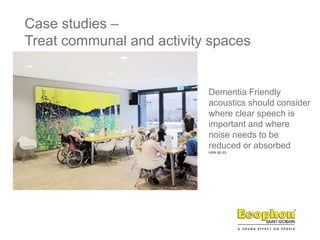
Case studies –
Treat communal and activity spaces
Dementia Friendly
acoustics should consider
where clear speech is
important and where
noise needs to be
reduced or absorbed
HBN 08:02
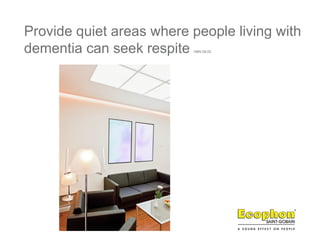
Provide quiet areas where people living with
dementia can seek respite HBN 08:02
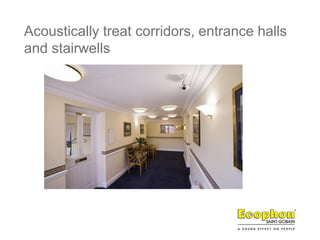
Acoustically treat corridors, entrance halls
and stairwells
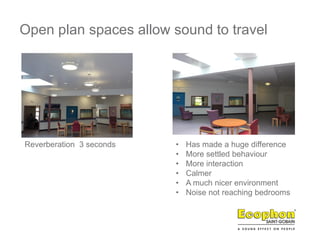
Open plan spaces allow sound to travel
Reverberation 3 seconds • Has made a huge difference
• More settled behaviour
• More interaction
• Calmer
• A much nicer environment
• Noise not reaching bedrooms
Thank you for listening
• Andrea.harman@ecophon.co.uk
• Digital healthcare magazine: Eco for
Sustainable Design, available in
Appstore and Google Play
• www.ecophon.co.uk
• #safeandsound
• Presentations on designing dementia
care spaces – see our stand or
phone Andrea on 07771565382
• Acoustics of environments used
by people affected by dementia
Professor Marcus Ormerod and Rachel Russell,
SURFACE Inclusive Design Research Centre, School of
Built Environment and Dr Bill Davies, Acoustics, School
of Computing, Science and Engineering, University of
Salford

Andrea Harman

  • 1.
    This slide isused for start page and chaptering. Insert your image here (The image should cover the whole grey square by doing that you automatically follow the new graphic manual) Reducing the Impact of Noise on People with DementiaPresented by Andrea Harman, Concept Developer Healthcare, Ecophon Example of the type of photo
  • 2.
    What is noise? Soundis a form of energy Noise is unwanted sound
  • 3.
    Impact of noise-Noise is recognised as a source of stress, causing a physiological reaction in our body
  • 4.
    We also havea psychological reaction to noise
  • 5.
    Impact on intellectualperformance Simple task (find misspellings) Complex task (Find logical mistakes) Ref: Weinstein, University of California, Berkeley, Journal of applied psychology, 1974, vol 59, no 5, p548-554
  • 6.
    Sleep Disruptions EEG Arousals Ref:Berg, ”Impact of reduced reverberation time on sound-induced arousals during sleep”, Sleep, 2001, vol 24, no 3, p289-292 Poor acoustic environment Good acoustic environment
  • 7.
    Medication • Given medicationat different sound levels % of patients Ref: Minckley, ”A study of noise and its relationship to patient discomfort in the recovery room”, Nursing Research, 1968, vol 17, no 3, p247-250
  • 8.
    Quiet is oneof the physical aspects of comfort • Air quality • Lighting • Temperature • Acoustics • Layout
  • 9.
    As we age,we lose our high frequency hearing and become more sensitive to other frequencies of sound www.actiononhearingloss.org.uk/your-hearing/look-after-your- hearing/check-your-hearing/take-the-check.aspx
  • 10.
    Low frequency soundsare often linked to annoyance, aggression and fear • Lorries • Thunder • Drums • Factory/Machine noise
  • 11.
    Consonants contain theinformation Vowels decide the volume of speech I_ i_ _o__i__e _o u__e___a__ __a_ _eo__e _ay __y _i__ ______a___ We have difficulty working out what has been said when in noisy spaces _t _s poss_bl_ t_ _nd_rst_nd wh_t p__pl_ s__ _nly w_th c_ns_n_nts (It is possible to understand what people say only with the consonants)
  • 12.
    Of all thesenses, hearing is the one that has the most significant impact on people with dementia in terms of quality of life The Social Care Institute for Excellence
  • 13.
    Difficulties in hearing,remembering and communicating, contributes to the person with dementia engaging with their environment and the people in it. HBN 08:02
  • 14.
    High noise levelsin the living rooms were associated with low behavioural signs of social interactions. Garre-Olmo et al (2012)
  • 15.
    Leading to frustrationand socially isolation.
  • 16.
    How can youachieve useful outcomes for the acoustic design of spaces used by people with dementia
  • 17.
    A noisy orreverberant environment can be extremely uncomfortable to a person with dementia and will prevent good communication DSDC
  • 18.
    Good room acousticscan make a real difference
  • 19.
  • 20.
    Adding sound absorptionAbsorber Classification - EN ISO 11654 The absorption classes are designated A-E where absorption Class A has the highest sound absorption. A specified overall depth of system (o.d.s) must always be stated for a given absorption class.
  • 21.
    The effects ofgetting older on your hearing 6.4 million people in the UK aged over 65 have some form of hearing loss Age UK https://www.youtube.com/watch?v=qPkhInEWkjk&feature=youtube
  • 22.
    Not all soundis badPositive Sounds Nature • Bird song • Water flowing • Light rain Signposting • Cutlery • Tea trolleys • Getting up • Activity Music • Reminiscence • Calming • Activity
  • 23.
    Case studies – Treatcommunal and activity spaces Dementia Friendly acoustics should consider where clear speech is important and where noise needs to be reduced or absorbed HBN 08:02
  • 24.
    Provide quiet areaswhere people living with dementia can seek respite HBN 08:02
  • 25.
    Acoustically treat corridors,entrance halls and stairwells
  • 26.
    Open plan spacesallow sound to travel Reverberation 3 seconds • Has made a huge difference • More settled behaviour • More interaction • Calmer • A much nicer environment • Noise not reaching bedrooms
  • 27.
    Thank you forlistening • Andrea.harman@ecophon.co.uk • Digital healthcare magazine: Eco for Sustainable Design, available in Appstore and Google Play • www.ecophon.co.uk • #safeandsound • Presentations on designing dementia care spaces – see our stand or phone Andrea on 07771565382 • Acoustics of environments used by people affected by dementia Professor Marcus Ormerod and Rachel Russell, SURFACE Inclusive Design Research Centre, School of Built Environment and Dr Bill Davies, Acoustics, School of Computing, Science and Engineering, University of Salford