 The internet was a very limited resource for
researching existing double page spreads in a
TV listing magazine
 Because of this I actually primarily researched
for these by purchasing some TV listing
magazines and looking for them first hand
 This was also very difficult to research as I
looked through a number of TV listing
magazines and still could not find any double
page spreads for a documentary
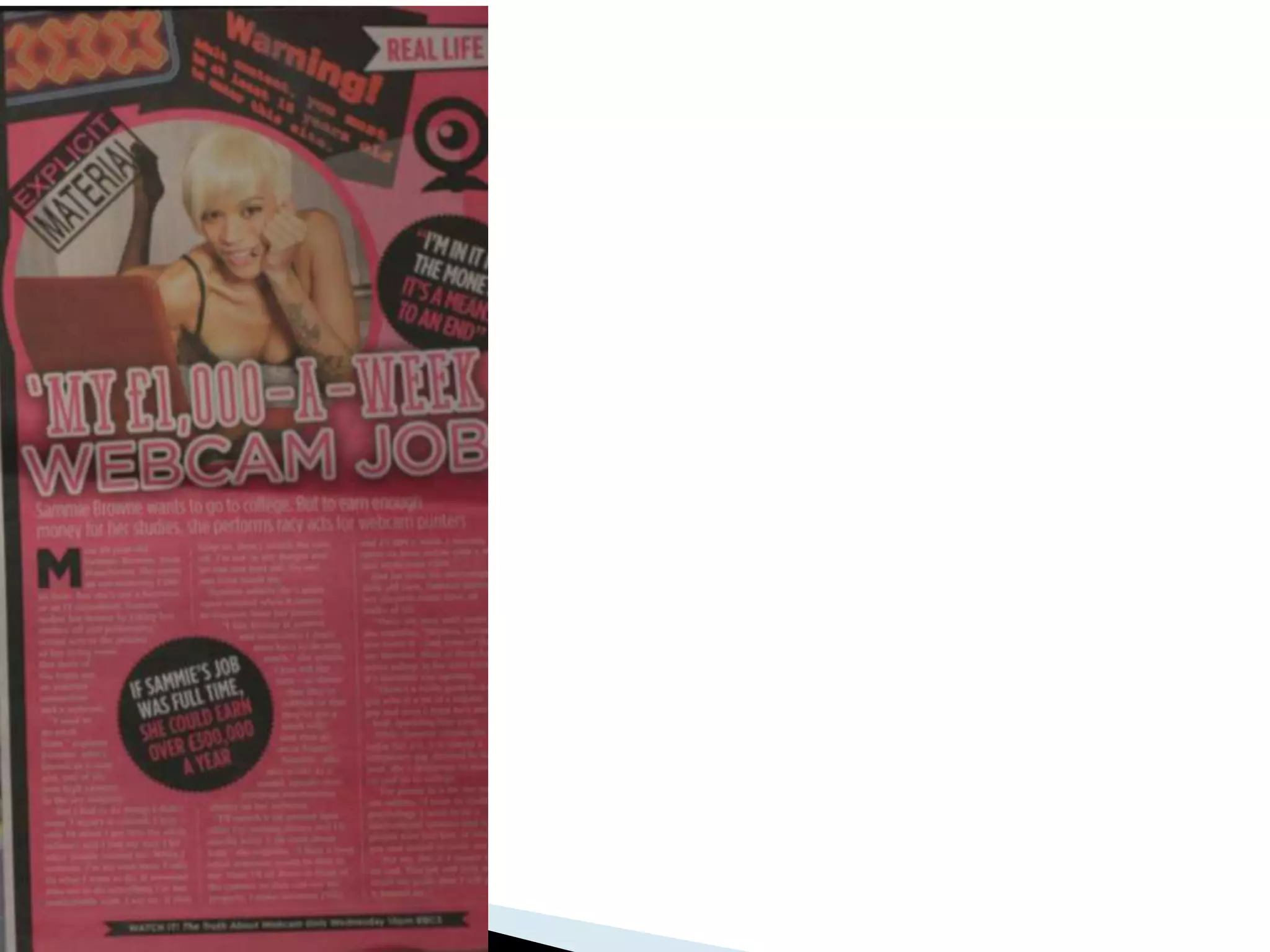
 The closest to this that I could find in my
research was a double page spread that
consisted of 3 smaller articles advertising
documentaries
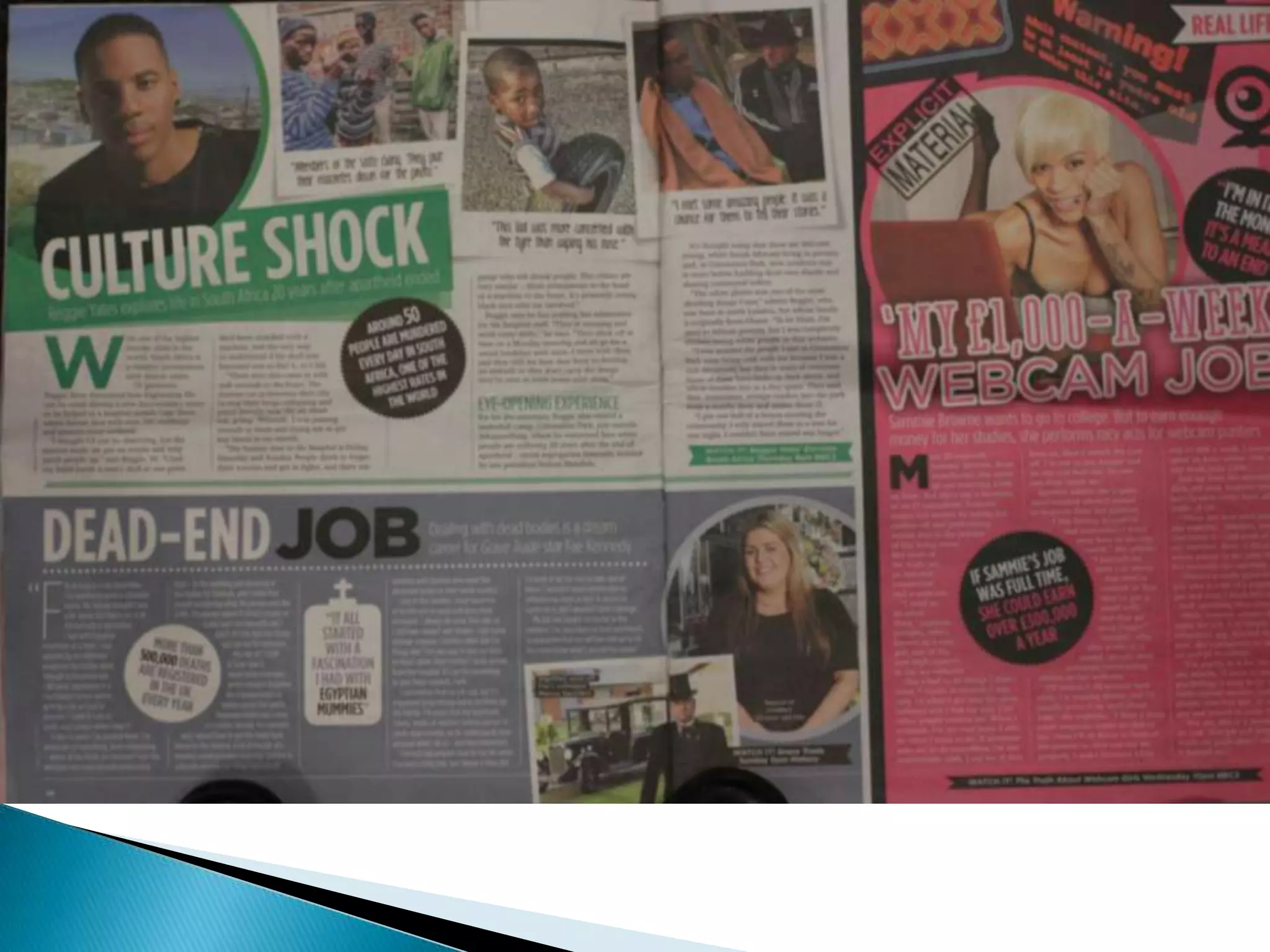
 You can immediately see a similar layout style
from the picture I have taken of the double page
spread
 All three of these documentary articles have a
primary background colour, which are
contrasting to easily identify the different adverts
 The smaller advertisements use brighter
colours, whilst the main one is a lot more simple
and uses plain white for its background but
features quite a loud colour of green to make
headings and important information stand out on
this white background. This allows the key parts
of the article to become easily identifiable and
catch the readers attention easily
 Unlike a lot of common advertisements, the
headings for these documentary adverts do not
include the name of the program, they all contain
a small quote that is often tongue-in-cheek or a
pun with reference to the topic of the
documentary
 This technique is used for the heading as the
heading is the one part of the advert that
everyone reads when flicking through a TV
listings magazine, therefore adding a humorous
sense to it allows the reader to take an interest to
the article if they find the heading funny or clever
 All three articles contain a main image that are mid close-
ups of the main character that the documentary focuses
on, we will have to differentiate this for our documentary
as there is no predominant leading role in our
documentary, but still use the same type of image
 There are also other smaller images used depending on
the size of the article, for example the largest article has 3
other small images
 Mise-en-scene is a very crucial part of the imagery, as all
images across this double page spread contain mise-en-
scene that makes it a lot easier for consumer to identify
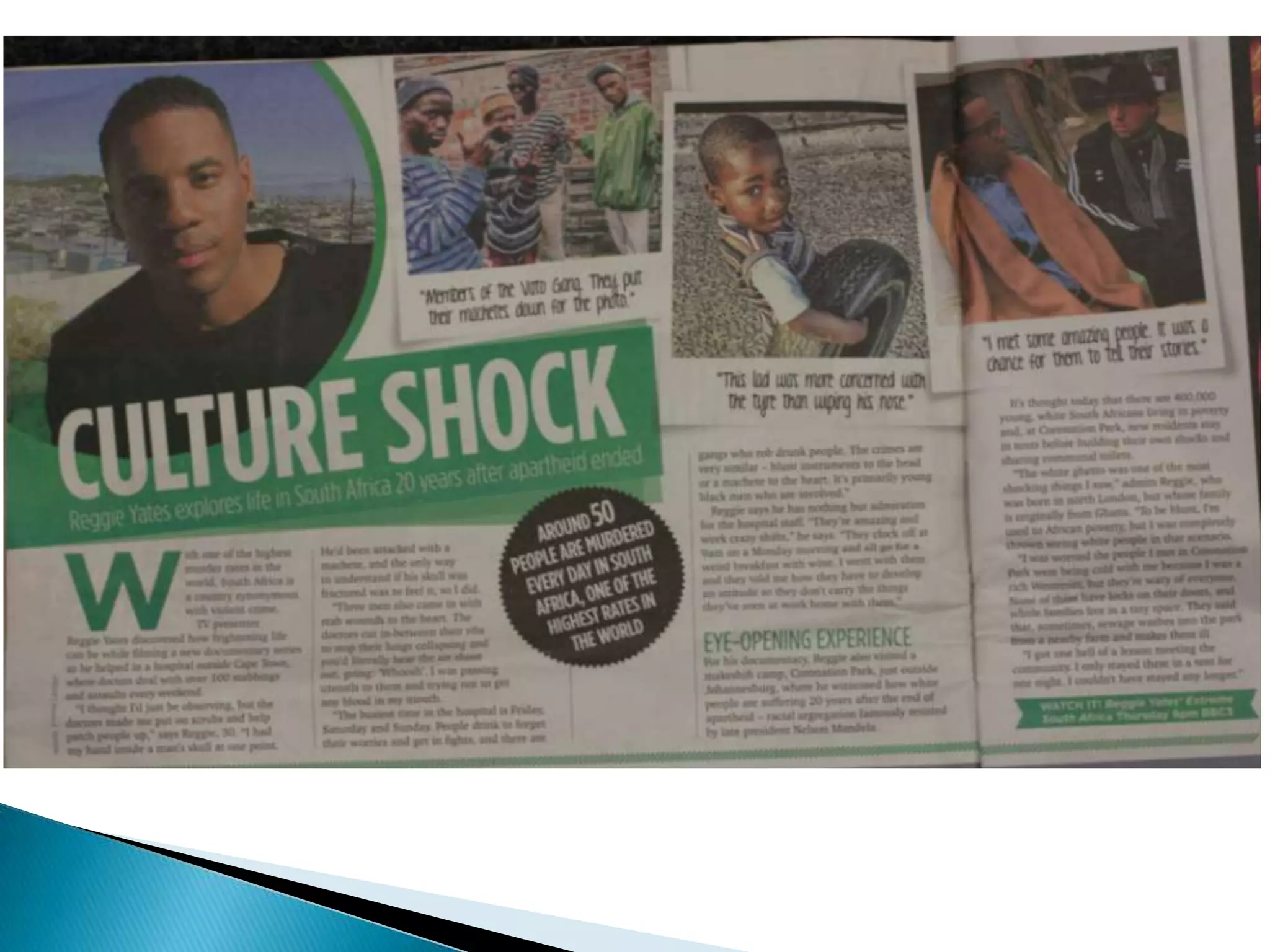
the topic of the documentary. For example the picture of
Reggie Yates clearly shows the African slums behind him
in the main image for the article regarding his
documentary about life in South Africa
 All three of these examples are very basic with
their straplines, as it does not need to contain any
detail and does not need to funny clever unlike
the heading
 They all contain a short and simple sentence that
gives the reader a good idea of what the
documentary is actually about
 This is the first thing that readers will read after
the heading, therefore it is essential that it is not
misleading and does not seem boring at all as it
could determine whether or not people read the
rest of the article or take an interest in the
documentary
 The write ups are very similar for all three of
these examples and I have noticed a few basic
trends
 All of the write ups begin by stating a general
facts regarding the topic of the documentary
 They all feature at least one interview that always
includes the main character of the documentary,
this take sup a large proportion of the write up
 Describing the actual documentary itself is very
brief, as it is important that they do not give
away any spoilers that are to be seen in the
documentary and cannot be spoken about
without ruining it
 There are several additional features that are only
small but have a big impact on the appearance of
the article
 A common case of this are black circles that
contain short, interesting facts regarding the
documentary
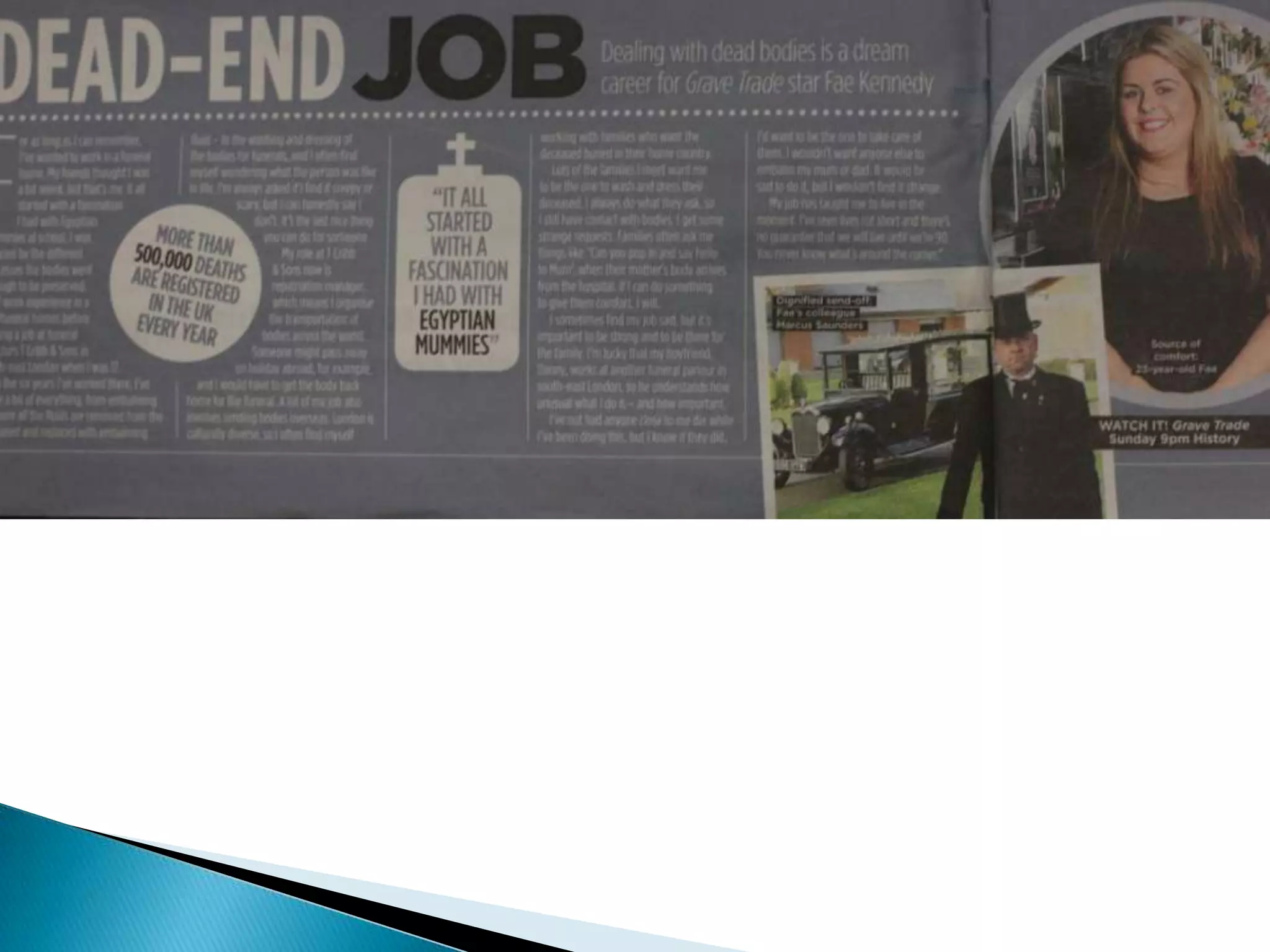
 The culture shock article does not feature many
others but the dead-end job article features
another shape that contains a fact, whilst the
webcam job article contains a lot of small images
and animations that surround the main image,
making it appear more professional and detailed

Ancillary task 2 research

  • 2.
     The internetwas a very limited resource for researching existing double page spreads in a TV listing magazine  Because of this I actually primarily researched for these by purchasing some TV listing magazines and looking for them first hand  This was also very difficult to research as I looked through a number of TV listing magazines and still could not find any double page spreads for a documentary  The closest to this that I could find in my research was a double page spread that consisted of 3 smaller articles advertising documentaries
  • 7.
     You canimmediately see a similar layout style from the picture I have taken of the double page spread  All three of these documentary articles have a primary background colour, which are contrasting to easily identify the different adverts  The smaller advertisements use brighter colours, whilst the main one is a lot more simple and uses plain white for its background but features quite a loud colour of green to make headings and important information stand out on this white background. This allows the key parts of the article to become easily identifiable and catch the readers attention easily
  • 8.
     Unlike alot of common advertisements, the headings for these documentary adverts do not include the name of the program, they all contain a small quote that is often tongue-in-cheek or a pun with reference to the topic of the documentary  This technique is used for the heading as the heading is the one part of the advert that everyone reads when flicking through a TV listings magazine, therefore adding a humorous sense to it allows the reader to take an interest to the article if they find the heading funny or clever
  • 9.
     All threearticles contain a main image that are mid close- ups of the main character that the documentary focuses on, we will have to differentiate this for our documentary as there is no predominant leading role in our documentary, but still use the same type of image  There are also other smaller images used depending on the size of the article, for example the largest article has 3 other small images  Mise-en-scene is a very crucial part of the imagery, as all images across this double page spread contain mise-en- scene that makes it a lot easier for consumer to identify the topic of the documentary. For example the picture of Reggie Yates clearly shows the African slums behind him in the main image for the article regarding his documentary about life in South Africa
  • 10.
     All threeof these examples are very basic with their straplines, as it does not need to contain any detail and does not need to funny clever unlike the heading  They all contain a short and simple sentence that gives the reader a good idea of what the documentary is actually about  This is the first thing that readers will read after the heading, therefore it is essential that it is not misleading and does not seem boring at all as it could determine whether or not people read the rest of the article or take an interest in the documentary
  • 11.
     The writeups are very similar for all three of these examples and I have noticed a few basic trends  All of the write ups begin by stating a general facts regarding the topic of the documentary  They all feature at least one interview that always includes the main character of the documentary, this take sup a large proportion of the write up  Describing the actual documentary itself is very brief, as it is important that they do not give away any spoilers that are to be seen in the documentary and cannot be spoken about without ruining it
  • 12.
     There areseveral additional features that are only small but have a big impact on the appearance of the article  A common case of this are black circles that contain short, interesting facts regarding the documentary  The culture shock article does not feature many others but the dead-end job article features another shape that contains a fact, whilst the webcam job article contains a lot of small images and animations that surround the main image, making it appear more professional and detailed