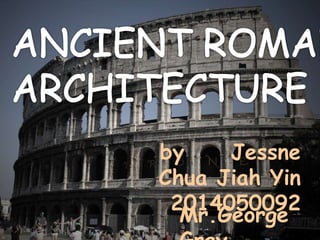
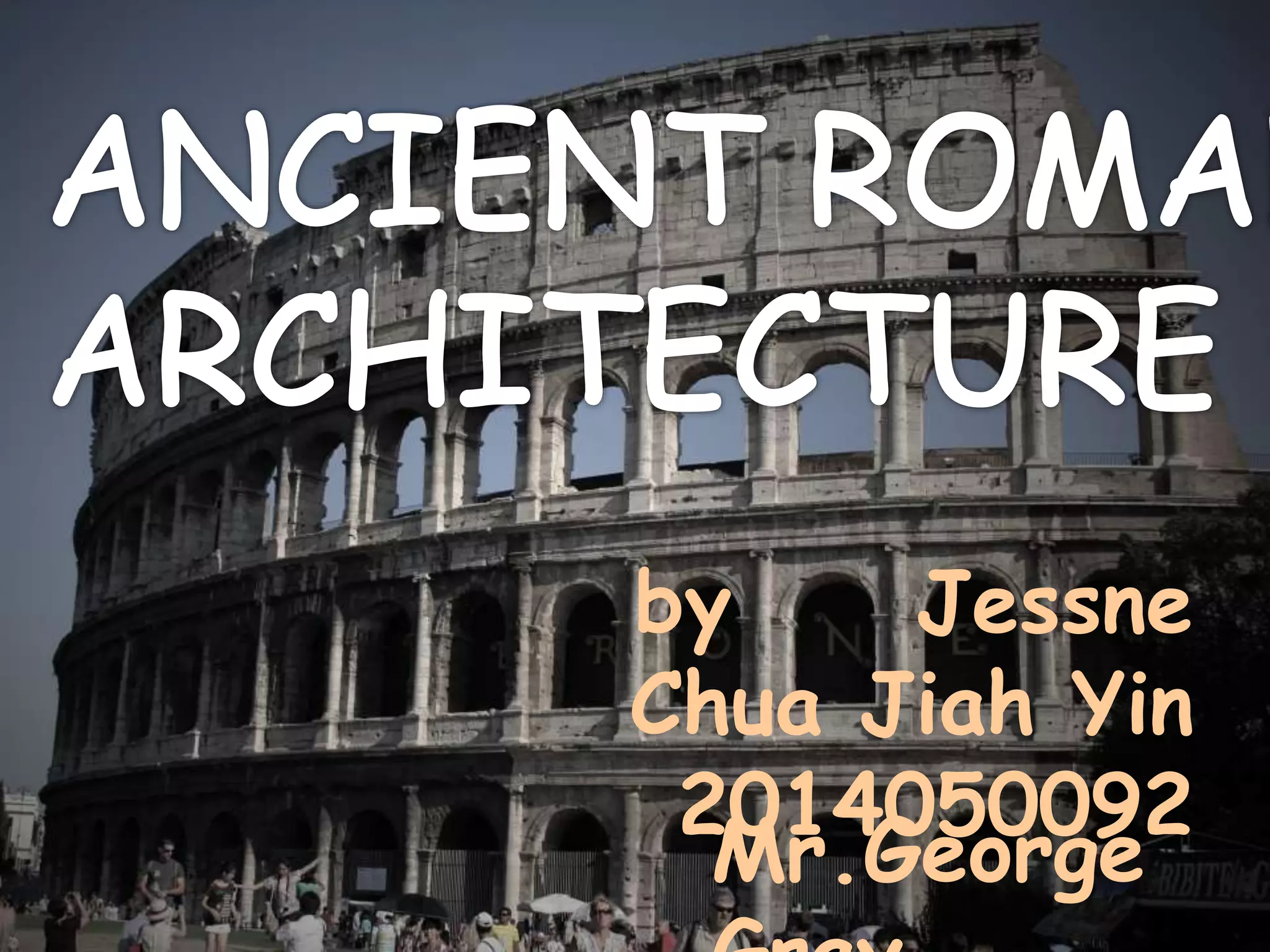
by Jessne
Chua Jiah Yin
2014050092
Mr.George
Ancient Roman architecture adopted many different aspects
of Ancient Greek architecture creating a new architectural
style. The Romans were indebted to their Etruscan neighbors
and forefathers who supplied them with a wealth of
knowledge essential for future architectural solutions.
The Romans were also known to employ Greek craftsmen
and engineers to construct Roman buildings. Roman
architecture flourished throughout the Empire during
the Pax Romana.
The Roman use of the arch and their improvements in the use of
concrete and bricks facilitated the building of the many
aqueducts throughout the empire. The same concepts produced
numerous bridges, some of which are still in daily use. The
Romans first adopted the arch from the Etruscans, and
implemented it in their own building. An arch transmits load
evenly and is still commonly used in architecture today.
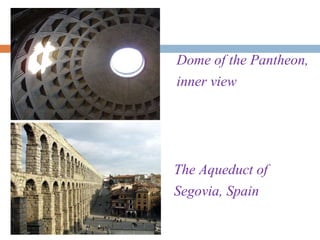
Dome of the Pantheon,
inner view
The Aqueduct of
Segovia, Spain
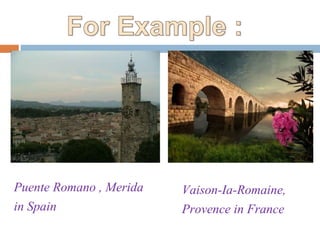
Puente Romano , Merida
in Spain
Vaison-Ia-Romaine,
Provence in France
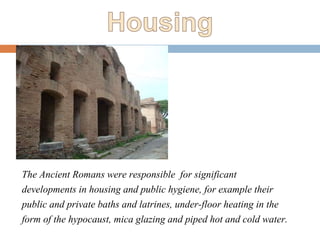
The Ancient Romans were responsible for significant
developments in housing and public hygiene, for example their
public and private baths and latrines, under-floor heating in the
form of the hypocaust, mica glazing and piped hot and cold water.
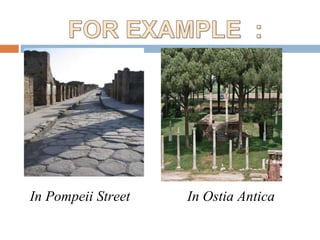
In Pompeii Street In Ostia Antica
All Roman cities had at least one Thermae, a popular facility
for public bathing, exercising and socializing. Exercise might
include wrestling and weight-lifting, as well as swimming.
Romans did not wash with soap and water as we do now.
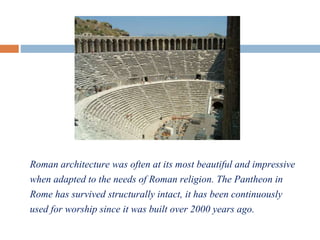
Roman architecture was often at its most beautiful and impressive
when adapted to the needs of Roman religion. The Pantheon in
Rome has survived structurally intact, it has been continuously
used for worship since it was built over 2000 years ago.
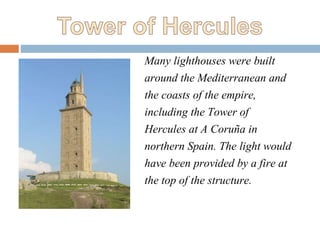
Many lighthouses were built
around the Mediterranean and
the coasts of the empire,
including the Tower of
Hercules at A CoruĂąa in
northern Spain. The light would
have been provided by a fire at
the top of the structure.
 Tile covered concrete quickly supplanted marble as the
primary building material and more daring buildings
soon followed with great pillars supporting broad arches
and domes rather than dense lines of columns suspending
flat architraves.
 Roman architects perfected Roman concrete and used it
in buildings where it could stand on its own and support a
great deal of weight.
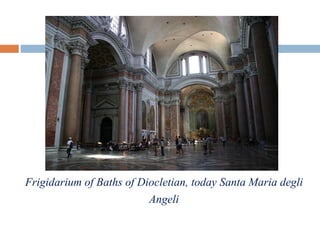
Frigidarium of Baths of Diocletian, today Santa Maria degli
Angeli
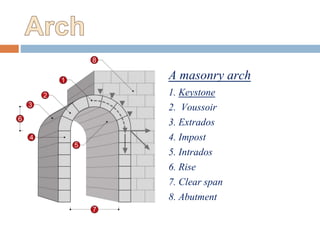
A masonry arch
1. Keystone
2. Voussoir
3. Extrados
4. Impost
5. Intrados
6. Rise
7. Clear span
8. Abutment
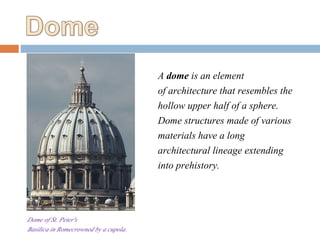
Dome of St. Peter's
Basilica in Romecrowned by a cupola.
A dome is an element
of architecture that resembles the
hollow upper half of a sphere.
Dome structures made of various
materials have a long
architectural lineage extending
into prehistory.
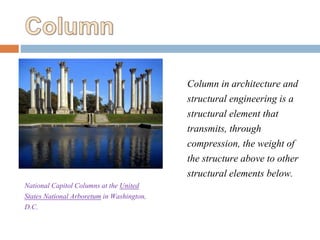
National Capitol Columns at the United
States National Arboretum in Washington,
D.C.
Column in architecture and
structural engineering is a
structural element that
transmits, through
compression, the weight of
the structure above to other
structural elements below.
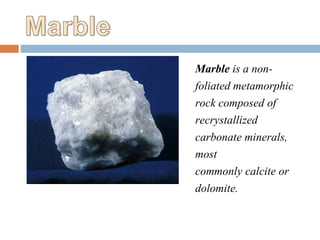
Marble is a non-
foliated metamorphic
rock composed of
recrystallized
carbonate minerals,
most
commonly calcite or
dolomite.
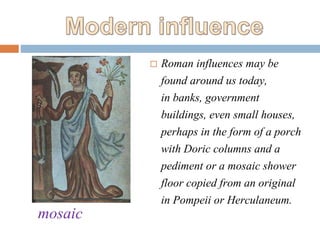
 Roman influences may be
found around us today,
in banks, government
buildings, even small houses,
perhaps in the form of a porch
with Doric columns and a
pediment or a mosaic shower
floor copied from an original
in Pompeii or Herculaneum.
mosaic
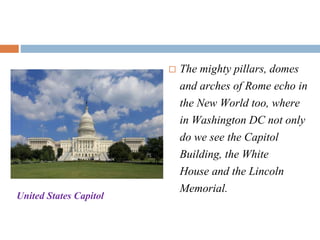
 The mighty pillars, domes
and arches of Rome echo in
the New World too, where
in Washington DC not only
do we see the Capitol
Building, the White
House and the Lincoln
Memorial.United States Capitol
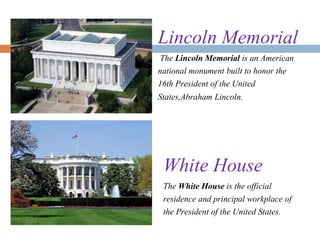
Lincoln Memorial
The Lincoln Memorial is an American
national monument built to honor the
16th President of the United
States,Abraham Lincoln.
White House
The White House is the official
residence and principal workplace of
the President of the United States.
I like about the housing because it is very
interesting and the vaults and arches, together
with a sound knowledge of building materials,
enabled them to achieve unprecedented successes
in the construction of imposing structures for
public use.
Ancient Roman architecture
http://en.wikipedia.org/wiki/Roman_architecture
THANK YOU

Ancient roman

  • 1.
    by Jessne Chua JiahYin 2014050092 Mr.George
  • 2.
    Ancient Roman architectureadopted many different aspects of Ancient Greek architecture creating a new architectural style. The Romans were indebted to their Etruscan neighbors and forefathers who supplied them with a wealth of knowledge essential for future architectural solutions. The Romans were also known to employ Greek craftsmen and engineers to construct Roman buildings. Roman architecture flourished throughout the Empire during the Pax Romana.
  • 3.
    The Roman useof the arch and their improvements in the use of concrete and bricks facilitated the building of the many aqueducts throughout the empire. The same concepts produced numerous bridges, some of which are still in daily use. The Romans first adopted the arch from the Etruscans, and implemented it in their own building. An arch transmits load evenly and is still commonly used in architecture today.
  • 4.
    Dome of thePantheon, inner view The Aqueduct of Segovia, Spain
  • 5.
    Puente Romano ,Merida in Spain Vaison-Ia-Romaine, Provence in France
  • 6.
    The Ancient Romanswere responsible for significant developments in housing and public hygiene, for example their public and private baths and latrines, under-floor heating in the form of the hypocaust, mica glazing and piped hot and cold water.
  • 7.
    In Pompeii StreetIn Ostia Antica
  • 8.
    All Roman citieshad at least one Thermae, a popular facility for public bathing, exercising and socializing. Exercise might include wrestling and weight-lifting, as well as swimming. Romans did not wash with soap and water as we do now.
  • 9.
    Roman architecture wasoften at its most beautiful and impressive when adapted to the needs of Roman religion. The Pantheon in Rome has survived structurally intact, it has been continuously used for worship since it was built over 2000 years ago.
  • 10.
    Many lighthouses werebuilt around the Mediterranean and the coasts of the empire, including the Tower of Hercules at A CoruĂąa in northern Spain. The light would have been provided by a fire at the top of the structure.
  • 11.
     Tile coveredconcrete quickly supplanted marble as the primary building material and more daring buildings soon followed with great pillars supporting broad arches and domes rather than dense lines of columns suspending flat architraves.  Roman architects perfected Roman concrete and used it in buildings where it could stand on its own and support a great deal of weight.
  • 12.
    Frigidarium of Bathsof Diocletian, today Santa Maria degli Angeli
  • 13.
    A masonry arch 1.Keystone 2. Voussoir 3. Extrados 4. Impost 5. Intrados 6. Rise 7. Clear span 8. Abutment
  • 14.
    Dome of St.Peter's Basilica in Romecrowned by a cupola. A dome is an element of architecture that resembles the hollow upper half of a sphere. Dome structures made of various materials have a long architectural lineage extending into prehistory.
  • 15.
    National Capitol Columnsat the United States National Arboretum in Washington, D.C. Column in architecture and structural engineering is a structural element that transmits, through compression, the weight of the structure above to other structural elements below.
  • 16.
    Marble is anon- foliated metamorphic rock composed of recrystallized carbonate minerals, most commonly calcite or dolomite.
  • 17.
     Roman influencesmay be found around us today, in banks, government buildings, even small houses, perhaps in the form of a porch with Doric columns and a pediment or a mosaic shower floor copied from an original in Pompeii or Herculaneum. mosaic
  • 18.
     The mightypillars, domes and arches of Rome echo in the New World too, where in Washington DC not only do we see the Capitol Building, the White House and the Lincoln Memorial.United States Capitol
  • 19.
    Lincoln Memorial The LincolnMemorial is an American national monument built to honor the 16th President of the United States,Abraham Lincoln. White House The White House is the official residence and principal workplace of the President of the United States.
  • 20.
    I like aboutthe housing because it is very interesting and the vaults and arches, together with a sound knowledge of building materials, enabled them to achieve unprecedented successes in the construction of imposing structures for public use.
  • 21.
  • 22.