One of the many great 
mathematical discoveries of 
Archimedes was the 
relationship between the 
surface area of a cylinder 
and a sphere. Archimedes 
discovered that a sphere 
that has the same diameter 
as the height and width of 
the cylinder is 2/3 of the 
surface area of the cylinder
Archimedes’ first war 
invention was a claw that was 
said to be able to lift ships out 
of the water and then smash 
them. From Pappus we have 
learned that in connection with 
his discovery of the solution to 
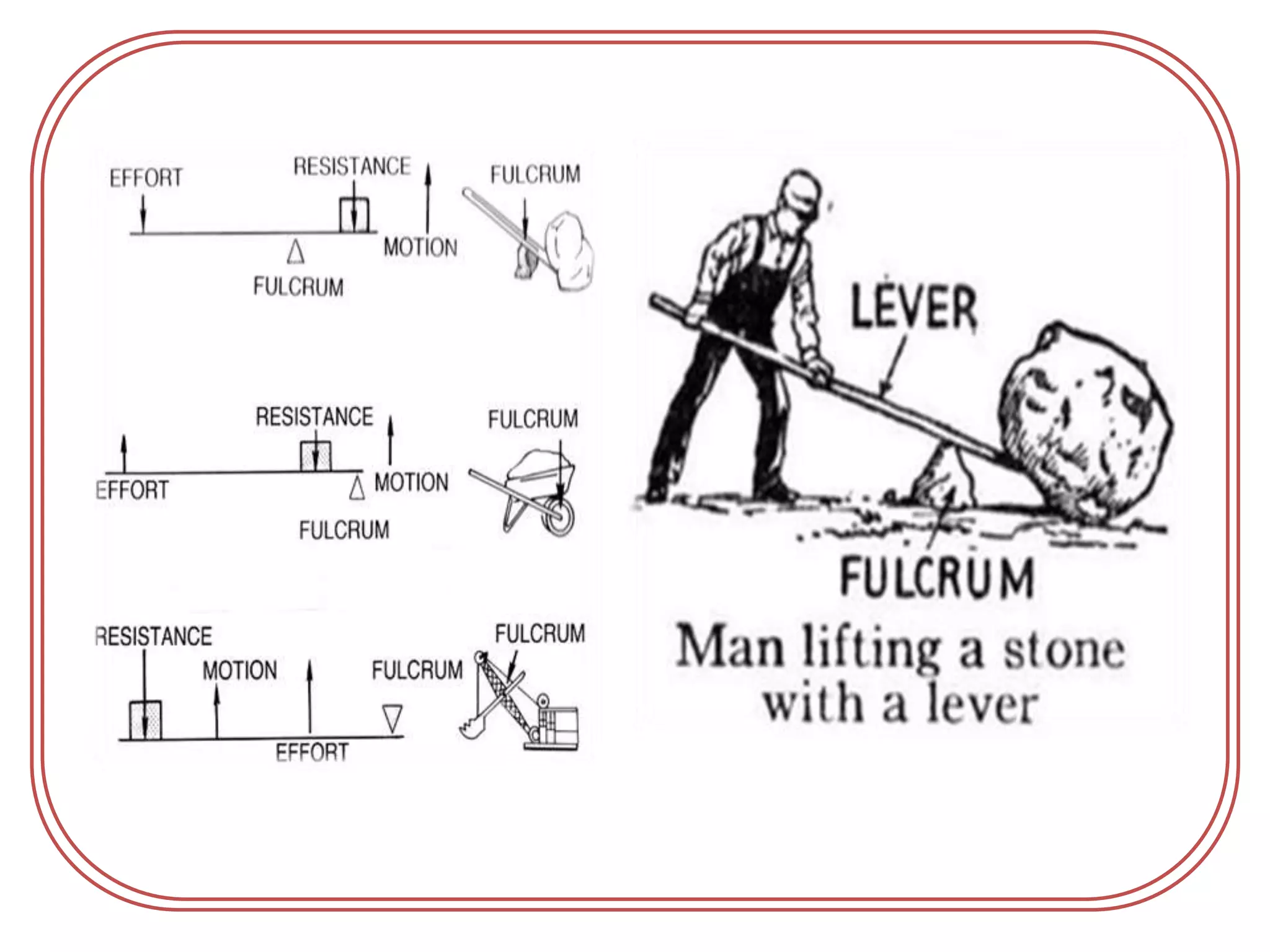
the problem of moving a given 
weight by a given force, that 
Archimedes upon applying the 
law of the lever is to have said, 
“Give me a place to stand on, 
and I can move the earth.”
Archimedes taking his bath on day, he 
noticed that that the level of the water in 
the tub rose as he got in, and he had the 
sudden inspiration that he could use this 
effect to determine the volume (and 
therefore the density) of the crown. In 
his excitement, he apparently rushed out 
of the bath and ran naked through the 
streets shouting, "Eureka! Eureka!" (“I 
found it! I found it!”). This gave rise to 
what has become known as Archimedes’ 
Principle: an object is immersed in a 
fluid is buoyed up by a force equal to the 
weight of the fluid displaced by the 
object.
The circumference of a circle is the actual 
length around the circle which is equal to 
360°. Pi (p) is the number needed to 
compute the circumference of the circle. 
p is equal to 3.14. 
Pi is greek and has been around for over 
2000 years! 
In circles the AREA is equal to 3.14 (p) times 
the radius (r) to the power of 2. 
Thus the formula looks like: 
A= pr2. 
In circles the circumference is 3.14 (p) times 
the Diameter. 
Thus the formula looks like: 
2pr or pd. 
Lines in Circles. 
AB = Diameter, 
OC = Radius, 
ED = Chord, 
FG = Tangent, 
EHD = Arc, 
ADB = Semicircle, 
OCB = Sector, 
COB = Central Angle.
Plate portraying soldiers 
using a compass to measure 
the barrel of a cannon. Jim 
Bennet, Stephen Johnston 
(edited by), The Geometry of 
War (1500-1750), Oxford, 
1996, p. 15. 
Using instruments was 
indispensable in the military 
field, where the technology 
of firearms called for 
increasingly more precise 
mathematical knowledge.al
This 19th century model is based on a 
drawing made by Galileo's (1564-1642) 
friend and biographer Viviani (1622- 
1703) of a pendulum clock, which 
Galileo designed just before his death 
and which was partly constructed by 
his son Vincenzio in 1649. It represents 
the first known attempt to apply a 
pendulum to control the rate of a 
clock. He recognised the potential of 
using a pendulum to control a clock but 
died before his work could be 
completed.
Box for mathematical 
instruments (17th ca.), 
Florence, Istituto e Museo di 
Storia della Scienza . 
This box contains a set of 
mathematical instruments 
dating from the 17th century, 
coming from the Medicean 
collections. The interior, 
divided into nineteen 
compartments, now holds 
thirteen pieces, all made of 
brass: various instruments for 
drawing, a pair of knives and 
a proportional compass.
Mordente’s compass (1591), 
Florence, Istituto e Museo di 
Storia della Scienza. 
Invented by Fabrizio 
Mordente (1532 – c. 1608) 
to measure the smallest 
fraction of a degree, this 
particular proportional 
compass with eight points is 
distinguished by the 
presence of sliding cursors. 
Based on their positions, it 
was possible to establish the 
proportions between lines, 
geometric figures and solid 
bodies.
Geometric and military 
compass of Galileo Galilei 
(c. 1606), Florence, 
Istituto e Museo di Storia 
della Scienza 
The Istituto e Museo di 
Storia della Scienza of 
Florence possesses one of 
the very rare surviving 
examples of Galileo’s 
compass, probably the 
one donated by the Pisan 
scientist to Cosimo II along 
with a printed copy of the 
Operazioni del compasso 
geometrico et militare.
3-Dimensional figures 
Leonardo da Vinci kept also busy with complex 
3-dimesional geometric figures. Leonardo drew these 
in all their variants. In his period in Florence he was 
already introduced to the perspective geometry . The 
abstract perfection from these complex figures must 
have charmed and fascinated him.
The rhombicuboctahedron, as 
published in De divina proportione.
Tycho Instrument – Sextant
A calculating machine in 
the 17th century. 
In 1888, William S. Burroughs 
patented his first calculator. Like 
the Comptometer, it was really an 
adder-subtracter, but it could 
multiply and divide via repeated 
additions and subtractions
1876 Centennial 
Expo Geo B Grants 
calculating 
machine. 
In 1851, J. W. Nystroms 
calculating machine.
The Arithmetical machine (pictured) is one of the 
first mechanical calculating devices known to 
exist.
Magnetic compass 
A Geometrical 
Instrument used in 
measuring angles.
Earliest surviving 
Astrolabes…
Ancient Water 
Clock in Quanat 
of Gonabad, 
500 years ago.
The World’s oldest known 
measuring device, The Lebombo 
Bone (35,000 BC) with 29 lines, 
Africa.
Water Clock Sun Dial
A Sun Dial, Dublin in 1742
Ancient mathematics
Ancient mathematics

Ancient mathematics

  • 2.
    One of themany great mathematical discoveries of Archimedes was the relationship between the surface area of a cylinder and a sphere. Archimedes discovered that a sphere that has the same diameter as the height and width of the cylinder is 2/3 of the surface area of the cylinder
  • 3.
    Archimedes’ first war invention was a claw that was said to be able to lift ships out of the water and then smash them. From Pappus we have learned that in connection with his discovery of the solution to the problem of moving a given weight by a given force, that Archimedes upon applying the law of the lever is to have said, “Give me a place to stand on, and I can move the earth.”
  • 5.
    Archimedes taking hisbath on day, he noticed that that the level of the water in the tub rose as he got in, and he had the sudden inspiration that he could use this effect to determine the volume (and therefore the density) of the crown. In his excitement, he apparently rushed out of the bath and ran naked through the streets shouting, "Eureka! Eureka!" (“I found it! I found it!”). This gave rise to what has become known as Archimedes’ Principle: an object is immersed in a fluid is buoyed up by a force equal to the weight of the fluid displaced by the object.
  • 6.
    The circumference ofa circle is the actual length around the circle which is equal to 360°. Pi (p) is the number needed to compute the circumference of the circle. p is equal to 3.14. Pi is greek and has been around for over 2000 years! In circles the AREA is equal to 3.14 (p) times the radius (r) to the power of 2. Thus the formula looks like: A= pr2. In circles the circumference is 3.14 (p) times the Diameter. Thus the formula looks like: 2pr or pd. Lines in Circles. AB = Diameter, OC = Radius, ED = Chord, FG = Tangent, EHD = Arc, ADB = Semicircle, OCB = Sector, COB = Central Angle.
  • 7.
    Plate portraying soldiers using a compass to measure the barrel of a cannon. Jim Bennet, Stephen Johnston (edited by), The Geometry of War (1500-1750), Oxford, 1996, p. 15. Using instruments was indispensable in the military field, where the technology of firearms called for increasingly more precise mathematical knowledge.al
  • 8.
    This 19th centurymodel is based on a drawing made by Galileo's (1564-1642) friend and biographer Viviani (1622- 1703) of a pendulum clock, which Galileo designed just before his death and which was partly constructed by his son Vincenzio in 1649. It represents the first known attempt to apply a pendulum to control the rate of a clock. He recognised the potential of using a pendulum to control a clock but died before his work could be completed.
  • 9.
    Box for mathematical instruments (17th ca.), Florence, Istituto e Museo di Storia della Scienza . This box contains a set of mathematical instruments dating from the 17th century, coming from the Medicean collections. The interior, divided into nineteen compartments, now holds thirteen pieces, all made of brass: various instruments for drawing, a pair of knives and a proportional compass.
  • 10.
    Mordente’s compass (1591), Florence, Istituto e Museo di Storia della Scienza. Invented by Fabrizio Mordente (1532 – c. 1608) to measure the smallest fraction of a degree, this particular proportional compass with eight points is distinguished by the presence of sliding cursors. Based on their positions, it was possible to establish the proportions between lines, geometric figures and solid bodies.
  • 11.
    Geometric and military compass of Galileo Galilei (c. 1606), Florence, Istituto e Museo di Storia della Scienza The Istituto e Museo di Storia della Scienza of Florence possesses one of the very rare surviving examples of Galileo’s compass, probably the one donated by the Pisan scientist to Cosimo II along with a printed copy of the Operazioni del compasso geometrico et militare.
  • 12.
    3-Dimensional figures Leonardoda Vinci kept also busy with complex 3-dimesional geometric figures. Leonardo drew these in all their variants. In his period in Florence he was already introduced to the perspective geometry . The abstract perfection from these complex figures must have charmed and fascinated him.
  • 14.
    The rhombicuboctahedron, as published in De divina proportione.
  • 16.
  • 19.
    A calculating machinein the 17th century. In 1888, William S. Burroughs patented his first calculator. Like the Comptometer, it was really an adder-subtracter, but it could multiply and divide via repeated additions and subtractions
  • 20.
    1876 Centennial ExpoGeo B Grants calculating machine. In 1851, J. W. Nystroms calculating machine.
  • 21.
    The Arithmetical machine(pictured) is one of the first mechanical calculating devices known to exist.
  • 23.
    Magnetic compass AGeometrical Instrument used in measuring angles.
  • 24.
  • 25.
    Ancient Water Clockin Quanat of Gonabad, 500 years ago.
  • 28.
    The World’s oldestknown measuring device, The Lebombo Bone (35,000 BC) with 29 lines, Africa.
  • 30.
  • 31.
    A Sun Dial,Dublin in 1742