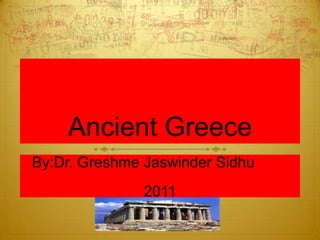
Ancient Greece
By:Dr. Greshme Jaswinder Sidhu
               2011
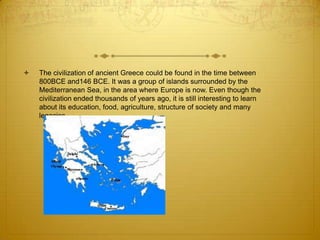
   The civilization of ancient Greece could be found in the time between
    800BCE and146 BCE. It was a group of islands surrounded by the
    Mediterranean Sea, in the area where Europe is now. Even though the
    civilization ended thousands of years ago, it is still interesting to learn
    about its education, food, agriculture, structure of society and many
    legacies.
Education
Education was very important in ancient Greece. Children in
Athens were educated to fill the adult’s role in society. Boys
were allowed to go school but girls were not. Instead, girls
were taught how to dance and play music by their mothers.
Boys started school at the age of 6. They were taught how
to read and write, and they studied science, math,
geography and history. They wrote on wax boards with a
piece of wood or bone. The boys were taught by tutors, who
were usually slaves. In Sparta, boys had a different kind of
education. Boys there learned how to be soldiers. Spartan
girls learned how to be fit and strong, too. Therefore, in both
Sparta and Athens, the ancient Greeks believed it was
important to educate their children.
Food & Agriculture
In ancient Greece, food was an important part of life for both
rich and poor people. About one fifth of the land was used for
farming. They ate olives and grapes as they were easy to
grow on the land. They also ate cheese made from goat’s
milk and bread made from wheat. However, the soil was poor
and rocky so it was difficult to grow enough grass for many
animals to eat. They had a wet winter followed by a hot, dry
summer which also meant few crops could grow. The rich
people bought food in the market and the poor people ate
what they grew. For breakfast, everyone ate bread dipped in
wine. The most common foods the Greeks ate were fish,
bread, olives, grapes, cheese, vegetables and fruits. As you
can see, the land in ancient Greece had a big impact of the
types of foods that were eaten.
Structure of Society
 In ancient Greece society was structured very differently from
 today. In Athens, they had the system of democracy but only men
 could vote and only when they were over the age of twenty. They
 would gather together in an assembly to debate ideas and vote on
 decisions for the civilizations. Also, men were the only ones who
 could become actors and believe it or not, men did all the
 shopping, too. Rich men went to parties with other wealthy and
 important men. Young boys were also more important than girls in
 ancient Greece. Girls married at a young age. They were ruled by
 their fathers and once they got married they were ruled by their
 husbands. Girls stayed home and took good care of their children
 while their husbands went out in public. Therefore, it seems that
 the ancient Greek men and women had different roles in society
 than we have today.
Legacies
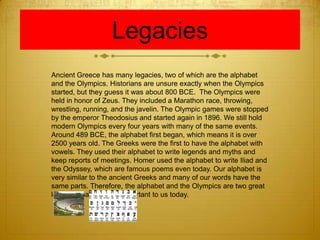
Ancient Greece has many legacies, two of which are the alphabet
and the Olympics. Historians are unsure exactly when the Olympics
started, but they guess it was about 800 BCE. The Olympics were
held in honor of Zeus. They included a Marathon race, throwing,
wrestling, running, and the javelin. The Olympic games were stopped
by the emperor Theodosius and started again in 1896. We still hold
modern Olympics every four years with many of the same events.
Around 489 BCE, the alphabet first began, which means it is over
2500 years old. The Greeks were the first to have the alphabet with
vowels. They used their alphabet to write legends and myths and
keep reports of meetings. Homer used the alphabet to write Iliad and
the Odyssey, which are famous poems even today. Our alphabet is
very similar to the ancient Greeks and many of our words have the
same parts. Therefore, the alphabet and the Olympics are two great
legacies that are very important to us today.
In conclusion, you now know about ancient Greece and it great legacies. This report
has described Greek food, agriculture and the structure of society. It is very important
to know that our language and lots of traditions that we have today came from ancient
Greece.
Reference List
Author                                   Date                                   Title

Linda Bailey                             2002                      Ancient Greece

Loverance and Wood                       1992                      Ancient Greece

Kaminl Rehanduri                         1995                     The Great History Search

Simon Adams                              2005                      Alexander

Marnishanks, Consuitant, Michaelshanks    2007                    Ancient Greece

Online sources

20-10-11                                   www. bbc. co. uk

20-10-11                                   www. biss. grade4. wikispaces. net

20-10-11                                    www. History for kids.org

Ancient greece report

  • 1.
    Ancient Greece By:Dr. GreshmeJaswinder Sidhu 2011
  • 2.
    The civilization of ancient Greece could be found in the time between 800BCE and146 BCE. It was a group of islands surrounded by the Mediterranean Sea, in the area where Europe is now. Even though the civilization ended thousands of years ago, it is still interesting to learn about its education, food, agriculture, structure of society and many legacies.
  • 3.
    Education Education was veryimportant in ancient Greece. Children in Athens were educated to fill the adult’s role in society. Boys were allowed to go school but girls were not. Instead, girls were taught how to dance and play music by their mothers. Boys started school at the age of 6. They were taught how to read and write, and they studied science, math, geography and history. They wrote on wax boards with a piece of wood or bone. The boys were taught by tutors, who were usually slaves. In Sparta, boys had a different kind of education. Boys there learned how to be soldiers. Spartan girls learned how to be fit and strong, too. Therefore, in both Sparta and Athens, the ancient Greeks believed it was important to educate their children.
  • 4.
    Food & Agriculture Inancient Greece, food was an important part of life for both rich and poor people. About one fifth of the land was used for farming. They ate olives and grapes as they were easy to grow on the land. They also ate cheese made from goat’s milk and bread made from wheat. However, the soil was poor and rocky so it was difficult to grow enough grass for many animals to eat. They had a wet winter followed by a hot, dry summer which also meant few crops could grow. The rich people bought food in the market and the poor people ate what they grew. For breakfast, everyone ate bread dipped in wine. The most common foods the Greeks ate were fish, bread, olives, grapes, cheese, vegetables and fruits. As you can see, the land in ancient Greece had a big impact of the types of foods that were eaten.
  • 5.
    Structure of Society In ancient Greece society was structured very differently from today. In Athens, they had the system of democracy but only men could vote and only when they were over the age of twenty. They would gather together in an assembly to debate ideas and vote on decisions for the civilizations. Also, men were the only ones who could become actors and believe it or not, men did all the shopping, too. Rich men went to parties with other wealthy and important men. Young boys were also more important than girls in ancient Greece. Girls married at a young age. They were ruled by their fathers and once they got married they were ruled by their husbands. Girls stayed home and took good care of their children while their husbands went out in public. Therefore, it seems that the ancient Greek men and women had different roles in society than we have today.
  • 6.
    Legacies Ancient Greece hasmany legacies, two of which are the alphabet and the Olympics. Historians are unsure exactly when the Olympics started, but they guess it was about 800 BCE. The Olympics were held in honor of Zeus. They included a Marathon race, throwing, wrestling, running, and the javelin. The Olympic games were stopped by the emperor Theodosius and started again in 1896. We still hold modern Olympics every four years with many of the same events. Around 489 BCE, the alphabet first began, which means it is over 2500 years old. The Greeks were the first to have the alphabet with vowels. They used their alphabet to write legends and myths and keep reports of meetings. Homer used the alphabet to write Iliad and the Odyssey, which are famous poems even today. Our alphabet is very similar to the ancient Greeks and many of our words have the same parts. Therefore, the alphabet and the Olympics are two great legacies that are very important to us today.
  • 7.
    In conclusion, younow know about ancient Greece and it great legacies. This report has described Greek food, agriculture and the structure of society. It is very important to know that our language and lots of traditions that we have today came from ancient Greece.
  • 8.
    Reference List Author Date Title Linda Bailey 2002 Ancient Greece Loverance and Wood 1992 Ancient Greece Kaminl Rehanduri 1995 The Great History Search Simon Adams 2005 Alexander Marnishanks, Consuitant, Michaelshanks 2007 Ancient Greece Online sources 20-10-11 www. bbc. co. uk 20-10-11 www. biss. grade4. wikispaces. net 20-10-11 www. History for kids.org