Lesson 2
Ancient Egypt
Egyptian Civilization Starting around
5500 BCE two major kingdoms
developed along the Nile. Historians call
them Upper Egypt and Lower Egypt.
Around 3200 BCE, Egypt was brought
together under one ruler—King Narmer
(sometimes called Menes). This is
recognized as the beginning of the
Ancient Egyptian Art Forms
A.Architecture
The greatest architectural achievements of
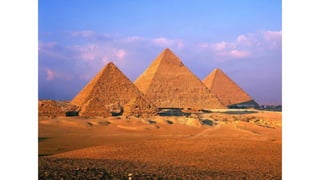
Ancient Egyptian were the pyramids. Pyramids
were built as tombs for the Pharaohs. The
pyramids of Egypt are the most amazing and
symbolic monuments of this civilization. There are
over 30 pyramids but the most important is the
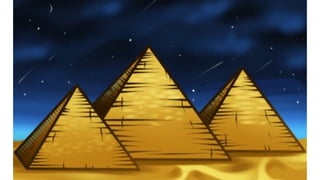
Great Pyramid of Giza. Pyramids of Giza It is the
most substantial ancient structure of the world.
The three pyramids are the funerary
structures of the three kings of the fourth
dynasty (2465 to 2575 BC) namely: Khufu
(Cheops) whom the Great Pyramid was
attributed to; Khafa (Chepren)whom the
pyramid next to the Great Pyramid is
attributed; and the smallest is attributed to
Menkaura (Mycerinus).
B. Sculpture
Egyptian sculptures widely used symbolic
elements such as: forms, hieroglyphics,
relative size, location, materials, color,
actions and gestures. Their tombs required
the most extensive used of sculpture.
Painted relief sculpture lined the wall of
pyramids. This is called a Stele, a carved
upright stone slab used as a monument.
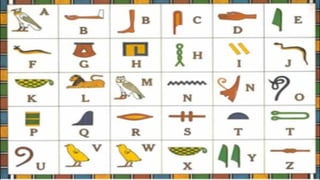
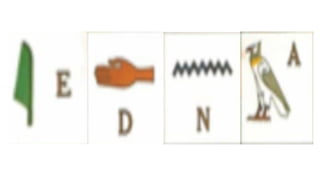
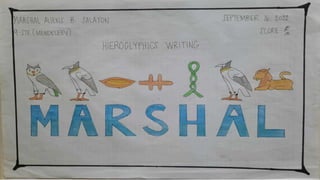
HIEROGLYPHICS WRITING –
is a system of writing that
employs characters instead
of words, it was used in
Ancient Egypt.
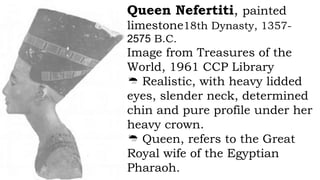
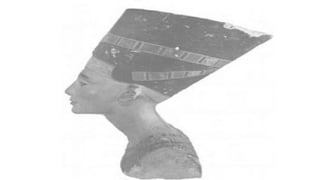
Queen Nefertiti, painted
limestone18th Dynasty, 1357-
2575 B.C.
Image from Treasures of the
World, 1961 CCP Library
 Realistic, with heavy lidded
eyes, slender neck, determined
chin and pure profile under her
heavy crown.
 Queen, refers to the Great
Royal wife of the Egyptian
Pharaoh.
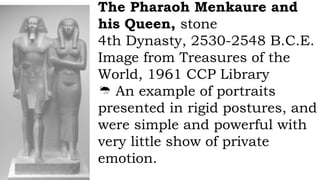
The Pharaoh Menkaure and
his Queen, stone
4th Dynasty, 2530-2548 B.C.E.
Image from Treasures of the
World, 1961 CCP Library
 An example of portraits
presented in rigid postures, and
were simple and powerful with
very little show of private
emotion.
C. Painting
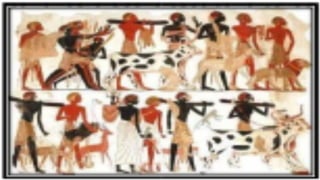
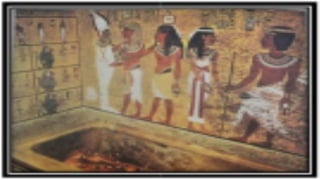
The purpose of Egyptian paintings is to
make the deceased afterlife place pleasant.
It includes journey to the underworld
introducing the deceased to the gods of the
underworld by their protective deities. It
emphasizes the importance of life after
death and the preservation of the
knowledge of the past.
Most paintings were highly stylize,
symbolic, and shows profile view of an
animal or a person. The main colors
used were red, black, blue, gold and
green. They are taken and derived
from mineral pigments that can
withstand strong sunlight without
fading.
ART ACTIVITY:
HIEROGLYPHICS WRITING
Arts-Quarter1Module 2 lesson 2 Ancient Egypt

Arts-Quarter1Module 2 lesson 2 Ancient Egypt

  • 1.
  • 2.
    Egyptian Civilization Startingaround 5500 BCE two major kingdoms developed along the Nile. Historians call them Upper Egypt and Lower Egypt. Around 3200 BCE, Egypt was brought together under one ruler—King Narmer (sometimes called Menes). This is recognized as the beginning of the
  • 3.
    Ancient Egyptian ArtForms A.Architecture The greatest architectural achievements of Ancient Egyptian were the pyramids. Pyramids were built as tombs for the Pharaohs. The pyramids of Egypt are the most amazing and symbolic monuments of this civilization. There are over 30 pyramids but the most important is the Great Pyramid of Giza. Pyramids of Giza It is the most substantial ancient structure of the world.
  • 4.
    The three pyramidsare the funerary structures of the three kings of the fourth dynasty (2465 to 2575 BC) namely: Khufu (Cheops) whom the Great Pyramid was attributed to; Khafa (Chepren)whom the pyramid next to the Great Pyramid is attributed; and the smallest is attributed to Menkaura (Mycerinus).
  • 6.
    B. Sculpture Egyptian sculptureswidely used symbolic elements such as: forms, hieroglyphics, relative size, location, materials, color, actions and gestures. Their tombs required the most extensive used of sculpture. Painted relief sculpture lined the wall of pyramids. This is called a Stele, a carved upright stone slab used as a monument.
  • 7.
    HIEROGLYPHICS WRITING – isa system of writing that employs characters instead of words, it was used in Ancient Egypt.
  • 9.
    Queen Nefertiti, painted limestone18thDynasty, 1357- 2575 B.C. Image from Treasures of the World, 1961 CCP Library  Realistic, with heavy lidded eyes, slender neck, determined chin and pure profile under her heavy crown.  Queen, refers to the Great Royal wife of the Egyptian Pharaoh.
  • 11.
    The Pharaoh Menkaureand his Queen, stone 4th Dynasty, 2530-2548 B.C.E. Image from Treasures of the World, 1961 CCP Library  An example of portraits presented in rigid postures, and were simple and powerful with very little show of private emotion.
  • 13.
    C. Painting The purposeof Egyptian paintings is to make the deceased afterlife place pleasant. It includes journey to the underworld introducing the deceased to the gods of the underworld by their protective deities. It emphasizes the importance of life after death and the preservation of the knowledge of the past.
  • 14.
    Most paintings werehighly stylize, symbolic, and shows profile view of an animal or a person. The main colors used were red, black, blue, gold and green. They are taken and derived from mineral pigments that can withstand strong sunlight without fading.
  • 17.