Bone Growth & Development”
Know This First!!
Know This First!!
• Osteo = Bone
• Intra = Between
• Perio = Outer
• Endo = Inner
• -blast, -cyte, -clast = types of cells
• Mesenchymal Cells = Stem Cells for bone,
cartilage, lymphatic structures and circulatory
structures.
(1) Bone Development
• Ossification = Bone Formation.
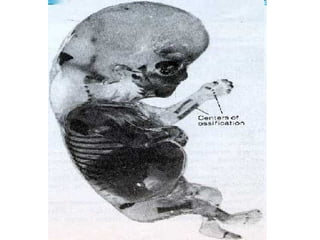
• Part 1: Prenatal Formation of Bony Skeleton
• Part 2: Postnatal Growth
(2)
(2) Prenatal Formation of
Prenatal Formation of
Bony Skeleton
Bony Skeleton
• Bone Tissue will replace Cartilage Tissue
• Initial Cartilage Tissue is resilient and flexible,
allowing for increased mitosis.
• THE STEPS:
– Intramembranous Ossification:
– Endochondral Ossification:
(3) Intramembranous Ossification
[~Begins Week 8]
• Cells produce fibrous membranes surrounding cartilage.
• Ossification Center forms within fibrous membrane.
• Osteoid (Nutrient + Osteoblast Mixture) secreted from
membrane.
• Osteoblasts develop into Osteocytes.
• Osteoid mineralizes around blood vessels, forming spongy
bone trabeculae.
• Remaining external Mesenchymal Cells form periosteum.
• Outer trabeculae lament and form thicker compact bone.
• Cranial Bones + Clavicles formed.
(4) Endochondral Ossification
[~Begins Week 10-12]
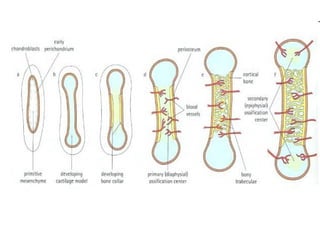
• Ossification Center forms within cartilage.
• Blood Vessels infiltrate, allowing for periosteum formation.
• Bone Collar forms around diaphysis of cartilage model.
• Osteoblasts within the Periosteum secrete osteoid, encasing
cartilage.
• Ossification Center calcifies, cartilage cells enlarge and die.
• Inner cavity invaded by periosteal bud (blood vessels, nerves,
osteoblasts).
• Osteoblasts surround dead cartilage cells, spongy bone trabeculae
formed.
• Innermost trabeculae devoured by osteoclasts, medullary cavity
formed.
• Outer trabeculae lament and form compact bone.
(5) Endochondral Ossification:
The Epiphyses
The Epiphyses
[~Begins Week 27-29]
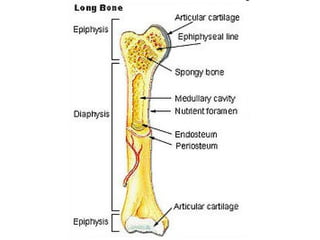
• Center (both inner and outer) of bone model
continues to ossify.
• Ends remain as cartilage, continue to undergo
mitosis  Elongation.
• Ossification was “chasing” Cartilage
Formation to the ends of the bone.
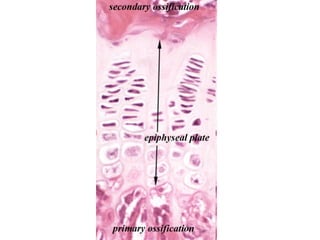
• Epiphyses ossify…. Cartilage remains on
outer surface of epiphyses and at Epiphyseal
Plate.
(6) Postnatal Bone Growth
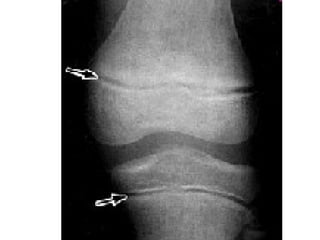
• Long bones lengthen from the center  ends.
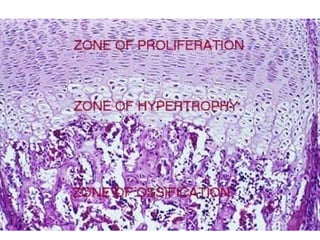
– Cartilage Cells w/in Epiphyseal Plate continue to divide =
Growth + Lengthening.
– Epiphyseal Cartilage Cells replaced by osteoblasts (the
chase continues).
– Eventually the “Plate” is replaced by bone.
• All bones become thicker.
– Periosteum continues to secrete osteoid on top of existing
bone.
– Osteoclasts on inside devour some bone.
– Increased bone deposition, Decreased bone removal.
– Thickness can increase due to increased bone stress!
• Some facial bones continue to grow… past
adolescence.
(7) Hormone Regulation
• During Infancy & Childhood:
– Growth Hormone stimulates epiphyseal growth
– Growth Hormone released by pituitary gland, but
controlled by thyroid hormones.
• During Puberty:
– Testosterone and Estrogen are released slowly, in
increasing amounts
• Initially promotes growth spurt and masculinization /
feminization
• Later induce epiphyseal closure, ending growth

ANAT_unit 4_bone growth and development notes.ppt

  • 1.
    Bone Growth &Development”
  • 2.
    Know This First!! KnowThis First!! • Osteo = Bone • Intra = Between • Perio = Outer • Endo = Inner • -blast, -cyte, -clast = types of cells • Mesenchymal Cells = Stem Cells for bone, cartilage, lymphatic structures and circulatory structures.
  • 3.
    (1) Bone Development (1)Bone Development • Ossification = Bone Formation. • Part 1: Prenatal Formation of Bony Skeleton • Part 2: Postnatal Growth
  • 4.
    (2) (2) Prenatal Formationof Prenatal Formation of Bony Skeleton Bony Skeleton • Bone Tissue will replace Cartilage Tissue • Initial Cartilage Tissue is resilient and flexible, allowing for increased mitosis. • THE STEPS: – Intramembranous Ossification: – Endochondral Ossification:
  • 5.
    (3) Intramembranous Ossification (3)Intramembranous Ossification [~Begins Week 8] • Cells produce fibrous membranes surrounding cartilage. • Ossification Center forms within fibrous membrane. • Osteoid (Nutrient + Osteoblast Mixture) secreted from membrane. • Osteoblasts develop into Osteocytes. • Osteoid mineralizes around blood vessels, forming spongy bone trabeculae. • Remaining external Mesenchymal Cells form periosteum. • Outer trabeculae lament and form thicker compact bone. • Cranial Bones + Clavicles formed.
  • 8.
    (4) Endochondral Ossification (4)Endochondral Ossification [~Begins Week 10-12] • Ossification Center forms within cartilage. • Blood Vessels infiltrate, allowing for periosteum formation. • Bone Collar forms around diaphysis of cartilage model. • Osteoblasts within the Periosteum secrete osteoid, encasing cartilage. • Ossification Center calcifies, cartilage cells enlarge and die. • Inner cavity invaded by periosteal bud (blood vessels, nerves, osteoblasts). • Osteoblasts surround dead cartilage cells, spongy bone trabeculae formed. • Innermost trabeculae devoured by osteoclasts, medullary cavity formed. • Outer trabeculae lament and form compact bone.
  • 10.
    (5) Endochondral Ossification: (5)Endochondral Ossification: The Epiphyses The Epiphyses [~Begins Week 27-29] • Center (both inner and outer) of bone model continues to ossify. • Ends remain as cartilage, continue to undergo mitosis  Elongation. • Ossification was “chasing” Cartilage Formation to the ends of the bone. • Epiphyses ossify…. Cartilage remains on outer surface of epiphyses and at Epiphyseal Plate.
  • 15.
    (6) Postnatal BoneGrowth (6) Postnatal Bone Growth • Long bones lengthen from the center  ends. – Cartilage Cells w/in Epiphyseal Plate continue to divide = Growth + Lengthening. – Epiphyseal Cartilage Cells replaced by osteoblasts (the chase continues). – Eventually the “Plate” is replaced by bone. • All bones become thicker. – Periosteum continues to secrete osteoid on top of existing bone. – Osteoclasts on inside devour some bone. – Increased bone deposition, Decreased bone removal. – Thickness can increase due to increased bone stress! • Some facial bones continue to grow… past adolescence.
  • 16.
    (7) Hormone Regulation (7)Hormone Regulation • During Infancy & Childhood: – Growth Hormone stimulates epiphyseal growth – Growth Hormone released by pituitary gland, but controlled by thyroid hormones. • During Puberty: – Testosterone and Estrogen are released slowly, in increasing amounts • Initially promotes growth spurt and masculinization / feminization • Later induce epiphyseal closure, ending growth