AN OUTCOME MEASURE FOR
SOCIAL GOALS OF INCLUSION
    BY MELISSA WELCH
BACKGROUND

• Written by Sharene L. Smoot in 2011
• Georgia College & State University
INTRODUCTION

• Increasing number of inclusion
  classrooms
• Social acceptance?
EVIDENCE

• Convenience sample:
 •   61 students with MID
 •   286 general education students
 •   Two high schools, five middle schools, one elementary
     school, and one preschool
 •   Five school districts in rural Georgia
EVIDENCE

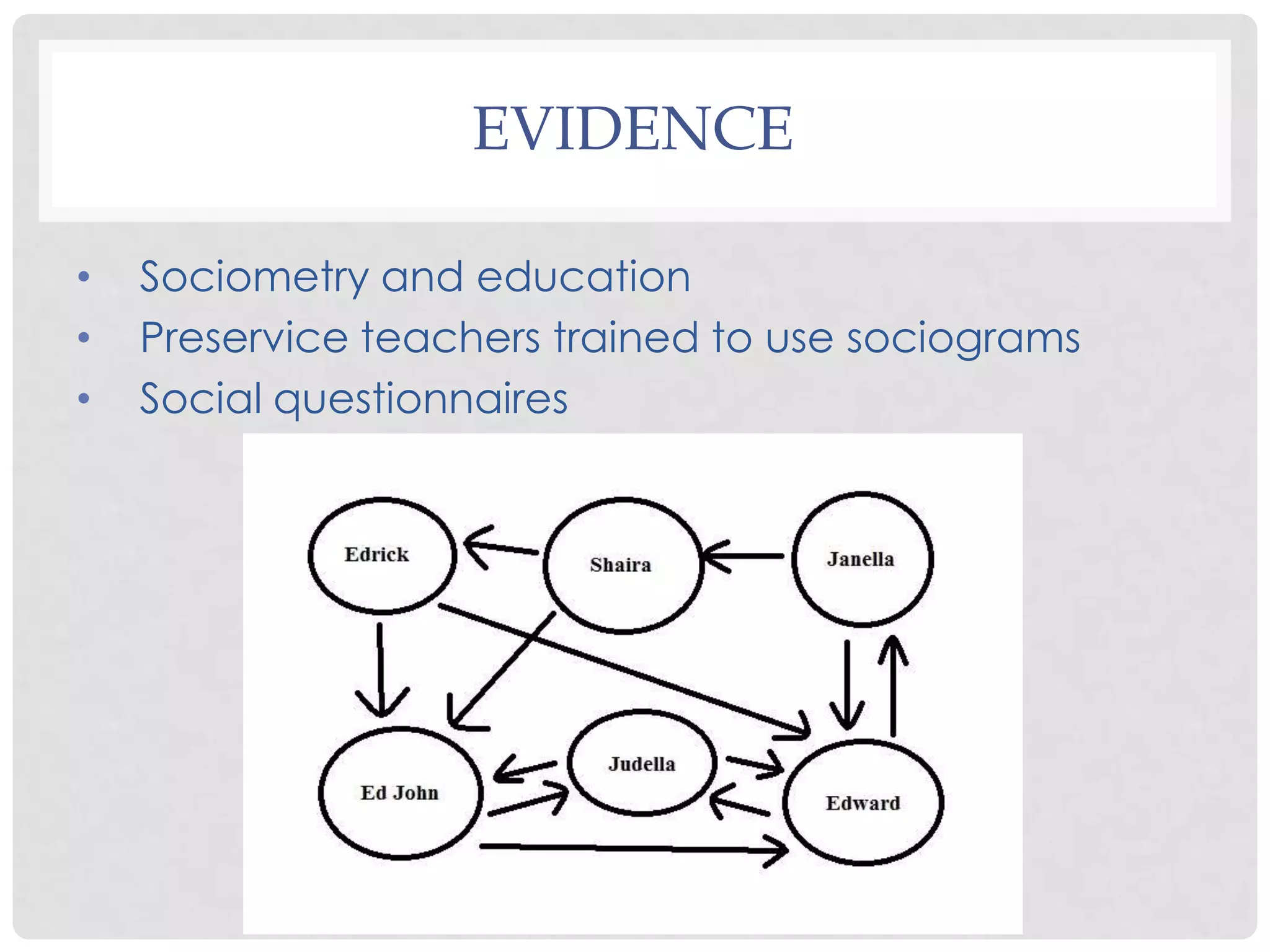
•   Sociometry and education
•   Preservice teachers trained to use sociograms
•   Social questionnaires
CONCLUSION

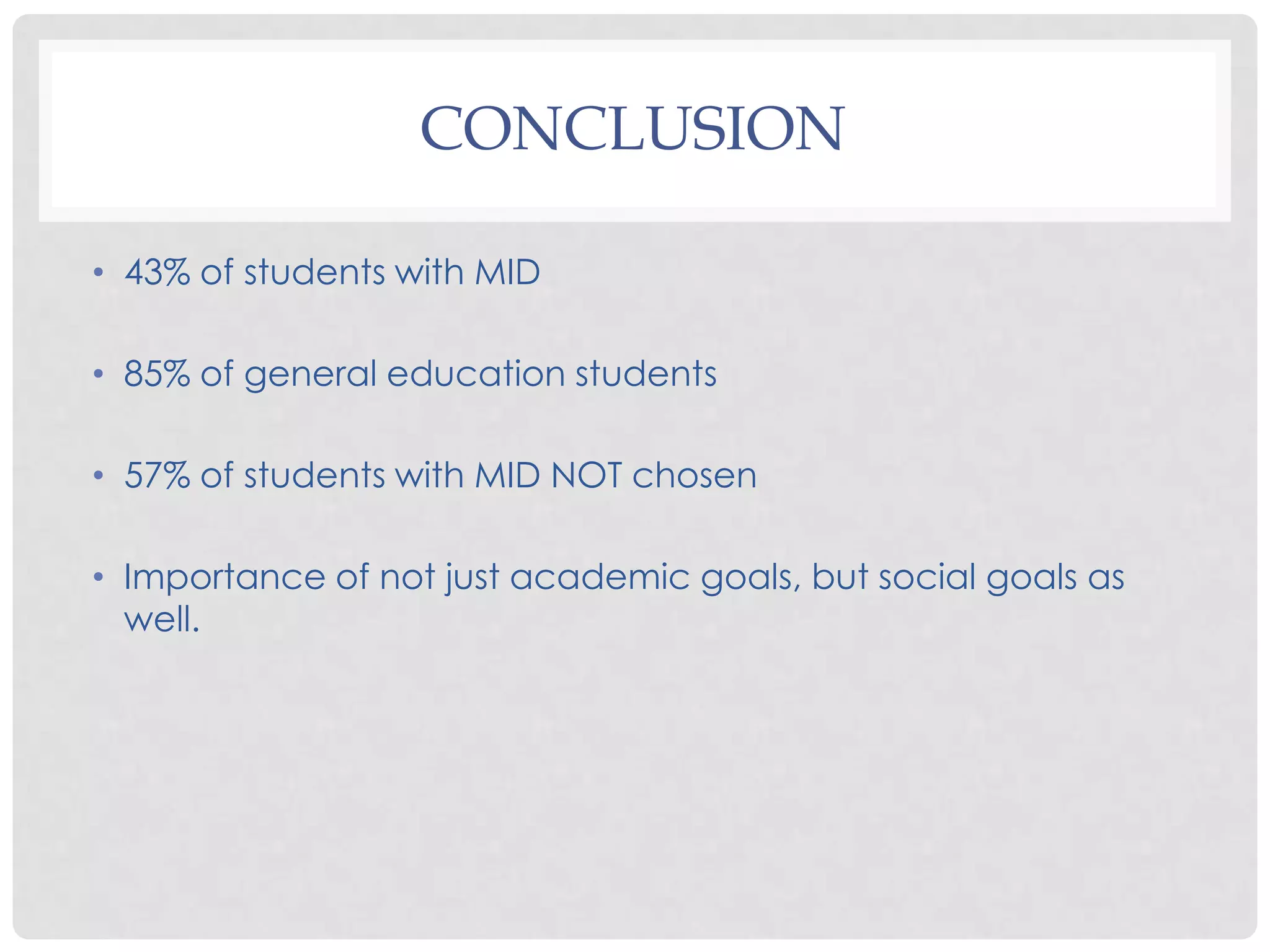
• 43% of students with MID

• 85% of general education students

• 57% of students with MID NOT chosen

• Importance of not just academic goals, but social goals as
  well.
CONTRIBUTION

• Special Project

• Students with MID in my classroom

• Academics are not the only important aspect of education
SUMMARY

• Students with MID not only struggle academically but socially
  as well

• Opportunities need to be provided for these students to build
  relationships with peers

• The findings of this study are applicable to many inclusion
  programs
REFERENCES

Smoot, S. (2011). An outcome measure for social goals of
     inclusion. Rural Special Education Quarterly, 30(1), 6-13.
     DOI: 2341179291

An Outcome Measure for Social Groups of Inclusion

  • 1.
    AN OUTCOME MEASUREFOR SOCIAL GOALS OF INCLUSION BY MELISSA WELCH
  • 2.
    BACKGROUND • Written bySharene L. Smoot in 2011 • Georgia College & State University
  • 3.
    INTRODUCTION • Increasing numberof inclusion classrooms • Social acceptance?
  • 4.
    EVIDENCE • Convenience sample: • 61 students with MID • 286 general education students • Two high schools, five middle schools, one elementary school, and one preschool • Five school districts in rural Georgia
  • 5.
    EVIDENCE • Sociometry and education • Preservice teachers trained to use sociograms • Social questionnaires
  • 6.
    CONCLUSION • 43% ofstudents with MID • 85% of general education students • 57% of students with MID NOT chosen • Importance of not just academic goals, but social goals as well.
  • 7.
    CONTRIBUTION • Special Project •Students with MID in my classroom • Academics are not the only important aspect of education
  • 8.
    SUMMARY • Students withMID not only struggle academically but socially as well • Opportunities need to be provided for these students to build relationships with peers • The findings of this study are applicable to many inclusion programs
  • 9.
    REFERENCES Smoot, S. (2011).An outcome measure for social goals of inclusion. Rural Special Education Quarterly, 30(1), 6-13. DOI: 2341179291

Editor's Notes

  • #3 “An Outcome Measure of Social Goals of Inclusion” was written by Sharene L. Smoot of Georgia College & State University in 2011
  • #4 Due to IDEA laws mandating a FAPE for all students, there is an increasing number of special education students being placed in general education classrooms. This study was conducted to examine the degree of success in students with mild intellectual disabilities (MID) being accepted by their peers socially.
  • #5 High school: 25 MIDMiddle school: 24 MIDElementary:12 MIDTeachers selected volunteered to mentor preservice teacher and share their classroom 20 hours/week, for 5 weeks.All students with MID had to meet criteria of spending at least part of their day in a mainstream classroom.
  • #6 Students were given questionnaires to determine to what degree students with MID were a social part of the classroom. Asked questions such as “who would you like to sit with at lunch?” and “who would you like to work with?”. Students were only able to name 2 friends/question. Teachers then analyzed which students weren’t named by peers.
  • #7 Only 43% of students with MID were named as a friend by a peer, leaving out 57% of students with MID. However, this does not mean that MID students weren’t at all accepted, just maybe not considered to be a close friend since each students could only name 2 people. It’s important to set social goals in IEPs in addition to academic ones, and to facilitate social settings.
  • #8 This study provides some needed quantitative data in researching my special project. It affirms my personal thoughts on inclusion, as well as encourages me to create situations in my own inclusion classroom where my students with MID can build relationships
  • #9 Students with MID not only struggle academically but socially as wellOpportunities need to be provided for these students to build relationships with peersThe findings of this study are applicable to many inclusion programs—a similar study could be conducted to determine the social success of inclusion as well as to determine areas for improvement