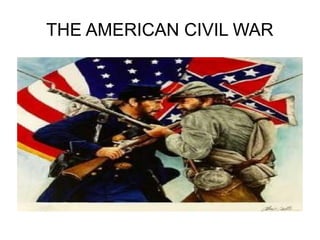
THE AMERICAN CIVIL WAR
THE BELLIGERENTS

North(United States of
America) &
South(Confederacy)
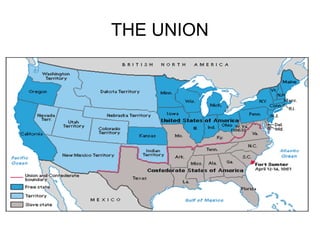
THE UNION
STATES OF THE UNION

California, Connecticut, Illinois, Indiana, Iowa,
Kansas, Maine, Massachussets, Michigan,
Minnesota, Nevada, New Hampshire, New Jersey,
New York, Ohio, Oregon, Pennsylvania, Rhode
Island, Vermont, West Virginia and Wisconsin.
PRINCIPLES OF THE UNION

The Union was opposed to slavery since Abraham
Lincoln became President of the USA in 1861.
They were not agree with the independence of the
Southern states.
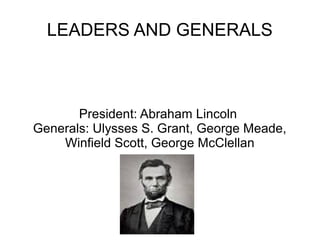
LEADERS AND GENERALS

President: Abraham Lincoln
Generals: Ulysses S. Grant, George Meade,
Winfield Scott, George McClellan
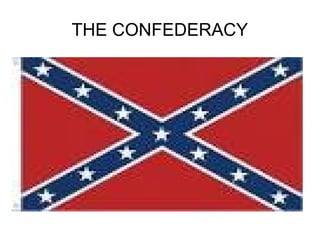
THE CONFEDERACY
STATES OF THE CONFEDERACY

South Carolina, Mississippi, Florida, Alabama,
Georgia, Louisiana, Texas, Virginia, Arkansas,
North Carolina and Tennessee
PRINCIPLES OF THE
CONFEDERACY
They supported slavery (many people think that it
is the main cause of the war, but it is not certain
enough) and they protected the self-government
right in their states. They arrested everybody who
showed support (or was suspect of that) to The
Union. They were supported by the UK and the
Pope.
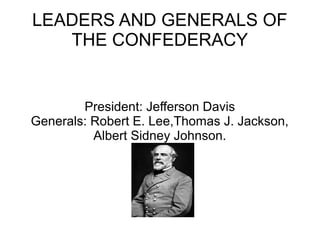
LEADERS AND GENERALS OF
THE CONFEDERACY

President: Jefferson Davis
Generals: Robert E. Lee,Thomas J. Jackson,
Albert Sidney Johnson.
CAUSES OF THE WAR
●

●

●

Social and economic differences between the
North and the South: The Union was richer than
the South
States vs federal rights: The Confederacy
believed in the self-government and the Union
wanted more power to the federal institutions
Slavery: As we said before, the Union wanted
to abolish slavery and the South disagreed.
THE BEGINNING OF THE WAR

The war broke out when the Confederacy troops
assalted Fort Sumter. The Union's response to
this attack was a hard repression. Then, some
southern states joined these troops and declared
independents of the Union.
THE DEVELOPMENT OF THE
WAR
The Union had more soldiers and a better
equipment which allowed them to fight in better
conditions. Furthermore they blockaded the ports
of the South which had a negative effect on the
Confederacy economy.However, the North faced
one great difficulty;the only way to win the war
was invading the South, and, who knows the
South better than the southern people?
GETTYSBURG, THE TURNING
POINT
This battle was the bloodiest one of the war (and
one of the bloodiest in USA history). Robert E.
Lee (Confederacy) attacked the Potomac Army
lead by George Meade. Eventually, the Union won
and after this battle, they could invade the South.
It was the turning point of the war.
THE END OF THE WAR

After Gettysburg, the progress of the northern
troops was unstoppable. The Confederacy was
running out of almost everything. Many soldiers
deserted and finally, even General Lee surrended
his troops.
VICTORY OF THE UNION AND
MAIN CONSEQUENCES

After the war, the South became again a part of
the USA and had to recognize Abraham Lincoln
as President. Slavery was definitely abolished in
the South. Abraham Lincoln was killed by a
sympathetic of the Confederacy.
INTERESTING THINGS ABOUT
THE WAR
●

●

●

Three of Lincoln's own brothers-in-law died
fighting for the Confederacy
Two brothers became generals on opposite
sides.
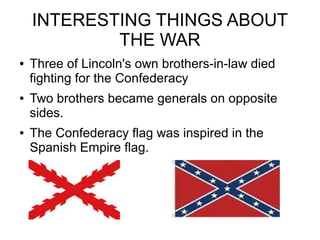
The Confederacy flag was inspired in the
Spanish Empire flag.

America Civil War

  • 1.
  • 2.
    THE BELLIGERENTS North(United Statesof America) & South(Confederacy)
  • 3.
  • 4.
    STATES OF THEUNION California, Connecticut, Illinois, Indiana, Iowa, Kansas, Maine, Massachussets, Michigan, Minnesota, Nevada, New Hampshire, New Jersey, New York, Ohio, Oregon, Pennsylvania, Rhode Island, Vermont, West Virginia and Wisconsin.
  • 5.
    PRINCIPLES OF THEUNION The Union was opposed to slavery since Abraham Lincoln became President of the USA in 1861. They were not agree with the independence of the Southern states.
  • 6.
    LEADERS AND GENERALS President:Abraham Lincoln Generals: Ulysses S. Grant, George Meade, Winfield Scott, George McClellan
  • 7.
  • 8.
    STATES OF THECONFEDERACY South Carolina, Mississippi, Florida, Alabama, Georgia, Louisiana, Texas, Virginia, Arkansas, North Carolina and Tennessee
  • 9.
    PRINCIPLES OF THE CONFEDERACY Theysupported slavery (many people think that it is the main cause of the war, but it is not certain enough) and they protected the self-government right in their states. They arrested everybody who showed support (or was suspect of that) to The Union. They were supported by the UK and the Pope.
  • 10.
    LEADERS AND GENERALSOF THE CONFEDERACY President: Jefferson Davis Generals: Robert E. Lee,Thomas J. Jackson, Albert Sidney Johnson.
  • 11.
    CAUSES OF THEWAR ● ● ● Social and economic differences between the North and the South: The Union was richer than the South States vs federal rights: The Confederacy believed in the self-government and the Union wanted more power to the federal institutions Slavery: As we said before, the Union wanted to abolish slavery and the South disagreed.
  • 12.
    THE BEGINNING OFTHE WAR The war broke out when the Confederacy troops assalted Fort Sumter. The Union's response to this attack was a hard repression. Then, some southern states joined these troops and declared independents of the Union.
  • 13.
    THE DEVELOPMENT OFTHE WAR The Union had more soldiers and a better equipment which allowed them to fight in better conditions. Furthermore they blockaded the ports of the South which had a negative effect on the Confederacy economy.However, the North faced one great difficulty;the only way to win the war was invading the South, and, who knows the South better than the southern people?
  • 14.
    GETTYSBURG, THE TURNING POINT Thisbattle was the bloodiest one of the war (and one of the bloodiest in USA history). Robert E. Lee (Confederacy) attacked the Potomac Army lead by George Meade. Eventually, the Union won and after this battle, they could invade the South. It was the turning point of the war.
  • 15.
    THE END OFTHE WAR After Gettysburg, the progress of the northern troops was unstoppable. The Confederacy was running out of almost everything. Many soldiers deserted and finally, even General Lee surrended his troops.
  • 16.
    VICTORY OF THEUNION AND MAIN CONSEQUENCES After the war, the South became again a part of the USA and had to recognize Abraham Lincoln as President. Slavery was definitely abolished in the South. Abraham Lincoln was killed by a sympathetic of the Confederacy.
  • 17.
    INTERESTING THINGS ABOUT THEWAR ● ● ● Three of Lincoln's own brothers-in-law died fighting for the Confederacy Two brothers became generals on opposite sides. The Confederacy flag was inspired in the Spanish Empire flag.