Preliminary Proposals for DMCA AmendmentsCongressional CommitteeCameron Zinsli, Luca Guidobaldi, Dana Halevy Rozner, Andrew Asplund, Jin Han, Lawrence Wang, Katherine Rea, Anna Bakhmetyeva
Proposal OneDana Halevy Rozner, Luca Guidobaldi, Cameron Zinsli
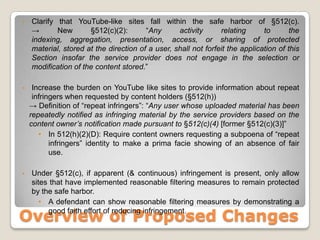
Clarify that YouTube-like sites fall within the safe harbor of §512(c).-> New §512(c)(2): “Any activity relating to the indexing, aggregation, presentation, access, or sharing of protected material, stored at the direction of a user, shall not forfeit the application of this Section insofar the service provider does not engage in the selection or modification of the content stored.”
Increase the burden on YouTube like sites to provide information about repeat infringers when requested by content holders (§512(h))-> Definition of “repeat infringers”: “Any user whose uploaded material has been repeatedly notified as infringing material by the service providers based on the content owner’s notification made pursuant to §512(c)(4) [former §512(c)(3)]”In 512(h)(2)(D): Require content owners requesting a subpoena of “repeat infringers” identity to make a prima facie showing of an absence of fair use.
Under §512(c), if apparent (& continuous) infringement is present, only allow sites that have implemented reasonable filtering measures to remain protected by the safe harbor.
A defendant can show reasonable filtering measures by demonstrating a good faith effort of reducing infringement.Overview of Proposed Changes
The system needs minor tweaks not major overhauls: the existing scheme of the DMCA is sufficient
Preserving the openness of existing YouTube-like sites to prevent the law from forcing sites into closed, subscription based services and obliterating anonymity.
We do not want to discourage businesses and users from participating in these markets.
Encourage cooperation amongst stakeholders: the burden stays with the content owners but ISPs should facilitate copyright holders’ policing activities, acting in good faith according to the degree of technical and contractual control they might retain on the material.Policy Justifications
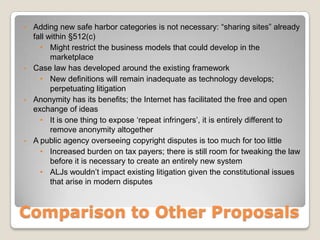
Adding new safe harbor categories is not necessary: “sharing sites” already fall within §512(c)
Might restrict the business models that could develop in the marketplace
Case law has developed around the existing framework

Ip innovations congress

  • 1.
    Preliminary Proposals forDMCA AmendmentsCongressional CommitteeCameron Zinsli, Luca Guidobaldi, Dana Halevy Rozner, Andrew Asplund, Jin Han, Lawrence Wang, Katherine Rea, Anna Bakhmetyeva
  • 2.
    Proposal OneDana HalevyRozner, Luca Guidobaldi, Cameron Zinsli
  • 3.
    Clarify that YouTube-likesites fall within the safe harbor of §512(c).-> New §512(c)(2): “Any activity relating to the indexing, aggregation, presentation, access, or sharing of protected material, stored at the direction of a user, shall not forfeit the application of this Section insofar the service provider does not engage in the selection or modification of the content stored.”
  • 4.
    Increase the burdenon YouTube like sites to provide information about repeat infringers when requested by content holders (§512(h))-> Definition of “repeat infringers”: “Any user whose uploaded material has been repeatedly notified as infringing material by the service providers based on the content owner’s notification made pursuant to §512(c)(4) [former §512(c)(3)]”In 512(h)(2)(D): Require content owners requesting a subpoena of “repeat infringers” identity to make a prima facie showing of an absence of fair use.
  • 5.
    Under §512(c), ifapparent (& continuous) infringement is present, only allow sites that have implemented reasonable filtering measures to remain protected by the safe harbor.
  • 6.
    A defendant canshow reasonable filtering measures by demonstrating a good faith effort of reducing infringement.Overview of Proposed Changes
  • 7.
    The system needsminor tweaks not major overhauls: the existing scheme of the DMCA is sufficient
  • 8.
    Preserving the opennessof existing YouTube-like sites to prevent the law from forcing sites into closed, subscription based services and obliterating anonymity.
  • 9.
    We do notwant to discourage businesses and users from participating in these markets.
  • 10.
    Encourage cooperation amongststakeholders: the burden stays with the content owners but ISPs should facilitate copyright holders’ policing activities, acting in good faith according to the degree of technical and contractual control they might retain on the material.Policy Justifications
  • 11.
    Adding new safeharbor categories is not necessary: “sharing sites” already fall within §512(c)
  • 12.
    Might restrict thebusiness models that could develop in the marketplace
  • 13.
    Case law hasdeveloped around the existing framework