+
Food Allergies
By: Lexy Moore
+
Objectives
 Understand the basics of food allergies and how you can
manage it
 Recognize the top eight allergens
 Identify the different symptoms caused by allergens
 Understand the seriousness of anaphylaxis
 Learn various careful food preparation methods and
cross contamination precautions from Touch Point
policies and procedures
 Grasp the new techniques implemented for the tray line
and supervisor
+
Food Allergy Basics
 The role of the immune system is to protect the body
from germs and disease
 A food allergy is an abnormal response by the
immune system to a food protein
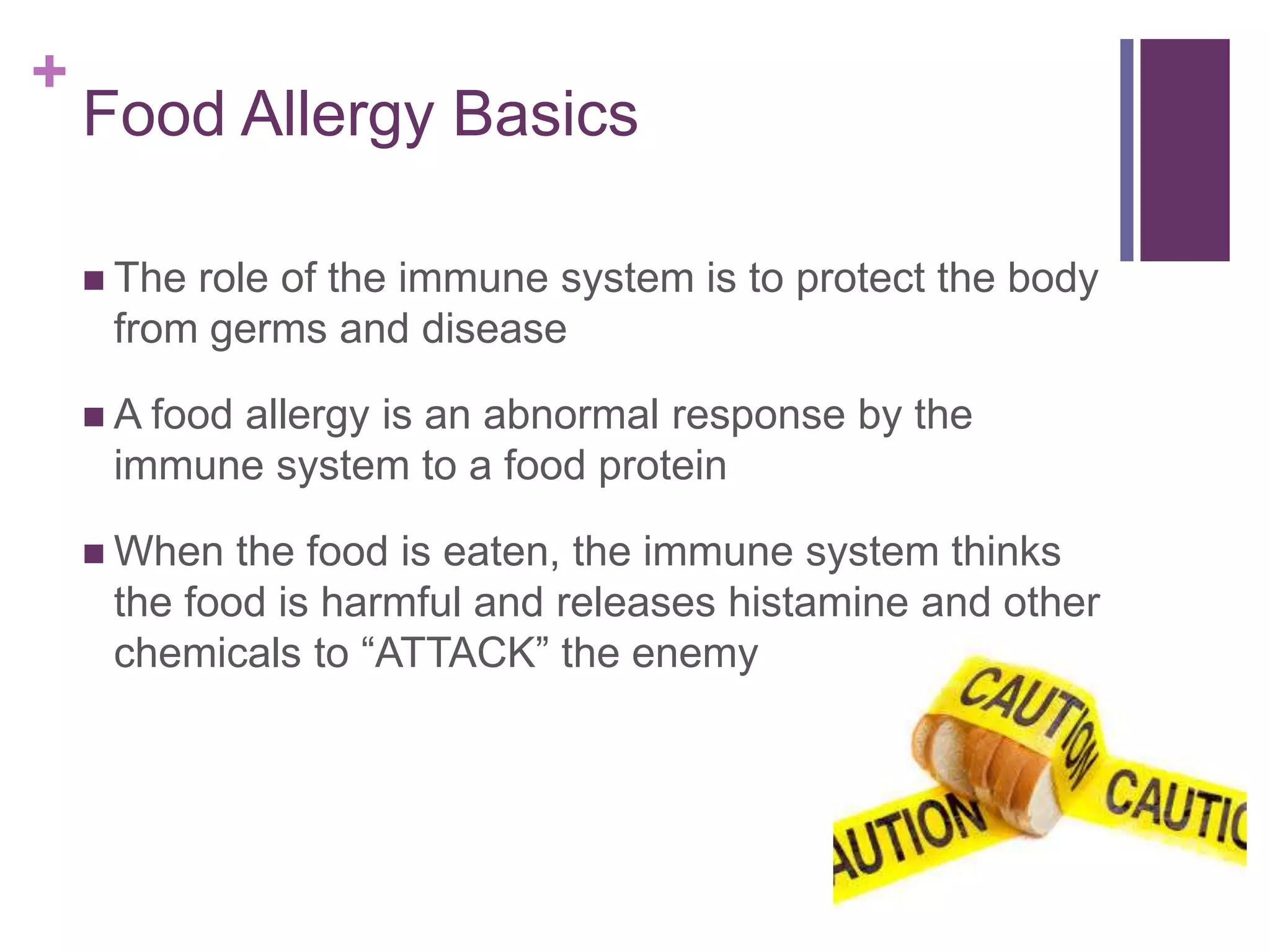
 When the food is eaten, the immune system thinks
the food is harmful and releases histamine and other
chemicals to “ATTACK” the enemy
+
Can Doctors Cure Food Allergies?
 There is no cure for
food allergies
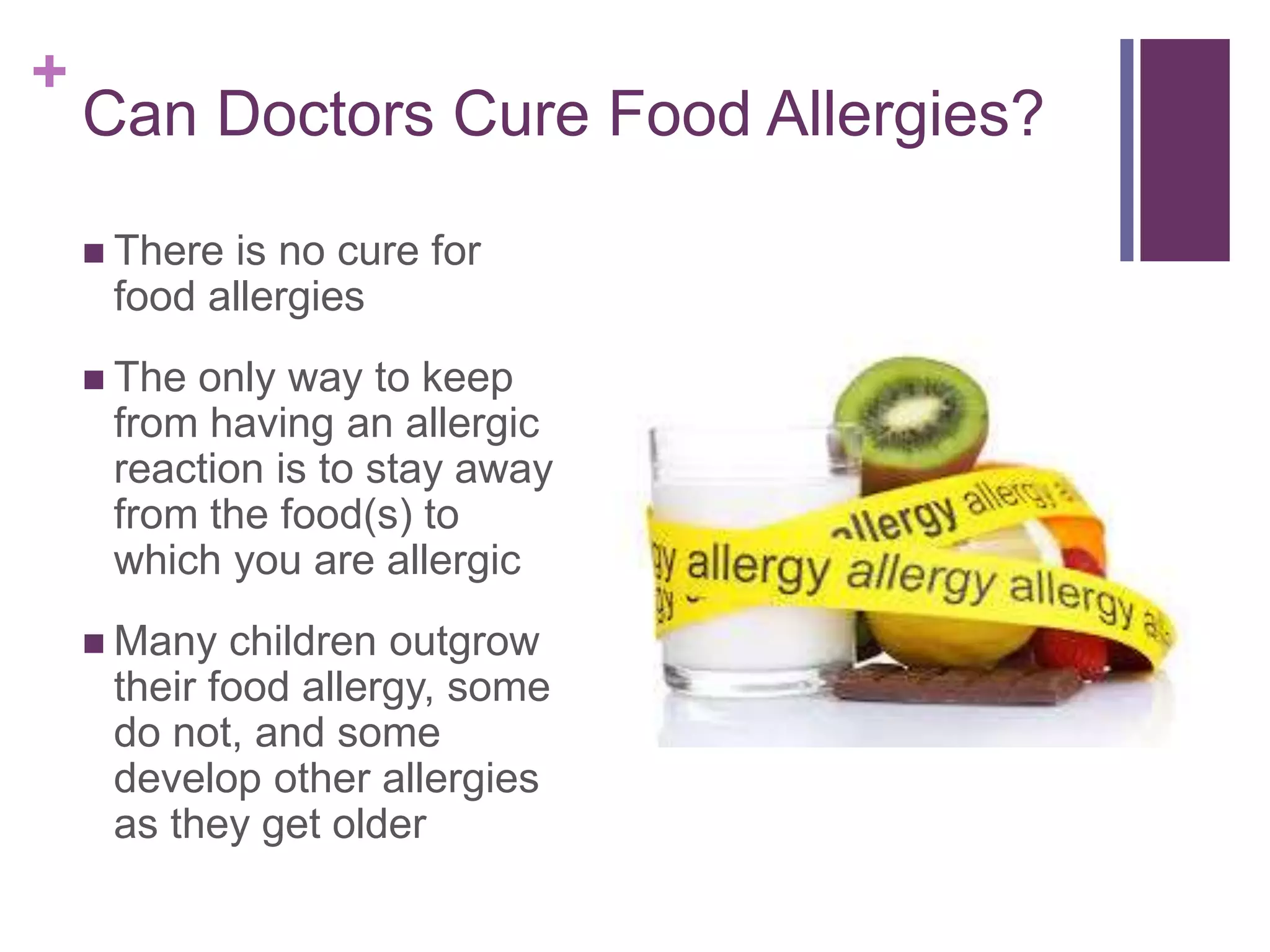
 The only way to keep
from having an allergic
reaction is to stay away
from the food(s) to
which you are allergic
 Many children outgrow
their food allergy, some
do not, and some
develop other allergies
as they get older
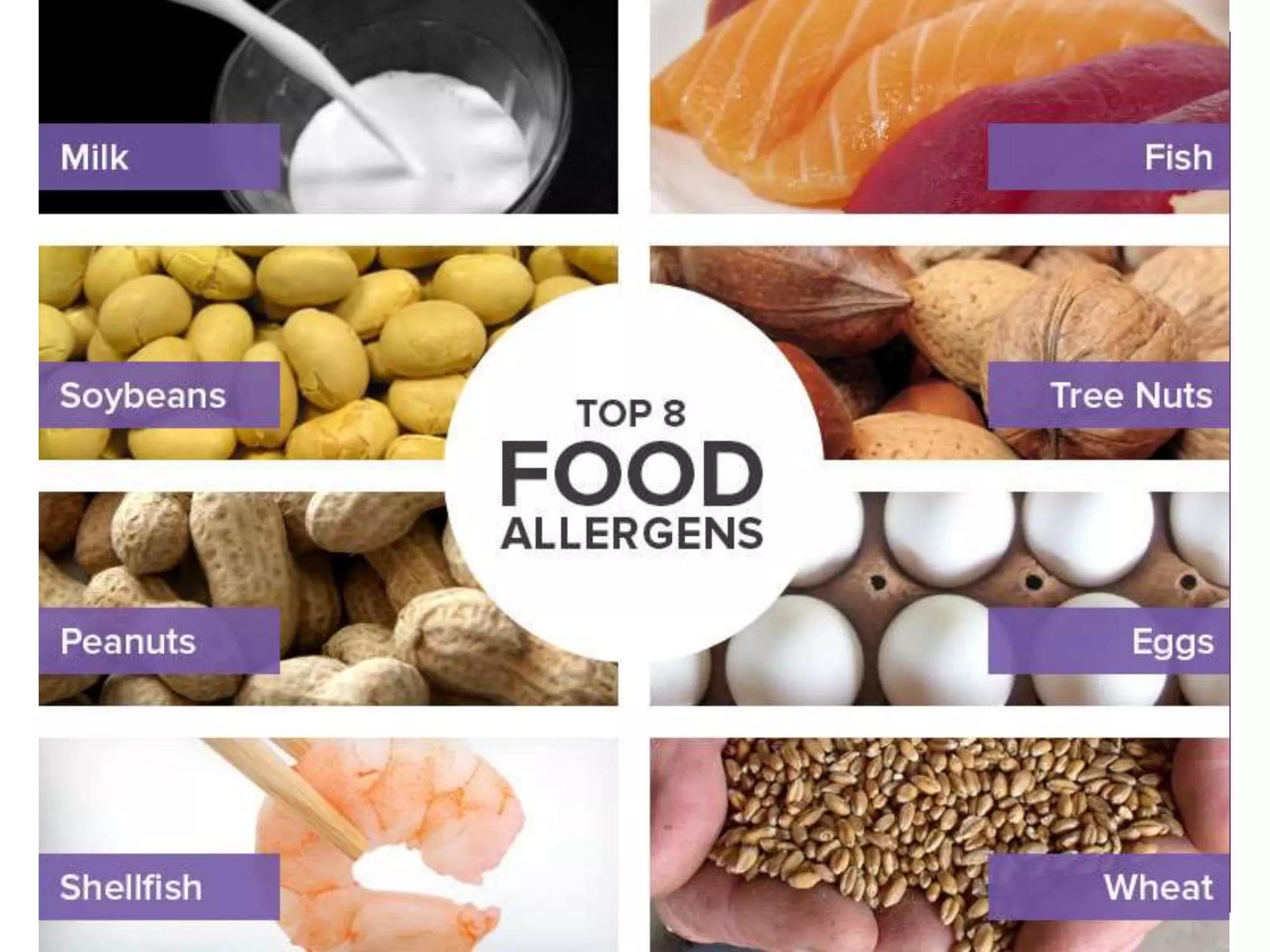
What 8 foods cause 90% of
allergic reactions in the United
States???
+
+
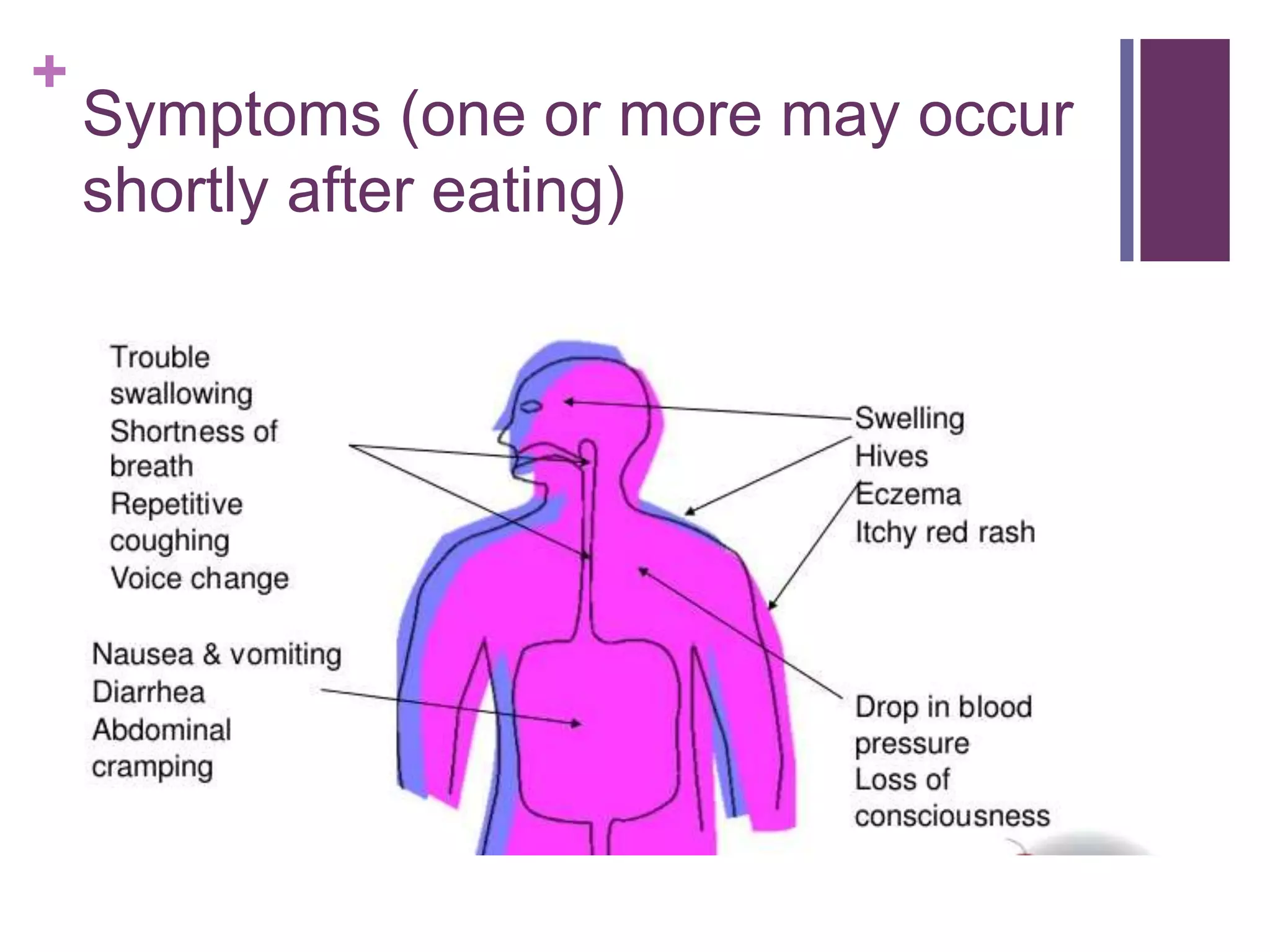
Symptoms (one or more may occur
shortly after eating)
+
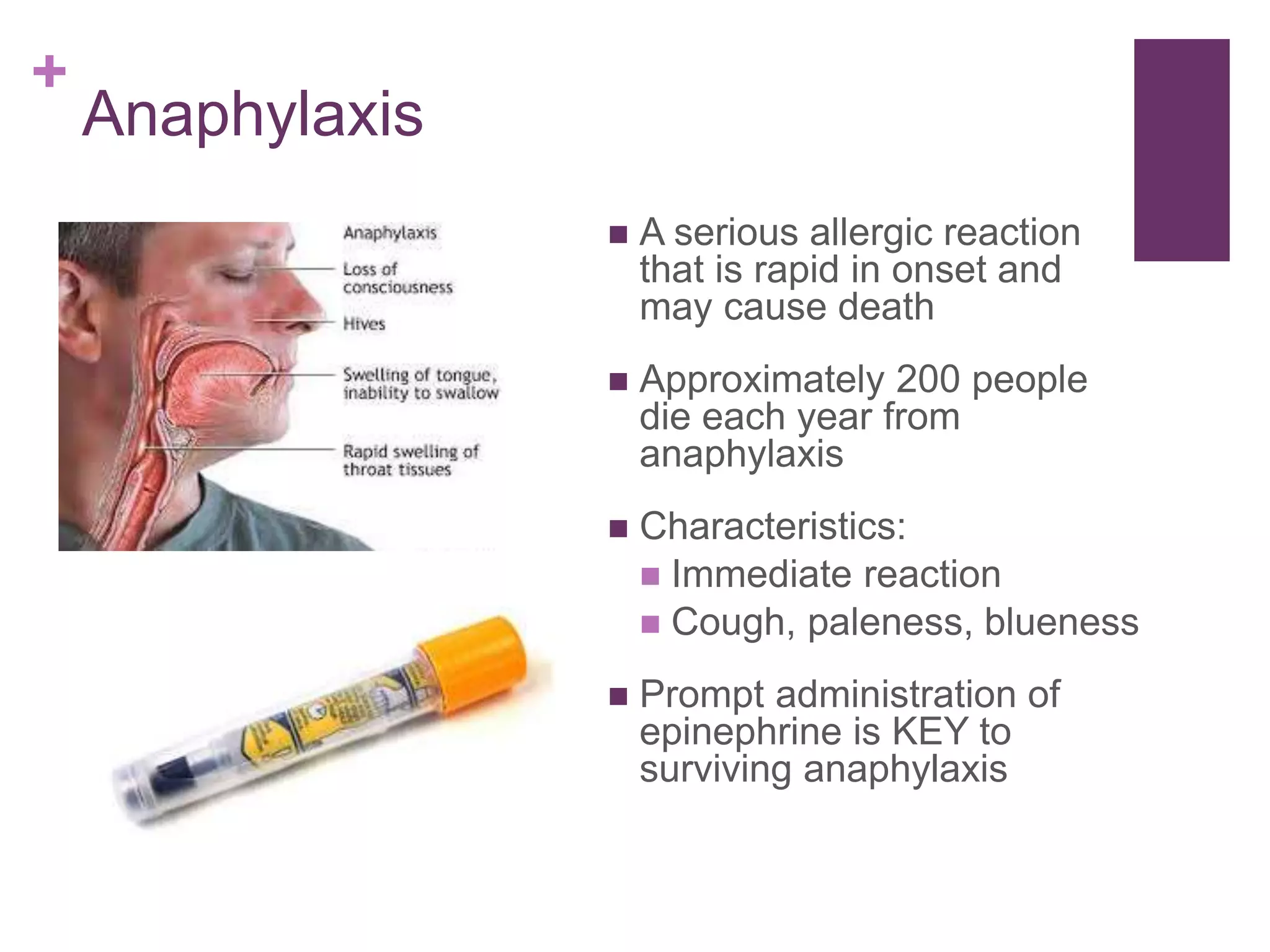
Anaphylaxis
 A serious allergic reaction
that is rapid in onset and
may cause death
 Approximately 200 people
die each year from
anaphylaxis
 Characteristics:
 Immediate reaction
 Cough, paleness, blueness
 Prompt administration of
epinephrine is KEY to
surviving anaphylaxis
+
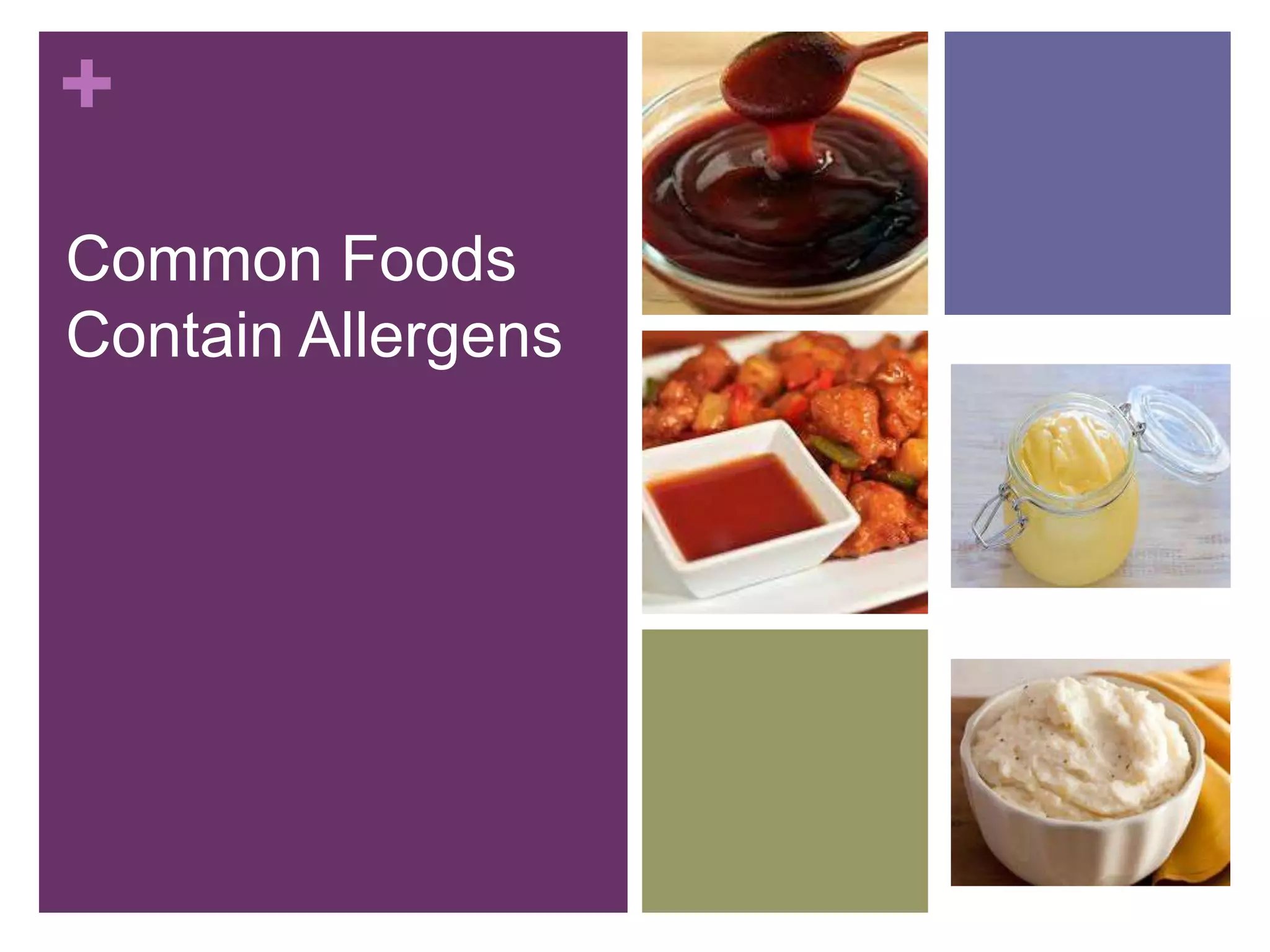
Common Foods
Contain Allergens
+
Careful Food Preparation
 Read all ingredient labels
 Wash hands and change gloves before preparing
the food
 Prepare food with clean, sanitized equipment and
serve on clean, sanitized dishes
 If you cannot be certain that the allergen is not
present, do NOT serve the food
 The employees preparing and serving the food must
work with the manager or chef who is
knowledgeable about recipes and menu content
+
Cross Contamination Precautions
 Hands should be scrubbed following appropriate hand
washing techniques
 Use clean sanitized equipment and food contact surfaces
 Use clean/sanitized equipment when switching from one
raw food to another
 Sanitize cutting boards after each use
 Single use disposable gloves are worn when preparing
foods and serving foods
 Gloves are changed between tasks or if punctured or
ripped
+
Implementation
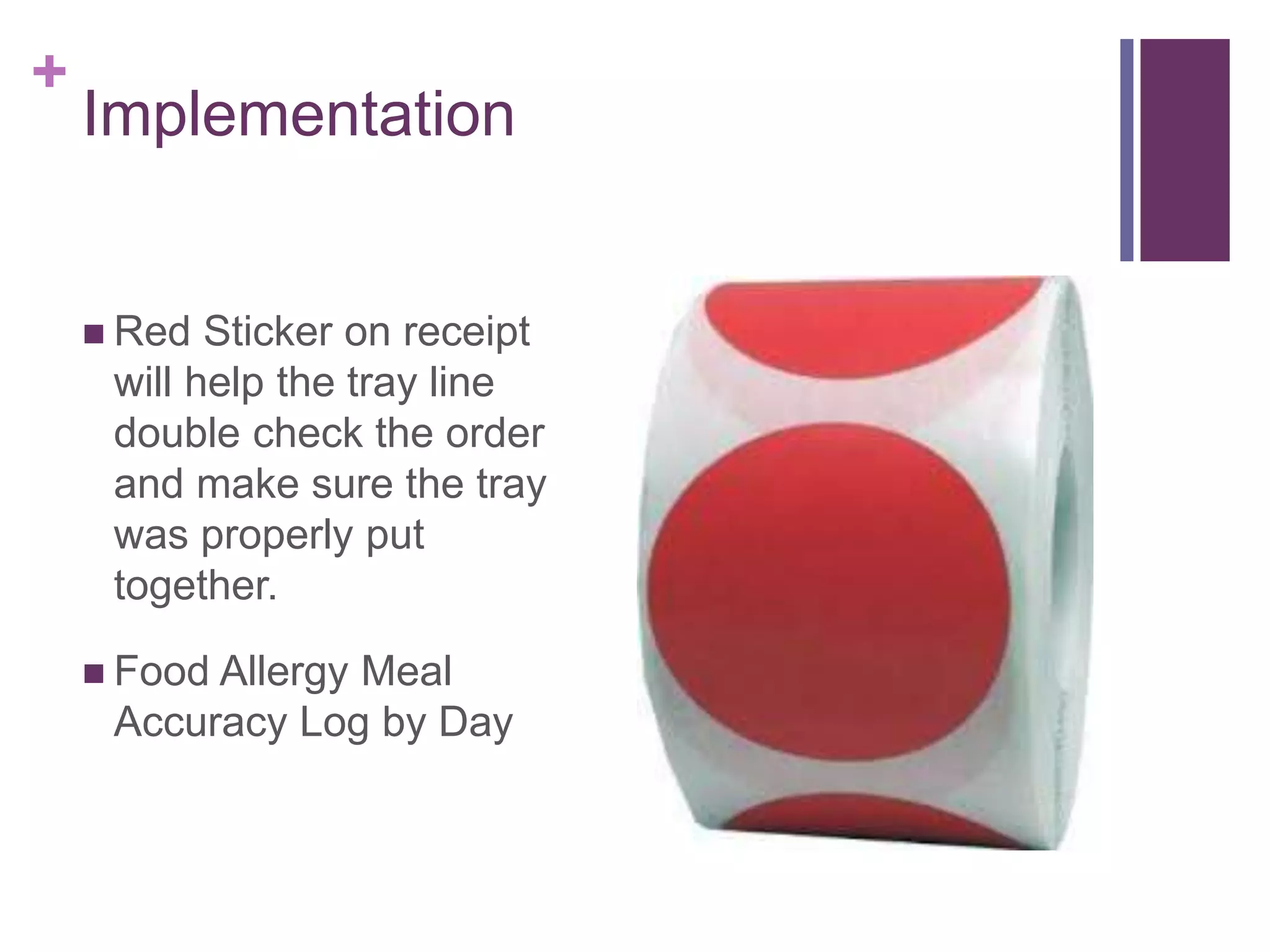
 Red Sticker on receipt
will help the tray line
double check the order
and make sure the tray
was properly put
together.
 Food Allergy Meal
Accuracy Log by Day
+
Summary
 A food allergy is an abnormal response by the immune
system to a food protein
 The only way to keep from having an allergic reaction is
to stay away from the food(s) to which you are allergic
 Eight foods cause 90% of reactions in the United States
 Anaphylaxis is a serious allergic reaction that is rapid in
onset and may cause death
 Important to be aware of careful food preparation
methods and cross contamination precautions
 Implementing the red sticker and log can help prevent
allergic reactions from occurring
+
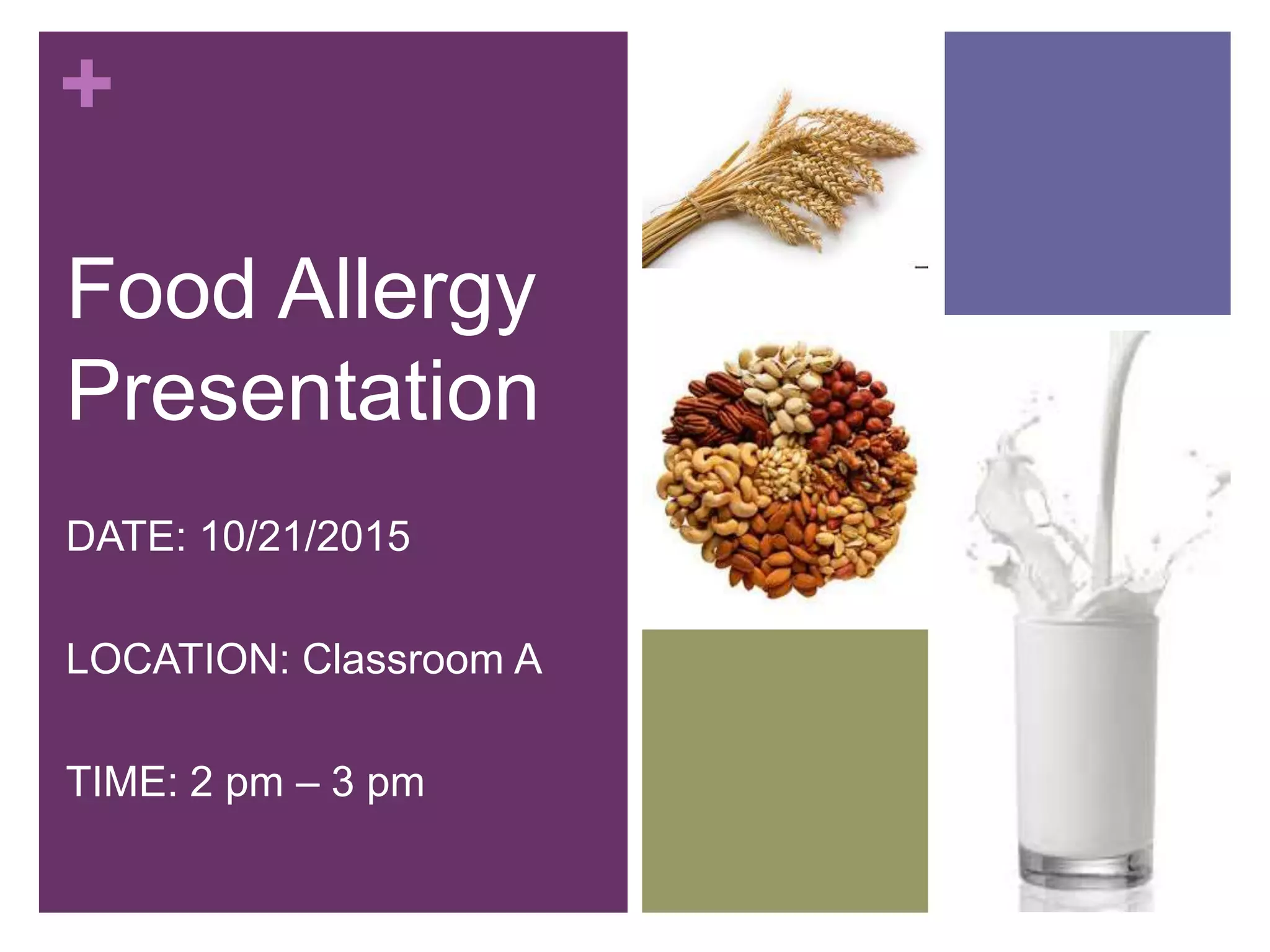
Food Allergy
Presentation
DATE: 10/21/2015
LOCATION: Classroom A
TIME: 2 pm – 3 pm

Allergy Presentation Inservice -2

  • 1.
  • 2.
    + Objectives  Understand thebasics of food allergies and how you can manage it  Recognize the top eight allergens  Identify the different symptoms caused by allergens  Understand the seriousness of anaphylaxis  Learn various careful food preparation methods and cross contamination precautions from Touch Point policies and procedures  Grasp the new techniques implemented for the tray line and supervisor
  • 3.
    + Food Allergy Basics The role of the immune system is to protect the body from germs and disease  A food allergy is an abnormal response by the immune system to a food protein  When the food is eaten, the immune system thinks the food is harmful and releases histamine and other chemicals to “ATTACK” the enemy
  • 4.
    + Can Doctors CureFood Allergies?  There is no cure for food allergies  The only way to keep from having an allergic reaction is to stay away from the food(s) to which you are allergic  Many children outgrow their food allergy, some do not, and some develop other allergies as they get older
  • 5.
    What 8 foodscause 90% of allergic reactions in the United States???
  • 6.
  • 7.
    + Symptoms (one ormore may occur shortly after eating)
  • 8.
    + Anaphylaxis  A seriousallergic reaction that is rapid in onset and may cause death  Approximately 200 people die each year from anaphylaxis  Characteristics:  Immediate reaction  Cough, paleness, blueness  Prompt administration of epinephrine is KEY to surviving anaphylaxis
  • 9.
  • 10.
    + Careful Food Preparation Read all ingredient labels  Wash hands and change gloves before preparing the food  Prepare food with clean, sanitized equipment and serve on clean, sanitized dishes  If you cannot be certain that the allergen is not present, do NOT serve the food  The employees preparing and serving the food must work with the manager or chef who is knowledgeable about recipes and menu content
  • 11.
    + Cross Contamination Precautions Hands should be scrubbed following appropriate hand washing techniques  Use clean sanitized equipment and food contact surfaces  Use clean/sanitized equipment when switching from one raw food to another  Sanitize cutting boards after each use  Single use disposable gloves are worn when preparing foods and serving foods  Gloves are changed between tasks or if punctured or ripped
  • 12.
    + Implementation  Red Stickeron receipt will help the tray line double check the order and make sure the tray was properly put together.  Food Allergy Meal Accuracy Log by Day
  • 13.
    + Summary  A foodallergy is an abnormal response by the immune system to a food protein  The only way to keep from having an allergic reaction is to stay away from the food(s) to which you are allergic  Eight foods cause 90% of reactions in the United States  Anaphylaxis is a serious allergic reaction that is rapid in onset and may cause death  Important to be aware of careful food preparation methods and cross contamination precautions  Implementing the red sticker and log can help prevent allergic reactions from occurring
  • 14.

Editor's Notes

  • #9 80% of fatal anaphylactic reactions to foods in American adults involve peanuts and tree nuts LORI: even though you may have not have had a serious reaction before it can still happen
  • #10 BBQ sauce – at least one brand of BBQ sauce has pecans and it is listed in the label Sweet and Sour Sauce – Some brands contain wheat and soy Mayonnaise – contain eggs, cheese and yogurt Mashed Potatoes – often prepared with milk and butter
  • #11 Group discussion: how do we identify tray and what do you make it safe? How do you as a cook make sure it is safe? What are the preparation methods already put into place? Are there separate dishes for the allergy patients? How do we know who has an allergy?
  • #13 Pass around copy of receipt and food allergy meal accuracy log