Food Allergies
What is a Food Allergy?
When the body’s immune system mistakenly
believes a harmless substance is harmful to
the body. It tries to protect the body by
releasing histamines and IgE antibodies to
attack the substance.
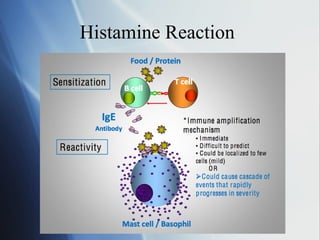
Food Allergy Response
 Chemical triggers like histamine and IgE
antibodies are released in response to an
allergen and can cause allergic reactions
with a variety of symptoms
 Symptoms may vary from person to person
and not all reactions appear the same
Histamine Reaction
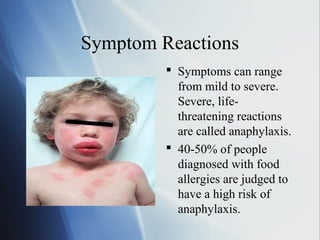
Symptom Reactions
 Symptoms can range
from mild to severe.
Severe, life-
threatening reactions
are called anaphylaxis.
 40-50% of people
diagnosed with food
allergies are judged to
have a high risk of
anaphylaxis.
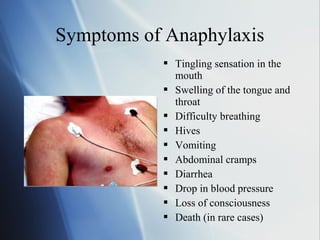
Symptoms of Anaphylaxis
 Tingling sensation in the
mouth
 Swelling of the tongue and
throat
 Difficulty breathing
 Hives
 Vomiting
 Abdominal cramps
 Diarrhea
 Drop in blood pressure
 Loss of consciousness
 Death (in rare cases)
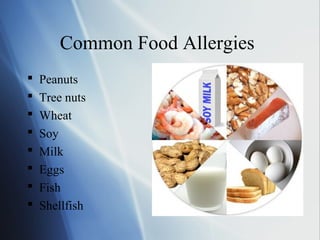
Common Food Allergies
 Peanuts
 Tree nuts
 Wheat
 Soy
 Milk
 Eggs
 Fish
 Shellfish
Food Allergy Statistics
 There is no cure for food allergies. Strict avoidance
of food allergens and early recognition and
management of allergic reactions to food are
important measures to prevent serious health
consequences.
 One in 25, or 4 percent of the population.
Why Should We Be Prepared to Address Food
Allergies?
 We have a social responsibility for the health and
safety of the guests .
 Food allergies could be a complicating factor when
dealing with other conditions (i.e. asthma).
 Guests with food allergies have unique social and
emotional challenges.
Issues That Need to Be
Addressed
 Quality of training/education provided to
staff caring for guests with food allergies
 Competency of staff and their knowledge of
food allergies (i.e. safety, prevention, food
handling, recognizing symptoms, and
responding to reactions)
Problems
 Plans are individualized, therefore there are
no standardized guidelines for managing
allergic reactions and assisting guests based
on their needs
What Needs to Be Done
 Guidelines for managing life threatening
food allergy reactions.
 A collaborative training approach involving
talents to identify and monitor guests with
food allergies, and emergency care plans
What Needs to Be Done
 Establish written emergency protocols to
prepare for and respond to food allergy
emergencies
 Implement practices that minimize exposure
to allergens

Food allergy

  • 1.
  • 2.
    What is aFood Allergy? When the body’s immune system mistakenly believes a harmless substance is harmful to the body. It tries to protect the body by releasing histamines and IgE antibodies to attack the substance.
  • 3.
    Food Allergy Response Chemical triggers like histamine and IgE antibodies are released in response to an allergen and can cause allergic reactions with a variety of symptoms  Symptoms may vary from person to person and not all reactions appear the same
  • 4.
  • 5.
    Symptom Reactions  Symptomscan range from mild to severe. Severe, life- threatening reactions are called anaphylaxis.  40-50% of people diagnosed with food allergies are judged to have a high risk of anaphylaxis.
  • 6.
    Symptoms of Anaphylaxis Tingling sensation in the mouth  Swelling of the tongue and throat  Difficulty breathing  Hives  Vomiting  Abdominal cramps  Diarrhea  Drop in blood pressure  Loss of consciousness  Death (in rare cases)
  • 7.
    Common Food Allergies Peanuts  Tree nuts  Wheat  Soy  Milk  Eggs  Fish  Shellfish
  • 8.
    Food Allergy Statistics There is no cure for food allergies. Strict avoidance of food allergens and early recognition and management of allergic reactions to food are important measures to prevent serious health consequences.  One in 25, or 4 percent of the population.
  • 9.
    Why Should WeBe Prepared to Address Food Allergies?  We have a social responsibility for the health and safety of the guests .  Food allergies could be a complicating factor when dealing with other conditions (i.e. asthma).  Guests with food allergies have unique social and emotional challenges.
  • 10.
    Issues That Needto Be Addressed  Quality of training/education provided to staff caring for guests with food allergies  Competency of staff and their knowledge of food allergies (i.e. safety, prevention, food handling, recognizing symptoms, and responding to reactions)
  • 11.
    Problems  Plans areindividualized, therefore there are no standardized guidelines for managing allergic reactions and assisting guests based on their needs
  • 12.
    What Needs toBe Done  Guidelines for managing life threatening food allergy reactions.  A collaborative training approach involving talents to identify and monitor guests with food allergies, and emergency care plans
  • 13.
    What Needs toBe Done  Establish written emergency protocols to prepare for and respond to food allergy emergencies  Implement practices that minimize exposure to allergens