Food Allergies
Food Allergy Basics
The role of the immune system is to protect the body from germs and disease
A food allergy is an abnormal response by the immune system to a food protein
When the food is eaten, the immune system thinks the food is harmful and releases histamine and other chemicals to “attack” the enemyFood Allergy Basics
There is no cure for food allergy
Complete and strict avoidance of the food is the only way to prevent a reactionFood Allergy Basics
Eight foods cause 90% of the allergic reactions inthe United States:Milk
Peanuts
Eggs
Tree Nuts (e.g., walnuts, pecans, etc.)
Wheat
Fish
Soy
ShellfishFood Allergy Basics
4% of U.S. population or 12 million Americans       (1 in 25) have a food allergy
Children are the largest group affected
4 to 6% of children have a food allergy
Growing problem…peanut allergy doubled in children over a five-year period (1997 – 2002)Food Allergy Facts
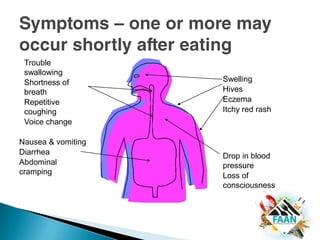
Symptoms – one or more may occur shortly after eatingTrouble swallowingShortness of breathRepetitive coughingVoice changeSwellingHivesEczemaItchy red rashNausea & vomitingDiarrheaAbdominal crampingDrop in blood pressureLoss of consciousness
A serious allergic reaction that is rapid in onset and may cause death
Each year in the U.S. anaphylaxis to food causes an estimated 50,000 to 125,000 emergency room visits, depending on the source
Individuals with food allergy plus asthma are at greatest risk for a serious reactionAnaphylaxis
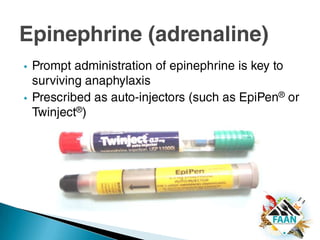
Prompt administration of epinephrine is key to surviving anaphylaxis
Prescribed as auto-injectors (such as EpiPen® or Twinject®)Epinephrine (adrenaline)
Managing Food Allergies Day to Day

2009adultpresentation 091019114101-phpapp01