by Kelly Mott

Happy Holidays!
As we enter a time of celebration and sharing, be aware
that those around you might be one of the millions of
Americans that have a food allergy.

What Are Allergens?
 An allergy is a reaction of the immune system to a normally
harmless element. These include, but are not limited to:
 Food proteins
 Substances
 Latex
 Plants (poison oak, poison ivy, poison sumac, nettles)
 Fragrance (perfumes, contents in lotions and detergents)
 Metals
 Rubber
 Aeroallergens
 Dust Mites
 Pollen
 Mold
 Stinging Insects
 Drugs

What Are Food Allergens?
 While more than 160 foods can cause allergic reactions in
people with food allergies, the law identifies the eight
most common allergenic foods.
 Milk
 Eggs
 Fish (e.g. bass, flounder, cod)
 Crustacean shellfish (e.g. crab, lobster, shrimp)
 Tree nuts (e.g. almonds, walnuts, pecans)
 Peanuts
 Wheat
 Soybeans

Food Allergen Awareness at
Work and Home
 Although most food allergies cause relatively mild and minor
symptoms, some food allergies can cause severe reactions, and
may even be life-threatening.
 There is no cure for food allergies. Strict avoidance of food
allergens – and early recognition and management of allergic
reactions to food – are important measures to prevent serious
health consequences.
 To help Americans avoid the health risks posed by food
allergens, Congress passed the Food Allergen Labeling and
consumer Protection Act of 2004 (FALCPA).
http://www.fda.gov/Food/ResourcesForYou/Consumers/ucm079311.htm

What Are the Symptoms of an
Allergic Reaction?
 Hives
 Flushed skin or rash
 Tingling or itchy sensation in the mouth
 Face, tongue, or lip swelling
 Vomiting and/or diarrhea
 Abdominal cramps
 Coughing or wheezing
 Dizziness and/or lightheadedness
 Swelling of the throat and vocal cords
 Difficulty breathing
 Loss of consciousness
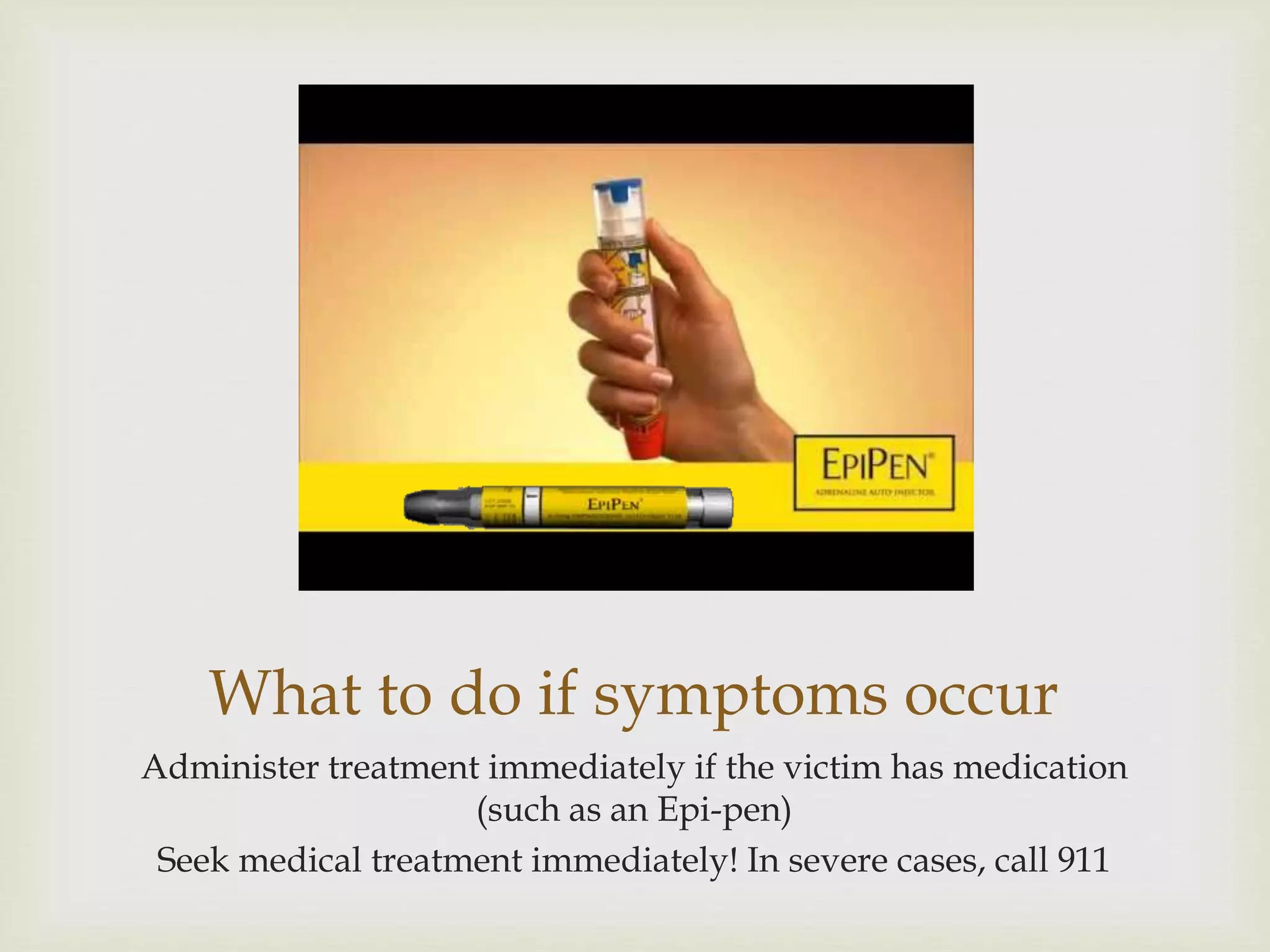
What to do if symptoms occur
Administer treatment immediately if the victim has medication
(such as an Epi-pen)
Seek medical treatment immediately! In severe cases, call 911

Severe Allergic Reactions-
Anaphylaxis
 Anaphylaxis
 Constricted airways in the lungs
 Severe lowering of blood pressure and shock (“anaphylactic
shock”)
 Suffocation by swelling of the throat
 Each year in the U.S., it is estimated that anaphylaxis to
food results in:
 30,000 emergency room visits
 2,000 hospitalizations
 150 deaths

Food Sensitivities
Many people have difficulty digesting certain foods.
Food sensitivity/intolerance is not life threatening,
but can cause sufferers a great deal of discomfort.

Common Types of Food
Sensitivities
 Lactose Intolerance
 The body can not easily digest lactose, a natural sugar
found in milk and dairy products. This is not the same as a
food allergy to milk. It can cause gas, belly pain, and
bloating. Some people who are lactose intolerant can eat or
drink small amounts of milk or dairy products, and others
cannot digest milk products at all.
 Celiac Disease
 A digestive and autoimmune disorder that causes damage
to the lining of the small intestine when foods with gluten
are eaten. The damage makes it hard for the body to absorb
nutrients from food. Gluten is a type of protein found in the
grains wheat, barley, rye, and triticale (a wheat-rye cross).

Common Types of Food
Sensitivities
 Diverticulitis
 Diverticulosis happens when pouches form in the wall
of the colon and become inflamed or infected. People
who have diverticulitis are advised not consume nuts,
corn, popcorn, and fruits with seeds like strawberries
and tomatoes. It was believed these foods would get
stuck in the diverticula and cause inflammation, but
new research is showing this may not be the case. If
you or a family member have been diagnosed with
diverticulitis, talk to your family doctor about what
dietary choices are right for you.

Ways to Keep Others With Food
Allergies Safe
 Keep your carry-in dish or menu at home for
gatherings free of allergens
 Tell everyone at the meal if a dish contains and
allergen
 Don’t prepare anything “exotic”. Keep the menu
simple with familiar food items
 Label items that contain allergens. There are many
products available as well as creative ideas on
websites like Pinterest for labeling buffet foods!

Have a Safe and Happy
Holiday Season!
Thank You

Food Allergen Awareness Training

  • 1.
  • 2.
     Happy Holidays! As weenter a time of celebration and sharing, be aware that those around you might be one of the millions of Americans that have a food allergy.
  • 3.
     What Are Allergens? An allergy is a reaction of the immune system to a normally harmless element. These include, but are not limited to:  Food proteins  Substances  Latex  Plants (poison oak, poison ivy, poison sumac, nettles)  Fragrance (perfumes, contents in lotions and detergents)  Metals  Rubber  Aeroallergens  Dust Mites  Pollen  Mold  Stinging Insects  Drugs
  • 4.
     What Are FoodAllergens?  While more than 160 foods can cause allergic reactions in people with food allergies, the law identifies the eight most common allergenic foods.  Milk  Eggs  Fish (e.g. bass, flounder, cod)  Crustacean shellfish (e.g. crab, lobster, shrimp)  Tree nuts (e.g. almonds, walnuts, pecans)  Peanuts  Wheat  Soybeans
  • 5.
     Food Allergen Awarenessat Work and Home  Although most food allergies cause relatively mild and minor symptoms, some food allergies can cause severe reactions, and may even be life-threatening.  There is no cure for food allergies. Strict avoidance of food allergens – and early recognition and management of allergic reactions to food – are important measures to prevent serious health consequences.  To help Americans avoid the health risks posed by food allergens, Congress passed the Food Allergen Labeling and consumer Protection Act of 2004 (FALCPA). http://www.fda.gov/Food/ResourcesForYou/Consumers/ucm079311.htm
  • 6.
     What Are theSymptoms of an Allergic Reaction?  Hives  Flushed skin or rash  Tingling or itchy sensation in the mouth  Face, tongue, or lip swelling  Vomiting and/or diarrhea  Abdominal cramps  Coughing or wheezing  Dizziness and/or lightheadedness  Swelling of the throat and vocal cords  Difficulty breathing  Loss of consciousness
  • 7.
    What to doif symptoms occur Administer treatment immediately if the victim has medication (such as an Epi-pen) Seek medical treatment immediately! In severe cases, call 911
  • 8.
     Severe Allergic Reactions- Anaphylaxis Anaphylaxis  Constricted airways in the lungs  Severe lowering of blood pressure and shock (“anaphylactic shock”)  Suffocation by swelling of the throat  Each year in the U.S., it is estimated that anaphylaxis to food results in:  30,000 emergency room visits  2,000 hospitalizations  150 deaths
  • 9.
     Food Sensitivities Many peoplehave difficulty digesting certain foods. Food sensitivity/intolerance is not life threatening, but can cause sufferers a great deal of discomfort.
  • 10.
     Common Types ofFood Sensitivities  Lactose Intolerance  The body can not easily digest lactose, a natural sugar found in milk and dairy products. This is not the same as a food allergy to milk. It can cause gas, belly pain, and bloating. Some people who are lactose intolerant can eat or drink small amounts of milk or dairy products, and others cannot digest milk products at all.  Celiac Disease  A digestive and autoimmune disorder that causes damage to the lining of the small intestine when foods with gluten are eaten. The damage makes it hard for the body to absorb nutrients from food. Gluten is a type of protein found in the grains wheat, barley, rye, and triticale (a wheat-rye cross).
  • 11.
     Common Types ofFood Sensitivities  Diverticulitis  Diverticulosis happens when pouches form in the wall of the colon and become inflamed or infected. People who have diverticulitis are advised not consume nuts, corn, popcorn, and fruits with seeds like strawberries and tomatoes. It was believed these foods would get stuck in the diverticula and cause inflammation, but new research is showing this may not be the case. If you or a family member have been diagnosed with diverticulitis, talk to your family doctor about what dietary choices are right for you.
  • 12.
     Ways to KeepOthers With Food Allergies Safe  Keep your carry-in dish or menu at home for gatherings free of allergens  Tell everyone at the meal if a dish contains and allergen  Don’t prepare anything “exotic”. Keep the menu simple with familiar food items  Label items that contain allergens. There are many products available as well as creative ideas on websites like Pinterest for labeling buffet foods!
  • 13.
     Have a Safeand Happy Holiday Season! Thank You