Allergen
Prepared by :
Noor Akma Binti Mohd Alias
QAQC Executive
What is an Allergen?
Any normally harmless
substance that causes
an immediate allergic
reaction in a
susceptible person.
Proteins in foods/
derivatives cause
abnormal immune
responses.
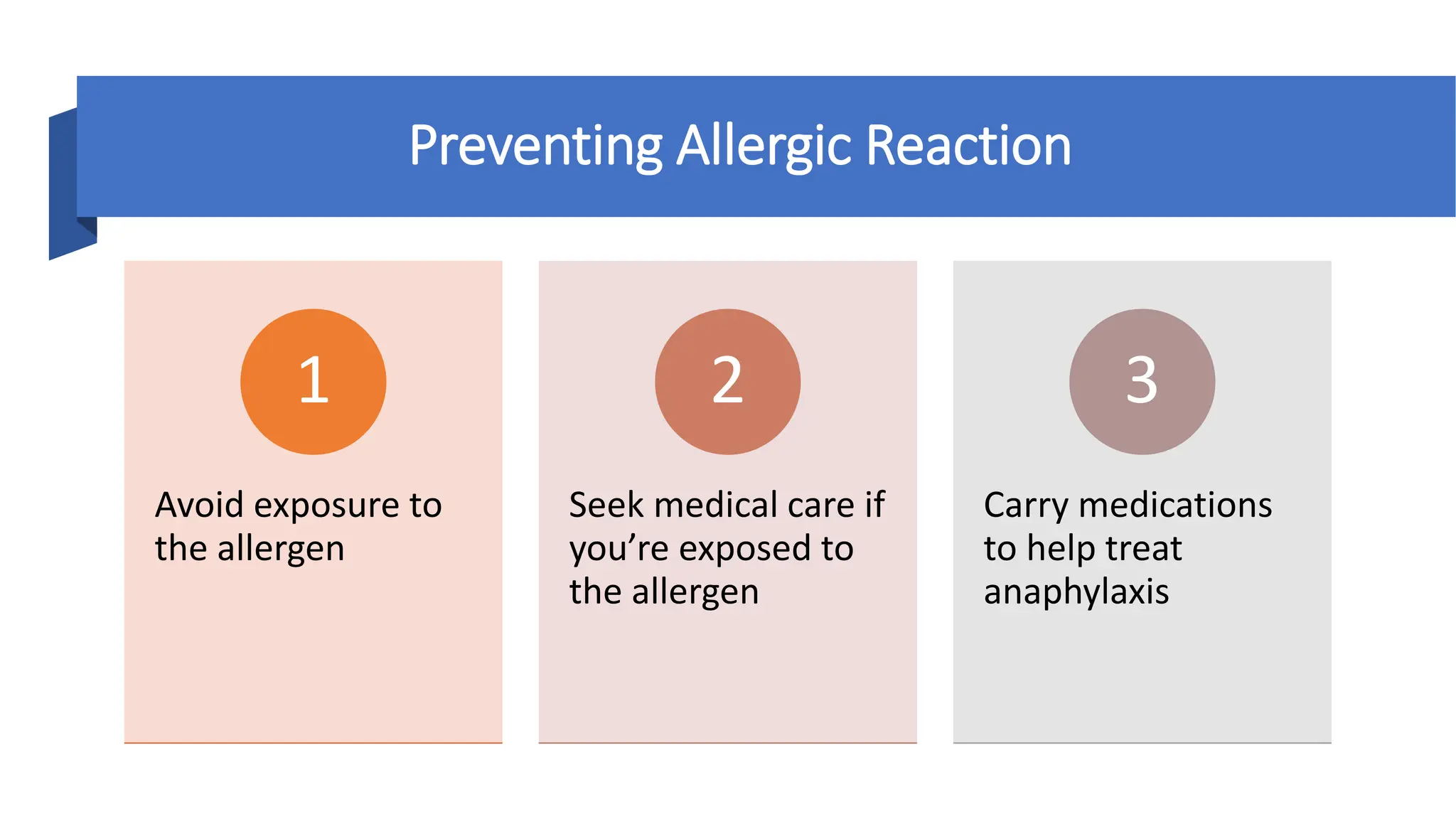
Preventing Allergic Reaction
Avoid exposure to
the allergen
1
Seek medical care if
you’re exposed to
the allergen
2
Carry medications
to help treat
anaphylaxis
3
Causes
of
Allergic
Reaction
Airborne allergens, such as pollen, animal
dander, dust mites and mold.
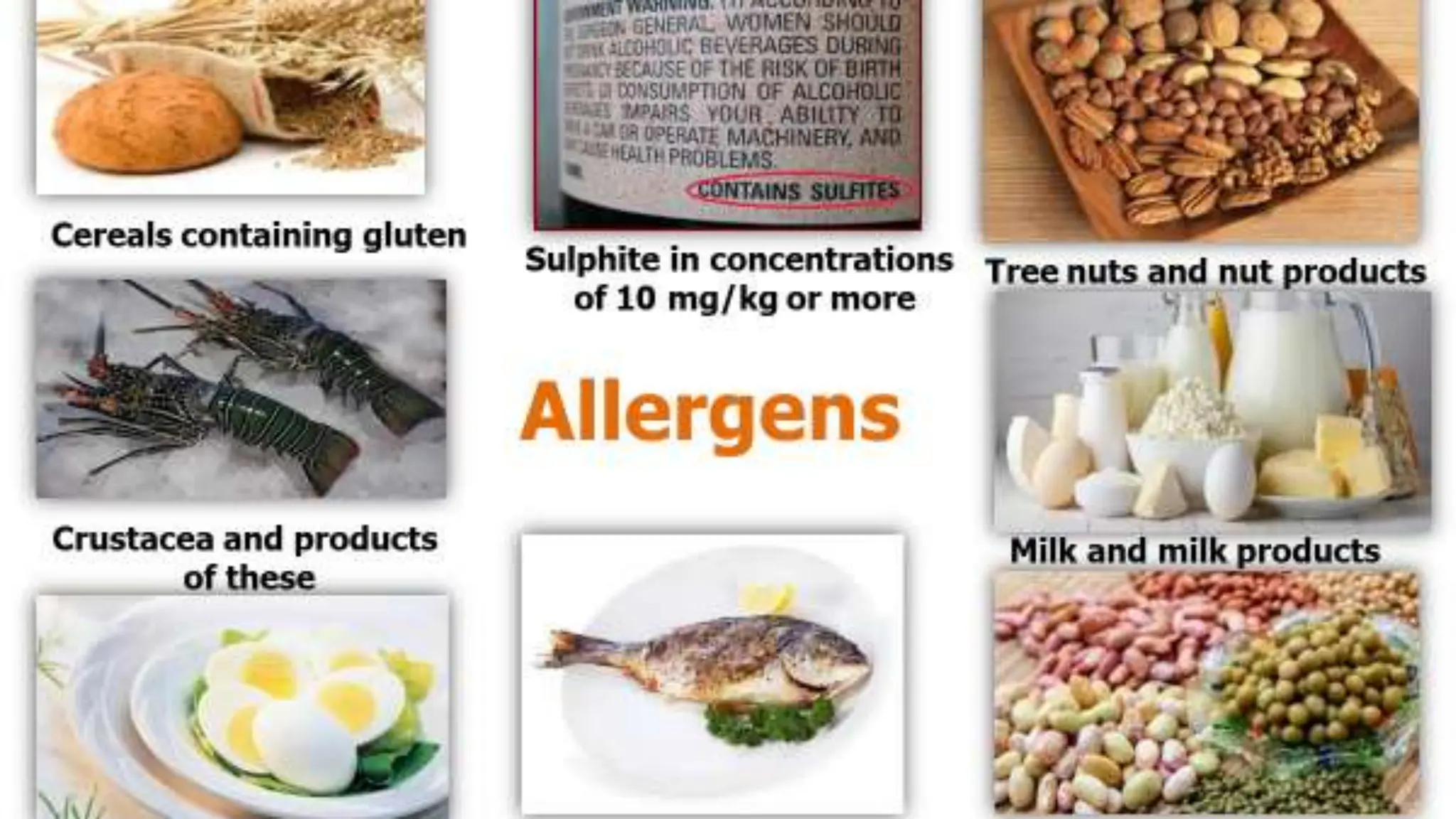
Certain foods, particularly peanuts, tree nuts,
wheat, soy, fish, shellfish, eggs and milk.
Insect stings, (bee / wasp)
Medications, penicillin or penicillin-based
antibiotics.
Production
Scheduling
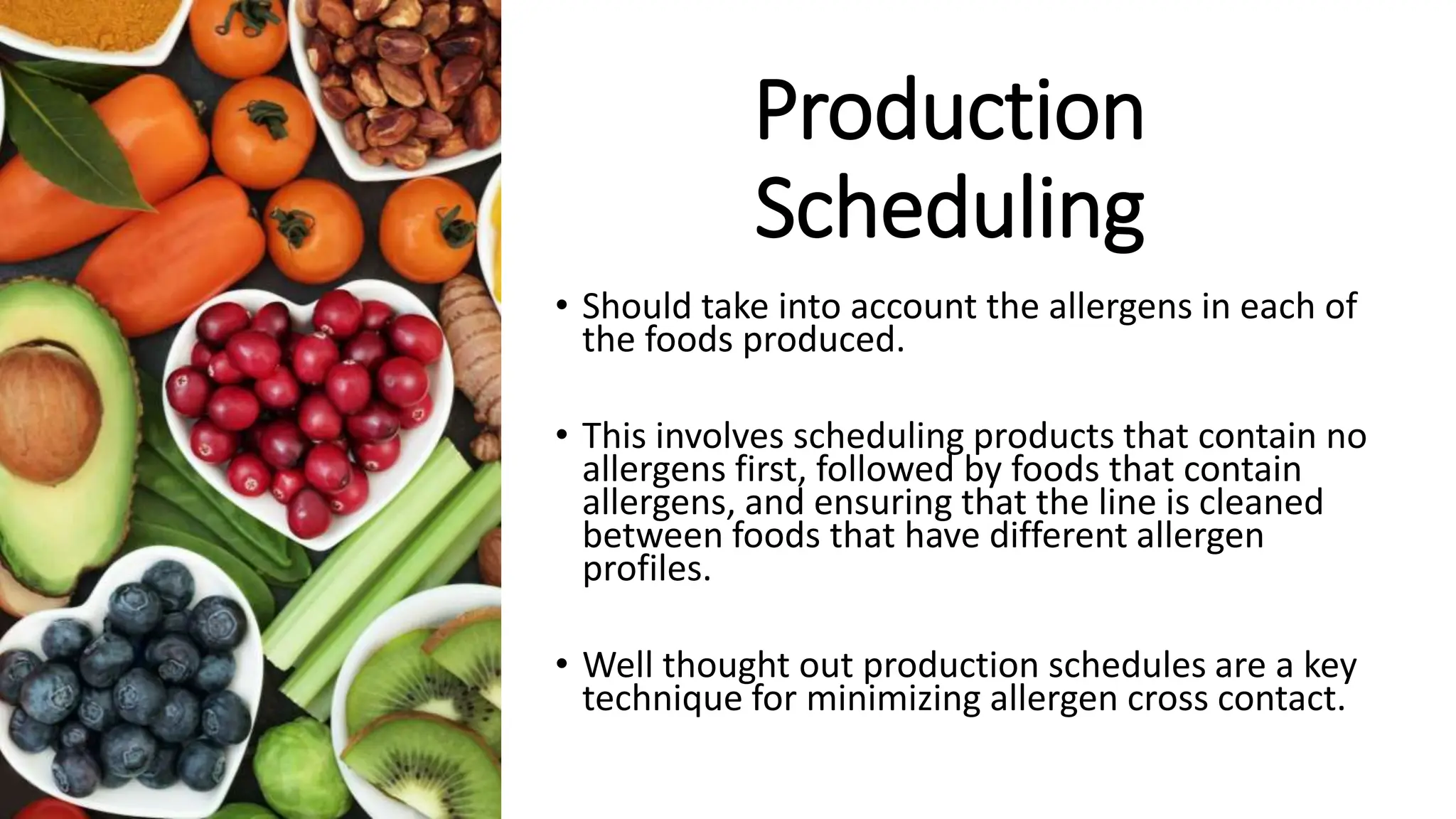
• Should take into account the allergens in each of
the foods produced.
• This involves scheduling products that contain no
allergens first, followed by foods that contain
allergens, and ensuring that the line is cleaned
between foods that have different allergen
profiles.
• Well thought out production schedules are a key
technique for minimizing allergen cross contact.
• Use only approved ingredients
• Do not make decisions which can affect food integrity or
safety unless empowered and trained to do so
• Use product rework only in the product for which it was
originally produced
• Understand your responsibilities
• Understand and do the job as trained
Responsibilities of the Food Handler
• Prepare foods which contain known
allergens after all other products have
been produced, follow sequence as
directed.
• Avoid cross-contamination
• Wash hands thoroughly after handling
known allergens
• Wash hands thoroughly after eating
Responsibilities of the Food
Handler
• Keep aprons and clothing free of allergens
• Follow a very thorough sanitation
program to prevent cross-contamination.
• Keep dust down
• Keep all ingredients closed when not in
use
• Use only specified equipment and utensils
Preventing Food Allergen
Contamination
Prevent Cross-Contact:
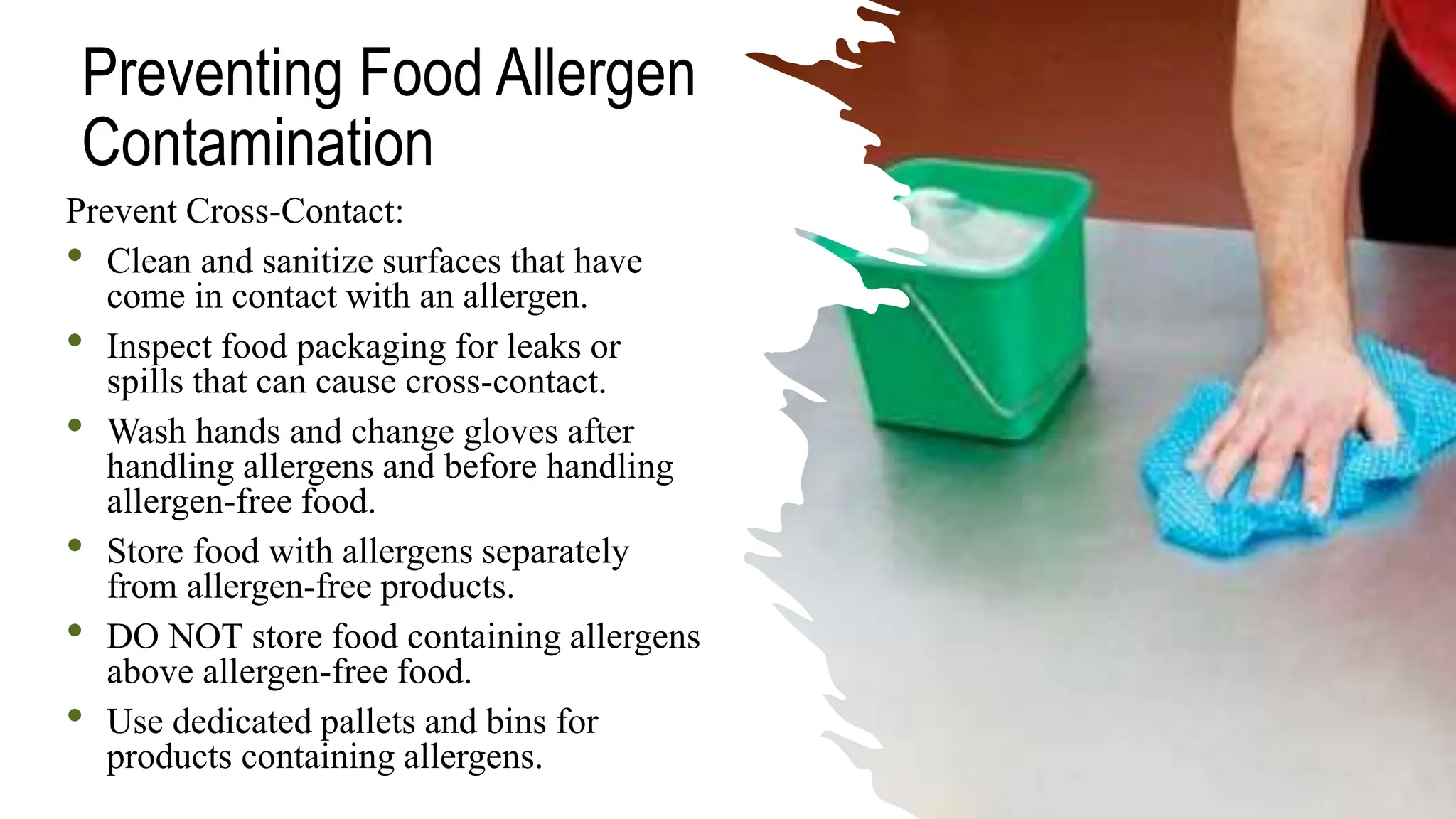
• Clean and sanitize surfaces that have
come in contact with an allergen.
• Inspect food packaging for leaks or
spills that can cause cross-contact.
• Wash hands and change gloves after
handling allergens and before handling
allergen-free food.
• Store food with allergens separately
from allergen-free products.
• DO NOT store food containing allergens
above allergen-free food.
• Use dedicated pallets and bins for
products containing allergens.
Remember
•Don’t assume all people can eat
all foods
•Do your job as trained
•Do not make decisions for the
consumer
•Do no cross contaminate
•Properly label all foods
Activity
1. Eggs and egg products are allergens. True/False
2. Allergens and non-allergen product can be prepared in same
containers without cleaning. True/False
3. Store allergenic ingredients or products separately to prevent
minimize .............................
a. Production b. Waste
c. Cross-contamination d. Space
4.Which foods and ingredients are known to cause hypersensitivity and
shall always be declared.
a. Chicken b. Red Meat
c. Rice d. Milk
THANK YOU

ALLERGEN awareness training for quality .pptx

  • 1.
    Allergen Prepared by : NoorAkma Binti Mohd Alias QAQC Executive
  • 2.
    What is anAllergen? Any normally harmless substance that causes an immediate allergic reaction in a susceptible person. Proteins in foods/ derivatives cause abnormal immune responses.
  • 5.
    Preventing Allergic Reaction Avoidexposure to the allergen 1 Seek medical care if you’re exposed to the allergen 2 Carry medications to help treat anaphylaxis 3
  • 6.
    Causes of Allergic Reaction Airborne allergens, suchas pollen, animal dander, dust mites and mold. Certain foods, particularly peanuts, tree nuts, wheat, soy, fish, shellfish, eggs and milk. Insect stings, (bee / wasp) Medications, penicillin or penicillin-based antibiotics.
  • 7.
    Production Scheduling • Should takeinto account the allergens in each of the foods produced. • This involves scheduling products that contain no allergens first, followed by foods that contain allergens, and ensuring that the line is cleaned between foods that have different allergen profiles. • Well thought out production schedules are a key technique for minimizing allergen cross contact.
  • 8.
    • Use onlyapproved ingredients • Do not make decisions which can affect food integrity or safety unless empowered and trained to do so • Use product rework only in the product for which it was originally produced • Understand your responsibilities • Understand and do the job as trained
  • 9.
    Responsibilities of theFood Handler • Prepare foods which contain known allergens after all other products have been produced, follow sequence as directed. • Avoid cross-contamination • Wash hands thoroughly after handling known allergens • Wash hands thoroughly after eating
  • 10.
    Responsibilities of theFood Handler • Keep aprons and clothing free of allergens • Follow a very thorough sanitation program to prevent cross-contamination. • Keep dust down • Keep all ingredients closed when not in use • Use only specified equipment and utensils
  • 11.
    Preventing Food Allergen Contamination PreventCross-Contact: • Clean and sanitize surfaces that have come in contact with an allergen. • Inspect food packaging for leaks or spills that can cause cross-contact. • Wash hands and change gloves after handling allergens and before handling allergen-free food. • Store food with allergens separately from allergen-free products. • DO NOT store food containing allergens above allergen-free food. • Use dedicated pallets and bins for products containing allergens.
  • 12.
    Remember •Don’t assume allpeople can eat all foods •Do your job as trained •Do not make decisions for the consumer •Do no cross contaminate •Properly label all foods
  • 13.
    Activity 1. Eggs andegg products are allergens. True/False 2. Allergens and non-allergen product can be prepared in same containers without cleaning. True/False 3. Store allergenic ingredients or products separately to prevent minimize ............................. a. Production b. Waste c. Cross-contamination d. Space 4.Which foods and ingredients are known to cause hypersensitivity and shall always be declared. a. Chicken b. Red Meat c. Rice d. Milk
  • 15.