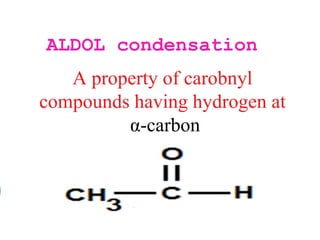
A property of carobnyl
compounds having hydrogen at
α-carbon
ALDOL condensation
ALDOL condensation
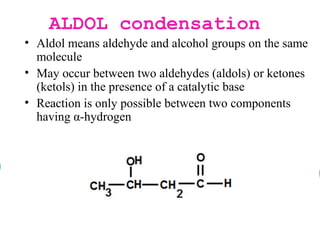
• Aldol means aldehyde and alcohol groups on the same
molecule
• May occur between two aldehydes (aldols) or ketones
(ketols) in the presence of a catalytic base
• Reaction is only possible between two components
having α-hydrogen
ALDOL condensation
• Formation of aldols or ketols reactions are
reversible
• Mechanism: involves enolate formation
and nucleophilic attack at a carbonyl
carbon
• Aldols and ketols loose water in the
presence of an acid forming α-ß-
unsaturated aldehydes or ketones and ß-
hydroxy aldehydes or ketones
Aldol condensation
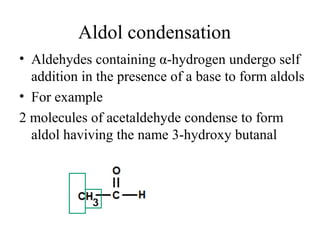
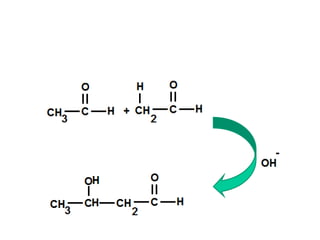
• Aldehydes containing α-hydrogen undergo self
addition in the presence of a base to form aldols
• For example
2 molecules of acetaldehyde condense to form
aldol haviving the name 3-hydroxy butanal
Mechanism
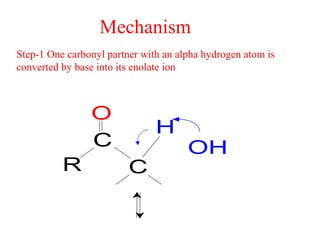
Step-1 One carbonyl partner with an alpha hydrogen atom is
converted by base into its enolate ion
O
C
R C
H
OH
C
O
C
C O
R
:
..
..
R
C
O
C
OH2
C
O:
: :
Electrophilic
Acceptor
Nucleophilic
Donor
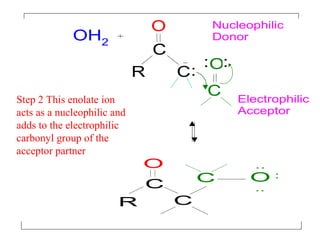
Step 2 This enolate ion
acts as a nucleophilic and
adds to the electrophilic
carbonyl group of the
acceptor partner
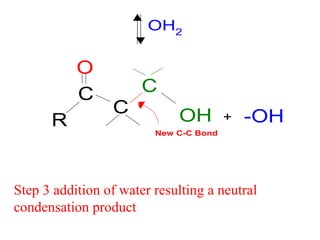
Step 3 addition of water resulting a neutral
condensation product
OH2
R
C
C
C
OH -OH
O
+
New C-C Bond
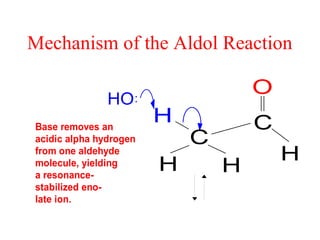
Mechanism of the Aldol Reaction
HO:
H
C
H H
C
O
H
Base removes an
acidic alpha hydrogen
from one aldehyde
molecule, yielding
a resonance-
stabilized eno-
late ion.
C
O
CH3 H
: : OH+ 2
C
H
H
C
H
O
..
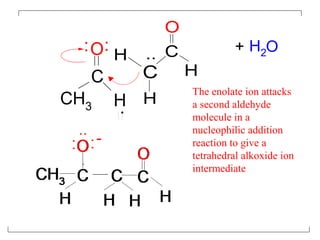
The enolate ion attacks
a second aldehyde
molecule in a
nucleophilic addition
reaction to give a
tetrahedral alkoxide ion
intermediate
H O2
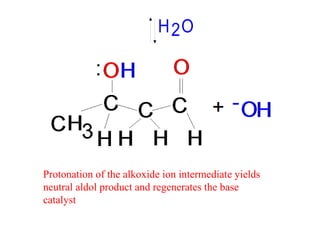
Protonation of the alkoxide ion intermediate yields
neutral aldol product and regenerates the base
catalyst
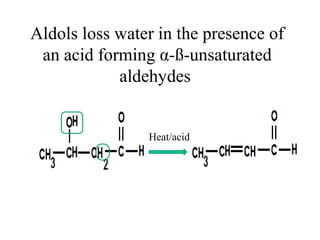
Aldols loss water in the presence of
an acid forming α-ß-unsaturated
aldehydes
Heat/acid
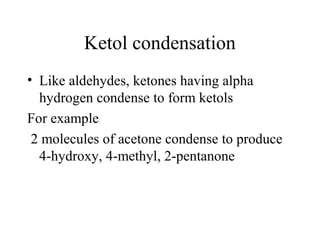
Ketol condensation
• Like aldehydes, ketones having alpha
hydrogen condense to form ketols
For example
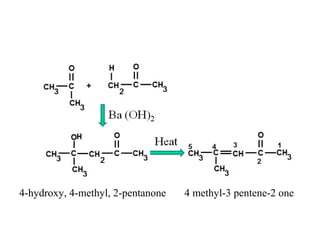
2 molecules of acetone condense to produce
4-hydroxy, 4-methyl, 2-pentanone
4 methyl-3 pentene-2 one4-hydroxy, 4-methyl, 2-pentanone
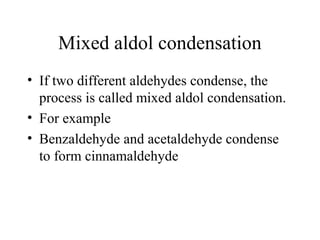
Mixed aldol condensation
• If two different aldehydes condense, the
process is called mixed aldol condensation.
• For example
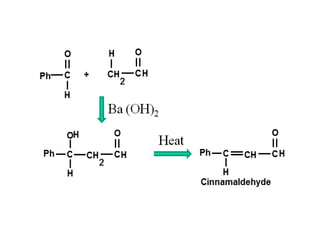
• Benzaldehyde and acetaldehyde condense
to form cinnamaldehyde
Aldol Condensation---Sir Khalid (Organic)

Aldol Condensation---Sir Khalid (Organic)

  • 1.
    A property ofcarobnyl compounds having hydrogen at α-carbon ALDOL condensation
  • 2.
    ALDOL condensation • Aldolmeans aldehyde and alcohol groups on the same molecule • May occur between two aldehydes (aldols) or ketones (ketols) in the presence of a catalytic base • Reaction is only possible between two components having α-hydrogen
  • 3.
    ALDOL condensation • Formationof aldols or ketols reactions are reversible • Mechanism: involves enolate formation and nucleophilic attack at a carbonyl carbon • Aldols and ketols loose water in the presence of an acid forming α-ß- unsaturated aldehydes or ketones and ß- hydroxy aldehydes or ketones
  • 4.
    Aldol condensation • Aldehydescontaining α-hydrogen undergo self addition in the presence of a base to form aldols • For example 2 molecules of acetaldehyde condense to form aldol haviving the name 3-hydroxy butanal
  • 6.
    Mechanism Step-1 One carbonylpartner with an alpha hydrogen atom is converted by base into its enolate ion O C R C H OH
  • 7.
    C O C C O R : .. .. R C O C OH2 C O: : : Electrophilic Acceptor Nucleophilic Donor Step2 This enolate ion acts as a nucleophilic and adds to the electrophilic carbonyl group of the acceptor partner
  • 8.
    Step 3 additionof water resulting a neutral condensation product OH2 R C C C OH -OH O + New C-C Bond
  • 9.
    Mechanism of theAldol Reaction HO: H C H H C O H Base removes an acidic alpha hydrogen from one aldehyde molecule, yielding a resonance- stabilized eno- late ion.
  • 10.
    C O CH3 H : :OH+ 2 C H H C H O .. The enolate ion attacks a second aldehyde molecule in a nucleophilic addition reaction to give a tetrahedral alkoxide ion intermediate
  • 11.
    H O2 Protonation ofthe alkoxide ion intermediate yields neutral aldol product and regenerates the base catalyst
  • 12.
    Aldols loss waterin the presence of an acid forming α-ß-unsaturated aldehydes Heat/acid
  • 13.
    Ketol condensation • Likealdehydes, ketones having alpha hydrogen condense to form ketols For example 2 molecules of acetone condense to produce 4-hydroxy, 4-methyl, 2-pentanone
  • 14.
    4 methyl-3 pentene-2one4-hydroxy, 4-methyl, 2-pentanone
  • 15.
    Mixed aldol condensation •If two different aldehydes condense, the process is called mixed aldol condensation. • For example • Benzaldehyde and acetaldehyde condense to form cinnamaldehyde