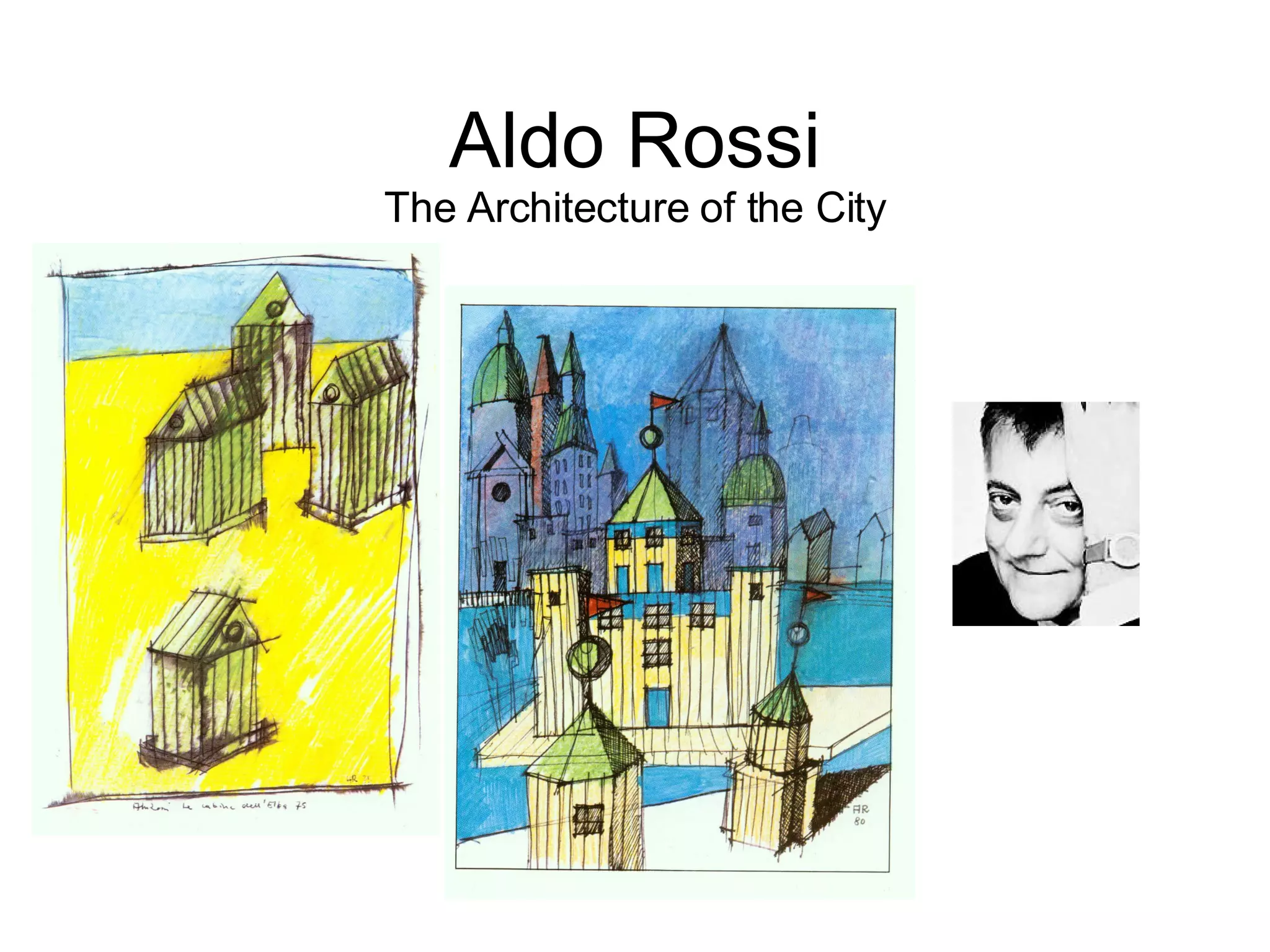
Aldo Rossi The Architecture of the City
“The Architecture of the City”  First published as  L’architettura della citta  in 1966 Proposes a return to reason & logic, history & memory, & the city The city must be valued as a construction over time
Themes Critique of Functionalism and Modernism’s utilitarian basis Autonomous monuments and the permanence of form A city of fragments, a city of monuments The memory structure of the city
Permanence of Form
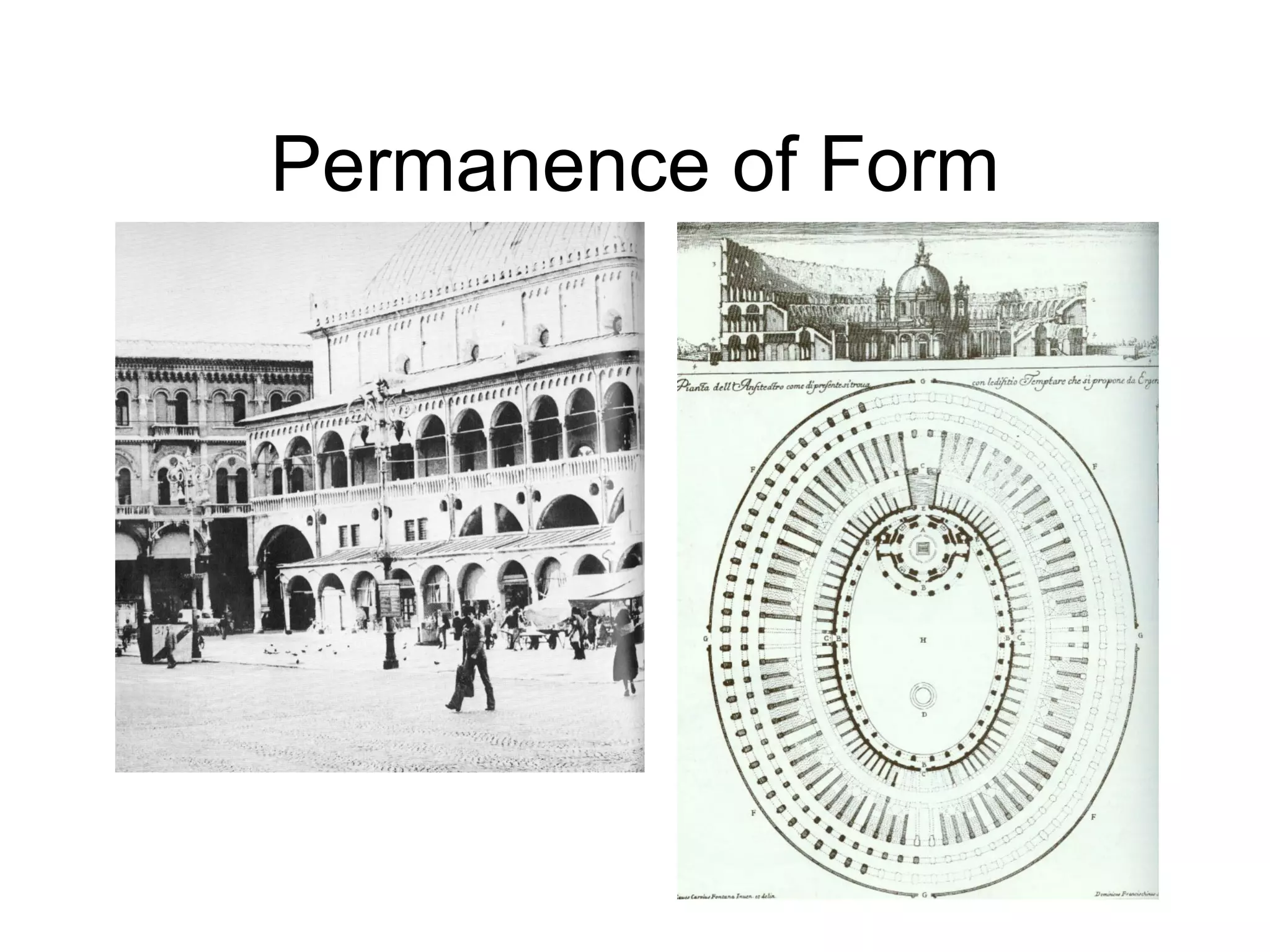
Palazzo della Ragione Padua, Italy  A City Hall from the 1200’s, converted into a marketplace Form is permanent and complex Form can be adapted to new uses Not “form follows function”
Project for the Coliseum Rome, Italy Project to transform the Coliseum into a forum for a centrally planned church Proposed by Carlo Fontana, 1707 Unrealized Maintains the idea that existing artifacts can be adapted for new uses “ Whereas the Functionalist seeks the greatest possible suitability to the most specific purpose, the Rationalist desires to obtain the greatest potential of adaptation to the largest number of needs”
Type and Elemental Forms
 
Teatro del Mondo Venice Biennale 1979-80 “ Theatre of the World”  Simple, unornamented forms Recalls floating theatres characteristic of Venice in the 18th century Based on Rossi’s childhood memory of a puppet theatre
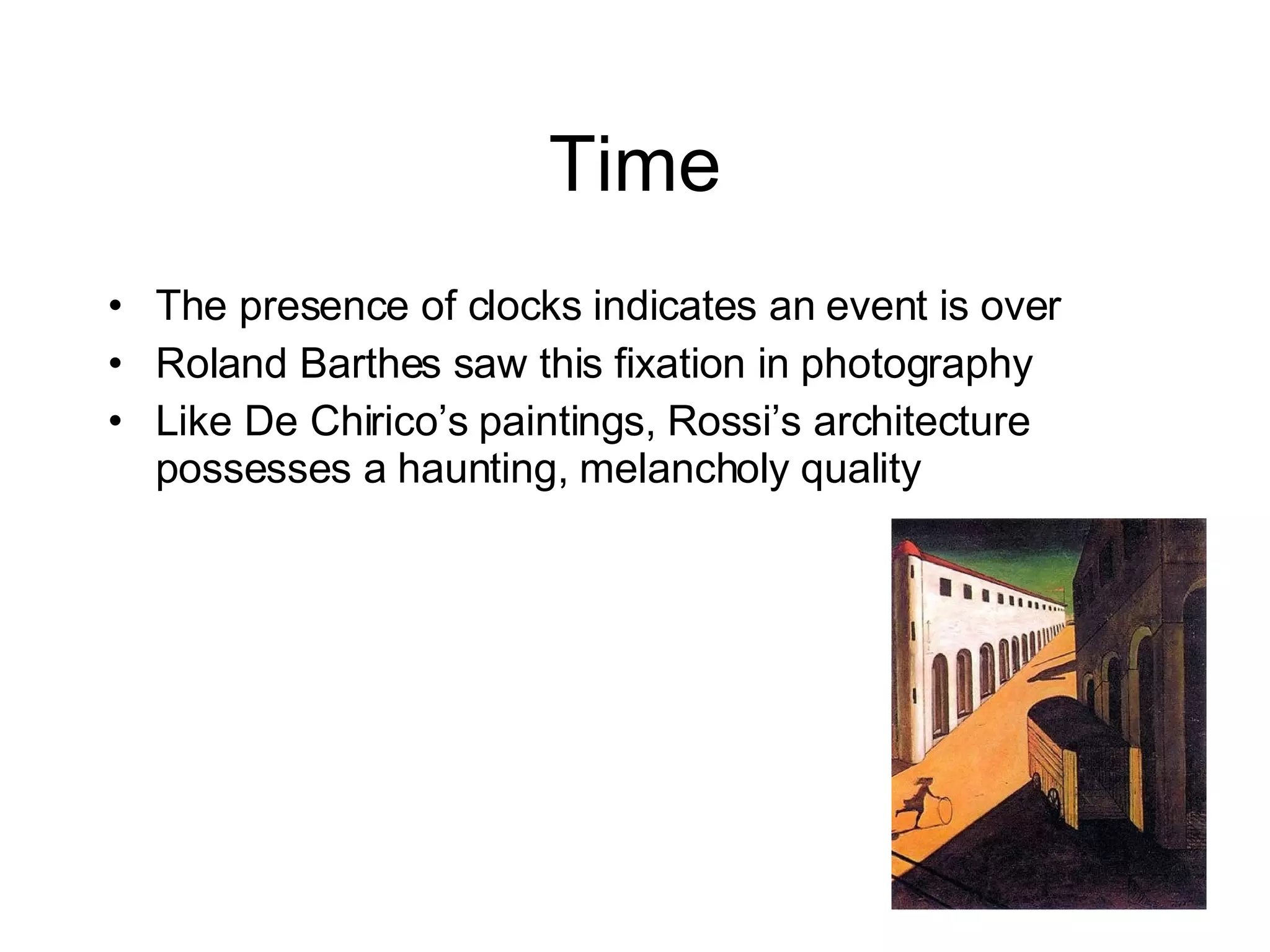
Type and Memory Reminiscent of  De Chirico  The city composed of recognizable types Types allow people to connect through collective memory  Autonomous forms as archetypes  Form follows memory
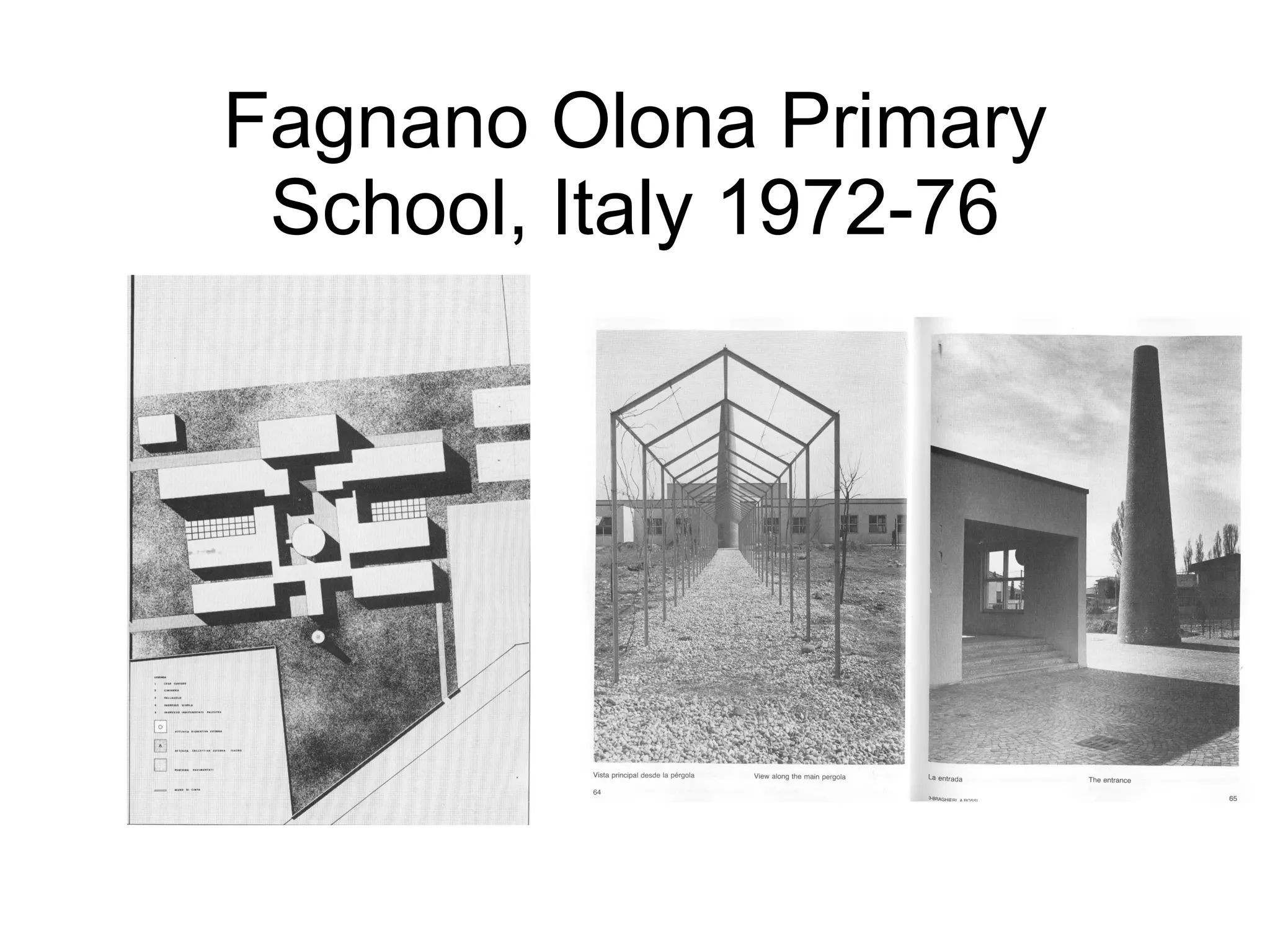
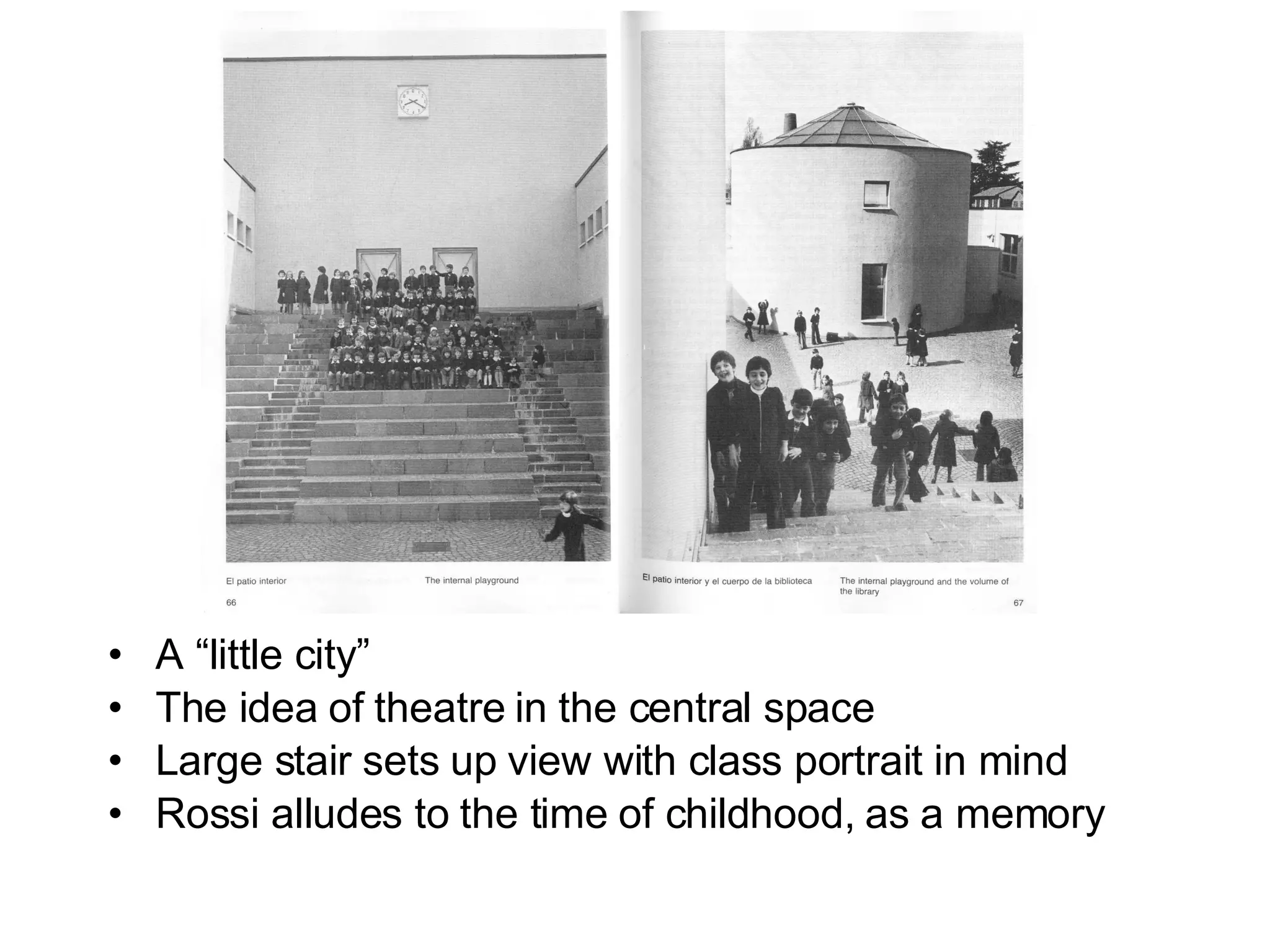
Fagnano Olona Primary School, Italy 1972-76
A “little city” The idea of theatre in the central space Large stair sets up view with class portrait in mind Rossi alludes to the time of childhood, as a memory
Time The presence of clocks indicates an event is over Roland Barthes saw this fixation in photography Like De Chirico’s paintings, Rossi’s architecture possesses a haunting, melancholy quality
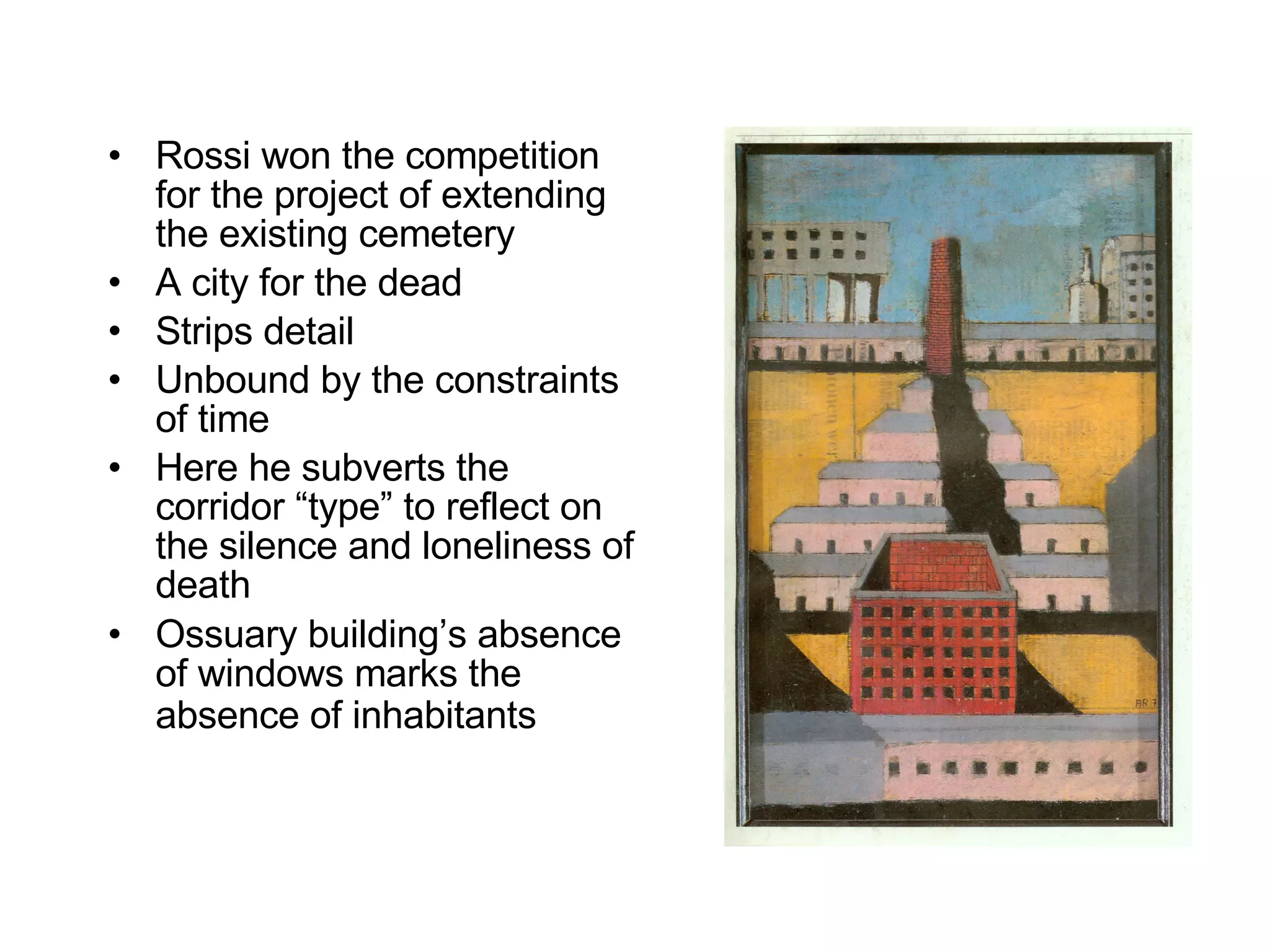
San Cataldo Cemetery Modena, Italy 1971
Rossi won the competition for the project of extending the existing cemetery A city for the dead Strips detail Unbound by the constraints of time Here he subverts the corridor “type” to reflect on the silence and loneliness of death  Ossuary building’s absence of windows marks the absence of inhabitants
Memory Structure of the City Nolli Map of Rome, 1748 The city designed as links from one monument to the next Mimics how our memories work Monuments and memory are fundamental to the city structure
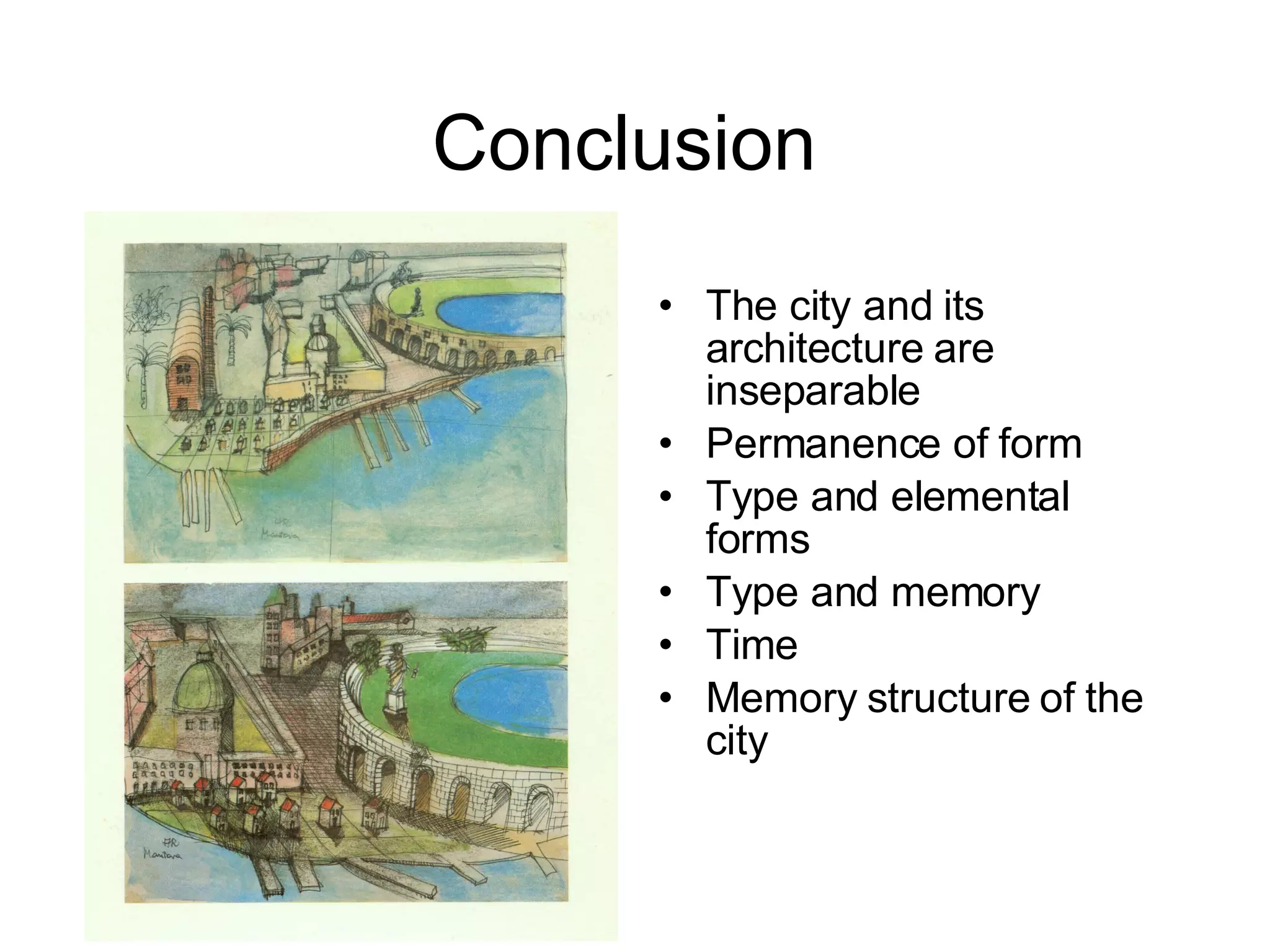
Conclusion  The city and its architecture are inseparable  Permanence of form Type and elemental forms Type and memory Time Memory structure of the city
“ The architect masters meaning and, through it, he is able to enter into the process of society’s transformation”

Aldo Rossi and The Architecture of the City

  • 1.
    Aldo Rossi TheArchitecture of the City
  • 2.
    “The Architecture ofthe City” First published as L’architettura della citta in 1966 Proposes a return to reason & logic, history & memory, & the city The city must be valued as a construction over time
  • 3.
    Themes Critique ofFunctionalism and Modernism’s utilitarian basis Autonomous monuments and the permanence of form A city of fragments, a city of monuments The memory structure of the city
  • 4.
  • 5.
    Palazzo della RagionePadua, Italy A City Hall from the 1200’s, converted into a marketplace Form is permanent and complex Form can be adapted to new uses Not “form follows function”
  • 6.
    Project for theColiseum Rome, Italy Project to transform the Coliseum into a forum for a centrally planned church Proposed by Carlo Fontana, 1707 Unrealized Maintains the idea that existing artifacts can be adapted for new uses “ Whereas the Functionalist seeks the greatest possible suitability to the most specific purpose, the Rationalist desires to obtain the greatest potential of adaptation to the largest number of needs”
  • 7.
  • 8.
  • 9.
    Teatro del MondoVenice Biennale 1979-80 “ Theatre of the World” Simple, unornamented forms Recalls floating theatres characteristic of Venice in the 18th century Based on Rossi’s childhood memory of a puppet theatre
  • 10.
    Type and MemoryReminiscent of De Chirico The city composed of recognizable types Types allow people to connect through collective memory Autonomous forms as archetypes Form follows memory
  • 11.
    Fagnano Olona PrimarySchool, Italy 1972-76
  • 12.
    A “little city”The idea of theatre in the central space Large stair sets up view with class portrait in mind Rossi alludes to the time of childhood, as a memory
  • 13.
    Time The presenceof clocks indicates an event is over Roland Barthes saw this fixation in photography Like De Chirico’s paintings, Rossi’s architecture possesses a haunting, melancholy quality
  • 14.
    San Cataldo CemeteryModena, Italy 1971
  • 15.
    Rossi won thecompetition for the project of extending the existing cemetery A city for the dead Strips detail Unbound by the constraints of time Here he subverts the corridor “type” to reflect on the silence and loneliness of death Ossuary building’s absence of windows marks the absence of inhabitants
  • 16.
    Memory Structure ofthe City Nolli Map of Rome, 1748 The city designed as links from one monument to the next Mimics how our memories work Monuments and memory are fundamental to the city structure
  • 17.
    Conclusion Thecity and its architecture are inseparable Permanence of form Type and elemental forms Type and memory Time Memory structure of the city
  • 18.
    “ The architectmasters meaning and, through it, he is able to enter into the process of society’s transformation”