–
 system of watercourses or drains for
carrying off excess water
 minimises the impact of flooding from
built-up areas into rivers and creeks
 In geomorphology, it is the pattern
formed by the surface water in a
particular drainage basin.
 The Philippines ranks third among
countries most at risk for disasters.
 Metro Manila Flood Management Master
Plan (2012) - improve management of
solid waste within villages in the vicinity
of drainage systems
 Most cities in the Philippines have no
separate storm water and waste water
system.
 Sometimes the drainage system is more
or less located underground and
sometimes it is open concrete ditches
 Most of the drain pipes were built in the
1960s.
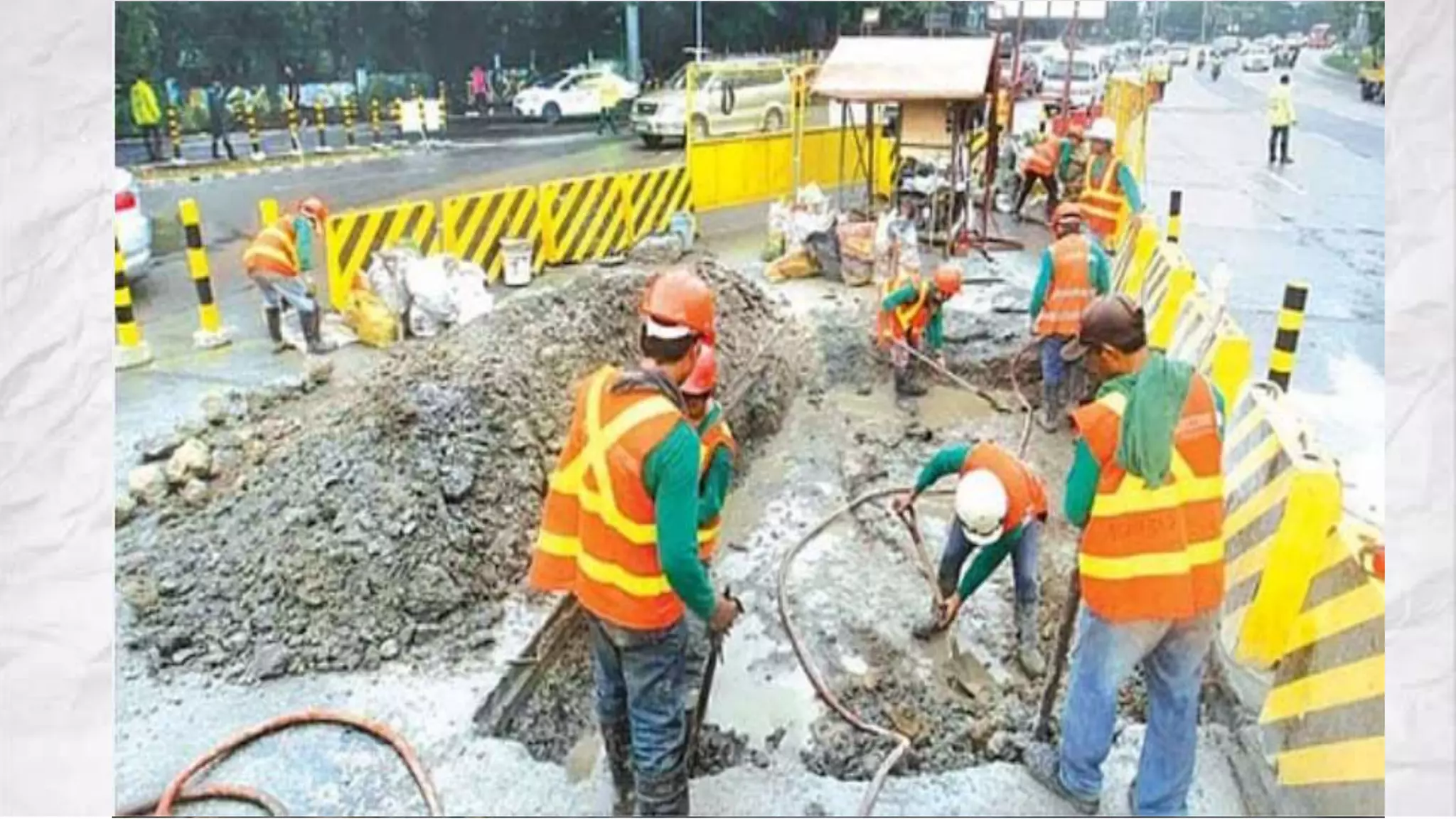
• The Construction of Drainage in metro manila
start since 1950’s and under Ministry of Public
Works and Highways now it is called
Department of Public Works and Highways.
• The DPWH Has already installed 35 drainage
mains along the nation roads in manila. It have
a total length of 34 kilometers.
 RA 7924 – Operation and Management
was handed over from the DPWH to
MMDA (July 9, 2002)
PRINCIPAL
• Drainage mains
• Outfalls
• Creeks
SECONDARY:
• Drainage channels or laterals
 According to the Metropolitan Manila
Development Authority (MMDA), 70 percent of
the drain pipes in Manila are made of single
barrels 24 inches in diameter, similar to the
size of the opening of a container drum.
However, the actual and ideal size should be 3
meters by 4 meters or visually similar to the
size of a car
 The discharge capacity of the drainage
system was estimated to be reduced to less
than 60% of the original capacity.
 Manila the center of the country and becomes
very dense city which leads to Informal
Settlers to live around creeks, rivers and
esteros.
ISSUES CONSIDERED IN THE REHABILITATION:
• Difficulties on Land Acquisition
• Tedious coordination with different and various private and
semi-government agencies handling underground utilities
• Limited area that can be used during project construction
• Difficulties due to heavy traffic and will aggravate traffic jam by
construction
• Poorly maintained drainage systems and poor waste
management habits can adversely affect us and our
environment in the following ways;
Flooding: The immediate effects of flooding include loss of
human life, damage to property, destruction of crops and
other plants, loss of livestock.
Illness/diseases: Stagnant water can result to
contamination which can harm living organisms.
Flood prone areas are the drainage of:
MANILA NORTH:
• Aviles
• Sampaloc
• España
• Quiapo
MANILA SOUTH:
• Zobel Roxas
• PNR Canal
• Calatagan Creek-1
• San Isidro
• San Antonio
• Pio Del Pilar
• Difficulties on Land Acquisition
• Tedious coordination with different and various private and
semi-government
• agencies handling underground utilities
• Limited area that can be used during project construction
(narrow road, etc.)
• Difficulties due to heavy traffic and will aggravate traffic jam
by construction
• Solution is additional pumping station, but limited land for
acquisition.
• Need for additional pumping stations as well as Storage
Facilities
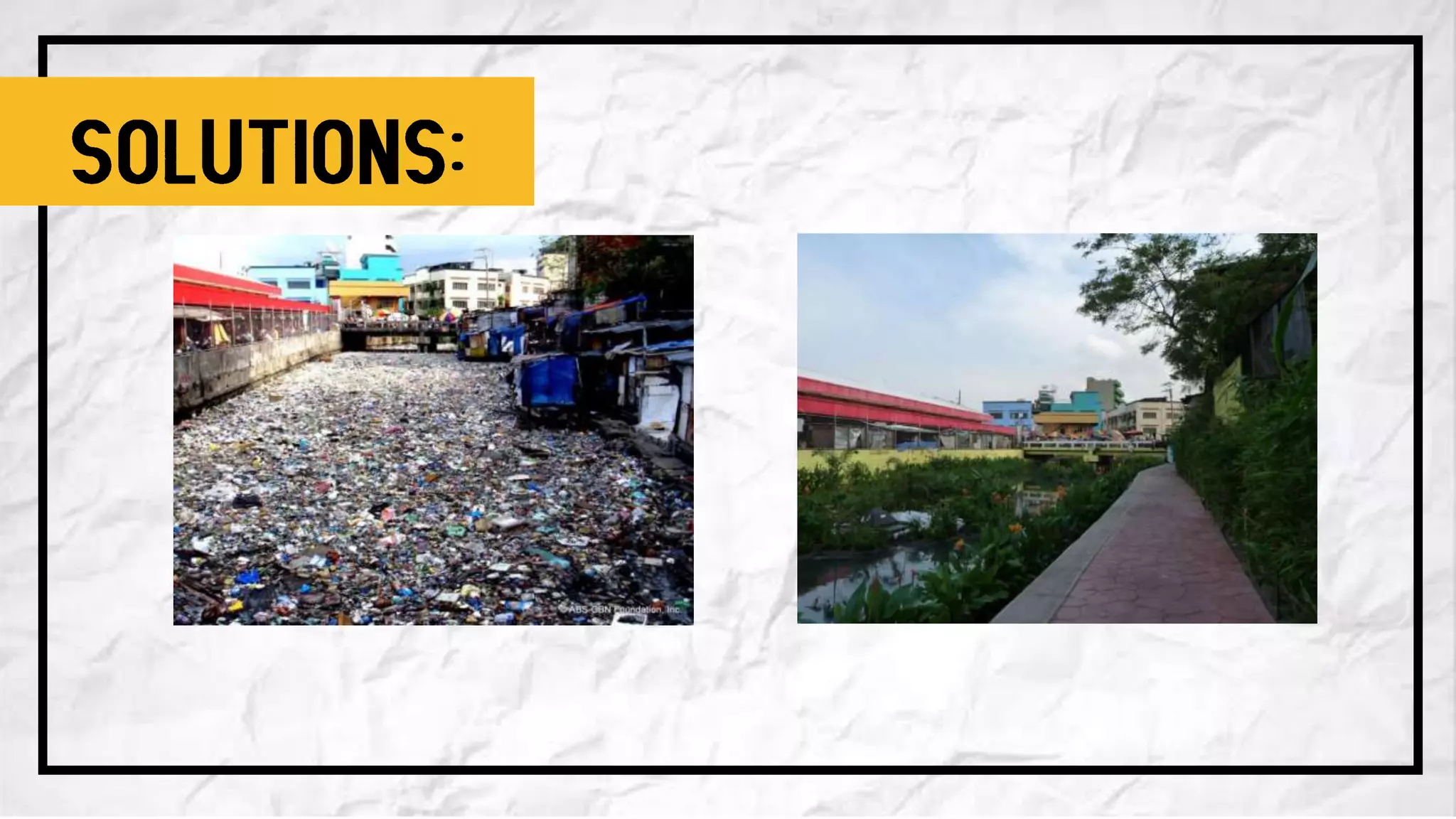
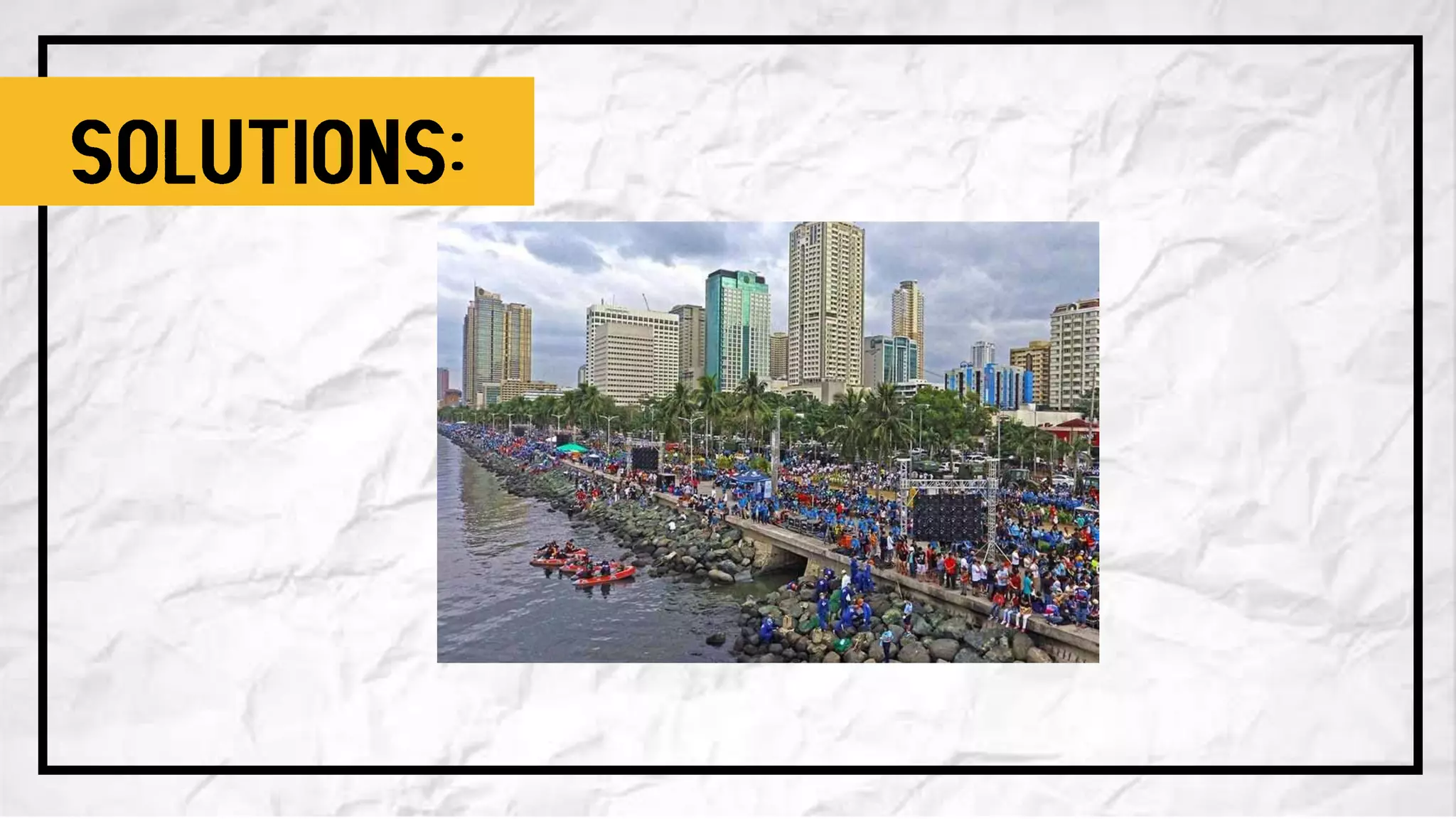
• Rehabilitation and Repairs of Drainage pump
• Relocating IFS away from creeks, esteros and
other drainage facilities
• Clean up drive
• Proposals of new drainage systems
Drainage System in Manila

Drainage System in Manila

  • 1.
  • 3.
     system ofwatercourses or drains for carrying off excess water  minimises the impact of flooding from built-up areas into rivers and creeks  In geomorphology, it is the pattern formed by the surface water in a particular drainage basin.
  • 4.
     The Philippinesranks third among countries most at risk for disasters.  Metro Manila Flood Management Master Plan (2012) - improve management of solid waste within villages in the vicinity of drainage systems
  • 6.
     Most citiesin the Philippines have no separate storm water and waste water system.  Sometimes the drainage system is more or less located underground and sometimes it is open concrete ditches  Most of the drain pipes were built in the 1960s.
  • 7.
    • The Constructionof Drainage in metro manila start since 1950’s and under Ministry of Public Works and Highways now it is called Department of Public Works and Highways. • The DPWH Has already installed 35 drainage mains along the nation roads in manila. It have a total length of 34 kilometers.
  • 8.
     RA 7924– Operation and Management was handed over from the DPWH to MMDA (July 9, 2002)
  • 9.
    PRINCIPAL • Drainage mains •Outfalls • Creeks SECONDARY: • Drainage channels or laterals
  • 11.
     According tothe Metropolitan Manila Development Authority (MMDA), 70 percent of the drain pipes in Manila are made of single barrels 24 inches in diameter, similar to the size of the opening of a container drum. However, the actual and ideal size should be 3 meters by 4 meters or visually similar to the size of a car
  • 12.
     The dischargecapacity of the drainage system was estimated to be reduced to less than 60% of the original capacity.  Manila the center of the country and becomes very dense city which leads to Informal Settlers to live around creeks, rivers and esteros.
  • 15.
    ISSUES CONSIDERED INTHE REHABILITATION: • Difficulties on Land Acquisition • Tedious coordination with different and various private and semi-government agencies handling underground utilities • Limited area that can be used during project construction • Difficulties due to heavy traffic and will aggravate traffic jam by construction
  • 17.
    • Poorly maintaineddrainage systems and poor waste management habits can adversely affect us and our environment in the following ways; Flooding: The immediate effects of flooding include loss of human life, damage to property, destruction of crops and other plants, loss of livestock. Illness/diseases: Stagnant water can result to contamination which can harm living organisms.
  • 18.
    Flood prone areasare the drainage of: MANILA NORTH: • Aviles • Sampaloc • España • Quiapo MANILA SOUTH: • Zobel Roxas • PNR Canal • Calatagan Creek-1 • San Isidro • San Antonio • Pio Del Pilar
  • 19.
    • Difficulties onLand Acquisition • Tedious coordination with different and various private and semi-government • agencies handling underground utilities • Limited area that can be used during project construction (narrow road, etc.) • Difficulties due to heavy traffic and will aggravate traffic jam by construction • Solution is additional pumping station, but limited land for acquisition. • Need for additional pumping stations as well as Storage Facilities
  • 20.
    • Rehabilitation andRepairs of Drainage pump • Relocating IFS away from creeks, esteros and other drainage facilities • Clean up drive • Proposals of new drainage systems