LIGHT RAIL EVOLUTION
Traffic interface, catenary free and traffic modelling
Callan Stirzaker, WSP Australia
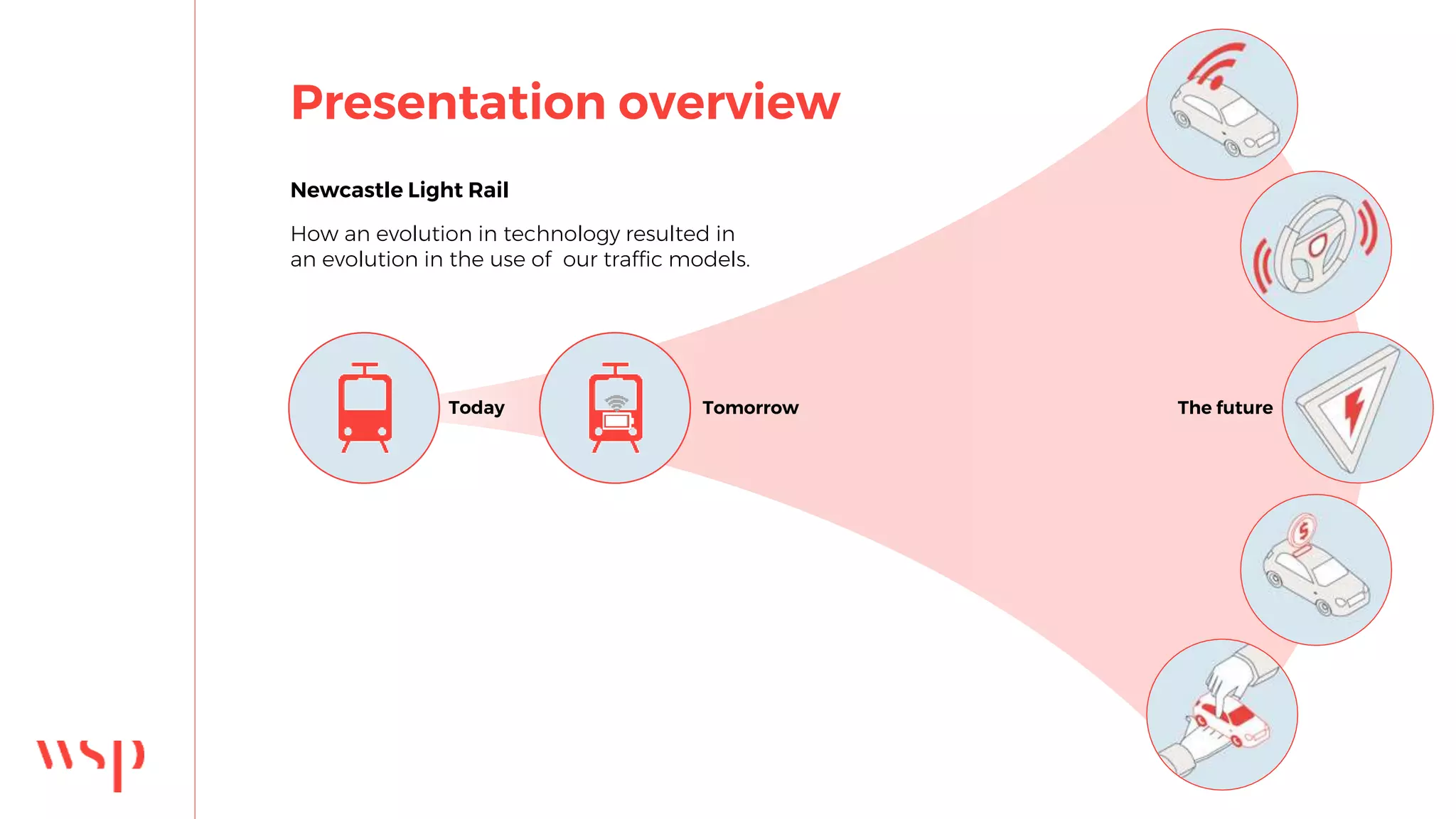
Presentation overview
Newcastle Light Rail
How an evolution in technology resulted in
an evolution in the use of our traffic models.
Today Tomorrow The future
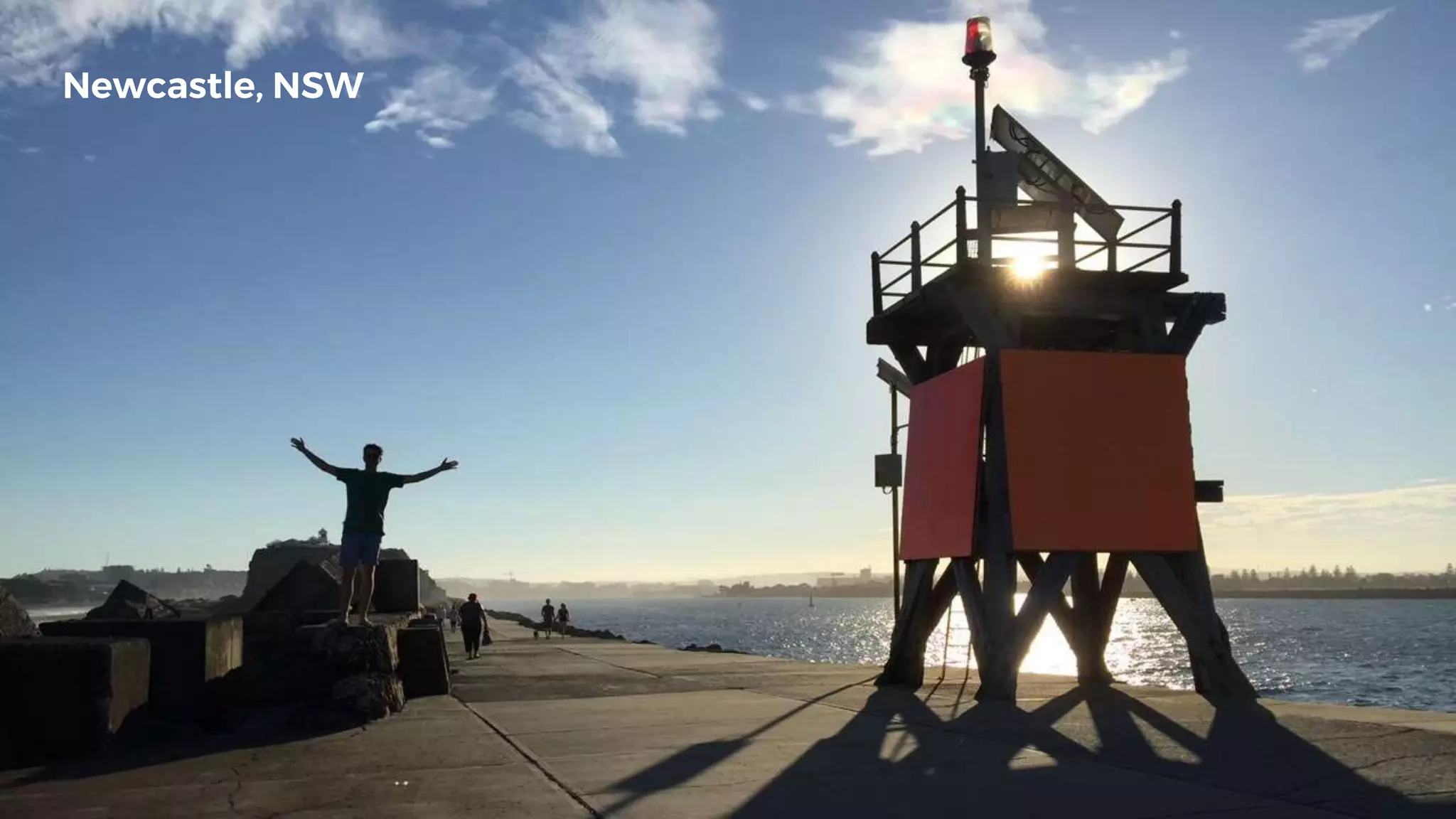
Newcastle, NSW
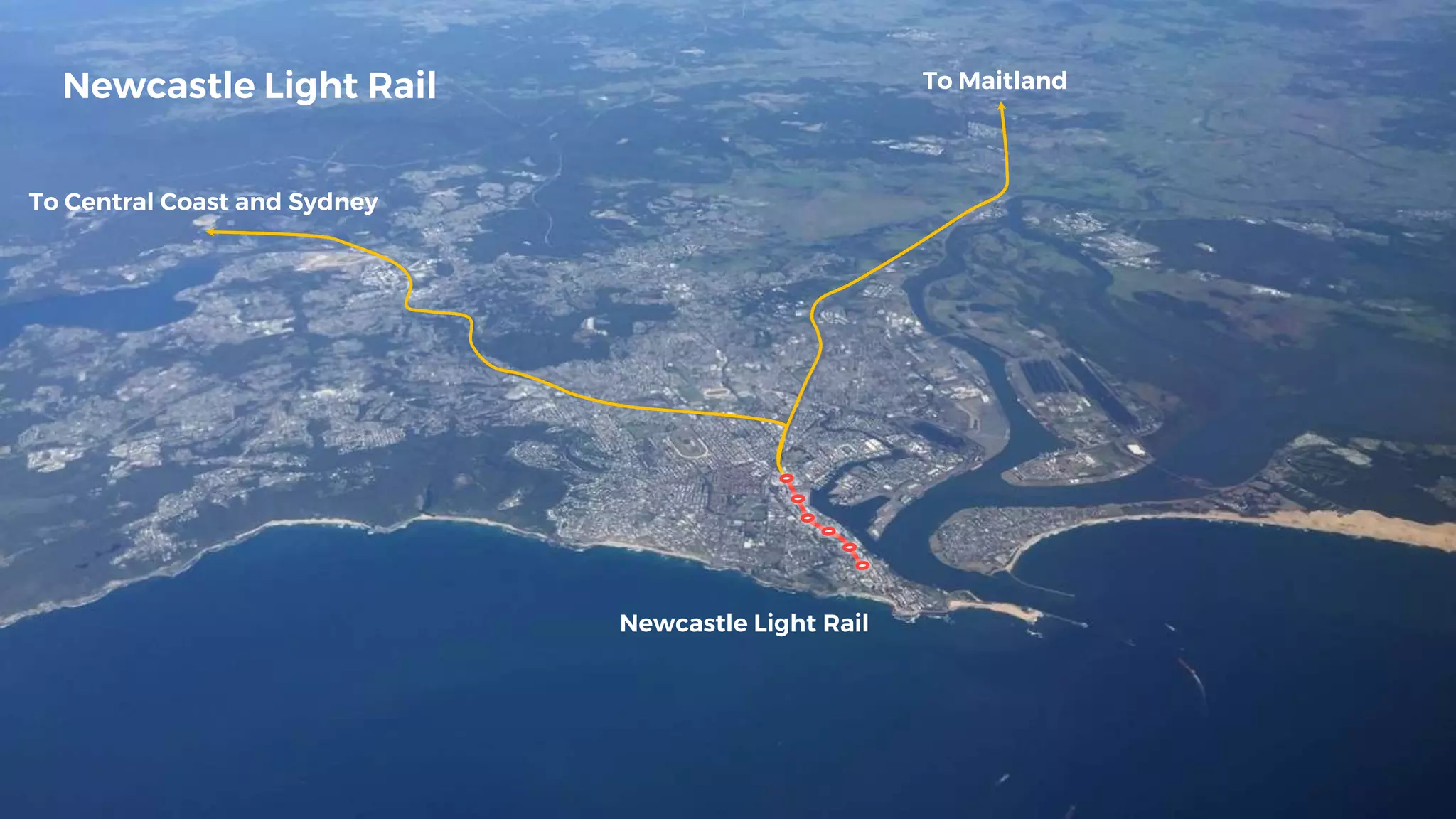
To Central Coast and Sydney
To Maitland
Newcastle Light Rail
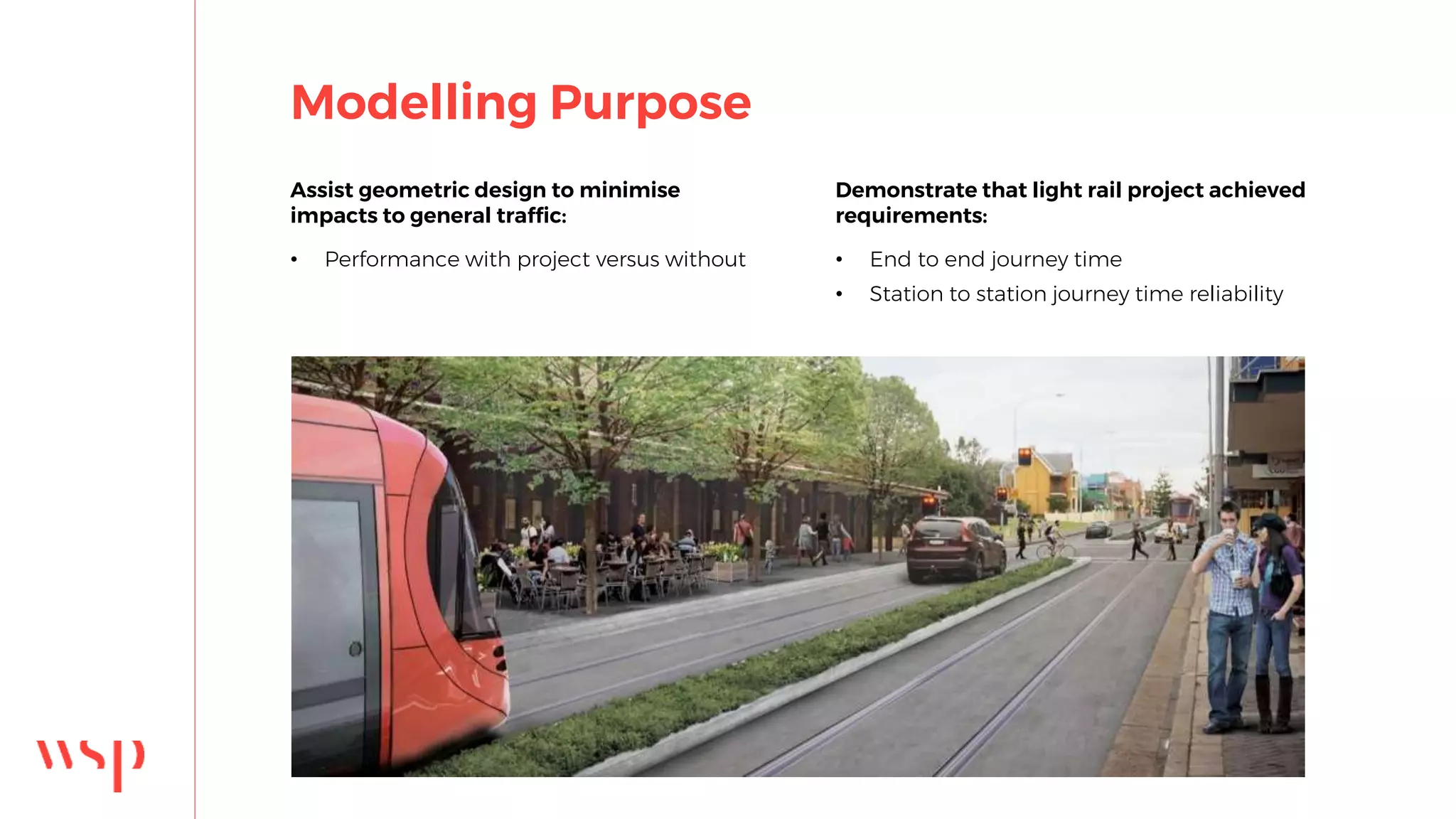
Modelling Purpose
Assist geometric design to minimise
impacts to general traffic:
• Performance with project versus without
Demonstrate that light rail project achieved
requirements:
• End to end journey time
• Station to station journey time reliability
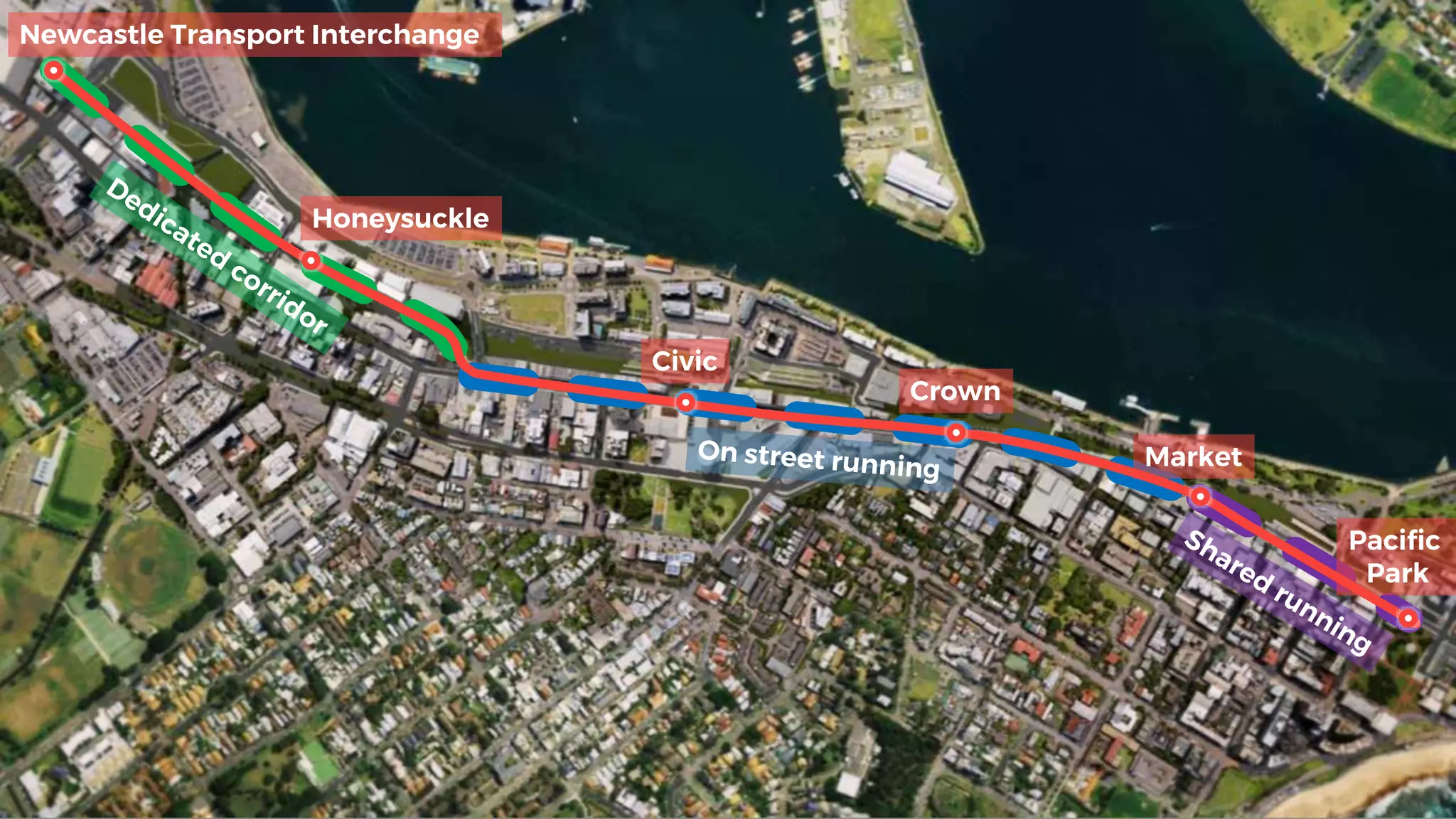
Market
Pacific
Park
Newcastle Transport Interchange
Honeysuckle
Civic
Crown
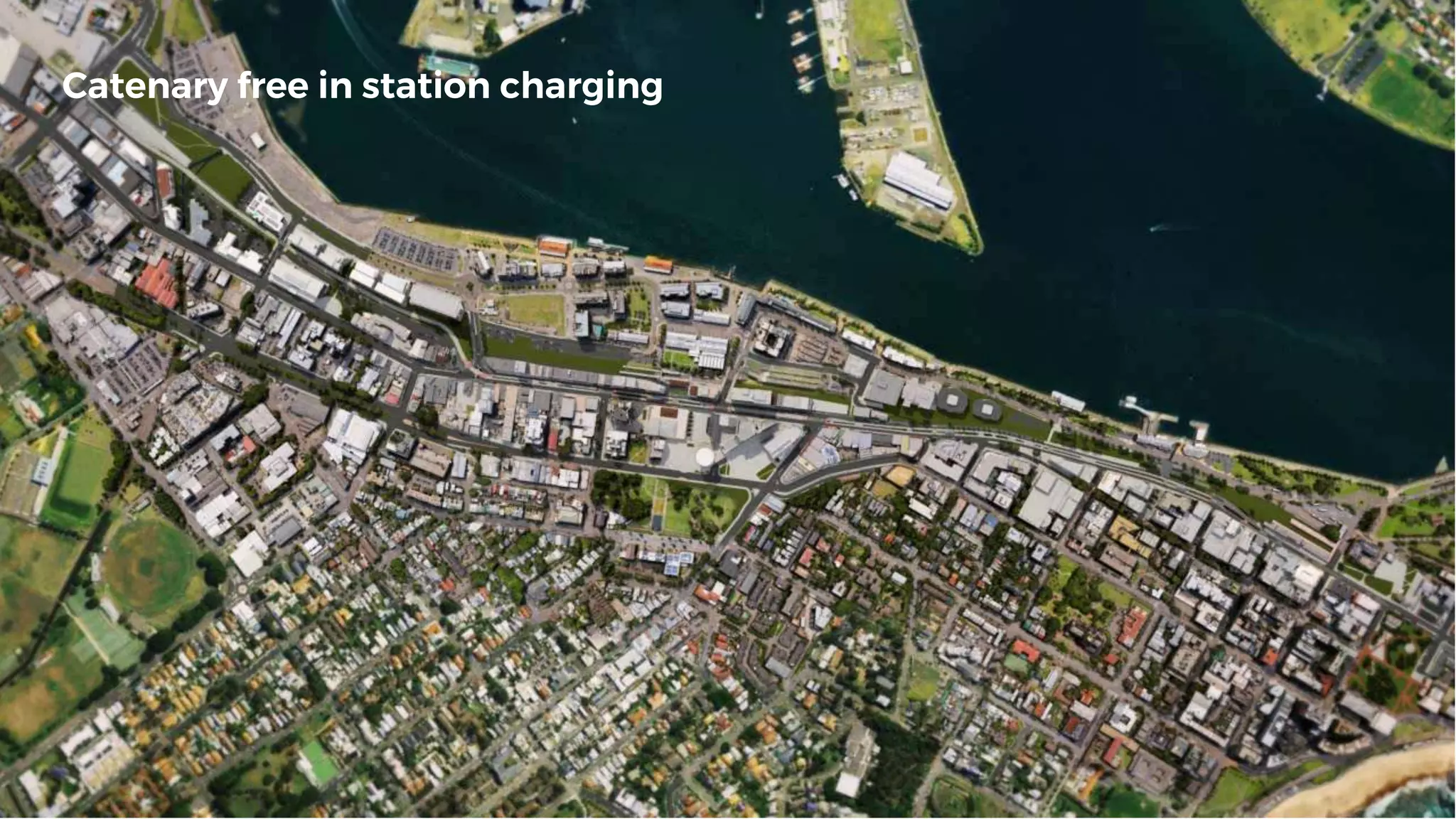
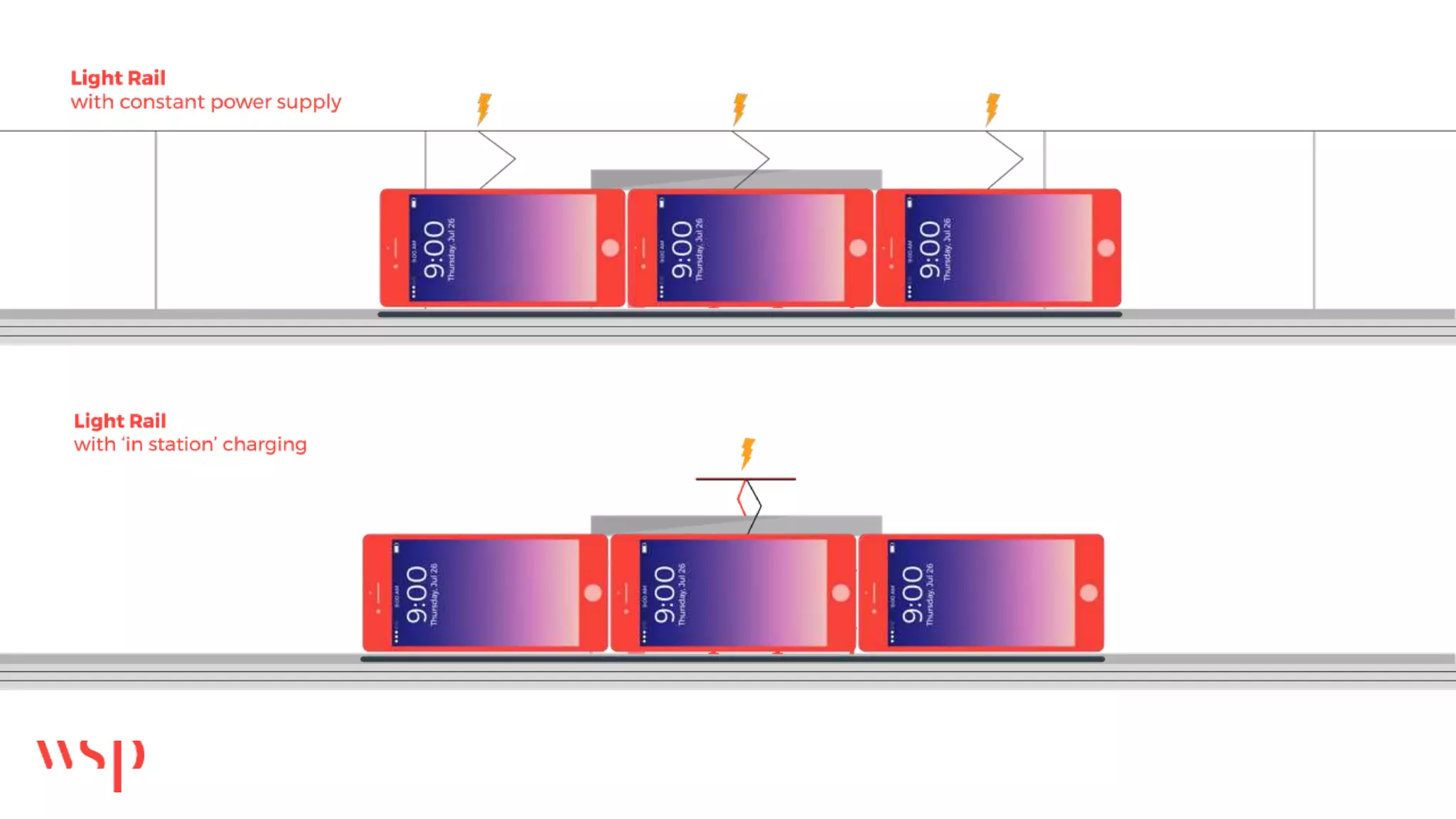
Catenary free in station charging
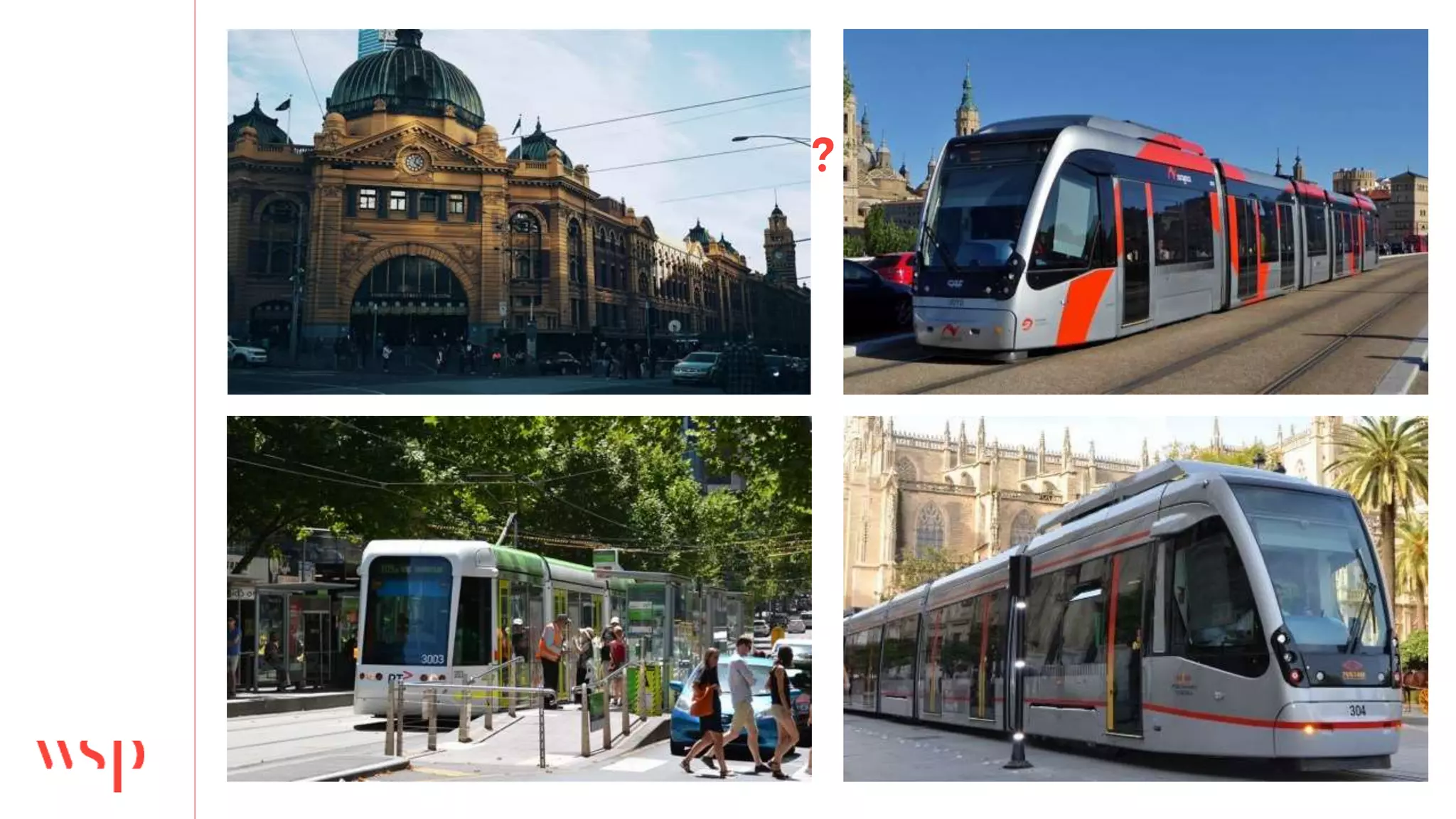
What is catenary?
Why go catenary free?
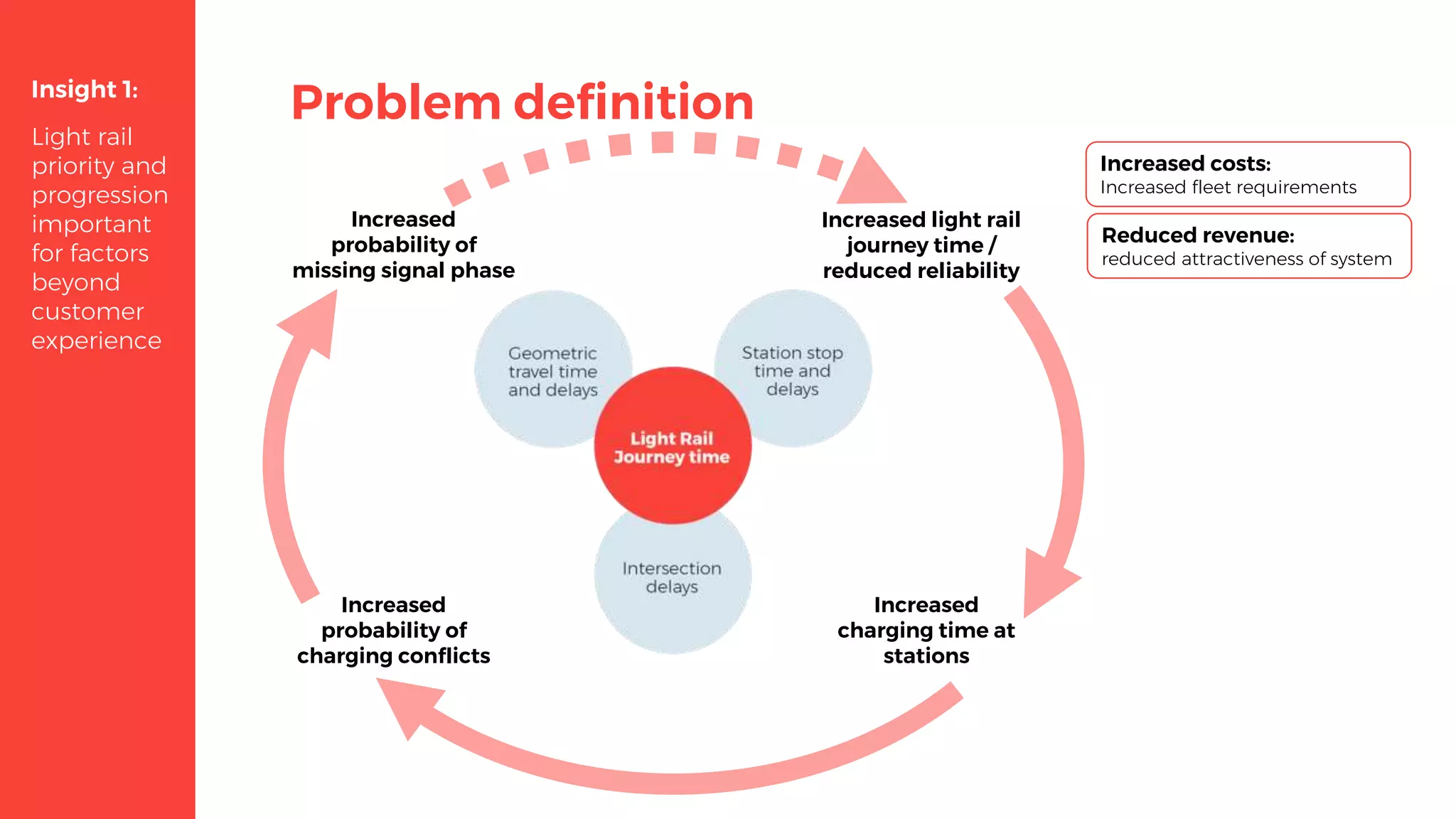
Problem definition
Increased costs:
Increased fleet requirements
Reduced revenue:
reduced attractiveness of system
Increased
probability of
missing signal phase
Increased light rail
journey time /
reduced reliability
Increased
probability of
charging conflicts
Increased
charging time at
stations
Insight 1:
Light rail
priority and
progression
important
for factors
beyond
customer
experience
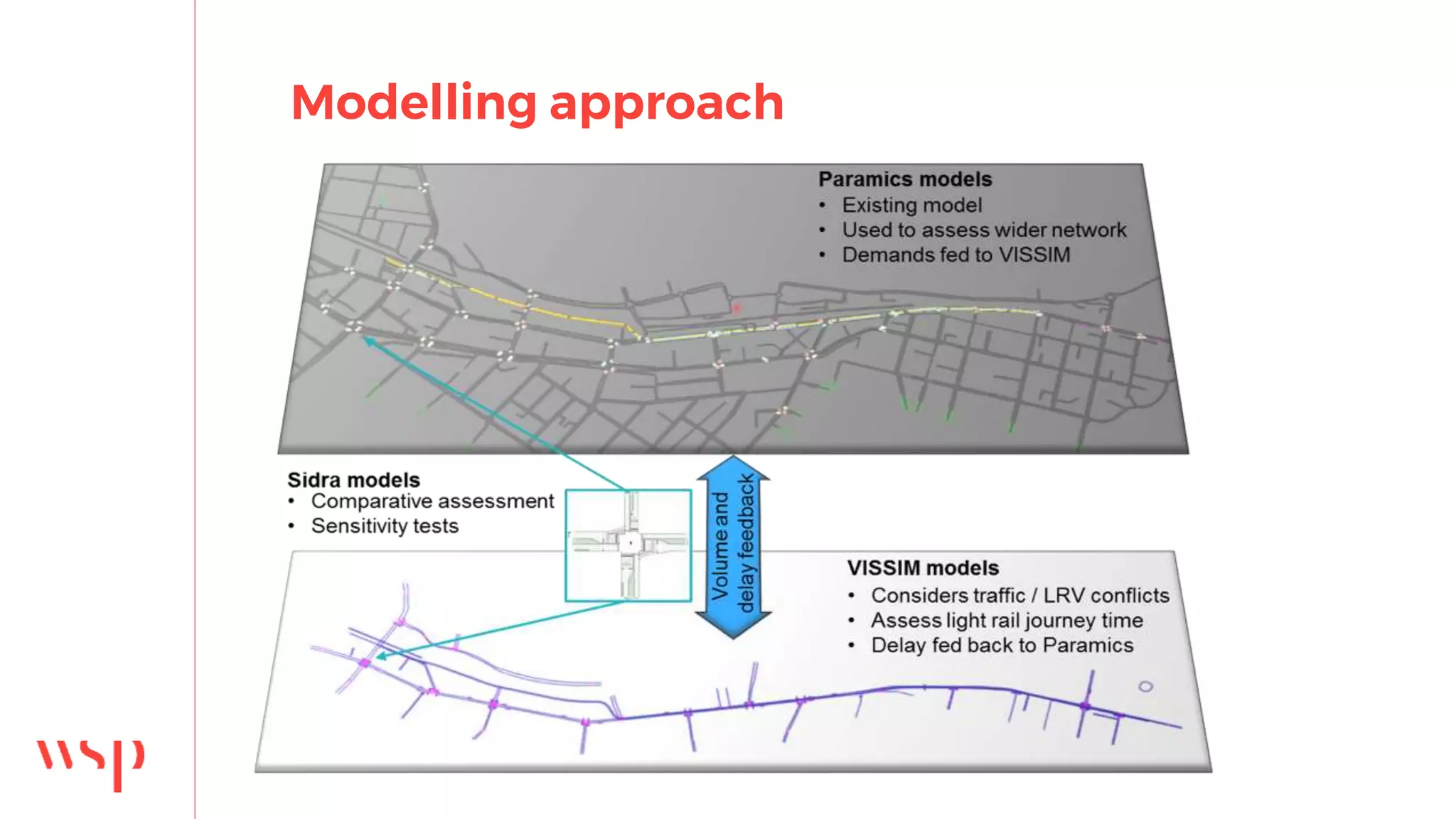
Modelling approach
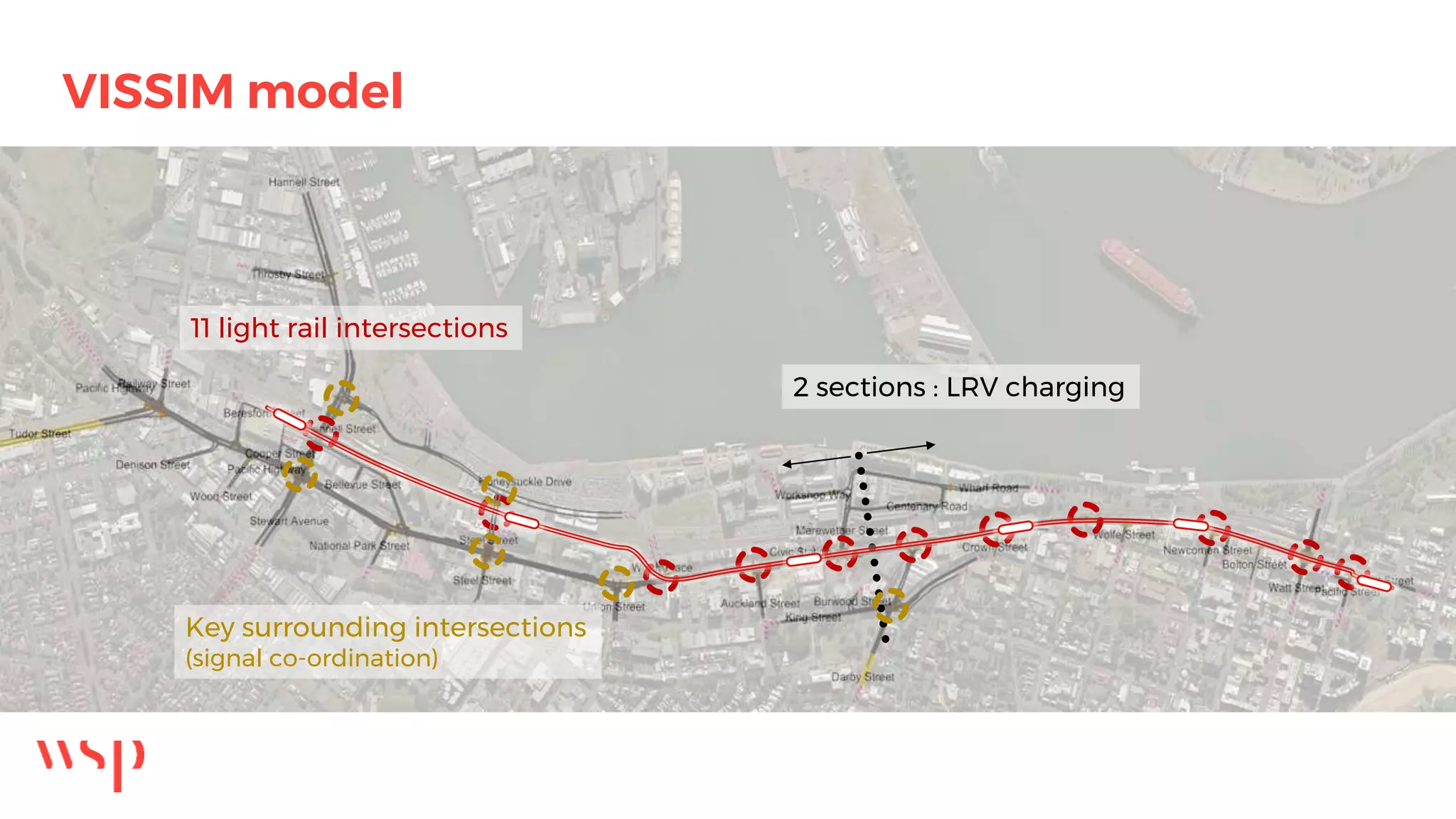
2 sections : LRV charging
11 light rail intersections
Key surrounding intersections
(signal co-ordination)
VISSIM model
VisVAP
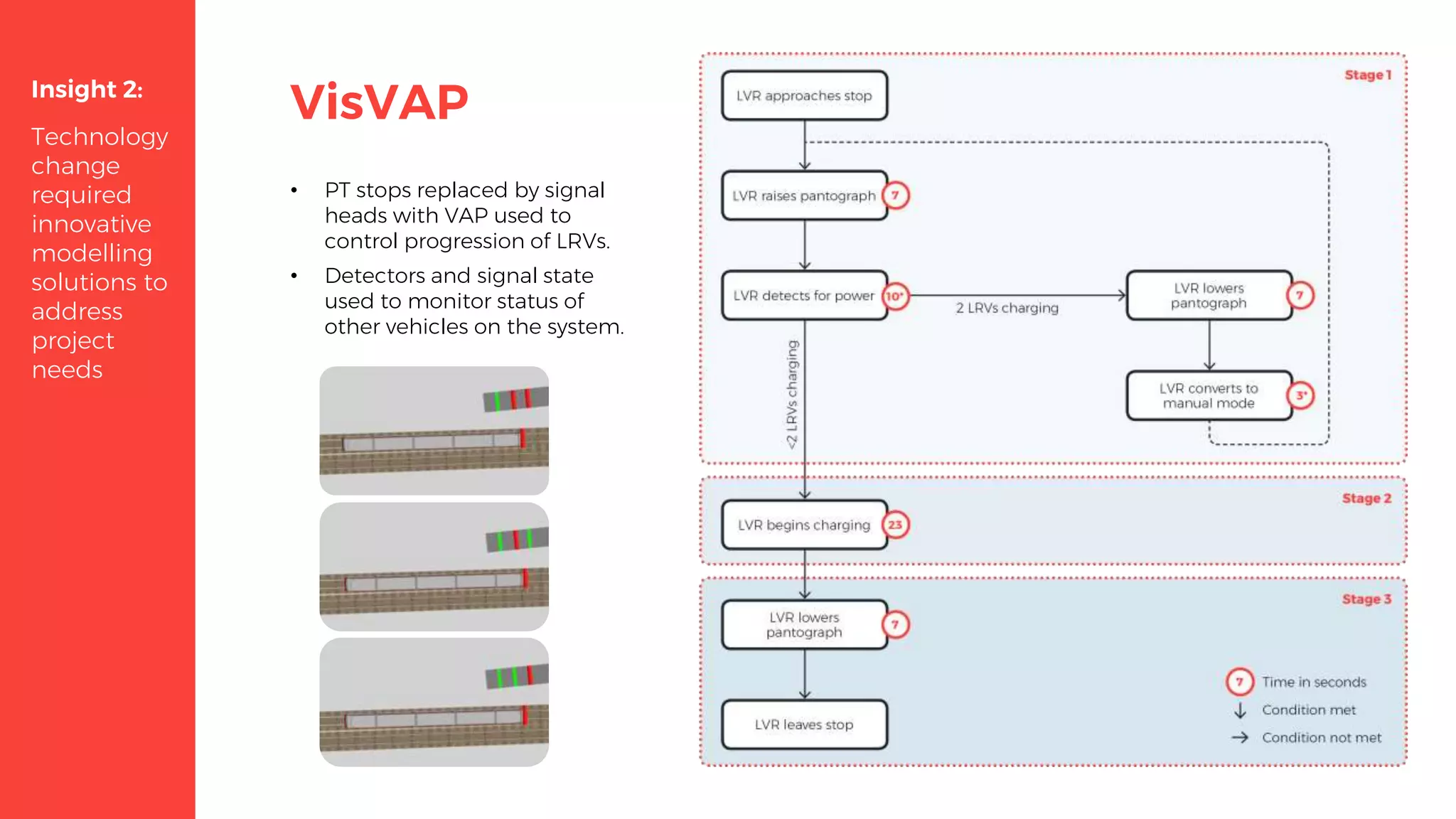
• PT stops replaced by signal
heads with VAP used to
control progression of LRVs.
• Detectors and signal state
used to monitor status of
other vehicles on the system.
Insight 2:
Technology
change
required
innovative
modelling
solutions to
address
project
needs
Model outputs and resolution
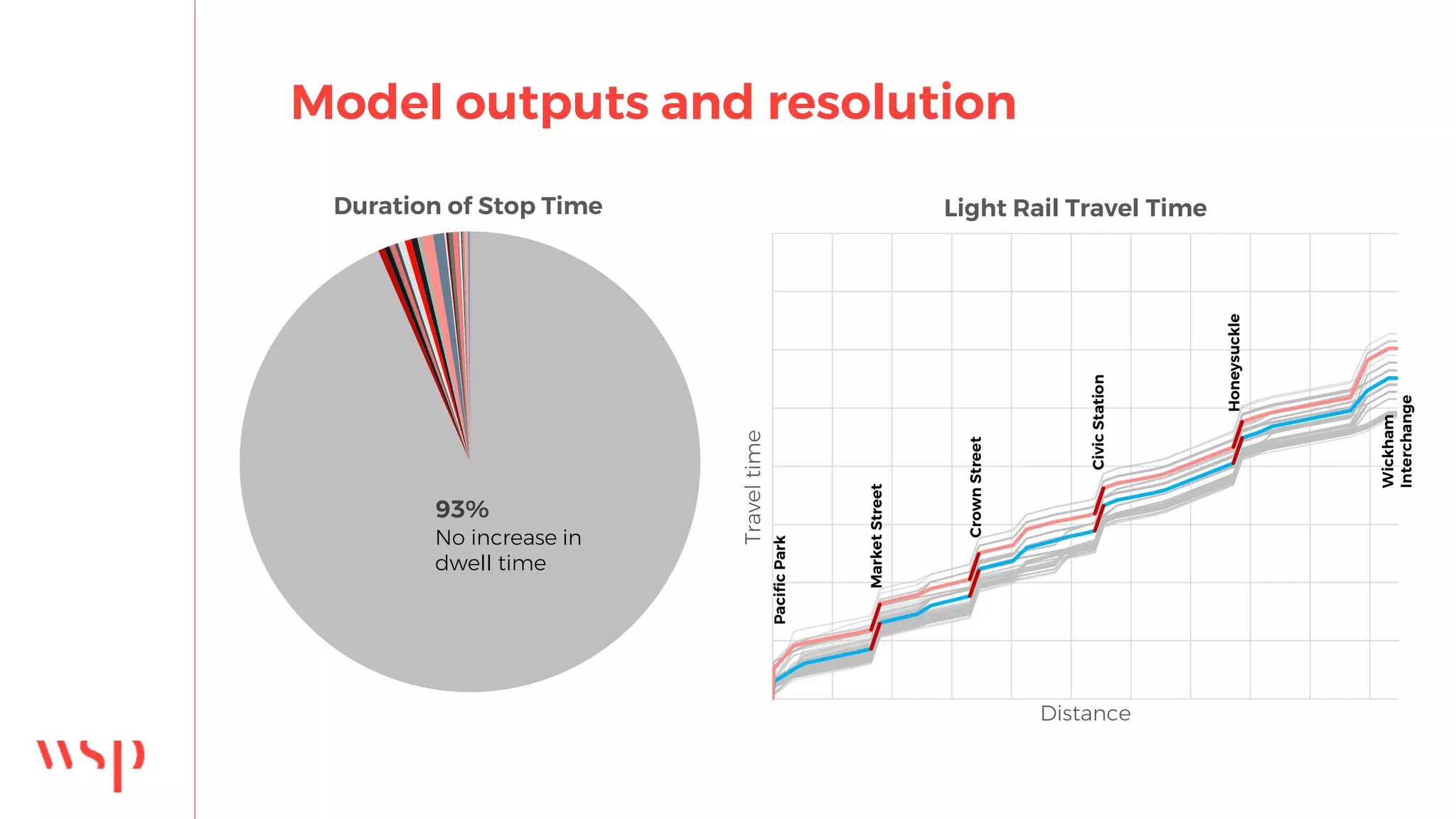
93%
Duration of Stop Time
Traveltime
Distance
Light Rail Travel Time
CrownStreet
CivicStation
Honeysuckle
Wickham
Interchange
MarketStreet
PacificPark
No increase in
dwell time
Model outputs and resolution
0%
5%
10%
15%
20%
25%
30%
35%
40%
45%
50%
Time distribution segments
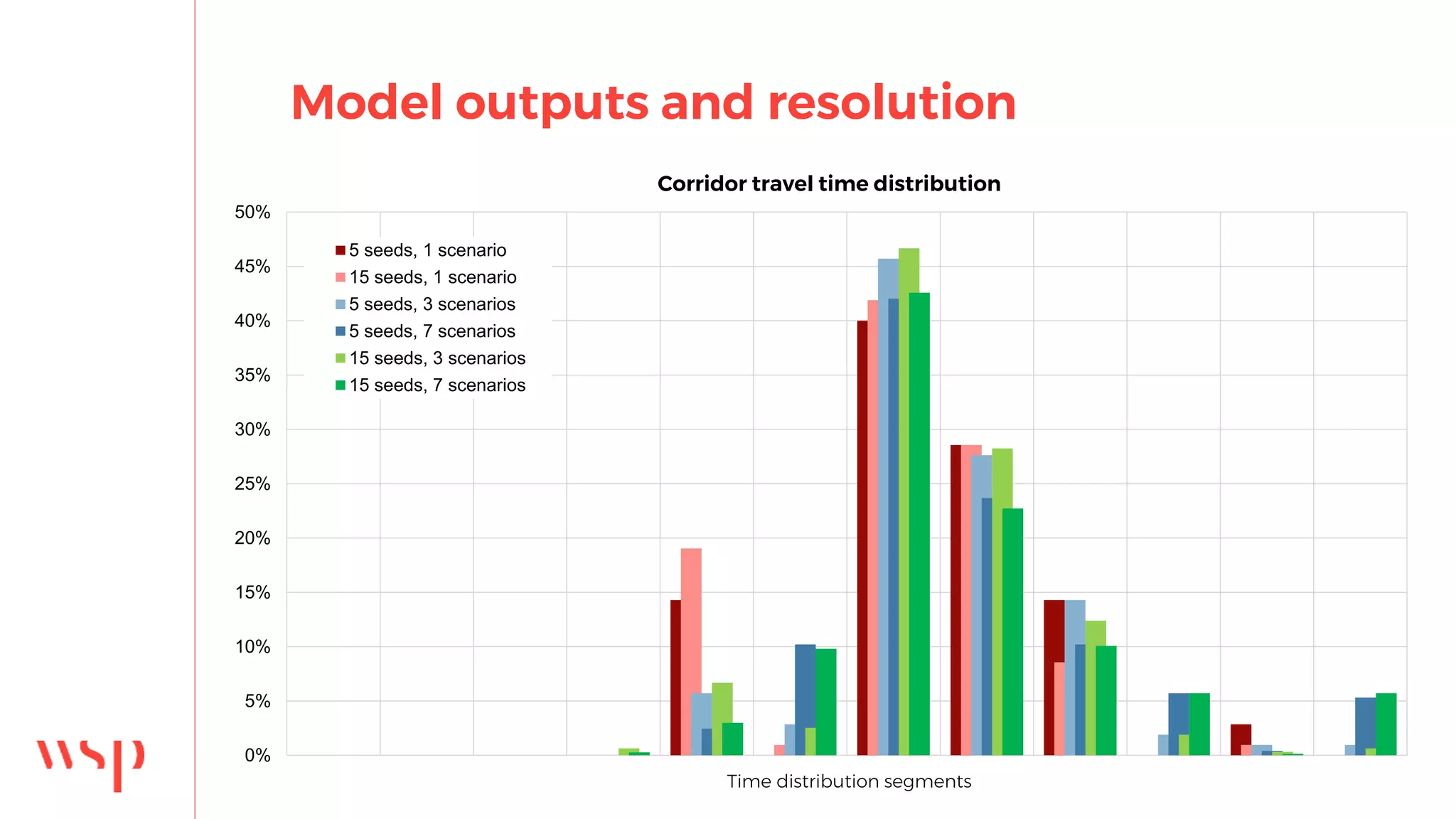
Corridor travel time distribution
5 seeds, 1 scenario
15 seeds, 1 scenario
5 seeds, 3 scenarios
5 seeds, 7 scenarios
15 seeds, 3 scenarios
15 seeds, 7 scenarios
Model outputs and resolution
0%
5%
10%
15%
20%
25%
30%
35%
40%
45%
50%
Time distribution segments
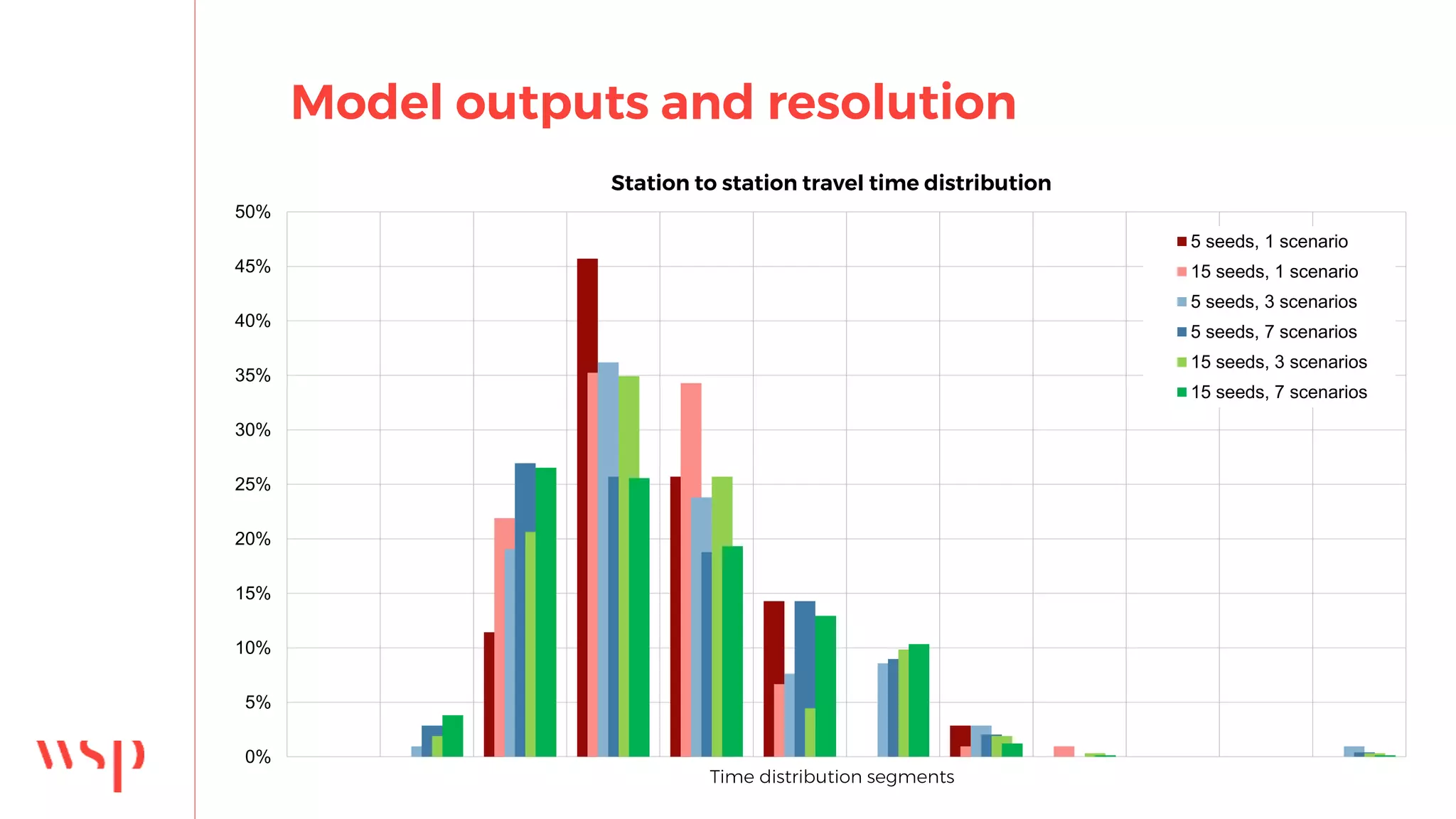
Station to station travel time distribution
5 seeds, 1 scenario
15 seeds, 1 scenario
5 seeds, 3 scenarios
5 seeds, 7 scenarios
15 seeds, 3 scenarios
15 seeds, 7 scenarios
Model outputs and resolutionInsight 3:
Project
needs
required
additional
simulation
scenarios to
obtain
confidence
in results
0%
5%
10%
15%
20%
25%
30%
35%
40%
45%
50%
Time distribution segments
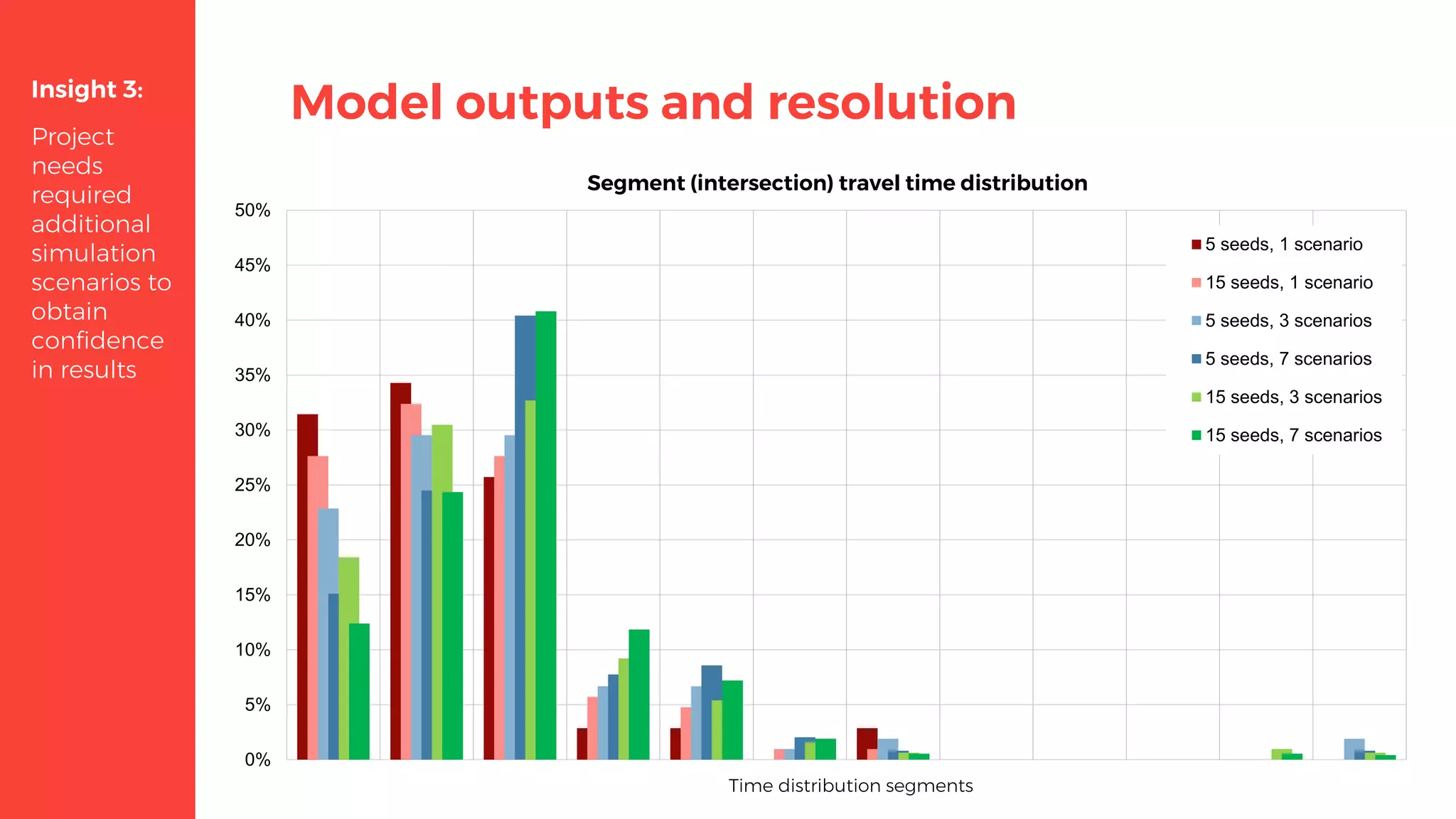
Segment (intersection) travel time distribution
5 seeds, 1 scenario
15 seeds, 1 scenario
5 seeds, 3 scenarios
5 seeds, 7 scenarios
15 seeds, 3 scenarios
15 seeds, 7 scenarios
Outcomes
Process
• Additional modelling runs to increase
resolution of outputs
• Change in output definitions meant a
reinterpretation of results (definition of
‘delay’)
• Ability to amend modelling to meet
changes in system environment.
Project
• Objectives of the modelling met:
demonstrated traffic vs light rail
performance.
• Additional detectors and increased
priority via phase extensions included
Key discussion points
• Technology changes are happening and
are here today as demonstrated by this
project.
• New technology may change how we
think about and prioritise transport
modes.
• A change mid-project resulted in a
change of modelling approach with the
introduction of the new ‘variables’.
• Modelling tools and guidelines need to
be capable of addressing possible
changes into the future.
At a glance
20
Questions?
Find us at the
WSP coffee cart
Perth
Level 5
503 Murray Street
Perth, WA
6000
Sydney
Level 27
680 George Street
Sydney, NSW
2000
Melbourne
Level 15
28 Freshwater Place
Southbank, VIC
3006
Callan Stirzaker
Brisbane | Sunshine Coast
Adelaide
Level 1
1 King William Street
Adelaide, SA
5000
Brisbane
Level 3
69 Ann Street
Brisbane
4000
Canberra
Level 1
121 Marcus Clarke Street
Canberra, ACT
2600
callan [dot] stirzaker [at] wsp [dot] com
callanstirzaker

AITPM Conference Presentation -Callan Stirzaker

  • 1.
    LIGHT RAIL EVOLUTION Trafficinterface, catenary free and traffic modelling Callan Stirzaker, WSP Australia
  • 2.
    Presentation overview Newcastle LightRail How an evolution in technology resulted in an evolution in the use of our traffic models. Today Tomorrow The future
  • 3.
  • 4.
    To Central Coastand Sydney To Maitland Newcastle Light Rail Newcastle Light Rail
  • 5.
    Modelling Purpose Assist geometricdesign to minimise impacts to general traffic: • Performance with project versus without Demonstrate that light rail project achieved requirements: • End to end journey time • Station to station journey time reliability
  • 6.
  • 7.
    Catenary free instation charging
  • 8.
    What is catenary? Whygo catenary free?
  • 10.
    Problem definition Increased costs: Increasedfleet requirements Reduced revenue: reduced attractiveness of system Increased probability of missing signal phase Increased light rail journey time / reduced reliability Increased probability of charging conflicts Increased charging time at stations Insight 1: Light rail priority and progression important for factors beyond customer experience
  • 11.
  • 12.
    2 sections :LRV charging 11 light rail intersections Key surrounding intersections (signal co-ordination) VISSIM model
  • 13.
    VisVAP • PT stopsreplaced by signal heads with VAP used to control progression of LRVs. • Detectors and signal state used to monitor status of other vehicles on the system. Insight 2: Technology change required innovative modelling solutions to address project needs
  • 14.
    Model outputs andresolution 93% Duration of Stop Time Traveltime Distance Light Rail Travel Time CrownStreet CivicStation Honeysuckle Wickham Interchange MarketStreet PacificPark No increase in dwell time
  • 15.
    Model outputs andresolution 0% 5% 10% 15% 20% 25% 30% 35% 40% 45% 50% Time distribution segments Corridor travel time distribution 5 seeds, 1 scenario 15 seeds, 1 scenario 5 seeds, 3 scenarios 5 seeds, 7 scenarios 15 seeds, 3 scenarios 15 seeds, 7 scenarios
  • 16.
    Model outputs andresolution 0% 5% 10% 15% 20% 25% 30% 35% 40% 45% 50% Time distribution segments Station to station travel time distribution 5 seeds, 1 scenario 15 seeds, 1 scenario 5 seeds, 3 scenarios 5 seeds, 7 scenarios 15 seeds, 3 scenarios 15 seeds, 7 scenarios
  • 17.
    Model outputs andresolutionInsight 3: Project needs required additional simulation scenarios to obtain confidence in results 0% 5% 10% 15% 20% 25% 30% 35% 40% 45% 50% Time distribution segments Segment (intersection) travel time distribution 5 seeds, 1 scenario 15 seeds, 1 scenario 5 seeds, 3 scenarios 5 seeds, 7 scenarios 15 seeds, 3 scenarios 15 seeds, 7 scenarios
  • 18.
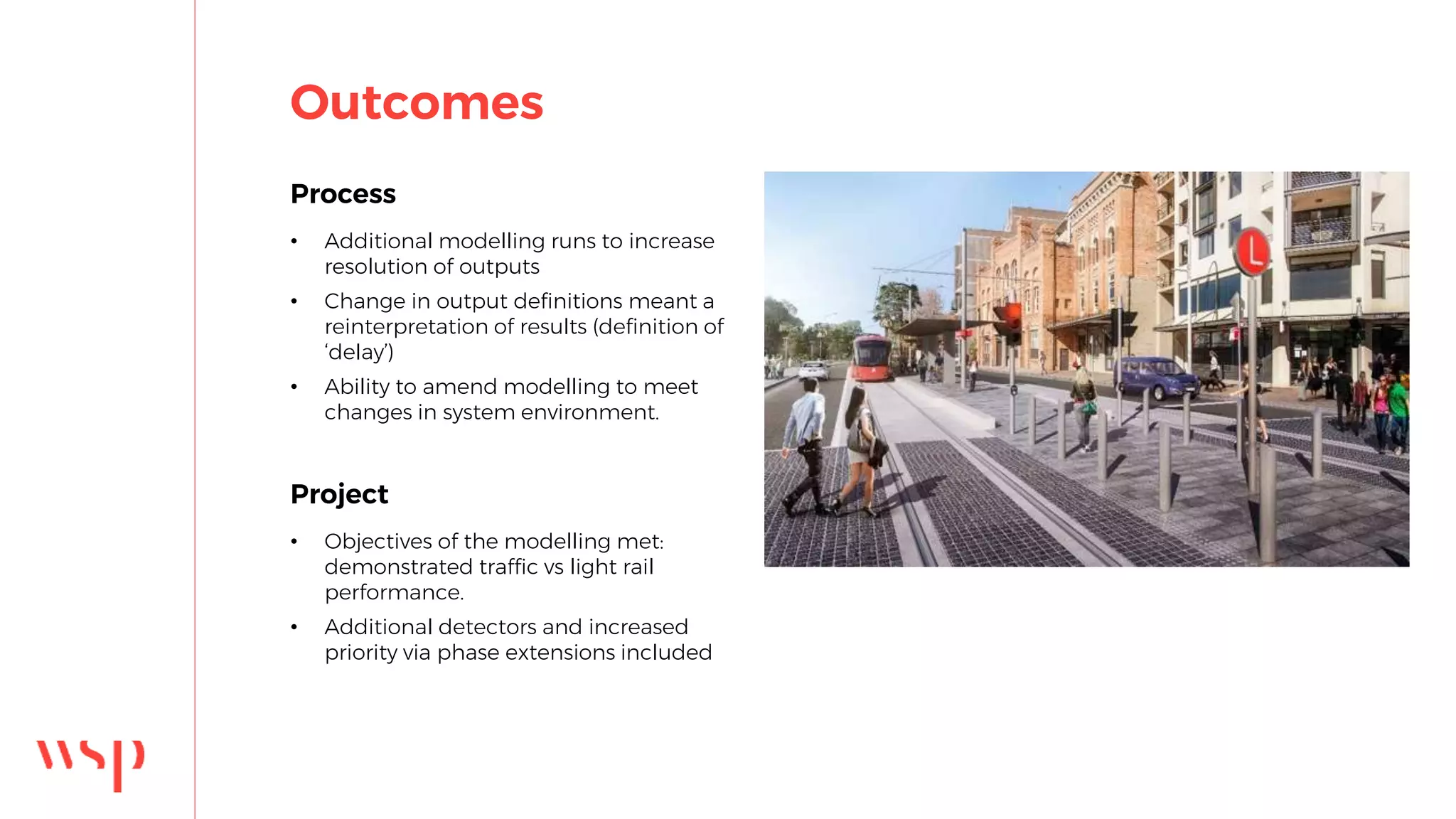
    Outcomes Process • Additional modellingruns to increase resolution of outputs • Change in output definitions meant a reinterpretation of results (definition of ‘delay’) • Ability to amend modelling to meet changes in system environment. Project • Objectives of the modelling met: demonstrated traffic vs light rail performance. • Additional detectors and increased priority via phase extensions included
  • 19.
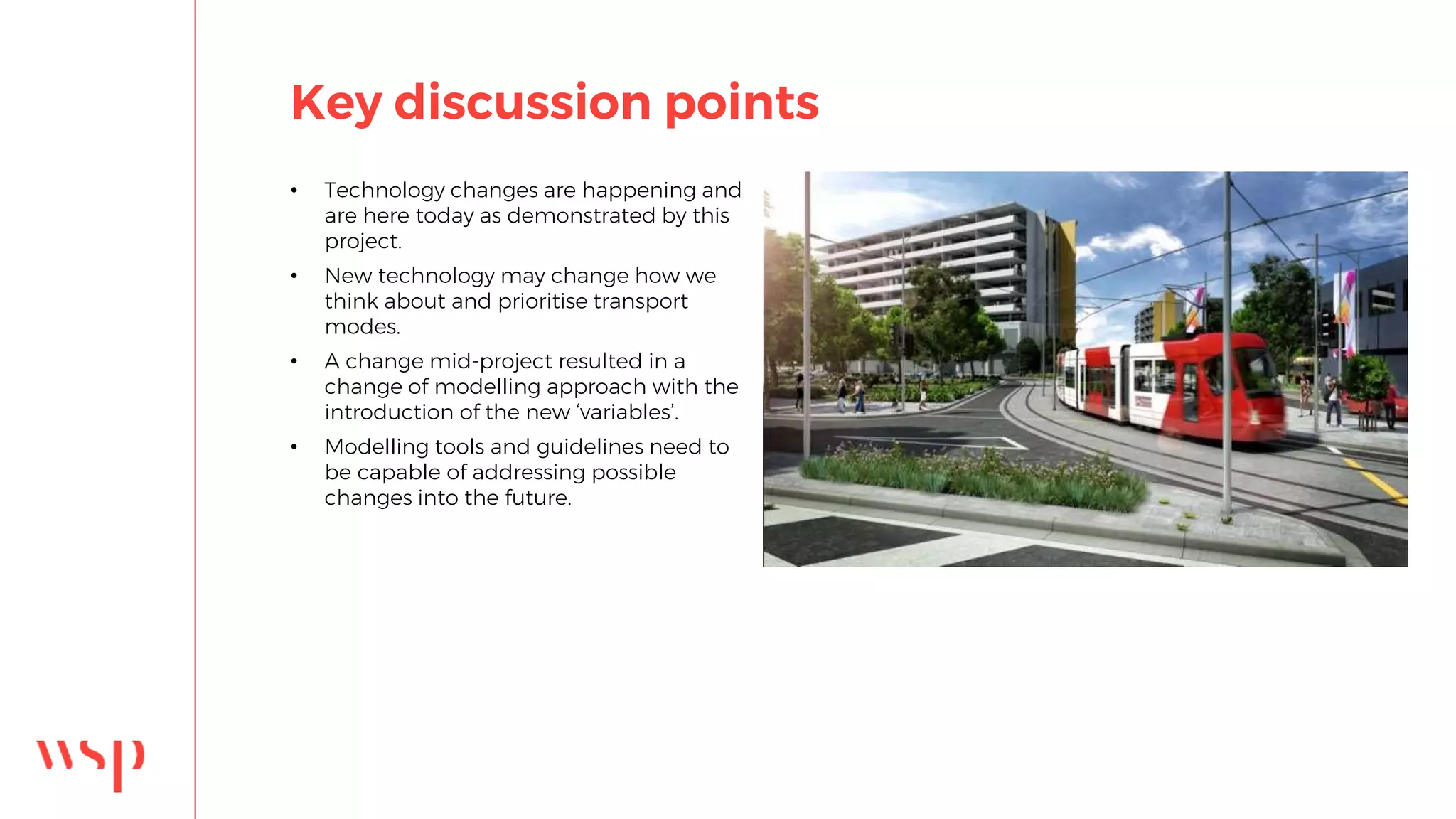
    Key discussion points •Technology changes are happening and are here today as demonstrated by this project. • New technology may change how we think about and prioritise transport modes. • A change mid-project resulted in a change of modelling approach with the introduction of the new ‘variables’. • Modelling tools and guidelines need to be capable of addressing possible changes into the future.
  • 20.
  • 21.
    Find us atthe WSP coffee cart Perth Level 5 503 Murray Street Perth, WA 6000 Sydney Level 27 680 George Street Sydney, NSW 2000 Melbourne Level 15 28 Freshwater Place Southbank, VIC 3006 Callan Stirzaker Brisbane | Sunshine Coast Adelaide Level 1 1 King William Street Adelaide, SA 5000 Brisbane Level 3 69 Ann Street Brisbane 4000 Canberra Level 1 121 Marcus Clarke Street Canberra, ACT 2600 callan [dot] stirzaker [at] wsp [dot] com callanstirzaker

Editor's Notes

  • #3 The purpose of the presentation today is to talk about a recent experience in modelling Newcastle Light Rail. In particular, the project has adopted a new technology (on board batteries), which has had a impact on the way in which we undertook the traffic modelling of the system. I would like to talk about our experiences and use it as a basis for consideration of how future changes will affect how we undertake modelling in the future. Acknowledgement of John and Troy during this slide.
  • #4 Before I do this, however I wanted to share a few photos of Newcastle, and perhaps dispel a few myths about this city. Newcastle isn’t a location which is regularly featured in AITPM presentations and for those of you in the room today from Perth, it may not be the number 1 place to visit on the East Coast. My wife and I lived in Newcastle for a year and the city is a vibrant coastal city with beautiful beaches, wonderful restaurants and many attractions nearby: including the Hunter Valley and Port Stephens.
  • #5 A brief overview of Newcastle Light Rail: The project is a 2.7km system in the heart of the city. It some respects it has replaced the existing heavy rail line, but it has also resulted in a change to the city bus network with a new Newcastle Transport Interchange at the western end of the line. There are plans for future expansions of the system.
  • #6 The modelling purpose put simply was to undertake two activities: To assist in the geometric design of the road and rail systems such that impacts to traffic were minimised. This was achieved by evaluation the ‘with’ versus ‘without’ case. To demonstrate that the proposed light rail system would meet customer centred performance requirements around travel time.
  • #7 A little bit more detail about the project: 2.7km system 6 stations Bus and heavy rail interchange at the western end of the system. Built within ‘city centre’ – with heavy pedestrian activity near many stops and around vibrant local areas such as Darby Street, Newcastle University, Honeysuckle Wharf and Hunter Street Mall.
  • #10 !!I am having difficulties getting this slide to work/animate.!!
  • #16 Range: Mean range = 15 second (2%) Median range = 1 second (<1%) Std. Dev = 13 seconds (2%) 98th percentile = 1min 40seconds (16%) Max = 60 seconds (9%)
  • #17 Range: Mean range = 12 second (11%) Median range = 2 second (2%) Std. Dev = 9 seconds (9%) 98th percentile = 28 seconds (25%) Max = 27 seconds (24%)
  • #18 Range: Mean range = 3 second (33%) Median range = 5 second (52%) Std. Dev = 2 seconds (20%) 98th percentile = 8 seconds (80%) Max = 25 seconds (270%) More simulations doesn’t necessarily mean more seed values, but scenarios which represent potential variation in the system.
  • #20 Technology changes are happening and are here today. This is a good example of how a change in technology may change transport models into the future. A change mid-project resulted in a change of modelling approach with the introduction of new ‘variables’: number of simulations required. outputs from models changed (definition of ‘delay’). Modelling tools and guidelines need to be capable of considering these changes: Existing modelling tools were capable of simulating change, utilising existing features, however, these were considered ‘work-around’. New functions to modelling tools may be necessary in the future.