Airline Marketing 9:
Branding
Dr Narudh Cheramakara
Bangkok University
1/2017
1. What is branding?
• Branding is a set of marketing and communication
methods that help to distinguish a company or
products from competitors, aiming to create a
lasting impression in the minds of customers. The
key components that form a brand's toolbox
include a brand’s identity, brand communication
(such as by logos and trademarks), brand
awareness, brand loyalty, and various branding
(brand management) strategies.[4]
1. What is branding?
• Brand equity is the measurable totality of a brand's worth
and is validated by assessing the effectiveness of these
branding components.[5] As markets become increasingly
dynamic and fluctuating, brand equity is a marketing
technique to increase customer satisfaction and customer
loyalty, with side effects like reduced price sensitivity.[4] A
brand is in essence a promise to its customers of they can
expect from their products, as well as emotional
benefits.[4] When a customer is familiar with a brand, or
favours it incomparably to its competitors, this is when a
corporation has reached a high level of brand equity.[5]
• Many companies believe that there is often little to
differentiate between several types of products in the 21st
century, and therefore branding is one of a few remaining
forms of product differentiation.[6]
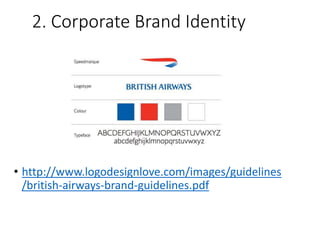
2. Corporate Brand Identity
• http://www.logodesignlove.com/images/guidelines
/british-airways-brand-guidelines.pdf
2. Corporate Brand Identity
Corporate brand identity[edit]
Brand identity is the embodiment behind a corporation's reason for
existence. Simply, the brand identity is a set of individual components, such
as a name, a design, a set of imagery, a slogan, a vision, etc. which set the
brand aside from others.[19][20] In order for a company to exude a strong
sense of brand identity, it must have an in-depth understanding of its target
market, competitors and the surrounding business environment.[4] Brand
identity includes both the core identity and the extended identity.[4]
The core identity reflects consistent long-term associations with the brand;
whereas the extended identity involves the intricate details of the brand that
help generate a constant motif.[4]
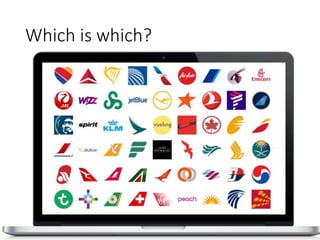
Which is which?
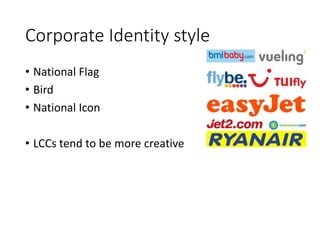
Corporate Identity style
• National Flag
• Bird
• National Icon
• LCCs tend to be more creative
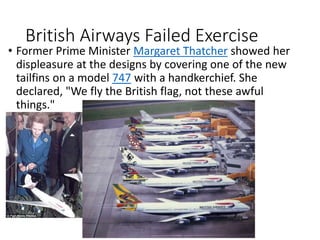
British Airways Failed Exercise
• Former Prime Minister Margaret Thatcher showed her
displeasure at the designs by covering one of the new
tailfins on a model 747 with a handkerchief. She
declared, "We fly the British flag, not these awful
things."
3. Brand Awareness
• Brand awareness
• Brand awareness involves a customers' ability to recall
and/or recognise brands, logos and branded advertising.
Brands helps customers to understand which brands or
products belong to which product or service category.
• Brands assist customers to understand the constellation
of benefits offered by individual brands.
• Brand awareness is a key step in the customer's purchase
decision process, since some kind of awareness is a
precondition to purchasing. That is, customers will not
consider a brand if they are not aware of it. – Lion Air
Initially
• Top-of-mind: Mama, Toyota, Hoover, Lay’s, etc.
3. Brand Awareness
• Brand awareness
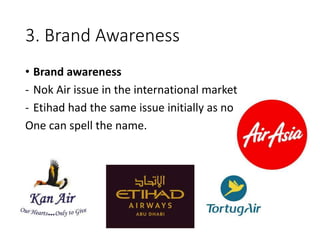
- Nok Air issue in the international market
- Etihad had the same issue initially as no
One can spell the name.
4. Brand Elements
• name: the word or words used to identify a company,
product, service, or concept
• logo: the visual trademark that identifies a brand
• tagline or catchphrase: ใครใครก็บินได้
• graphics:
4. Brand Elements
• shapes: the distinctive shapes of the Coca-Cola bottle
and of the Volkswagen Beetle are trademarked
elements of those brands
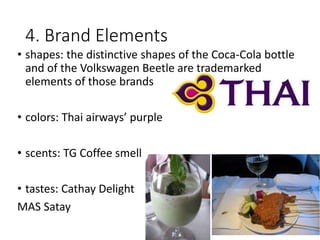
• colors: Thai airways’ purple
• scents: TG Coffee smell
• tastes: Cathay Delight
MAS Satay
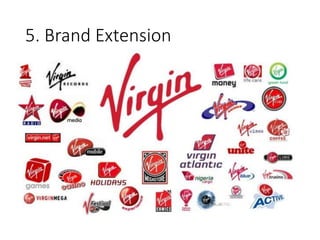
5. Brand Extension
5. Brand Extension
• EasyJet
• Air Asia
• Nok Air
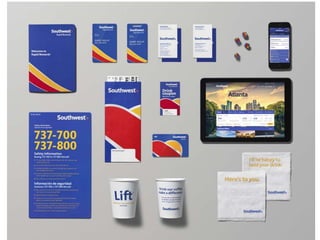
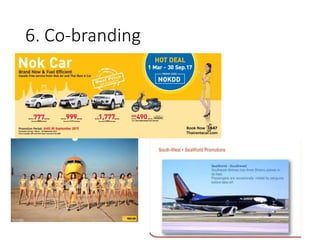
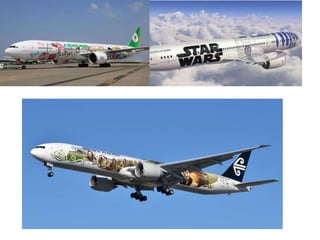
6. Co-branding
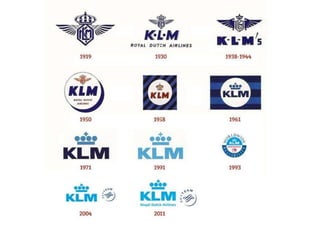
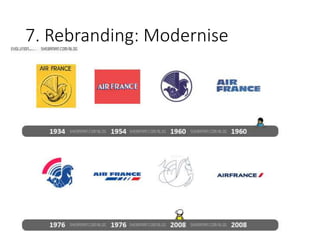
7. Rebranding: Modernise
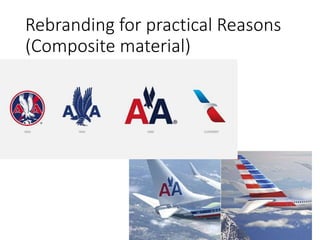
Rebranding for practical Reasons
(Composite material)
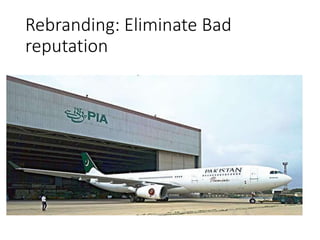
Rebranding: Eliminate Bad
reputation
8. Brand Positioning
• Once a decision has been taken as to the basis for
brand building, airlines
• must decide on the values that will position their
brand. These must
• encompass a proper mixture of Tangible and
Psychological brand values,
• so that the brand is both powerful and defendable
8. Brand Positioning
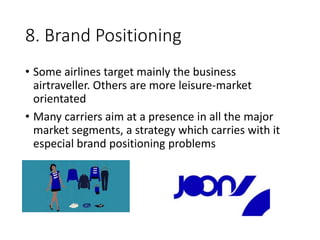
• Some airlines target mainly the business
airtraveller. Others are more leisure-market
orientated
• Many carriers aim at a presence in all the major
market segments, a strategy which carries with it
especial brand positioning problems
8. Brand Positioning
• Targeting Business Travellers must
- Tangible luxury product
- Reliability
- Frequencies
- Brand Position of Thai Airlines?
- TG/FD/SL/DD/PG?
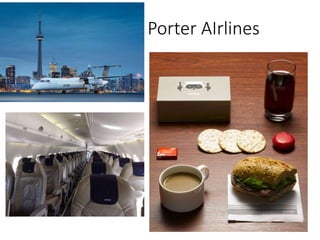
Porter AIrlines
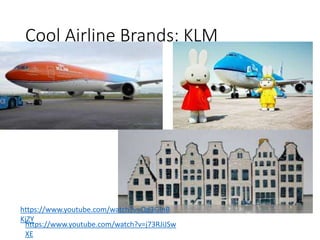
Cool Airline Brands: KLM
https://www.youtube.com/watch?v=j73RJiJSw
XE
https://www.youtube.com/watch?v=Qd3GInB
KjZY
• https://www.youtube.com/watch?v=0N3J6fE-
0JI&t=5s

Airline Marketing 9. branding

  • 1.
    Airline Marketing 9: Branding DrNarudh Cheramakara Bangkok University 1/2017
  • 2.
    1. What isbranding? • Branding is a set of marketing and communication methods that help to distinguish a company or products from competitors, aiming to create a lasting impression in the minds of customers. The key components that form a brand's toolbox include a brand’s identity, brand communication (such as by logos and trademarks), brand awareness, brand loyalty, and various branding (brand management) strategies.[4]
  • 3.
    1. What isbranding? • Brand equity is the measurable totality of a brand's worth and is validated by assessing the effectiveness of these branding components.[5] As markets become increasingly dynamic and fluctuating, brand equity is a marketing technique to increase customer satisfaction and customer loyalty, with side effects like reduced price sensitivity.[4] A brand is in essence a promise to its customers of they can expect from their products, as well as emotional benefits.[4] When a customer is familiar with a brand, or favours it incomparably to its competitors, this is when a corporation has reached a high level of brand equity.[5] • Many companies believe that there is often little to differentiate between several types of products in the 21st century, and therefore branding is one of a few remaining forms of product differentiation.[6]
  • 4.
    2. Corporate BrandIdentity • http://www.logodesignlove.com/images/guidelines /british-airways-brand-guidelines.pdf
  • 5.
    2. Corporate BrandIdentity Corporate brand identity[edit] Brand identity is the embodiment behind a corporation's reason for existence. Simply, the brand identity is a set of individual components, such as a name, a design, a set of imagery, a slogan, a vision, etc. which set the brand aside from others.[19][20] In order for a company to exude a strong sense of brand identity, it must have an in-depth understanding of its target market, competitors and the surrounding business environment.[4] Brand identity includes both the core identity and the extended identity.[4] The core identity reflects consistent long-term associations with the brand; whereas the extended identity involves the intricate details of the brand that help generate a constant motif.[4]
  • 8.
  • 9.
    Corporate Identity style •National Flag • Bird • National Icon • LCCs tend to be more creative
  • 10.
    British Airways FailedExercise • Former Prime Minister Margaret Thatcher showed her displeasure at the designs by covering one of the new tailfins on a model 747 with a handkerchief. She declared, "We fly the British flag, not these awful things."
  • 12.
    3. Brand Awareness •Brand awareness • Brand awareness involves a customers' ability to recall and/or recognise brands, logos and branded advertising. Brands helps customers to understand which brands or products belong to which product or service category. • Brands assist customers to understand the constellation of benefits offered by individual brands. • Brand awareness is a key step in the customer's purchase decision process, since some kind of awareness is a precondition to purchasing. That is, customers will not consider a brand if they are not aware of it. – Lion Air Initially • Top-of-mind: Mama, Toyota, Hoover, Lay’s, etc.
  • 13.
    3. Brand Awareness •Brand awareness - Nok Air issue in the international market - Etihad had the same issue initially as no One can spell the name.
  • 14.
    4. Brand Elements •name: the word or words used to identify a company, product, service, or concept • logo: the visual trademark that identifies a brand • tagline or catchphrase: ใครใครก็บินได้ • graphics:
  • 15.
    4. Brand Elements •shapes: the distinctive shapes of the Coca-Cola bottle and of the Volkswagen Beetle are trademarked elements of those brands • colors: Thai airways’ purple • scents: TG Coffee smell • tastes: Cathay Delight MAS Satay
  • 16.
  • 17.
    5. Brand Extension •EasyJet • Air Asia • Nok Air
  • 18.
  • 20.
  • 21.
    Rebranding for practicalReasons (Composite material)
  • 22.
  • 23.
    8. Brand Positioning •Once a decision has been taken as to the basis for brand building, airlines • must decide on the values that will position their brand. These must • encompass a proper mixture of Tangible and Psychological brand values, • so that the brand is both powerful and defendable
  • 24.
    8. Brand Positioning •Some airlines target mainly the business airtraveller. Others are more leisure-market orientated • Many carriers aim at a presence in all the major market segments, a strategy which carries with it especial brand positioning problems
  • 25.
    8. Brand Positioning •Targeting Business Travellers must - Tangible luxury product - Reliability - Frequencies - Brand Position of Thai Airlines? - TG/FD/SL/DD/PG?
  • 26.
  • 28.
    Cool Airline Brands:KLM https://www.youtube.com/watch?v=j73RJiJSw XE https://www.youtube.com/watch?v=Qd3GInB KjZY
  • 29.