Innovations in the Aviation
Industry: Trend and
Developments
Dr Narudh Cheramakara
Sep 2017
Agenda
• Innovation: Introduction
• Aircraft Manufacturing Sector
• Airline Sector
• Airport Sector
• Q & A
Innovation: Business Context
• The process of translating an idea or invention into a good or service
that creates value or for which customers will pay.
• Customer-centric !!!
• Evolutionary innovations (continuous or dynamic evolutionary
innovation) that are brought about by many incremental advances in
technology or processes and
• Revolutionary innovations (also called discontinuous innovations)
which are often disruptive and new.
Innovations: the benefits
• Cost
• Competitive Advantage
• Customer Experience
• Branding
• Marketing  4 Ps (Product, Price, Place//Distribution channel, Promotion)
• Customer Loyalty
• Regulatory compliance (Voluntary or Compulsory)
• Customer’s willingness to pay
=> Improving financial performance
What else?
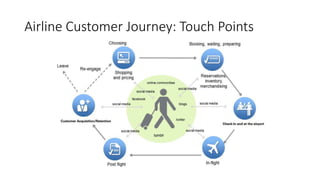
Airline Customer Journey: Touch Points
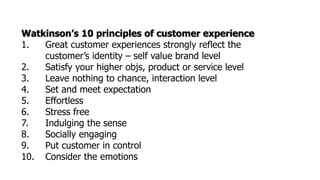
Watkinson’s 10 principles of customer experience
1. Great customer experiences strongly reflect the
customer’s identity – self value brand level
2. Satisfy your higher objs, product or service level
3. Leave nothing to chance, interaction level
4. Set and meet expectation
5. Effortless
6. Stress free
7. Indulging the sense
8. Socially engaging
9. Put customer in control
10. Consider the emotions
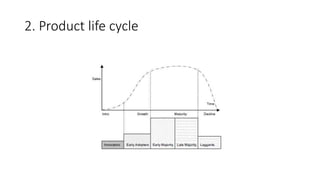
2. Product life cycle
3. Product Innovation
For a successful product innovation E.M. Rogers suggests the following
points of consideration
3.1 Relative Advantage
• new products must be substantially better value-for-money than
those they are replacing, in order for consumers to accept the risks of
using them
3. Product Innovation
• 3.2 Compatibility
• An innovation is unlikely to be successful if it is a very radical
departure from the existing ways in which business is done in the
market sector in
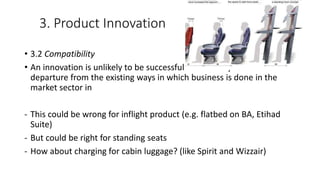
- This could be wrong for inflight product (e.g. flatbed on BA, Etihad
Suite)
- But could be right for standing seats
- How about charging for cabin luggage? (like Spirit and Wizzair)
3. Product Innovation
• 3.3 Complexity
• Some innovations fail because they are perceived as being extremely
difficult to use, requiring purchasers to invest a great deal of time and
effort
• Nok Air has a policy of not collecting irrelevant passengers’ data
(DOB, passport no, etc.)  This is a double-edged sword for CRM
Analysis.
3. Product Innovation
• 3.4 4. Divisibility
• It is often easier to persuade consumers to take a series of short
steps, rather than one very large and risky one.
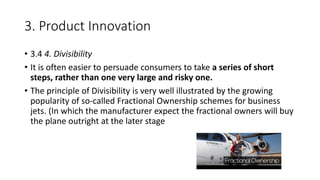
• The principle of Divisibility is very well illustrated by the growing
popularity of so-called Fractional Ownership schemes for business
jets. (In which the manufacturer expect the fractional owners will buy
the plane outright at the later stage
3. Product Innovation
• 3.5 Communicability
• Customers are unlikely to be persuaded to buy a product if the
benefits this product will bring cannot be communicated to them
persuasively.
• Miscommunication and the so called ‘internet drama’ is very difficult
to handle by airlines
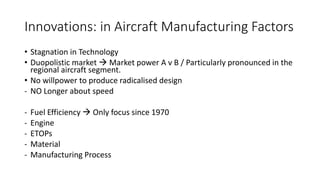
Innovations: in Aircraft Manufacturing Factors
• Stagnation in Technology
• Duopolistic market  Market power A v B / Particularly pronounced in the
regional aircraft segment.
• No willpower to produce radicalised design
- NO Longer about speed
- Fuel Efficiency  Only focus since 1970
- Engine
- ETOPs
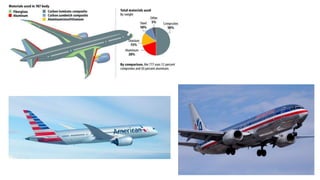
- Material
- Manufacturing Process
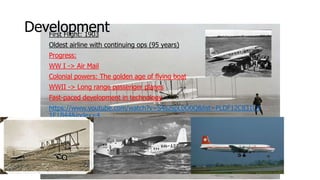
DevelopmentFirst Flight: 1903
Oldest airline with continuing ops (95 years)
Progress:
WW I -> Air Mail
Colonial powers: The golden age of flying boat
WWII -> Long range passenger planes
Fast-paced development in technology
https://www.youtube.com/watch?v=S4s2spL0O0Q&list=PLDF12C831C4
1E1B44&index=4
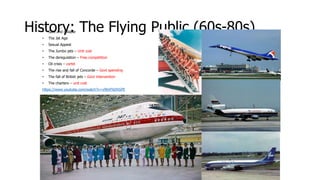
History: The Flying Public (60s-80s)• Safe and reliable
• The Jet Age
• Sexual Appeal
• The Jumbo jets – Unit cost
• The deregulation – Free competition
• Oil crisis – cartel
• The rise and fall of Concorde – Govt spending
• The fall of British jets – Govt intervention
• The charters – unit cost
https://www.youtube.com/watch?v=v9bVFkDhGPE
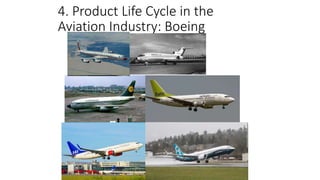
4. Product Life Cycle in the
Aviation Industry: Boeing
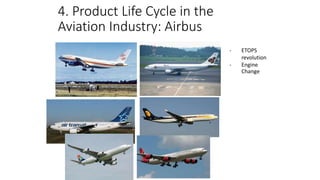
4. Product Life Cycle in the
Aviation Industry: Airbus
- ETOPS
revolution
- Engine
Change
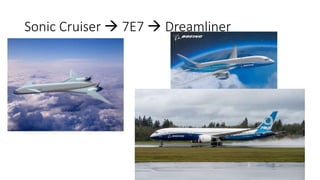
Sonic Cruiser  7E7  Dreamliner
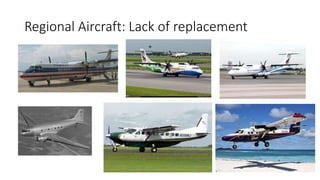
Regional Aircraft: Lack of replacement
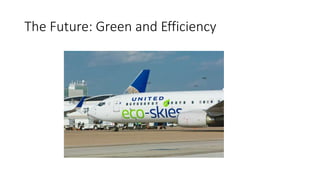
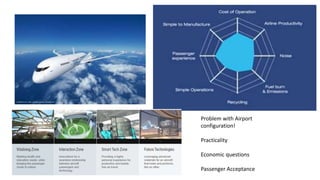
The Future: Green and Efficiency
Problem with Airport
configuration!
Practicality
Economic questions
Passenger Acceptance
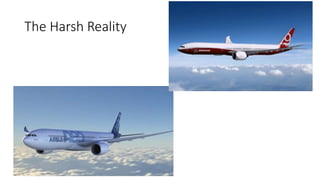
The Harsh Reality
Key Take Away
• Stagnation
• Airline has no market power
• Where next?
Innovation In Airline Industry
• Following Touch Points: Pain Points!
• Remember Innovations cover all marketing aspects!
• Digitisation
• Personalisation
• Seamless Experience
• Automation
• Underlying Points: Driven by Costs // Profit Maximisation  Through
marketing
Innovation: Distribution
• Lesser-developed markets appears to be much more innovative than
developed ones.
• Primarily led by the growth of LCC sectors (Thailand is a prominent
example
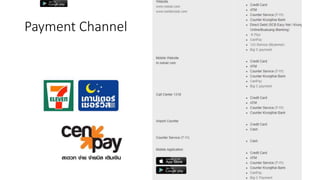
• PAYMENT CHANNEL: Absolutely Vital
• E-commerce
• Online Travel Agency
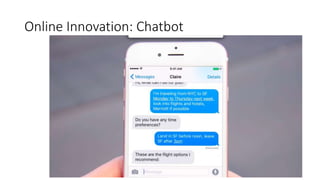
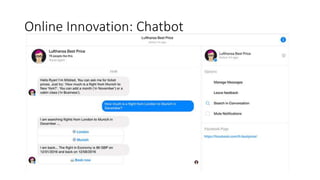
Online Innovation: Chatbot
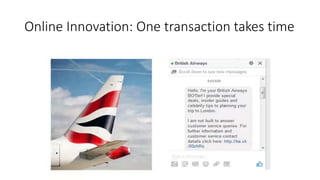
Online Innovation: One transaction takes time
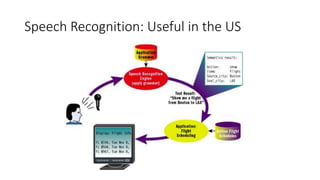
Speech Recognition: Useful in the US
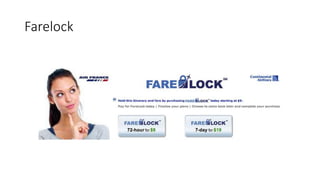
Farelock
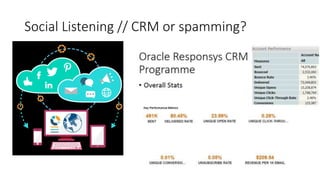
Social Listening // CRM or spamming?
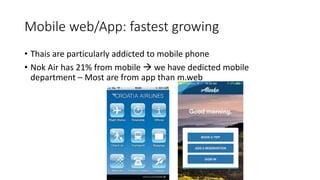
Mobile web/App: fastest growing
• Thais are particularly addicted to mobile phone
• Nok Air has 21% from mobile  we have dedicted mobile
department – Most are from app than m.web
Payment Channel
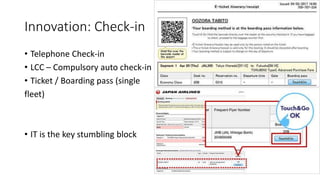
Innovation: Check-in
• Telephone Check-in
• LCC – Compulsory auto check-in
• Ticket / Boarding pass (single
fleet)
• IT is the key stumbling block
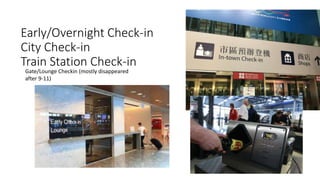
Early/Overnight Check-in
City Check-in
Train Station Check-in
Gate/Lounge Checkin (mostly disappeared
after 9-11)
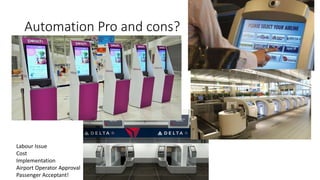
Automation Pro and cons?
Labour Issue
Cost
Implementation
Airport Operator Approval
Passenger Acceptant!
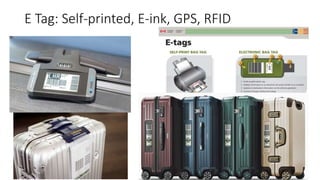
E Tag: Self-printed, E-ink, GPS, RFID
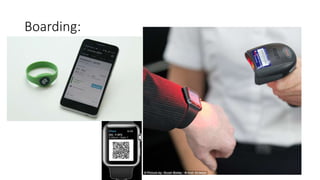
Boarding:
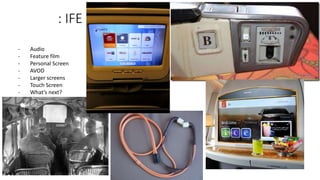
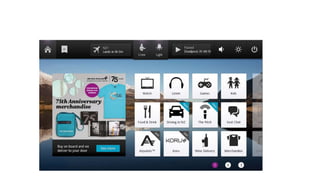
: IFE
- Audio
- Feature film
- Personal Screen
- AVOD
- Larger screens
- Touch Screen
- What’s next?
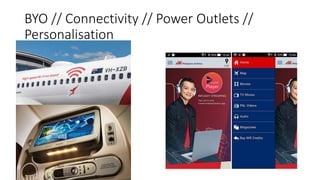
BYO // Connectivity // Power Outlets //
Personalisation
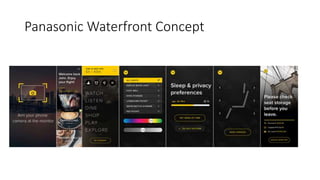
Panasonic Waterfront Concept
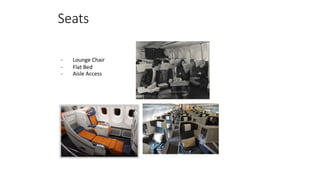
Seats
- Lounge Chair
- Flat Bed
- Aisle Access
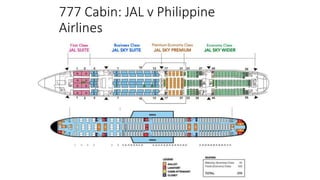
777 Cabin: JAL v Philippine
Airlines
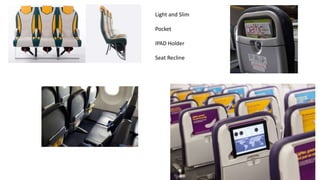
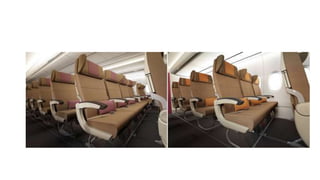
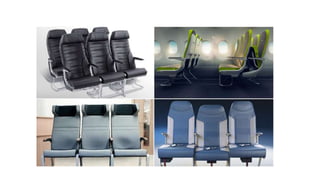
Economy
Light and Slim
Pocket
IPAD Holder
Seat Recline
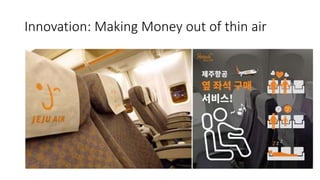
Innovation: Making Money out of thin air
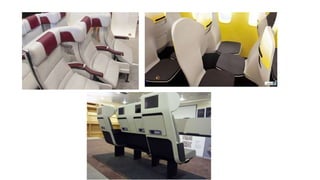
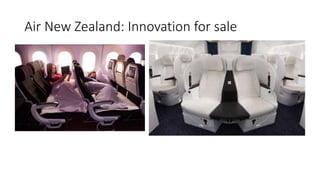
Air New Zealand: Innovation for sale
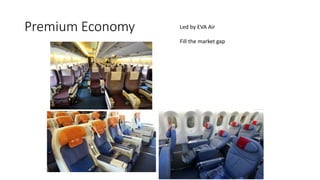
Premium Economy Led by EVA Air
Fill the market gap
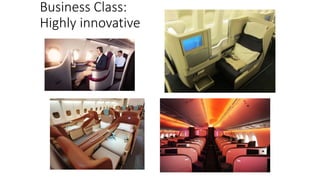
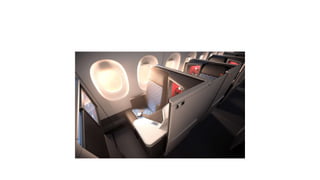
Business Class:
Highly innovative
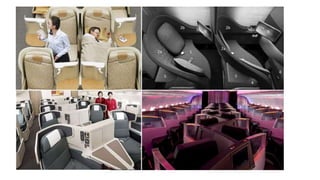
Business Class Development
• Hardshell
• Privacy
• Aisle Access
• Connectivity
• Power Port
• Working/Resting
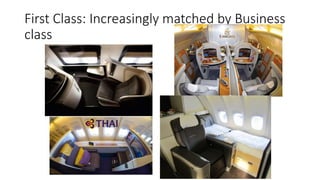
First Class: Increasingly matched by Business
class
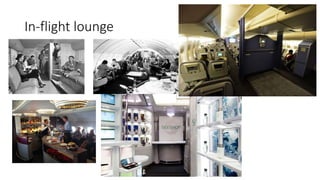
In-flight lounge
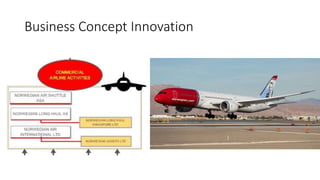
Business Concept Innovation
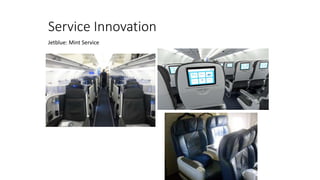
Service Innovation
Jetblue: Mint Service
Compared with US Airways
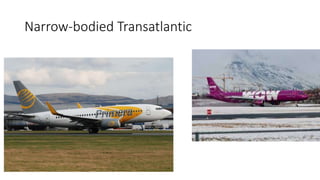
Narrow-bodied Transatlantic
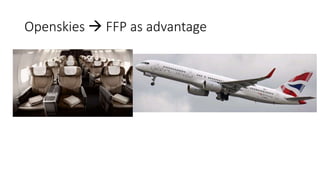
Openskies  FFP as advantage
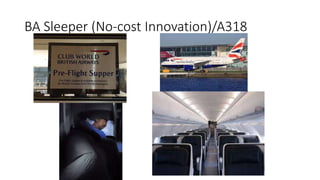
BA Sleeper (No-cost Innovation)/A318
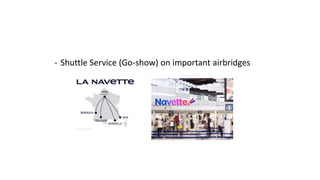
- Shuttle Service (Go-show) on important airbridges
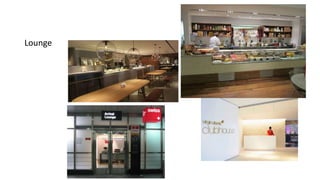
Lounge
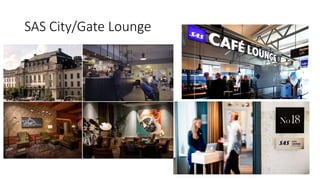
SAS City/Gate Lounge
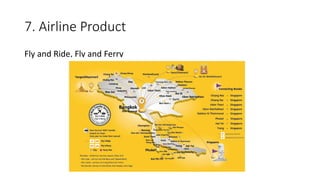
7. Airline Product
Fly and Ride, Fly and Ferry
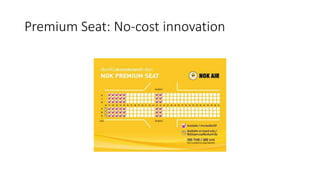
Premium Seat: No-cost innovation
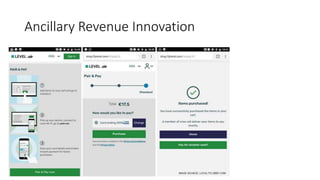
Ancillary Revenue Innovation
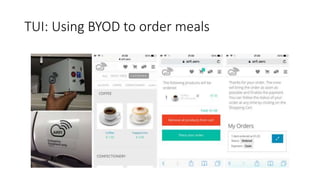
TUI: Using BYOD to order meals
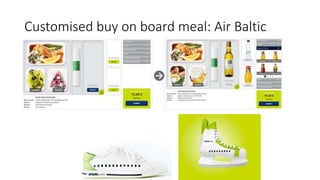
Customised buy on board meal: Air Baltic
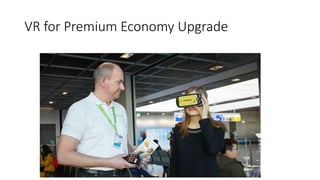
VR for Premium Economy Upgrade
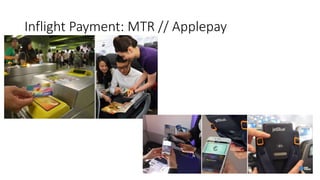
Inflight Payment: MTR // Applepay
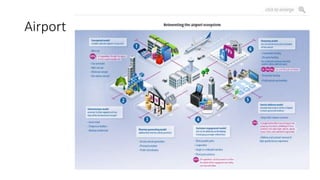
Airport
Airport Nature
• Physical Constraints
• Largely monopolistic – low incentive to improve efficiencies // Partly
or wholely government owned
• Non-Aeronautical revenues
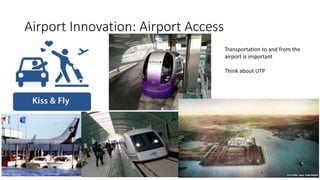
Airport Innovation: Airport Access
Transportation to and from the
airport is important
Think about UTP
Pre Clearance
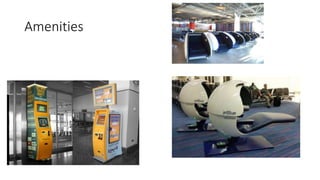
Amenities
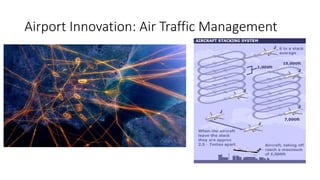
Airport Innovation: Air Traffic Management
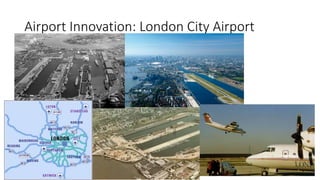
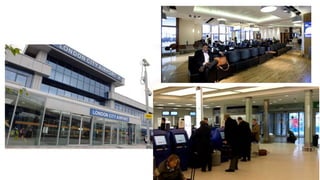
Airport Innovation: London City Airport
Virtual
Control
Tower
compared
with SVB?
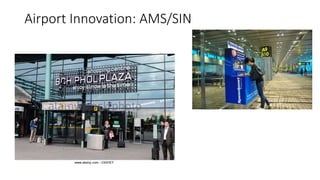
Airport Innovation: AMS/SIN
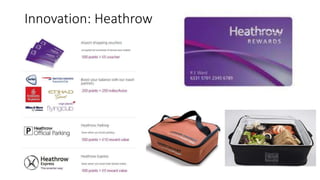
Innovation: Heathrow
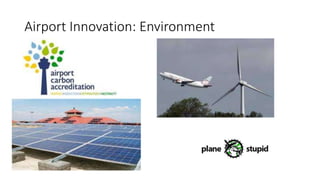
Airport Innovation: Environment
Airline Innovation Sources:
Air Shows
• Farnborough
• Paris Air Salon
• Singapore Airshow : Next February