Air leak syndrome
 Pulmonary interstitial emphysema.
 Pneumothorax.
 Pneumomediastinum.
 Pneumopericadium.
 Pneumoperitonium.
 Subcutaneous emphysema.
Air leak syndrome
Definition:-
Alveolar rupture with escape of air out of the alveoli.
Interstitioum first stage.
pleural rupture.
( mediastinum, pericardium , abdominal cavity, under the skin)
Risk factor
Diseases procedures ventilation
•RDS
•Meconium aspiration
syndrome .
•Amniotic fluid aspiration
•Infection .
•Prematurity <32 weeks
GA.
•Intubation.
•Suctioning.
•Traceostomy.
•Resuscitation
•Use of ↑Peak
inspiratory pressure
(PIP).
• TV, MAP, Ti .
Air leak syndrome
 Pulmonary interstitial emphysema( PIE)
 Pneumothorax.
 Pneumomediastinum.
 Pneumopericadium.
 Pneumoperitonium.
 Subcutaneous emphysema.
 where air is trapped between
the tiny air sacs
 Encircling the smallest blood
vessels and bronchi.
 occurs in poor lung
compliance.
Pulmonary interstitial emphysema
(PIE)
Collect air in the interstitium
Compressed the small airway
and vessels
V/Q mismatches
Deterioration of blood gas
CO2 PO2
High pressure
More air leak
V/Q mismatch PIE
 Usually First 72 hours of life .
 Acute <7 days.
 Localized or diffused.
 Unilateral or bilateral.
 Desaturation and increase respiratory effort.
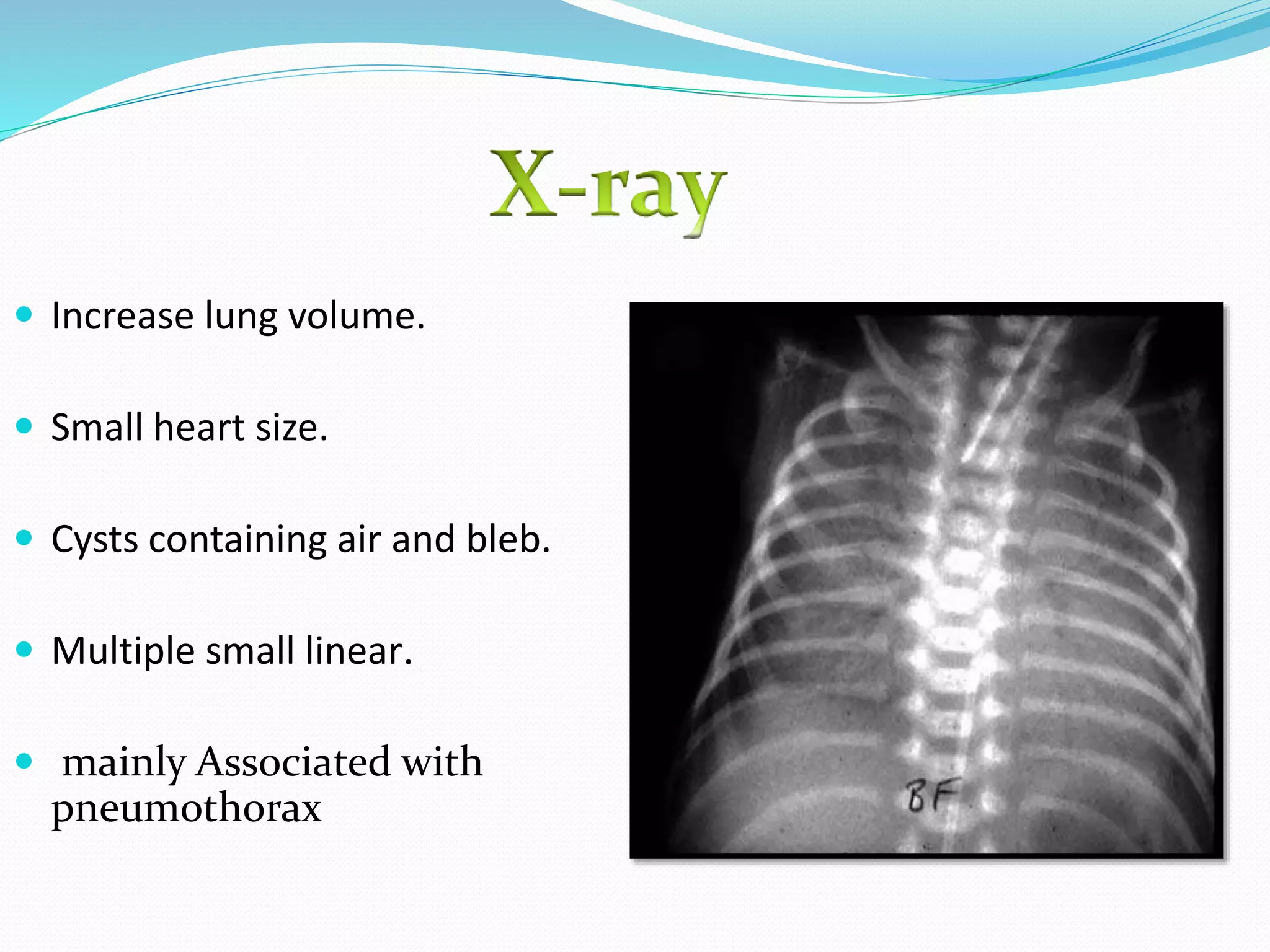
 X-ray (Increase lung voulume )
 ABG ( CO2 PO2)
 Increase lung volume.
 Small heart size.
 Cysts containing air and bleb.
 Multiple small linear.
 mainly Associated with
pneumothorax
bubbly
 Supportive.
 vent volumes ( MAP).
 Minimize ET suction and hand baging.
 HFOV. ( low strategies volume ).
Air leak syndrome
 Pulmonary interstitial emphysema.
 Pneumothorax.
 Pneumomediastinum.
 Pneumopericadium.
 Pneumoperitonium.
 Subcutaneous emphysema.
Pneumothorax
 common of air leak , occurring in 1 – 2 % of all newborn.
 Pneumothorax refers to the presence of air
in the pleural cavity between the visceral and parietal
pleura ( chest wall and lung)
Tension
pneumothorax
spontanous
pneumothorax
 the lung is collapse 10% -30%. without further
expansion of the pneumothorax.
 Result of the weak rupture of alveolar area.
 Often Asymptomatic.
 May resolve without complication.
 Addition of new air through the rupture with each
breath.
 Continuously Large and large air trap.
 The lung collapse under the pressure.
 The great vessels and heart shift toward
and cardiac function becomes compromised.
 Increase respiratory distress.
 Nasal flaring.
 Desaturation.
 Cynosis.
 Examination chest:-
 Asymmetry in chest movement.
 Diminished of breath sound.
Signs and symptom
 Trasnsillumination.
(reflection)
 Auscultation.
 X-ray.
Diagnosis
Pneumothorax X-ray
 No specific management. (severity of
symptoms)
 Most small pneumothorax resolve
spontaneously.
Treatment
Sever distress
Thoracentesis
(needle aspiration).
Chest tube
 Thoracentesis (needle aspiration).
 Emergency treatment of a symptomatic
pneumothorax.
 Insert needle 4th intercostal space anterior axillary
line.
 21- 23 butterfly gauge.
 Chest tube:-
 Definitive treatment is insertion of an 8 - 10 French
chest tube . attached to continuous suction.
 Follow-up auscultation, transillumination, and x-ray.
Air leak syndrome
 Pulmonary interstitial emphysema.
 Pneumothorax.
 Pneumomediastinum.
 Pneumopericadium.
 Pneumoperitonium.
 Subcutaneous emphysema.
Pneumomediastinum
 Pneumomediastinum consists of air in the mediastinal
space.
 Most cases are asymptomatic.
Pneumomediastinum
 Large collections of air may result in tachypnea and
cyanosis .
 The diagnosis is made on a chest radiograph.
 Usually resolves spontaneously, and requires no
specific treatment.
Pneumomediastinum
Air leak syndrome
 Pulmonary interstitial emphysema.
 Pneumothorax.
 Pneumomediastinum.
 Pneumopericadium.
 Pneumoperitonium.
 Subcutaneous emphysema.
Pneumopericadium
 air in the pericardial space.
 It can cause cardiac tamponade that is life threatening.
Pneumopericadium
 Typically occurs in a mechanically ventilated preterm
infant with severe RDS who also has pneumothorax
and/or PIE.
Pneumopericadium
Hemodynamic
compromise
hypotension
increased respiratory distress,
Pneumopericadium
Pneumopericadium
Management:
Infants who are asymptomatic may not need
intervention (close monitoring) .
 Ventilator pressures should be minimized .
Pericardial drainage :
Symptomatic infants
This procedure is both diagnostic and therapeutic
Air leak syndrome
 Pulmonary interstitial emphysema.
 Pneumothorax.
 Pneumomediastinum.
 Pneumopericadium.
 Pneumoperitonium.
 Subcutaneous emphysema.
Pneumoperitonium
 Pneumoperitoneum is dissection of air into the
peritoneum.
 Pneumoperitoneum may occur when extrapulmonary
air decompresses into the peritoneal cavity .
 The diagnosis is made on an abdominal radiograph
and usually has little clinical significance .
Pneumoperitonium.
Air leak syndrome
 Pulmonary interstitial emphysema.
 Pneumothorax.
 Pneumomediastinum.
 Pneumopericadium.
 Pneumoperitonium.
 Subcutaneous emphysema.
Subcutaneous emphysema.
 Subcutaneous emphysema typically occurs in the face,
neck, or supraclavicular region.
causes
?
 It typically presents as crepitus detected by palpation.
 It usually has no clinical significance.
 although large air collections in the neck may
cause tracheal compromise.
Subcutaneous emphysema.
ANY Questions?
Thank You

Air Leak Syndrome

  • 2.
    Air leak syndrome Pulmonary interstitial emphysema.  Pneumothorax.  Pneumomediastinum.  Pneumopericadium.  Pneumoperitonium.  Subcutaneous emphysema.
  • 3.
    Air leak syndrome Definition:- Alveolarrupture with escape of air out of the alveoli. Interstitioum first stage. pleural rupture. ( mediastinum, pericardium , abdominal cavity, under the skin)
  • 4.
    Risk factor Diseases proceduresventilation •RDS •Meconium aspiration syndrome . •Amniotic fluid aspiration •Infection . •Prematurity <32 weeks GA. •Intubation. •Suctioning. •Traceostomy. •Resuscitation •Use of ↑Peak inspiratory pressure (PIP). • TV, MAP, Ti .
  • 5.
    Air leak syndrome Pulmonary interstitial emphysema( PIE)  Pneumothorax.  Pneumomediastinum.  Pneumopericadium.  Pneumoperitonium.  Subcutaneous emphysema.
  • 6.
     where airis trapped between the tiny air sacs  Encircling the smallest blood vessels and bronchi.  occurs in poor lung compliance. Pulmonary interstitial emphysema (PIE)
  • 7.
    Collect air inthe interstitium Compressed the small airway and vessels V/Q mismatches Deterioration of blood gas
  • 8.
    CO2 PO2 High pressure Moreair leak V/Q mismatch PIE
  • 9.
     Usually First72 hours of life .  Acute <7 days.  Localized or diffused.  Unilateral or bilateral.
  • 10.
     Desaturation andincrease respiratory effort.  X-ray (Increase lung voulume )  ABG ( CO2 PO2)
  • 11.
     Increase lungvolume.  Small heart size.  Cysts containing air and bleb.  Multiple small linear.  mainly Associated with pneumothorax
  • 12.
  • 13.
     Supportive.  ventvolumes ( MAP).  Minimize ET suction and hand baging.  HFOV. ( low strategies volume ).
  • 14.
    Air leak syndrome Pulmonary interstitial emphysema.  Pneumothorax.  Pneumomediastinum.  Pneumopericadium.  Pneumoperitonium.  Subcutaneous emphysema.
  • 15.
    Pneumothorax  common ofair leak , occurring in 1 – 2 % of all newborn.  Pneumothorax refers to the presence of air in the pleural cavity between the visceral and parietal pleura ( chest wall and lung)
  • 16.
  • 17.
     the lungis collapse 10% -30%. without further expansion of the pneumothorax.  Result of the weak rupture of alveolar area.  Often Asymptomatic.  May resolve without complication.
  • 18.
     Addition ofnew air through the rupture with each breath.  Continuously Large and large air trap.  The lung collapse under the pressure.  The great vessels and heart shift toward and cardiac function becomes compromised.
  • 20.
     Increase respiratorydistress.  Nasal flaring.  Desaturation.  Cynosis.  Examination chest:-  Asymmetry in chest movement.  Diminished of breath sound. Signs and symptom
  • 21.
  • 22.
  • 23.
     No specificmanagement. (severity of symptoms)  Most small pneumothorax resolve spontaneously. Treatment
  • 24.
  • 25.
     Thoracentesis (needleaspiration).  Emergency treatment of a symptomatic pneumothorax.  Insert needle 4th intercostal space anterior axillary line.  21- 23 butterfly gauge.
  • 26.
     Chest tube:- Definitive treatment is insertion of an 8 - 10 French chest tube . attached to continuous suction.  Follow-up auscultation, transillumination, and x-ray.
  • 27.
    Air leak syndrome Pulmonary interstitial emphysema.  Pneumothorax.  Pneumomediastinum.  Pneumopericadium.  Pneumoperitonium.  Subcutaneous emphysema.
  • 28.
    Pneumomediastinum  Pneumomediastinum consistsof air in the mediastinal space.  Most cases are asymptomatic.
  • 29.
    Pneumomediastinum  Large collectionsof air may result in tachypnea and cyanosis .  The diagnosis is made on a chest radiograph.  Usually resolves spontaneously, and requires no specific treatment.
  • 30.
  • 31.
    Air leak syndrome Pulmonary interstitial emphysema.  Pneumothorax.  Pneumomediastinum.  Pneumopericadium.  Pneumoperitonium.  Subcutaneous emphysema.
  • 32.
    Pneumopericadium  air inthe pericardial space.  It can cause cardiac tamponade that is life threatening.
  • 33.
    Pneumopericadium  Typically occursin a mechanically ventilated preterm infant with severe RDS who also has pneumothorax and/or PIE.
  • 34.
  • 35.
  • 36.
    Pneumopericadium Management: Infants who areasymptomatic may not need intervention (close monitoring) .  Ventilator pressures should be minimized . Pericardial drainage : Symptomatic infants This procedure is both diagnostic and therapeutic
  • 37.
    Air leak syndrome Pulmonary interstitial emphysema.  Pneumothorax.  Pneumomediastinum.  Pneumopericadium.  Pneumoperitonium.  Subcutaneous emphysema.
  • 38.
    Pneumoperitonium  Pneumoperitoneum isdissection of air into the peritoneum.  Pneumoperitoneum may occur when extrapulmonary air decompresses into the peritoneal cavity .  The diagnosis is made on an abdominal radiograph and usually has little clinical significance .
  • 39.
  • 40.
    Air leak syndrome Pulmonary interstitial emphysema.  Pneumothorax.  Pneumomediastinum.  Pneumopericadium.  Pneumoperitonium.  Subcutaneous emphysema.
  • 41.
    Subcutaneous emphysema.  Subcutaneousemphysema typically occurs in the face, neck, or supraclavicular region. causes ?
  • 42.
     It typicallypresents as crepitus detected by palpation.  It usually has no clinical significance.  although large air collections in the neck may cause tracheal compromise. Subcutaneous emphysema.
  • 43.
  • 44.
  • 45.

Editor's Notes

  • #4 Salam alaykom . To day I will tallk about ALS and our presentation insallah will be very simple and eazy . First of all . When you hear the Air leak syndrome what is come in your minde? Of course you will imaging there is leak of air from the lung and many will imagen pneumothorax or other. So lets explane how ALS accure and it diveded to how many type Firs off all . The ALS syndrome meaning escaping of air out of the alveoli and go to intestitioum first stage and well call PIEPULMONARY INTERSTITIAL EMPHYSEMA (PIE) where air is trapped between the tiny air sacs, encircling the smallest blood vessels and bronchi. PNEUMOTHORAX where the air is trapped inside the chest between the chest wall and the lung, causing the lung to collapse. PNEUMOMEDIASTINUM where air is trapped in the middle part of the chest. the heart, (Pneumopericardium), get under the skin(Subcutaneous Emphysema). leak into the abdomen (Pneumoperitoneum). surround the kidneys (Pneumoretroperitoneum).
  • #16 There is a loss of intrapleural negative pressure causing lung collapse.
  • #22 Diagnosis is suspected by deterioration of respiratory status, by transillumination of the chest with a fiberoptic probe, or both. Diagnosis is confirmed by chest x-ray or, in the case of tension pneumothorax, return of air during thoracentesis
  • #26 Emergent treatment of a symptomatic pneumothorax • Localize site: 2 2nd nd-3rd rd intercostal space along midclavicular line • Cleanse the area • 22/24 g angio attached to 20 ml syringe with a stopcock • Palpable 3 3rd rd rib at midclavicular line and insert needle above the rib • Advance needle till air is withdrawn in syringe
  • #27 If a tube can be placed in the area where air is collecting, continuous suction on the tube can remove the air until the leak seals over. This is the most common treatment. In a pneumothorax a chest tube is placed between two ribs and into the chest cavity between the lungs and the chest wall. This is the most common treatment. Most small pneumothoraces resolve spontaneously, but larger and tension pneumothoraces require evacuation of the air in the pleural cavity. In tension pneumothorax, a scalp vein needle or an angiocatheter and syringe can be used to temporarily evacuate free air from the pleural space. Definitive treatment is insertion of an 8 or 10 French chest tube attached to continuous suction. Follow-up auscultation, transillumination, and x-ray confirm that the tube is functioning properly
  • #36 Abrupt onset of hemodynamic compromise due to cardiac tamponade
  • #39 Pneumoperitoneum is dissection of air into the peritoneum. It is generally not clinically significant but must be distinguished from pneumoperitoneum due to a ruptured abdominal viscus, which is a surgical emergency. Diagnosis is made by abdominal x-ray and physical examination. Clinical symptoms that include abdominal rigidity, absent bowel sounds, and signs of sepsis suggest abdominal viscus injury.
  • #43 Subcutaneous emphysema typically occurs in the face, neck, or supraclavicular region. It typically presents as crepitus detected by palpation. It usually has no clinical significance, although large air collections in the neck may cause tracheal compromise