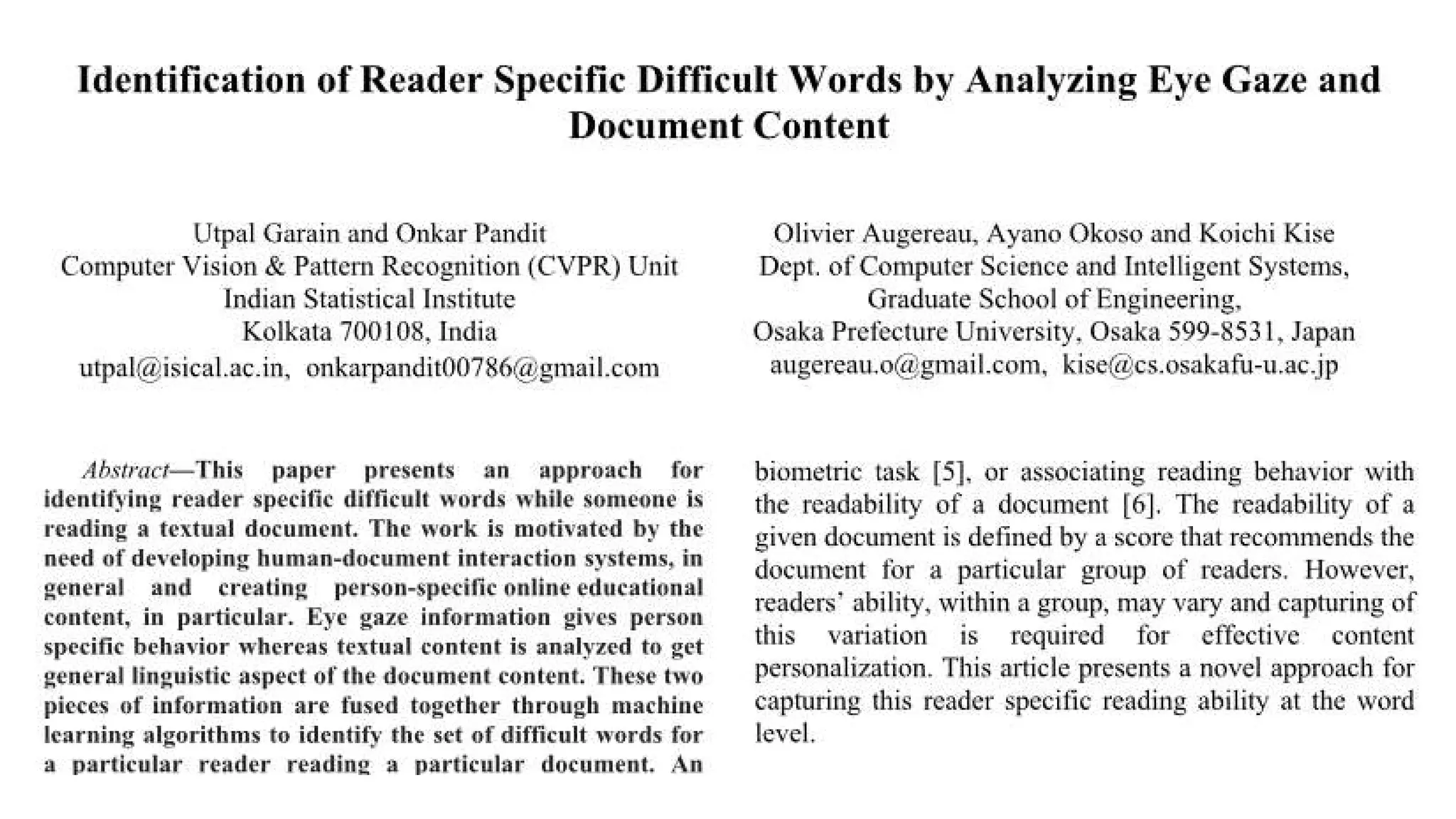
Advances in ML and rebirth of AI
Utpal Garain
Indian Statistical Institute
https://www.isical.ac.in/~utpal/
https://www.facebook.com/utpal.garain.5
Cognitive Computing
• Systems that learn at scale, reason with purpose and
interact with human naturally.
• Products of the field of Artificial Intelligence (AI)
• Man-machine symbiosis by JCR Licklider (1955)
• Aims
• To let computer facilitate formulative thinking as they now facilitate the
solution of formulated problems
• To enable man and computers to cooperate in making decisions and
controlling complex situations with flexible dependence on
predetermined programs
Birth of Cognitive Computing
• Lets revise the computing history
• The tabulating era (1900s till WW-II)
• The programming era (1950s till date)
• The cognitive era (21st Century ---)
• AI though introduced in 1955, could NOT show much promise till the
last century
• Remained as a hype
• Though some successful expert systems were developed
Catalysis of Progress
• In 1990s, some techniques like neural networks, genetic algorithms,
etc. received fresh attention.
• They could avoid some limitations of expert systems (features, rules)
• AI got rebirth
• Moore s la
• Doubling in capacity and speed every 18 months for six decades
• From mainframe to personal computer and to the smartphones and tablets
The rise of Cognitive
• Big data
• Volume of data is increasingly rapidly
• Social media, mobile devices, low- ost se sors, …
• The Internet and the cloud
• They make available vast amount of data and information to any Internet-
connected computing device
• New Algorithms
• Development in Machine Learning algorithms
• Neural Nets, SVMs, Deep Learning
• Advancement in Reasoning
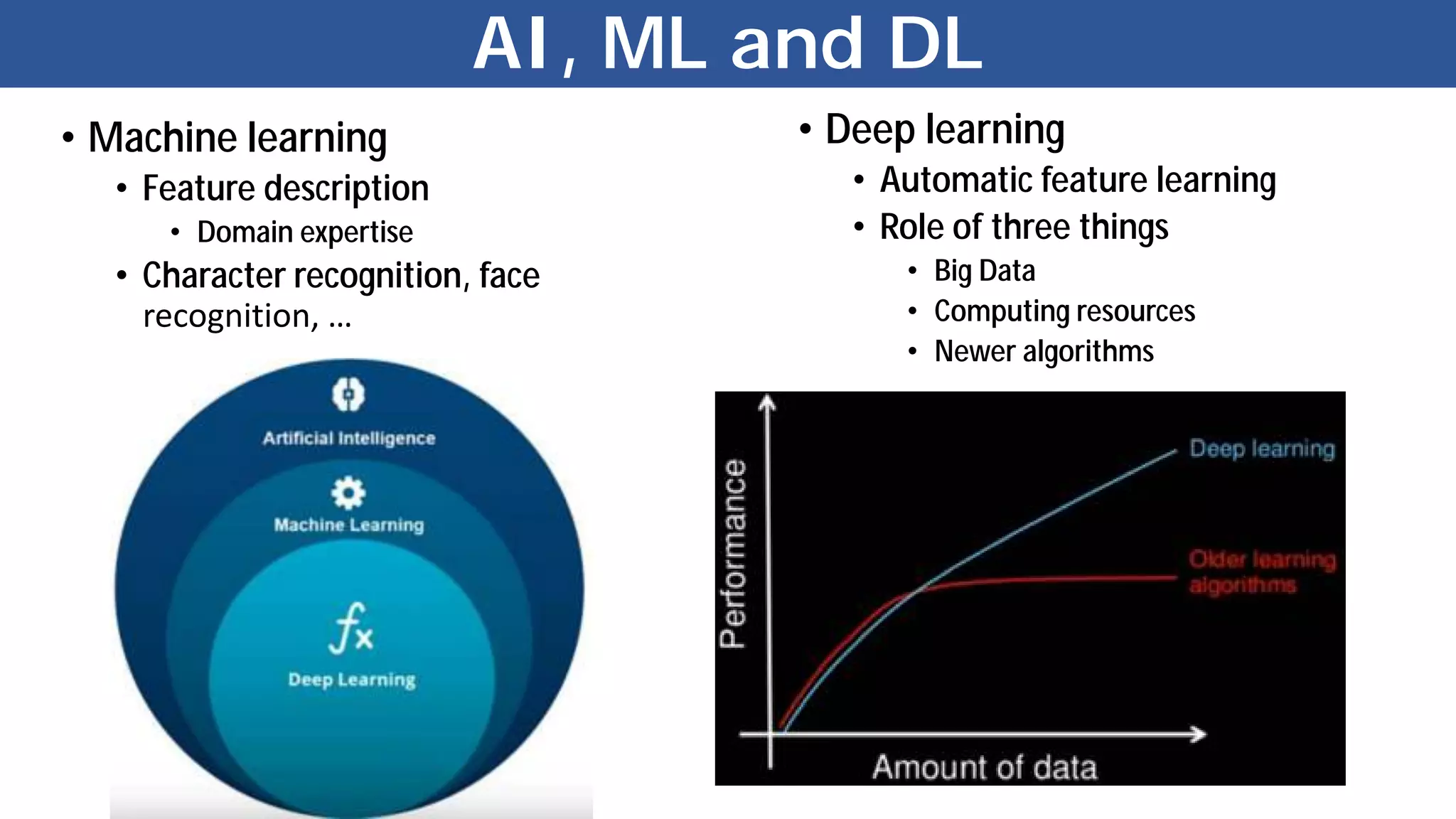
AI, ML and DL
• Machine learning
• Feature description
• Domain expertise
• Character recognition, face
re og itio , …
• Deep learning
• Automatic feature learning
• Role of three things
• Big Data
• Computing resources
• Newer algorithms
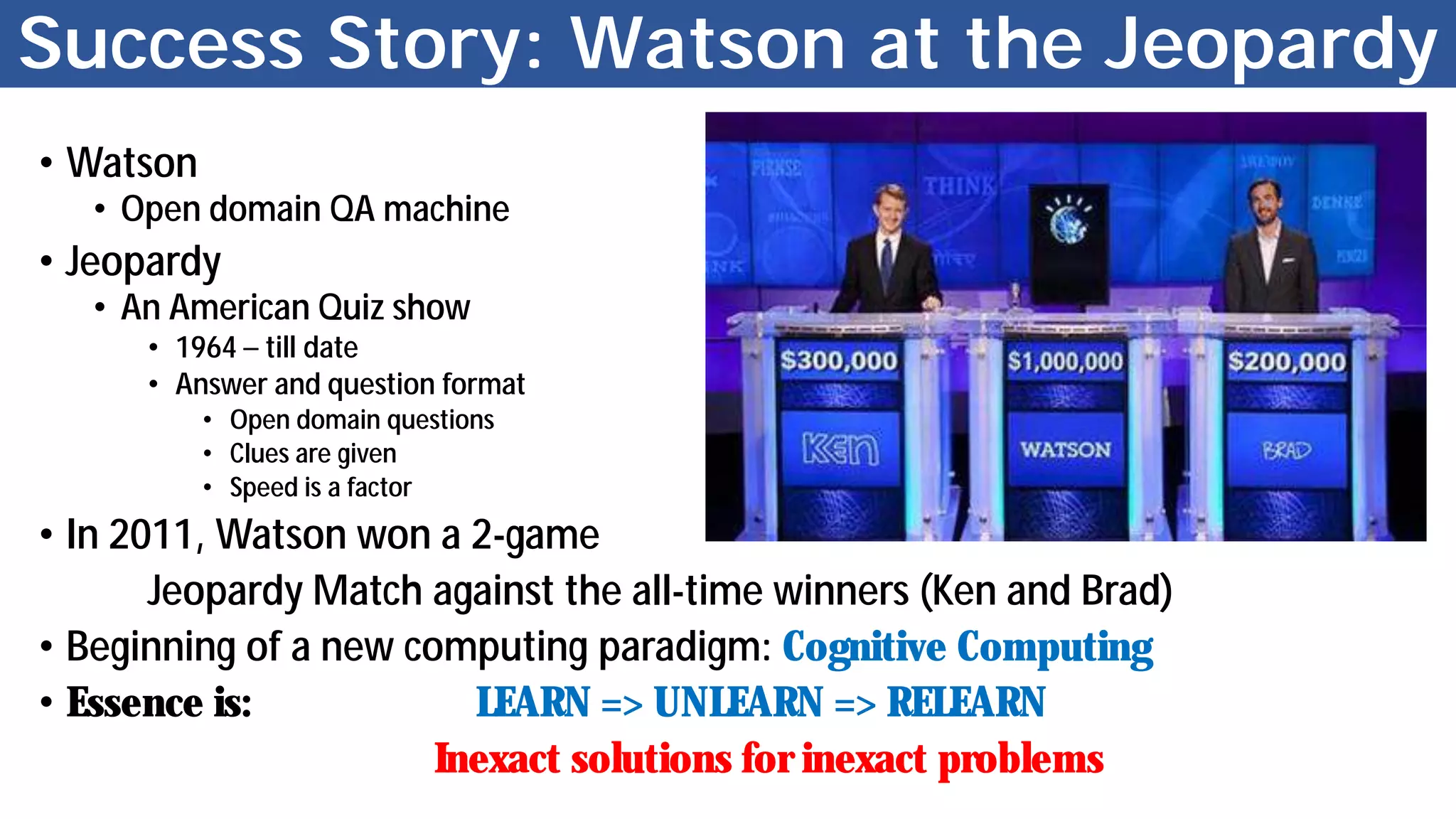
Success Story: Watson at the Jeopardy
• Watson
• Open domain QA machine
• Jeopardy
• An American Quiz show
• 1964 – till date
• Answer and question format
• Open domain questions
• Clues are given
• Speed is a factor
• In 2011, Watson won a 2-game
Jeopardy Match against the all-time winners (Ken and Brad)
• Beginning of a new computing paradigm: Cognitive Computing
• Essence is: LEARN => UNLEARN => RELEARN
Inexact solutions for inexact problems
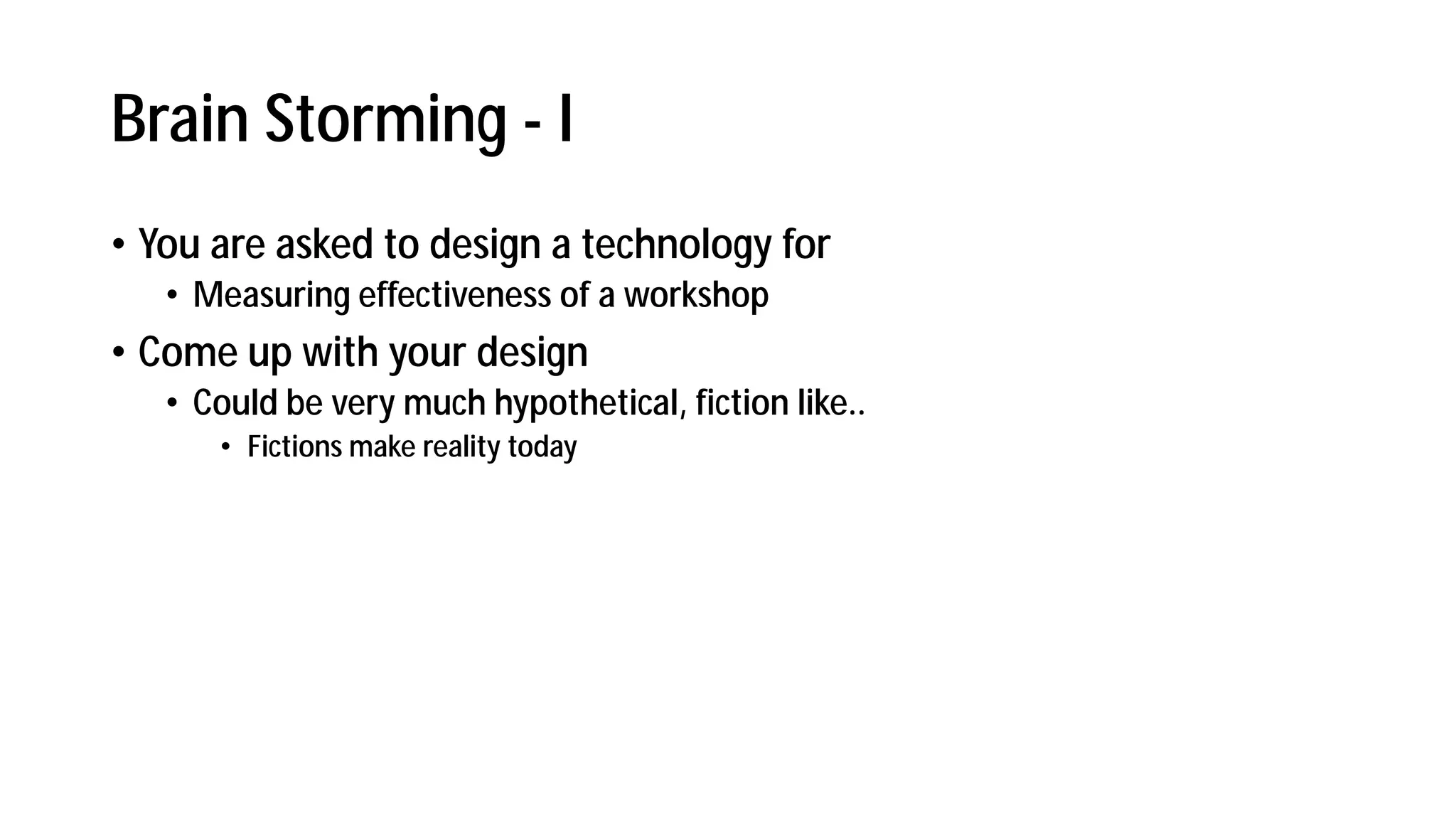
Brain Storming-I
• You are asked to design a technology (surely cognitive) for
• Measuring effectiveness of a workshop
• Come up with your design
• Could be very much hypothetical, fiction like..
• Fictions make reality today
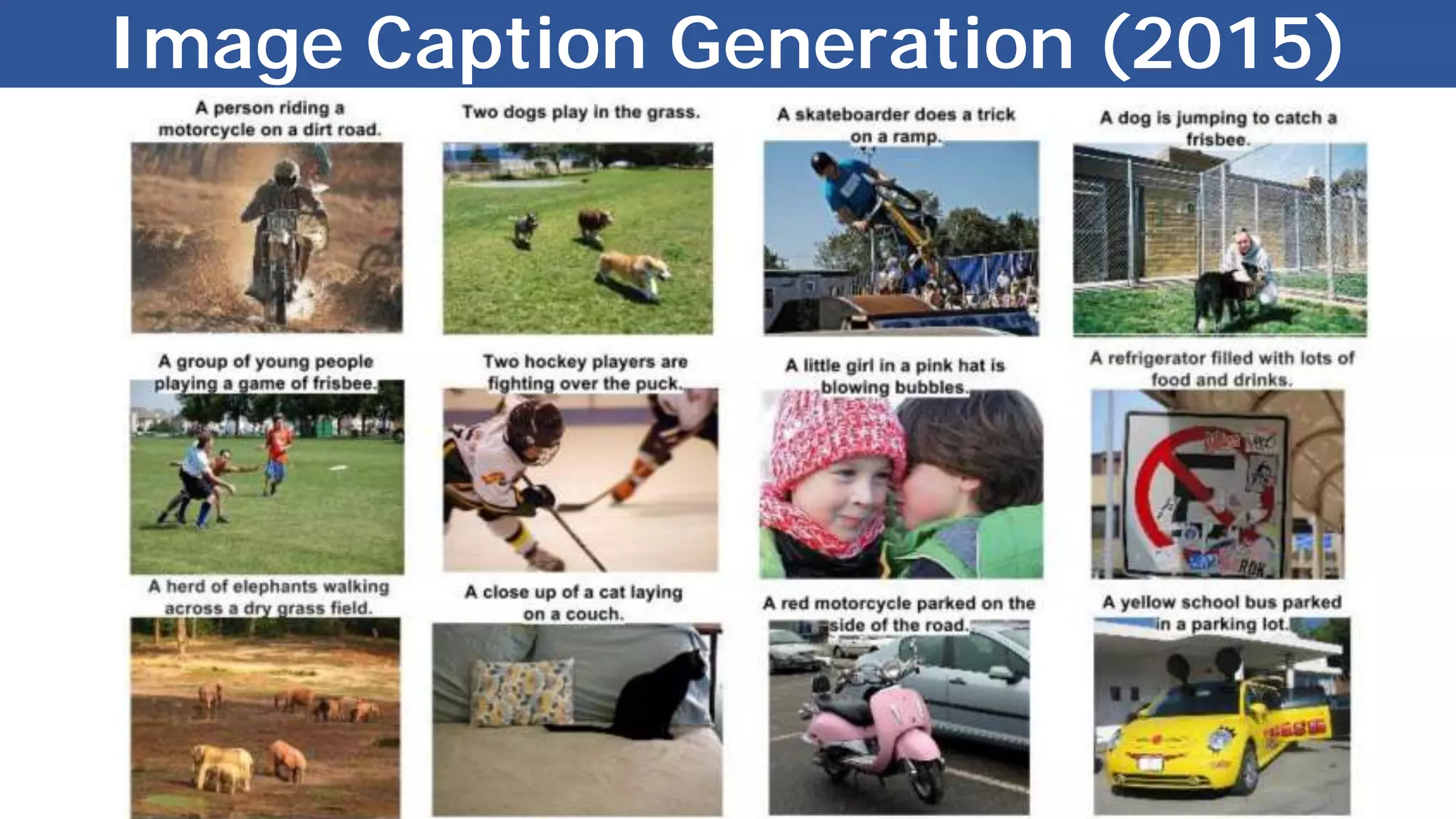
Image Caption Generation (2015)
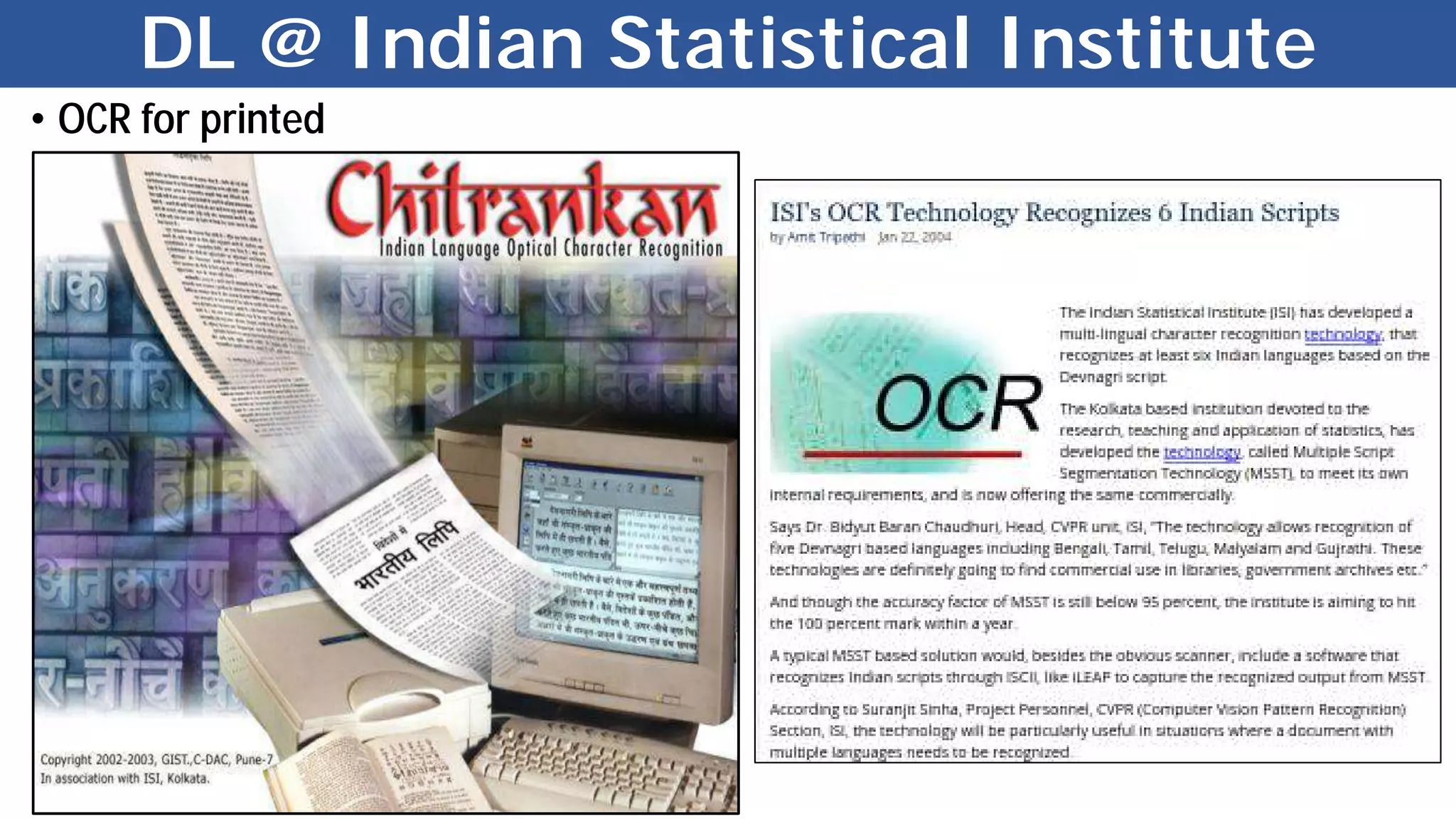
DL @ Indian Statistical Institute
• OCR for printed
DL @ Indian Statistical Institute
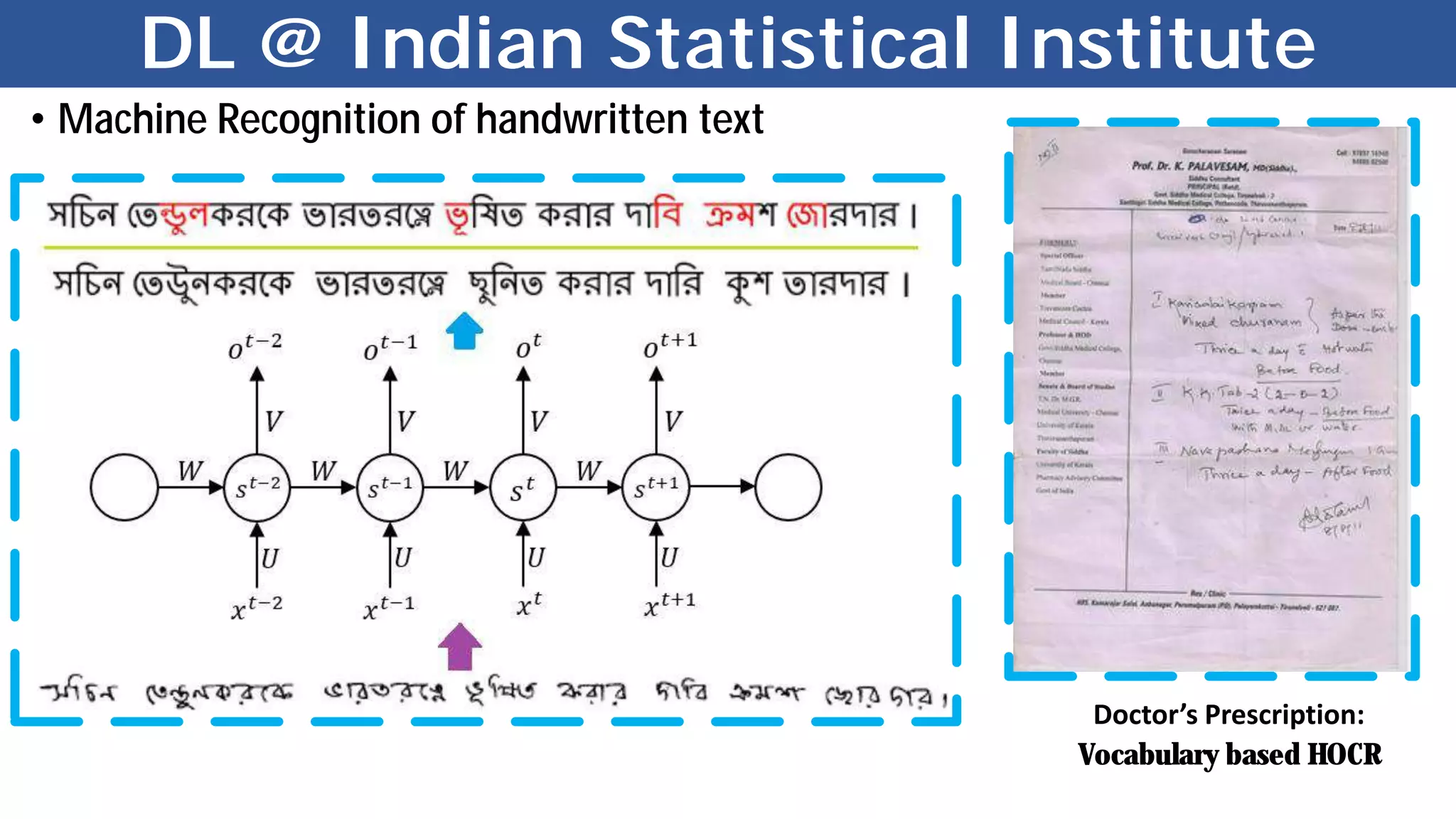
• Machine Recognition of handwritten text
Doctor’s Prescription:
Vocabulary based HOCR
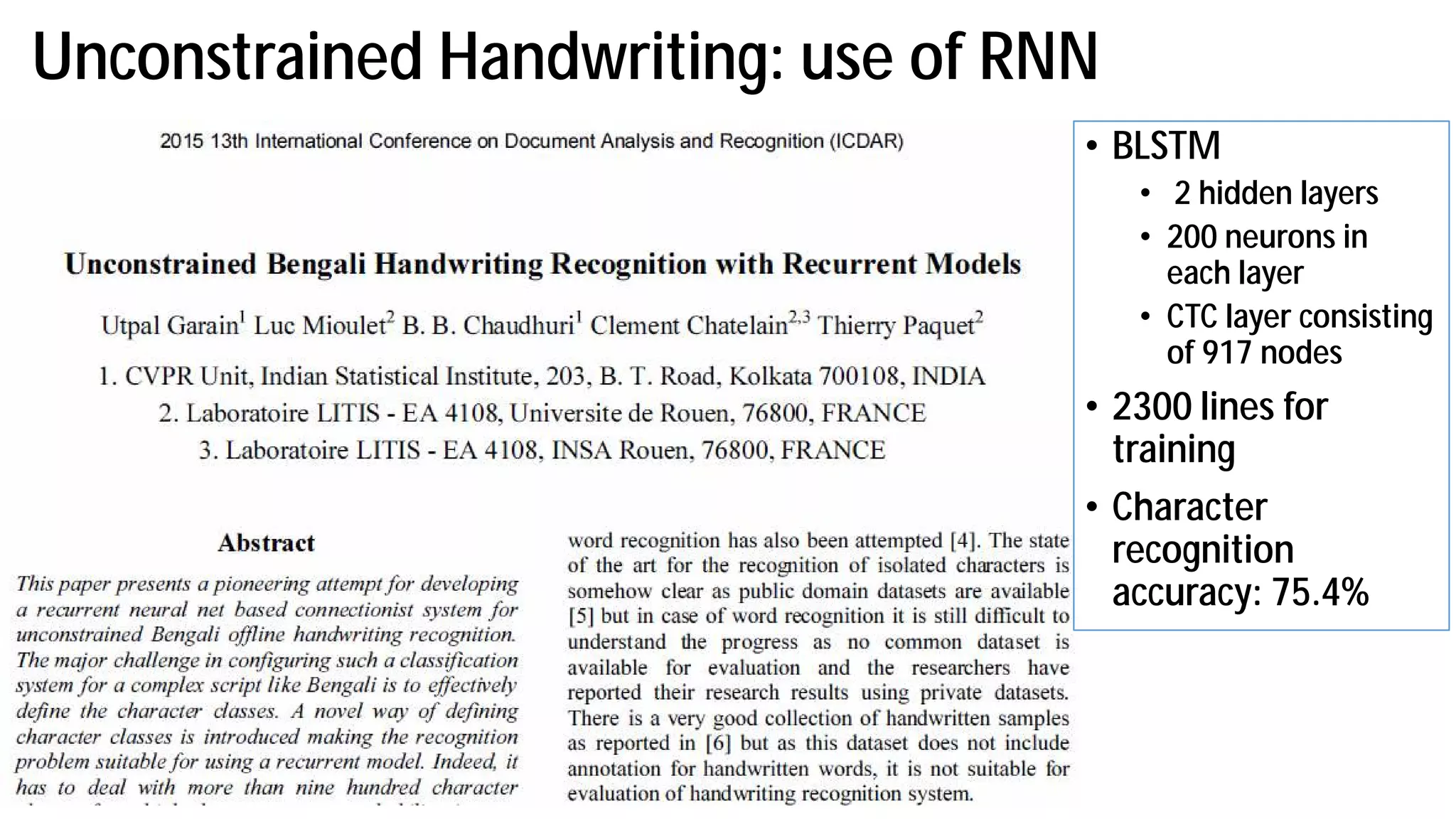
Unconstrained Handwriting: use of RNN
• BLSTM
• 2 hidden layers
• 200 neurons in
each layer
• CTC layer consisting
of 917 nodes
• 2300 lines for
training
• Character
recognition
accuracy: 75.4%
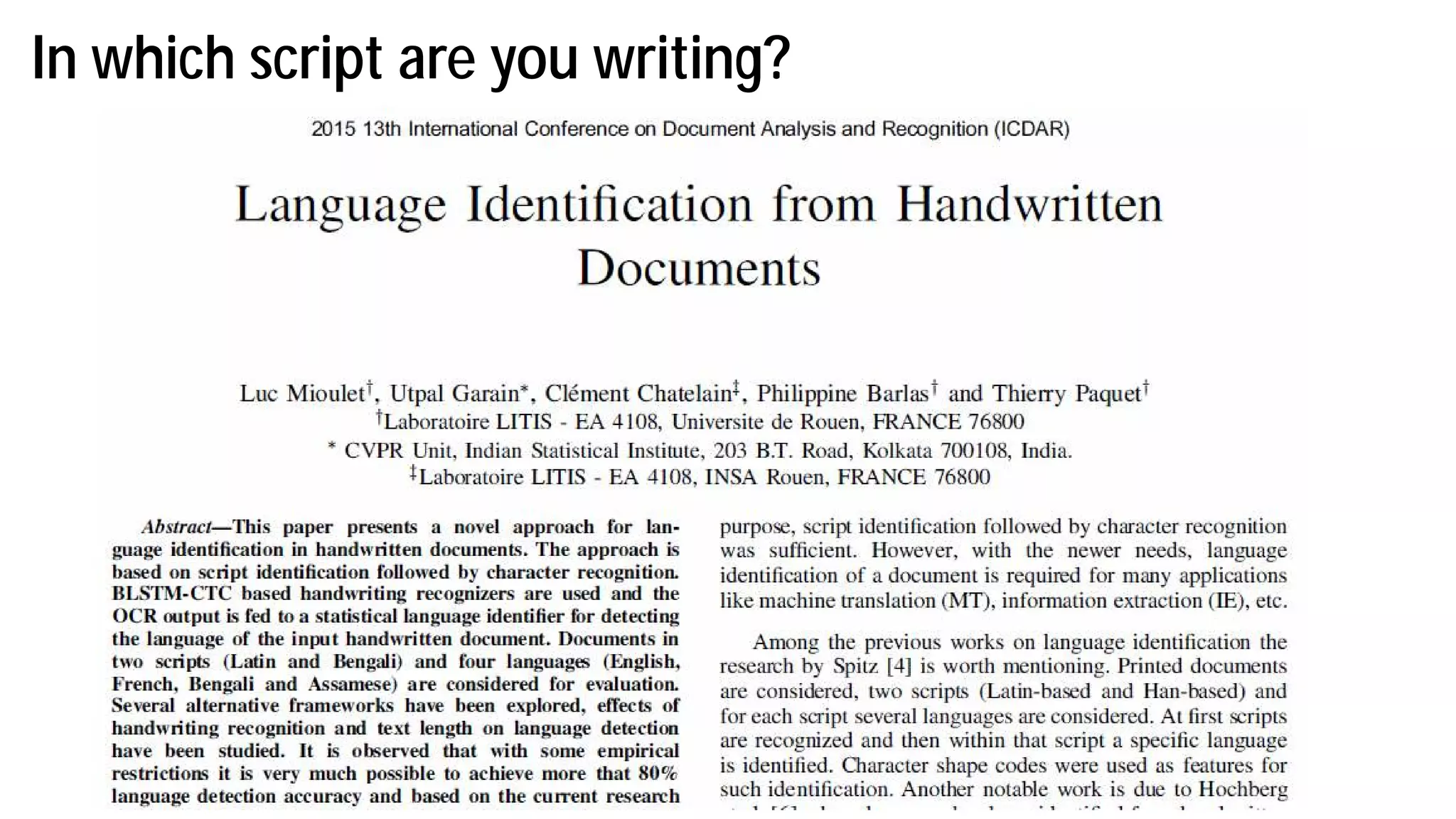
In which script are you writing?
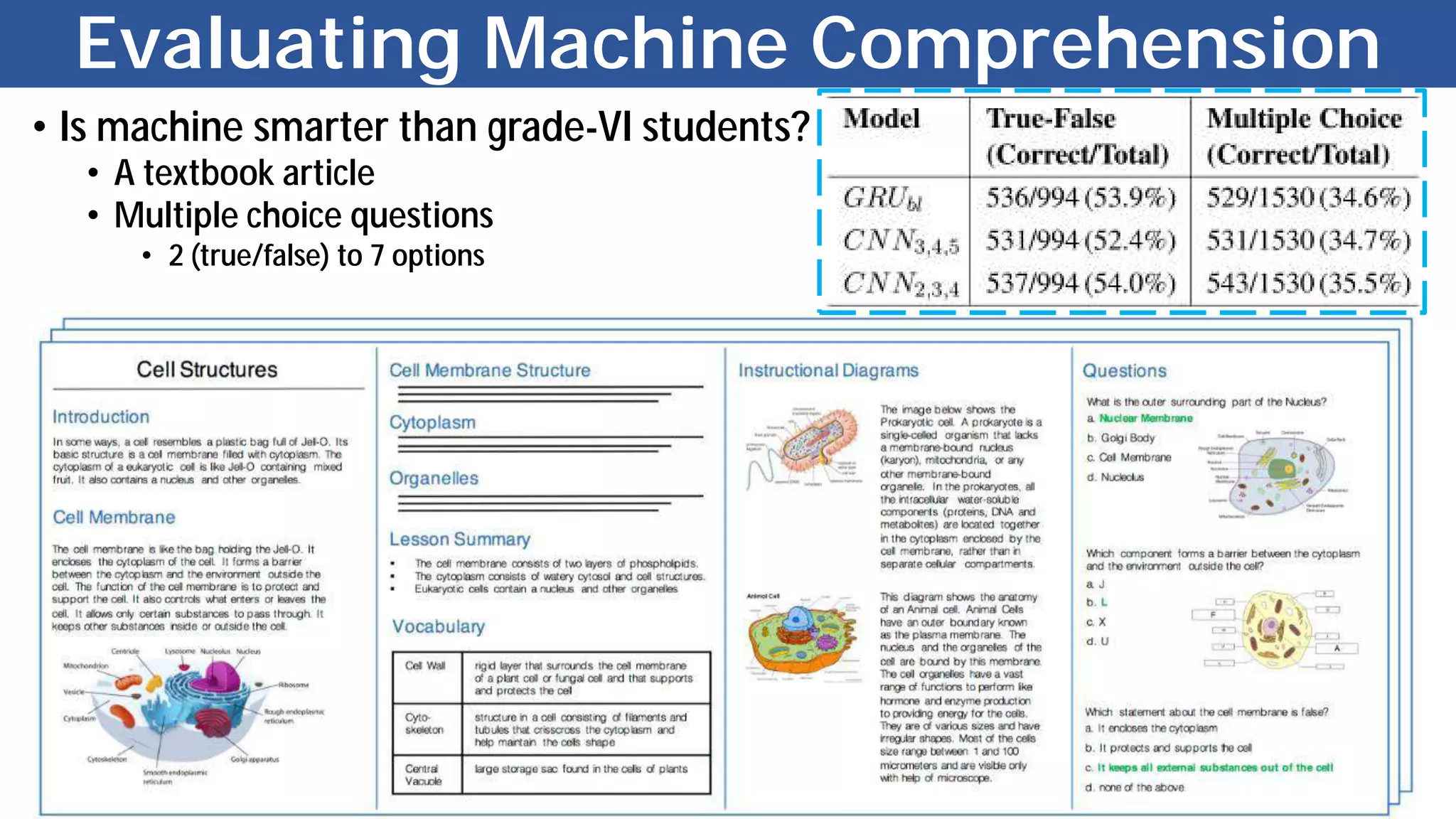
Evaluating Machine Comprehension
• Is machine smarter than grade-VI students?
• A textbook article
• Multiple choice questions
• 2 (true/false) to 7 options
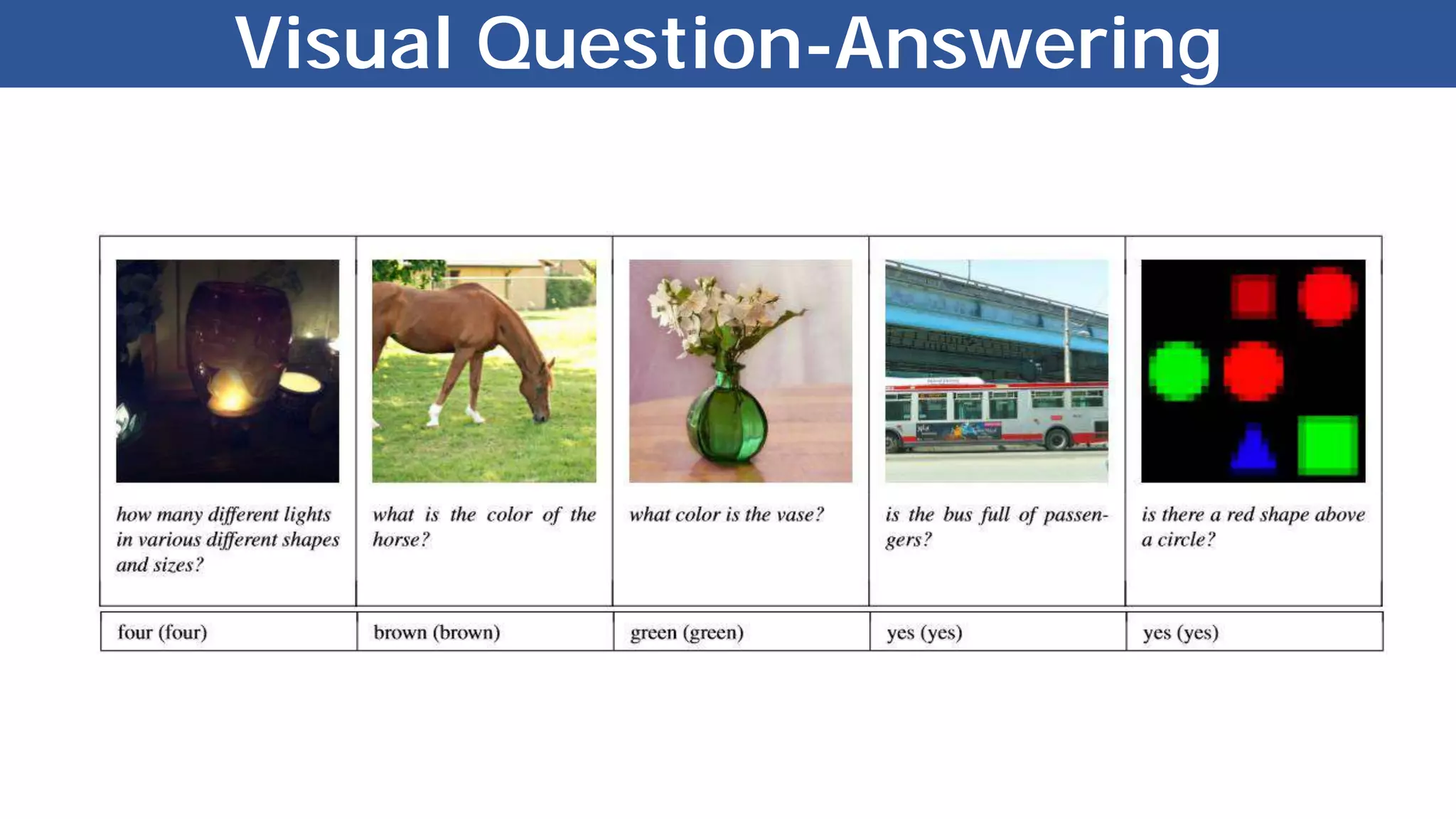
Visual Question-Answering
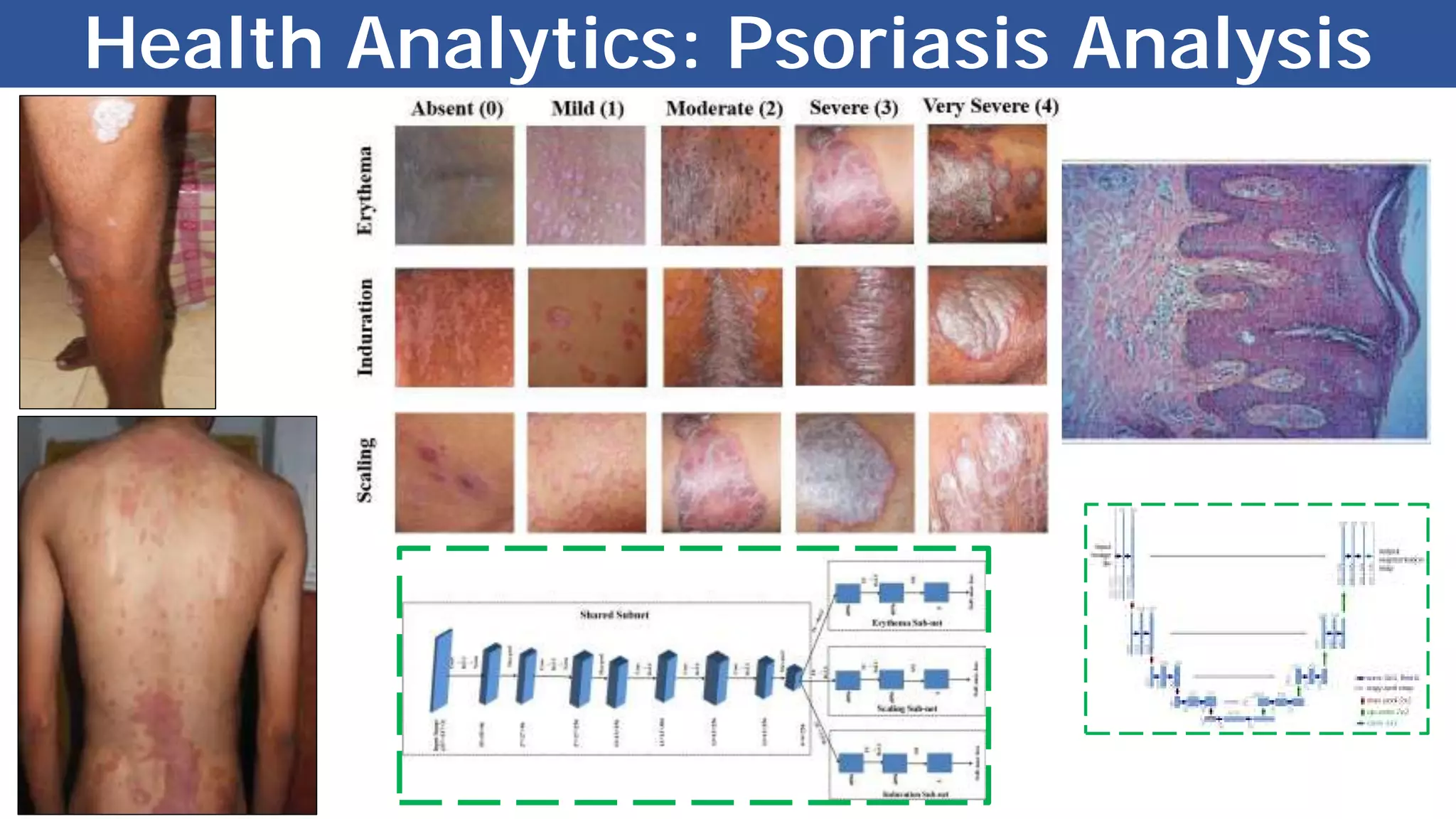
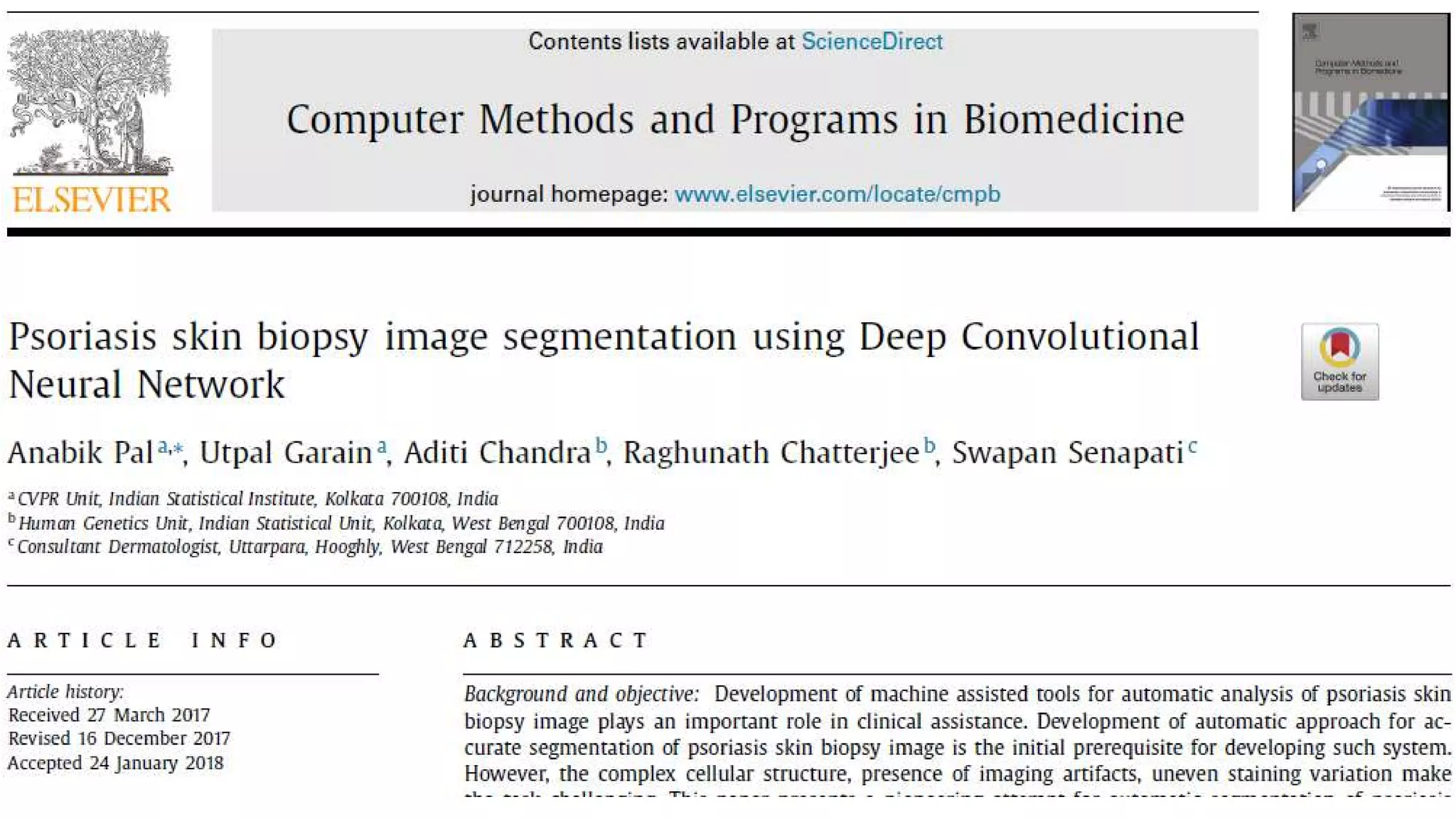
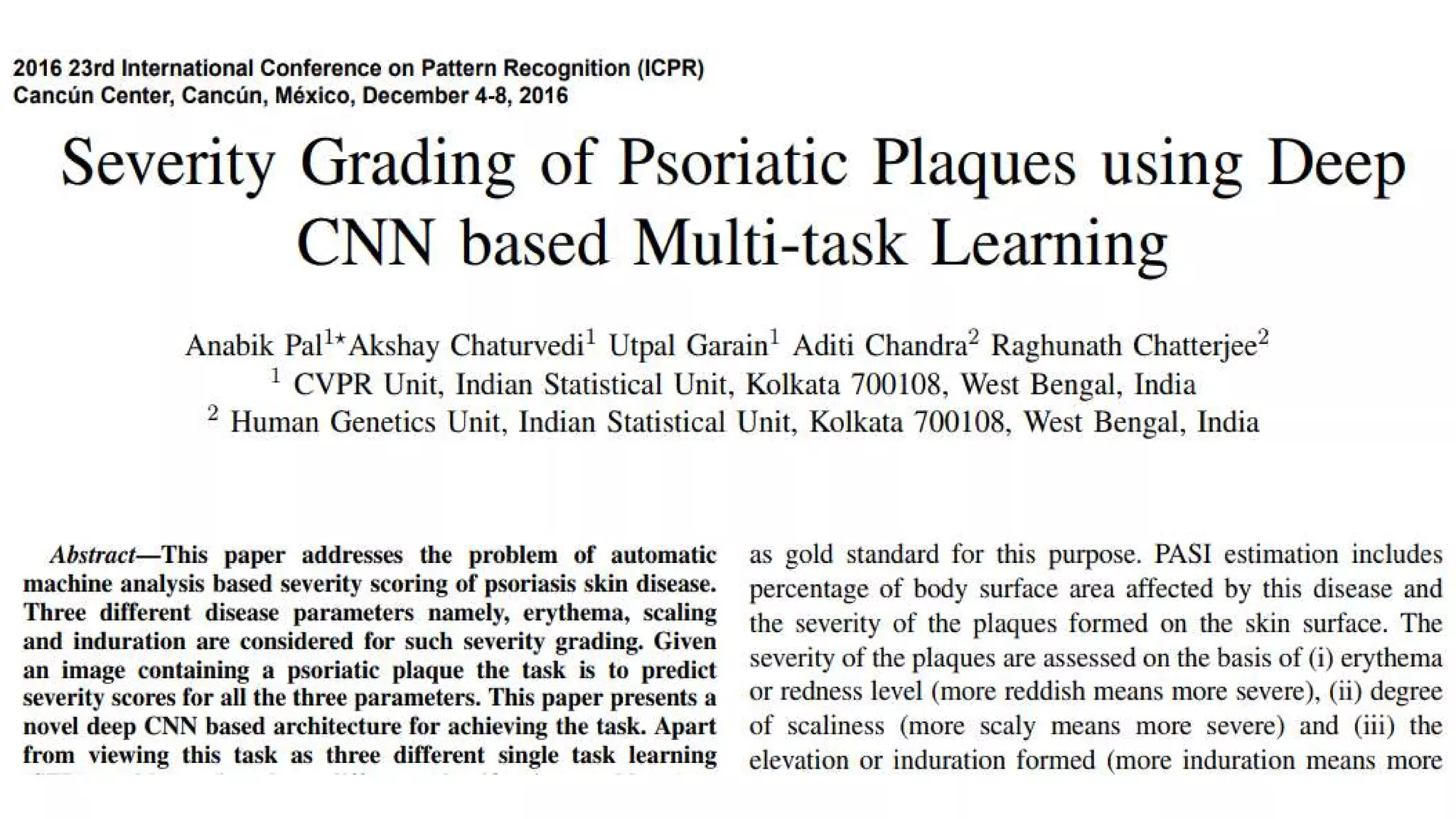
Health Analytics: Psoriasis Analysis
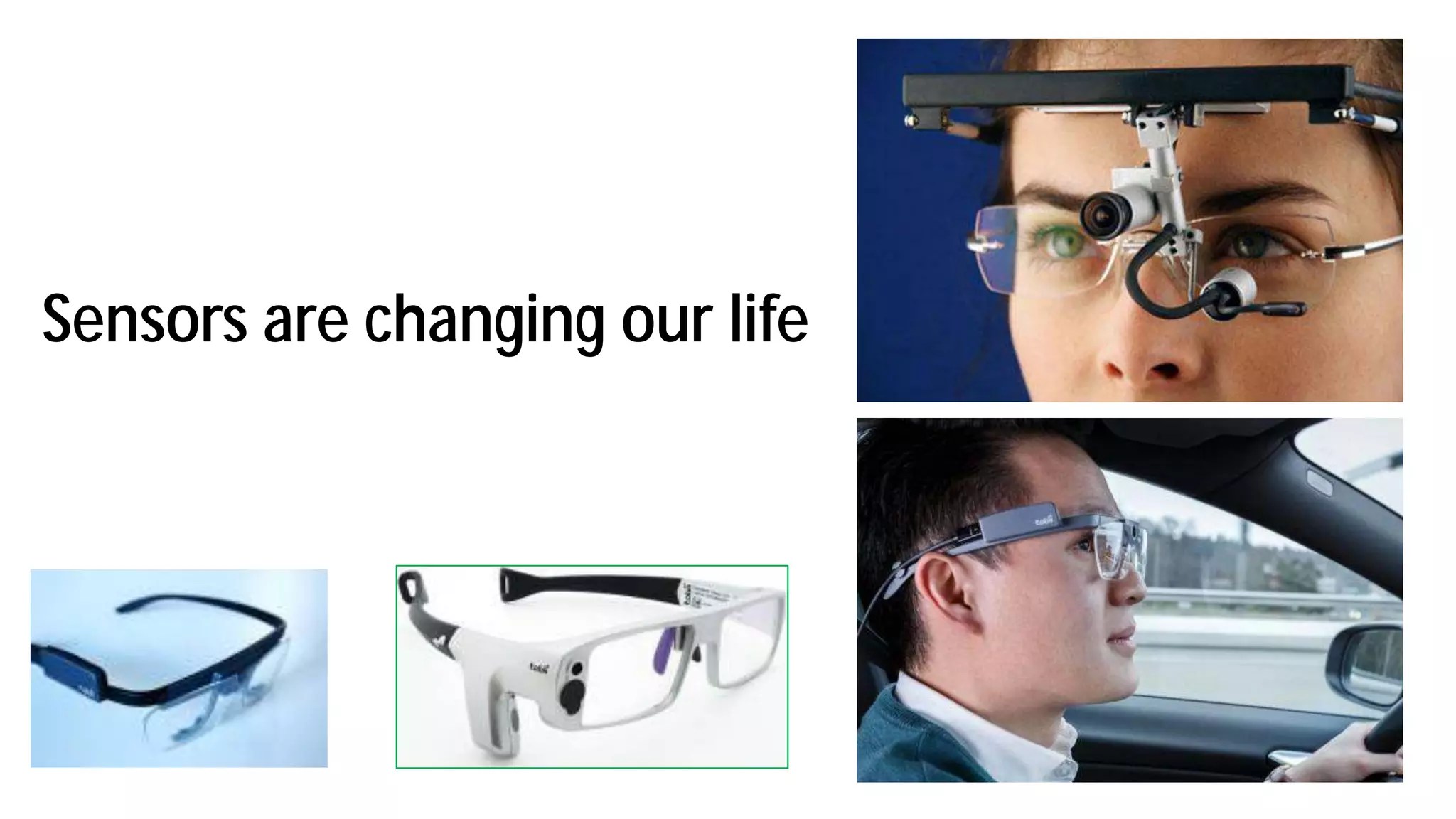
Sensors are changing our life
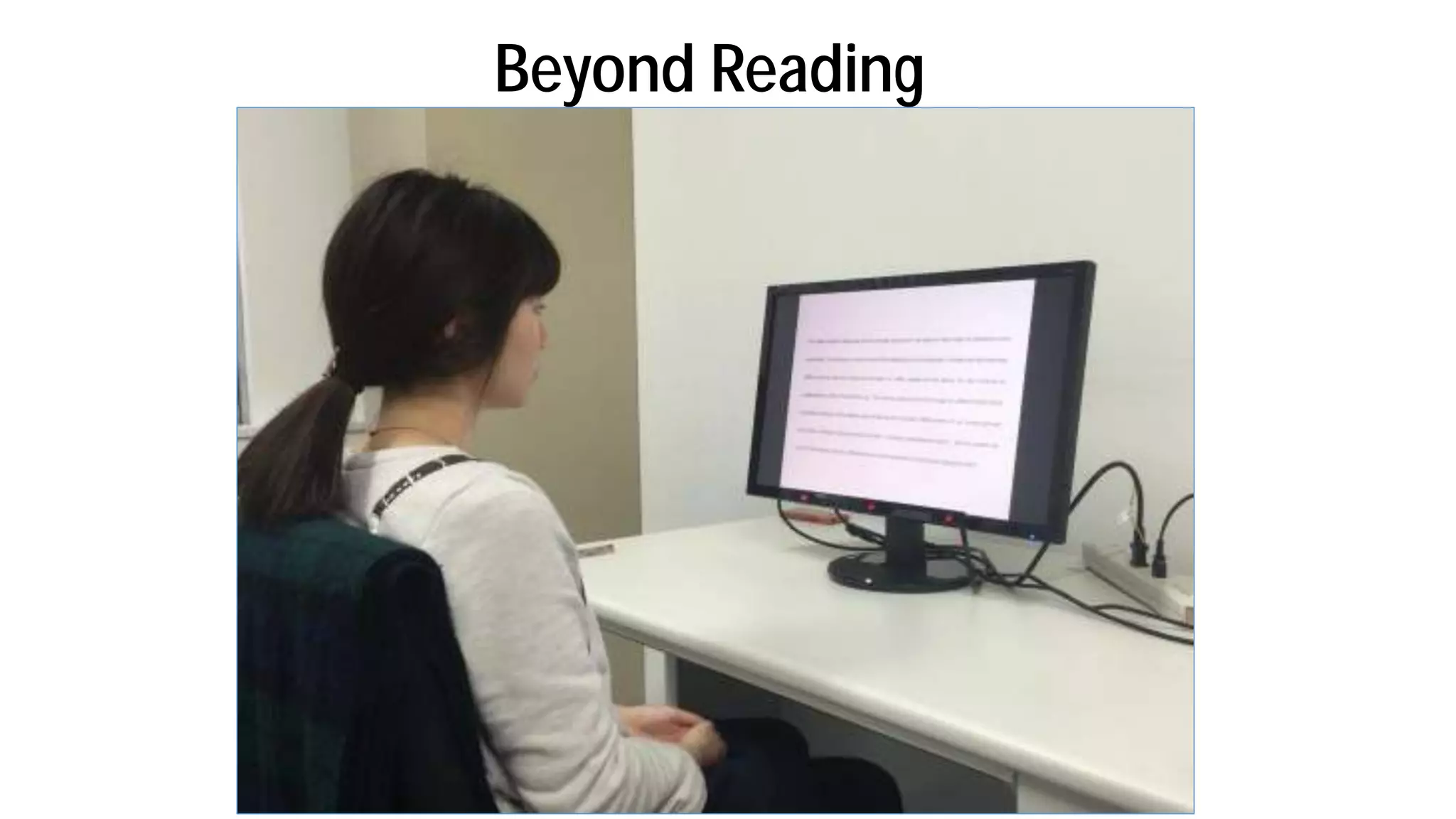
Beyond Reading
Brain Storming - I
• You are asked to design a technology for
• Measuring effectiveness of a workshop
• Come up with your design
• Could be very much hypothetical, fiction like..
• Fictions make reality today
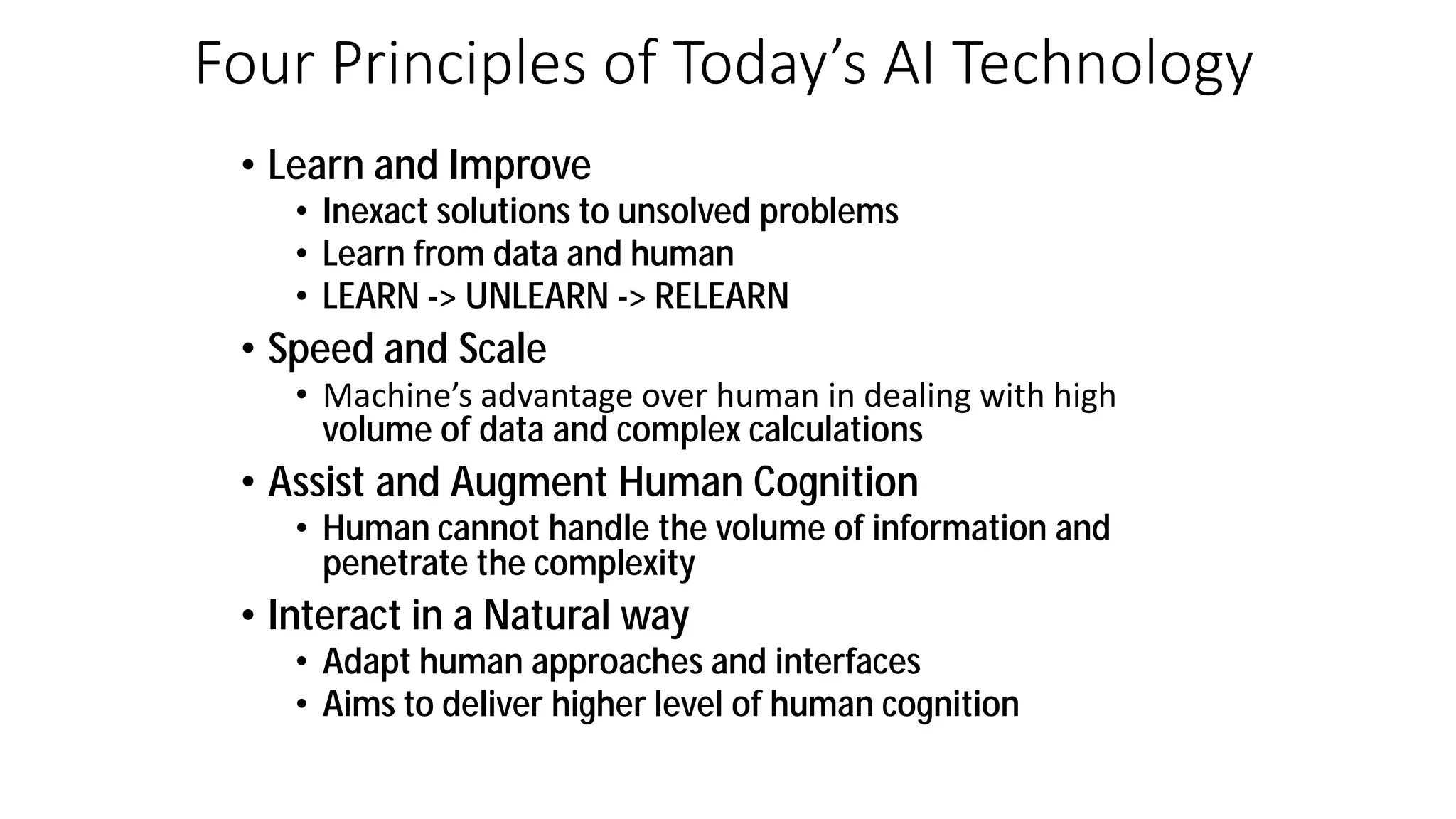
Four Principles of Today’s AI Technology
• Learn and Improve
• Inexact solutions to unsolved problems
• Learn from data and human
• LEARN -> UNLEARN -> RELEARN
• Speed and Scale
• Ma hi e s ad a tage o er hu a i deali g ith high
volume of data and complex calculations
• Assist and Augment Human Cognition
• Human cannot handle the volume of information and
penetrate the complexity
• Interact in a Natural way
• Adapt human approaches and interfaces
• Aims to deliver higher level of human cognition
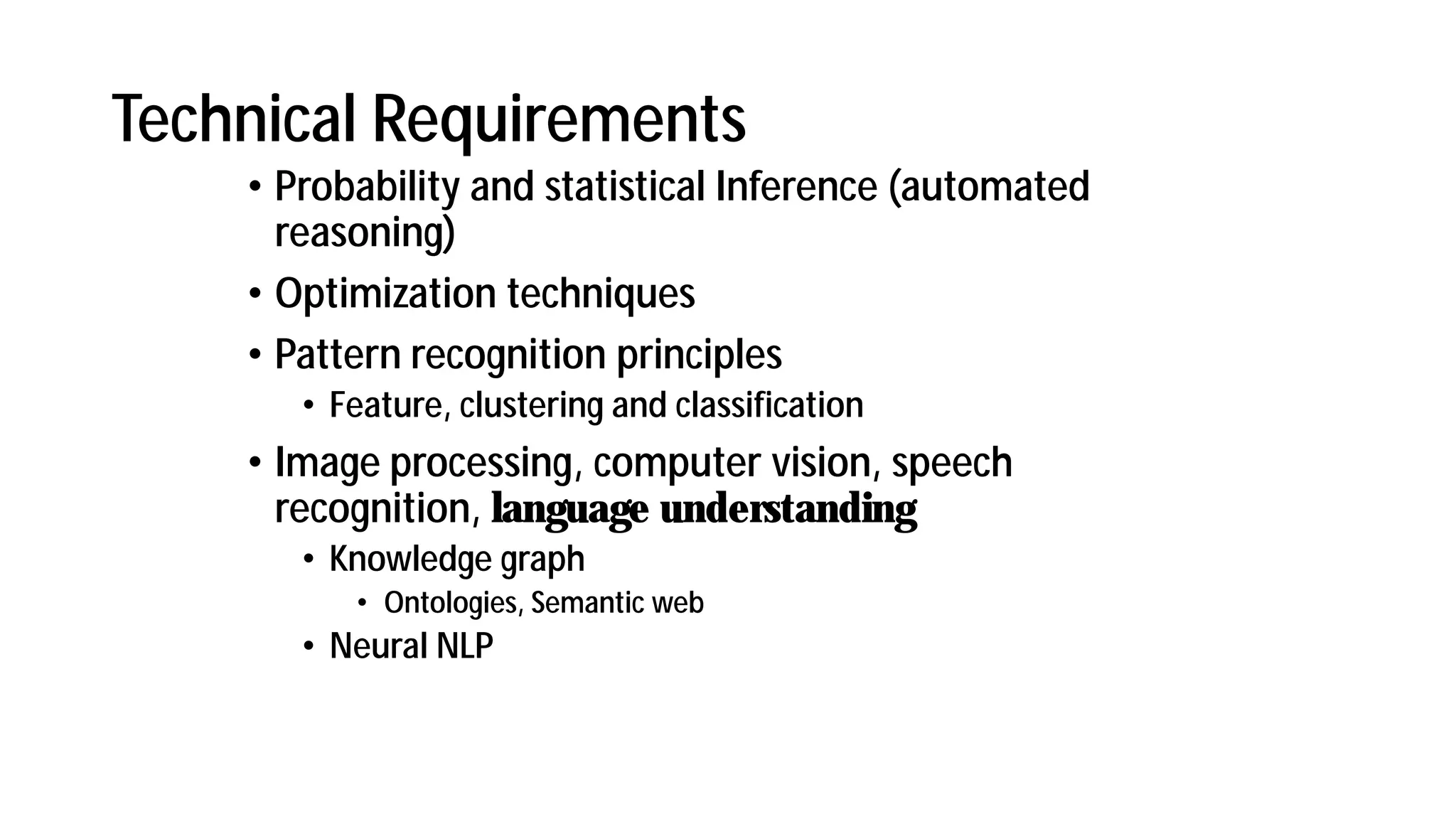
Technical Requirements
• Probability and statistical Inference (automated
reasoning)
• Optimization techniques
• Pattern recognition principles
• Feature, clustering and classification
• Image processing, computer vision, speech
recognition, language understanding
• Knowledge graph
• Ontologies, Semantic web
• Neural NLP
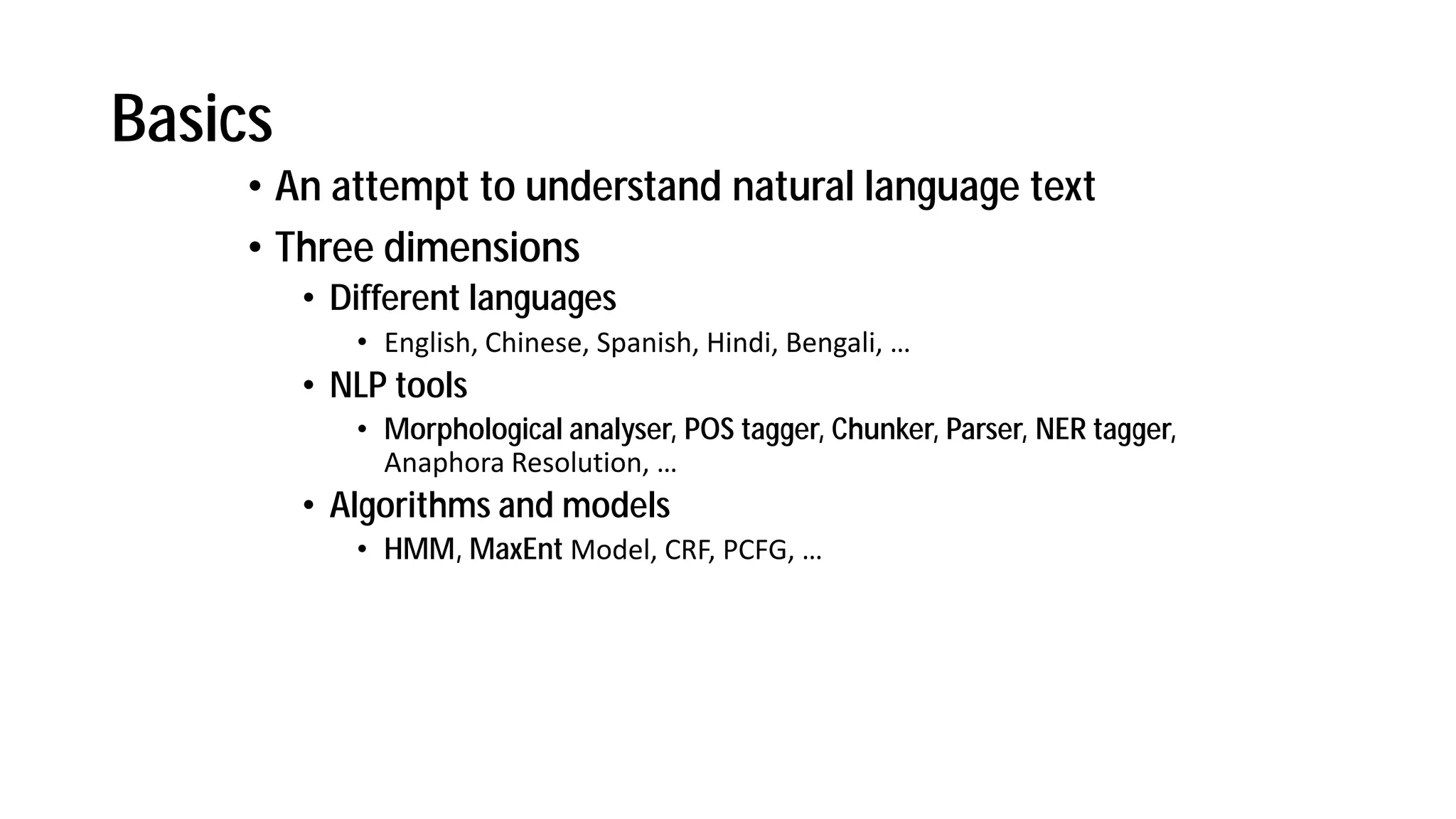
Language Processing
Basics
• An attempt to understand natural language text
• Three dimensions
• Different languages
• E glish, Chi ese, “pa ish, Hi di, Be gali, …
• NLP tools
• Morphological analyser, POS tagger, Chunker, Parser, NER tagger,
A aphora ‘esolutio , …
• Algorithms and models
• HMM, MaxEnt Model, C‘F, PCFG, …
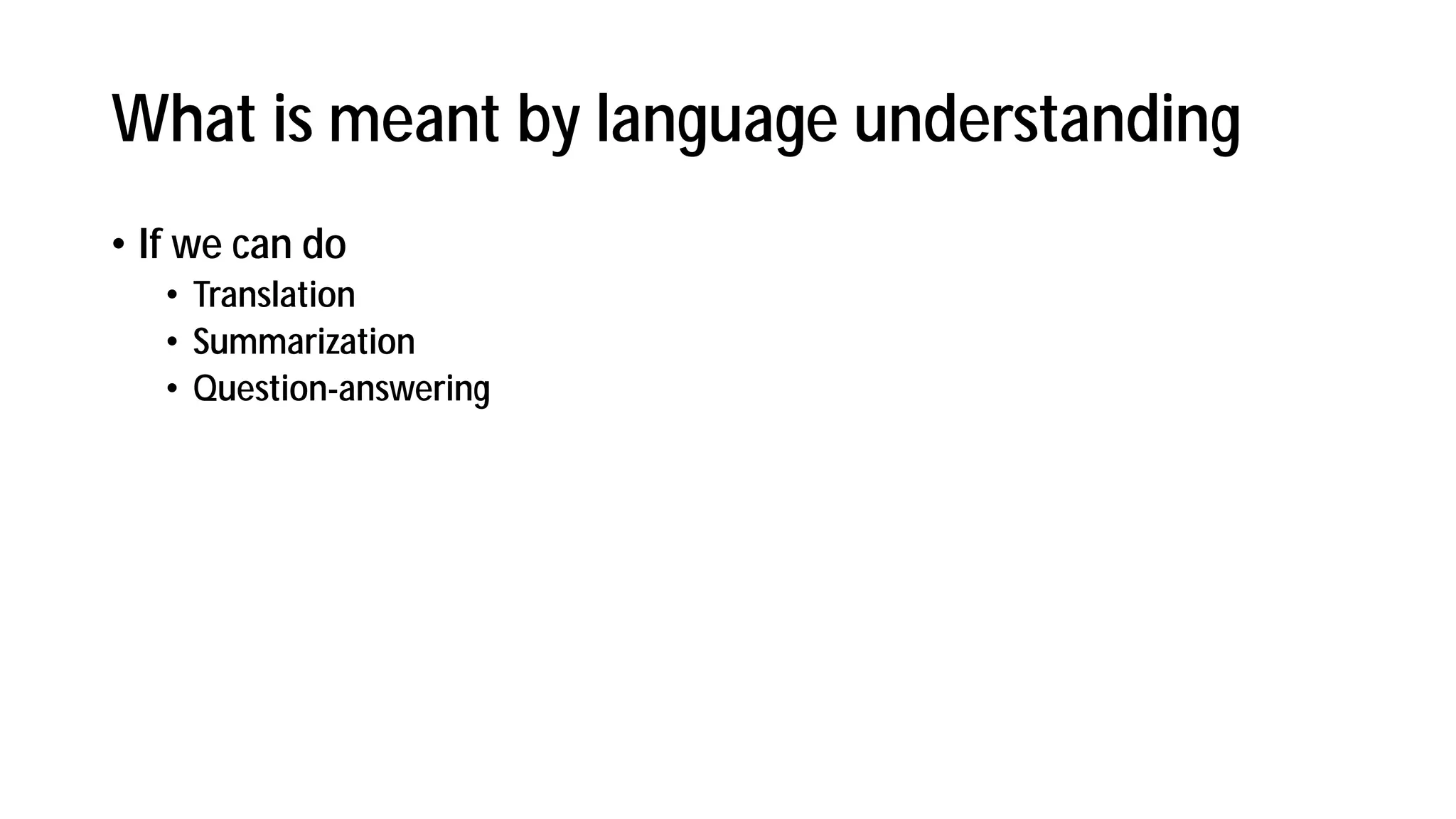
What is meant by language understanding
• If we can do
• Translation
• Summarization
• Question-answering
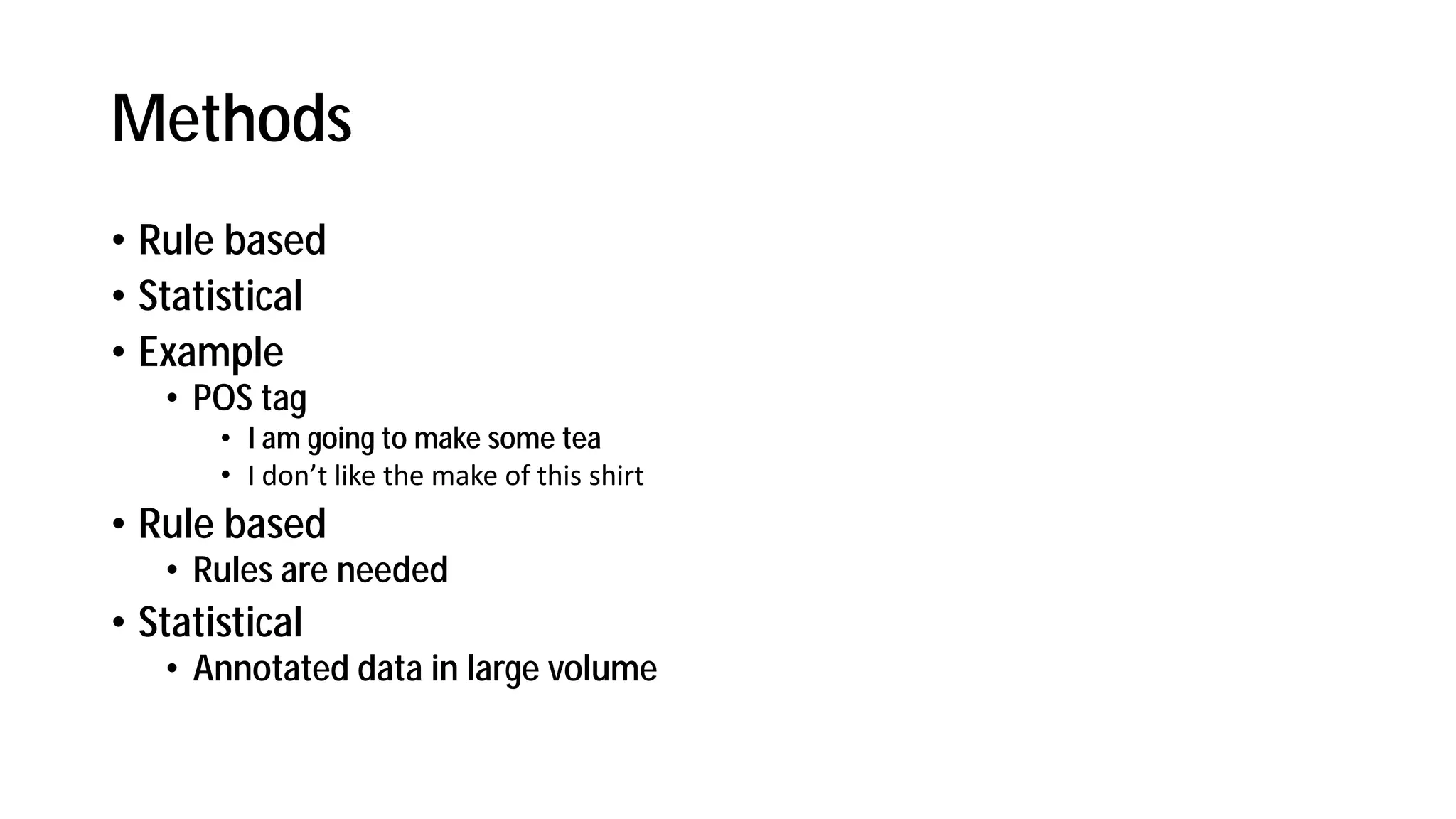
Methods
• Rule based
• Statistical
• Example
• POS tag
• I am going to make some tea
• I do t like the ake of this shirt
• Rule based
• Rules are needed
• Statistical
• Annotated data in large volume
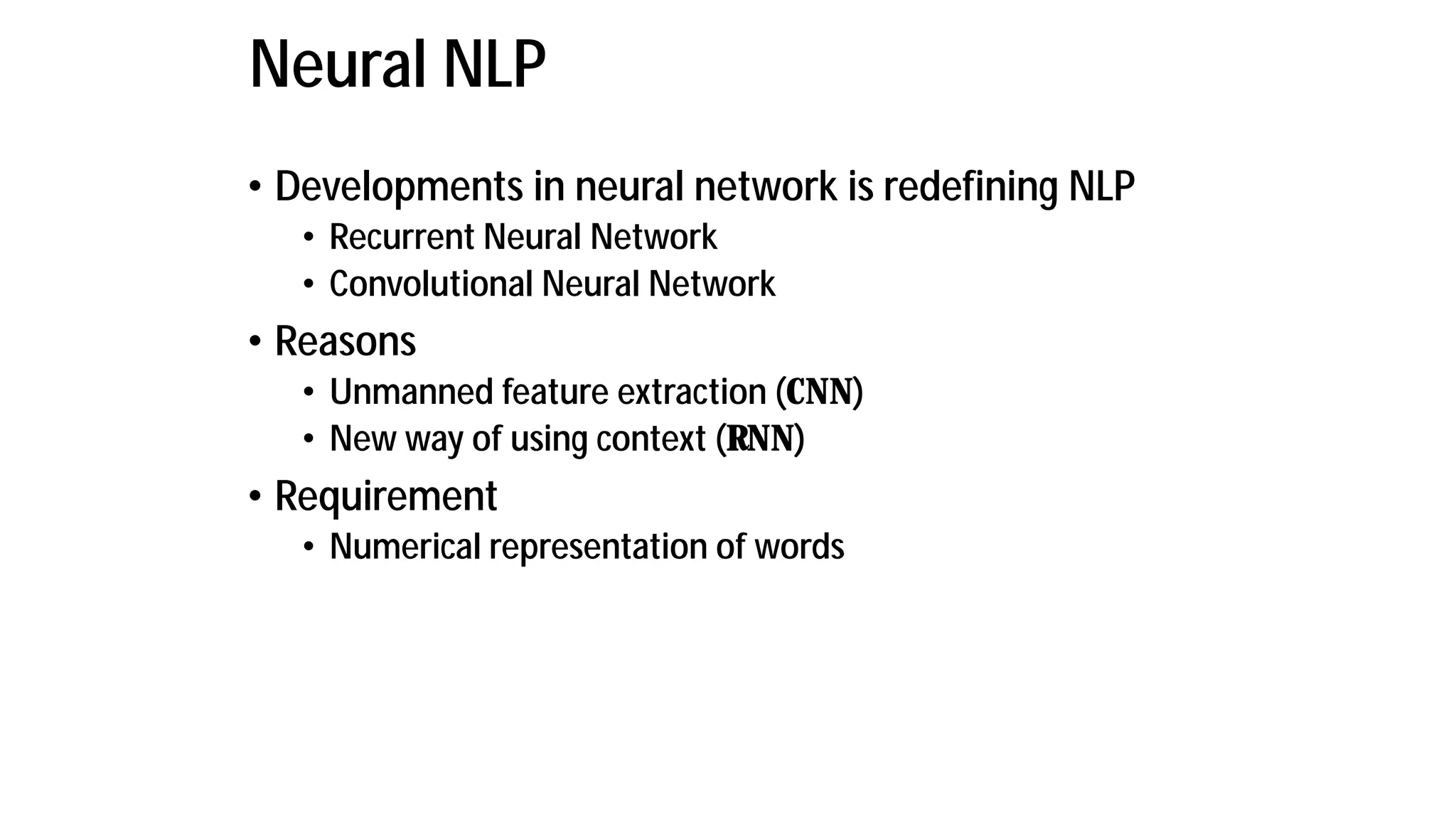
Neural NLP
• Developments in neural network is redefining NLP
• Recurrent Neural Network
• Convolutional Neural Network
• Reasons
• Unmanned feature extraction (CNN)
• New way of using context (RNN)
• Requirement
• Numerical representation of words
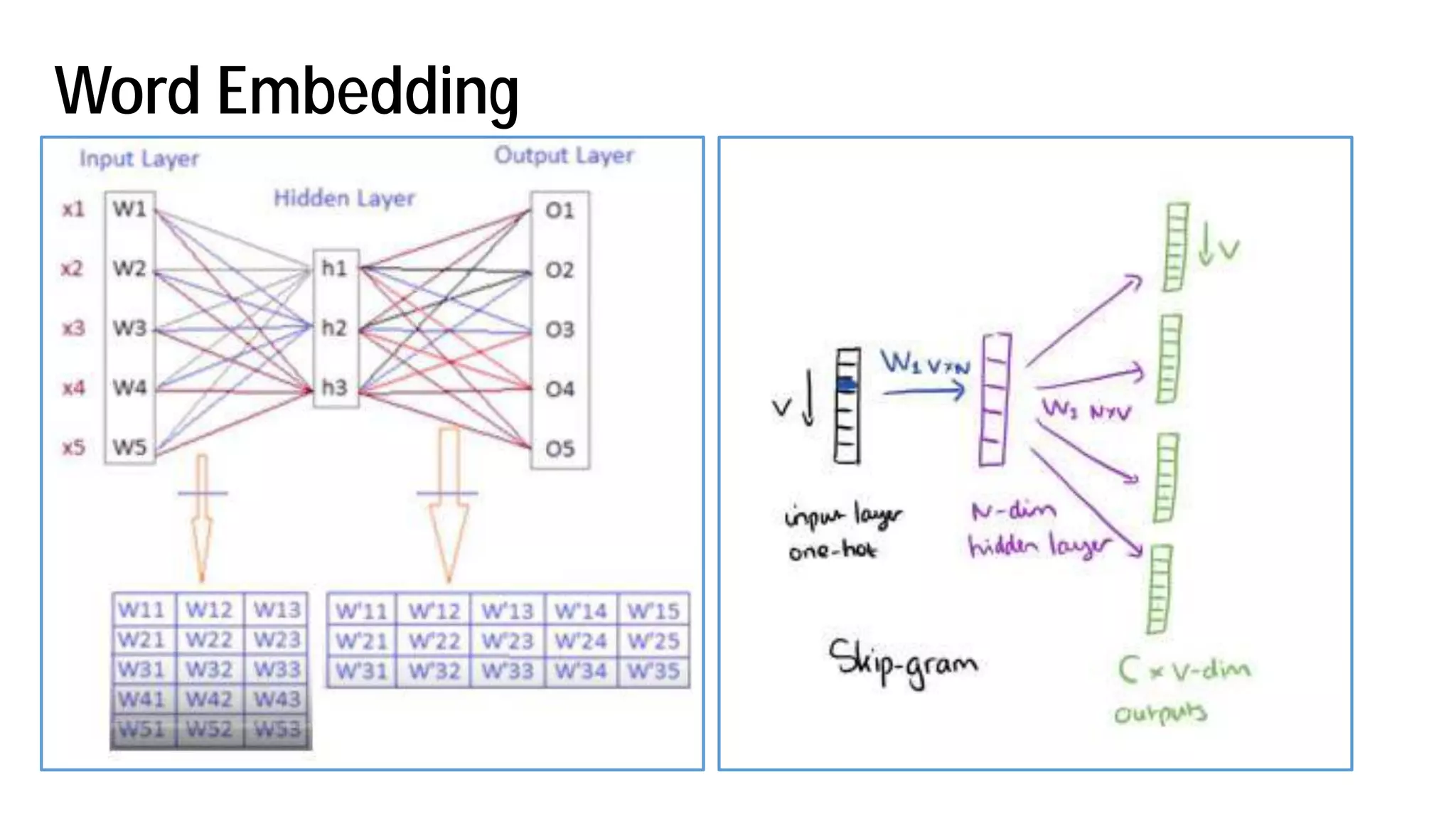
Word Embedding
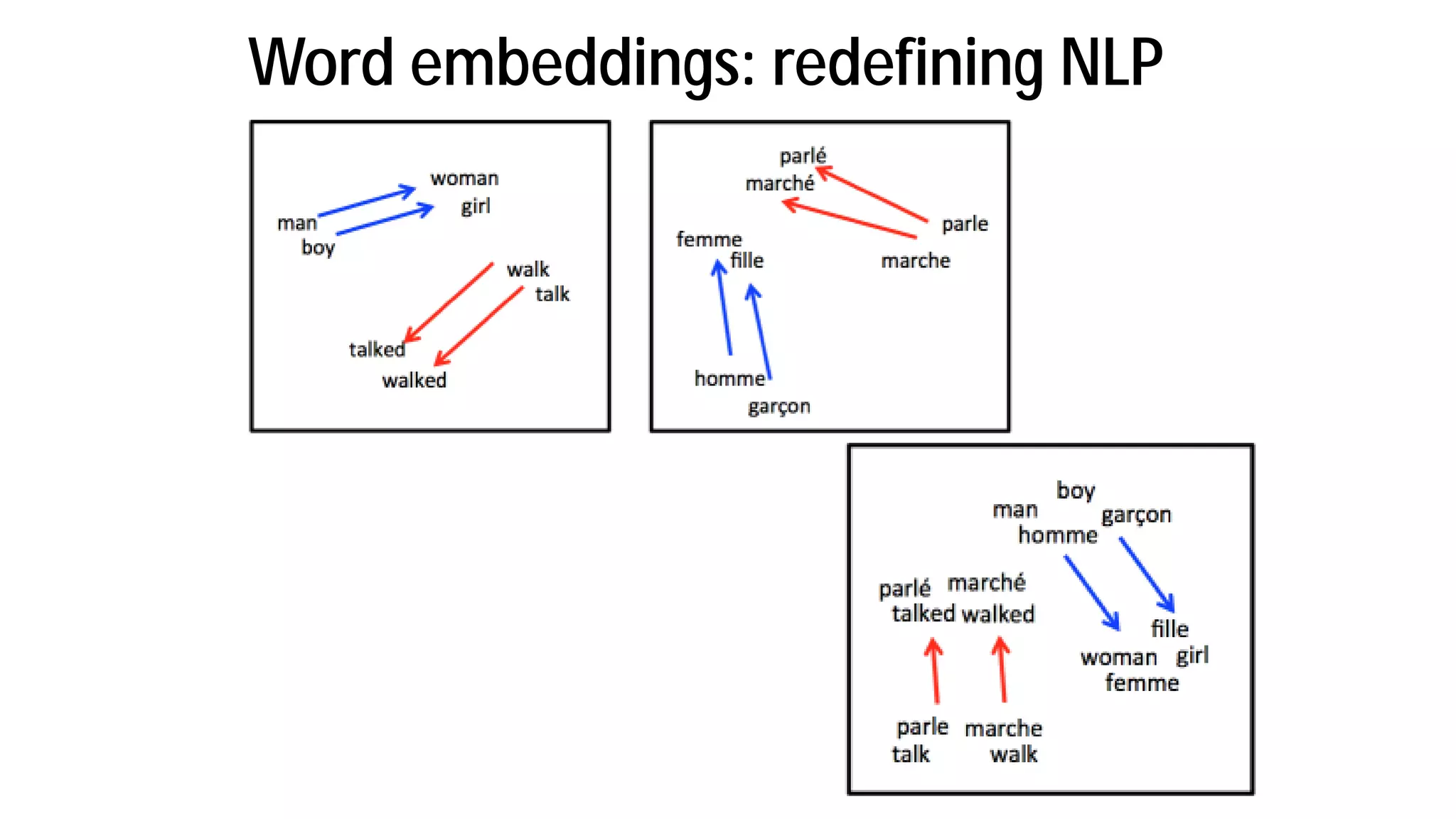
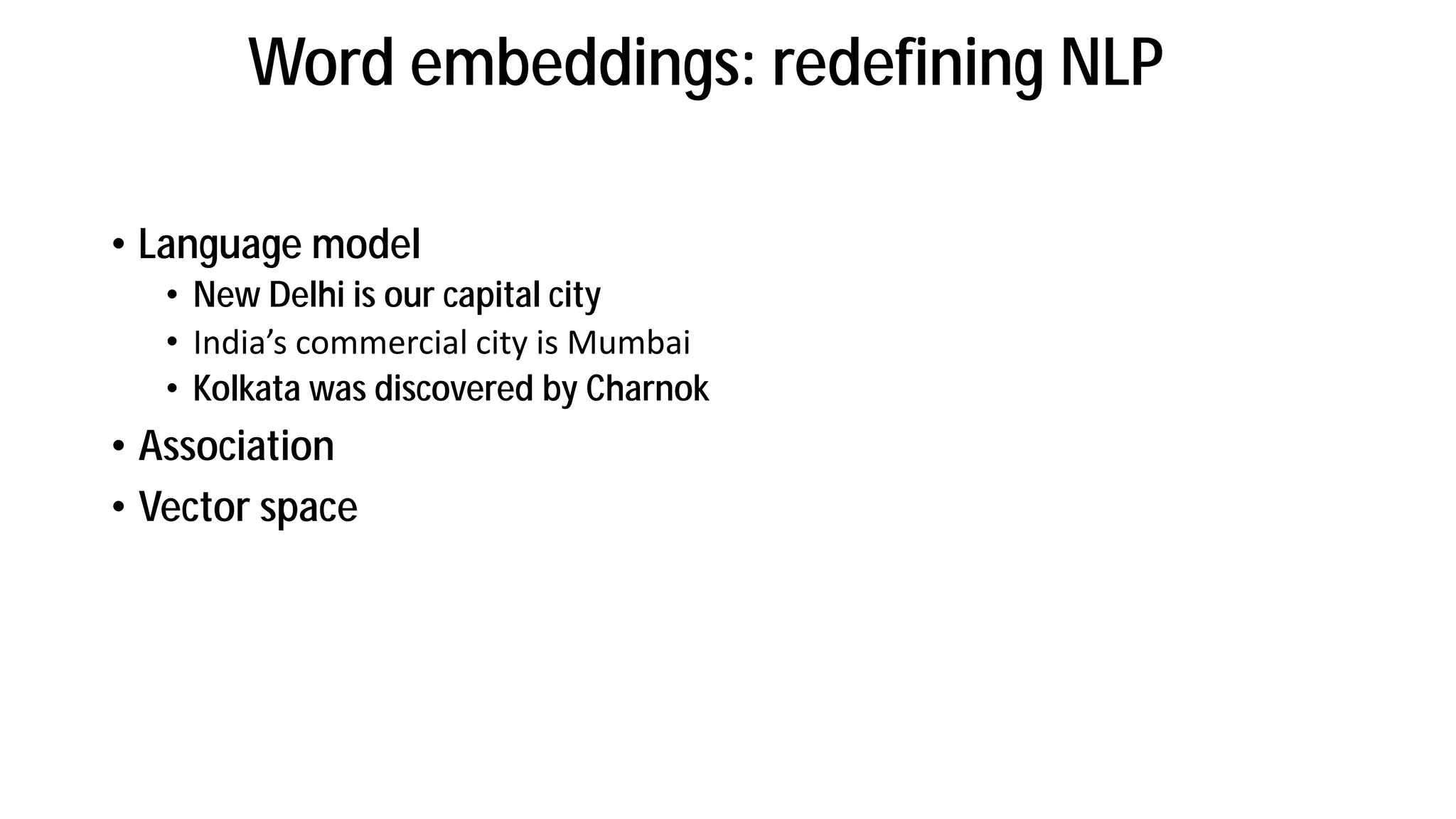
Word embeddings: redefining NLP
• Language model
• New Delhi is our capital city
• I dia s o er ial it is Mu ai
• Kolkata was discovered by Charnok
• Association
• Vector space
Word Embedding
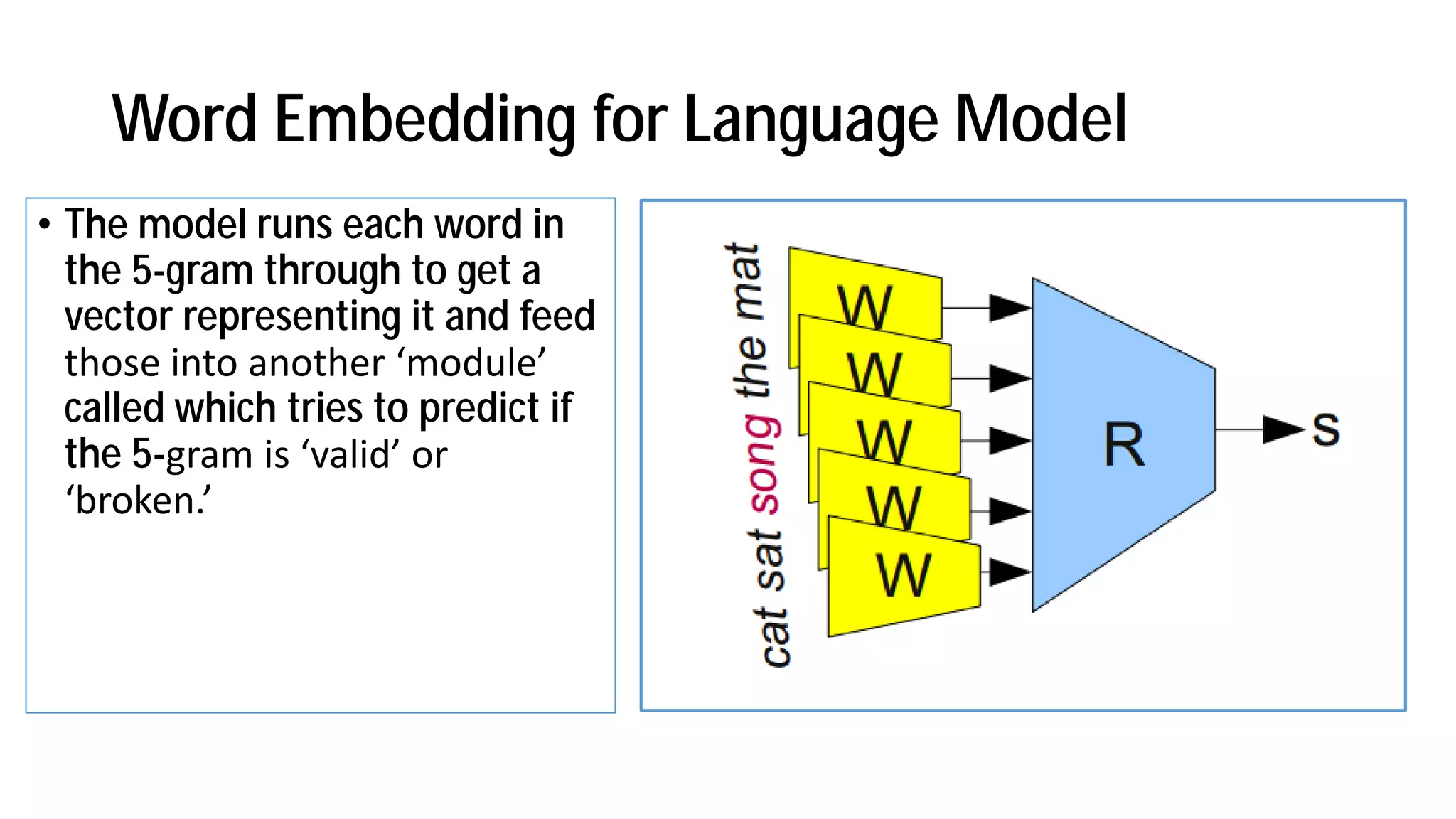
Word Embedding for Language Model
• The model runs each word in
the 5-gram through to get a
vector representing it and feed
those i to a other odule
called which tries to predict if
the 5-gra is alid or
roke .
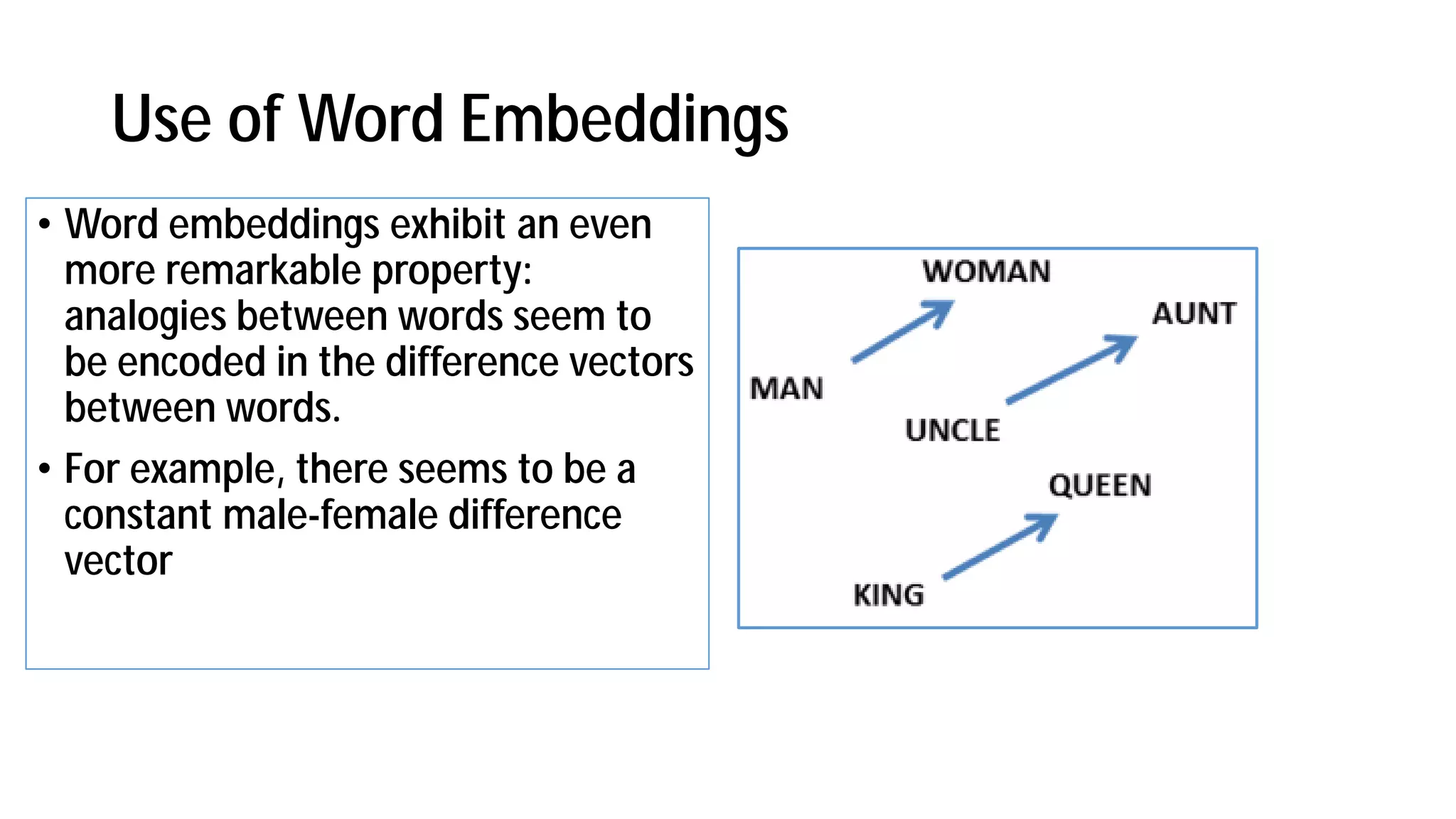
Use of Word Embeddings
• Word embeddings exhibit an even
more remarkable property:
analogies between words seem to
be encoded in the difference vectors
between words.
• For example, there seems to be a
constant male-female difference
vector
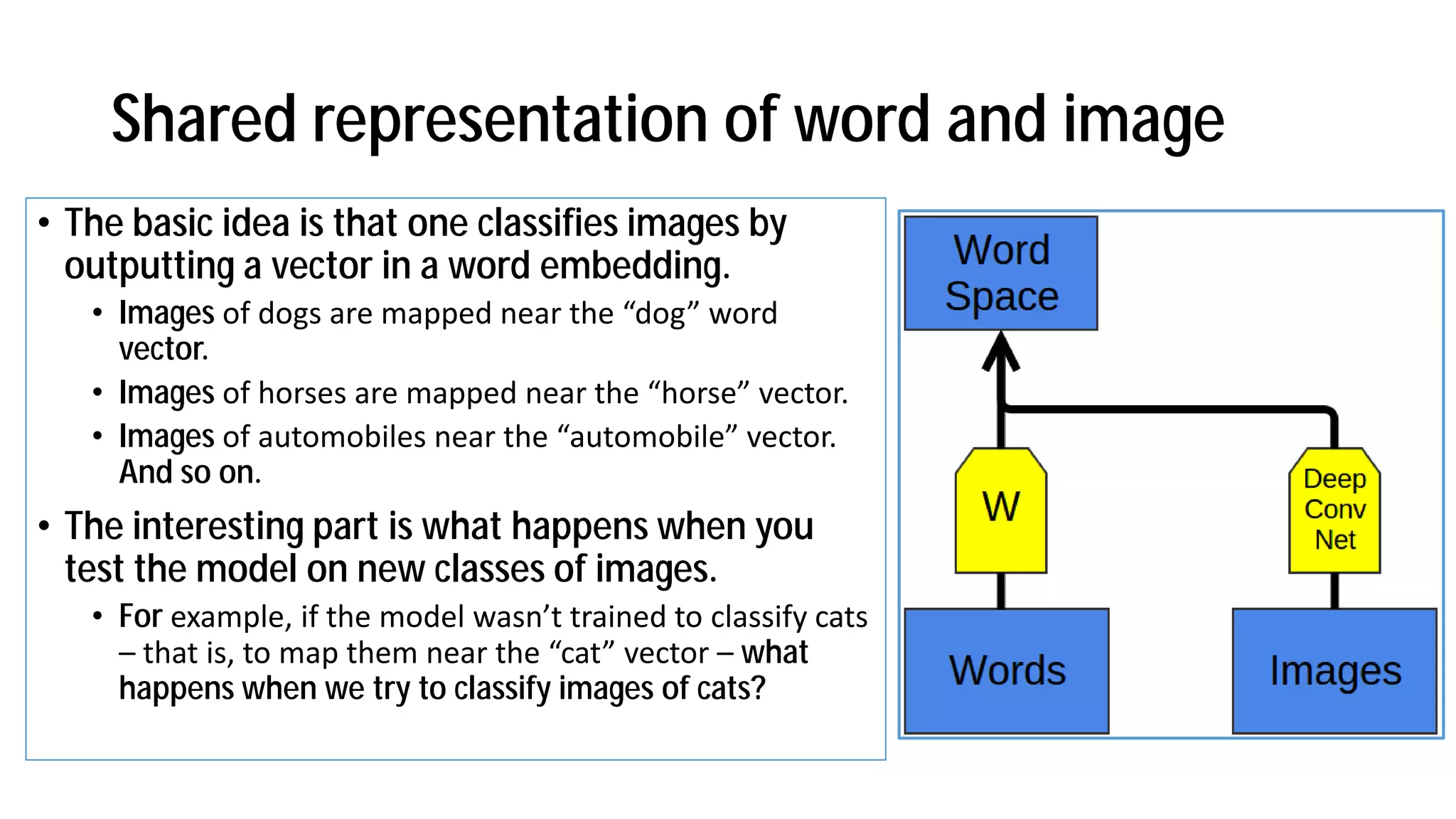
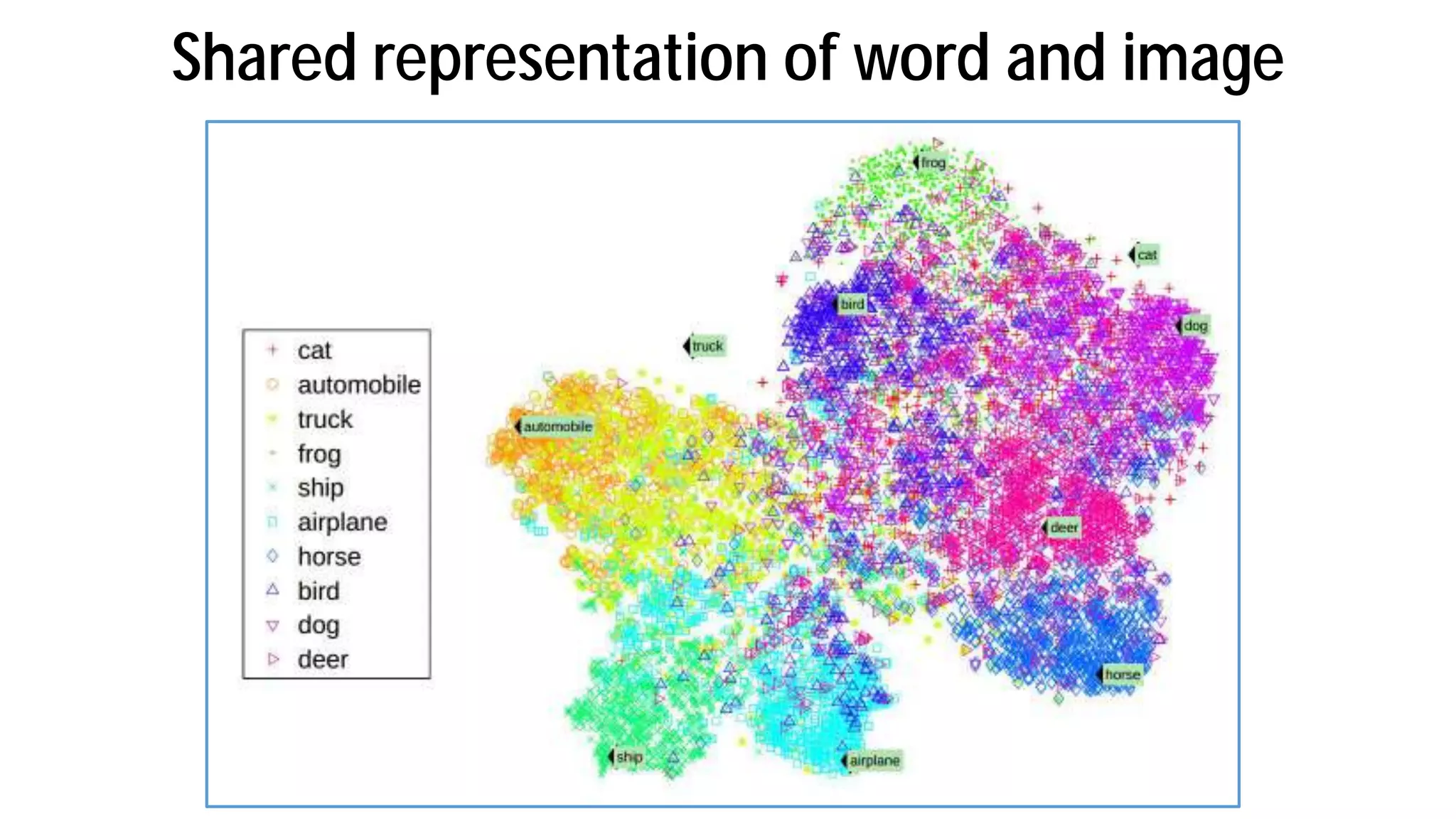
Shared representation of word and image
• The basic idea is that one classifies images by
outputting a vector in a word embedding.
• Images of dogs are apped ear the dog ord
vector.
• Images of horses are apped ear the horse e tor.
• Images of auto o iles ear the auto o ile e tor.
And so on.
• The interesting part is what happens when you
test the model on new classes of images.
• For e a ple, if the odel as t trai ed to lassif ats
– that is, to ap the ear the at e tor – what
happens when we try to classify images of cats?
Shared representation of word and image
• It turns out that the network is able to handle these new classes of images
quite reasonably.
• Images of ats are t apped to ra do poi ts i the ord e eddi g
space.
• Instead, the te d to e apped to the ge eral i i it of the dog e tor, a d, i
fa t, lose to the at e tor.
• Similarly, the tru k i ages e d up relati el lose to the tru k e tor, hi h
is ear the related auto o ile e tor.
On Human Resources
• Shortage of required manpower at almost all levels
• AI task designer
• What can I do with my data?
• Generating Insights (GI)
• DL solution designer
• Strong background in Algorithms, Coding and Statistics
• Tool users
• Knowledge on how to use off-the-shelf tools to develop applications
• Data annotator/curator
• Courses on
• Business analytics
• Statistics, Machine Learning and Deep Learning
• AI Application development
• Low level training, annotation/curation
ISI Centre for AI, ML and Data Analytics
• A Centre for theoretical and application oriented research in AI, ML and Big Data
• Identified areas:
• Computer Vision and Image Analysis
• Speech and Language Technology
• Social Media Analytics
• Sensor data analytics
• Health Care Analytics, Computational Biology and Bioinformatics
• Assistive Technology
• Forecast and Emergency Response (including Finance)
• Cosmology and Astro Physics
• Primary activities:
⁻ Public and privately funded projects
⁻ Training programmes and short-term courses
⁻ Development of Human Resources
⁻ Facilitating start-ups by Institute students and scholars
AILABS - Lecture Series - Is AI the New Electricity? - Advances In Machine Learning & The Rebirth Of AI : Presented by -  Prof. Utpal Garain

AILABS - Lecture Series - Is AI the New Electricity? - Advances In Machine Learning & The Rebirth Of AI : Presented by - Prof. Utpal Garain

  • 1.
    Advances in MLand rebirth of AI Utpal Garain Indian Statistical Institute https://www.isical.ac.in/~utpal/ https://www.facebook.com/utpal.garain.5
  • 2.
    Cognitive Computing • Systemsthat learn at scale, reason with purpose and interact with human naturally. • Products of the field of Artificial Intelligence (AI) • Man-machine symbiosis by JCR Licklider (1955) • Aims • To let computer facilitate formulative thinking as they now facilitate the solution of formulated problems • To enable man and computers to cooperate in making decisions and controlling complex situations with flexible dependence on predetermined programs
  • 3.
    Birth of CognitiveComputing • Lets revise the computing history • The tabulating era (1900s till WW-II) • The programming era (1950s till date) • The cognitive era (21st Century ---) • AI though introduced in 1955, could NOT show much promise till the last century • Remained as a hype • Though some successful expert systems were developed
  • 4.
    Catalysis of Progress •In 1990s, some techniques like neural networks, genetic algorithms, etc. received fresh attention. • They could avoid some limitations of expert systems (features, rules) • AI got rebirth • Moore s la • Doubling in capacity and speed every 18 months for six decades • From mainframe to personal computer and to the smartphones and tablets
  • 5.
    The rise ofCognitive • Big data • Volume of data is increasingly rapidly • Social media, mobile devices, low- ost se sors, … • The Internet and the cloud • They make available vast amount of data and information to any Internet- connected computing device • New Algorithms • Development in Machine Learning algorithms • Neural Nets, SVMs, Deep Learning • Advancement in Reasoning
  • 6.
    AI, ML andDL • Machine learning • Feature description • Domain expertise • Character recognition, face re og itio , … • Deep learning • Automatic feature learning • Role of three things • Big Data • Computing resources • Newer algorithms
  • 7.
    Success Story: Watsonat the Jeopardy • Watson • Open domain QA machine • Jeopardy • An American Quiz show • 1964 – till date • Answer and question format • Open domain questions • Clues are given • Speed is a factor • In 2011, Watson won a 2-game Jeopardy Match against the all-time winners (Ken and Brad) • Beginning of a new computing paradigm: Cognitive Computing • Essence is: LEARN => UNLEARN => RELEARN Inexact solutions for inexact problems
  • 8.
    Brain Storming-I • Youare asked to design a technology (surely cognitive) for • Measuring effectiveness of a workshop • Come up with your design • Could be very much hypothetical, fiction like.. • Fictions make reality today
  • 9.
  • 10.
    DL @ IndianStatistical Institute • OCR for printed
  • 11.
    DL @ IndianStatistical Institute • Machine Recognition of handwritten text Doctor’s Prescription: Vocabulary based HOCR
  • 12.
    Unconstrained Handwriting: useof RNN • BLSTM • 2 hidden layers • 200 neurons in each layer • CTC layer consisting of 917 nodes • 2300 lines for training • Character recognition accuracy: 75.4%
  • 13.
    In which scriptare you writing?
  • 14.
    Evaluating Machine Comprehension •Is machine smarter than grade-VI students? • A textbook article • Multiple choice questions • 2 (true/false) to 7 options
  • 15.
  • 16.
  • 19.
  • 20.
  • 22.
    Brain Storming -I • You are asked to design a technology for • Measuring effectiveness of a workshop • Come up with your design • Could be very much hypothetical, fiction like.. • Fictions make reality today
  • 23.
    Four Principles ofToday’s AI Technology • Learn and Improve • Inexact solutions to unsolved problems • Learn from data and human • LEARN -> UNLEARN -> RELEARN • Speed and Scale • Ma hi e s ad a tage o er hu a i deali g ith high volume of data and complex calculations • Assist and Augment Human Cognition • Human cannot handle the volume of information and penetrate the complexity • Interact in a Natural way • Adapt human approaches and interfaces • Aims to deliver higher level of human cognition
  • 24.
    Technical Requirements • Probabilityand statistical Inference (automated reasoning) • Optimization techniques • Pattern recognition principles • Feature, clustering and classification • Image processing, computer vision, speech recognition, language understanding • Knowledge graph • Ontologies, Semantic web • Neural NLP
  • 25.
  • 26.
    Basics • An attemptto understand natural language text • Three dimensions • Different languages • E glish, Chi ese, “pa ish, Hi di, Be gali, … • NLP tools • Morphological analyser, POS tagger, Chunker, Parser, NER tagger, A aphora ‘esolutio , … • Algorithms and models • HMM, MaxEnt Model, C‘F, PCFG, …
  • 27.
    What is meantby language understanding • If we can do • Translation • Summarization • Question-answering
  • 28.
    Methods • Rule based •Statistical • Example • POS tag • I am going to make some tea • I do t like the ake of this shirt • Rule based • Rules are needed • Statistical • Annotated data in large volume
  • 29.
    Neural NLP • Developmentsin neural network is redefining NLP • Recurrent Neural Network • Convolutional Neural Network • Reasons • Unmanned feature extraction (CNN) • New way of using context (RNN) • Requirement • Numerical representation of words
  • 30.
  • 31.
  • 32.
    Word embeddings: redefiningNLP • Language model • New Delhi is our capital city • I dia s o er ial it is Mu ai • Kolkata was discovered by Charnok • Association • Vector space
  • 33.
  • 34.
    Word Embedding forLanguage Model • The model runs each word in the 5-gram through to get a vector representing it and feed those i to a other odule called which tries to predict if the 5-gra is alid or roke .
  • 35.
    Use of WordEmbeddings • Word embeddings exhibit an even more remarkable property: analogies between words seem to be encoded in the difference vectors between words. • For example, there seems to be a constant male-female difference vector
  • 36.
    Shared representation ofword and image • The basic idea is that one classifies images by outputting a vector in a word embedding. • Images of dogs are apped ear the dog ord vector. • Images of horses are apped ear the horse e tor. • Images of auto o iles ear the auto o ile e tor. And so on. • The interesting part is what happens when you test the model on new classes of images. • For e a ple, if the odel as t trai ed to lassif ats – that is, to ap the ear the at e tor – what happens when we try to classify images of cats?
  • 37.
  • 38.
    Shared representation ofword and image • It turns out that the network is able to handle these new classes of images quite reasonably. • Images of ats are t apped to ra do poi ts i the ord e eddi g space. • Instead, the te d to e apped to the ge eral i i it of the dog e tor, a d, i fa t, lose to the at e tor. • Similarly, the tru k i ages e d up relati el lose to the tru k e tor, hi h is ear the related auto o ile e tor.
  • 39.
    On Human Resources •Shortage of required manpower at almost all levels • AI task designer • What can I do with my data? • Generating Insights (GI) • DL solution designer • Strong background in Algorithms, Coding and Statistics • Tool users • Knowledge on how to use off-the-shelf tools to develop applications • Data annotator/curator • Courses on • Business analytics • Statistics, Machine Learning and Deep Learning • AI Application development • Low level training, annotation/curation
  • 40.
    ISI Centre forAI, ML and Data Analytics • A Centre for theoretical and application oriented research in AI, ML and Big Data • Identified areas: • Computer Vision and Image Analysis • Speech and Language Technology • Social Media Analytics • Sensor data analytics • Health Care Analytics, Computational Biology and Bioinformatics • Assistive Technology • Forecast and Emergency Response (including Finance) • Cosmology and Astro Physics • Primary activities: ⁻ Public and privately funded projects ⁻ Training programmes and short-term courses ⁻ Development of Human Resources ⁻ Facilitating start-ups by Institute students and scholars