Mass transport at internal interfaces of
inorganic materials
Kedarnath Kolluri, M. J. Demkowicz and B. Uberuaga
Acknowledgments:
R. G. Hoagland, J. P. Hirth, A. Kashinath, A. Vattré, X.-Y. Liu, A. Misra, and A. Caro

Financial Support:
Center for Materials at Irradiation and Mechanical Extremes (CMIME) at LANL,
an Energy Frontier Research Center (EFRC) funded by
U.S. Department of Energy, Office of Science, Office of Basic Energy Sciences
Internal interfaces enhance ionic conduction

•
•
•

Downloaded from www.sciencemag.org on September 17, 2011

byand with the thickness of the lattice.shows that the large degraded interface structure when the YSZ layers
strains to match the STO YSZ, Because the frequency plots. In the presence of blocking effects
exceed the critical electrodes,
conductivity values in these heterostructures due
inbulk lattice constants of STO and YSZ are orig- to grain boundaries orthickness. a further
ee
ues Fig. 3. Dependence of the logarithm of the
in long-range ionic conductivity of the trilayers
his STO/YSZ/STO versus inverse temperature. The
to thickness range of the YSZ layer is 1 to 62 nm.
gi- Also included are the data of a single crystal
0.6
is (sc) of YSZ and a thin film (tf) 700 nm thick
1
[taken from (7)] with the same nominal
he composition. (Top inset) 400 K conductance
is of [YSZ1nm/STO10nm](ni/2) superlattices as a
gle function of the number of interfaces, ni.
eas (Bottom inset) Dependence of the conductgle ance of [STO10nm/YSZXnm/STO10nm] trilayers at
1.1
ior 500 K on YSZ layer thickness. Error bars are
ers according to a 1 nS uncertainty of the con1
ductance measurement.
ler
yer
outFig. 1. (A) Z-contrast scanning transmission electron microscopy (STEM) image of the STO/YSZ interface of
J. Garcia-Barriocanal et. al., Science, 321, 676 (2008)
dcthe [YSZ1nm/STO10nm]9 superlattice (with nine repeats), obtained in the VG Microscopes HB603U
sesmicroscope. A yellow arrow marks the position of the YSZ layer. (Inset) Low-magnification image obtained
Why?
in the VG Microscopes HB501UX column. In both cases a white arrow indicates the growth direction. (B) EEL
he
sesspectra showing the O K edge obtained from the STO unit cell at the interface plane (red circles) and 4.5 nm
High defect concentrations
into the STO layer (black squares). (Inset) Ti L2,3 edges for the same positions, same color code. All spectra
vaare the result of averaging four individual spectra at these positions, with an acquisition time of 3 s each.
of Faster transport due to interface structure; Strain-enhanced diffusion
areFig. 2. Real part of the lateral
No conductivity versus freorselectrical space charge in this example but possible in other interfaces
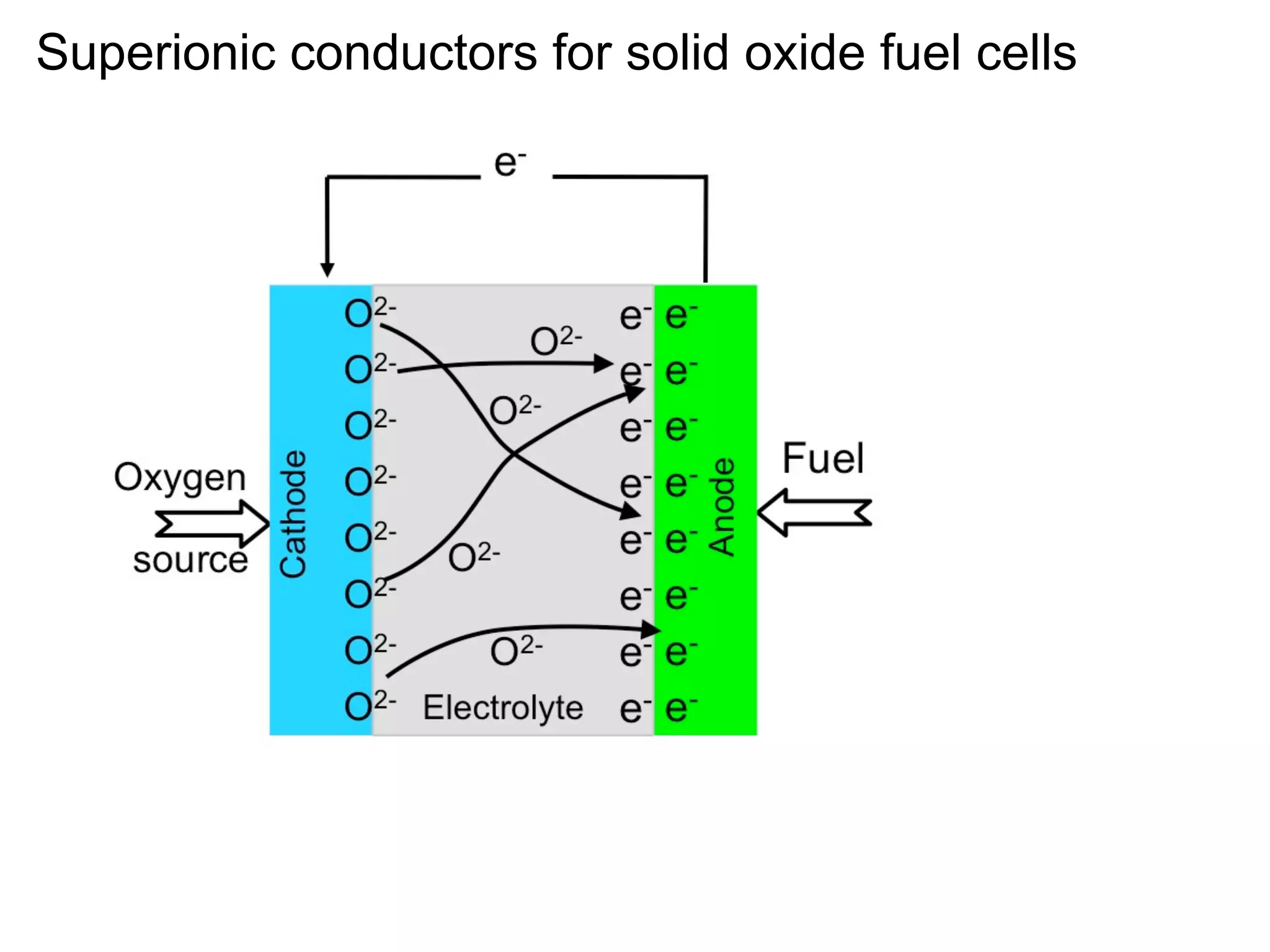
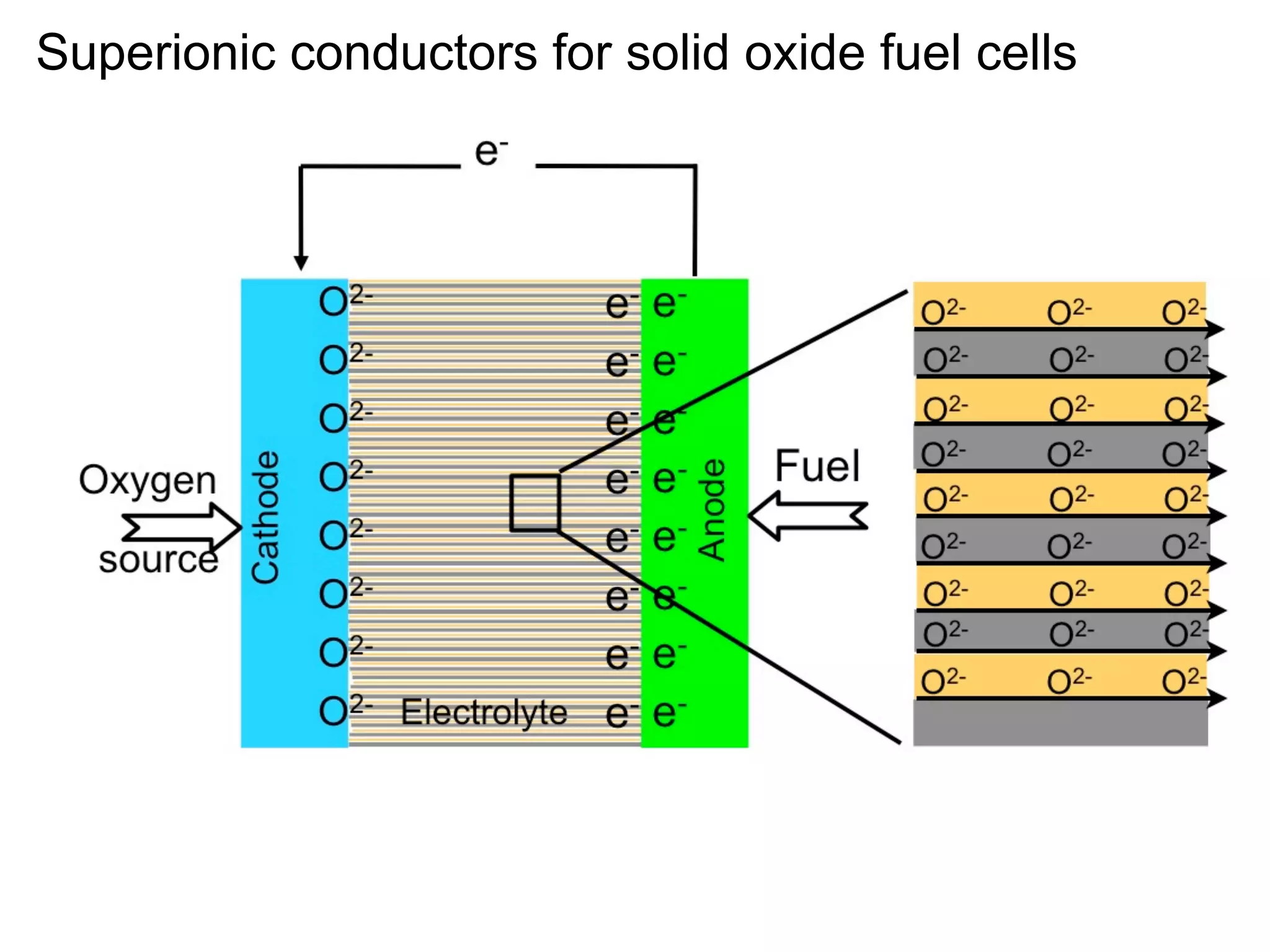
Superionic conductors for solid oxide fuel cells
ystal substrates were ultrasonically cleaned in ac-

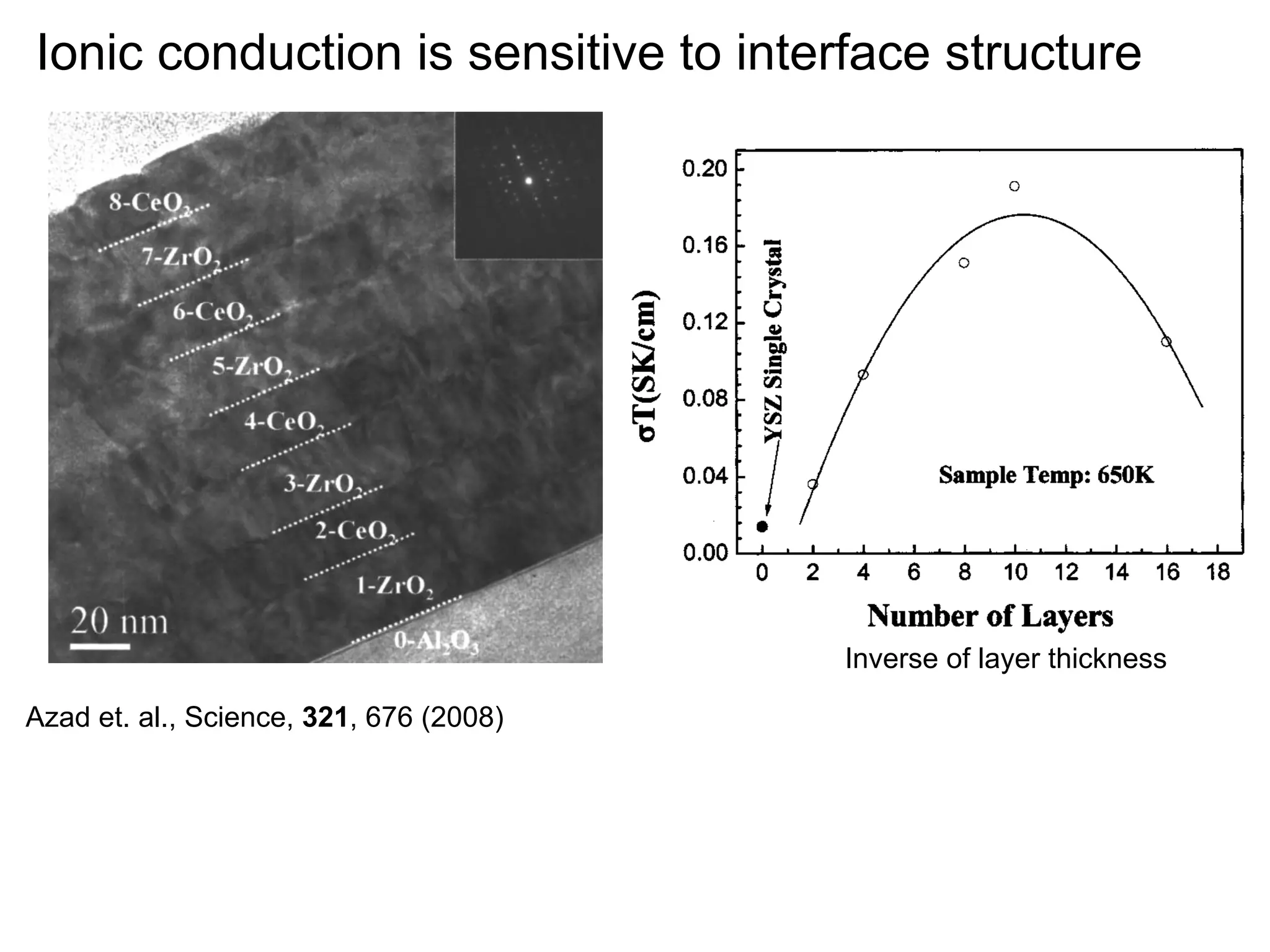
Ionic conduction is sensitive to interface structure
131906-3
Azad et al.

Inverse of layer thickness

FIG. 4. Conductivities of single crystal YSZ ͑Ref. 14͒, two-, four-, e
M Azad et. al., Science, a cross sectional view of an eight-layer
micrograph showing 321, 676 (2008) ten-, and sixteen-layer films at 650 K.

ed CeO2 and ZrO2 film grown on Al2O3͑0001͒.
was measured as a function of temperature using a f
probe van der Pauw technique.12 Since the electronic
© 2005 American Institute of Physics
ductivity in these oxides is significantly less compare
ht; see http://apl.aip.org/about/rights_and_permissions
ionic conductivity, especially at low temperatures, ionic
13
week ending
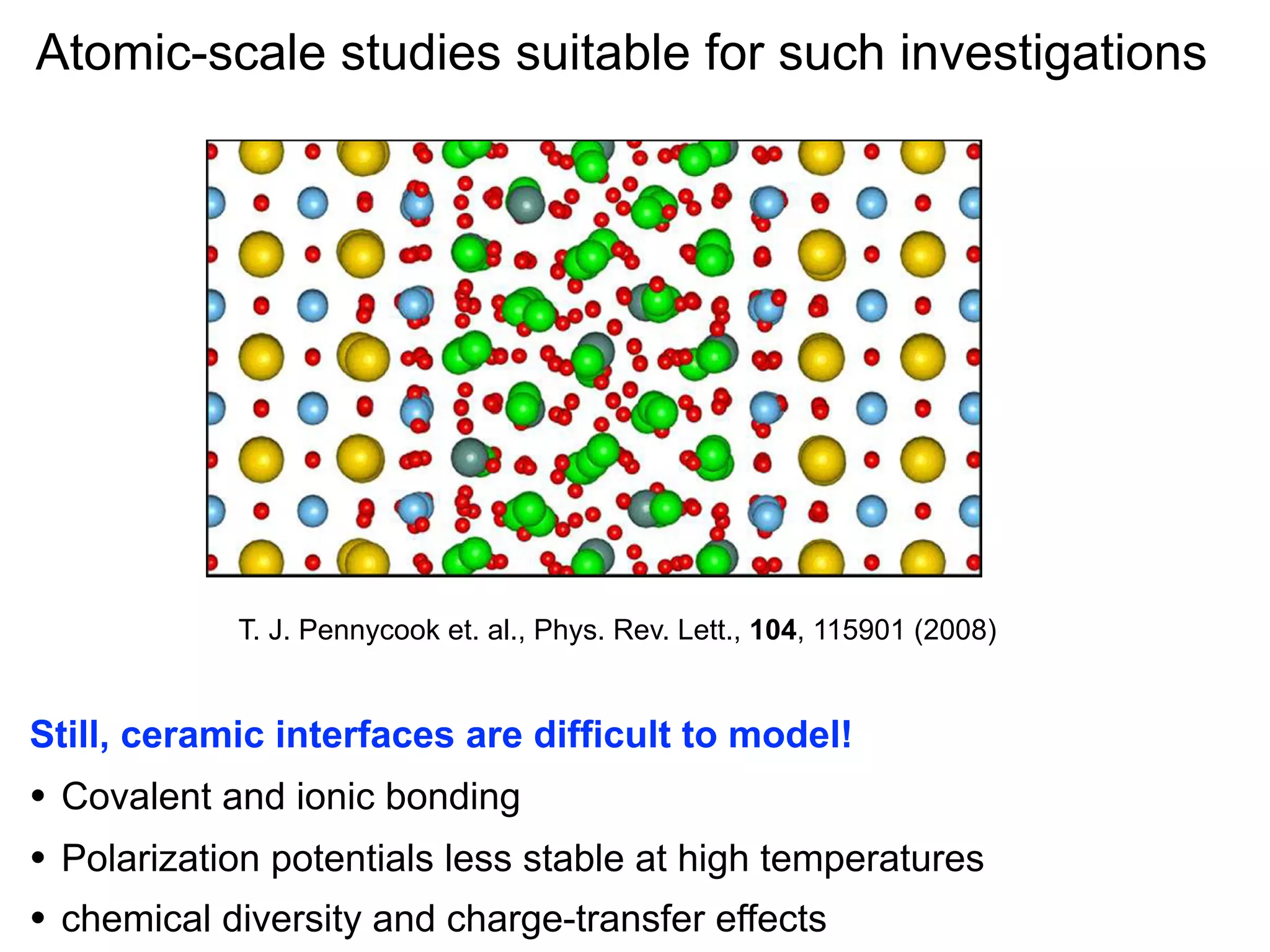
Atomic-scale T E R S suitable for such investigations
studies
REVIEW LET
19 MARCH 2010

T. J. Pennycook
al., Phys. of Lett., nm YSZ (2008)
FIG. 3 (color online). et. StructureRev. the 1104, 115901layer sandwiched between layers of STO at 360 K. Sr atoms are shown as
Still, large yellow balls, Ti in are difficult to model! and O in red.
ceramic interfaces blue, Zr in green, Y in gray,

• Covalent and ionic bonding
ime
of a large uncertainty in the density and the fact that
• Polarization potentials less stable at high temperatures the
set)
charge on the ions is ill-defined. We can, however, estimate
near chemical diversity and charge-transfer effects ratio of the
•
the effective magnitude by evaluating the
The Radiation Damage Tole
Perhaps we could start Ultra-High Strength Nan
of with metals!
Composites
• Good interatomic potentials exist for metallic systems
•
•

A. Misra, M.J. Demkowicz, X. Zhang, mass Hoagland
less difficult - can probe the effect of structure on and R.G. transport
interfaces are to act as sinks for radiaInterfaces act as obstacles to slip
tion-induced defects. Studies conducted
and sinks for radiation-induced defects.
on sputter-deposited Cu-Nb multilayers
Hence, nanolayered composites that
contain a large volume fraction of interfaces provide over an order of magnitude
After He implantation
increase in strength and enhanced radiation damage tolerance compared to bulk
materials. This paper shows the experimental and atomistic modeling results
|| (110)
and
〈111〉
(111)
from
Kurdjumov-Sachs (KS): a Cu-Nb nanolayered composite 〈110〉 ||
fcc
bcc
fcc
bcc
to highlight the roles of nanostructuring length (111) and || response of
scales
the
〈100〉
Nishiyama-Wassermann (NW): to ion collision(110)bcc and〈110〉 ||
interfaces
fcc cascades in
fcc
bcc
150 keV He, 1017 cm-2, 300 K
a
designing composite materials with high
radiation damage tolerance.

Initial focus on

•

interfaces of immiscible fcc-bcc semicoherent metal systems
Cu-Nb, Cu-V, Cu-Mo, Cu-Fe, and Ag-V

INTRODUCTION
The performance of materials in
Motivated by experiments
extreme environments of irradiation
and temperature must be significantly
improved to extend the reliability, lifetime, and efficiency of future nuclear
reactors. 1 In reactor environments,
b
damage introduced in the form of radia- A. Misra et al., JOM, Sept, 62 (2007)
Outline
•

Structure and properties of semicoherent interfaces

•

Point defects at semicoherent interfaces

•

Migration of point defects and relation to the interface structure

•

Implications to ceramic interfaces

•

case of MgO grain boundaries
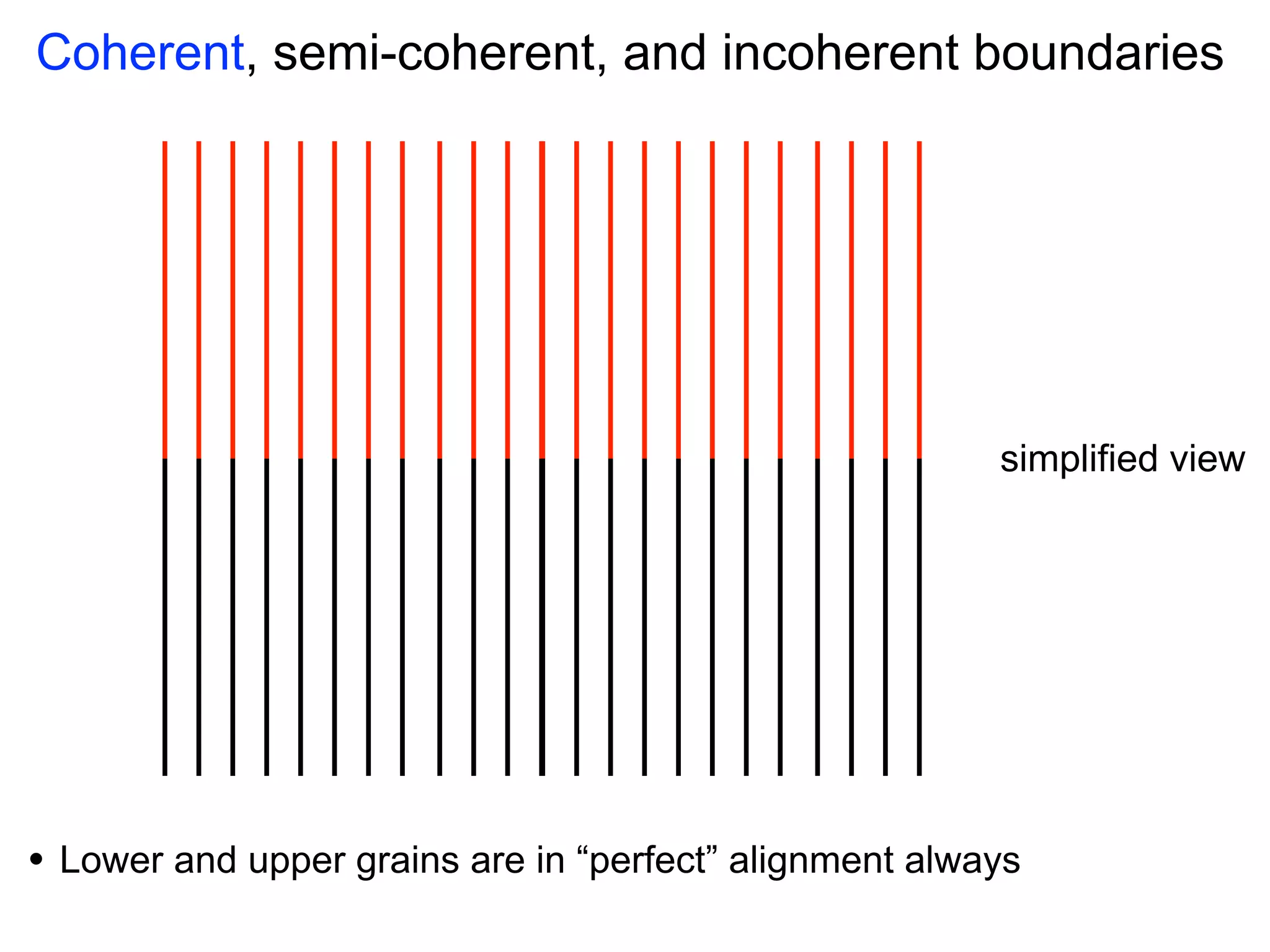
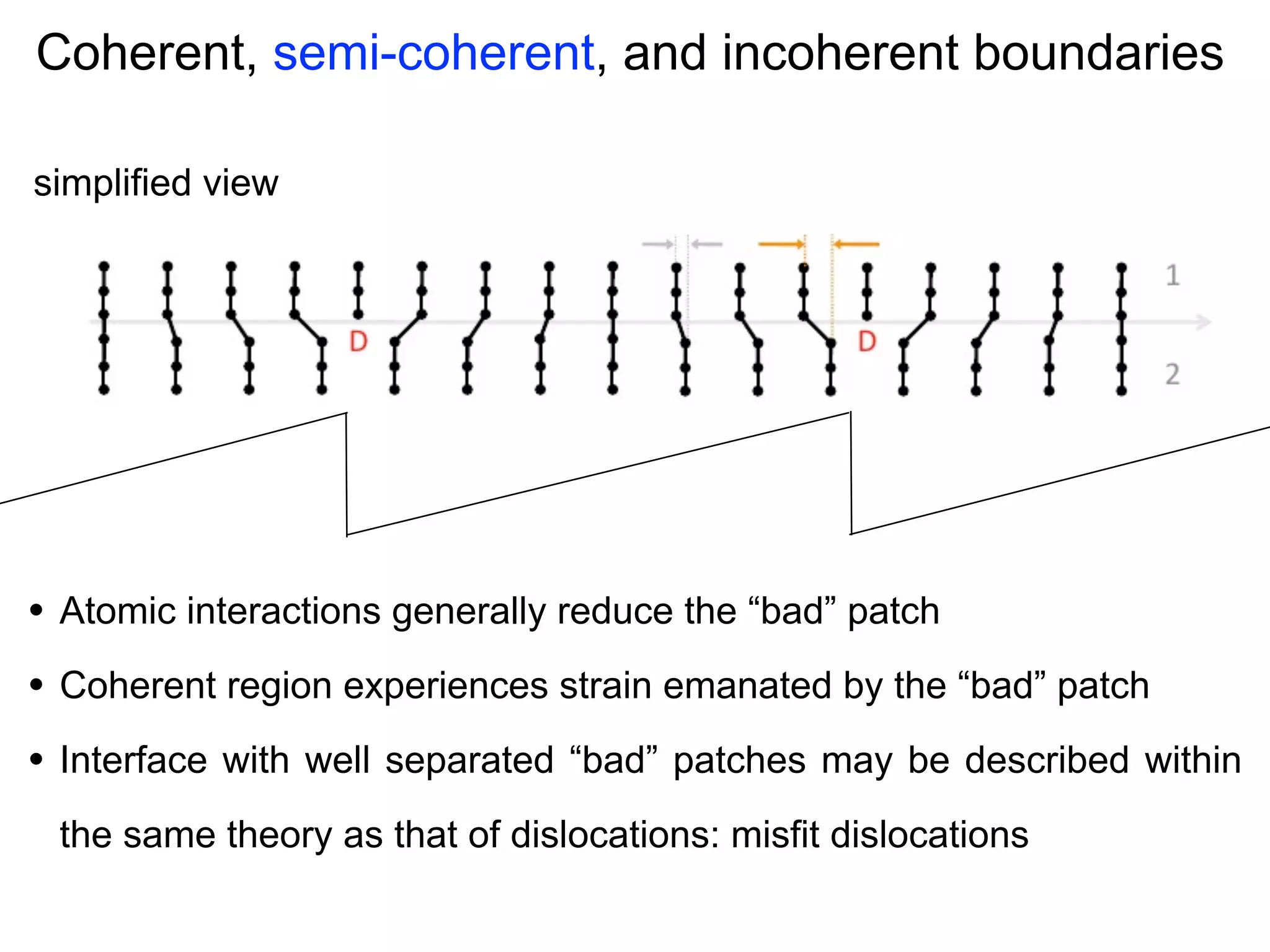
Coherent, semi-coherent, and incoherent boundaries

simplified view

•

Lower and upper grains are in “perfect” alignment always
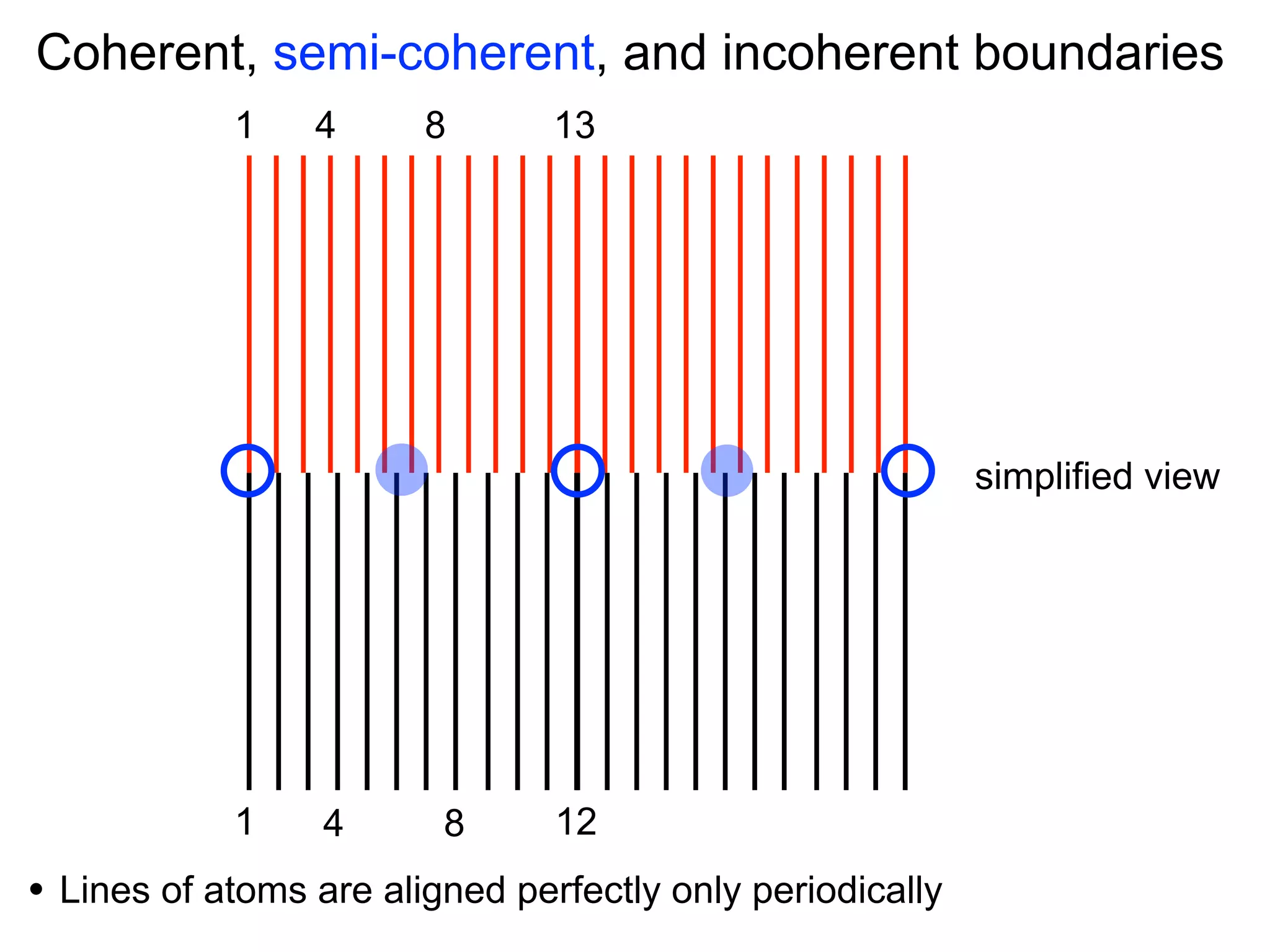
Coherent, semi-coherent, and incoherent boundaries
1

4

8

13

simplified view

1

•

4

8

12

Lines of atoms are aligned perfectly only periodically
Coherent, semi-coherent, and incoherent boundaries
simplified view

•

Atomic interactions generally reduce the “bad” patch

•

Coherent region experiences strain emanated by the “bad” patch

•

Interface with well separated “bad” patches may be described within
the same theory as that of dislocations: misfit dislocations
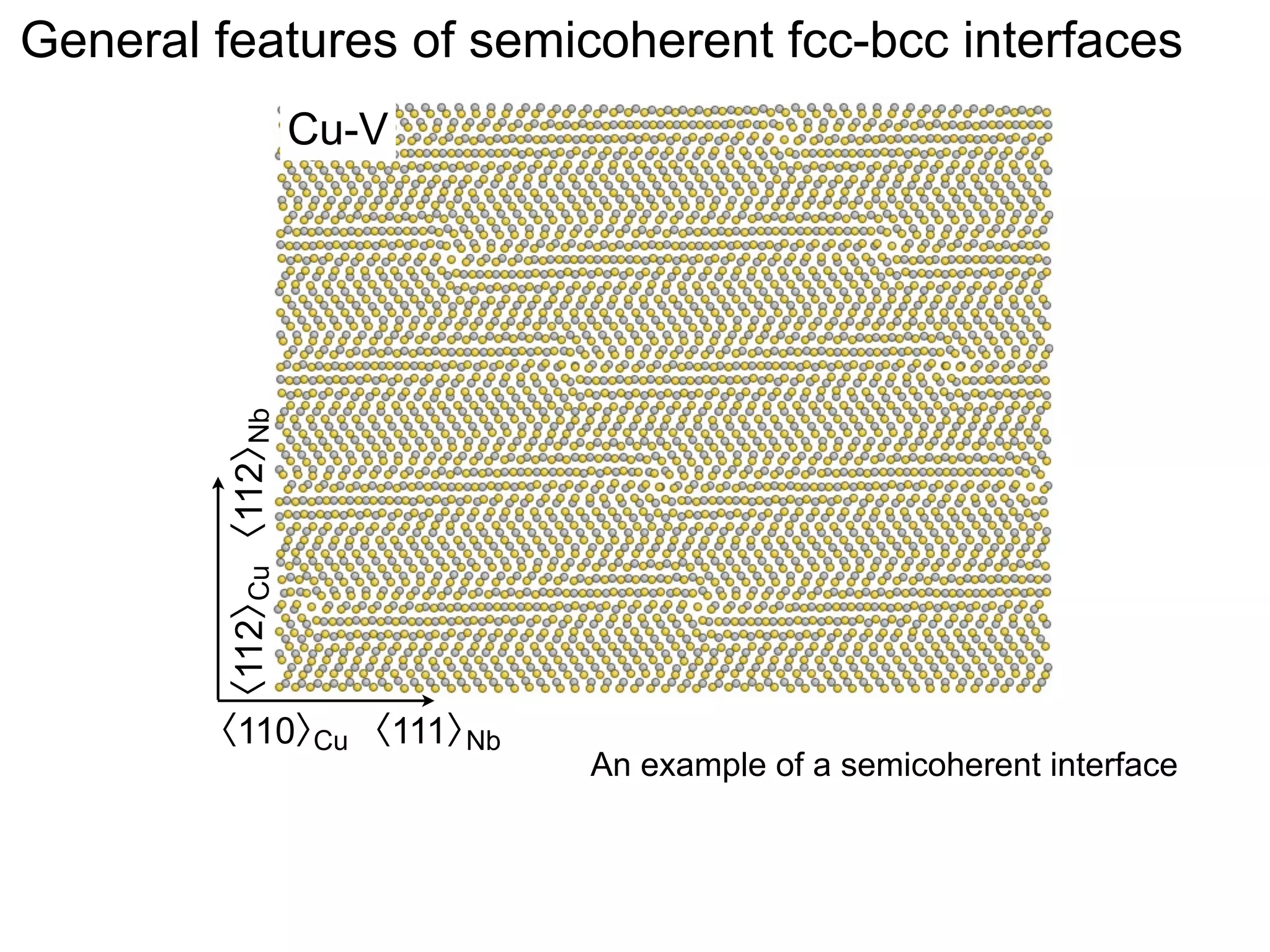
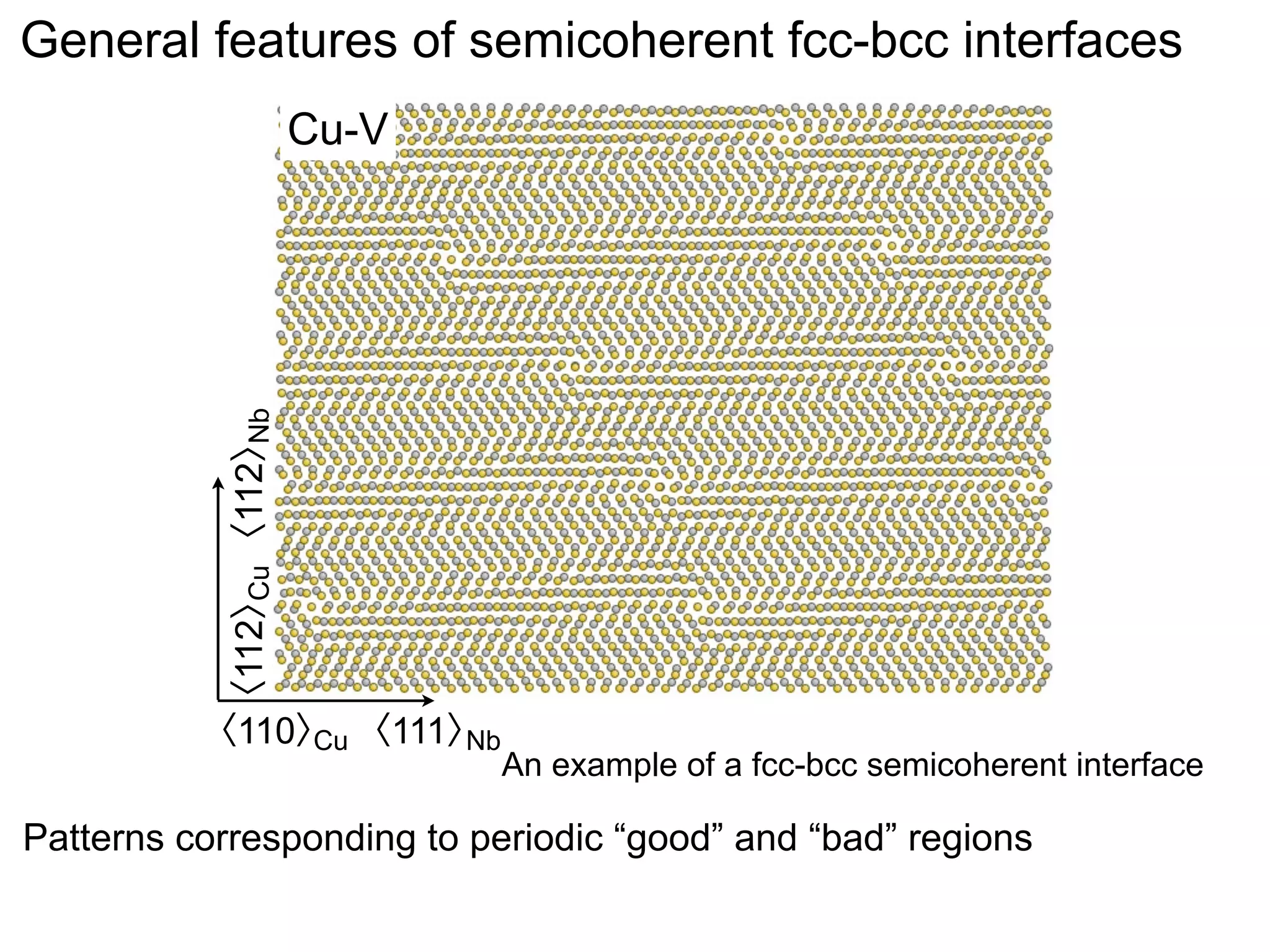
General features of semicoherent fcc-bcc interfaces

〈112〉 〈112〉
Cu
Nb

Cu-V

〈110〉 〈111〉
Cu
Nb

An example of a semicoherent interface
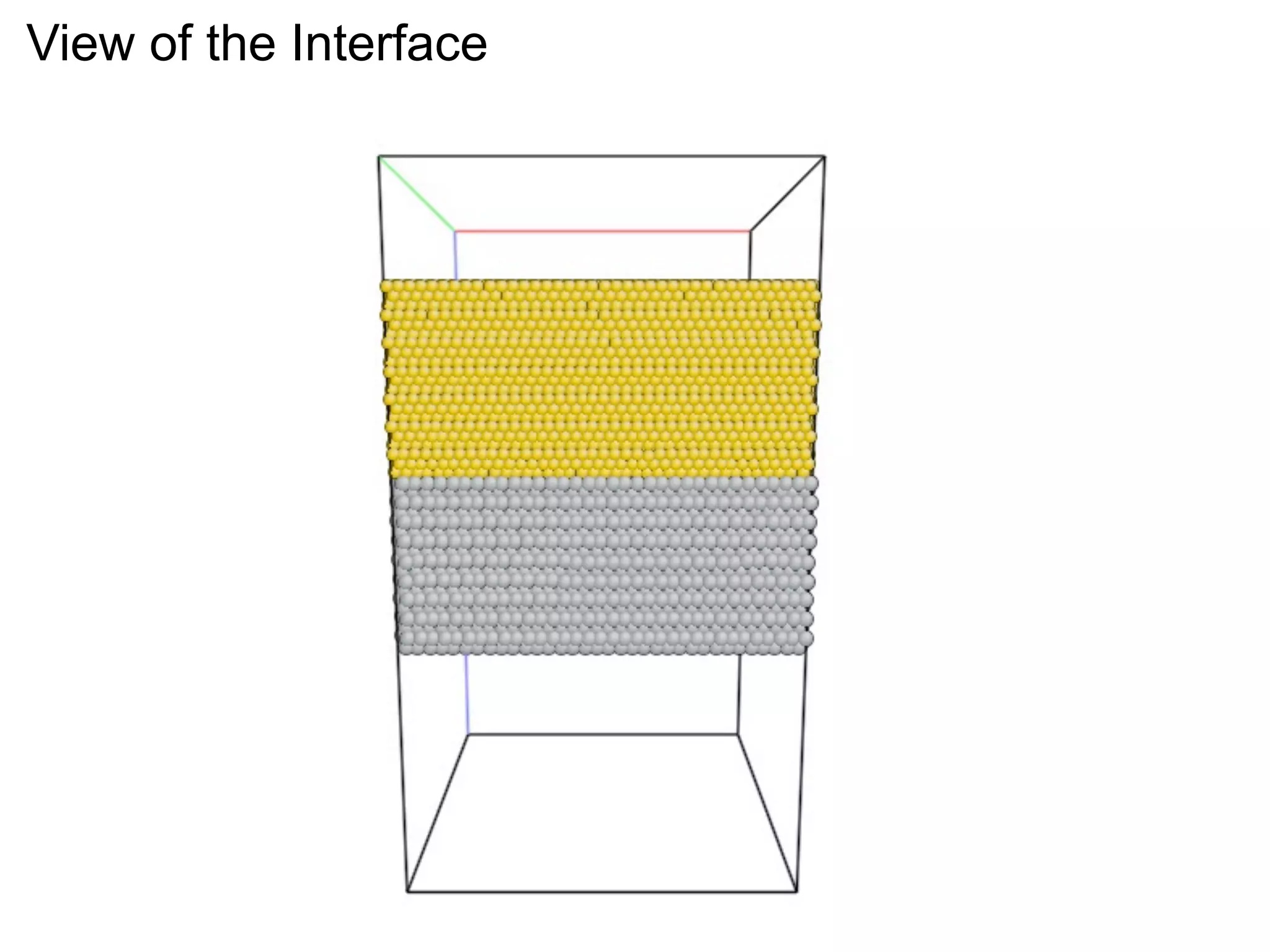
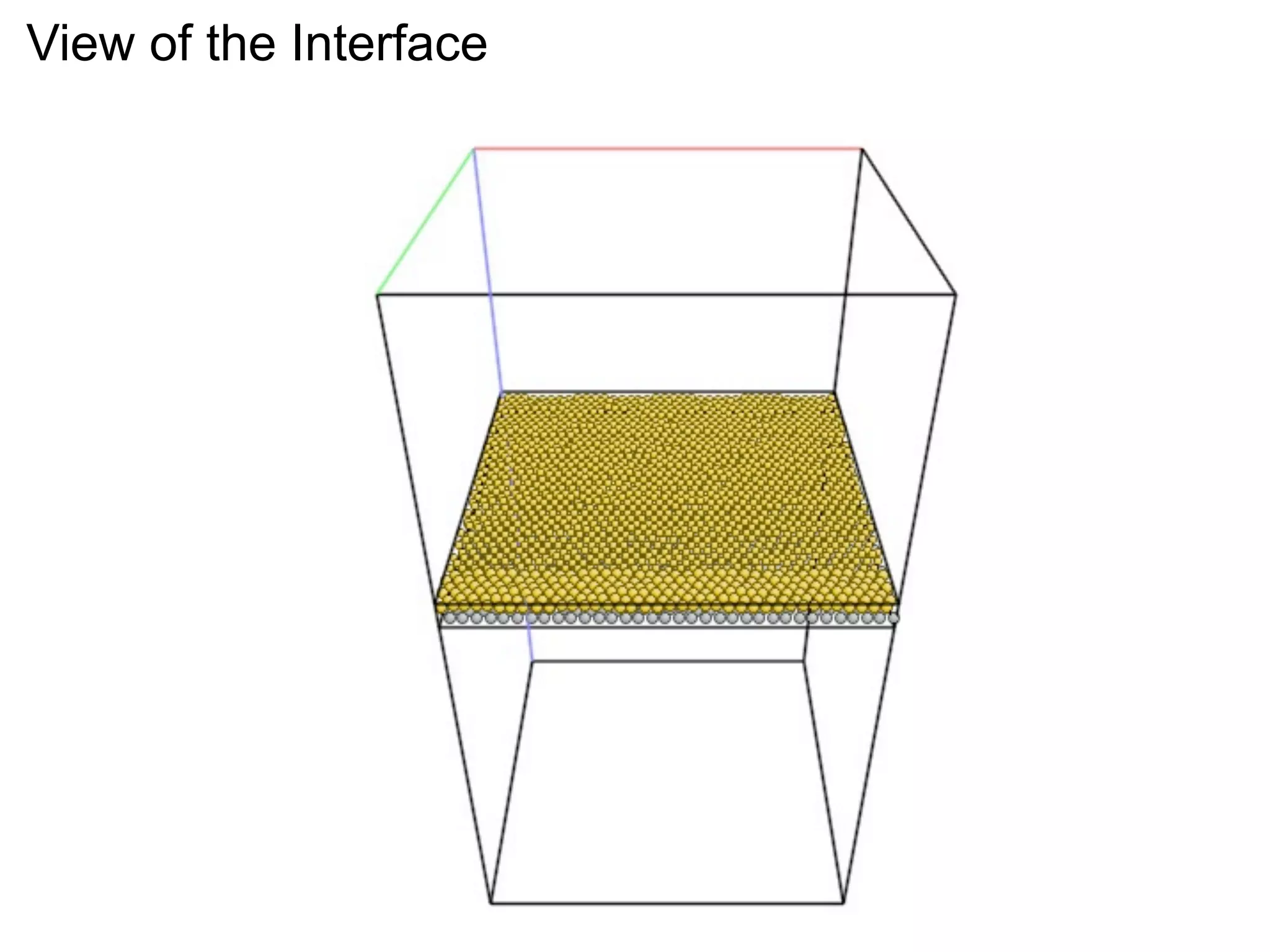
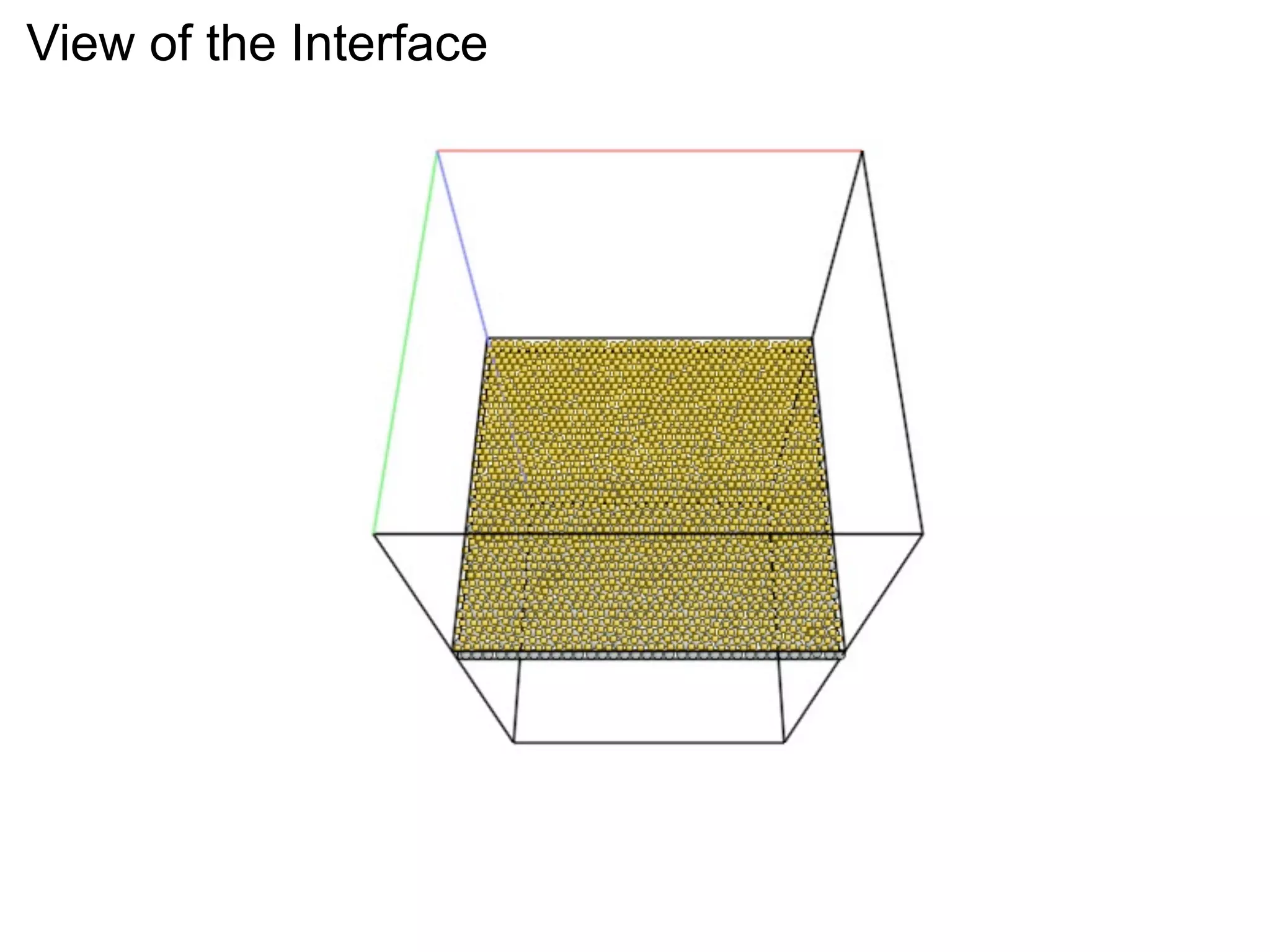
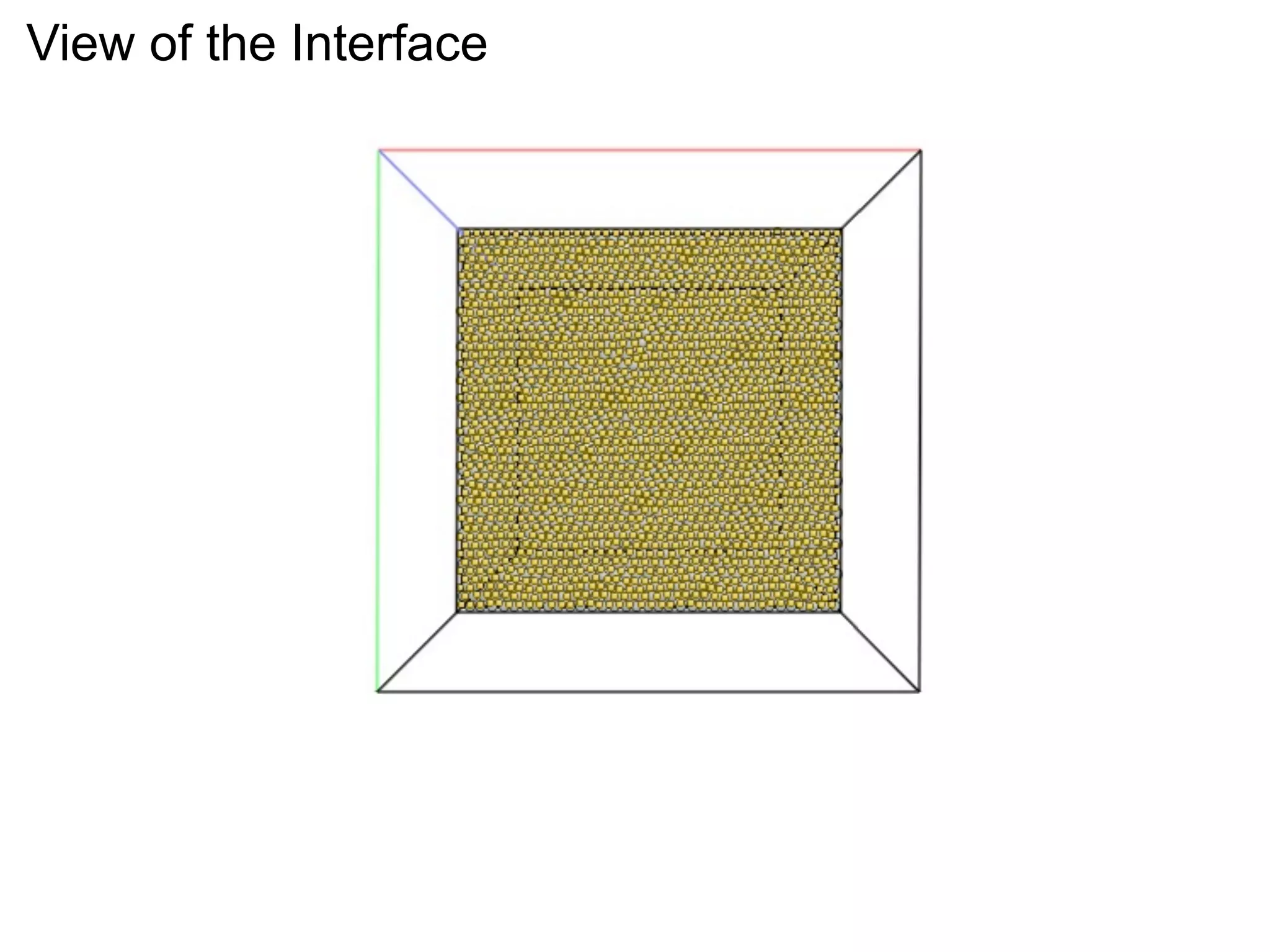
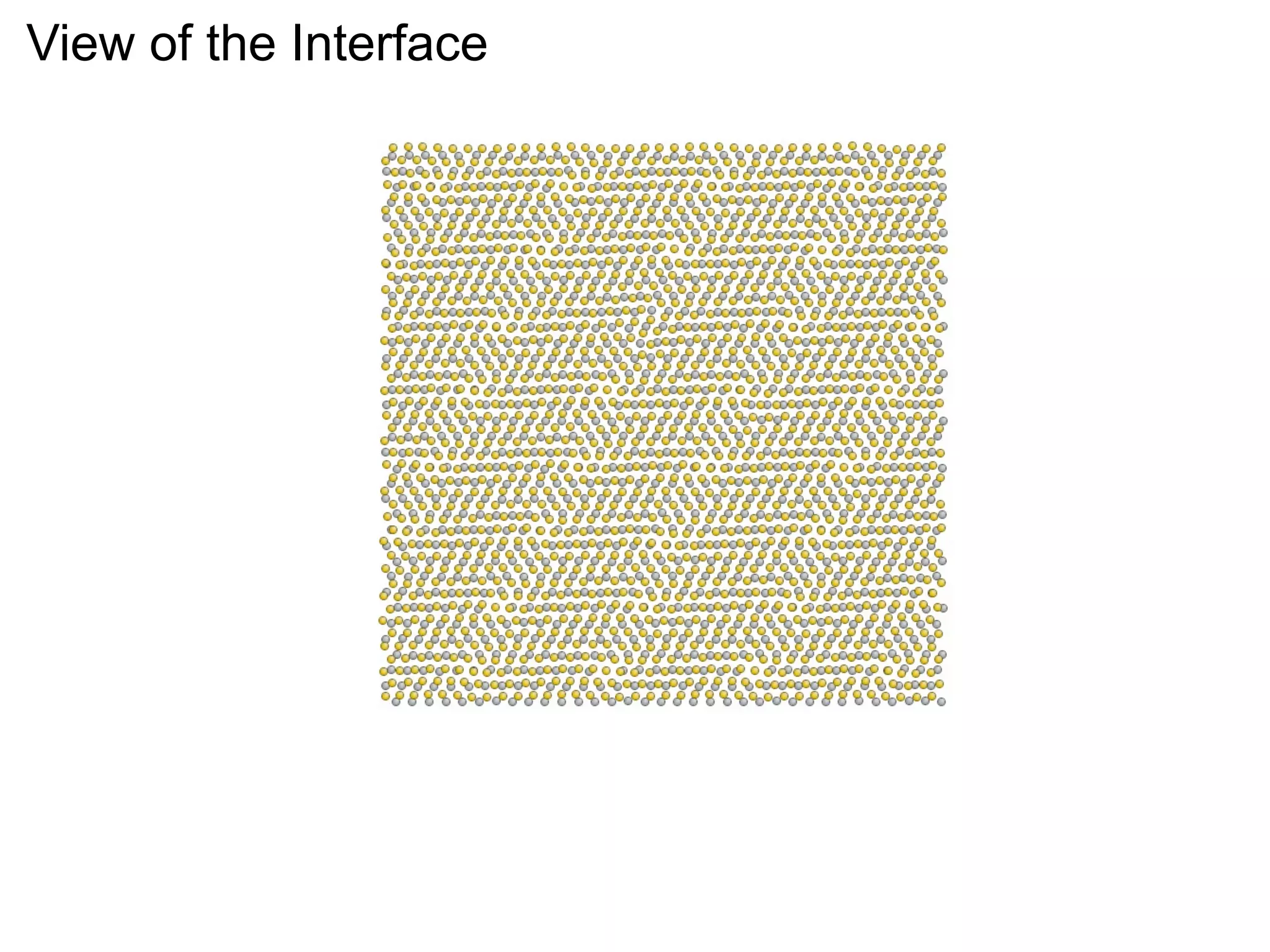
View of the Interface
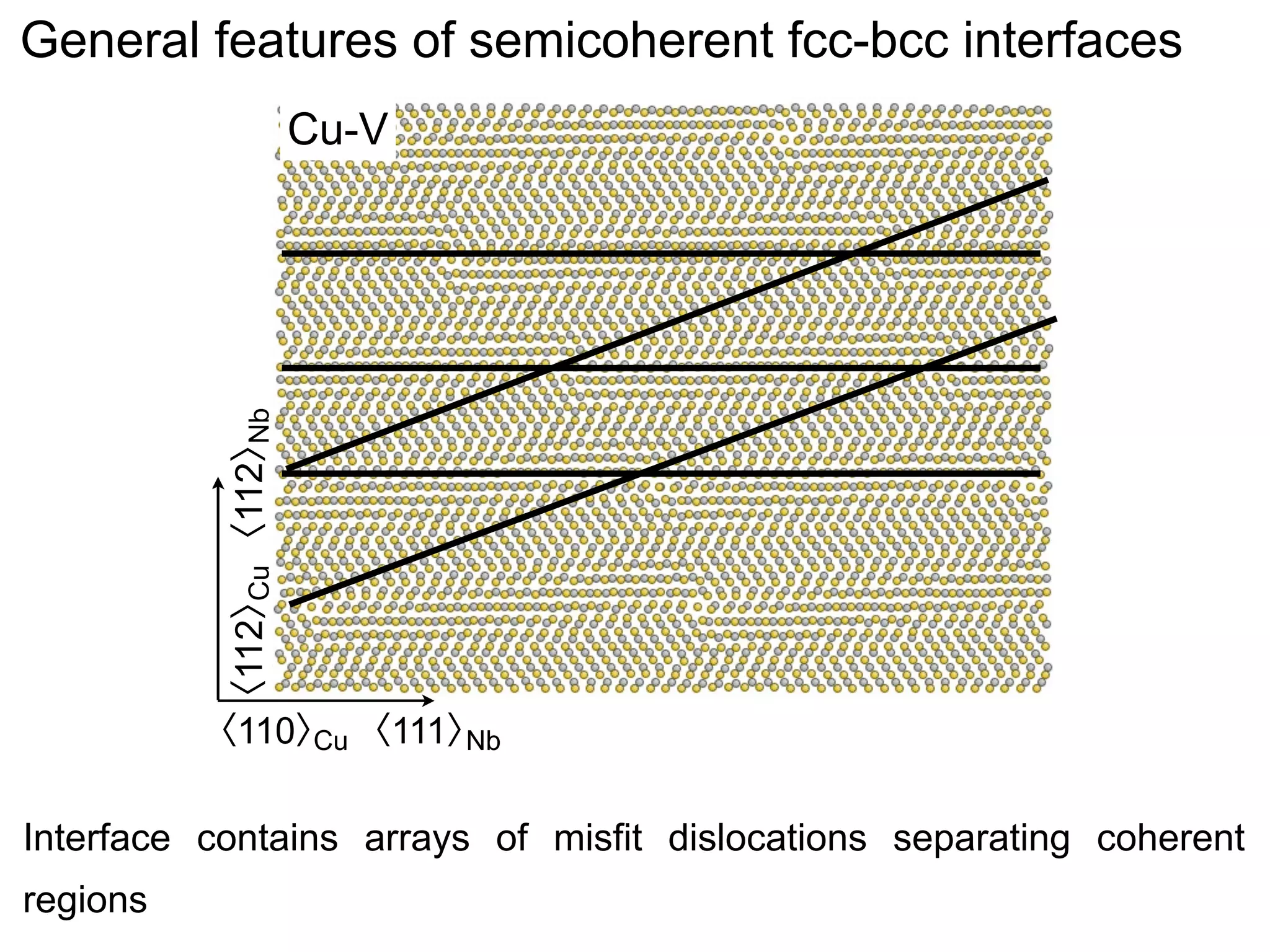
General features of semicoherent fcc-bcc interfaces

〈112〉 〈112〉
Cu
Nb

Cu-V

〈110〉 〈111〉
Cu
Nb

An example of a fcc-bcc semicoherent interface

Patterns corresponding to periodic “good” and “bad” regions
General features of semicoherent fcc-bcc interfaces

〈112〉 〈112〉
Cu
Nb

Cu-V

〈110〉 〈111〉
Cu
Nb

Interface contains arrays of misfit dislocations separating coherent
regions
〈112〉 〈112〉
Cu
Nb

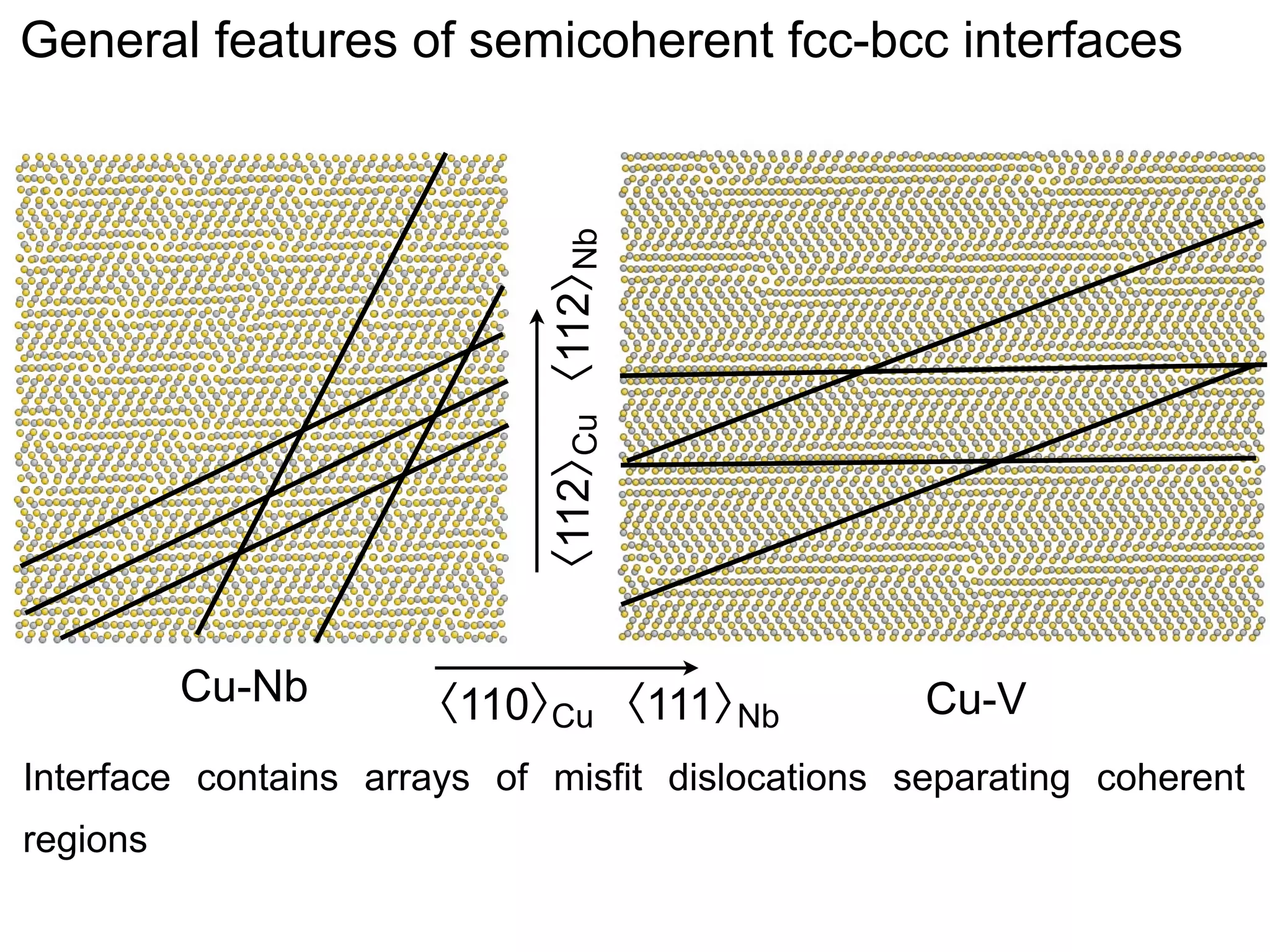
General features of semicoherent fcc-bcc interfaces

Cu-Nb

〈110〉 〈111〉
Cu
Nb

Cu-V

Interface contains arrays of misfit dislocations separating coherent
regions
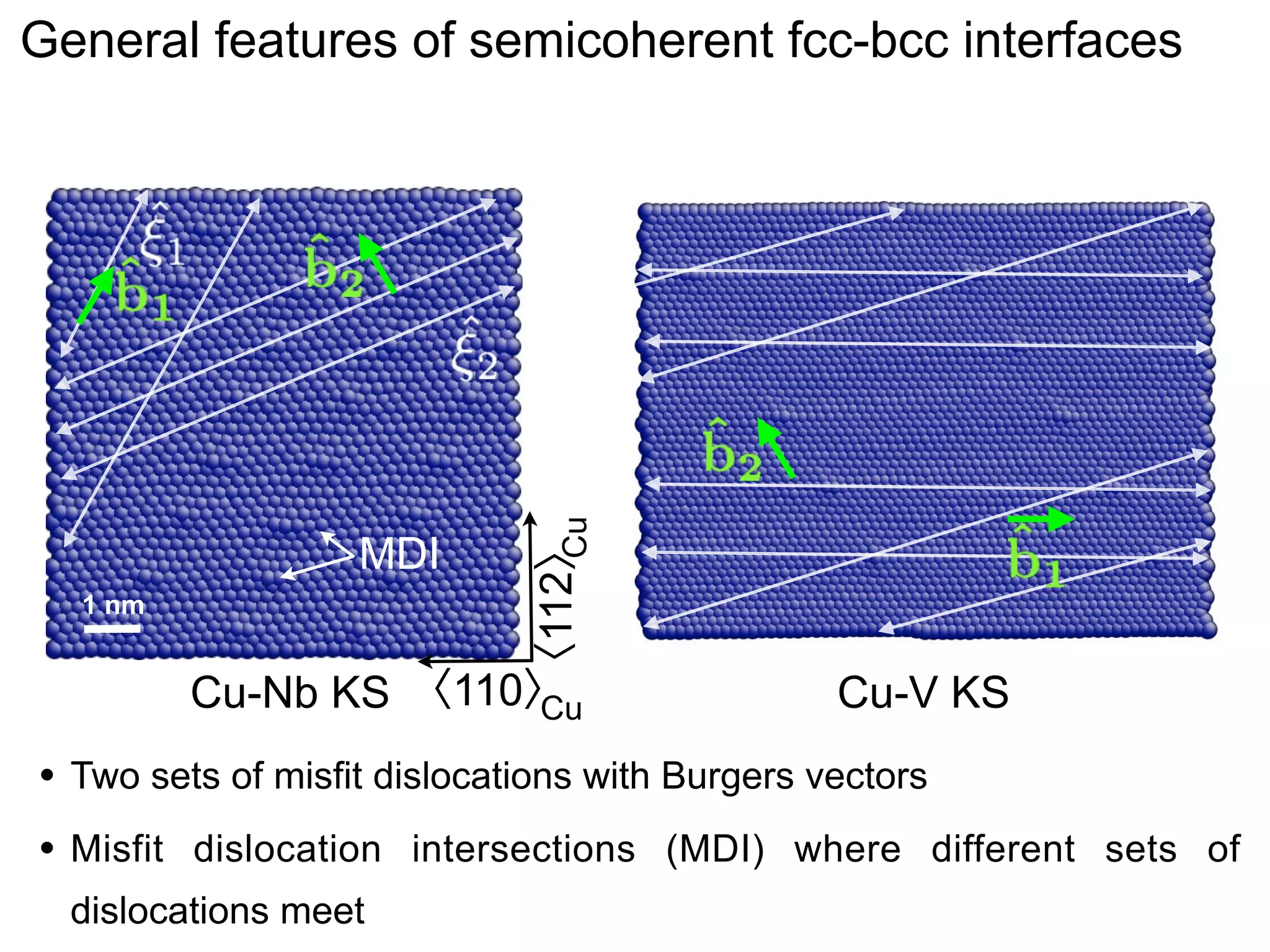
MDI
1 nm

〈112〉
Cu

General features of semicoherent fcc-bcc interfaces

Cu-Nb KS 〈110〉
Cu

Cu-V KS

•

Two sets of misfit dislocations with Burgers vectors

•

Misfit dislocation intersections (MDI) where different sets of
dislocations meet
Outline
•

Structure and properties of semicoherent interfaces

•

Point defects at semicoherent interfaces

•

Migration of point defects and relation to the interface structure

•

Implications to ceramic interfaces

•

case of MgO grain boundaries
0 0

00

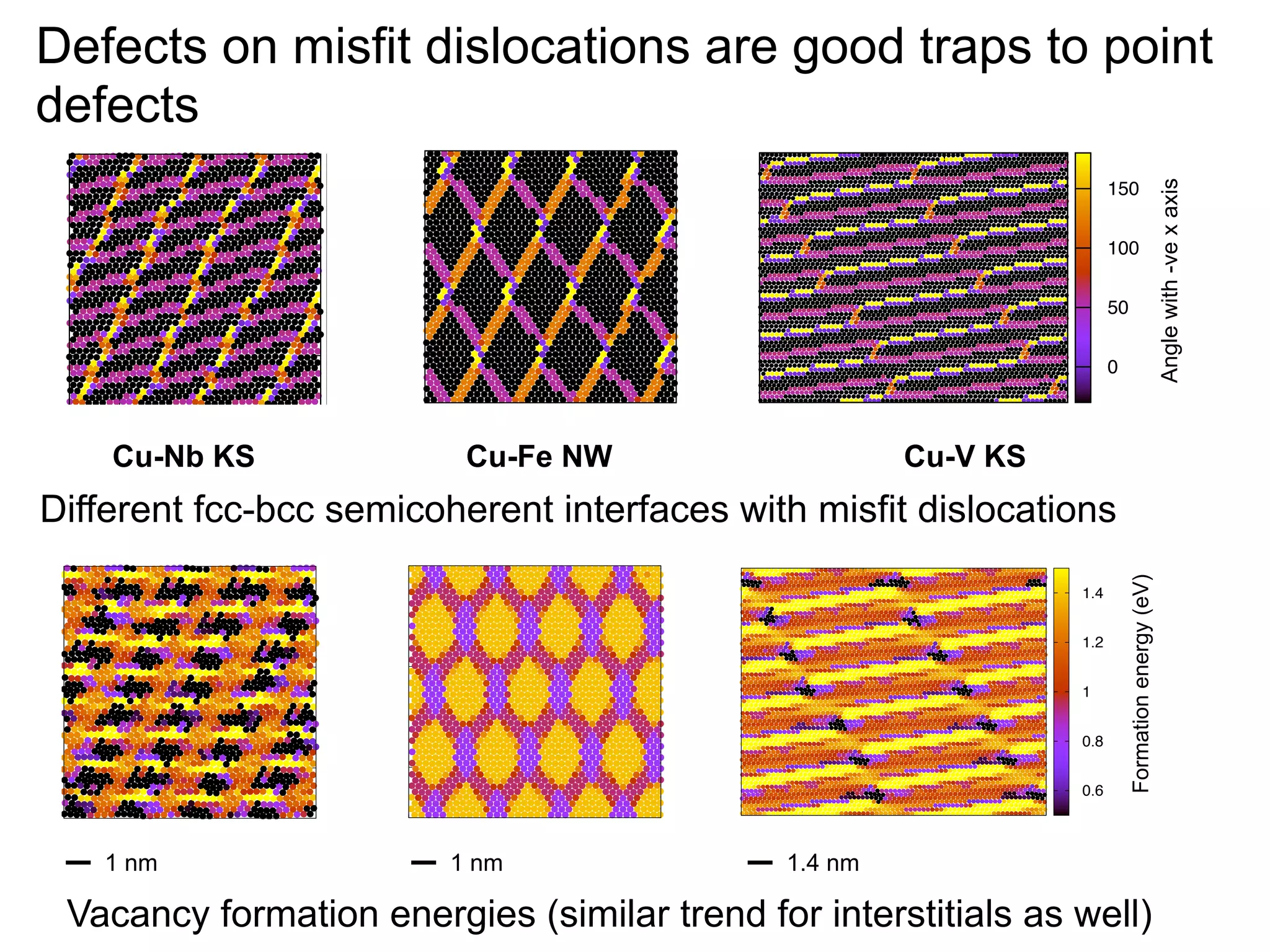
Defects on misfit dislocations are good traps to point
defects
150
150

0.2
0.2
0.4
0.4

100
100

0.6
0.6

50
50

0.8
0.8

0

0

1
10
0

0.2
0.2

0.4
0.4

0.6
0.6

Cu-Nb KS
Cu-Nb KS

0.8
0.8

1
1

0.28
0.28
0.26
150 0.45
1500.26
0.24
150
0.2 0.2
0.2
150
0.2 0.45
0.24
0.2 0.2
0.2
0.2
0.22
0.4
0.22
0.4
0.2
100
1000.2
0.4 0.4
0.4 0.35 0.4
100
100
0.4 0.4
0.18
0.4 0.35 0.4
0.18
0.16
0.3 0.6
0.6 0.6
0.6 0.3
50
50 0.16
0.14
0.6 0.6
0.6
0.6
50
50
0.14
0.25
0.12
0.8 0.8
0.8
0.8 0.25
0.1 0.12
0 0.8
0 0.1
0.8 0.8
0.8
0.2
0.08
0
0
0.2
1
0.060.08
1 0.15 1
1
0
0.2 0.2
0.4 0.4
0.6 0.6
0.8 0.8
1
0
0.2
0.8
1
1
0.06
1 0.15 0.2
0
1
0
0.4 0.4 0.6 0.8
0.6
11
1
0
0.2 0.2
0.4 0.4
0.6 0.6
0.8 0.8
1
0
0.2
0.4
0.6 0.8
0.8
0
1
0
0.2
0.4
0.6
11
0

0

0
0 0.5
0
0 0.5

0

0

Angle with -ve x axis

0

0
0

Cu-Fe NW
Cu-Fe NW

0.2
0.4
0.6
0.8

Cu-V KS
Cu-V KS

0

0

0

0.2

1.2

0.4
0.6

1

0.6

0.8

1.2

0.6

0.8
0

0.2

0.4

0

0.2
1 nm 0.4
1 nm

0.6

0.6

0.8

0.8

0.6

1

1

1.4

0.2

1.2

1.2
0.4

1.2

0.4

1

1

1

1
0.6

0.6

0.8

0.6

0.8

0.6

0.8
0.8

0.8 0.8

0.8

1

0.2

0.4

1

1.4

1.4
0.2

1.2 0.4

0.4

0

1.4

1.4 0.2

0.2

1

0
0

1.4

0.8
1
0.6
0
1

1
0
1

0.8
0.6

0.6

0.8
0.2

0

0.4

10.2 0.4
nm
1 nm

0.6

0.6

0.8

0.8

1

1

Formation energy (eV)

Different fcc-bcc semicoherent interfaces with misfit dislocations

0.2

0

0.4

0.2
1.4 nm 0.4
1.4 nm

0.6

0.8

0.6

0.6

1

0.8

1

Vacancy formation energies (similar trend for interstitials as well)

1

0
0.2
0.4
0.6
0.8
01

0

0
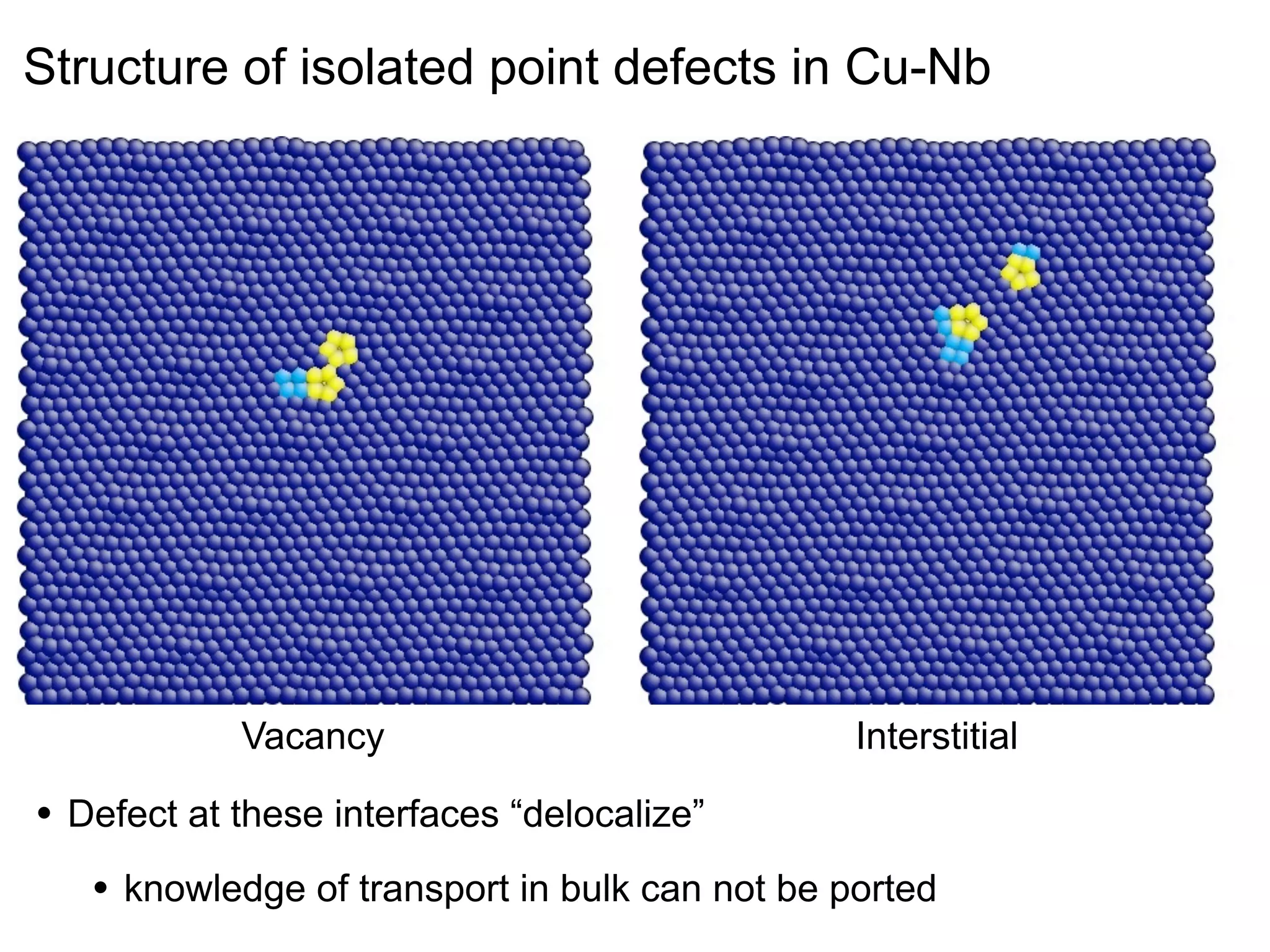
Structure of isolated point defects in Cu-Nb

Vacancy

•

Interstitial

Defect at these interfaces “delocalize”

•

knowledge of transport in bulk can not be ported
Outline
•

Structure and properties of semicoherent interfaces

•

Point defects at semicoherent interfaces

•

Migration of point defects and relation to the interface structure

•

Implications to ceramic interfaces

•

case of MgO grain boundaries
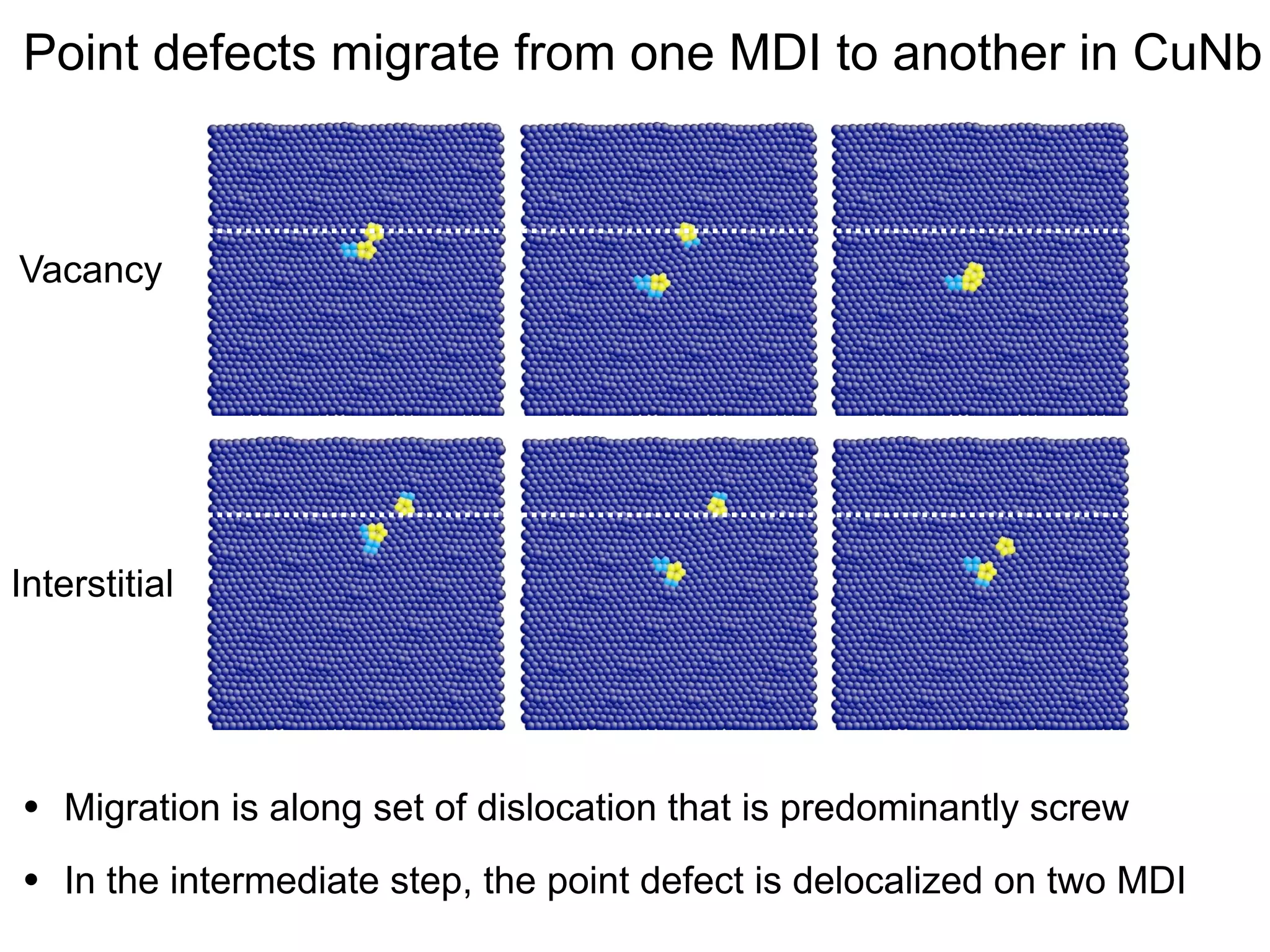
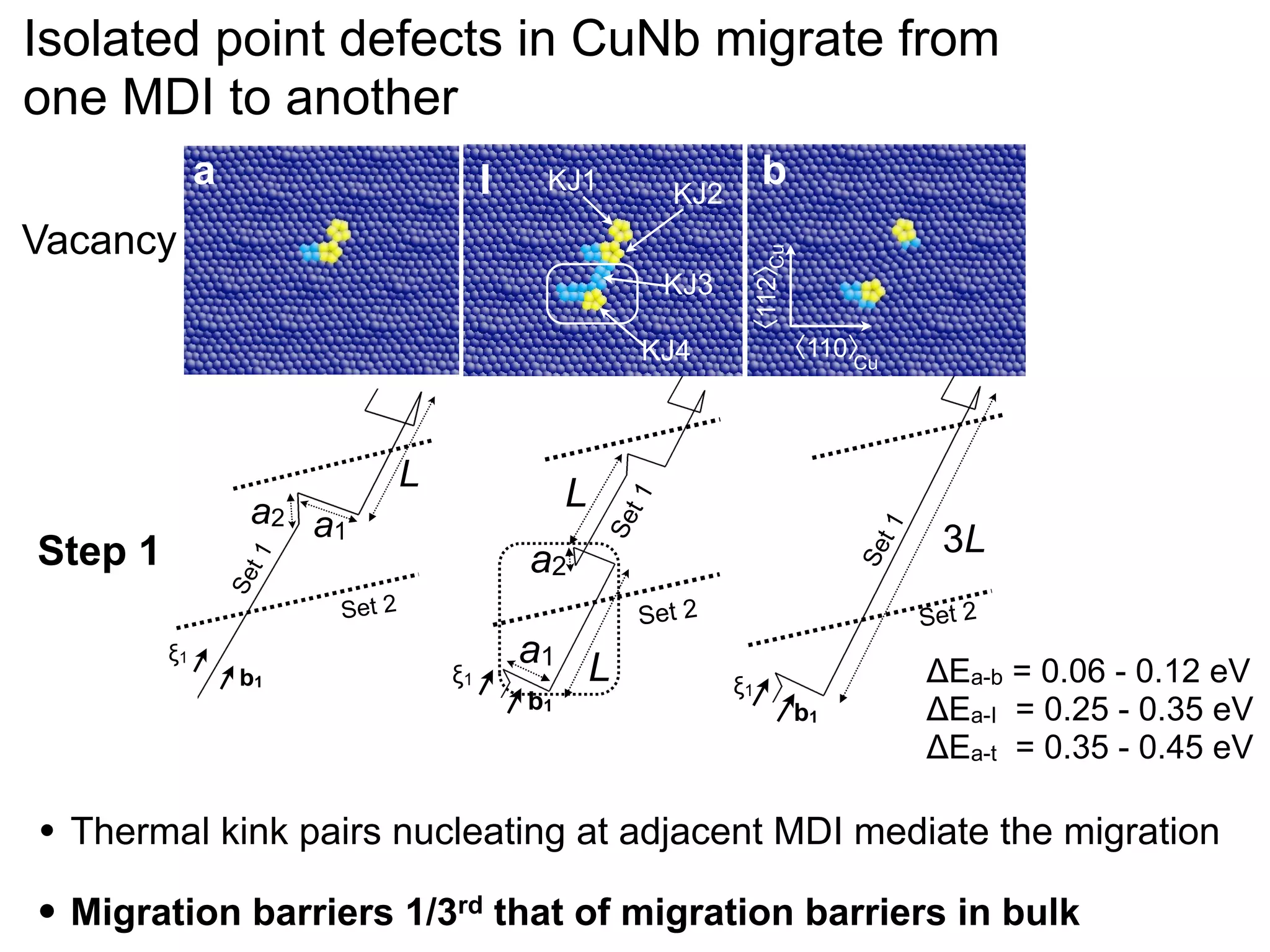
Point defects migrate from one MDI to another in CuNb

Vacancy

Interstitial

•

Migration is along set of dislocation that is predominantly screw

•

In the intermediate step, the point defect is delocalized on two MDI
0.45
0.4

Vacancy

I

KJ1t

t

Se

KJ3

!1

b1

•

t

KJ3´

a2

0.15
0.1

a1 L

!1

0.05

b1

b
t1

L

t1

L
0.2

t

t

I

I

0 a

•

KJ4
〈110〉
Cu

KJ4

0.25

Set 2

〈110〉
Cu

Se

t1

Step 1

t

Se

" E (eV)

a2 a1

KJ1

KJ2´

0.35
0.3

b

KJ2

〈112〉
Cu

a

〈112〉
Cu

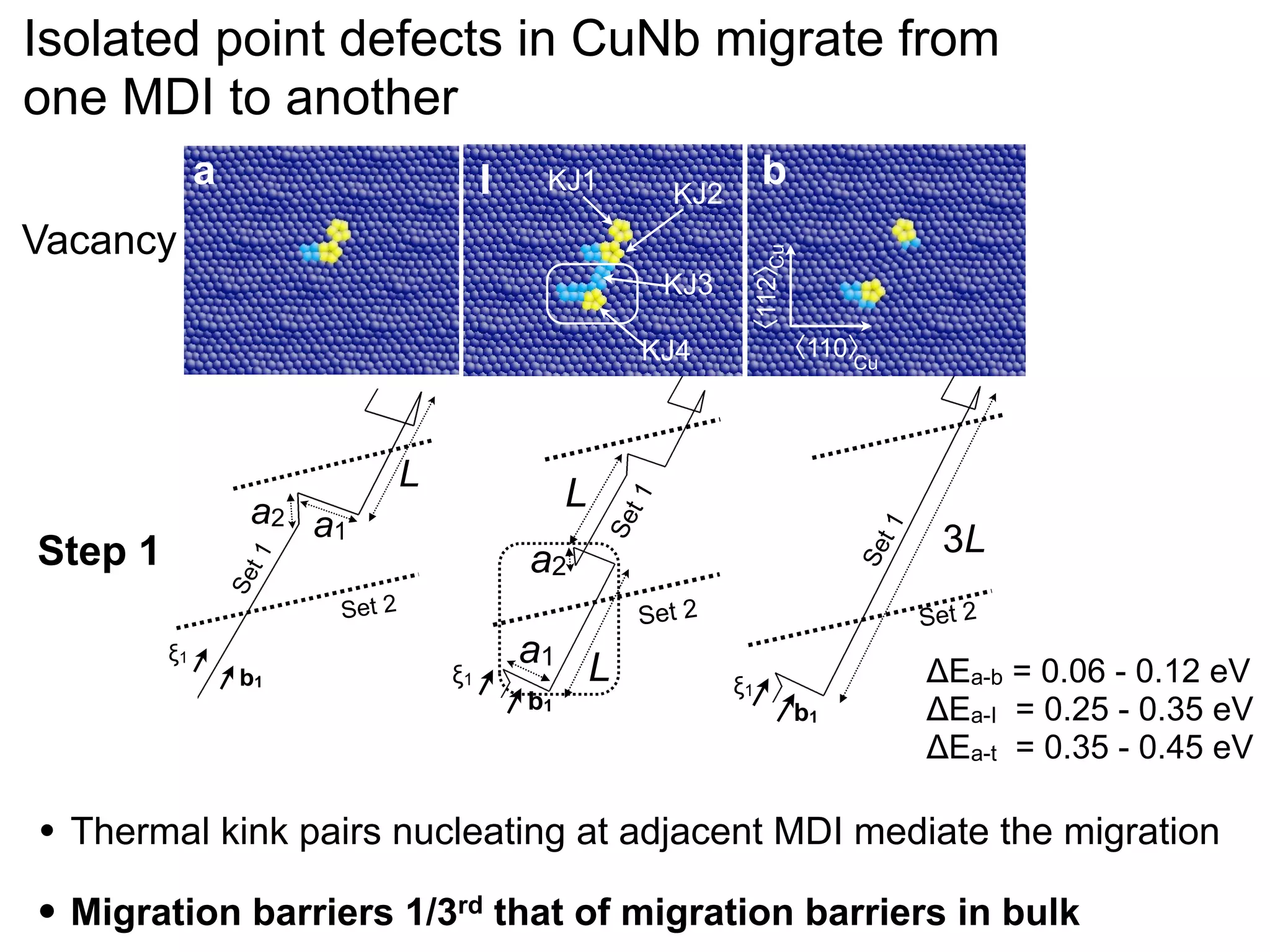
Isolated point defects in CuNb migrate from
one MDI to another

Set 2

3L
Set 2

!1

b1

b

Interstitial
Vacancy

"Ea-b = 0.06 - 0.12 eV
"Ea-I = 0.25 - 0.35 eV
"Ea-t = 0.35 - 0.45 eV

0 0.1 0.2 0.3 0.4 0.5 0.6 0.7 0.8
Thermal kink pairs nucleating at adjacent MDI mediate the migration 0.

Migration barriers

1/3rd

! (reaction coordinate)

that of migration barriers in bulk
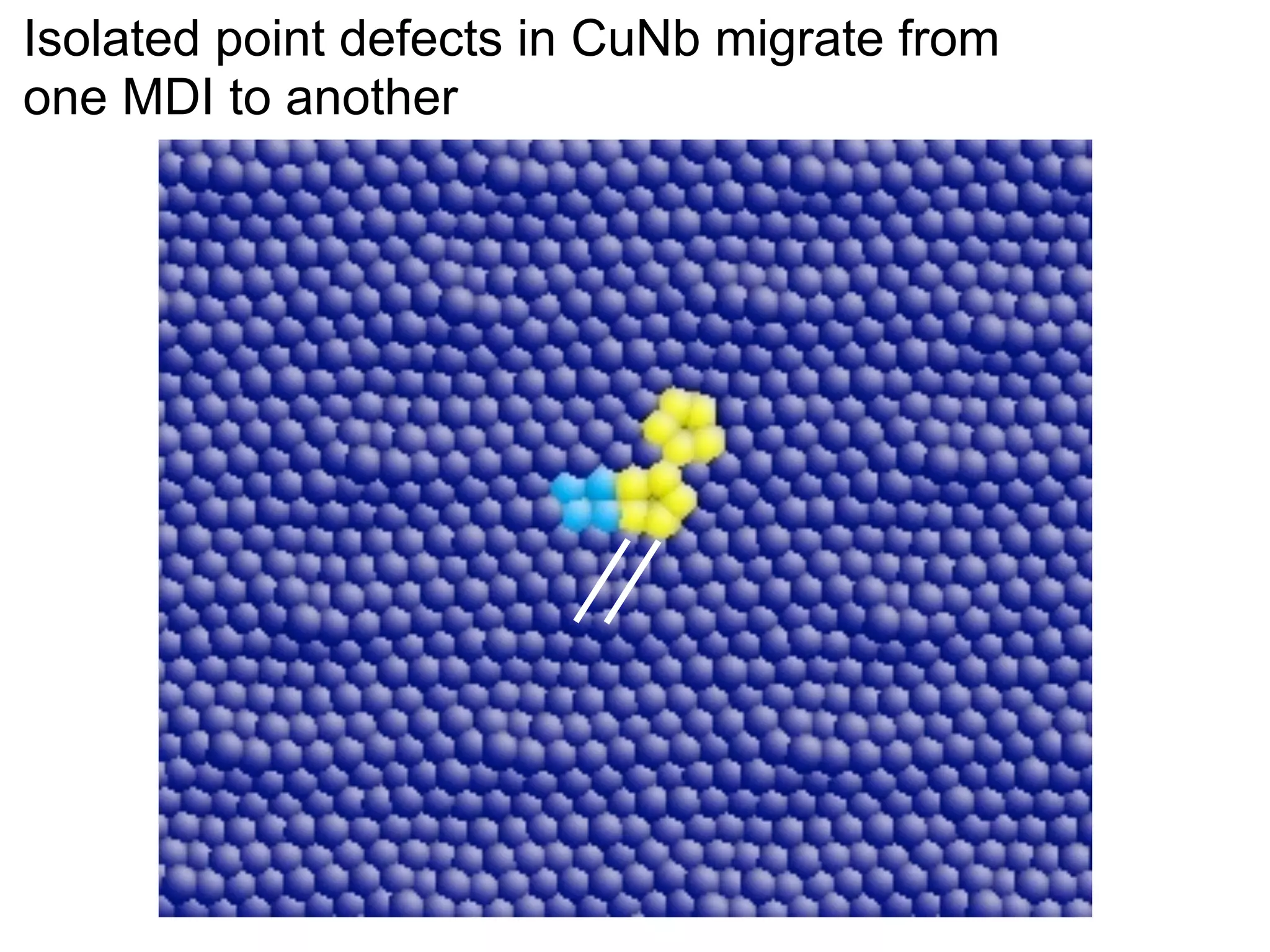
Isolated point defects in CuNb migrate from
one MDI to another
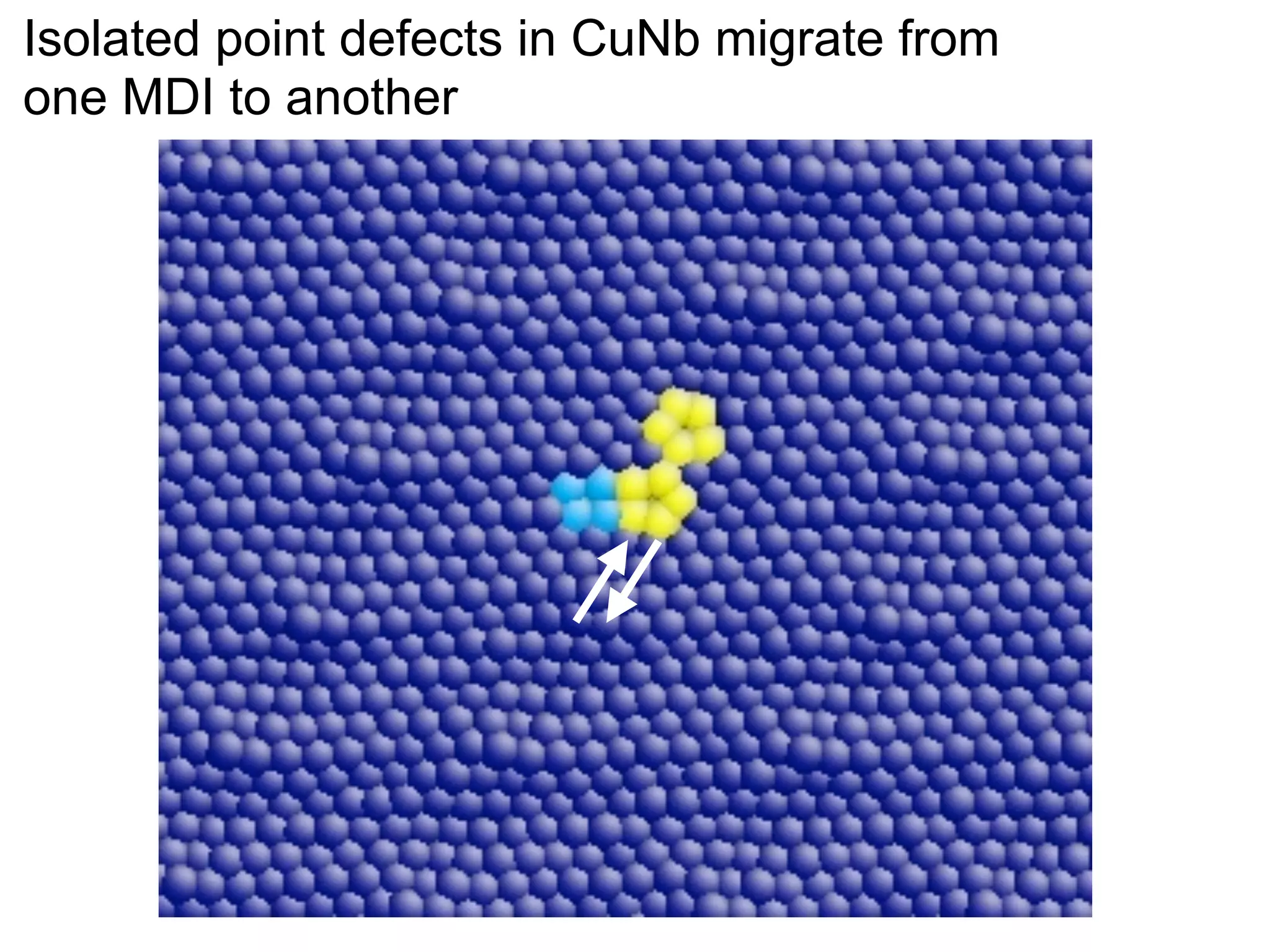
Isolated point defects in CuNb migrate from
one MDI to another
0.45
0.4

Vacancy

I

KJ1t

t

Se

KJ3

!1

b1

•

t

KJ3´

a2

0.15
0.1

a1 L

!1

0.05

b1

b
t1

L

t1

L
0.2

t

t

I

I

0 a

•

KJ4
〈110〉
Cu

KJ4

0.25

Set 2

〈110〉
Cu

Se

t1

Step 1

t

Se

" E (eV)

a2 a1

KJ1

KJ2´

0.35
0.3

b

KJ2

〈112〉
Cu

a

〈112〉
Cu

Isolated point defects in CuNb migrate from
one MDI to another

Set 2

3L
Set 2

!1

b1

b

Interstitial
Vacancy

"Ea-b = 0.06 - 0.12 eV
"Ea-I = 0.25 - 0.35 eV
"Ea-t = 0.35 - 0.45 eV

0 0.1 0.2 0.3 0.4 0.5 0.6 0.7 0.8
Thermal kink pairs nucleating at adjacent MDI mediate the migration 0.

Migration barriers

1/3rd

! (reaction coordinate)

that of migration barriers in bulk
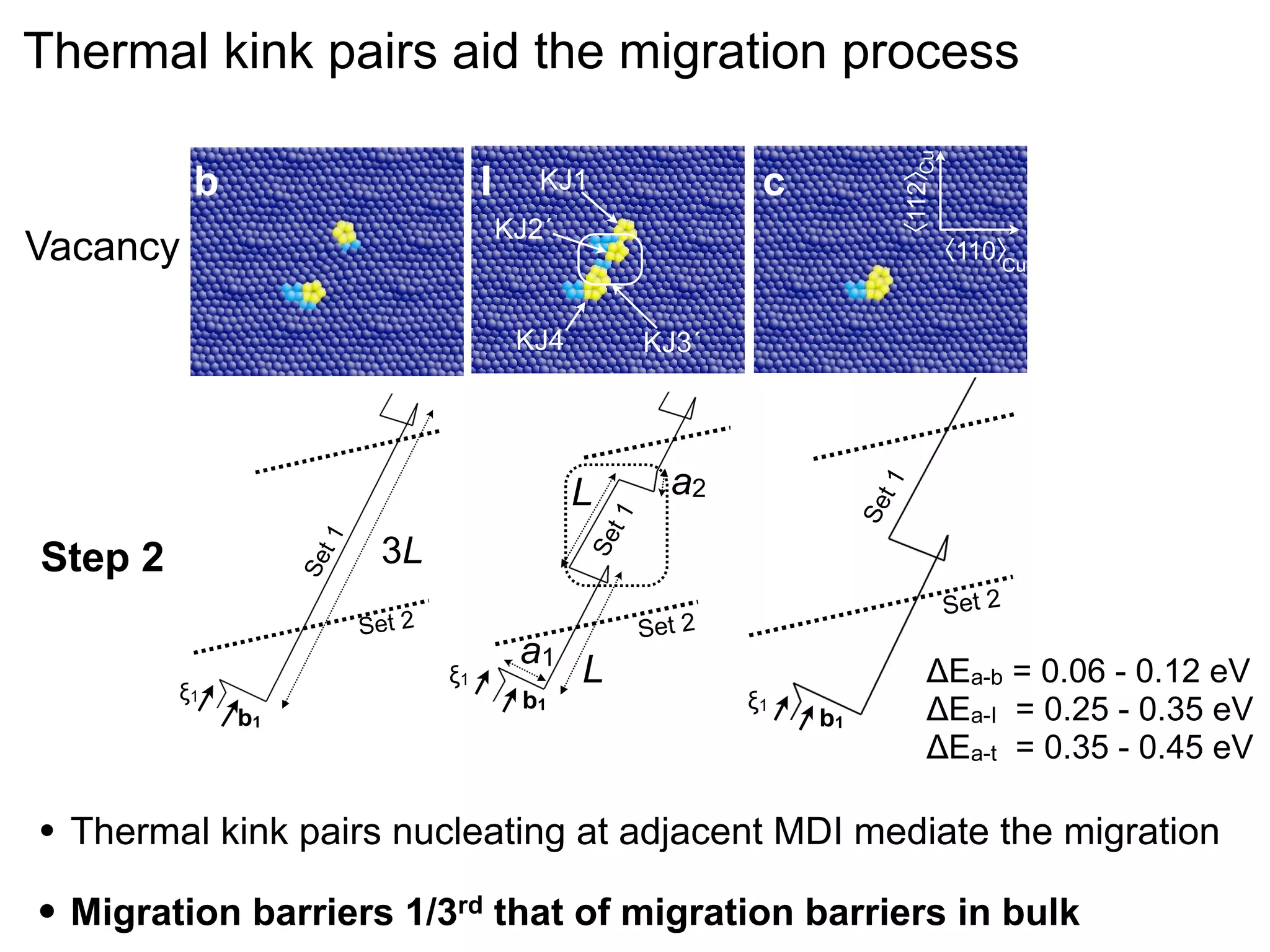
Thermal kink pairs aid the migration process
b

0.4

Vacancy

I

KJ1
KJ2´

KJ4

I

3L
0.15

t1

a2

Se

L

t1

0.2

t

t

KJ3´

0.25

a1 L

!1

b1

t

〈110〉
Cu

I

2
Set 0.1

•

t

t

b

Se

" E (eV)

Se
t1

Step 2

•

c

0.35
0.3

!1

t

〈112〉
Cu

0.45

0.05

b1

0 a

Set 2

Set 2

!1

b1

b

Interstitial
Vacancy

"Ea-b = 0.06 - 0.12 eV
"Ea-I = 0.25 - 0.35 eV
"Ea-t = 0.35 - 0.45 eV

0 0.1 0.2 0.3 0.4 0.5 0.6 0.7 0.8
Thermal kink pairs nucleating at adjacent MDI mediate the migration 0.

Migration barriers

1/3rd

! (reaction coordinate)

that of migration barriers in bulk
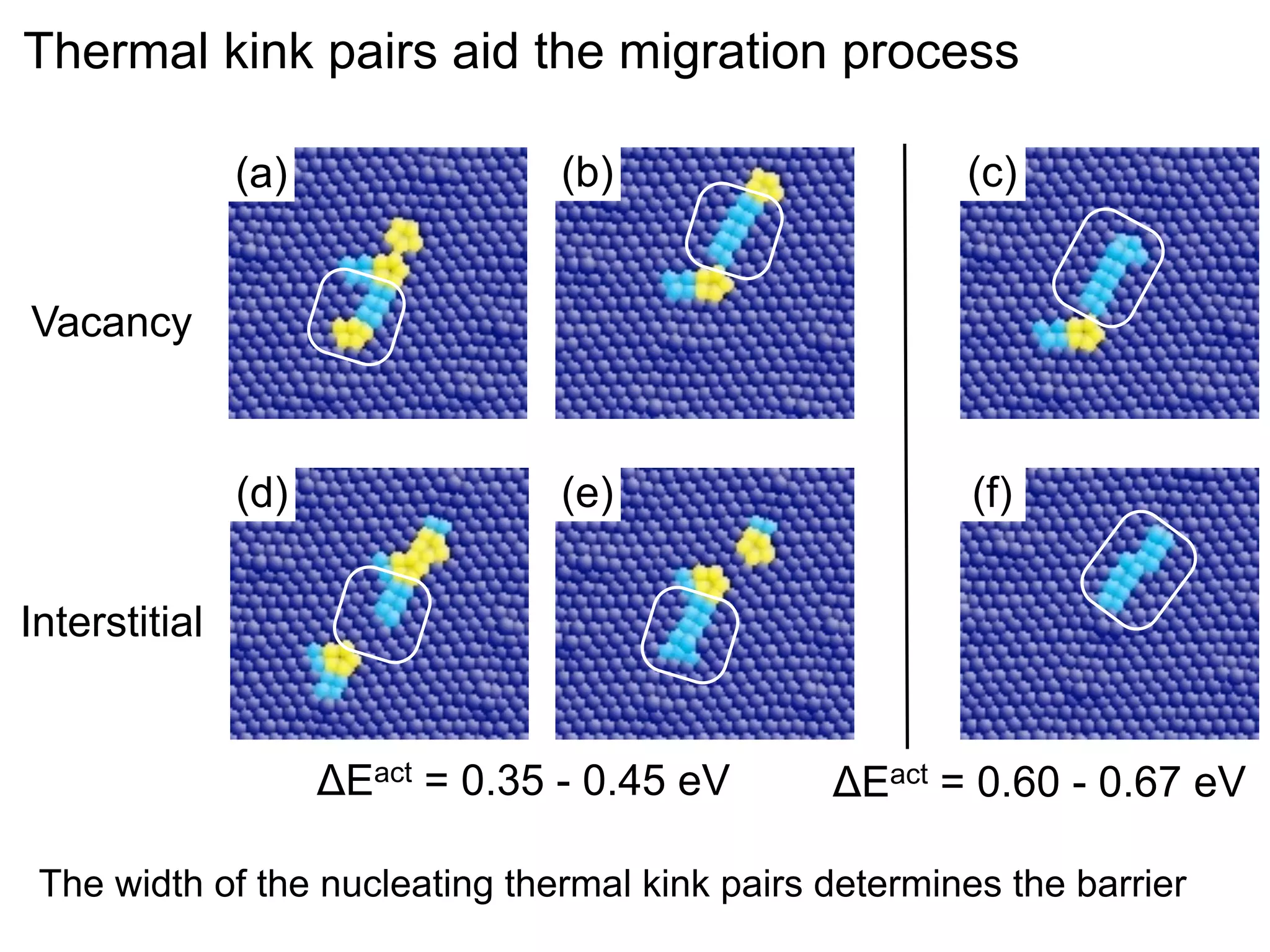
Thermal kink pairs aid the migration process
(a)

(b)

(c)

(d)

(e)

(f)

Vacancy

Interstitial

ΔEact = 0.35 - 0.45 eV

ΔEact = 0.60 - 0.67 eV
1nm

The width of the nucleating thermal kink pairs determines the barrier
0.45

t
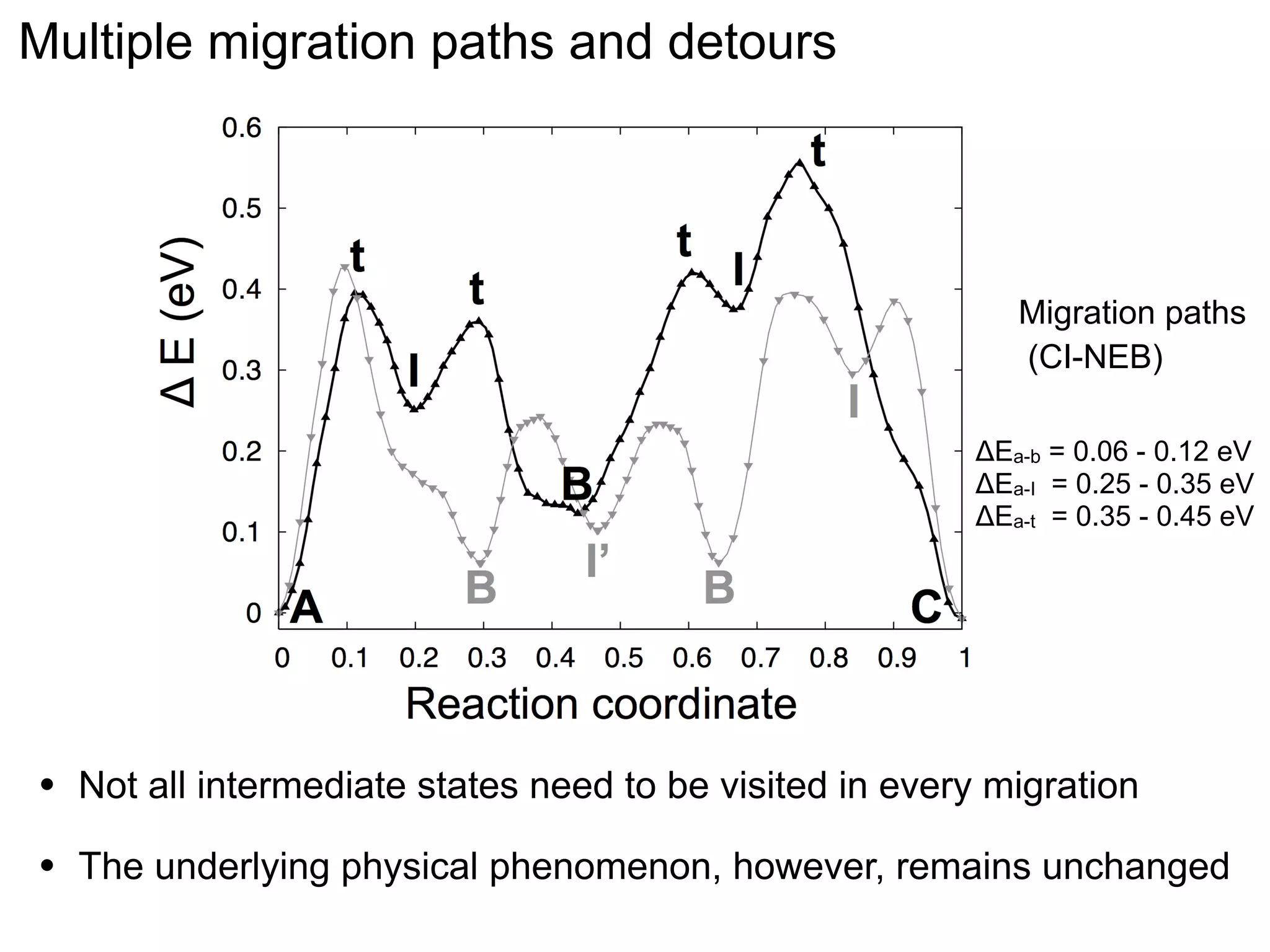
Multiple migration paths and detours
0.4
t

t
t

0.35

t

" E (eV)

0.3

I

I

0.25

t

0.2

b
Migration paths
(CI-NEB)
Interstitial

0.15

Vacancy

0.1
0.05
0 a
0

b

"Ea-b = 0.06 - 0.12 eV
"Ea-I = 0.25 - 0.35 eV
"Ea-t = 0.35 - 0.45 eV

0.1 0.2 0.3 0.4 0.5 0.6 0.7 0.8 0.
! (reaction coordinate)

•

Not all intermediate states need to be visited in every migration

•

The underlying physical phenomenon, however, remains unchanged
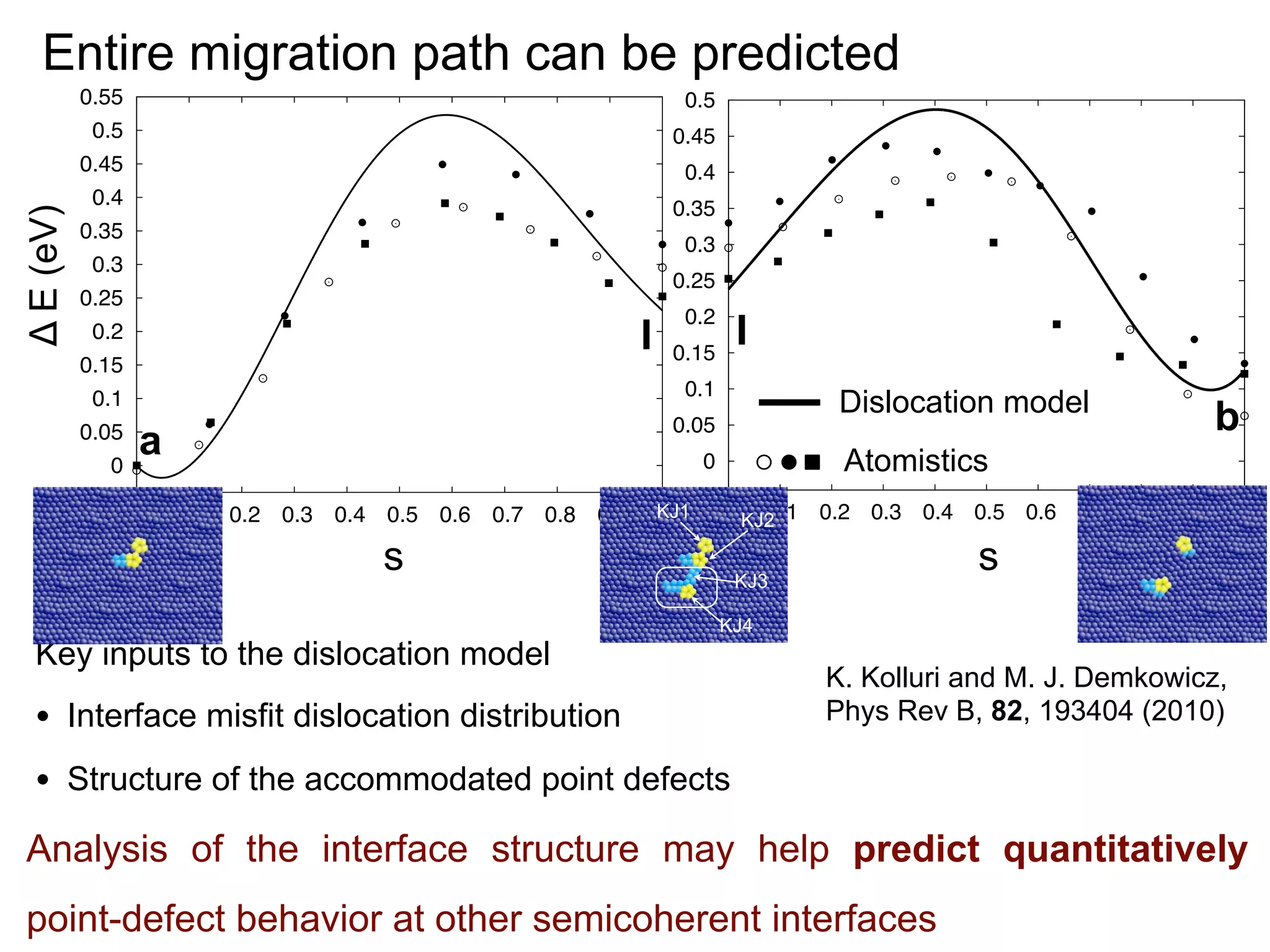
Entire migration path can be predicted
0.5

0.5

0.45

0.45

0.4

0.4

0.35

0.35

0.3

0.3

0.25

0.25

I

0.2
0.15

0.2

I

0.15

0.1

0.1

0.05

0.05

0

a
0

Dislocation model

0.1 0.2 0.3 0.4 0.5 0.6 0.7 0.8 0.9

KJ1
1

KJ1
0 KJ2
0.1 0.2 0.3 0.4 0.5 0.6 0.7 0.8 0.9

s
Key inputs to the dislocation model

b

Atomistics

0

〈112〉
Cu

Δ E (eV)

0.55

KJ2´

〈110〉
Cu

KJ3
KJ4

•

Interface misfit dislocation distribution

•

KJ4

1

s

KJ3´

K. Kolluri and M. J. Demkowicz,
Phys Rev B, 82, 193404 (2010)

Structure of the accommodated point defects

Analysis of the interface structure may help predict quantitatively
point-defect behavior at other semicoherent interfaces
jog, which is assumed constant for all states in our dislocation
model [and therefore does not appear in Eq. (1)], actually varies
along the direct migration path. To estimate the core energy
of the kink-jog, we summed differences in atomic energies
between the core atoms and corresponding atoms in a defectfree interface. The kink-jog core is taken to consist of 19 atoms:
the 5-atom ring in the Cu terminal plane and the 7 neighboring
Cu and Nb atoms from each of the two planes adjacent to the Cu
terminal plane. Core volumes were computed in an analogous
way. The core energies of the migrating jog are plotted as
filled triangles in Fig. 15(a) and are in good semiquantitative
agreement with the overall energy changes occurring along
the direct migration path. Core volumes are plotted as filled
circles.
Figure 15(b) shows the Cu and Nb interface planes with
a point defect in the extended state B. Arrows mark the
locations of the two kink-jogs and red lines mark the nominal
locations of set 2 misfit dislocation cores. The numbers are

TABLE I. Transitions occurring during migration of individual
point defects that were considered in kMC simulations, their
corresponding activation energy barriers, and number of distinct end
states for a given start state.

Point defect migration rates from simulations
Transition
type
A→I
A→B
I (near A) → B
I (near A) → A
B→A
B→I
B→I
B→C
I (near C) → C
I (near C) → B
I →B

Activation energy
(eV)

Number of
distinct end states

0.40
0.40
0.15
0.15
0.35
0.35
0.20
0.35
0.15
0.15
0.15

2
2
1
1
1
2
1
1
1
1
1

205416-9

•

Hypothesis:

•
•
•

transition state theory is valid and
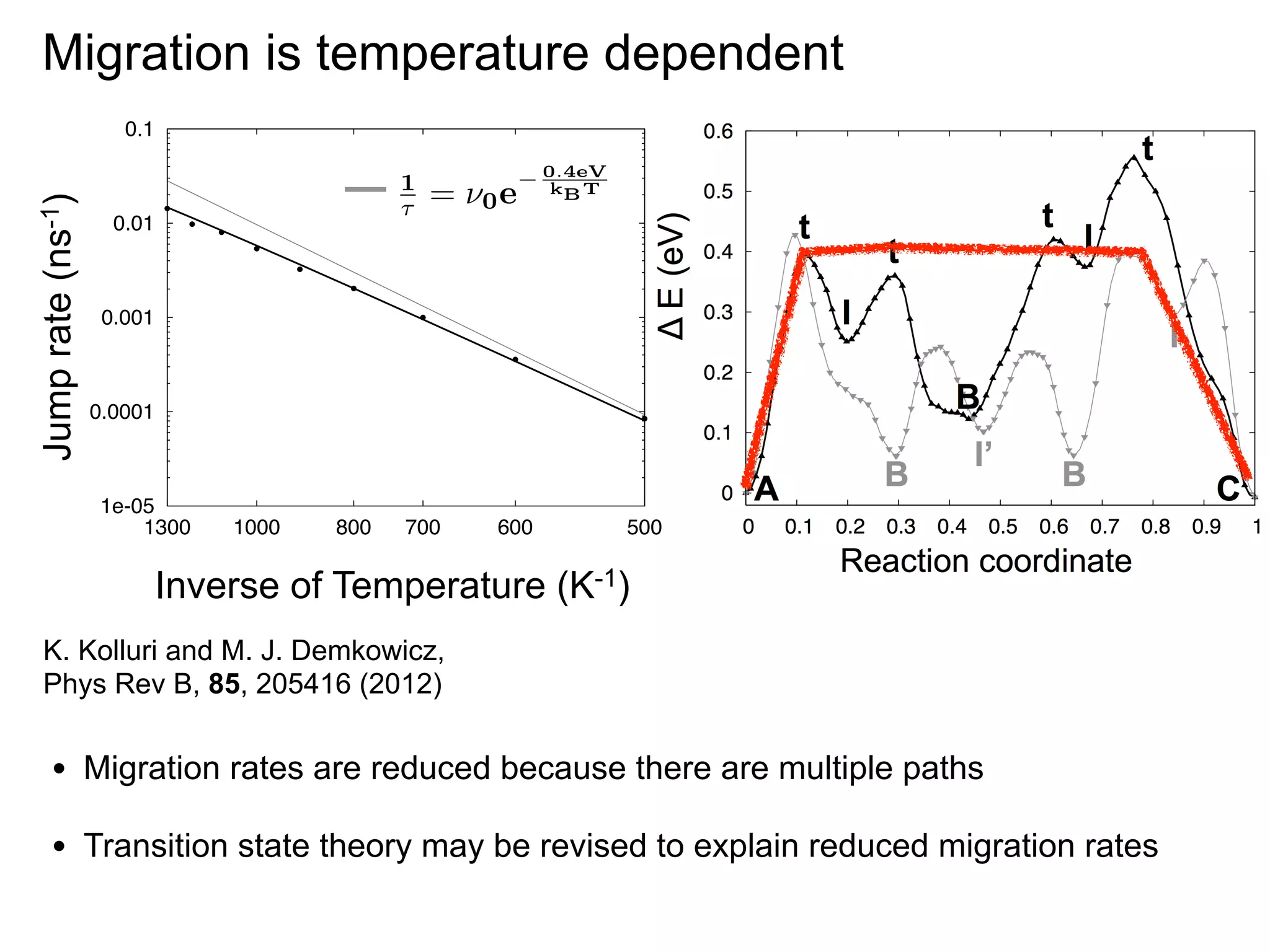
Rate-limiting step will determine the migration rate ≥ 0.4 eV

Validation:

•

kinetic Monte Carlo (since the migration path is not trivial)

•

Statistics from molecular dynamics
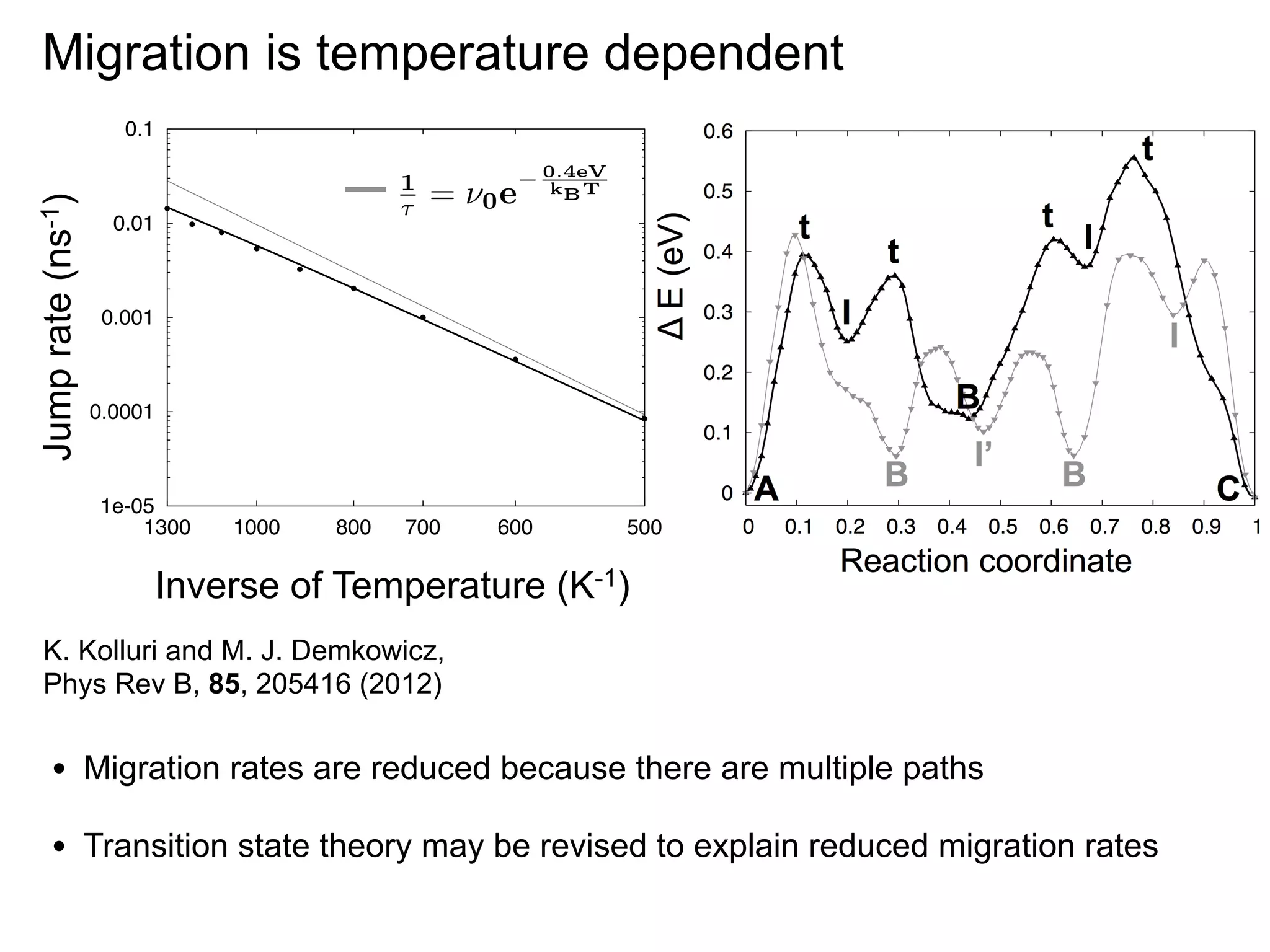
Migration is temperature dependent
Jump rate (ns-1)

0.1

1

=

0.01

0e

0.4eV
kB T

0.001

0.0001

1e-05
1300

1000

800

700

600

500

Inverse of Temperature (K-1)
K. Kolluri and M. J. Demkowicz,
Phys Rev B, 85, 205416 (2012)

•

Migration rates are reduced because there are multiple paths

•

Transition state theory may be revised to explain reduced migration rates
Migration is temperature dependent
Jump rate (ns-1)

0.1

1

=

0.01

0e

0.4eV
kB T

0.001

0.0001

1e-05
1300

1000

800

700

600

500

Inverse of Temperature (K-1)
K. Kolluri and M. J. Demkowicz,
Phys Rev B, 85, 205416 (2012)

•

Migration rates are reduced because there are multiple paths

•

Transition state theory may be revised to explain reduced migration rates
ln[(s!)p(t/τ,s)] = s ln(t/τ ) − t/τ.

(10)

Migration is temperature dependent

s are obtained for all three temperatures, confirming
0.1
tion that point defect1migration follows a Poisson
⇥
= 0 k 1T e
ig. 17). The jump rates for each temperature,
0.01
1
= 0e
y fitting, are plotted in Fig. 16(b) as filled gray
h uncertainties corresponding to the error in the
0.001
es fit. The gray line is the least-squares fit of Eq. (8)
obtained from MD. The activation energy obtained
0.0001
act
MC model (Eeff = 0.398 ± 0.002 eV) is well within
nty of 1e-05 activation energy found by fitting the MD
the
500
act
y, Eeff =1300 1000 0.045700 600
0.374 ± 800 eV.
Inverse of Temperature (K )
ctive attempt frequency for defect-1migration obfittingKolluri and M. J. Demkowicz, = 6.658 × 10⁹ ± 2.7 ×
K. the MD data is ν0
Phys Rev several orders of
is value is B, 85, 205416 (2012) magnitude lower than
mpt frequencies for point defect migration in fcc
• Migration −1 .72–74 A mechanistic interpretation paths
12
14 rates are reduced because there are multiple
, 10 −10 s
ow migration attempt frequency is not immediately
• Transition state theory may be revised to explain reduced migration rates
g. One possible explanation is that it arises from
number of atoms participating in the migration
Jump rate (ns-1)

Eact
e
kB T

B
0.4eV
kB T
act
model(Eef f = 0.398 ± 0.002 eV) is w
Migration is temperature dependent

a
by fitting the MD data, namely Ee

Jump rate (ns-1)

1

MD
kMC
0.1

act
model(Eef f = 0.398 ± 0.002 eV) is well wi

act
by fitting the MD data, namely Eef f = 0

0
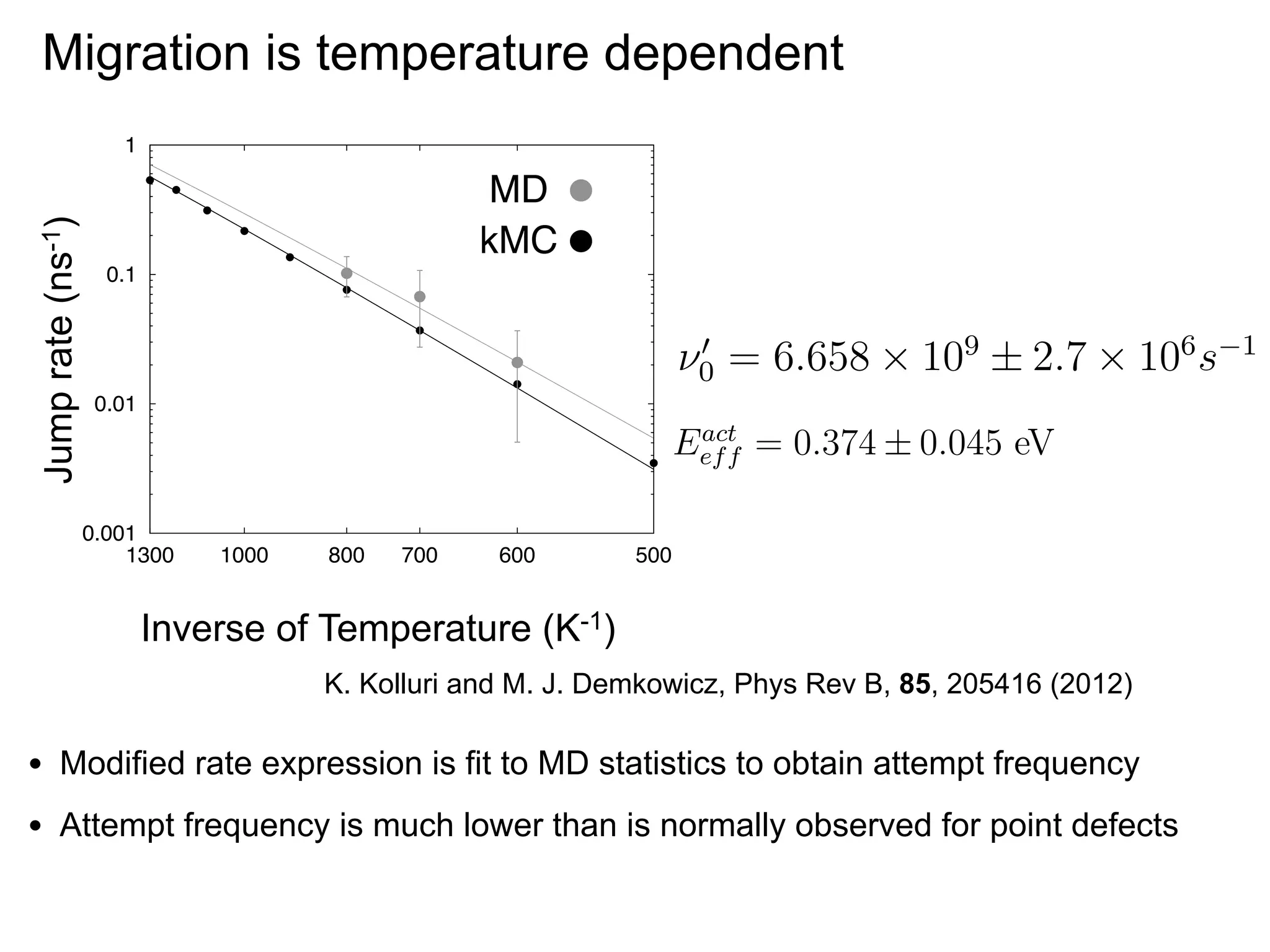
⌫0 = 6.658 ⇥ 109 ± 2.7 ⇥ 106 s

0.01

1

0
act
tained by0.374 ± 0.045 MD 0data is ⌫0
fitting the eV ⌫ 0 = 6.658 ⇥
Eef f =

0.001
1300

for defect migration obtained typical t
of magnitude lower than by fittingat
1000

800

700

600

500

69–71
value is 1012 1014
namelyseveral orderssof1 magnitude mec
. A lowe

Inverse of Temperature (K-1) migration in fcc Cu, namely 1012 1014

frequency is not immediately forth

K. Kolluri and M. J. Demkowicz, Phys Rev B, 85, 205416 (2012)

low migration attempt frequency is not im

•
•

the large number of atoms particip

Modified rate expression is fit to MD statistics to obtain attempt frequency
is that it arises from the large number of

Attempt frequency is much lower than for migration of for migration of compa
is normally observedcompact point defe
attempt frequency for point defects

frequency because it involves the m
der of the Einstein frequency because it i
Takeaways from fcc-bcc semicoherent interfaces
•

Interface has defect trapping sites

– density of these sites depends on interface structure
•

Point defects migrate from trap to trap

– migration is multi-step and involves concerted motion of atoms
– migration can be analytically represented
How much of this knowledge can be ported to ceramics?

•

Electrostatics

•

covalency

•

multiple species
Takeaways from fcc-bcc semicoherent interfaces
•

Interface has defect trapping sites

– density of these sites depends on interface structure
•

Point defects migrate from trap to trap

– migration is multi-step and involves concerted motion of atoms
– migration can be analytically represented
How much of this knowledge can be ported to ceramics?

•

Electrostatics : MgO - highly ionic and simple to model

•

covalency

•

multiple species
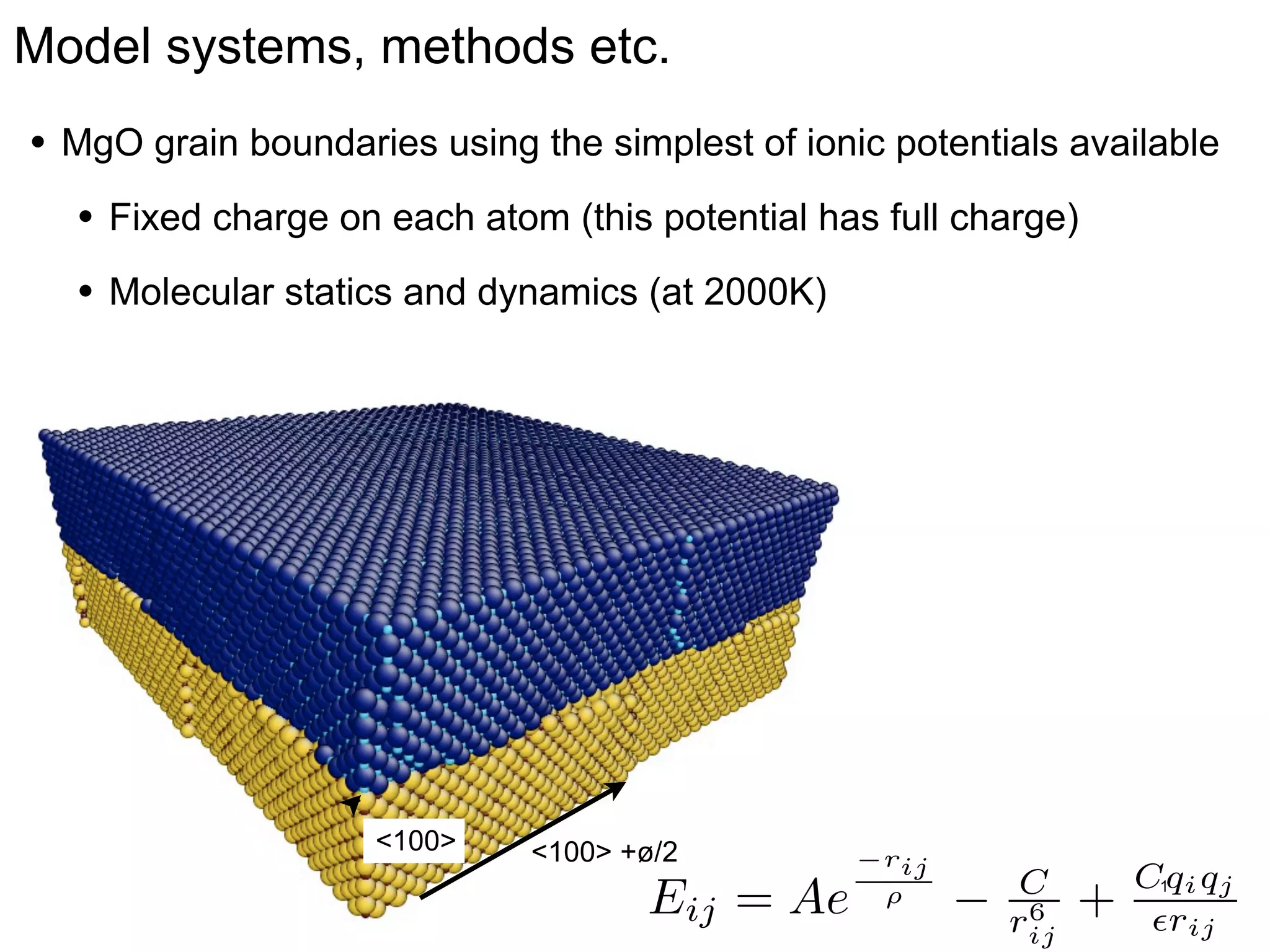
Model systems, methods etc.
•

MgO grain boundaries using the simplest of ionic potentials available
1 nm

•

Fixed charge on each atom (this potential has full charge)

•

Molecular statics and dynamics (at 2000K)

<100>

<100> +ø/2

Eij = Ae

rij
⇢

C
6
rij

+

Cqi qj
1
✏rij
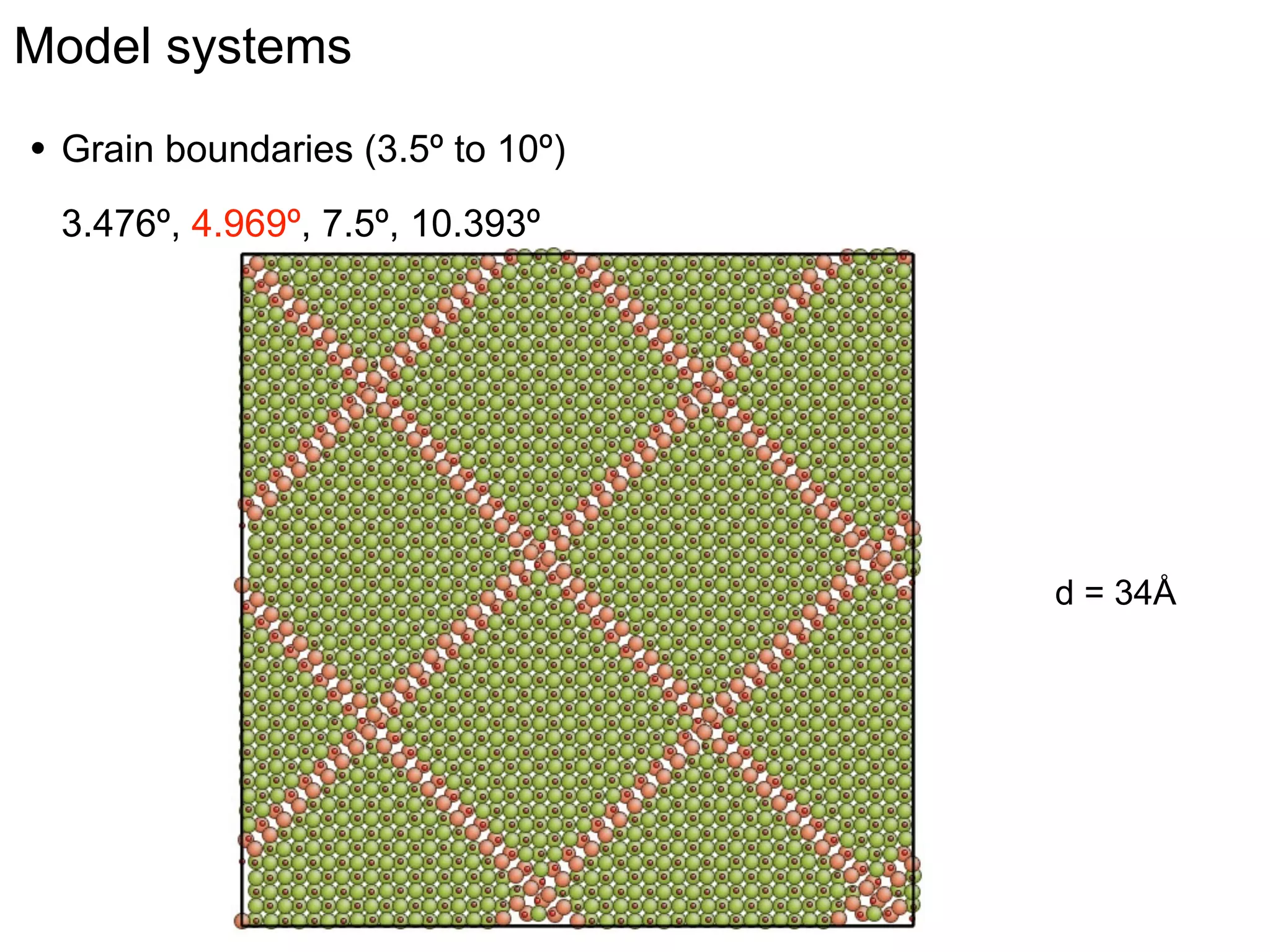
Model systems
•

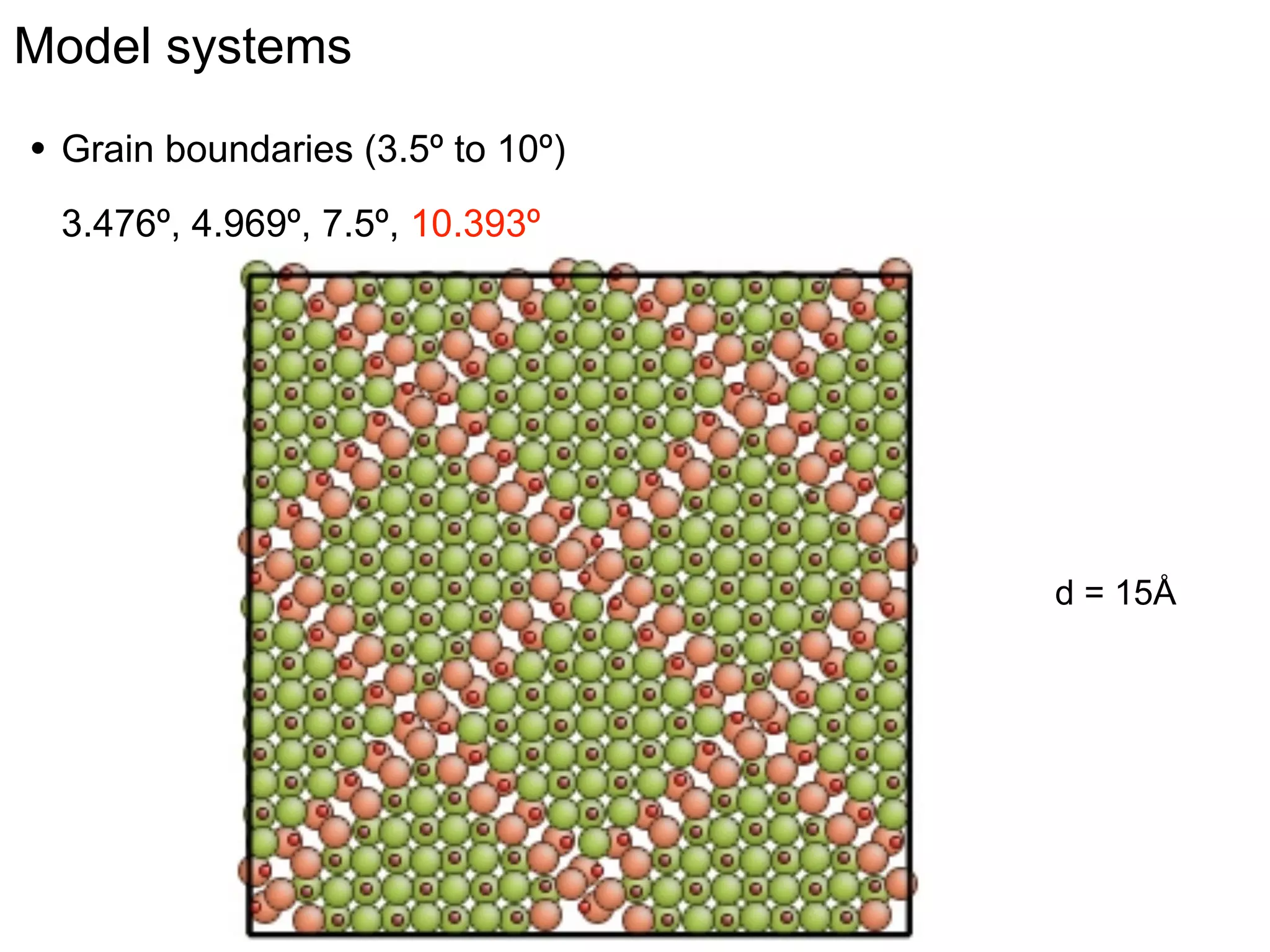
Grain boundaries (3.5º to 10º)
1 nm

3.476º, 4.969º, 7.5º, 10.393º

d = 34Å
Model systems
•

Grain boundaries (3.5º to 10º)
1 nm

3.476º, 4.969º, 7.5º, 10.393º

d = 15Å
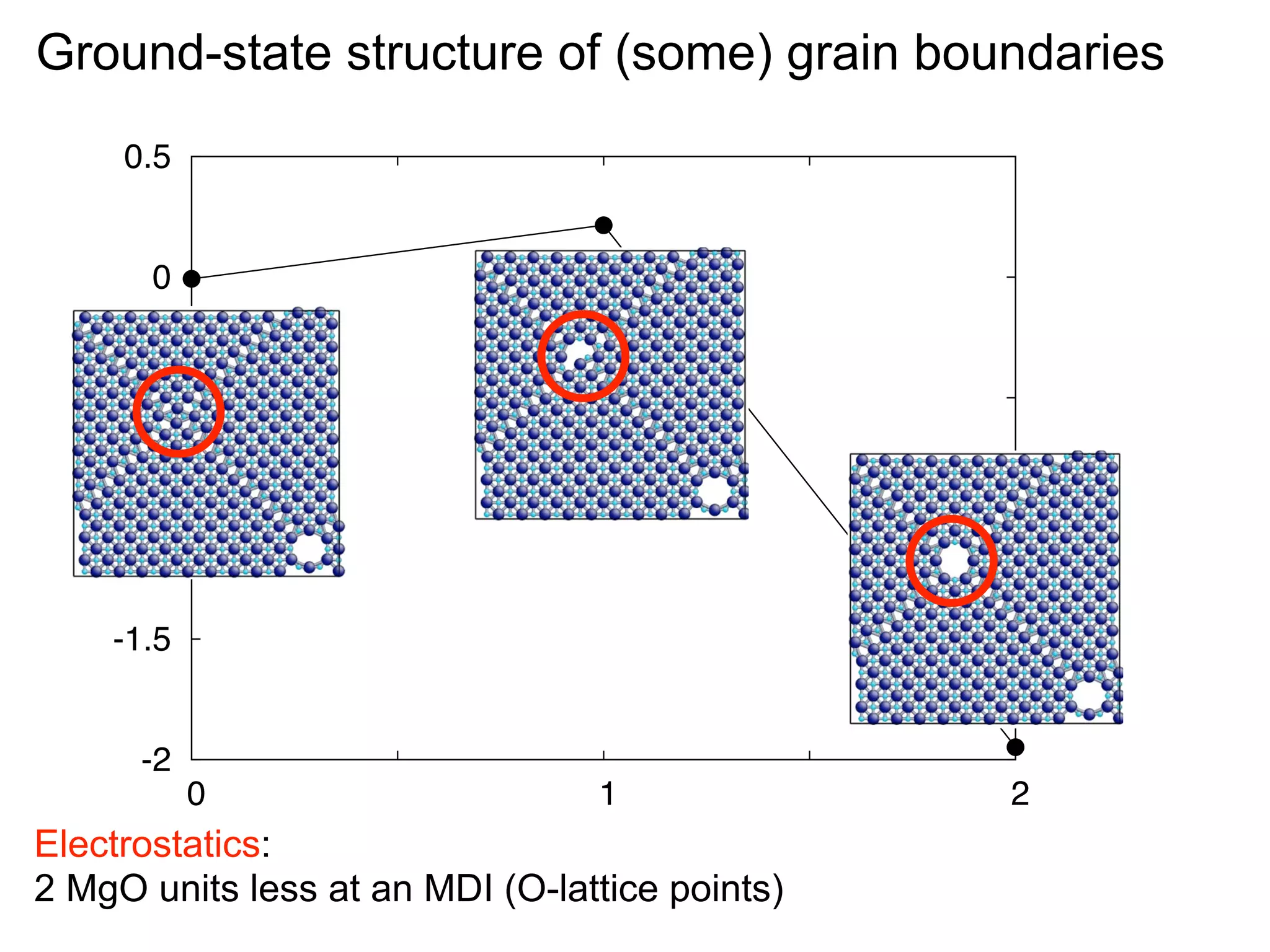
Ground-state structure of (some) grain boundaries
0.5

0

-0.5

-1

-1.5

-2
0

0.5

1

Electrostatics:
2 MgO units less at an MDI (O-lattice points)

1.5

2
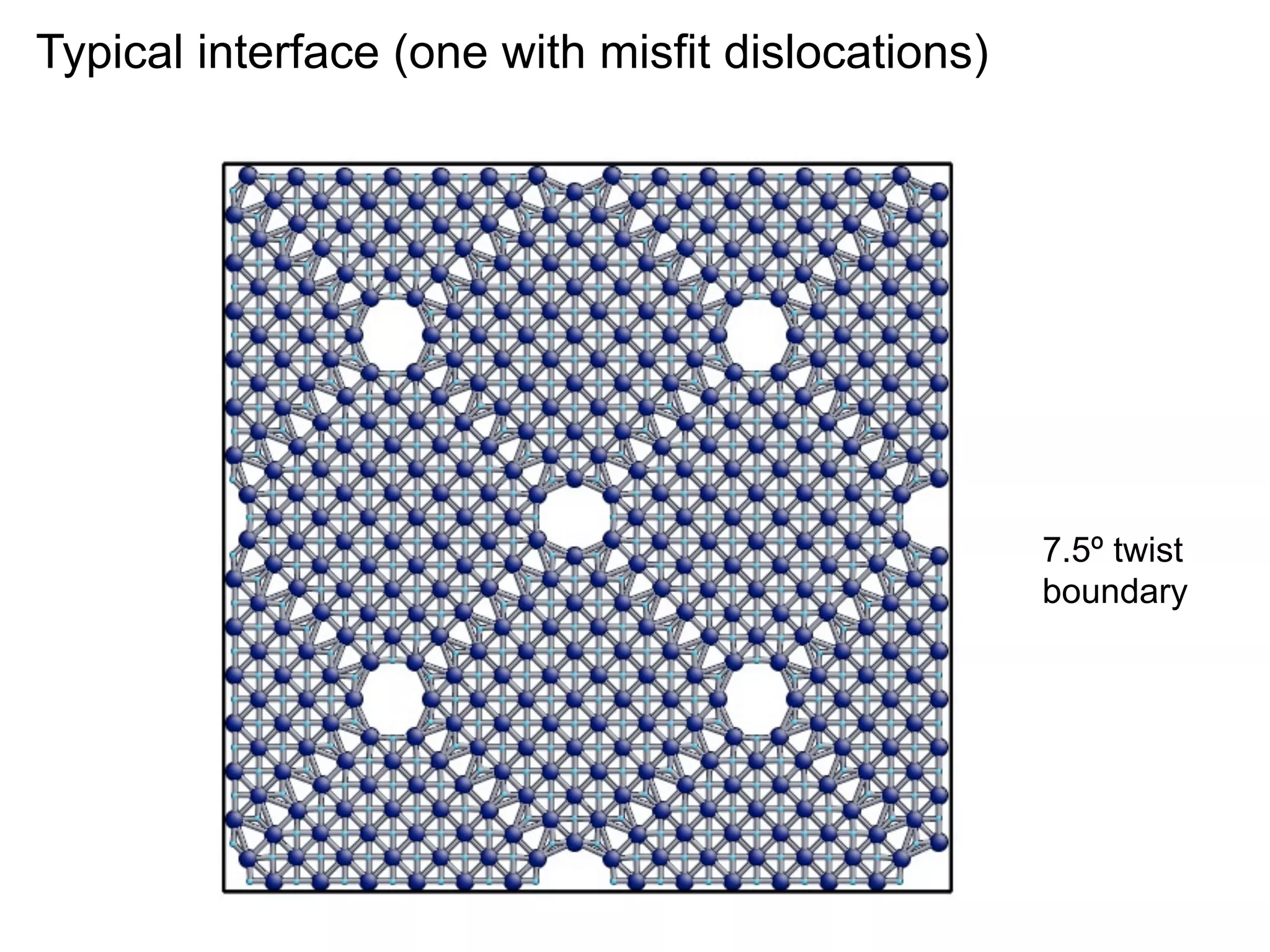
Typical interface (one with misfit dislocations)

7.5º twist
boundary
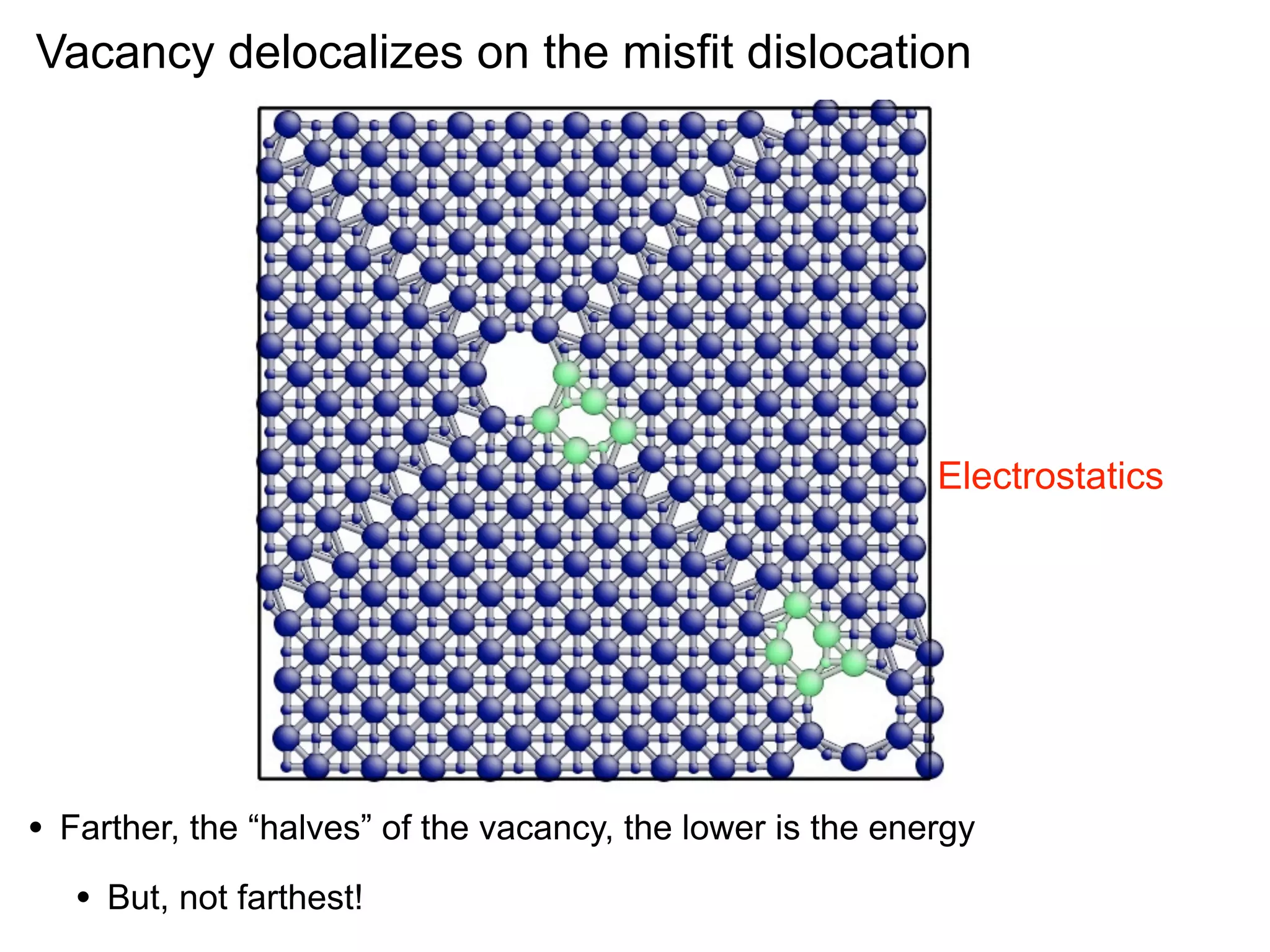
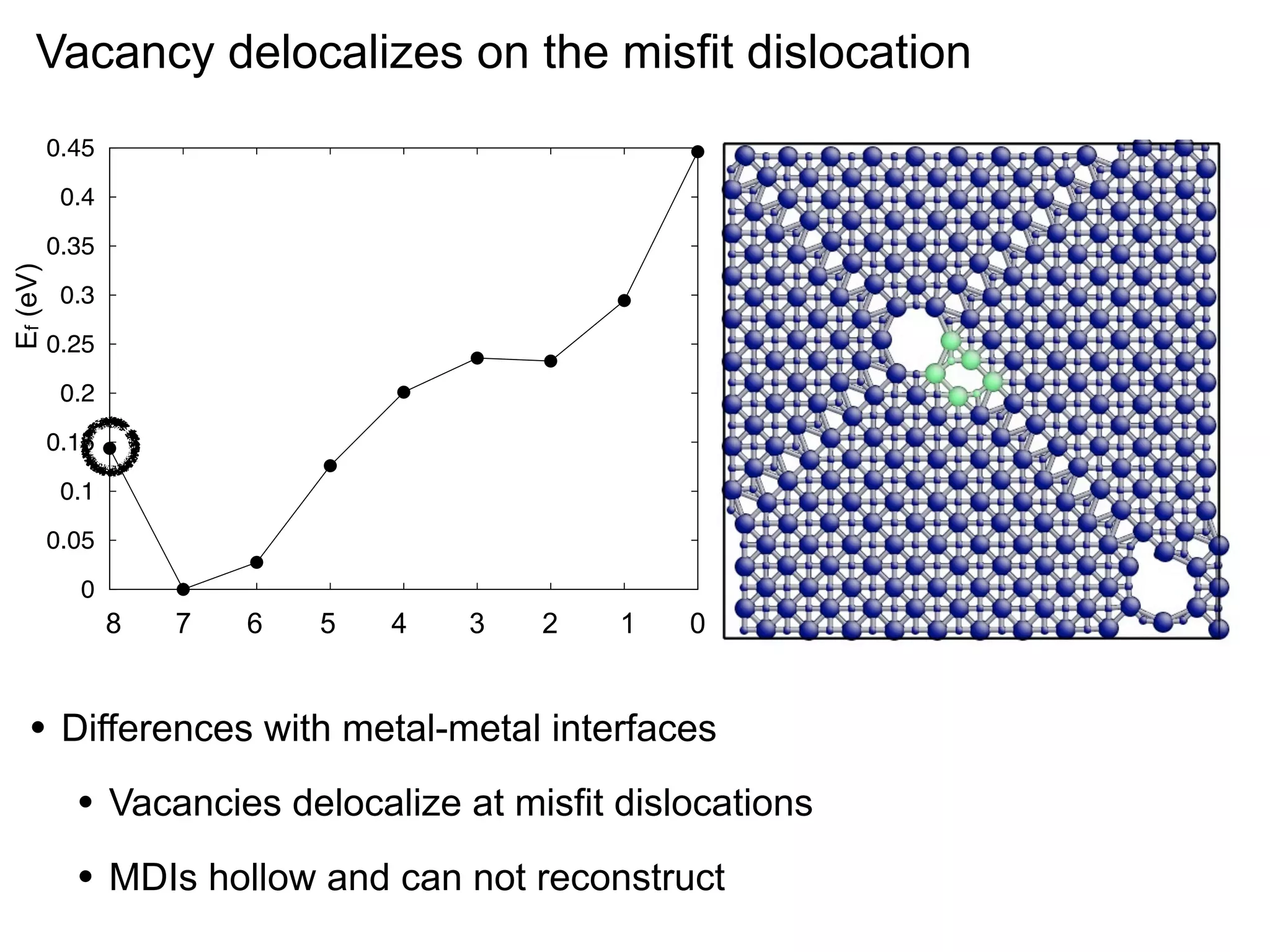
Vacancy delocalizes on the misfit dislocation

Electrostatics

•

Farther, the “halves” of the vacancy, the lower is the energy

•

But, not farthest!
Vacancy delocalizes on the misfit dislocation
0.45
0.4

Ef (eV)

0.35
0.3
0.25
0.2
0.15
0.1
0.05
0

•

0
8

1
7

2
6

3
5

4
4

5
3

6
2

7
1

8
0

Differences with metal-metal interfaces

•

Vacancies delocalize at misfit dislocations

•

MDIs hollow and can not reconstruct
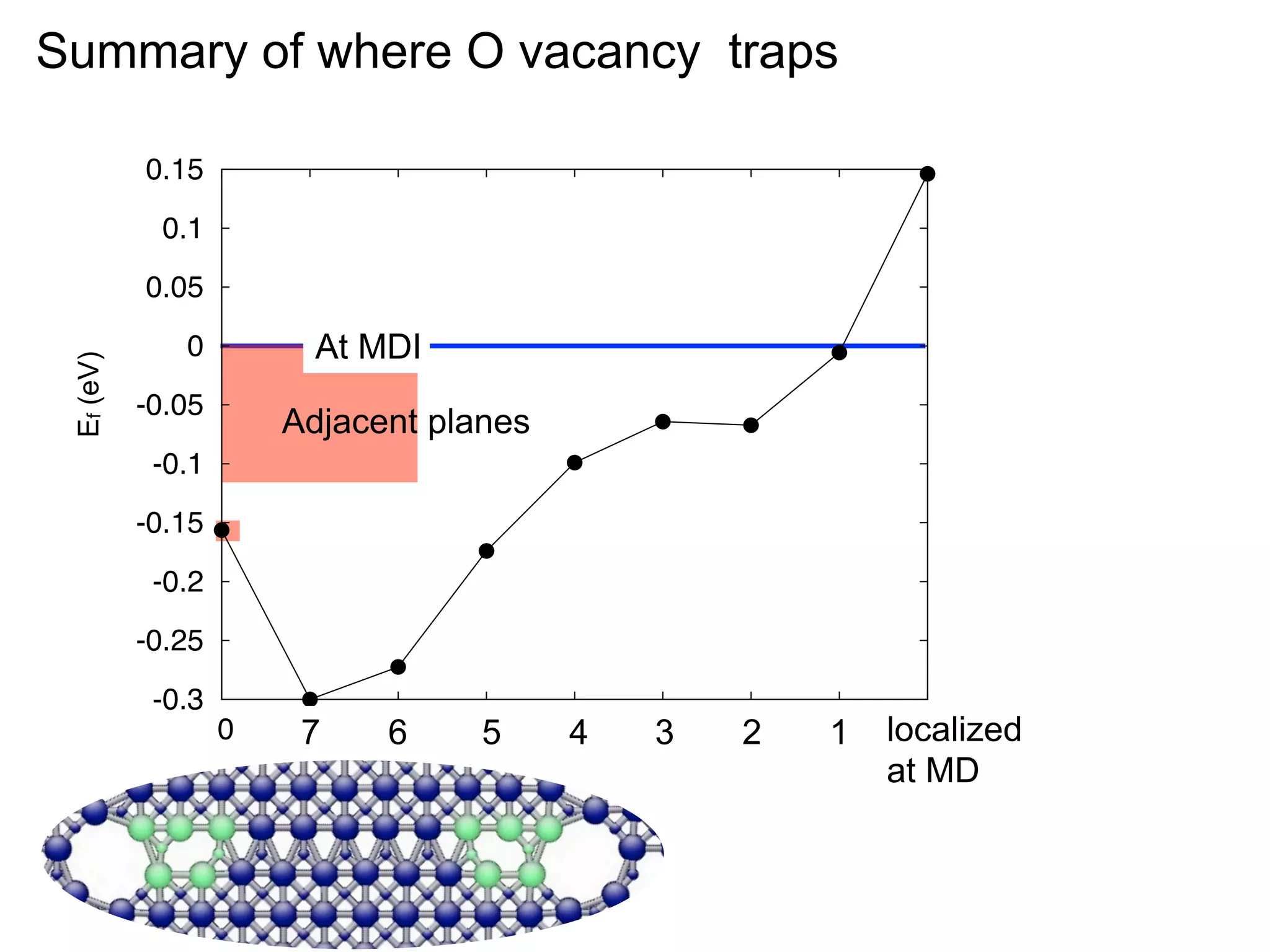
Summary of where O vacancy traps
0.15
0.1

Ef (eV)

0.05

At MDI

0
-0.05

Adjacent planes

-0.1
-0.15
-0.2
-0.25
-0.3
0

1
7

2
6

3
5

4

5
3

6
2

7
1

8
localized
at MD
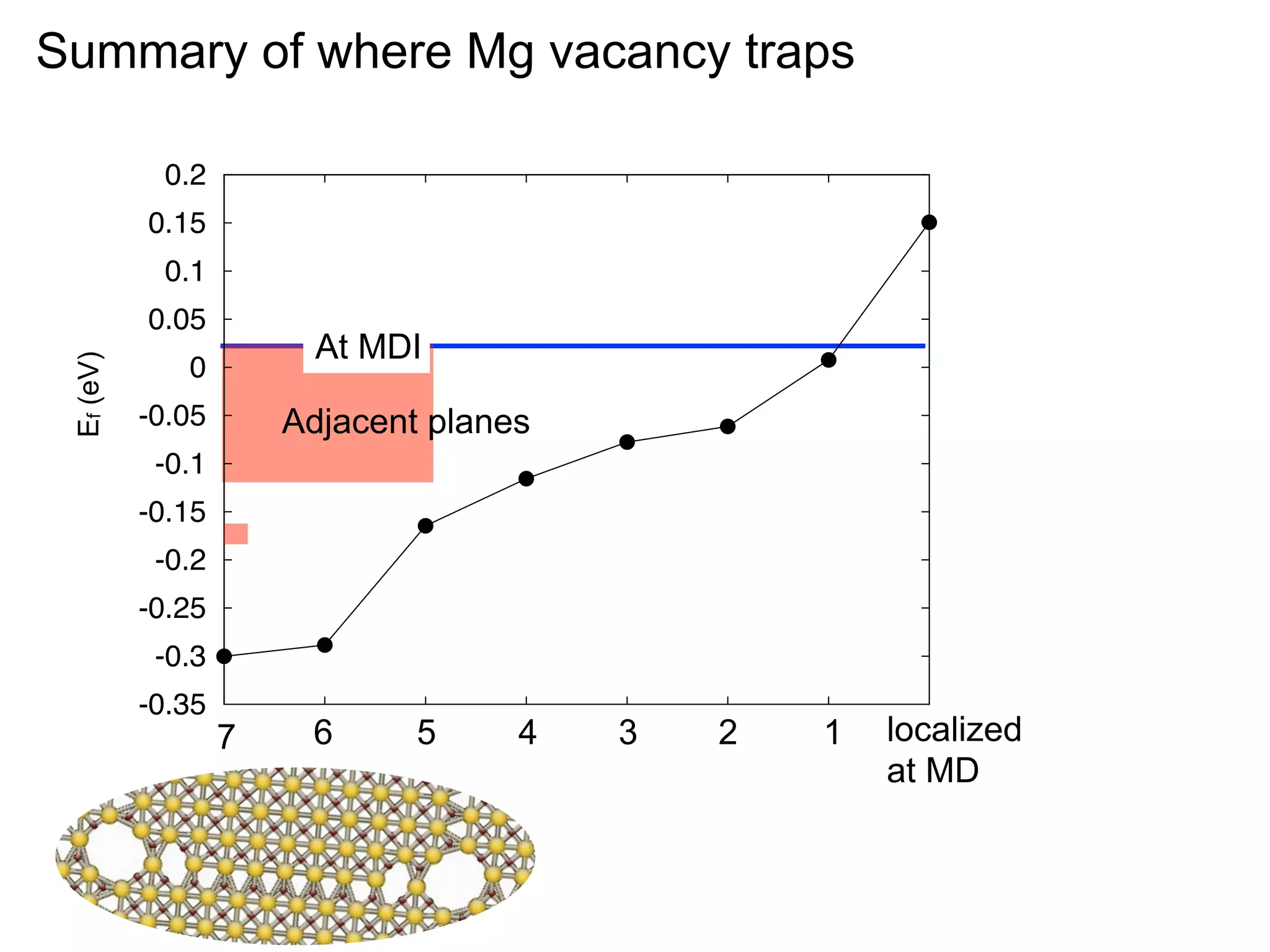
Summary of where Mg vacancy traps
0.2
0.15
0.1
Ef (eV)

0.05

At MDI

0

Adjacent planes

-0.05
-0.1
-0.15
-0.2
-0.25
-0.3
-0.35

0
7

1
6

2
5

3
4

4
3

5
2

6
1

localized
7
at MD
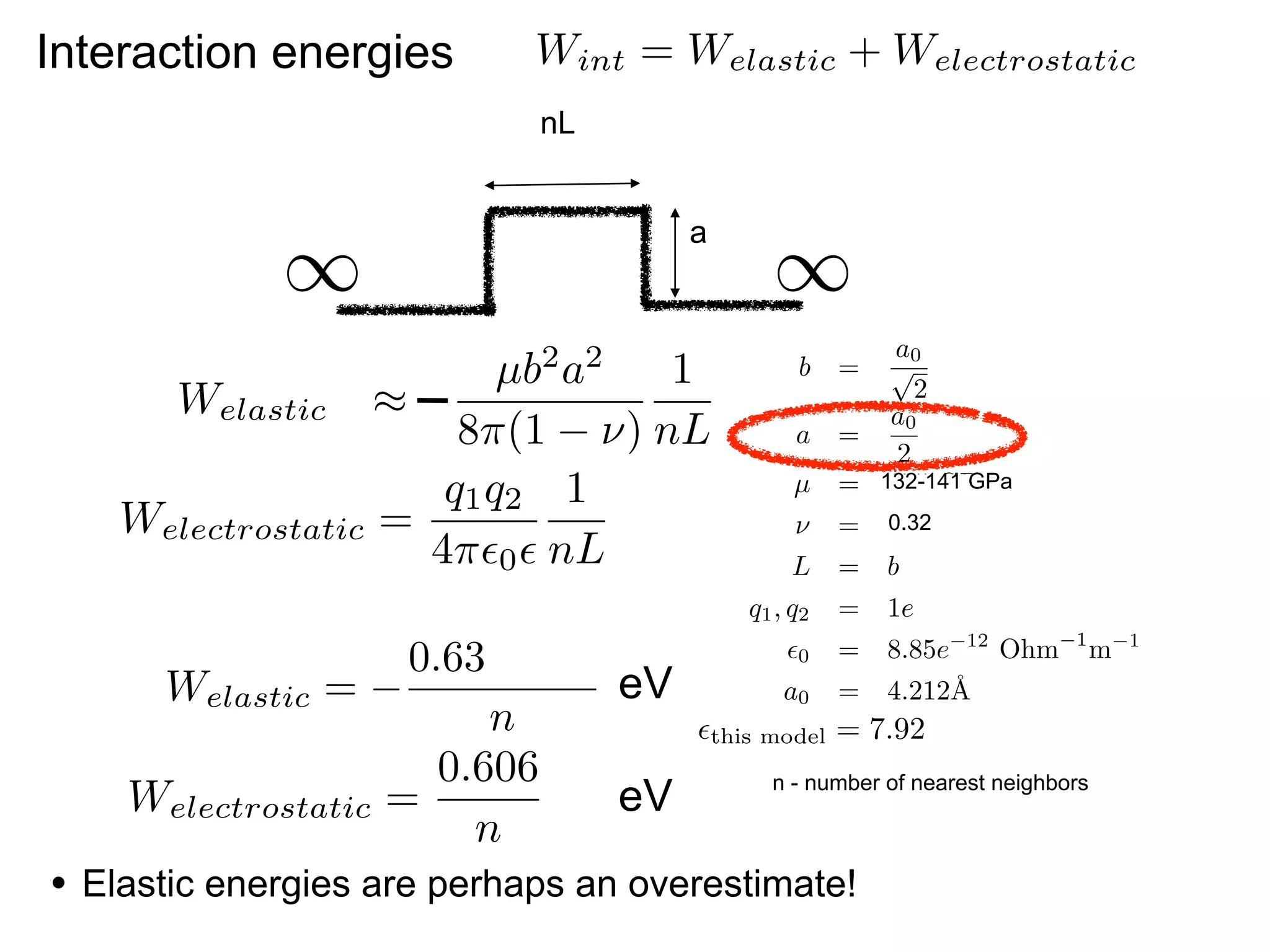
Interaction energies

Wint = Welastic + Welectrostatic
nL

1

a

2 2

µb a
1
Welastic ⇡
8⇡(1 ⌫) nL
1
qq1 q2 1
1 q2
WWelectrostatic ⇡
=
electrostatic
4⇡✏0 nL
4⇡✏0 ✏ nL

1

a
p0
2
a0
a =
2
µ = 132-141 GPa
155 GPa
b =

0.32
⌫ = 0.18
L = b

q 1 , q2

0.63(0.68)
eV
Welastic =
n
0.606
eV
Welectrostatic =
n

•

✏0
a0

= 1e
= 8.85e 12 Ohm
= 4.212˚
A

1

m

✏this model = 7.92
n - number of nearest neighbors

Elastic energies are perhaps an overestimate!

1
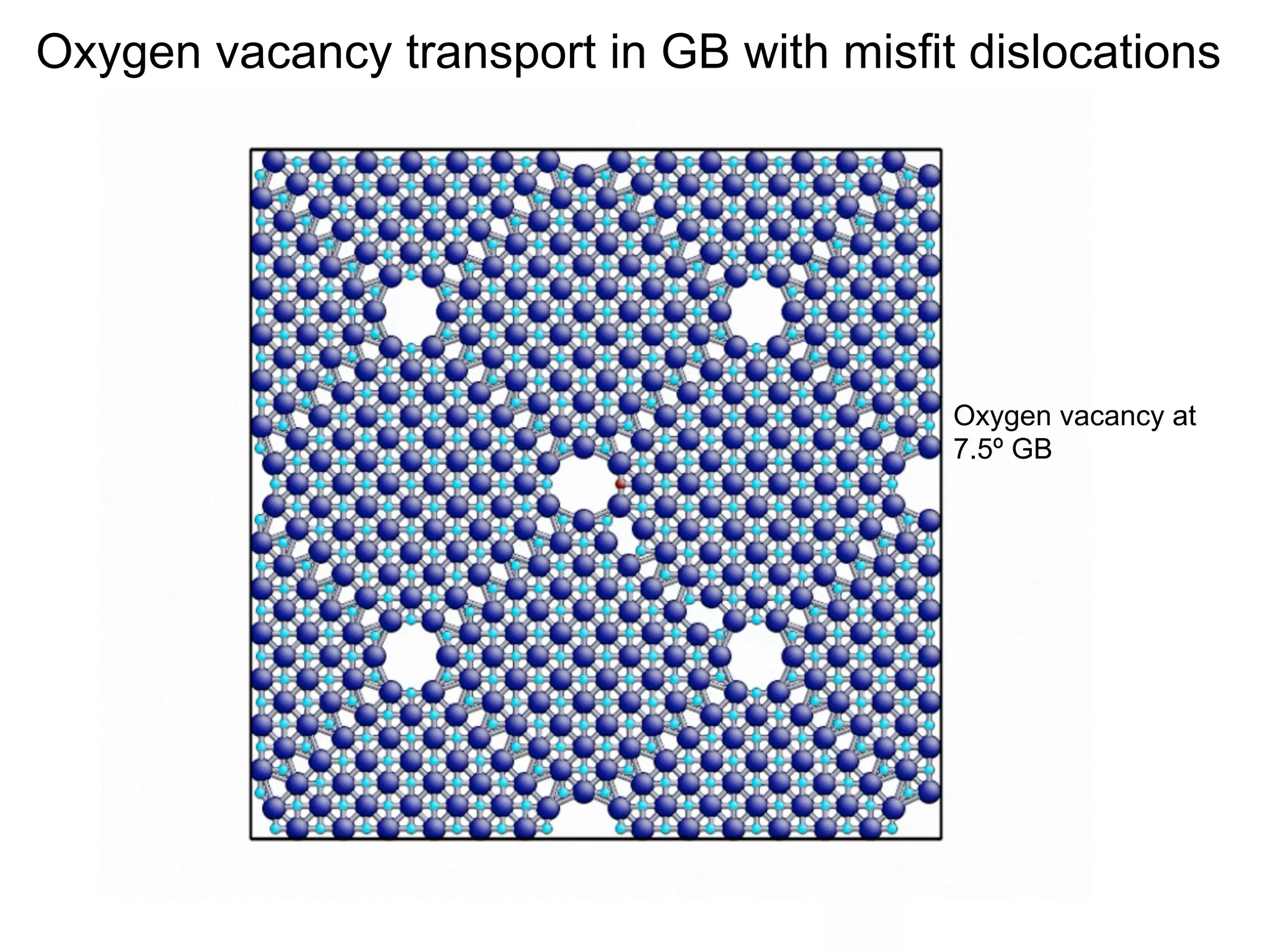
Oxygen vacancy transport in GB with misfit dislocations

Oxygen vacancy at
7.5º GB
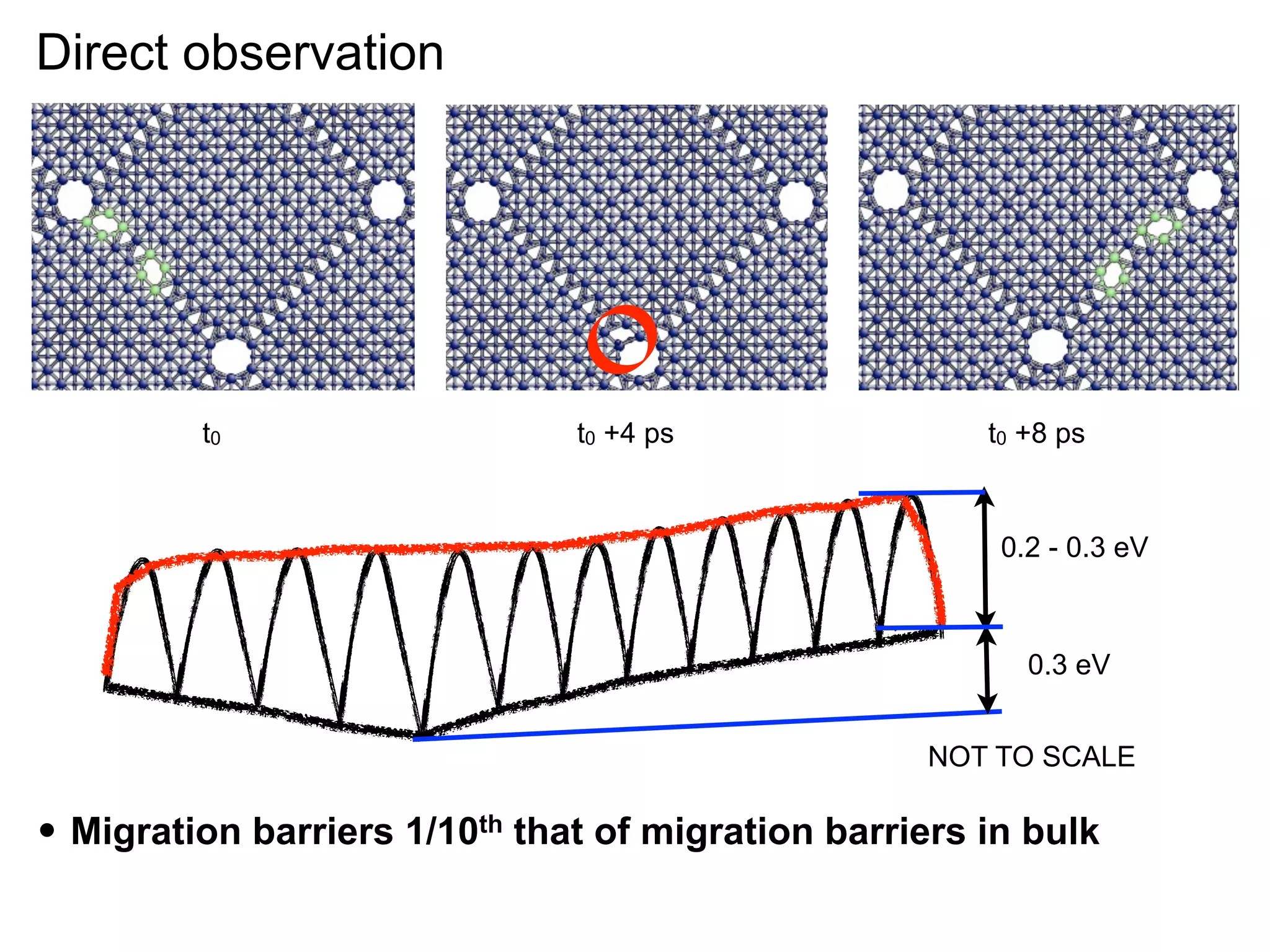
Direct observation

t0

t0 +4 ps

t0 +8 ps

0.2 - 0.3 eV

0.3 eV
NOT TO SCALE

•

Migration barriers 1/10th that of migration barriers in bulk
Summary
Metals:

•

Interface has defect trapping sites

– density of these sites depends on interface structure
•

Point defects migrate from trap to trap

– migration is multi-step and involves concerted motion of atoms
– migration can be analytically represented
Ceramics:

•

Defects trapped at and migrate from one misfit dislocation to another

•

Electrostatics in the model ceramics play greater role

•

Defects migrate faster and anisotropic
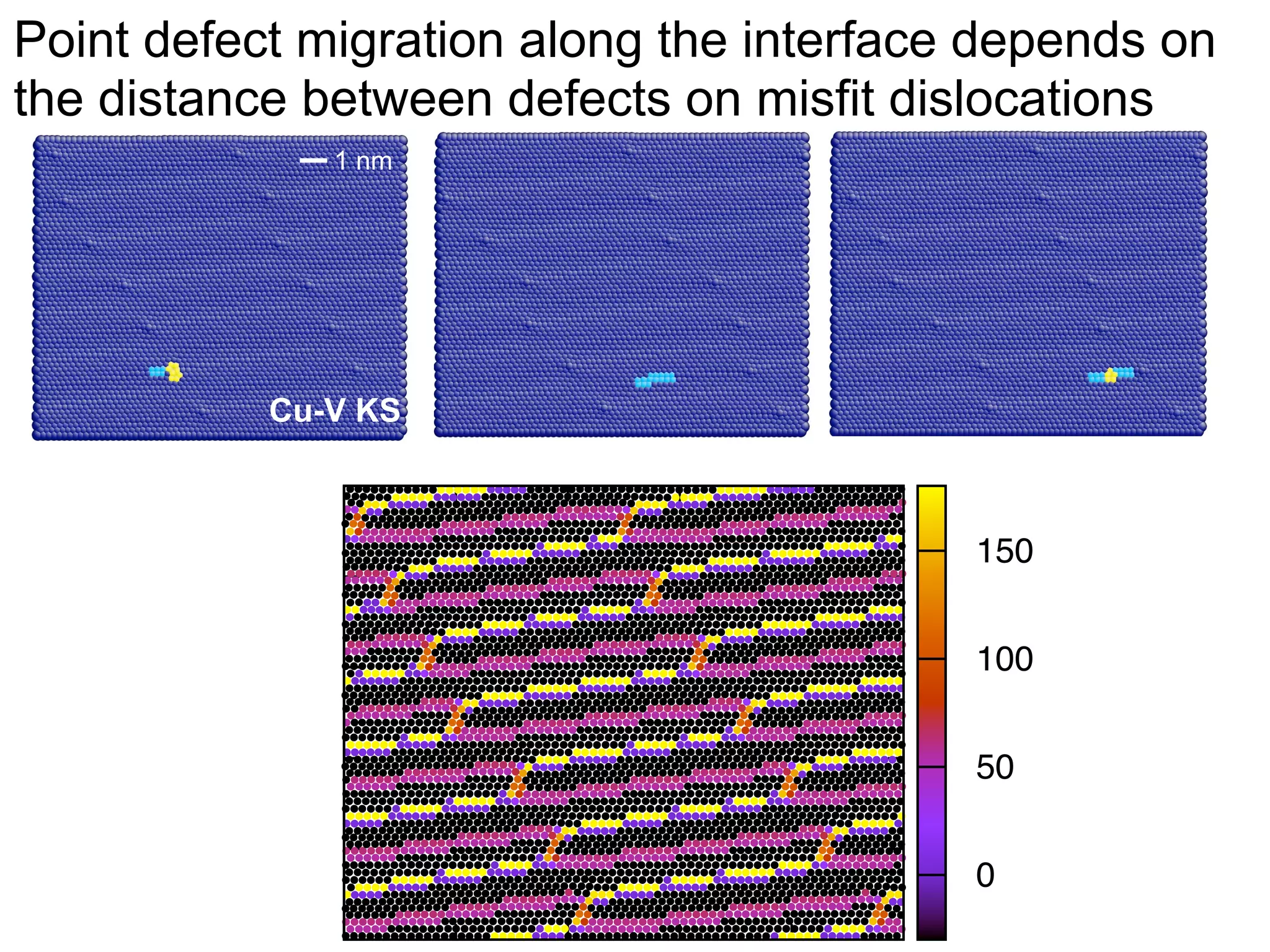
Point defect migration along the interface depends on
0
the distance between defects on misfit dislocations
1 nm

Cu-V KS

0
0.2

0
150

0.2

0.4

100

0.4

0.6

50

0.6

0.8
1

0

0.8
1
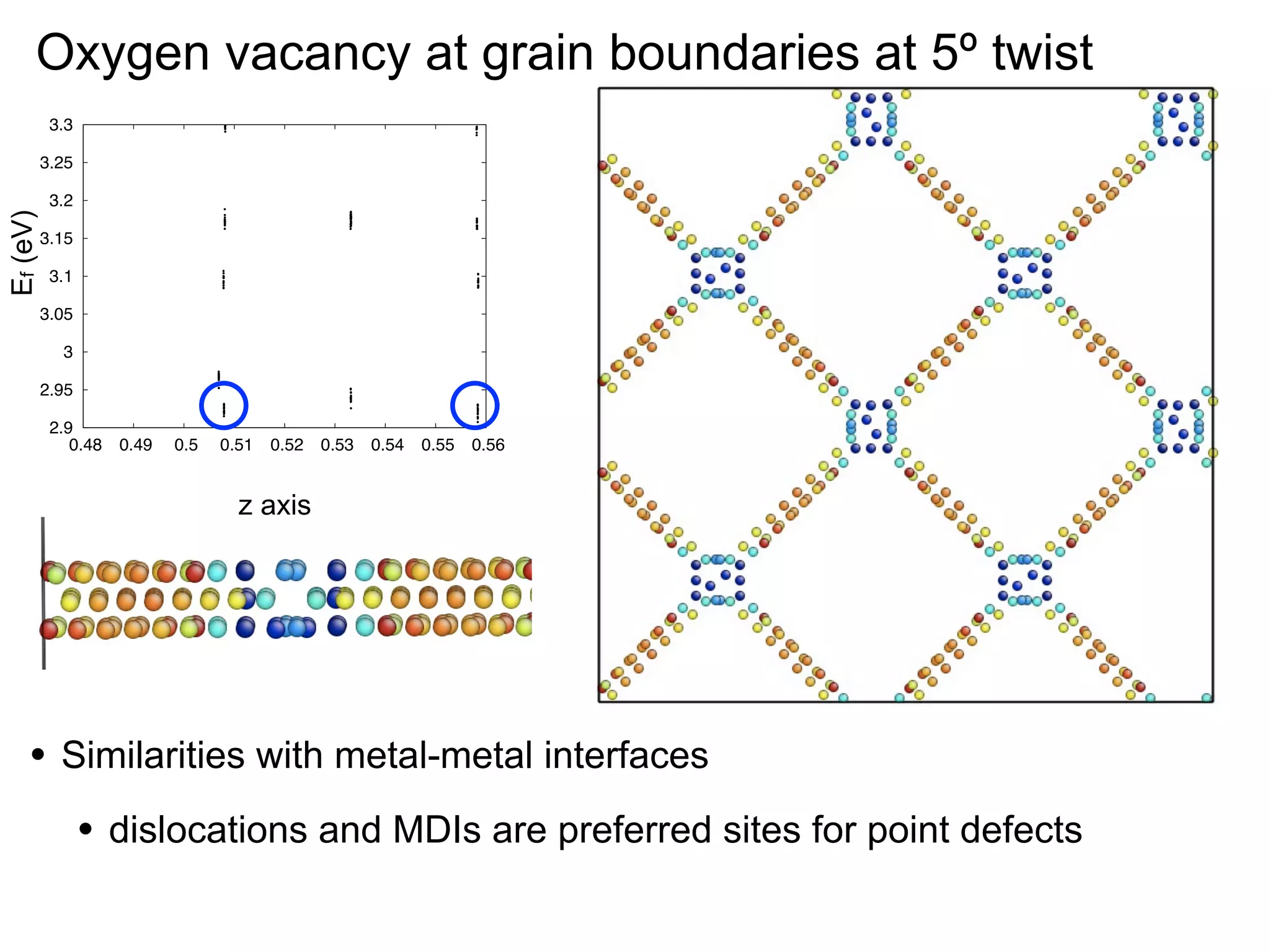
Oxygen vacancy at grain boundaries at 5º twist
3.3

Ef (eV)

3.25
3.2
3.15
3.1
3.05
3
2.95
2.9
0.48

0.49

0.5

0.51

0.52

0.53

0.54

0.55

0.56

z axis

•

Similarities with metal-metal interfaces

•

dislocations and MDIs are preferred sites for point defects
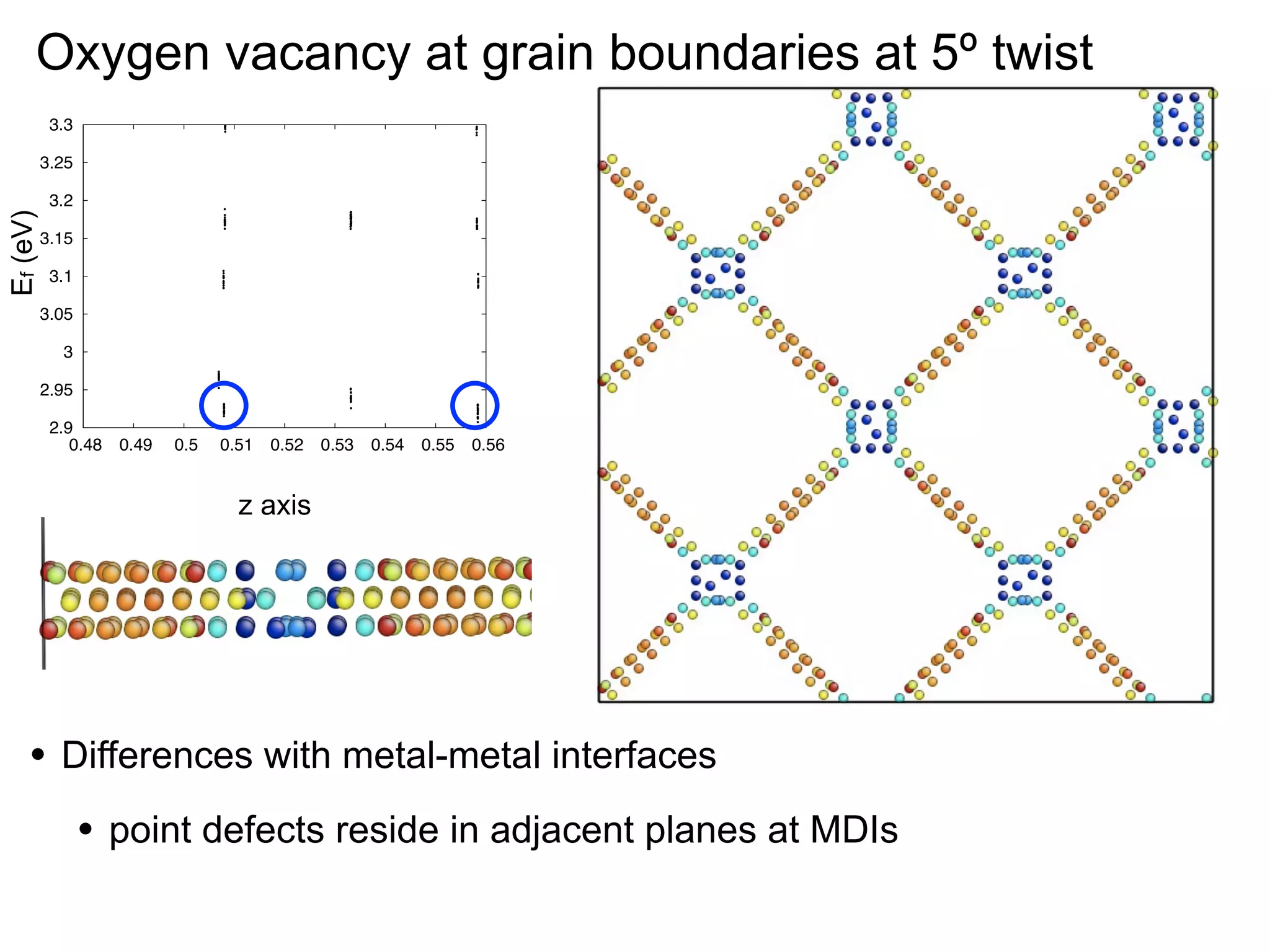
Oxygen vacancy at grain boundaries at 5º twist
3.3

Ef (eV)

3.25
3.2
3.15
3.1
3.05
3
2.95
2.9
0.48

0.49

0.5

0.51

0.52

0.53

0.54

0.55

0.56

z axis

•

Differences with metal-metal interfaces

•

point defects reside in adjacent planes at MDIs

AIChE 2012 Presentation

  • 1.
    Mass transport atinternal interfaces of inorganic materials Kedarnath Kolluri, M. J. Demkowicz and B. Uberuaga Acknowledgments: R. G. Hoagland, J. P. Hirth, A. Kashinath, A. Vattré, X.-Y. Liu, A. Misra, and A. Caro Financial Support: Center for Materials at Irradiation and Mechanical Extremes (CMIME) at LANL, an Energy Frontier Research Center (EFRC) funded by U.S. Department of Energy, Office of Science, Office of Basic Energy Sciences
  • 2.
    Internal interfaces enhanceionic conduction • • • Downloaded from www.sciencemag.org on September 17, 2011 byand with the thickness of the lattice.shows that the large degraded interface structure when the YSZ layers strains to match the STO YSZ, Because the frequency plots. In the presence of blocking effects exceed the critical electrodes, conductivity values in these heterostructures due inbulk lattice constants of STO and YSZ are orig- to grain boundaries orthickness. a further ee ues Fig. 3. Dependence of the logarithm of the in long-range ionic conductivity of the trilayers his STO/YSZ/STO versus inverse temperature. The to thickness range of the YSZ layer is 1 to 62 nm. gi- Also included are the data of a single crystal 0.6 is (sc) of YSZ and a thin film (tf) 700 nm thick 1 [taken from (7)] with the same nominal he composition. (Top inset) 400 K conductance is of [YSZ1nm/STO10nm](ni/2) superlattices as a gle function of the number of interfaces, ni. eas (Bottom inset) Dependence of the conductgle ance of [STO10nm/YSZXnm/STO10nm] trilayers at 1.1 ior 500 K on YSZ layer thickness. Error bars are ers according to a 1 nS uncertainty of the con1 ductance measurement. ler yer outFig. 1. (A) Z-contrast scanning transmission electron microscopy (STEM) image of the STO/YSZ interface of J. Garcia-Barriocanal et. al., Science, 321, 676 (2008) dcthe [YSZ1nm/STO10nm]9 superlattice (with nine repeats), obtained in the VG Microscopes HB603U sesmicroscope. A yellow arrow marks the position of the YSZ layer. (Inset) Low-magnification image obtained Why? in the VG Microscopes HB501UX column. In both cases a white arrow indicates the growth direction. (B) EEL he sesspectra showing the O K edge obtained from the STO unit cell at the interface plane (red circles) and 4.5 nm High defect concentrations into the STO layer (black squares). (Inset) Ti L2,3 edges for the same positions, same color code. All spectra vaare the result of averaging four individual spectra at these positions, with an acquisition time of 3 s each. of Faster transport due to interface structure; Strain-enhanced diffusion areFig. 2. Real part of the lateral No conductivity versus freorselectrical space charge in this example but possible in other interfaces
  • 3.
    Superionic conductors forsolid oxide fuel cells
  • 4.
    Superionic conductors forsolid oxide fuel cells
  • 5.
    ystal substrates wereultrasonically cleaned in ac- Ionic conduction is sensitive to interface structure 131906-3 Azad et al. Inverse of layer thickness FIG. 4. Conductivities of single crystal YSZ ͑Ref. 14͒, two-, four-, e M Azad et. al., Science, a cross sectional view of an eight-layer micrograph showing 321, 676 (2008) ten-, and sixteen-layer films at 650 K. ed CeO2 and ZrO2 film grown on Al2O3͑0001͒. was measured as a function of temperature using a f probe van der Pauw technique.12 Since the electronic © 2005 American Institute of Physics ductivity in these oxides is significantly less compare ht; see http://apl.aip.org/about/rights_and_permissions ionic conductivity, especially at low temperatures, ionic 13
  • 6.
    week ending Atomic-scale TE R S suitable for such investigations studies REVIEW LET 19 MARCH 2010 T. J. Pennycook al., Phys. of Lett., nm YSZ (2008) FIG. 3 (color online). et. StructureRev. the 1104, 115901layer sandwiched between layers of STO at 360 K. Sr atoms are shown as Still, large yellow balls, Ti in are difficult to model! and O in red. ceramic interfaces blue, Zr in green, Y in gray, • Covalent and ionic bonding ime of a large uncertainty in the density and the fact that • Polarization potentials less stable at high temperatures the set) charge on the ions is ill-defined. We can, however, estimate near chemical diversity and charge-transfer effects ratio of the • the effective magnitude by evaluating the
  • 7.
    The Radiation DamageTole Perhaps we could start Ultra-High Strength Nan of with metals! Composites • Good interatomic potentials exist for metallic systems • • A. Misra, M.J. Demkowicz, X. Zhang, mass Hoagland less difficult - can probe the effect of structure on and R.G. transport interfaces are to act as sinks for radiaInterfaces act as obstacles to slip tion-induced defects. Studies conducted and sinks for radiation-induced defects. on sputter-deposited Cu-Nb multilayers Hence, nanolayered composites that contain a large volume fraction of interfaces provide over an order of magnitude After He implantation increase in strength and enhanced radiation damage tolerance compared to bulk materials. This paper shows the experimental and atomistic modeling results || (110) and 〈111〉 (111) from Kurdjumov-Sachs (KS): a Cu-Nb nanolayered composite 〈110〉 || fcc bcc fcc bcc to highlight the roles of nanostructuring length (111) and || response of scales the 〈100〉 Nishiyama-Wassermann (NW): to ion collision(110)bcc and〈110〉 || interfaces fcc cascades in fcc bcc 150 keV He, 1017 cm-2, 300 K a designing composite materials with high radiation damage tolerance. Initial focus on • interfaces of immiscible fcc-bcc semicoherent metal systems Cu-Nb, Cu-V, Cu-Mo, Cu-Fe, and Ag-V INTRODUCTION The performance of materials in Motivated by experiments extreme environments of irradiation and temperature must be significantly improved to extend the reliability, lifetime, and efficiency of future nuclear reactors. 1 In reactor environments, b damage introduced in the form of radia- A. Misra et al., JOM, Sept, 62 (2007)
  • 8.
    Outline • Structure and propertiesof semicoherent interfaces • Point defects at semicoherent interfaces • Migration of point defects and relation to the interface structure • Implications to ceramic interfaces • case of MgO grain boundaries
  • 9.
    Coherent, semi-coherent, andincoherent boundaries simplified view • Lower and upper grains are in “perfect” alignment always
  • 10.
    Coherent, semi-coherent, andincoherent boundaries 1 4 8 13 simplified view 1 • 4 8 12 Lines of atoms are aligned perfectly only periodically
  • 11.
    Coherent, semi-coherent, andincoherent boundaries simplified view • Atomic interactions generally reduce the “bad” patch • Coherent region experiences strain emanated by the “bad” patch • Interface with well separated “bad” patches may be described within the same theory as that of dislocations: misfit dislocations
  • 12.
    General features ofsemicoherent fcc-bcc interfaces 〈112〉 〈112〉 Cu Nb Cu-V 〈110〉 〈111〉 Cu Nb An example of a semicoherent interface
  • 13.
    View of theInterface
  • 14.
    View of theInterface
  • 15.
    View of theInterface
  • 16.
    View of theInterface
  • 17.
    View of theInterface
  • 18.
    View of theInterface
  • 19.
    General features ofsemicoherent fcc-bcc interfaces 〈112〉 〈112〉 Cu Nb Cu-V 〈110〉 〈111〉 Cu Nb An example of a fcc-bcc semicoherent interface Patterns corresponding to periodic “good” and “bad” regions
  • 20.
    General features ofsemicoherent fcc-bcc interfaces 〈112〉 〈112〉 Cu Nb Cu-V 〈110〉 〈111〉 Cu Nb Interface contains arrays of misfit dislocations separating coherent regions
  • 21.
    〈112〉 〈112〉 Cu Nb General featuresof semicoherent fcc-bcc interfaces Cu-Nb 〈110〉 〈111〉 Cu Nb Cu-V Interface contains arrays of misfit dislocations separating coherent regions
  • 22.
    MDI 1 nm 〈112〉 Cu General featuresof semicoherent fcc-bcc interfaces Cu-Nb KS 〈110〉 Cu Cu-V KS • Two sets of misfit dislocations with Burgers vectors • Misfit dislocation intersections (MDI) where different sets of dislocations meet
  • 23.
    Outline • Structure and propertiesof semicoherent interfaces • Point defects at semicoherent interfaces • Migration of point defects and relation to the interface structure • Implications to ceramic interfaces • case of MgO grain boundaries
  • 24.
    0 0 00 Defects onmisfit dislocations are good traps to point defects 150 150 0.2 0.2 0.4 0.4 100 100 0.6 0.6 50 50 0.8 0.8 0 0 1 10 0 0.2 0.2 0.4 0.4 0.6 0.6 Cu-Nb KS Cu-Nb KS 0.8 0.8 1 1 0.28 0.28 0.26 150 0.45 1500.26 0.24 150 0.2 0.2 0.2 150 0.2 0.45 0.24 0.2 0.2 0.2 0.2 0.22 0.4 0.22 0.4 0.2 100 1000.2 0.4 0.4 0.4 0.35 0.4 100 100 0.4 0.4 0.18 0.4 0.35 0.4 0.18 0.16 0.3 0.6 0.6 0.6 0.6 0.3 50 50 0.16 0.14 0.6 0.6 0.6 0.6 50 50 0.14 0.25 0.12 0.8 0.8 0.8 0.8 0.25 0.1 0.12 0 0.8 0 0.1 0.8 0.8 0.8 0.2 0.08 0 0 0.2 1 0.060.08 1 0.15 1 1 0 0.2 0.2 0.4 0.4 0.6 0.6 0.8 0.8 1 0 0.2 0.8 1 1 0.06 1 0.15 0.2 0 1 0 0.4 0.4 0.6 0.8 0.6 11 1 0 0.2 0.2 0.4 0.4 0.6 0.6 0.8 0.8 1 0 0.2 0.4 0.6 0.8 0.8 0 1 0 0.2 0.4 0.6 11 0 0 0 0 0.5 0 0 0.5 0 0 Angle with -ve x axis Angle with -ve x axis 0 0 0 Cu-Fe NW Cu-Fe NW 0.2 0.4 0.6 0.8 Cu-V KS Cu-V KS 0 0 0 0.2 1.2 0.4 0.6 1 0.6 0.8 1.2 0.6 0.8 0 0.2 0.4 0 0.2 1 nm 0.4 1 nm 0.6 0.6 0.8 0.8 0.6 1 1 1.4 0.2 1.2 1.2 0.4 1.2 0.4 1 1 1 1 0.6 0.6 0.8 0.6 0.8 0.6 0.8 0.8 0.8 0.8 0.8 1 0.2 0.4 1 1.4 1.4 0.2 1.2 0.4 0.4 0 1.4 1.4 0.2 0.2 1 0 0 1.4 0.8 1 0.6 0 1 1 0 1 0.8 0.6 0.6 0.8 0.2 0 0.4 10.2 0.4 nm 1 nm 0.6 0.6 0.8 0.8 1 1 Formation energy (eV) Formation energy (eV) Different fcc-bcc semicoherent interfaces with misfit dislocations 0.2 0 0.4 0.2 1.4 nm 0.4 1.4 nm 0.6 0.8 0.6 0.6 1 0.8 1 Vacancy formation energies (similar trend for interstitials as well) 1 0 0.2 0.4 0.6 0.8 01 0 0
  • 25.
    Structure of isolatedpoint defects in Cu-Nb Vacancy • Interstitial Defect at these interfaces “delocalize” • knowledge of transport in bulk can not be ported
  • 26.
    Outline • Structure and propertiesof semicoherent interfaces • Point defects at semicoherent interfaces • Migration of point defects and relation to the interface structure • Implications to ceramic interfaces • case of MgO grain boundaries
  • 27.
    Point defects migratefrom one MDI to another in CuNb Vacancy Interstitial • Migration is along set of dislocation that is predominantly screw • In the intermediate step, the point defect is delocalized on two MDI
  • 28.
    0.45 0.4 Vacancy I KJ1t t Se KJ3 !1 b1 • t KJ3´ a2 0.15 0.1 a1 L !1 0.05 b1 b t1 L t1 L 0.2 t t I I 0 a • KJ4 〈110〉 Cu KJ4 0.25 Set2 〈110〉 Cu Se t1 Step 1 t Se " E (eV) a2 a1 KJ1 KJ2´ 0.35 0.3 b KJ2 〈112〉 Cu a 〈112〉 Cu Isolated point defects in CuNb migrate from one MDI to another Set 2 3L Set 2 !1 b1 b Interstitial Vacancy "Ea-b = 0.06 - 0.12 eV "Ea-I = 0.25 - 0.35 eV "Ea-t = 0.35 - 0.45 eV 0 0.1 0.2 0.3 0.4 0.5 0.6 0.7 0.8 Thermal kink pairs nucleating at adjacent MDI mediate the migration 0. Migration barriers 1/3rd ! (reaction coordinate) that of migration barriers in bulk
  • 29.
    Isolated point defectsin CuNb migrate from one MDI to another
  • 30.
    Isolated point defectsin CuNb migrate from one MDI to another
  • 31.
    0.45 0.4 Vacancy I KJ1t t Se KJ3 !1 b1 • t KJ3´ a2 0.15 0.1 a1 L !1 0.05 b1 b t1 L t1 L 0.2 t t I I 0 a • KJ4 〈110〉 Cu KJ4 0.25 Set2 〈110〉 Cu Se t1 Step 1 t Se " E (eV) a2 a1 KJ1 KJ2´ 0.35 0.3 b KJ2 〈112〉 Cu a 〈112〉 Cu Isolated point defects in CuNb migrate from one MDI to another Set 2 3L Set 2 !1 b1 b Interstitial Vacancy "Ea-b = 0.06 - 0.12 eV "Ea-I = 0.25 - 0.35 eV "Ea-t = 0.35 - 0.45 eV 0 0.1 0.2 0.3 0.4 0.5 0.6 0.7 0.8 Thermal kink pairs nucleating at adjacent MDI mediate the migration 0. Migration barriers 1/3rd ! (reaction coordinate) that of migration barriers in bulk
  • 32.
    Thermal kink pairsaid the migration process b 0.4 Vacancy I KJ1 KJ2´ KJ4 I 3L 0.15 t1 a2 Se L t1 0.2 t t KJ3´ 0.25 a1 L !1 b1 t 〈110〉 Cu I 2 Set 0.1 • t t b Se " E (eV) Se t1 Step 2 • c 0.35 0.3 !1 t 〈112〉 Cu 0.45 0.05 b1 0 a Set 2 Set 2 !1 b1 b Interstitial Vacancy "Ea-b = 0.06 - 0.12 eV "Ea-I = 0.25 - 0.35 eV "Ea-t = 0.35 - 0.45 eV 0 0.1 0.2 0.3 0.4 0.5 0.6 0.7 0.8 Thermal kink pairs nucleating at adjacent MDI mediate the migration 0. Migration barriers 1/3rd ! (reaction coordinate) that of migration barriers in bulk
  • 33.
    Thermal kink pairsaid the migration process (a) (b) (c) (d) (e) (f) Vacancy Interstitial ΔEact = 0.35 - 0.45 eV ΔEact = 0.60 - 0.67 eV 1nm The width of the nucleating thermal kink pairs determines the barrier
  • 34.
    0.45 t Multiple migration pathsand detours 0.4 t t t 0.35 t " E (eV) 0.3 I I 0.25 t 0.2 b Migration paths (CI-NEB) Interstitial 0.15 Vacancy 0.1 0.05 0 a 0 b "Ea-b = 0.06 - 0.12 eV "Ea-I = 0.25 - 0.35 eV "Ea-t = 0.35 - 0.45 eV 0.1 0.2 0.3 0.4 0.5 0.6 0.7 0.8 0. ! (reaction coordinate) • Not all intermediate states need to be visited in every migration • The underlying physical phenomenon, however, remains unchanged
  • 35.
    Entire migration pathcan be predicted 0.5 0.5 0.45 0.45 0.4 0.4 0.35 0.35 0.3 0.3 0.25 0.25 I 0.2 0.15 0.2 I 0.15 0.1 0.1 0.05 0.05 0 a 0 Dislocation model 0.1 0.2 0.3 0.4 0.5 0.6 0.7 0.8 0.9 KJ1 1 KJ1 0 KJ2 0.1 0.2 0.3 0.4 0.5 0.6 0.7 0.8 0.9 s Key inputs to the dislocation model b Atomistics 0 〈112〉 Cu Δ E (eV) 0.55 KJ2´ 〈110〉 Cu KJ3 KJ4 • Interface misfit dislocation distribution • KJ4 1 s KJ3´ K. Kolluri and M. J. Demkowicz, Phys Rev B, 82, 193404 (2010) Structure of the accommodated point defects Analysis of the interface structure may help predict quantitatively point-defect behavior at other semicoherent interfaces
  • 36.
    jog, which isassumed constant for all states in our dislocation model [and therefore does not appear in Eq. (1)], actually varies along the direct migration path. To estimate the core energy of the kink-jog, we summed differences in atomic energies between the core atoms and corresponding atoms in a defectfree interface. The kink-jog core is taken to consist of 19 atoms: the 5-atom ring in the Cu terminal plane and the 7 neighboring Cu and Nb atoms from each of the two planes adjacent to the Cu terminal plane. Core volumes were computed in an analogous way. The core energies of the migrating jog are plotted as filled triangles in Fig. 15(a) and are in good semiquantitative agreement with the overall energy changes occurring along the direct migration path. Core volumes are plotted as filled circles. Figure 15(b) shows the Cu and Nb interface planes with a point defect in the extended state B. Arrows mark the locations of the two kink-jogs and red lines mark the nominal locations of set 2 misfit dislocation cores. The numbers are TABLE I. Transitions occurring during migration of individual point defects that were considered in kMC simulations, their corresponding activation energy barriers, and number of distinct end states for a given start state. Point defect migration rates from simulations Transition type A→I A→B I (near A) → B I (near A) → A B→A B→I B→I B→C I (near C) → C I (near C) → B I →B Activation energy (eV) Number of distinct end states 0.40 0.40 0.15 0.15 0.35 0.35 0.20 0.35 0.15 0.15 0.15 2 2 1 1 1 2 1 1 1 1 1 205416-9 • Hypothesis: • • • transition state theory is valid and Rate-limiting step will determine the migration rate ≥ 0.4 eV Validation: • kinetic Monte Carlo (since the migration path is not trivial) • Statistics from molecular dynamics
  • 37.
    Migration is temperaturedependent Jump rate (ns-1) 0.1 1 = 0.01 0e 0.4eV kB T 0.001 0.0001 1e-05 1300 1000 800 700 600 500 Inverse of Temperature (K-1) K. Kolluri and M. J. Demkowicz, Phys Rev B, 85, 205416 (2012) • Migration rates are reduced because there are multiple paths • Transition state theory may be revised to explain reduced migration rates
  • 38.
    Migration is temperaturedependent Jump rate (ns-1) 0.1 1 = 0.01 0e 0.4eV kB T 0.001 0.0001 1e-05 1300 1000 800 700 600 500 Inverse of Temperature (K-1) K. Kolluri and M. J. Demkowicz, Phys Rev B, 85, 205416 (2012) • Migration rates are reduced because there are multiple paths • Transition state theory may be revised to explain reduced migration rates
  • 39.
    ln[(s!)p(t/τ,s)] = sln(t/τ ) − t/τ. (10) Migration is temperature dependent s are obtained for all three temperatures, confirming 0.1 tion that point defect1migration follows a Poisson ⇥ = 0 k 1T e ig. 17). The jump rates for each temperature, 0.01 1 = 0e y fitting, are plotted in Fig. 16(b) as filled gray h uncertainties corresponding to the error in the 0.001 es fit. The gray line is the least-squares fit of Eq. (8) obtained from MD. The activation energy obtained 0.0001 act MC model (Eeff = 0.398 ± 0.002 eV) is well within nty of 1e-05 activation energy found by fitting the MD the 500 act y, Eeff =1300 1000 0.045700 600 0.374 ± 800 eV. Inverse of Temperature (K ) ctive attempt frequency for defect-1migration obfittingKolluri and M. J. Demkowicz, = 6.658 × 10⁹ ± 2.7 × K. the MD data is ν0 Phys Rev several orders of is value is B, 85, 205416 (2012) magnitude lower than mpt frequencies for point defect migration in fcc • Migration −1 .72–74 A mechanistic interpretation paths 12 14 rates are reduced because there are multiple , 10 −10 s ow migration attempt frequency is not immediately • Transition state theory may be revised to explain reduced migration rates g. One possible explanation is that it arises from number of atoms participating in the migration Jump rate (ns-1) Eact e kB T B 0.4eV kB T
  • 40.
    act model(Eef f =0.398 ± 0.002 eV) is w Migration is temperature dependent a by fitting the MD data, namely Ee Jump rate (ns-1) 1 MD kMC 0.1 act model(Eef f = 0.398 ± 0.002 eV) is well wi act by fitting the MD data, namely Eef f = 0 0 ⌫0 = 6.658 ⇥ 109 ± 2.7 ⇥ 106 s 0.01 1 0 act tained by0.374 ± 0.045 MD 0data is ⌫0 fitting the eV ⌫ 0 = 6.658 ⇥ Eef f = 0.001 1300 for defect migration obtained typical t of magnitude lower than by fittingat 1000 800 700 600 500 69–71 value is 1012 1014 namelyseveral orderssof1 magnitude mec . A lowe Inverse of Temperature (K-1) migration in fcc Cu, namely 1012 1014 frequency is not immediately forth K. Kolluri and M. J. Demkowicz, Phys Rev B, 85, 205416 (2012) low migration attempt frequency is not im • • the large number of atoms particip Modified rate expression is fit to MD statistics to obtain attempt frequency is that it arises from the large number of Attempt frequency is much lower than for migration of for migration of compa is normally observedcompact point defe attempt frequency for point defects frequency because it involves the m der of the Einstein frequency because it i
  • 41.
    Takeaways from fcc-bccsemicoherent interfaces • Interface has defect trapping sites – density of these sites depends on interface structure • Point defects migrate from trap to trap – migration is multi-step and involves concerted motion of atoms – migration can be analytically represented How much of this knowledge can be ported to ceramics? • Electrostatics • covalency • multiple species
  • 42.
    Takeaways from fcc-bccsemicoherent interfaces • Interface has defect trapping sites – density of these sites depends on interface structure • Point defects migrate from trap to trap – migration is multi-step and involves concerted motion of atoms – migration can be analytically represented How much of this knowledge can be ported to ceramics? • Electrostatics : MgO - highly ionic and simple to model • covalency • multiple species
  • 43.
    Model systems, methodsetc. • MgO grain boundaries using the simplest of ionic potentials available 1 nm • Fixed charge on each atom (this potential has full charge) • Molecular statics and dynamics (at 2000K) <100> <100> +ø/2 Eij = Ae rij ⇢ C 6 rij + Cqi qj 1 ✏rij
  • 44.
    Model systems • Grain boundaries(3.5º to 10º) 1 nm 3.476º, 4.969º, 7.5º, 10.393º d = 34Å
  • 45.
    Model systems • Grain boundaries(3.5º to 10º) 1 nm 3.476º, 4.969º, 7.5º, 10.393º d = 15Å
  • 46.
    Ground-state structure of(some) grain boundaries 0.5 0 -0.5 -1 -1.5 -2 0 0.5 1 Electrostatics: 2 MgO units less at an MDI (O-lattice points) 1.5 2
  • 47.
    Typical interface (onewith misfit dislocations) 7.5º twist boundary
  • 48.
    Vacancy delocalizes onthe misfit dislocation Electrostatics • Farther, the “halves” of the vacancy, the lower is the energy • But, not farthest!
  • 49.
    Vacancy delocalizes onthe misfit dislocation 0.45 0.4 Ef (eV) 0.35 0.3 0.25 0.2 0.15 0.1 0.05 0 • 0 8 1 7 2 6 3 5 4 4 5 3 6 2 7 1 8 0 Differences with metal-metal interfaces • Vacancies delocalize at misfit dislocations • MDIs hollow and can not reconstruct
  • 50.
    Summary of whereO vacancy traps 0.15 0.1 Ef (eV) 0.05 At MDI 0 -0.05 Adjacent planes -0.1 -0.15 -0.2 -0.25 -0.3 0 1 7 2 6 3 5 4 5 3 6 2 7 1 8 localized at MD
  • 51.
    Summary of whereMg vacancy traps 0.2 0.15 0.1 Ef (eV) 0.05 At MDI 0 Adjacent planes -0.05 -0.1 -0.15 -0.2 -0.25 -0.3 -0.35 0 7 1 6 2 5 3 4 4 3 5 2 6 1 localized 7 at MD
  • 52.
    Interaction energies Wint =Welastic + Welectrostatic nL 1 a 2 2 µb a 1 Welastic ⇡ 8⇡(1 ⌫) nL 1 qq1 q2 1 1 q2 WWelectrostatic ⇡ = electrostatic 4⇡✏0 nL 4⇡✏0 ✏ nL 1 a p0 2 a0 a = 2 µ = 132-141 GPa 155 GPa b = 0.32 ⌫ = 0.18 L = b q 1 , q2 0.63(0.68) eV Welastic = n 0.606 eV Welectrostatic = n • ✏0 a0 = 1e = 8.85e 12 Ohm = 4.212˚ A 1 m ✏this model = 7.92 n - number of nearest neighbors Elastic energies are perhaps an overestimate! 1
  • 53.
    Oxygen vacancy transportin GB with misfit dislocations Oxygen vacancy at 7.5º GB
  • 54.
    Direct observation t0 t0 +4ps t0 +8 ps 0.2 - 0.3 eV 0.3 eV NOT TO SCALE • Migration barriers 1/10th that of migration barriers in bulk
  • 55.
    Summary Metals: • Interface has defecttrapping sites – density of these sites depends on interface structure • Point defects migrate from trap to trap – migration is multi-step and involves concerted motion of atoms – migration can be analytically represented Ceramics: • Defects trapped at and migrate from one misfit dislocation to another • Electrostatics in the model ceramics play greater role • Defects migrate faster and anisotropic
  • 56.
    Point defect migrationalong the interface depends on 0 the distance between defects on misfit dislocations 1 nm Cu-V KS 0 0.2 0 150 0.2 0.4 100 0.4 0.6 50 0.6 0.8 1 0 0.8 1
  • 57.
    Oxygen vacancy atgrain boundaries at 5º twist 3.3 Ef (eV) 3.25 3.2 3.15 3.1 3.05 3 2.95 2.9 0.48 0.49 0.5 0.51 0.52 0.53 0.54 0.55 0.56 z axis • Similarities with metal-metal interfaces • dislocations and MDIs are preferred sites for point defects
  • 58.
    Oxygen vacancy atgrain boundaries at 5º twist 3.3 Ef (eV) 3.25 3.2 3.15 3.1 3.05 3 2.95 2.9 0.48 0.49 0.5 0.51 0.52 0.53 0.54 0.55 0.56 z axis • Differences with metal-metal interfaces • point defects reside in adjacent planes at MDIs