TEACHABLE MACHINE
(Based on Computer Vision)
https://teachablemachine.withgoogle.com/
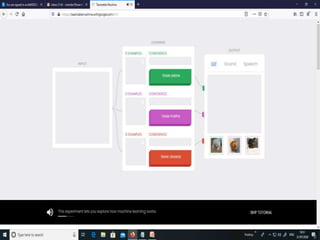
• This is the main experiment screen. It is divided into three
parts. On the left side is the Input box that shows the feed from
your camera. In the middle, is the Learning box that is divided
into three sections: Green, Purple, and Red. On the right side is
the Output box.
• The experiment can be trained to respond by showing a GIF,
playing a sound or speech.
• For training the system, first do some action before the camera
while pressing any of the colour button for a few second.
Repeat the action while pressing the same colour button.
Continue until the system achieves the required confidence.
• Repeat the action with the other two colour buttons.
• Once trained, the system will recognise your action and
provide the output.
AI Duet(based on data)
https://experiments.withgoogle.com/ai/ai-duet/view/
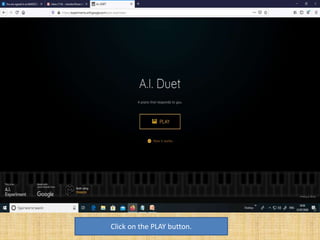
Click on the PLAY button.
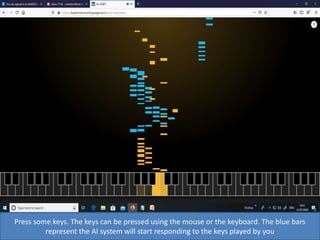
Press some keys. The keys can be pressed using the mouse or the keyboard. The blue bars
represent the AI system will start responding to the keys played by you
Nsynth Sound
Maker(based on data)
https://experiments.withgoogle.com/ai/sound-maker/view/
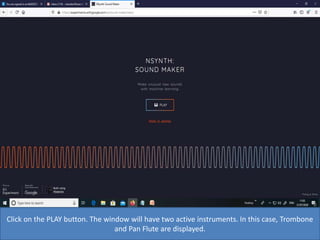
Click on the PLAY button. The window will have two active instruments. In this case, Trombone
and Pan Flute are displayed.
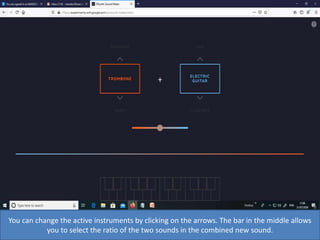
You can change the active instruments by clicking on the arrows. The bar in the middle allows
you to select the ratio of the two sounds in the combined new sound.
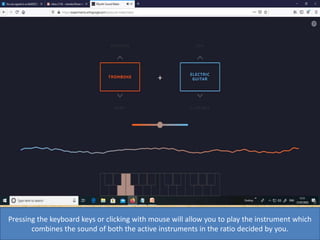
Pressing the keyboard keys or clicking with mouse will allow you to play the instrument which
combines the sound of both the active instruments in the ratio decided by you.
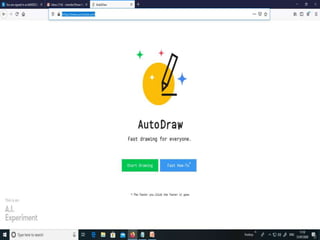
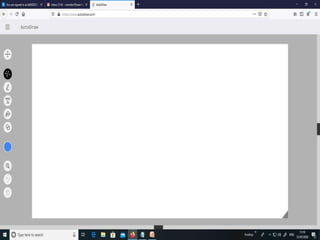
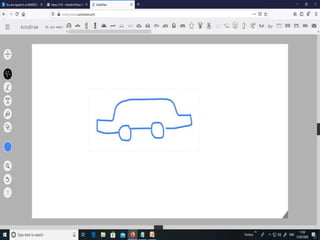
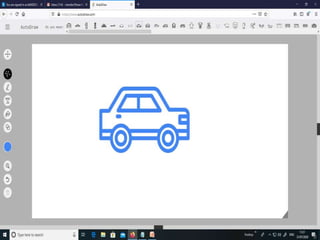
Auto Draw (based on
computer vision)
https://www.autodraw.com/
Ai lab
Ai lab
Ai lab
Ai lab

Ai lab

  • 1.
    TEACHABLE MACHINE (Based onComputer Vision) https://teachablemachine.withgoogle.com/
  • 4.
    • This isthe main experiment screen. It is divided into three parts. On the left side is the Input box that shows the feed from your camera. In the middle, is the Learning box that is divided into three sections: Green, Purple, and Red. On the right side is the Output box. • The experiment can be trained to respond by showing a GIF, playing a sound or speech. • For training the system, first do some action before the camera while pressing any of the colour button for a few second. Repeat the action while pressing the same colour button. Continue until the system achieves the required confidence. • Repeat the action with the other two colour buttons. • Once trained, the system will recognise your action and provide the output.
  • 5.
    AI Duet(based ondata) https://experiments.withgoogle.com/ai/ai-duet/view/
  • 6.
    Click on thePLAY button.
  • 7.
    Press some keys.The keys can be pressed using the mouse or the keyboard. The blue bars represent the AI system will start responding to the keys played by you
  • 8.
    Nsynth Sound Maker(based ondata) https://experiments.withgoogle.com/ai/sound-maker/view/
  • 9.
    Click on thePLAY button. The window will have two active instruments. In this case, Trombone and Pan Flute are displayed.
  • 10.
    You can changethe active instruments by clicking on the arrows. The bar in the middle allows you to select the ratio of the two sounds in the combined new sound.
  • 11.
    Pressing the keyboardkeys or clicking with mouse will allow you to play the instrument which combines the sound of both the active instruments in the ratio decided by you.
  • 12.
    Auto Draw (basedon computer vision) https://www.autodraw.com/