Process Safety Facility Planning and Siting 23 March 2011
Facility Planning External Location of Site / Effects on Community Exterior Effects on Site Internal Location/Arrangement within Site Incidents Risk Assessment Methodology
Facility Planning Why is location of site important? Why is proper planning important? Look at the present, learn form the past, and anticipate the future Include proper people in planning process Engineers / Designers Operations Management Emergency Services
External Siting Types of Incidents Fires and Explosions Toxic Air Release Spill into Waterways Disruption of Public Wastewater Treatment Plant Groundwater Contamination Normal Air Emissions
External Siting Location of a site with respect to surrounding area and community. Evaluate the effects of an incident on areas outside the plant. Evaluate the effects of normal operation on areas outside the plant. NIMBY – Not In My Back Yard
External Siting Evaluate the effects of surroundings on the facility. Adjacent Highways/Railways Transport of Hazardous Chemicals Environment Weather
Incidents Possible Effects of an Incident Loss of Life Loss of Jobs Business Interruption Increased Consumer Costs from Reduced Supply Increased Costs in Insurance Costs / Premiums Environmental Impacts  Negative Impact on Company Reputation
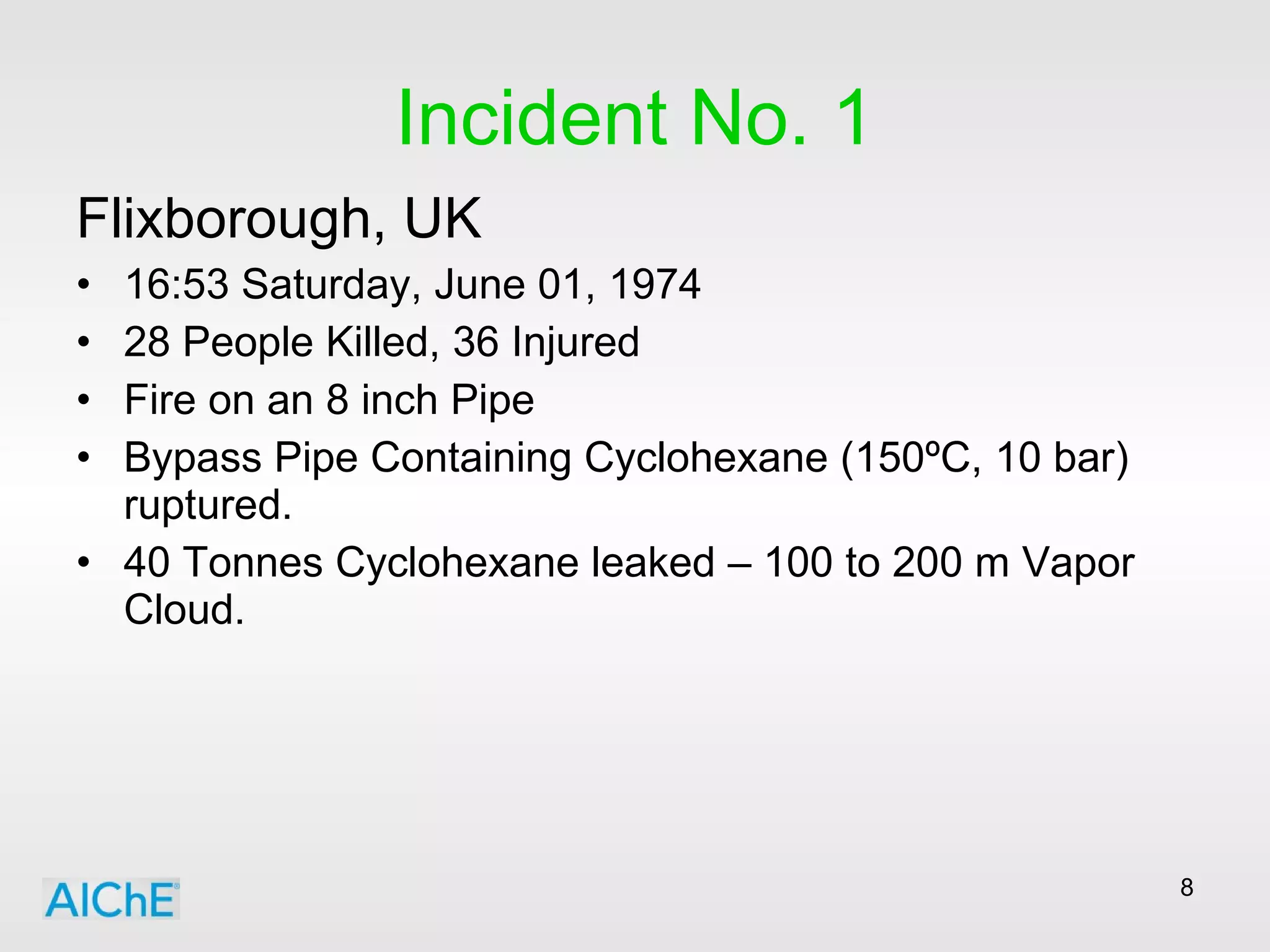
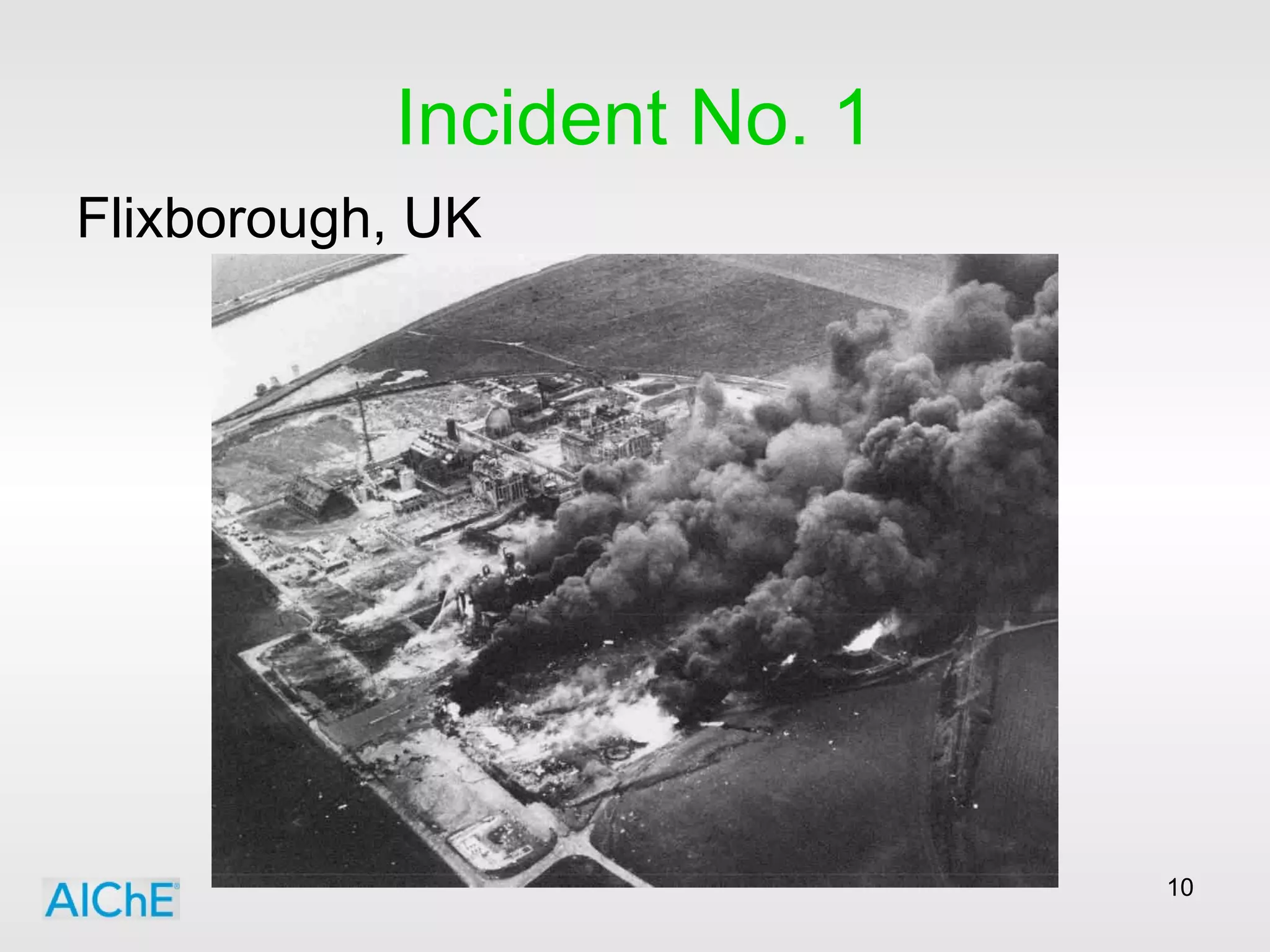
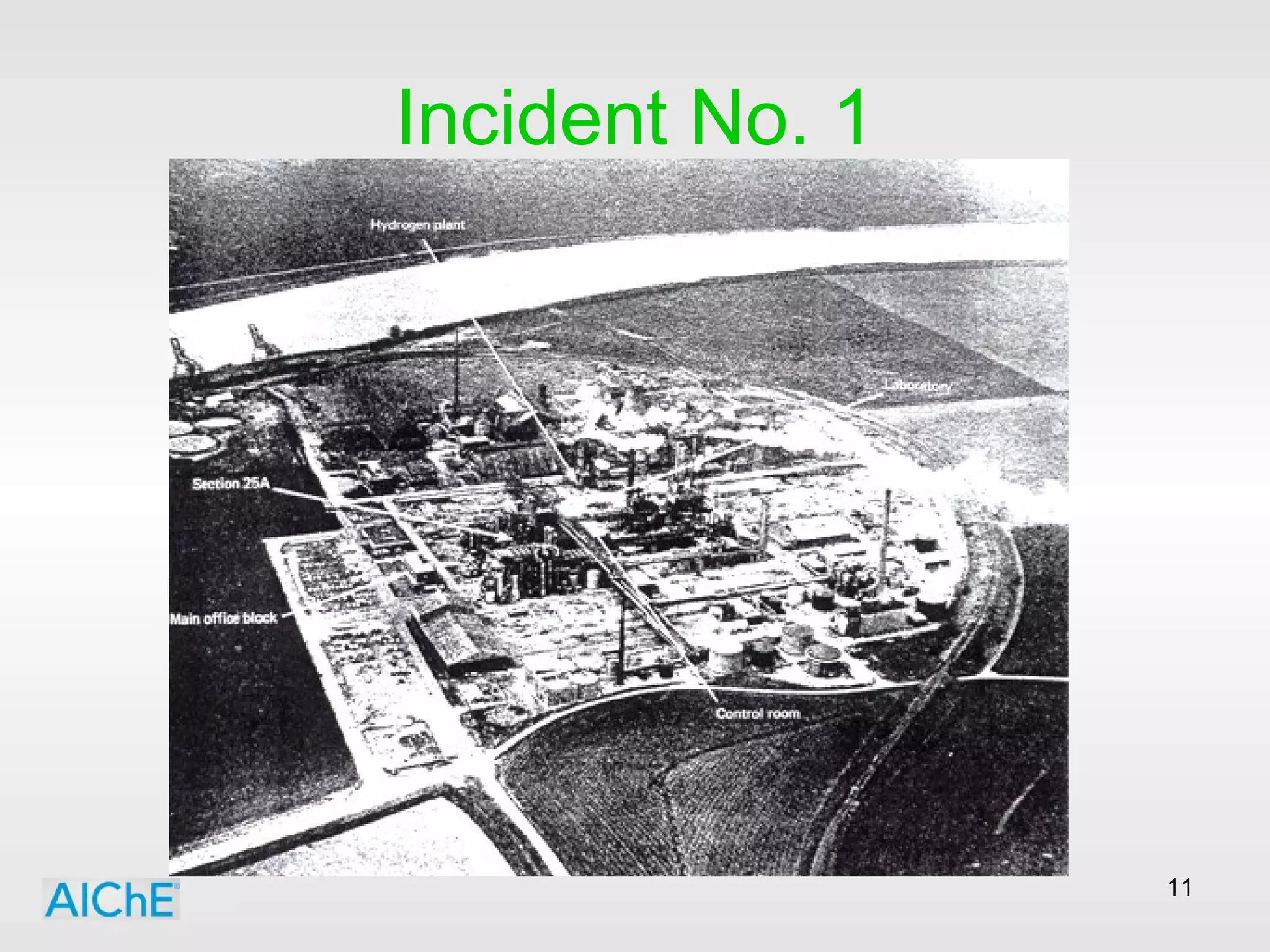
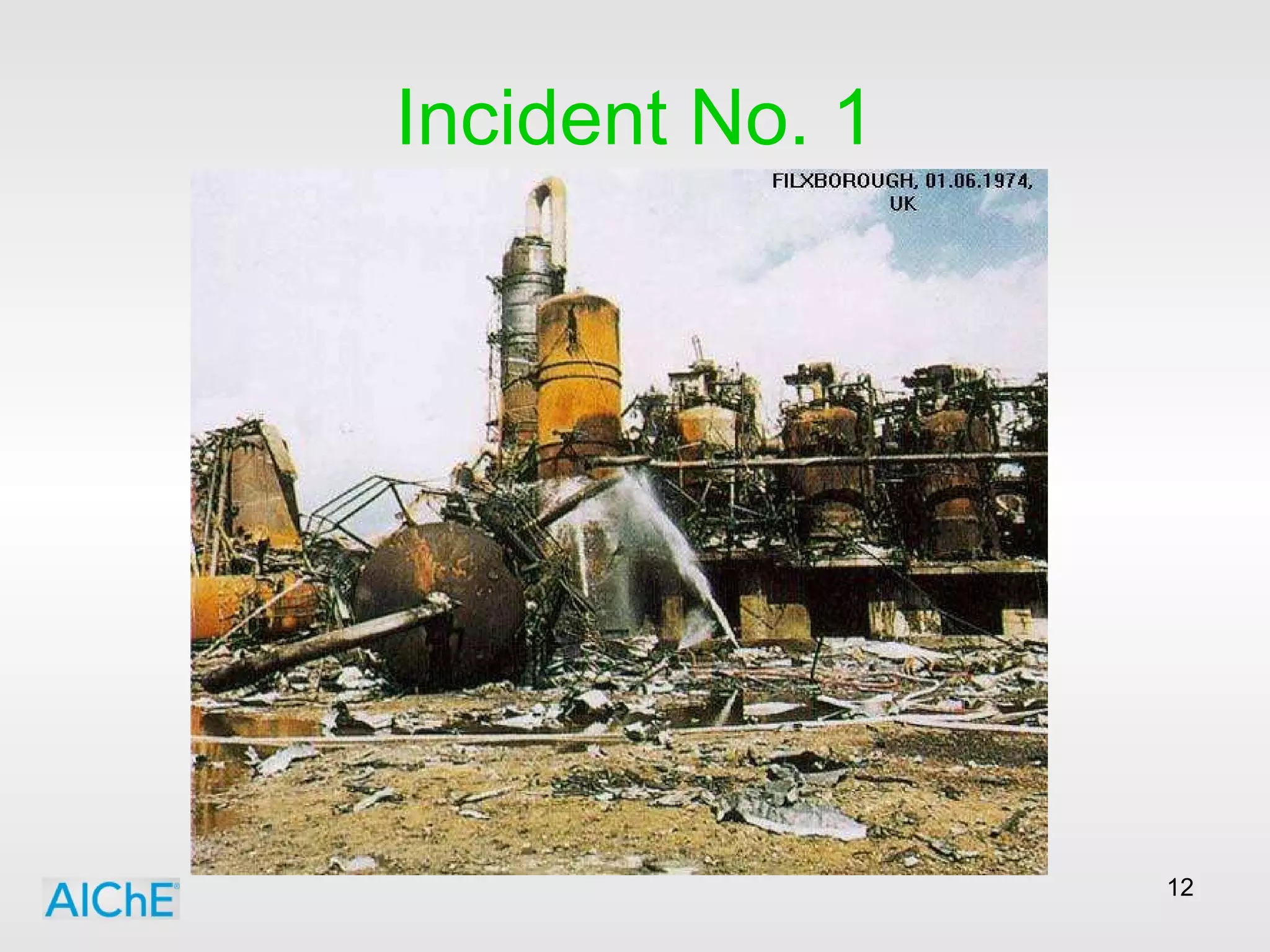
Incident No. 1 Flixborough, UK 16:53 Saturday, June 01, 1974 28 People Killed, 36 Injured Fire on an 8 inch Pipe Bypass Pipe Containing Cyclohexane (150 ºC, 10 bar) ruptured. 40 Tonnes  Cyclohexane leaked – 100 to 200 m Vapor Cloud.
Incident No. 1 Flixborough, UK 1,800 buildings within 1 mile radius damaged Fires in area lasted for 10 days Explosion equivalent to 15 Tonnes TNT All 18 people in control room killed 500+ would have been killed during a weekday
Incident No. 1 Flixborough, UK
Incident No. 1
Incident No. 1
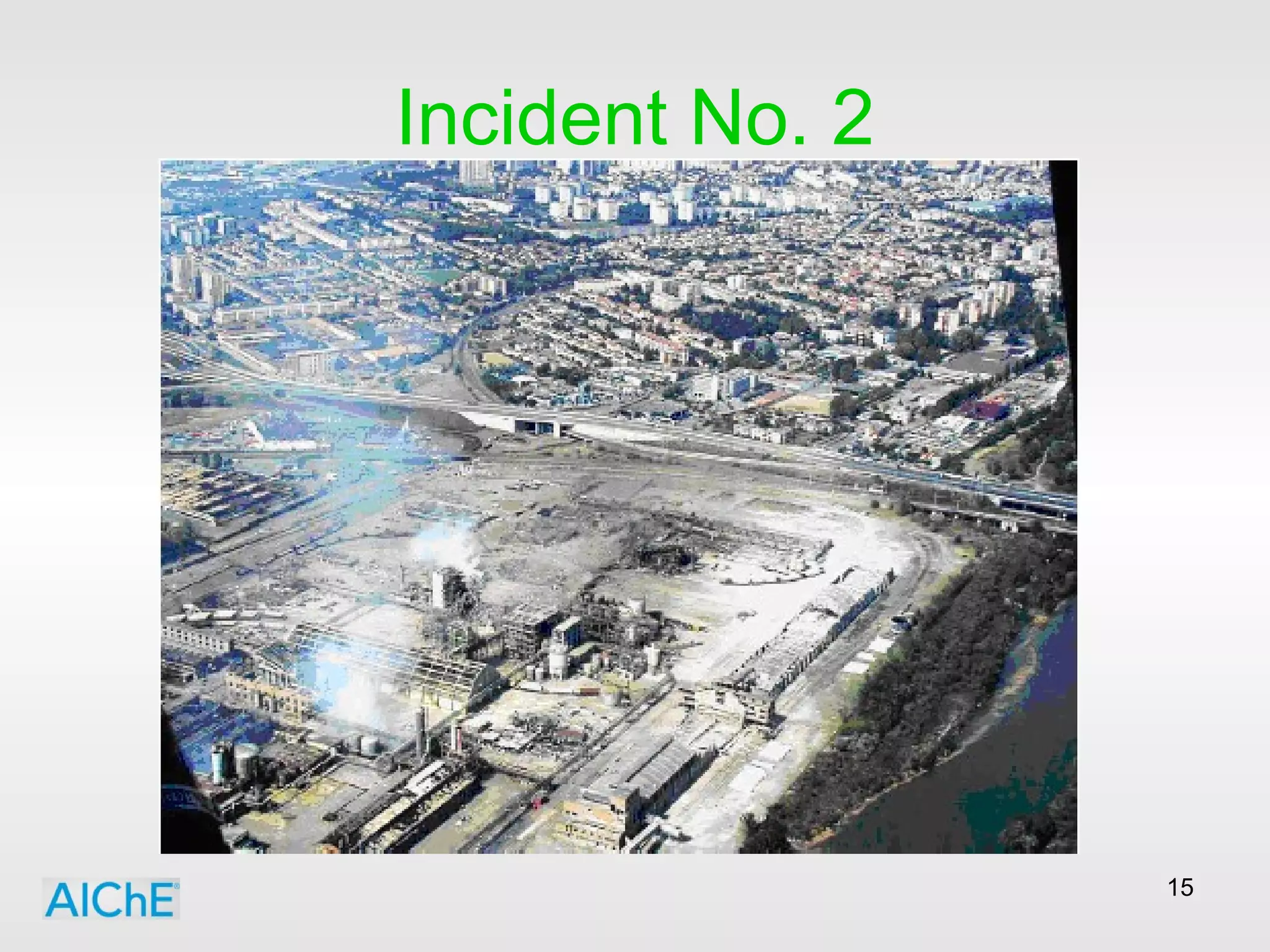
Incident No. 2 Toulouse, France AZF – Fertilizer Manufacturing and Warehouse September 25, 2001 – Originally thought to be terrorism 300 Tonnes of Ammonium Nitrate Exploded Mislabeled Chemical, Hot & Humid Conditions in Warehouse Crater – 100 ft deep, 650 ft diamter Steel structure found 3 km away Blast measured 3.4 on Richter scale, heard 80 km away
Incident No. 2 Toulouse, France Plant Built in 1924 – Rural Area 2005 Population – Over 400,000 Residential area – 1 km away Schools, University and hospitals evacuated 29 deaths (28 plant, 1 nearby school) 2,500 serious injuries; 8,000 minor injuries City advised people to stay indoors and close windows Two-Thirds city’s windows shattered 40,000 people homeless
Incident No. 2
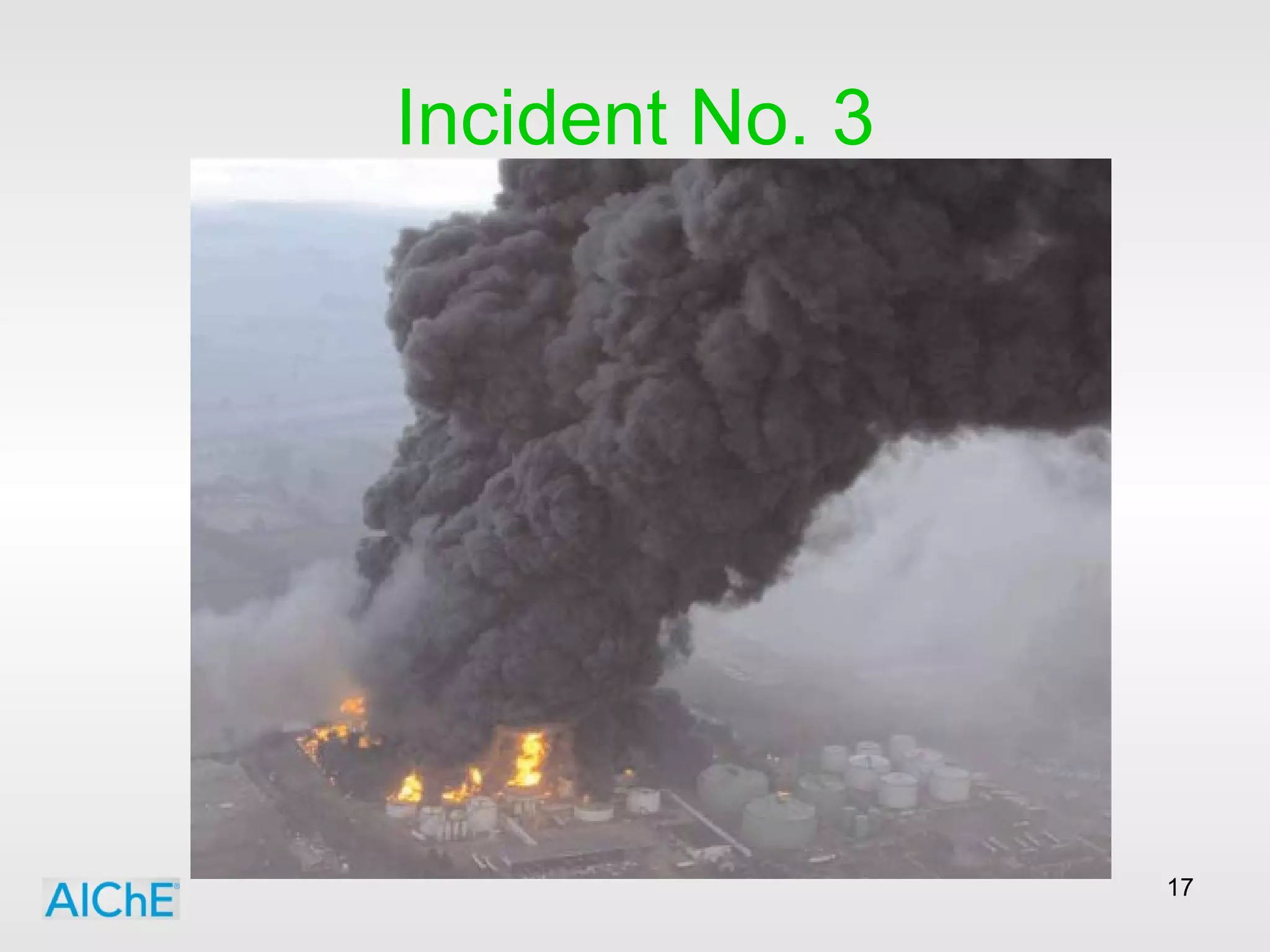
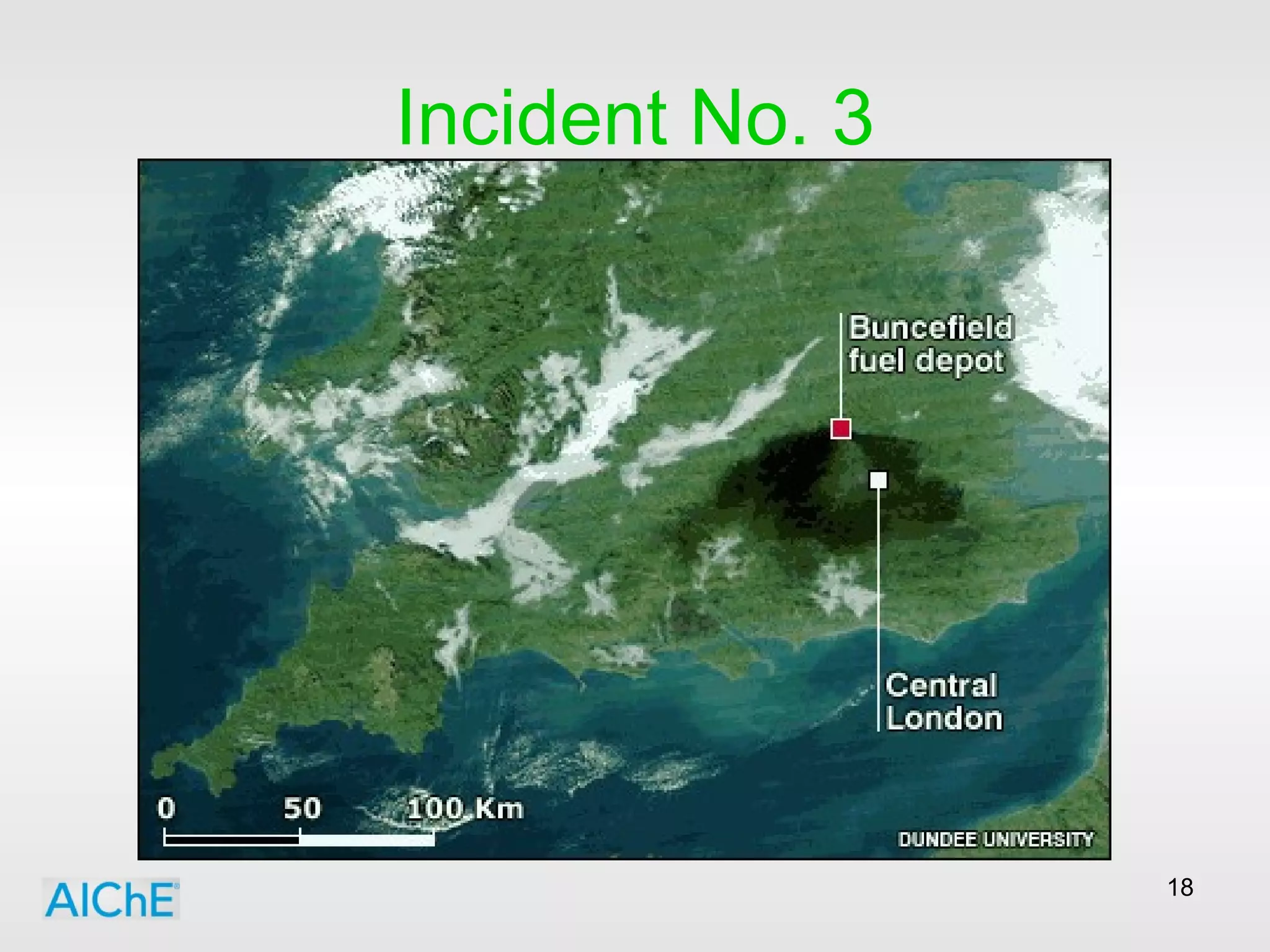
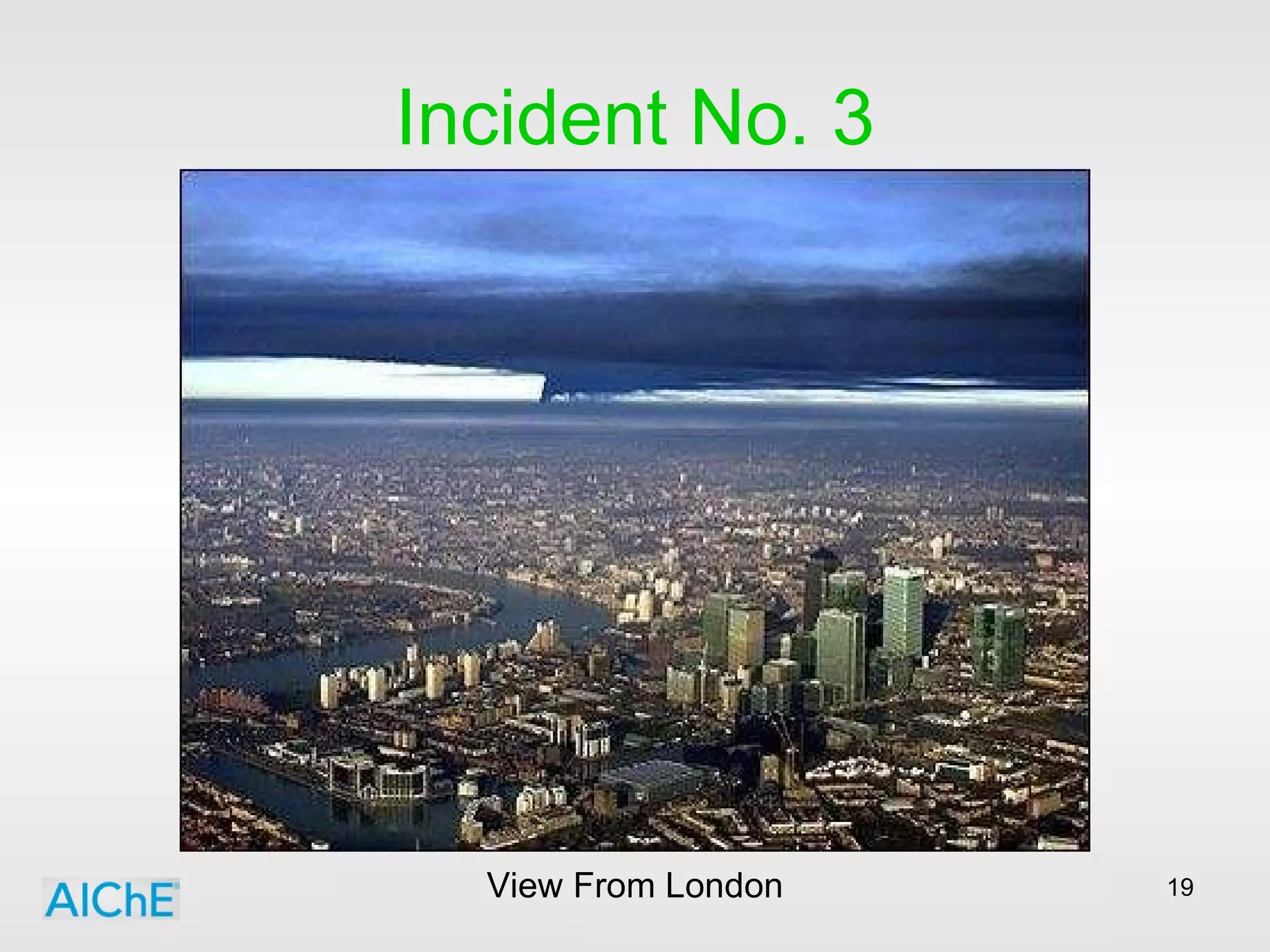
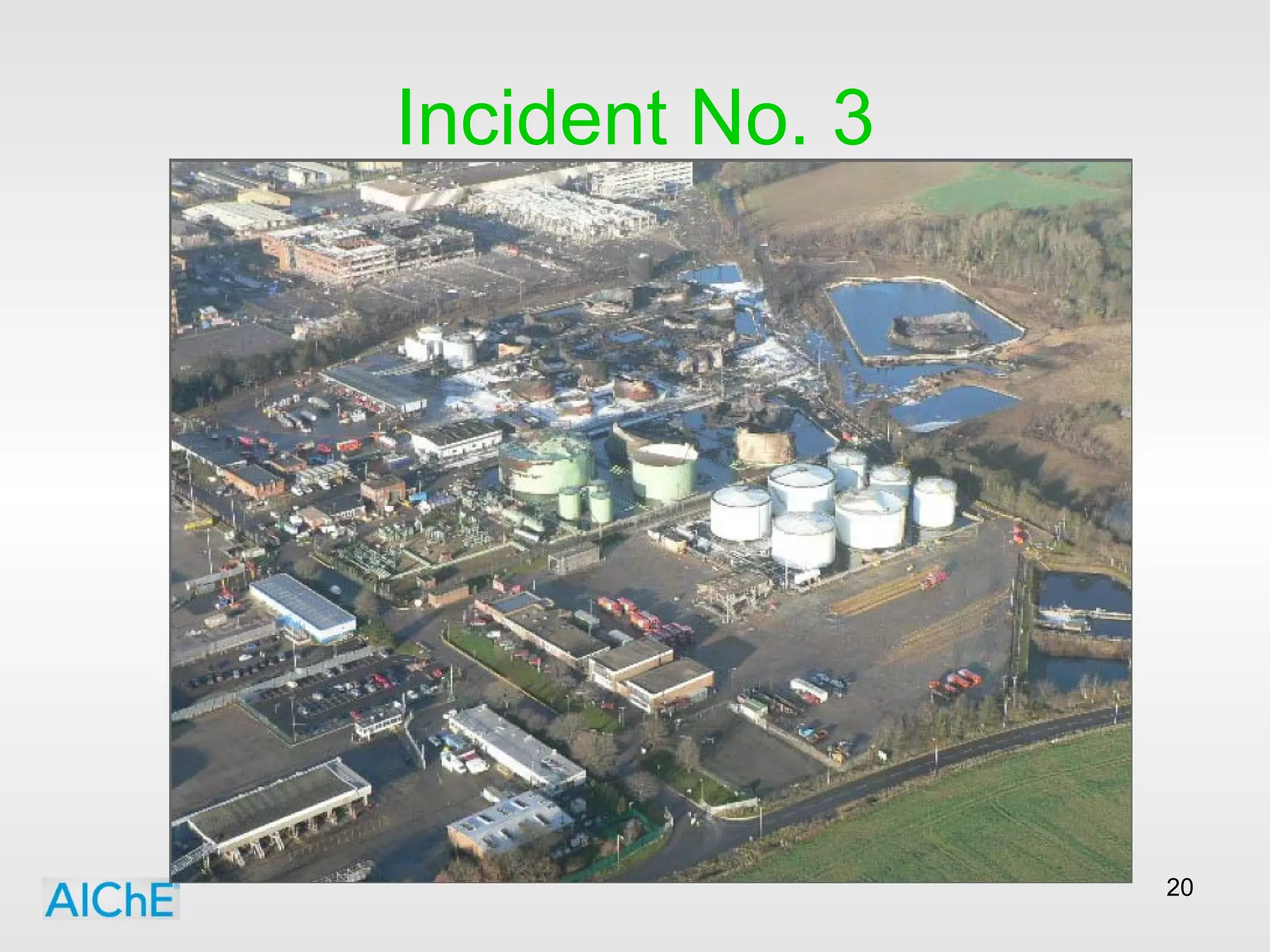
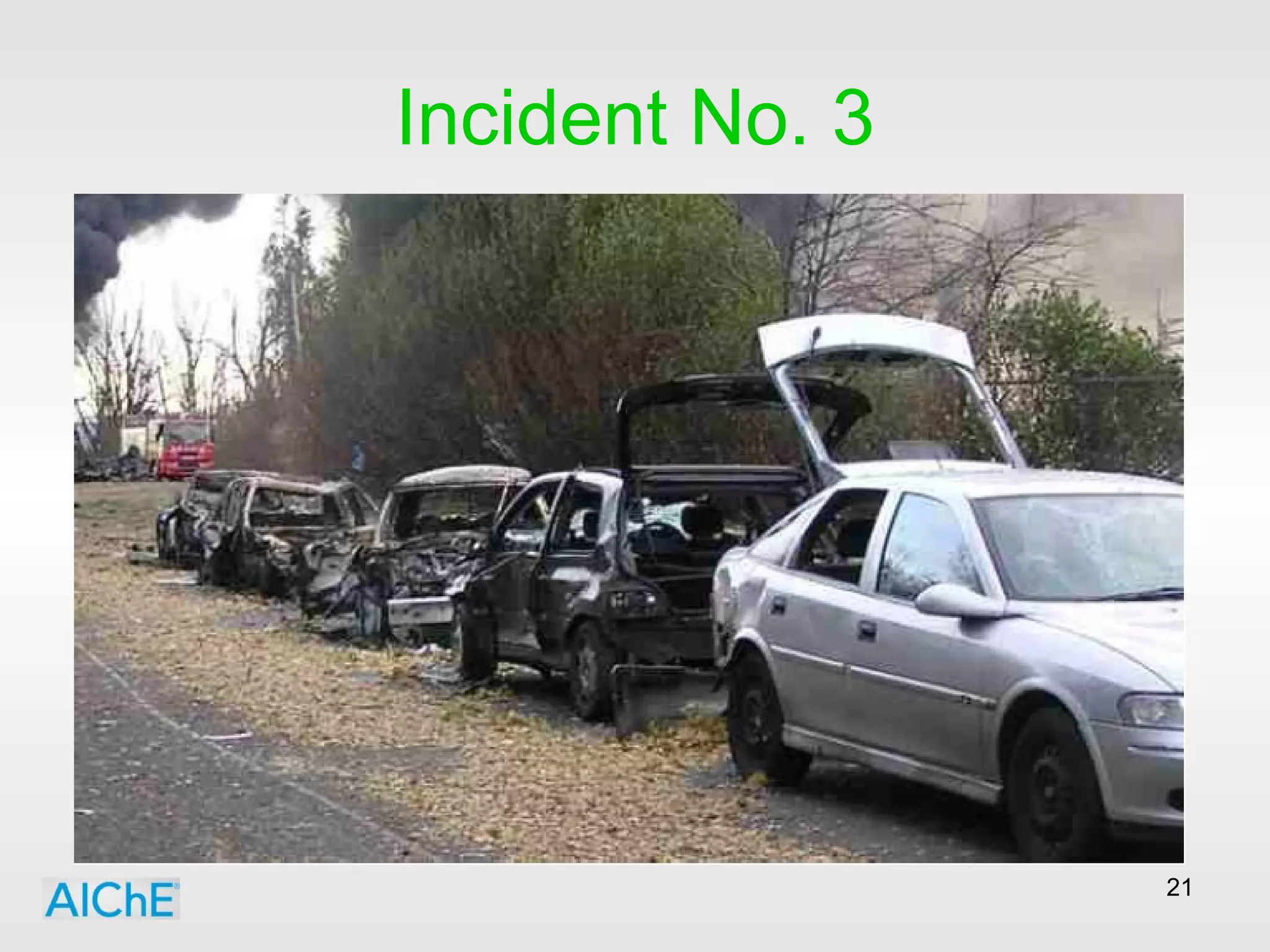
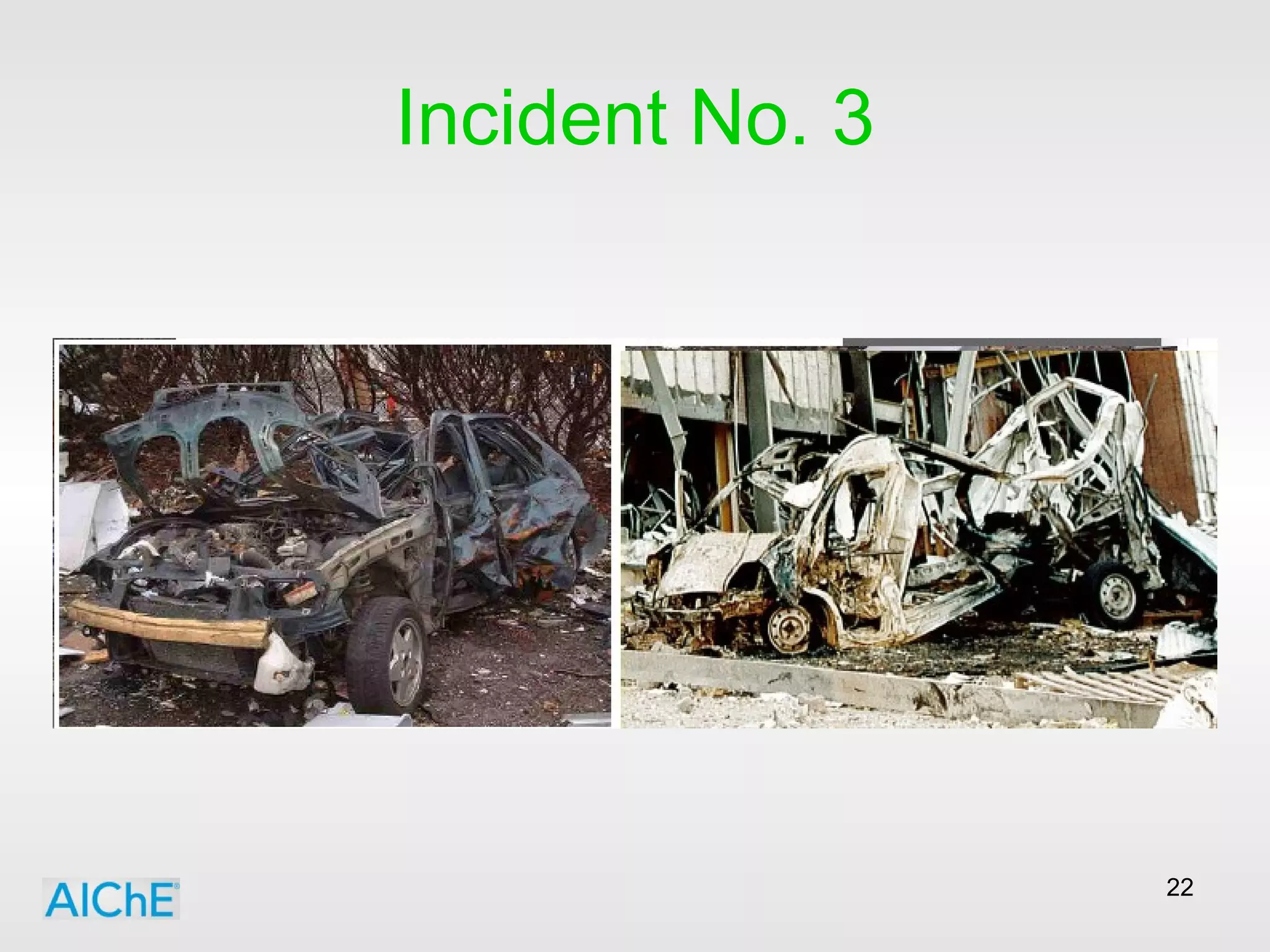
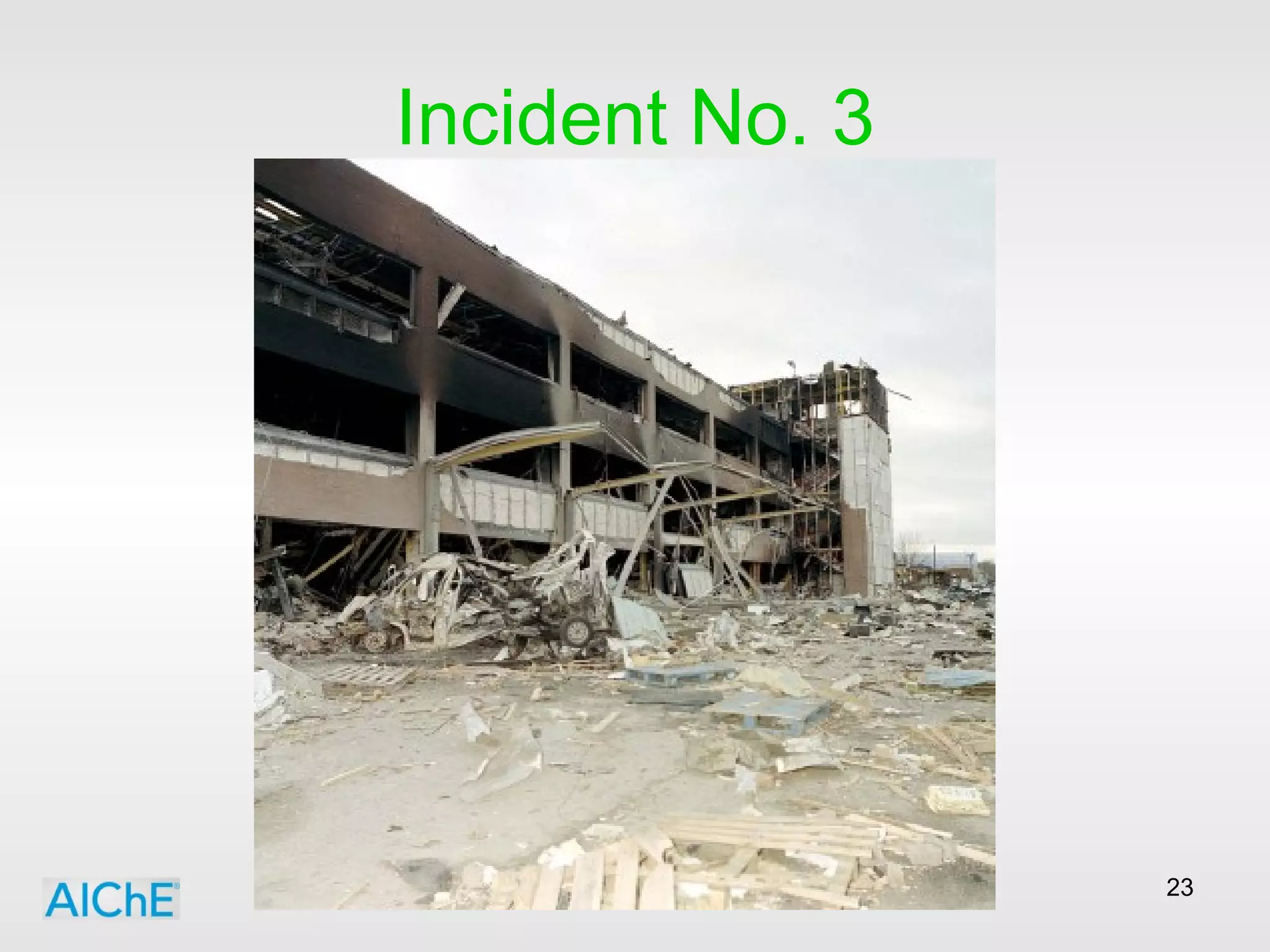
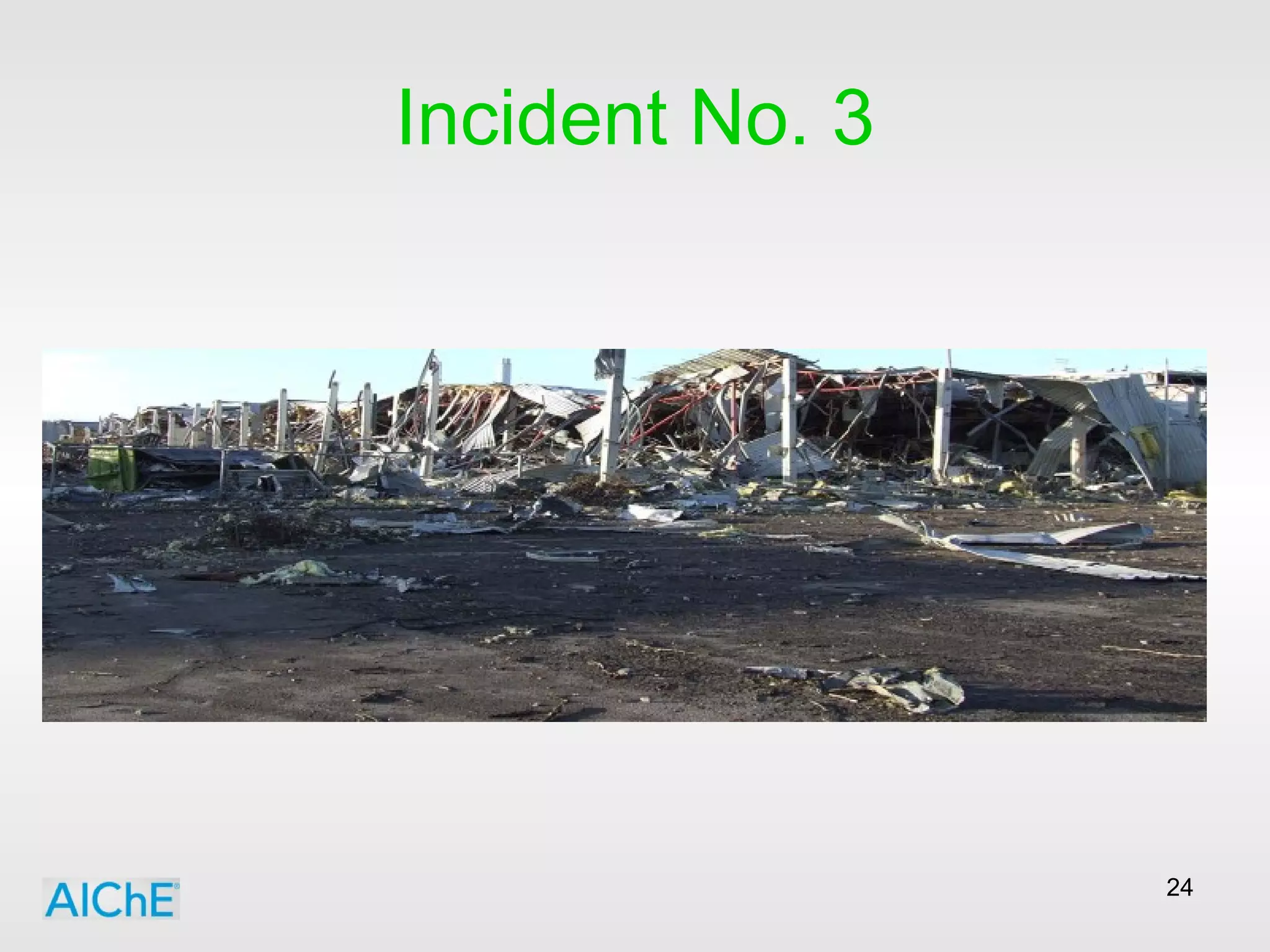
Incident No. 3 Buncefield Tank Farm Tank Farm in Hertfordshire, England Incident Occurred on December 11, 2005 Overflow of Filling Gasoline Storage Tank and Resulting Explosion Flammable Cloud – 400m Across Explosion 2.4 on the Richter Scale 23 Storage Tanks on Fire 43 Injured, 0 Fatalities Fire Burned for Several Days
Incident No. 3
Incident No. 3
Incident No. 3 View From London
Incident No. 3
Incident No. 3
Incident No. 3
Incident No. 3
Incident No. 3
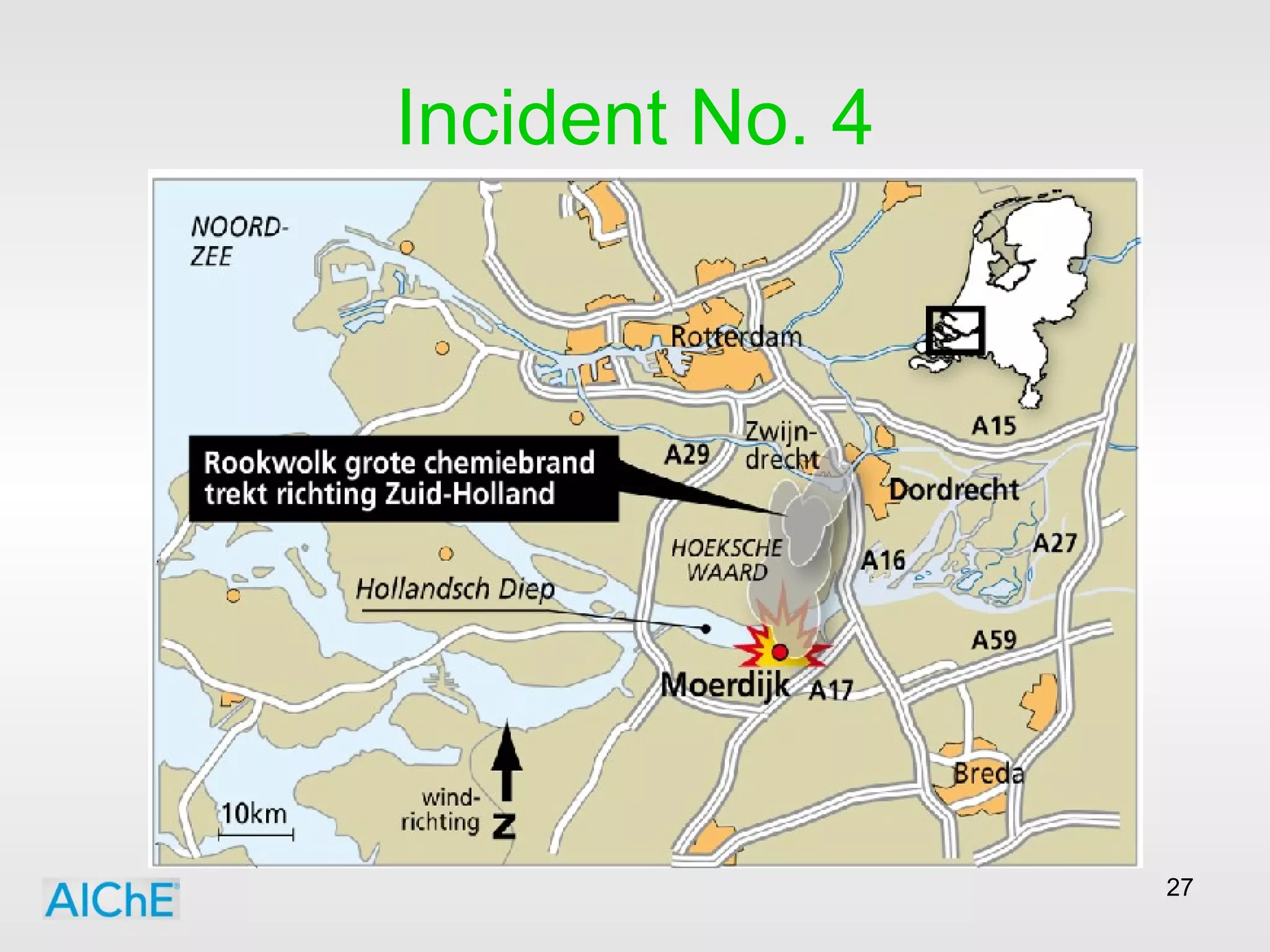
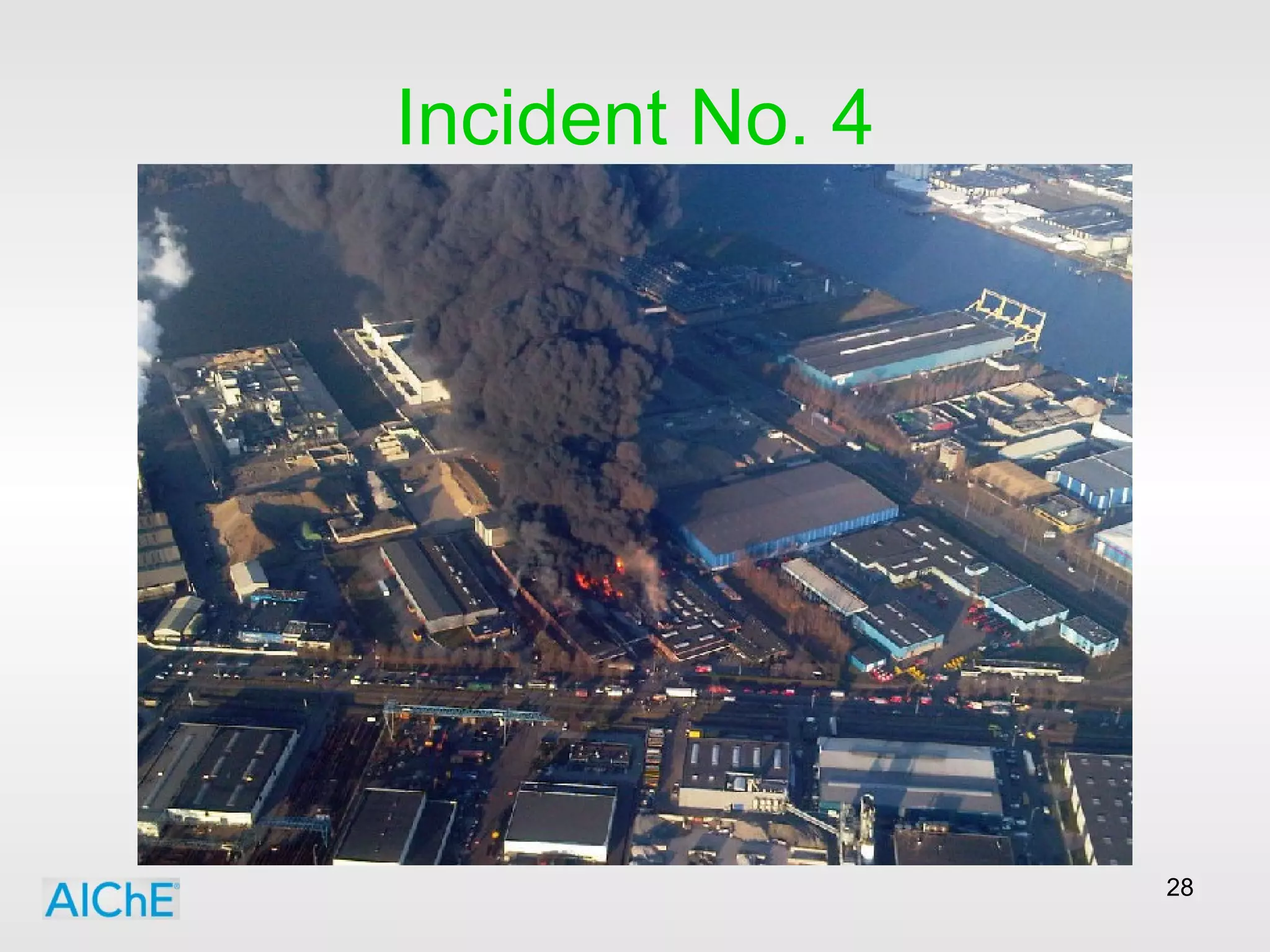
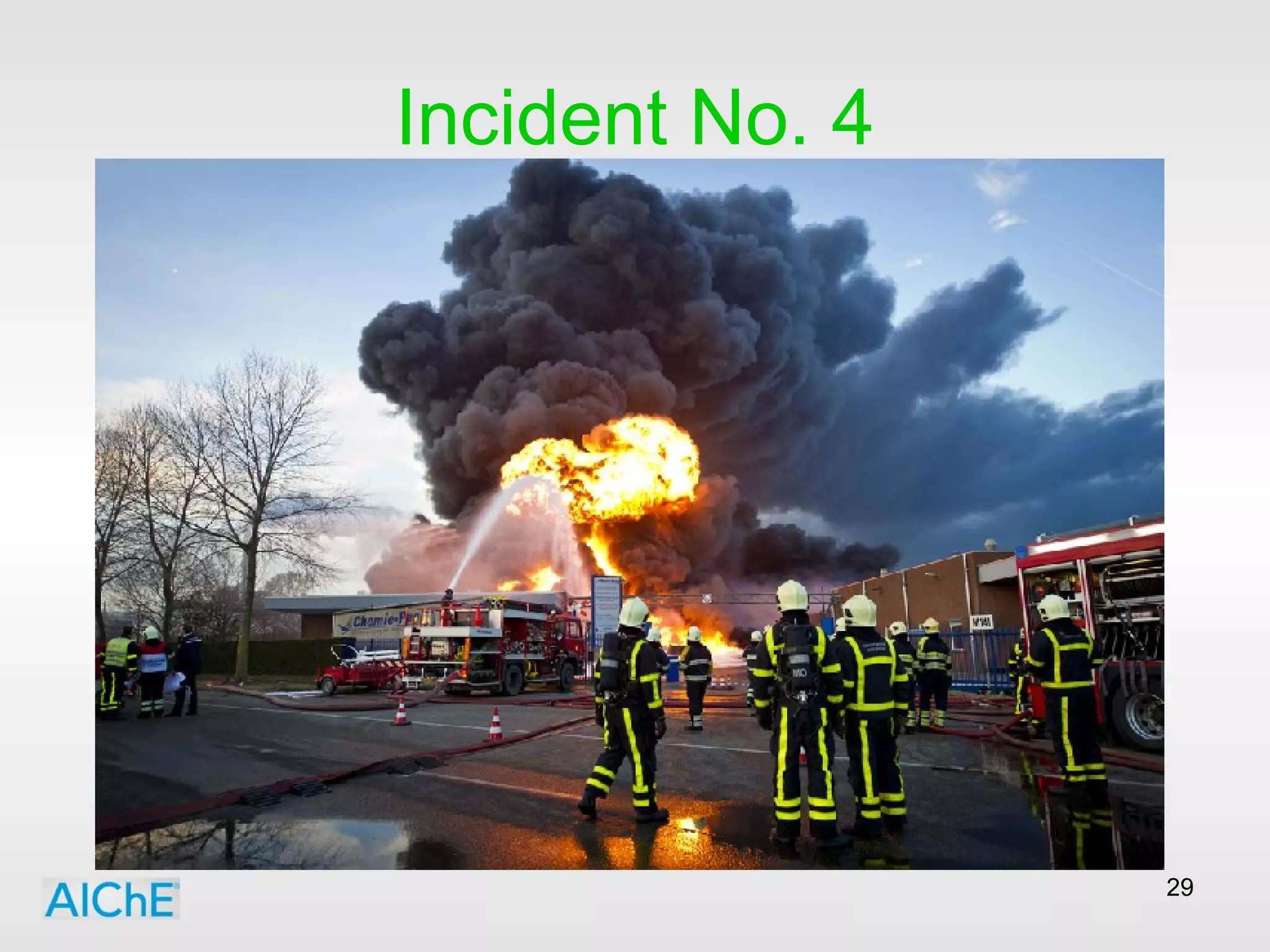
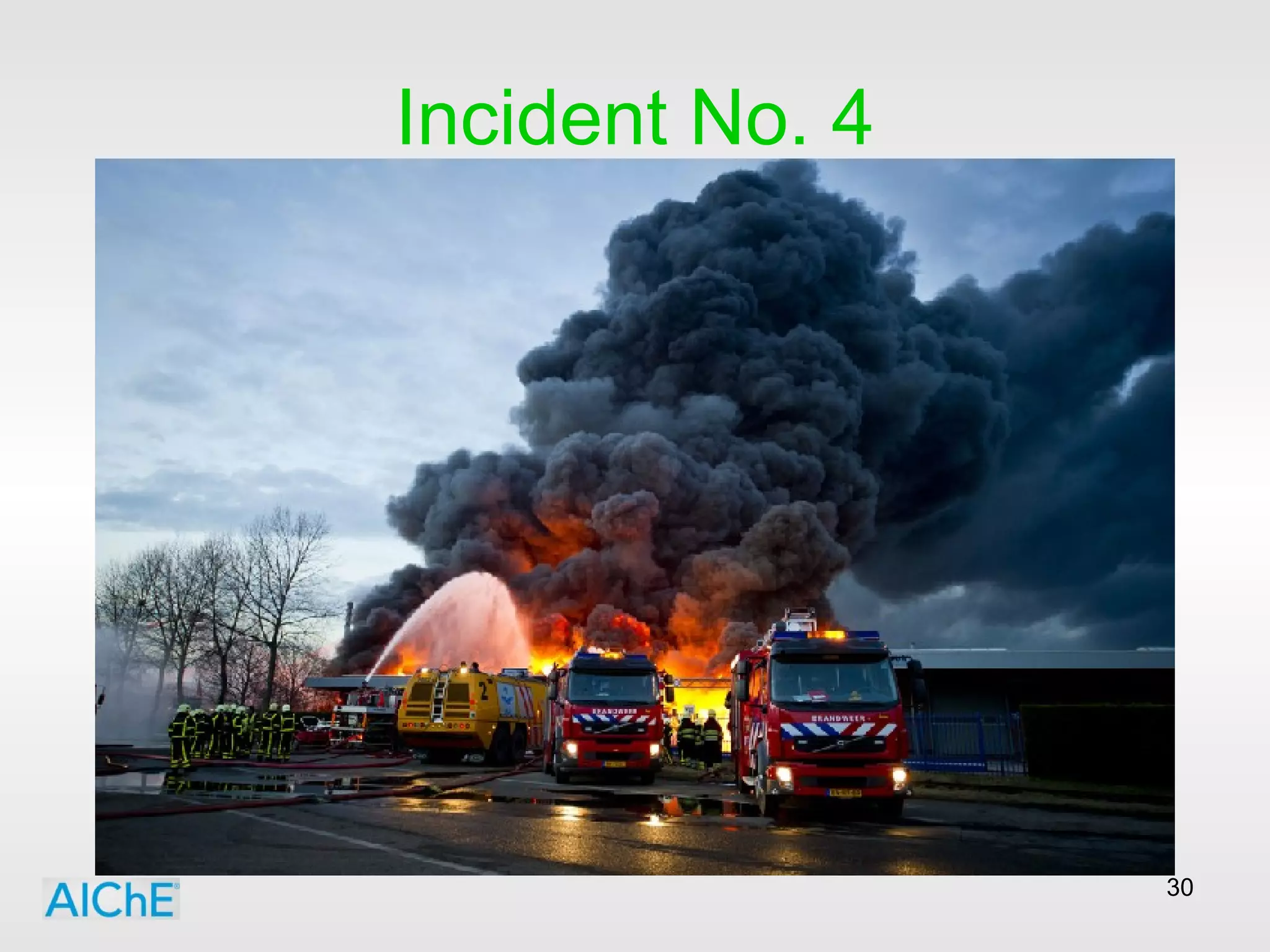
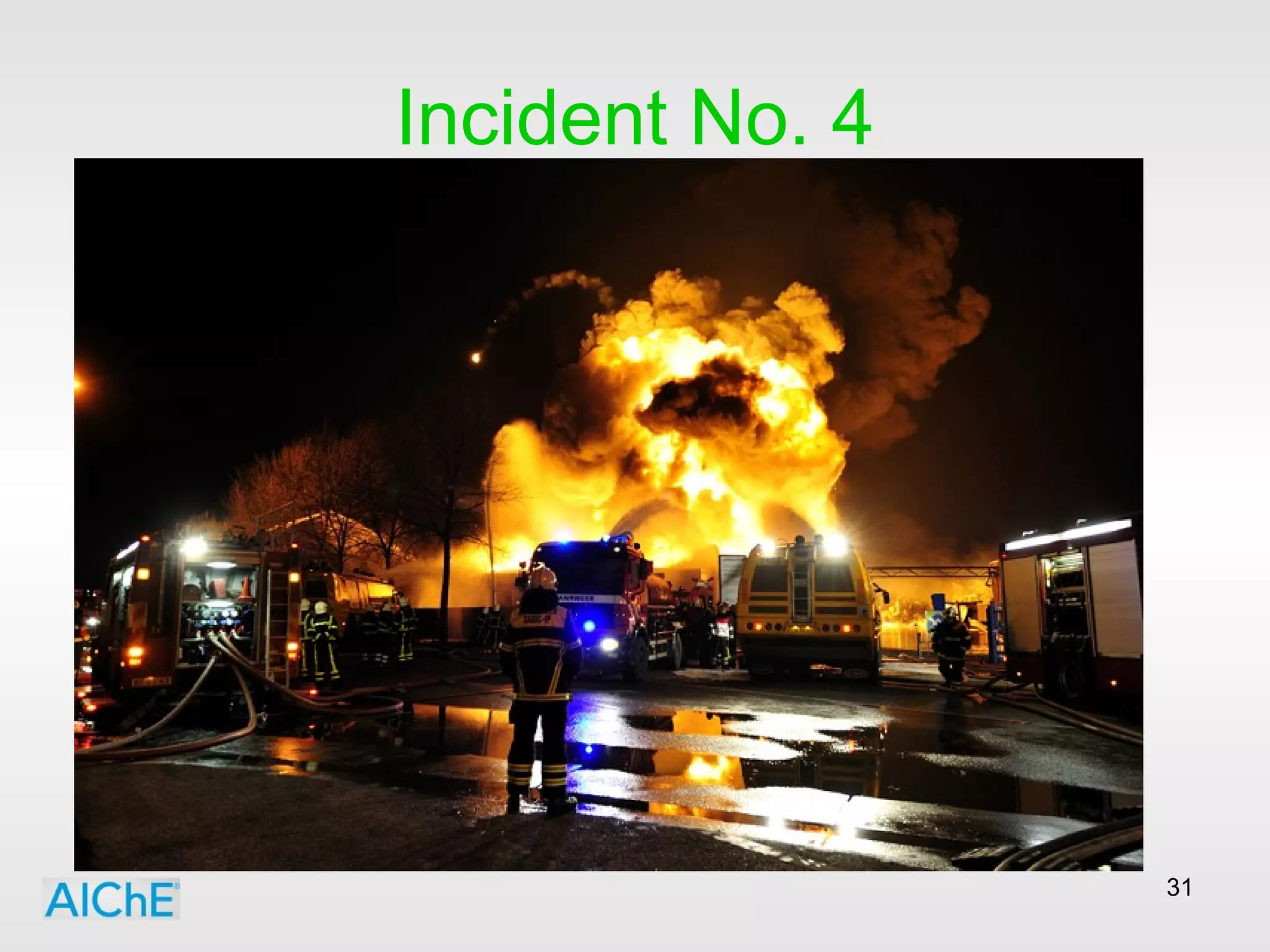
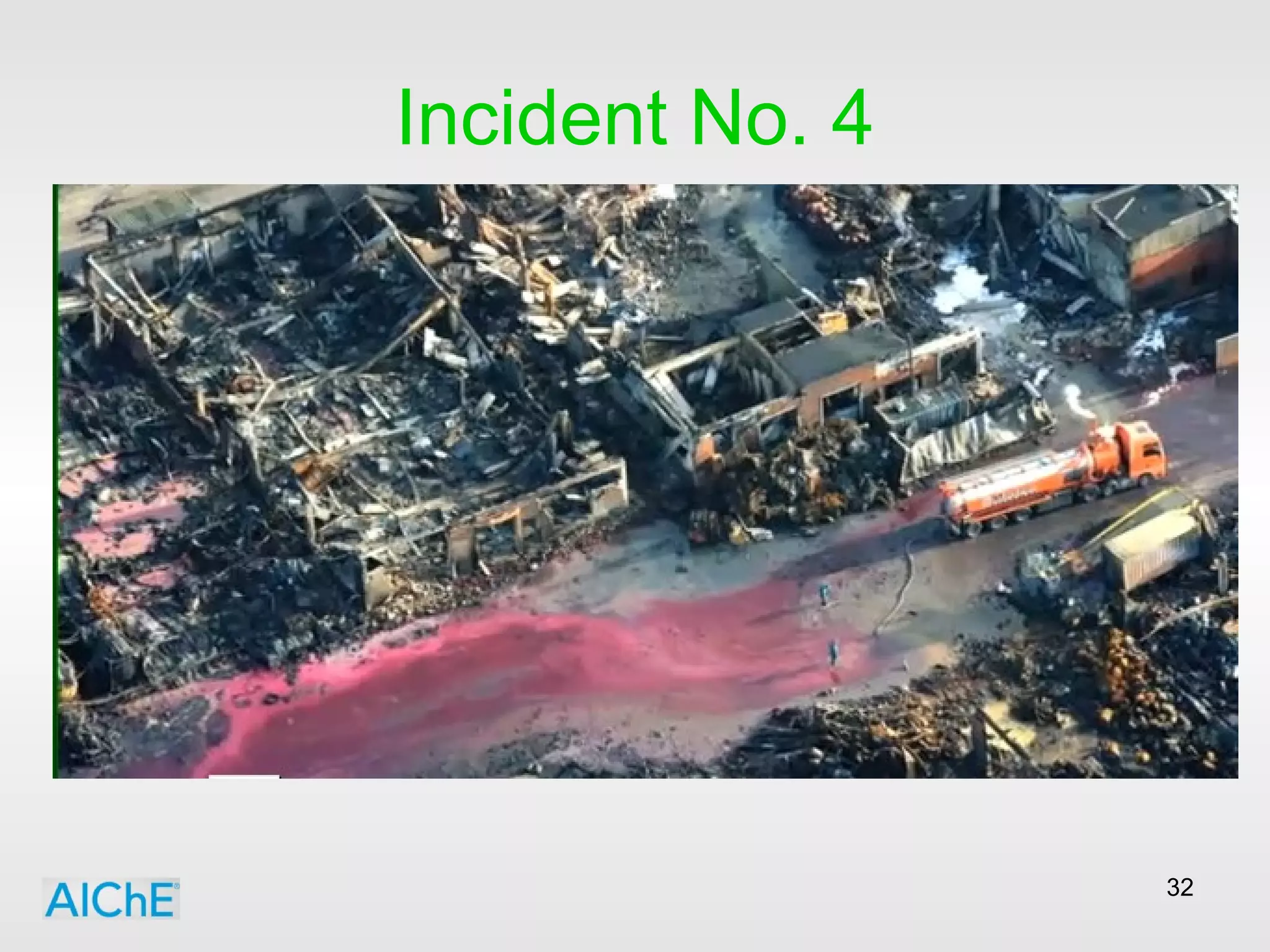
Incident No. 4 Chemie-Pack, Moerdijk, The Netherlands Chemical Packing Plant – 50 Employees Incident Occurred on January 5, 2011 No Immediate Injuries 400,000 L Carcinogenic Chemicals in Storage Flames 40m (130 ft) high Fumes and Smoke reached 3.2km away Company fined in 2006 for fire and safety violations
Incident No. 4 Chemie-Pack, Moerdijk, The Netherlands Shipping on Hollands Diep River was halted for the area A16 and A17 Roads Closed Train Traffic Stopped Fire spread to the nearby Wärtsilä engine factory   Government stopped sale of vegetables from nearby farms Children to stay indoors while environmental impact was assessed
Incident No. 4
Incident No. 4
Incident No. 4
Incident No. 4
Incident No. 4
Incident No. 4
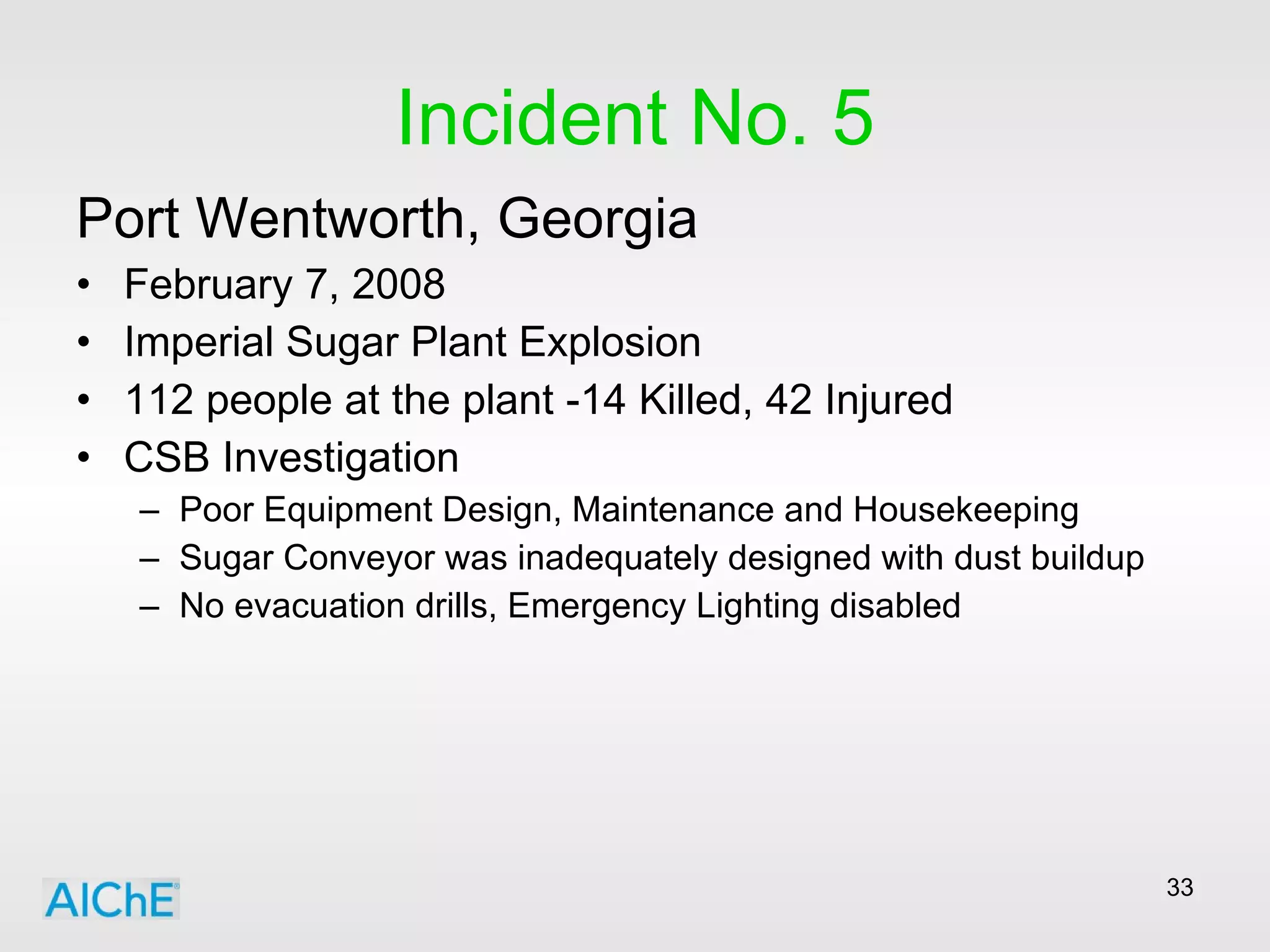
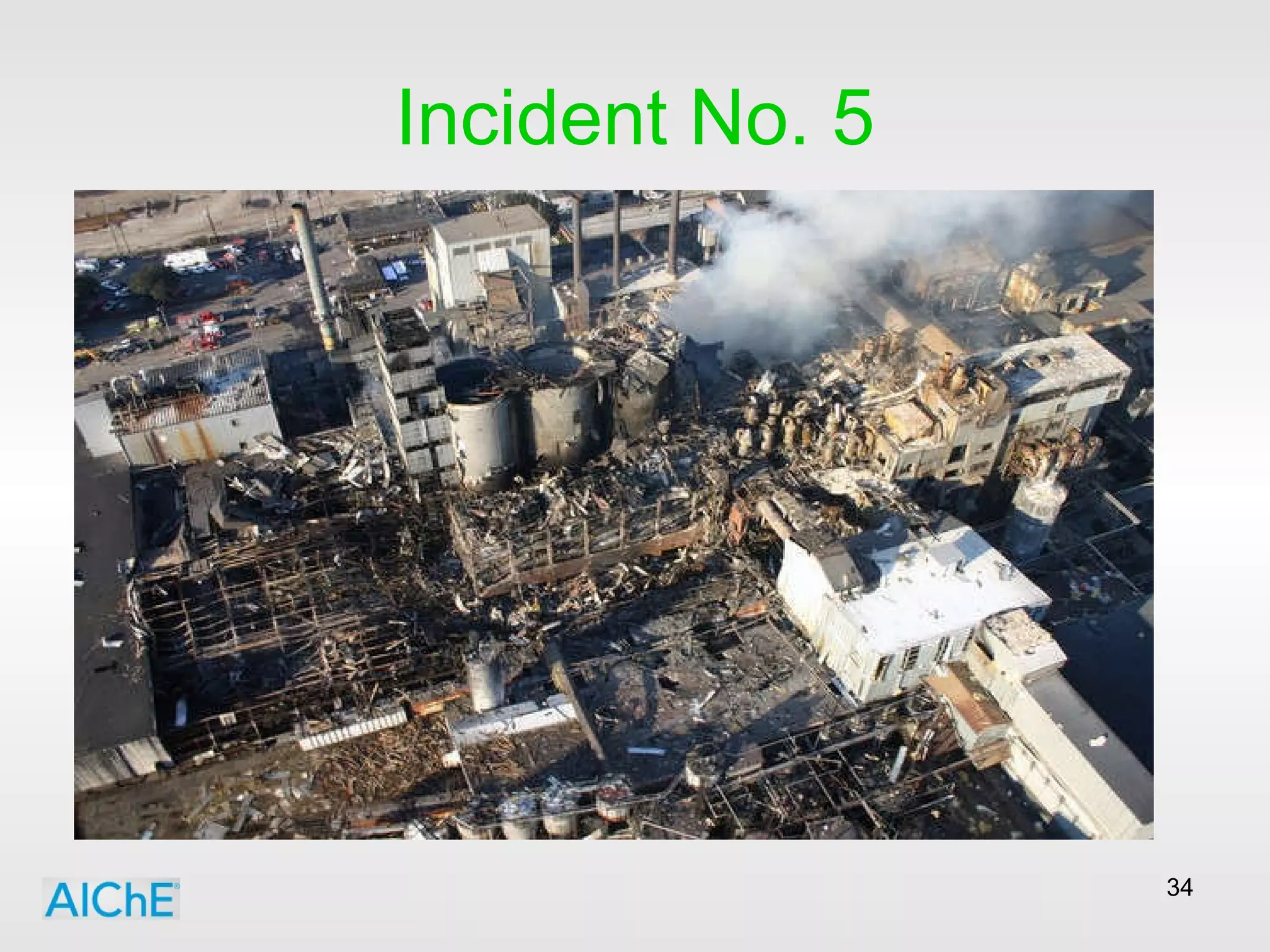
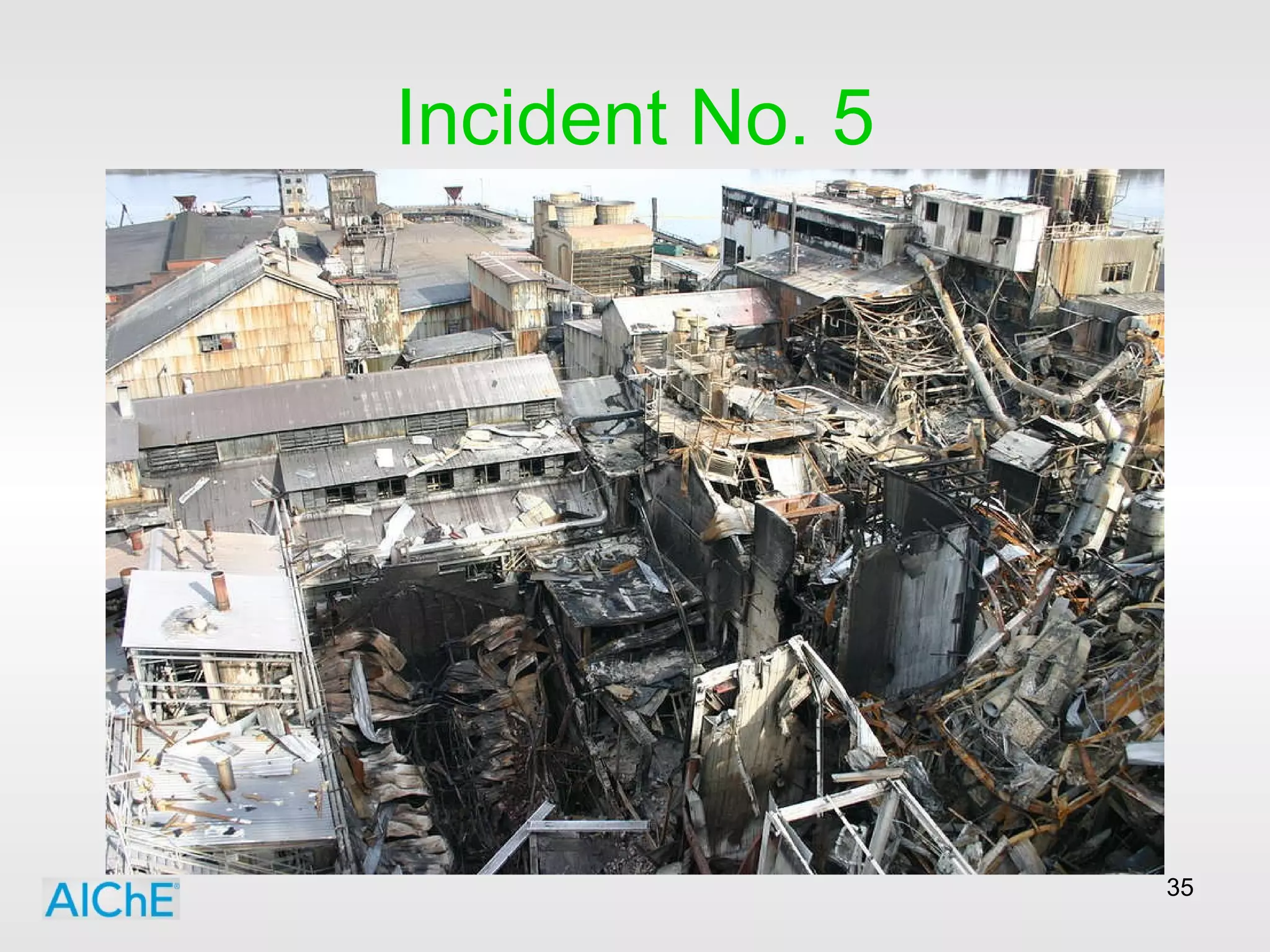
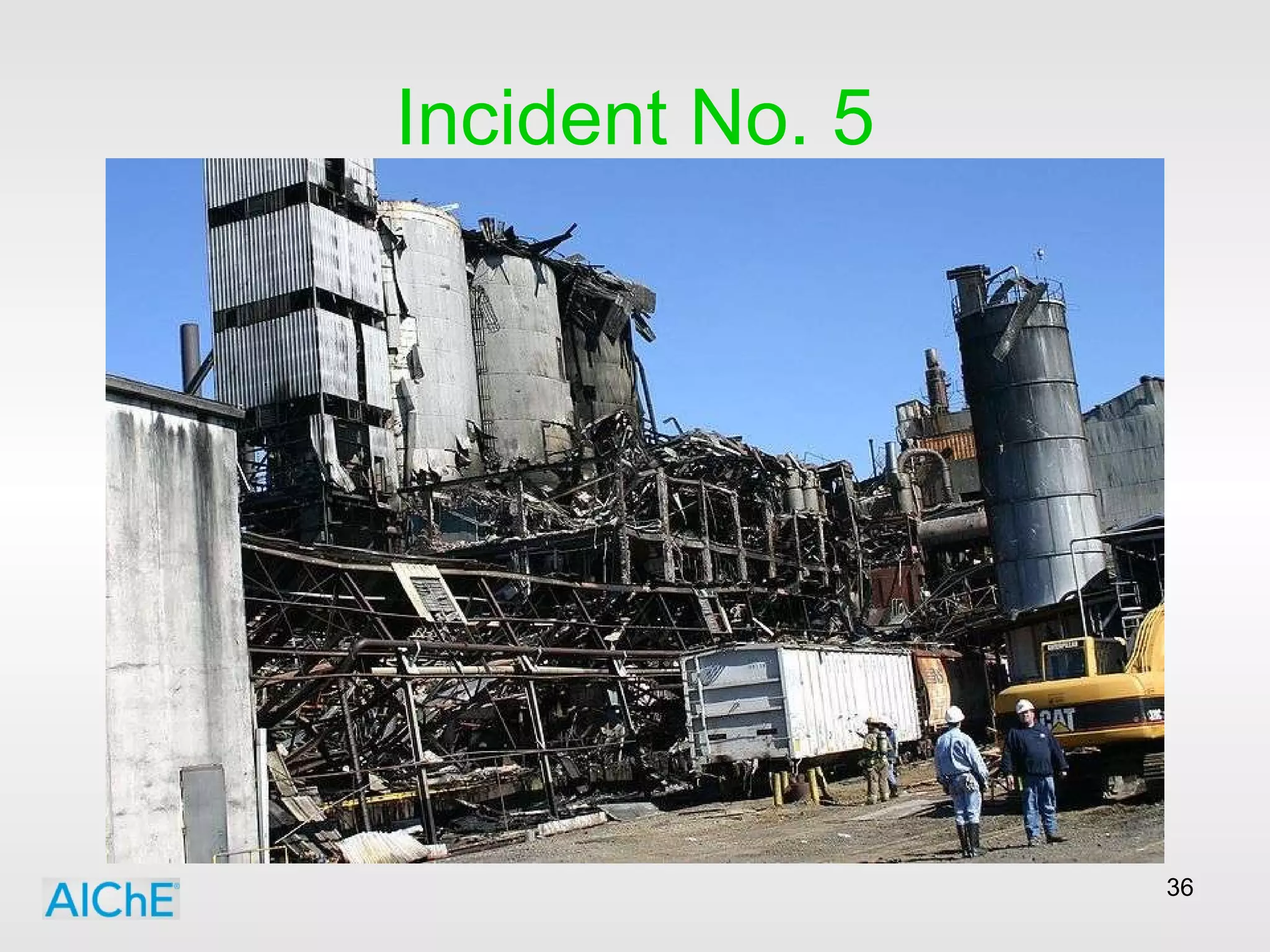
Incident No. 5 Port Wentworth, Georgia February 7, 2008 Imperial Sugar Plant Explosion 112 people at the plant -14 Killed, 42 Injured CSB Investigation Poor Equipment Design, Maintenance and Housekeeping Sugar Conveyor was inadequately designed with dust buildup No evacuation drills, Emergency Lighting disabled
Incident No. 5
Incident No. 5
Incident No. 5
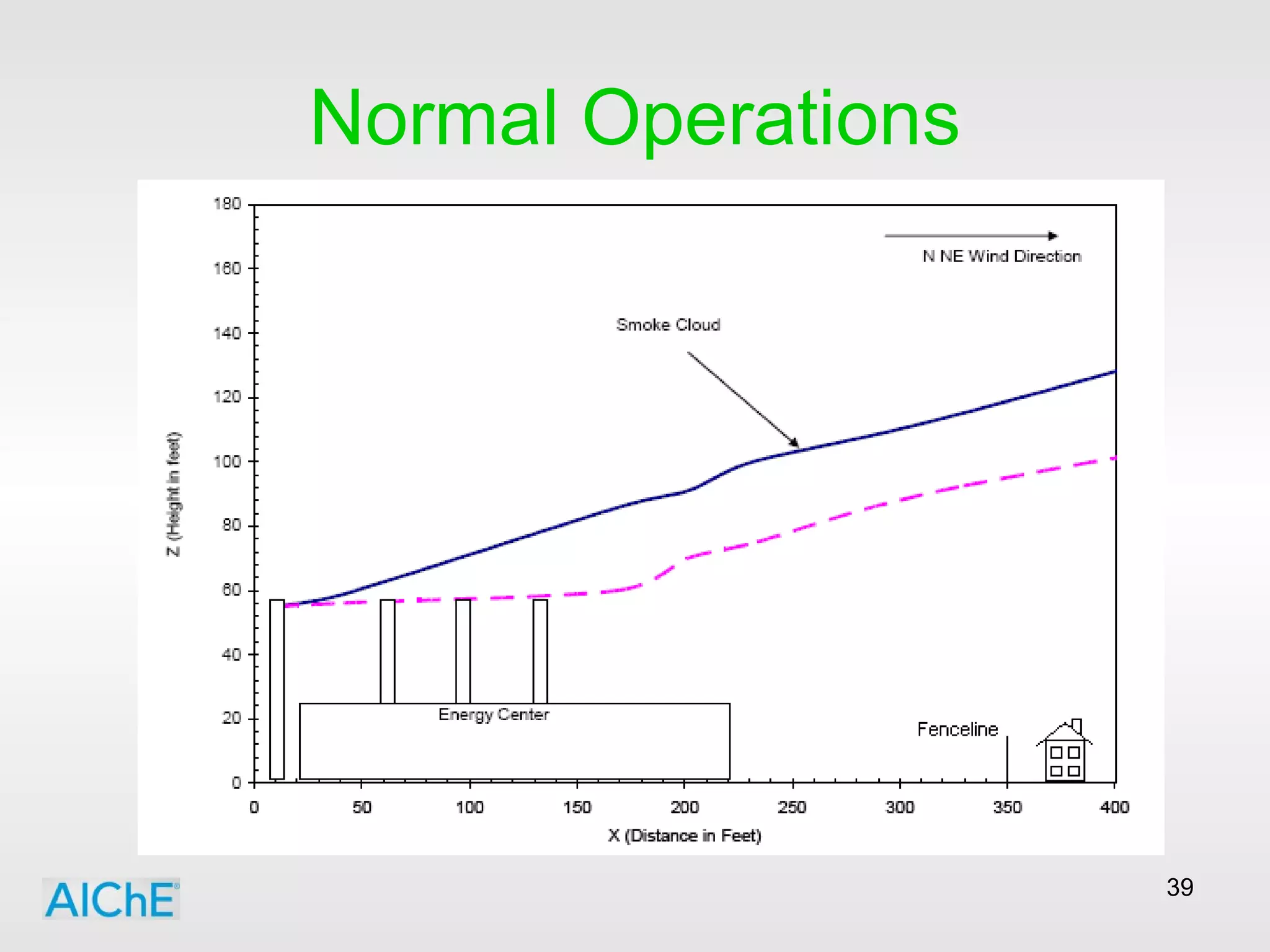
Normal Operations Evaluate Air Emissions Adjacent Waterways Flood Plains Noise Pollution Light Pollution Effects on Traffic Maintenance Infrastructure – Utility Needs Site Security
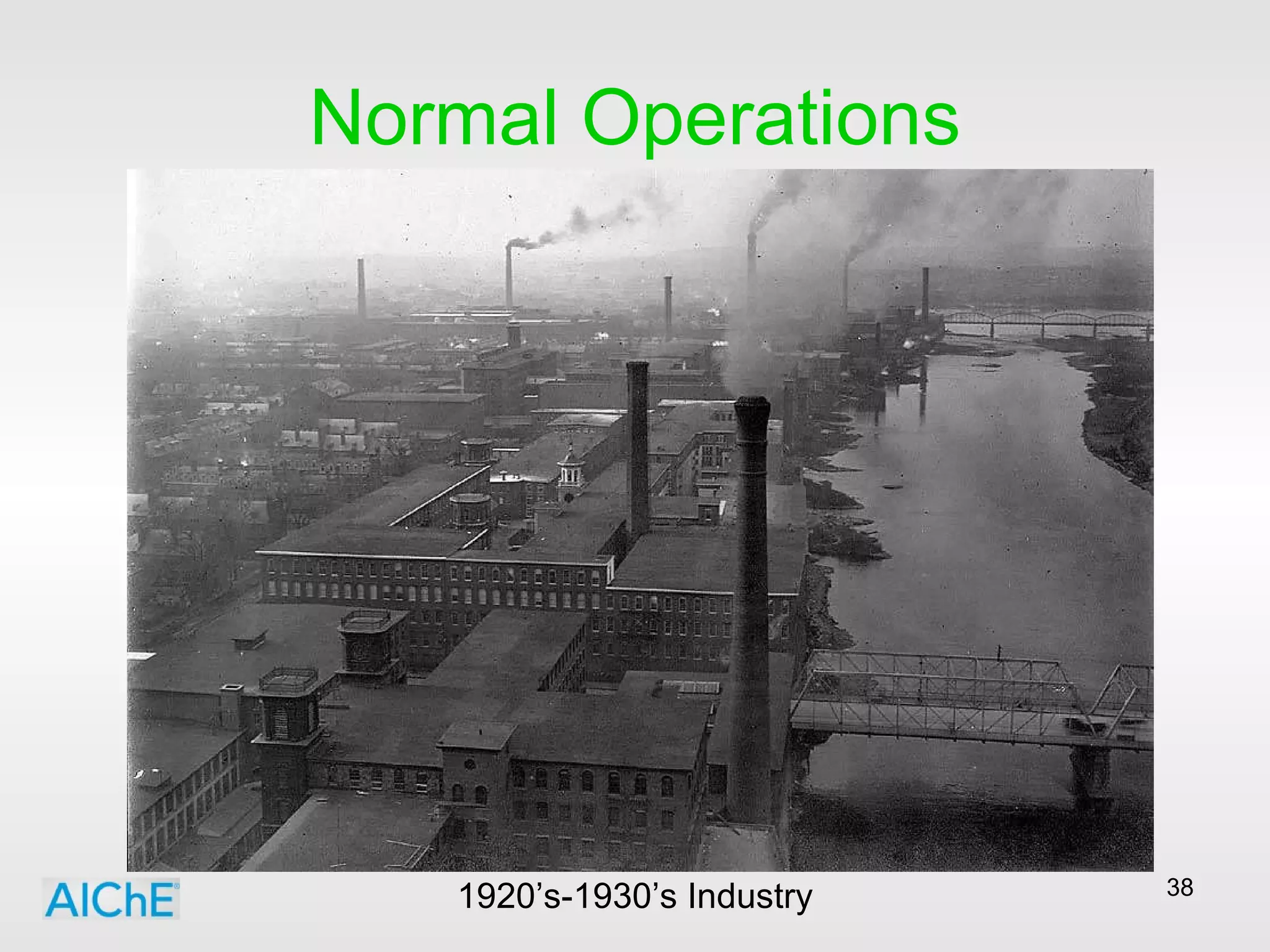
Normal Operations 1920’s-1930’s Industry
Normal Operations
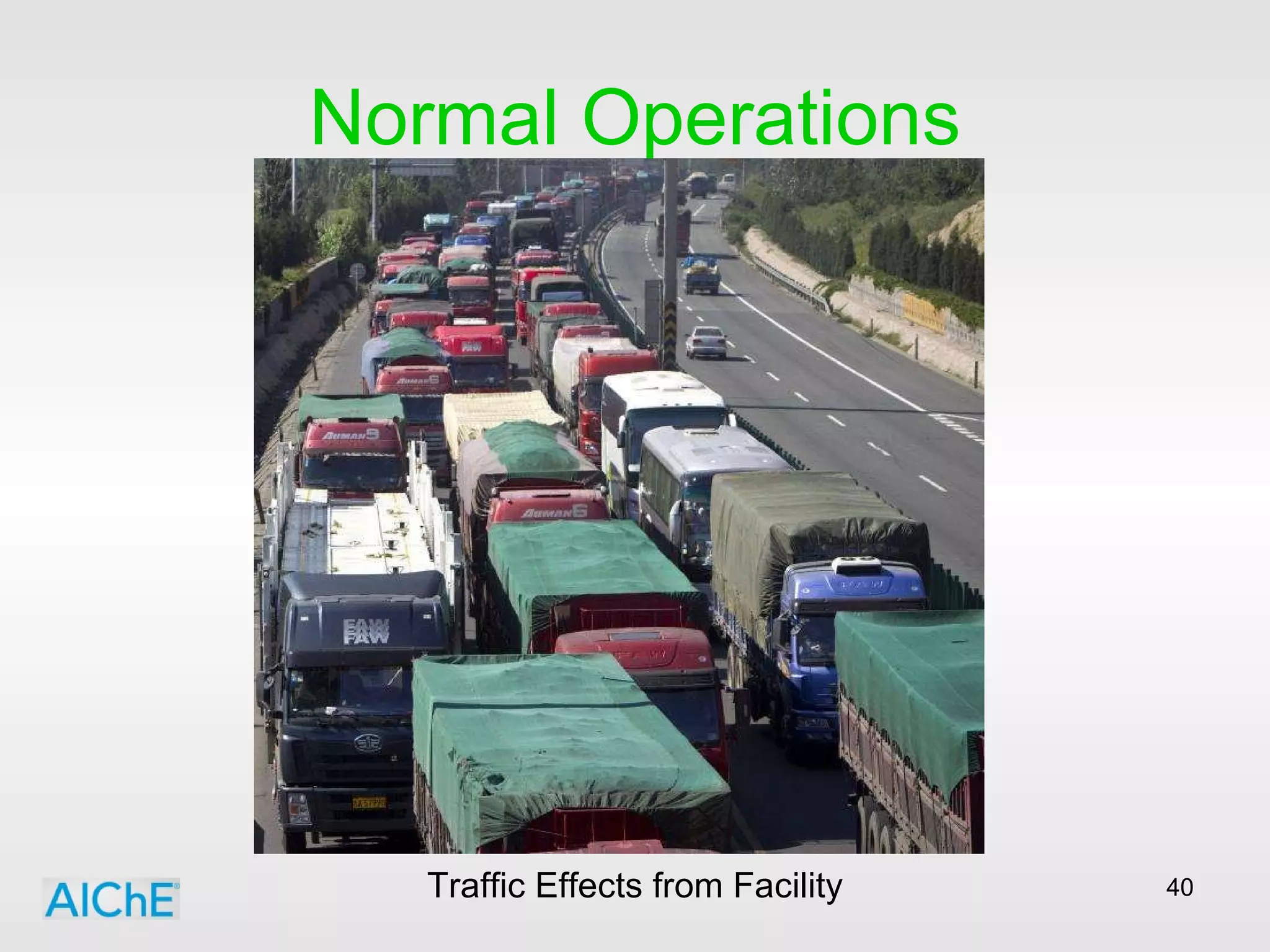
Normal Operations Traffic Effects from Facility
Internal Siting Location of Facilities within Plant Isolate Critical Buildings and Utilities from Hazards Redundancy on Utilities and Controls Proper Design of Utilities, Buildings and Structures for Overpressures and Fires Proper Level of Emergency Services
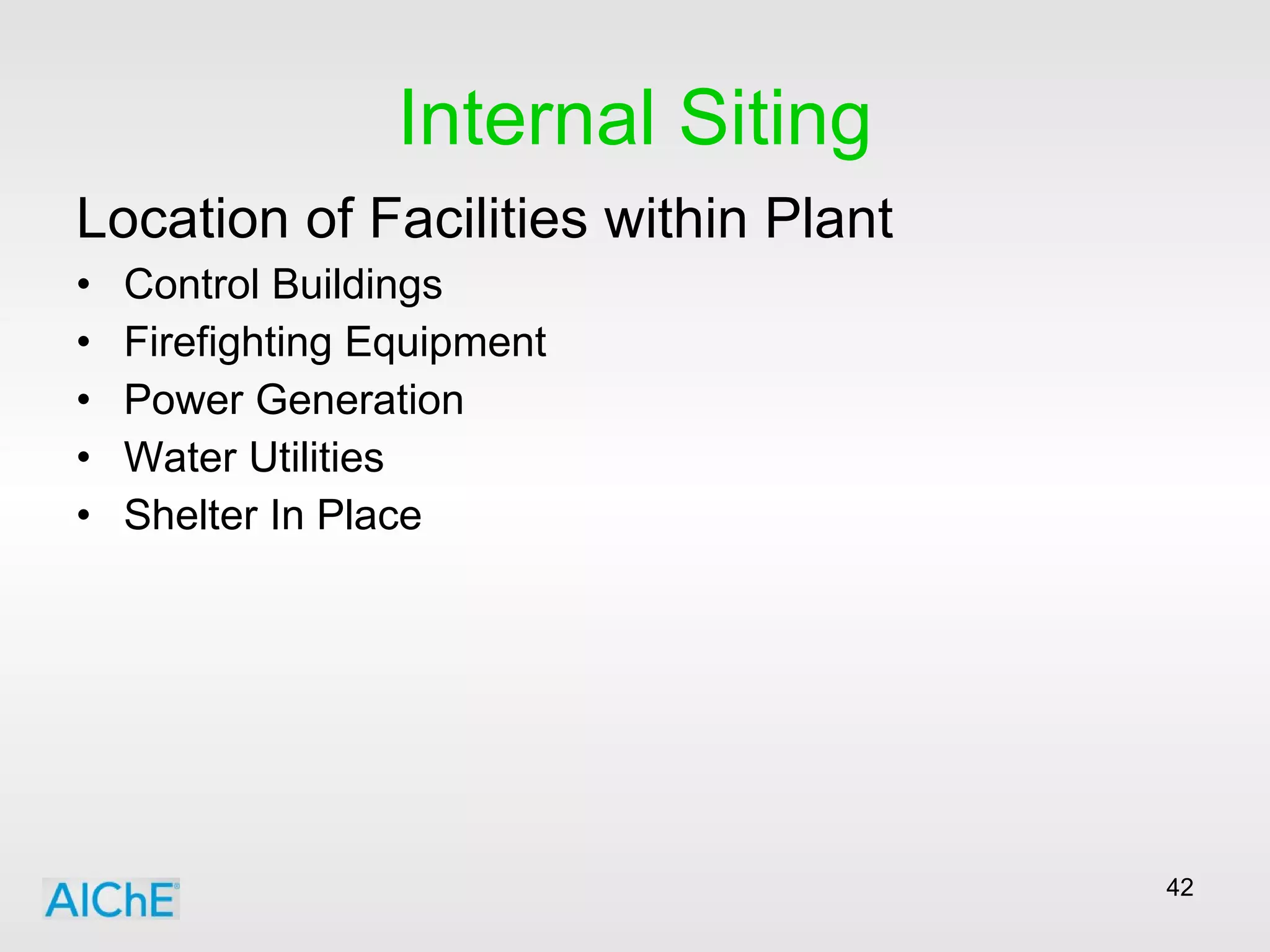
Internal Siting Location of Facilities within Plant Control Buildings Firefighting Equipment Power Generation Water Utilities Shelter In Place
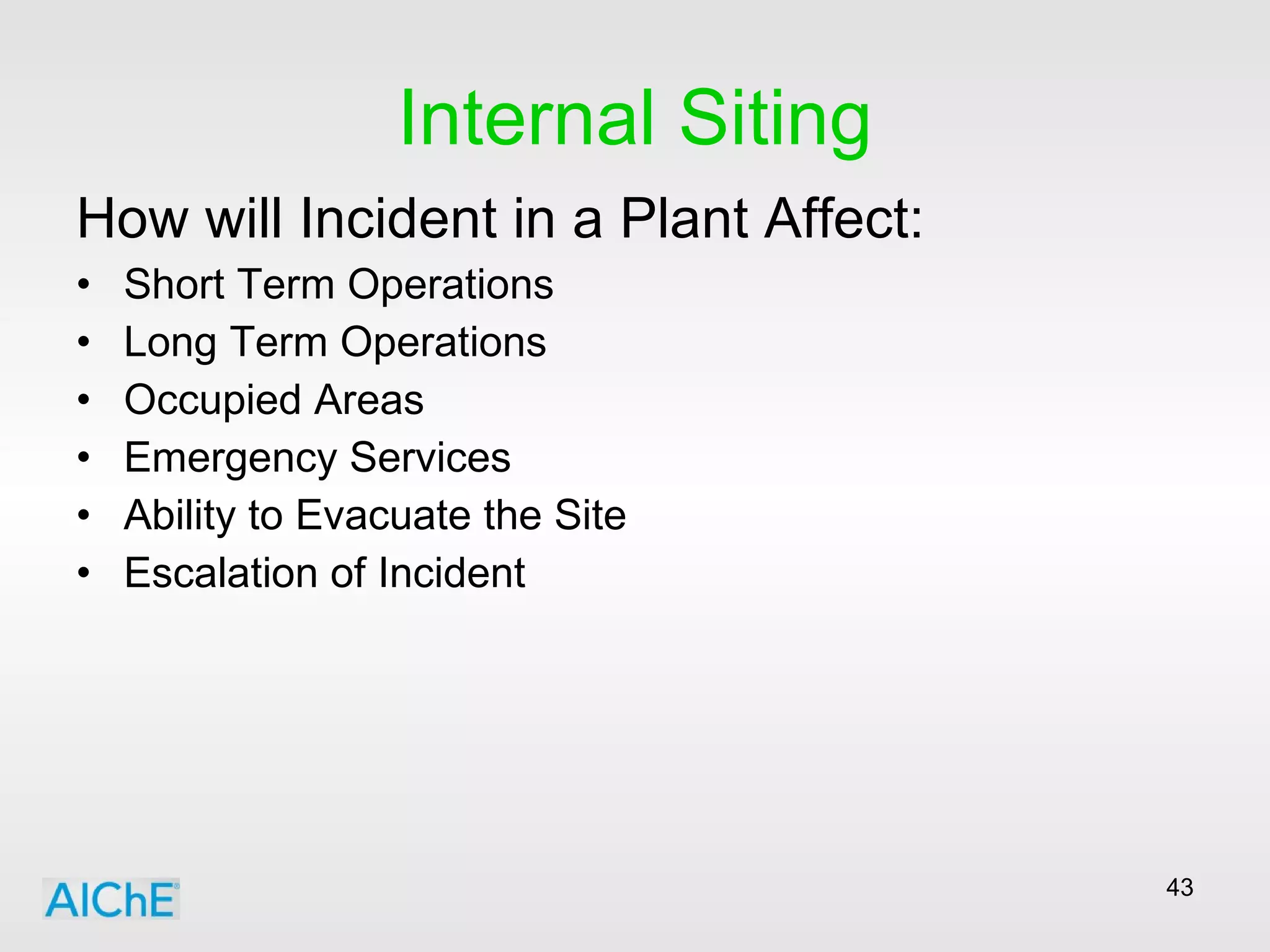
Internal Siting How will Incident in a Plant Affect: Short Term Operations Long Term Operations Occupied Areas Emergency Services Ability to Evacuate the Site Escalation of Incident
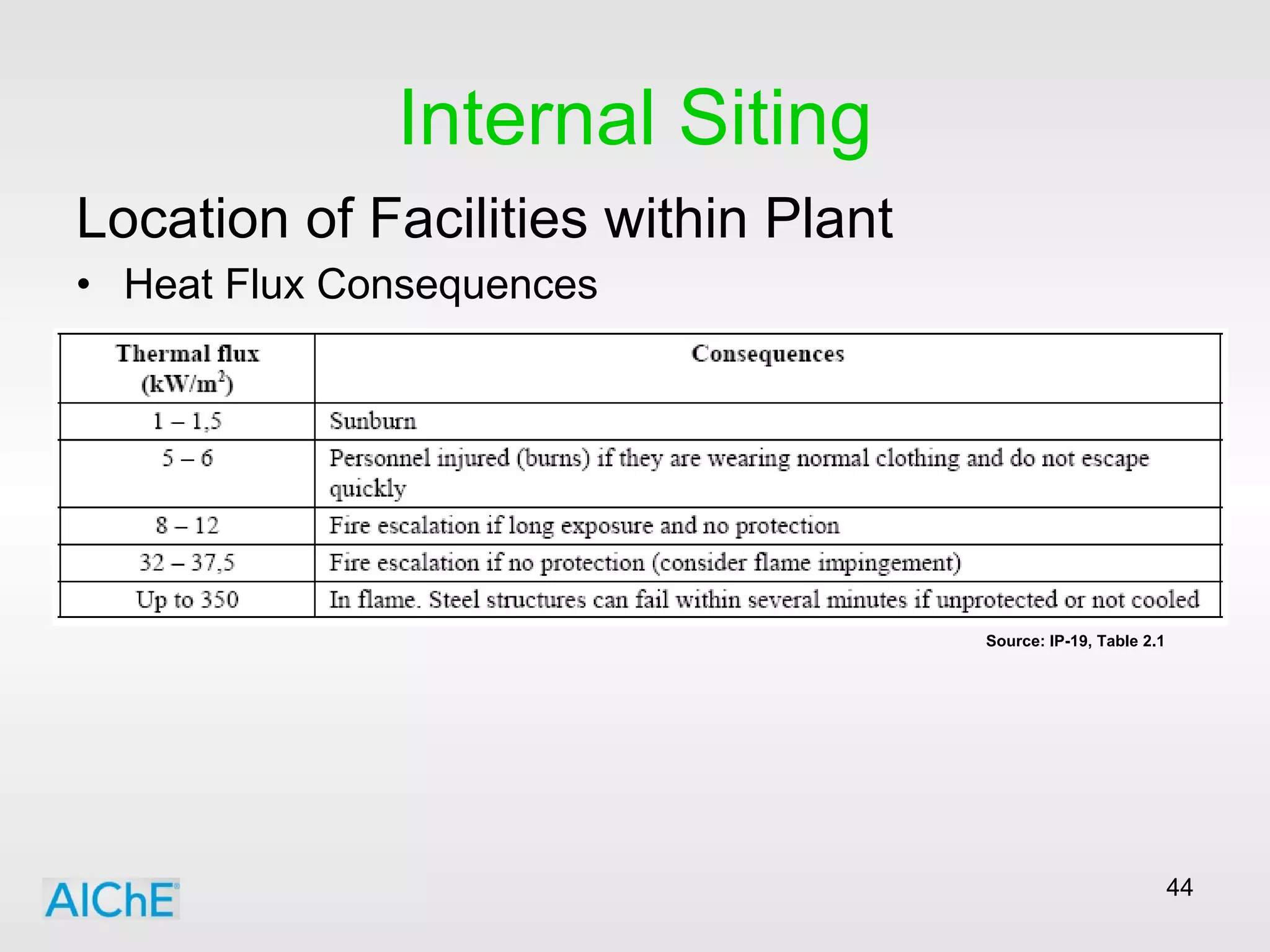
Internal Siting Location of Facilities within Plant Heat Flux Consequences Source: IP-19, Table 2.1
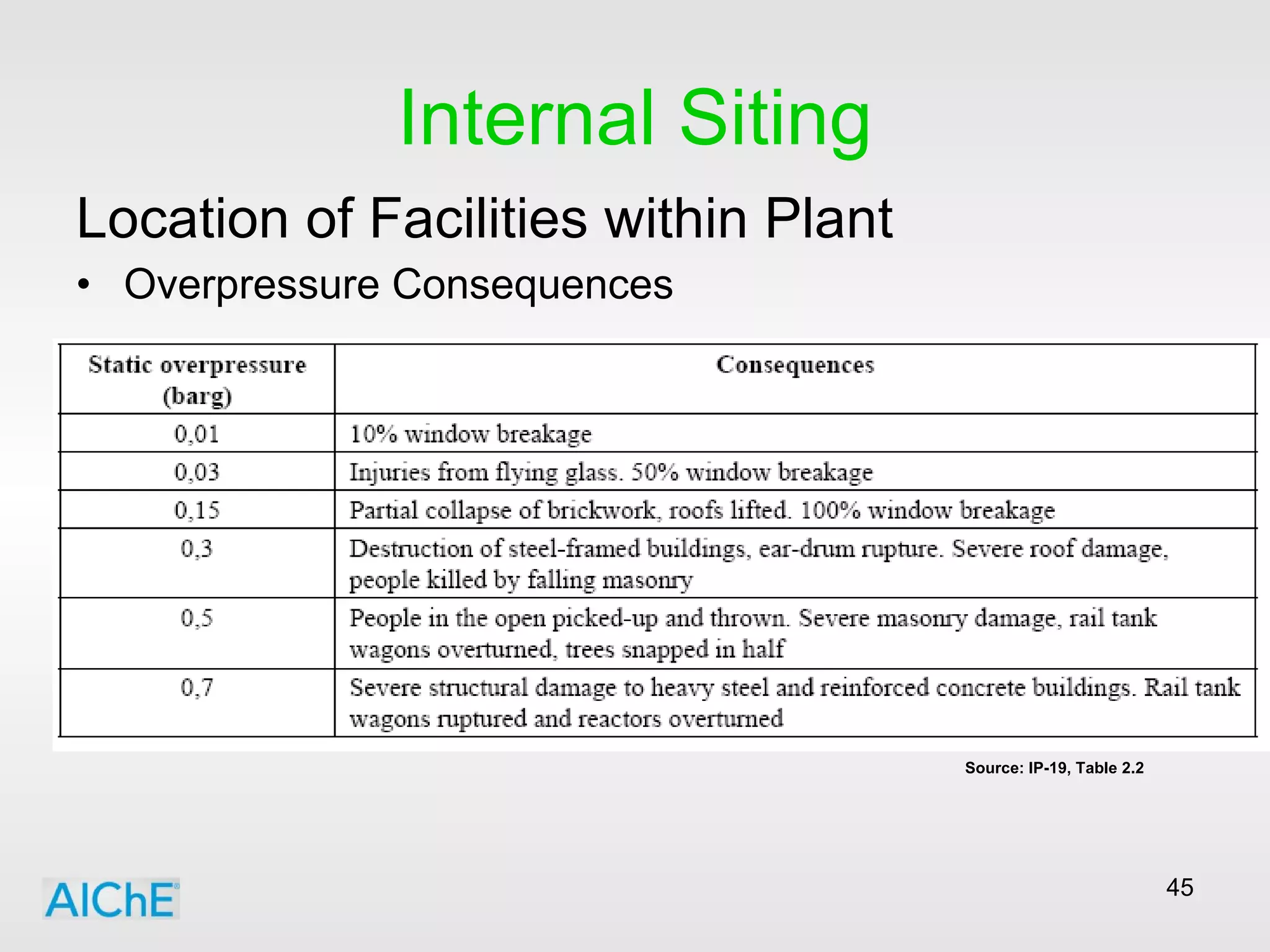
Internal Siting Location of Facilities within Plant Overpressure Consequences Source: IP-19, Table 2.2
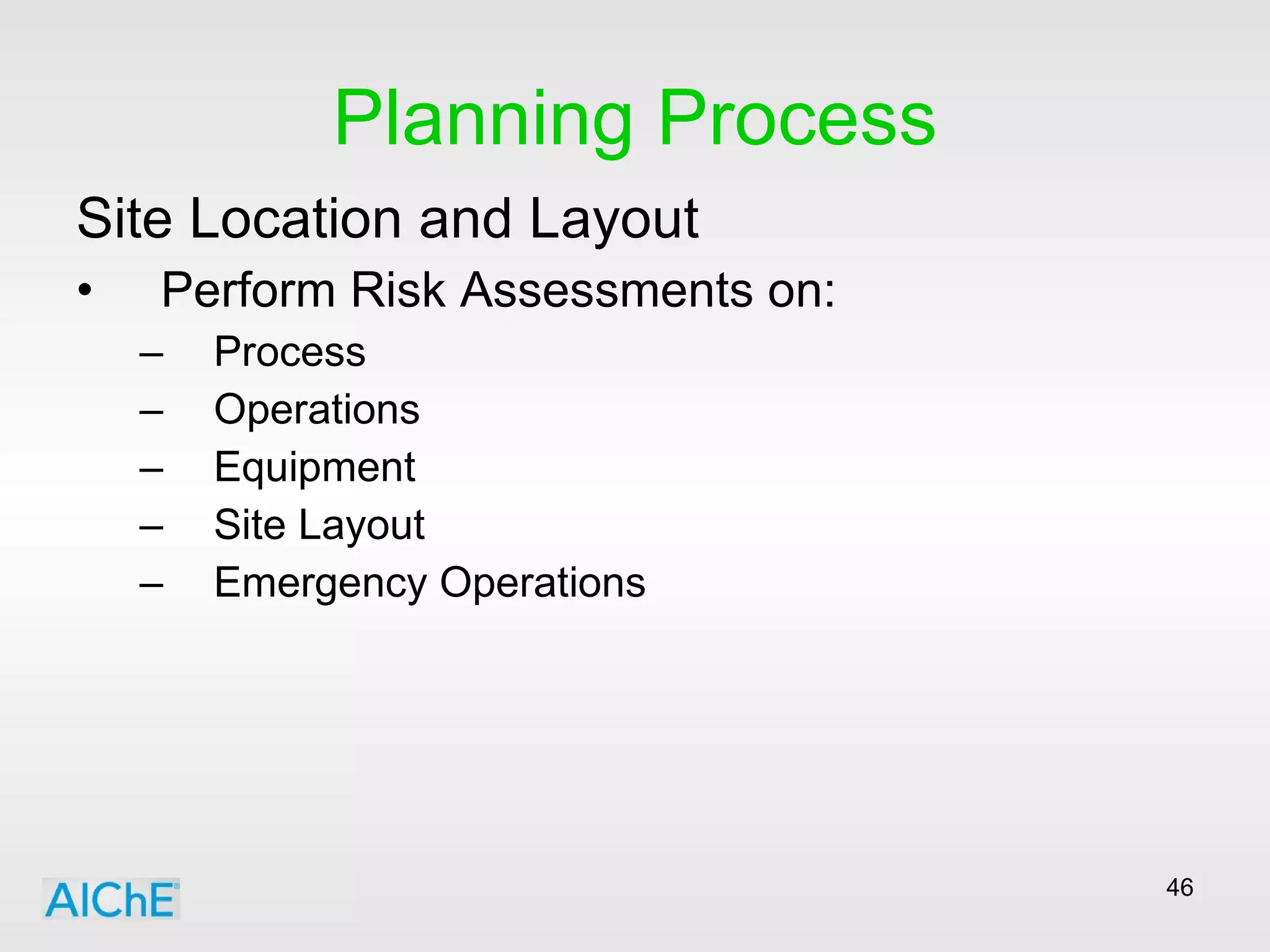
Planning Process Site Location and Layout Perform Risk Assessments on: Process Operations Equipment Site Layout Emergency Operations
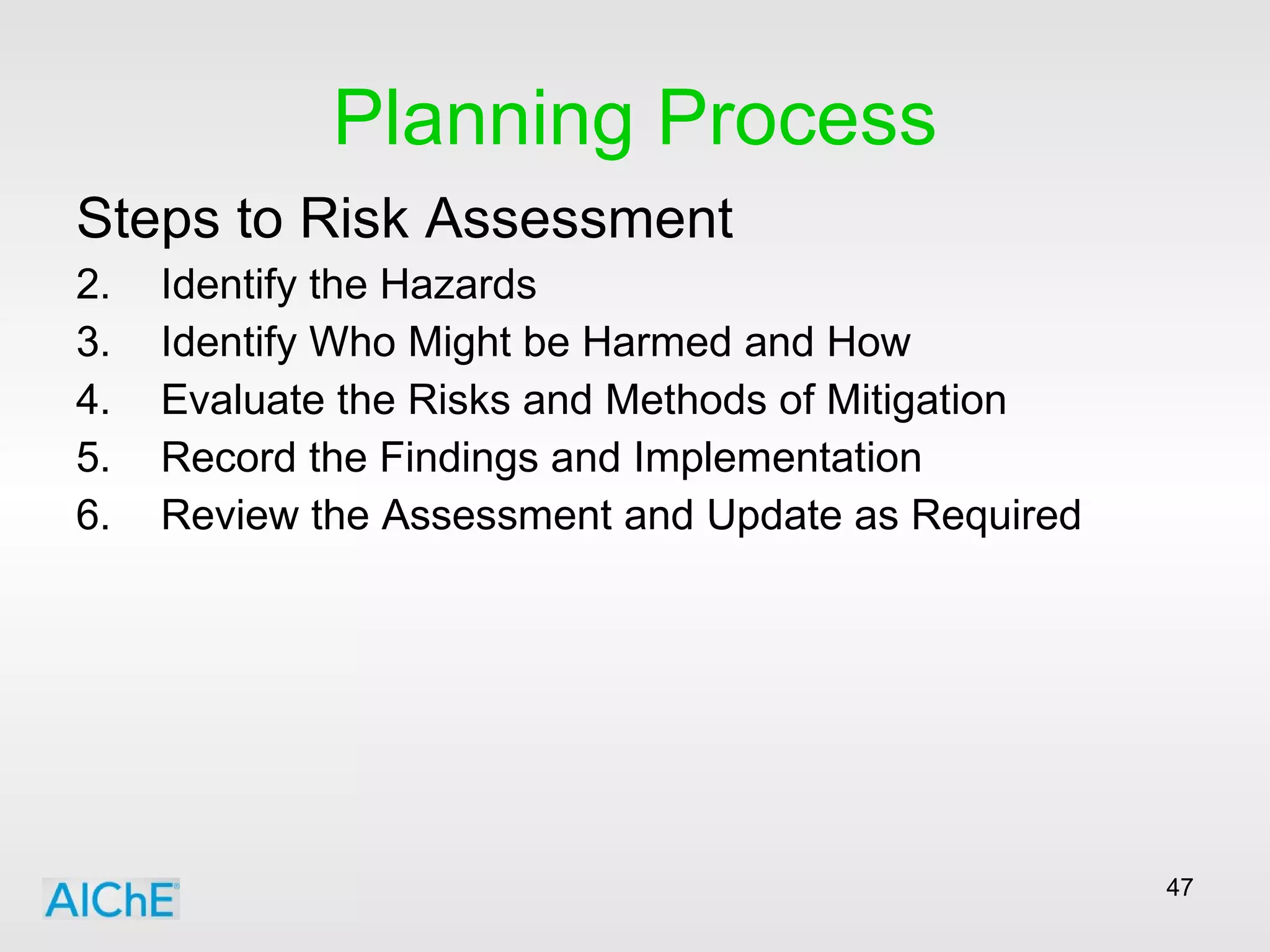
Planning Process Steps to Risk Assessment Identify the Hazards Identify Who Might be Harmed and How Evaluate the Risks and Methods of Mitigation Record the Findings and Implementation Review the Assessment and Update as Required
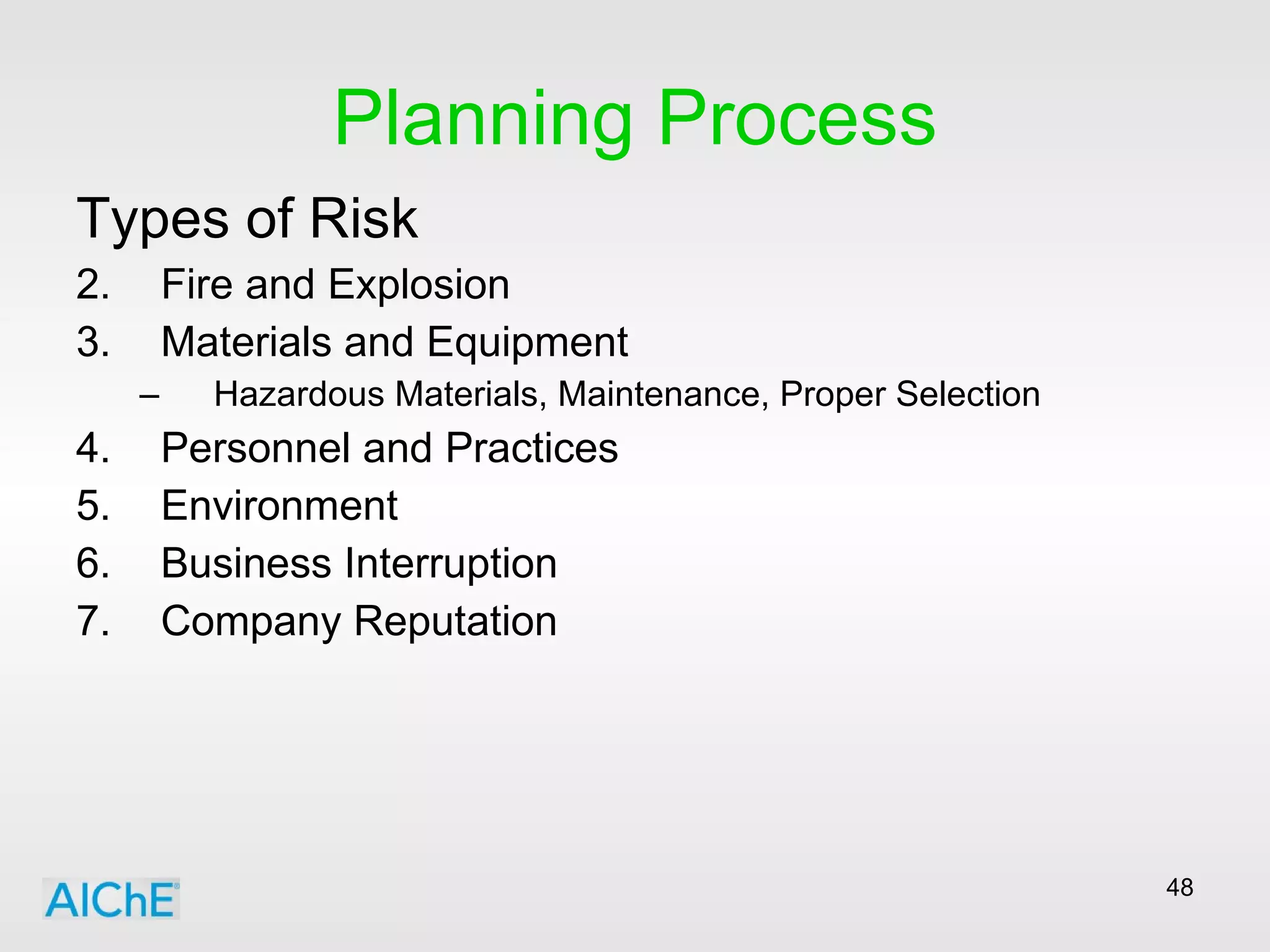
Planning Process Types of Risk Fire and Explosion Materials and Equipment Hazardous Materials, Maintenance, Proper Selection Personnel and Practices Environment Business Interruption Company Reputation
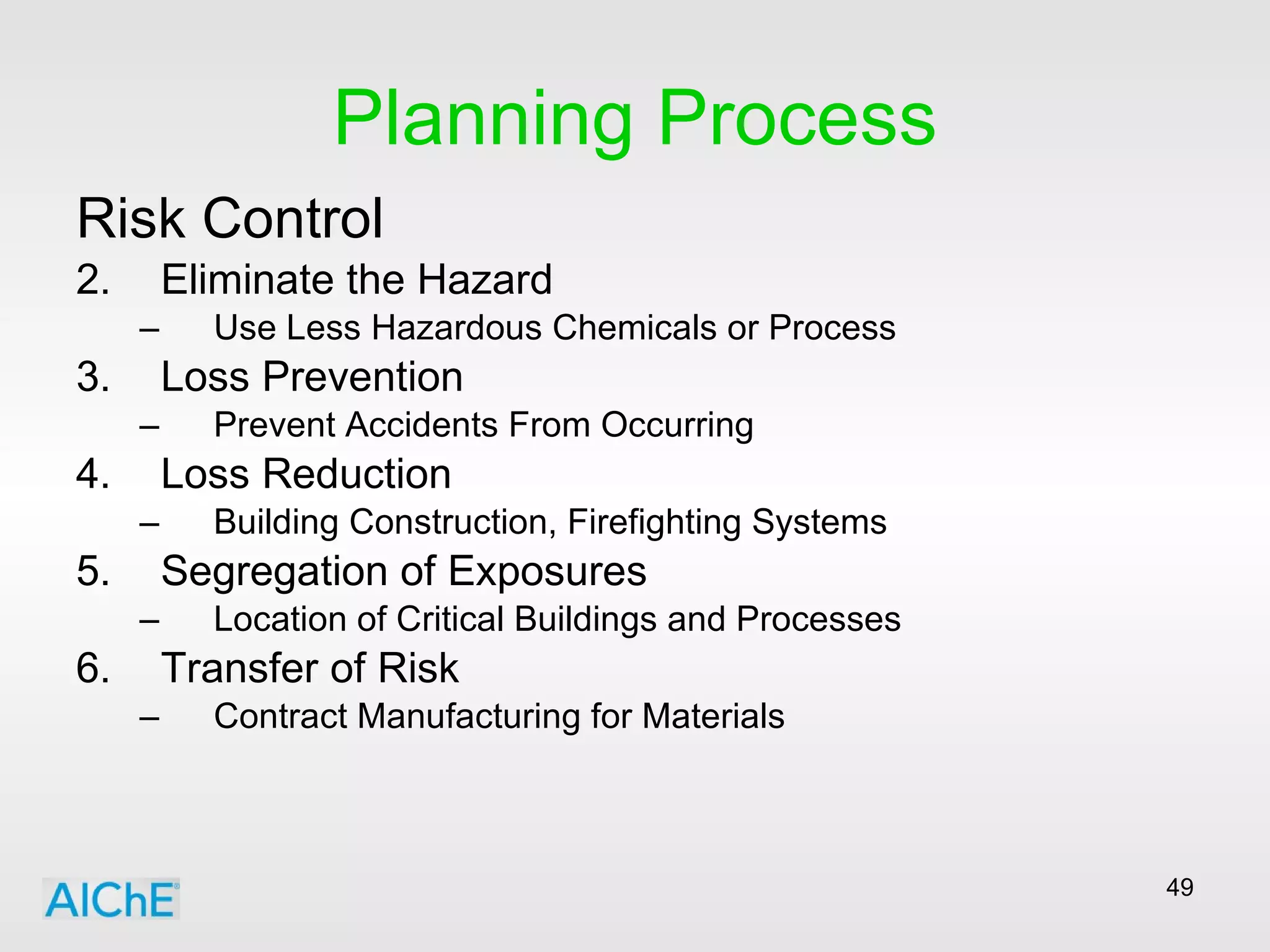
Planning Process Risk Control Eliminate the Hazard Use Less Hazardous Chemicals or Process Loss Prevention Prevent Accidents From Occurring Loss Reduction Building Construction, Firefighting Systems Segregation of Exposures Location of Critical Buildings and Processes Transfer of Risk Contract Manufacturing for Materials
Planning Process Determine Level of Acceptable Risk Based on Probability and Consequences of an Incident Industry Standards Corporate Standard Insurance Requirements
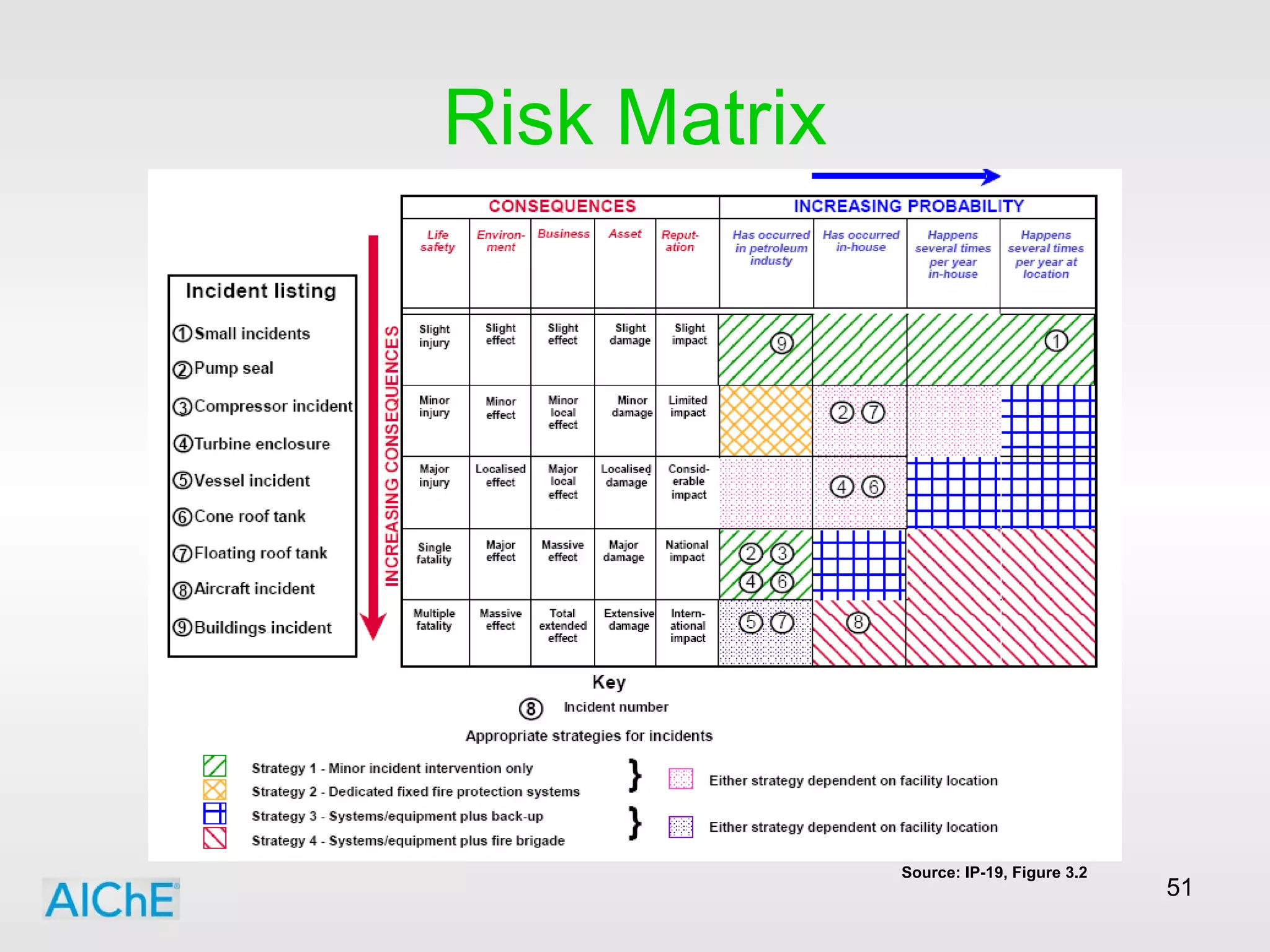
Risk Matrix Source: IP-19, Figure 3.2
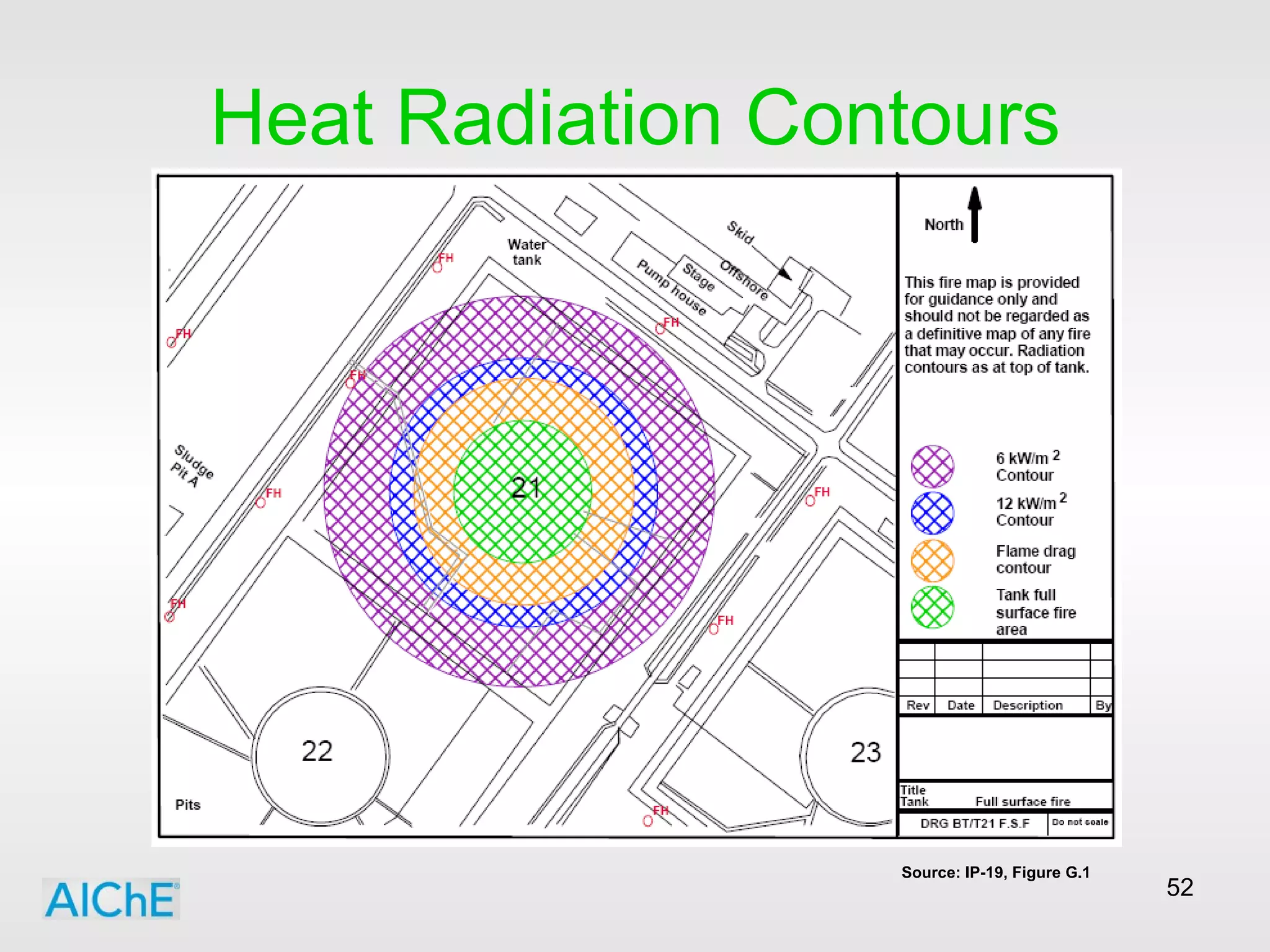
Heat Radiation Contours Source: IP-19, Figure G.1
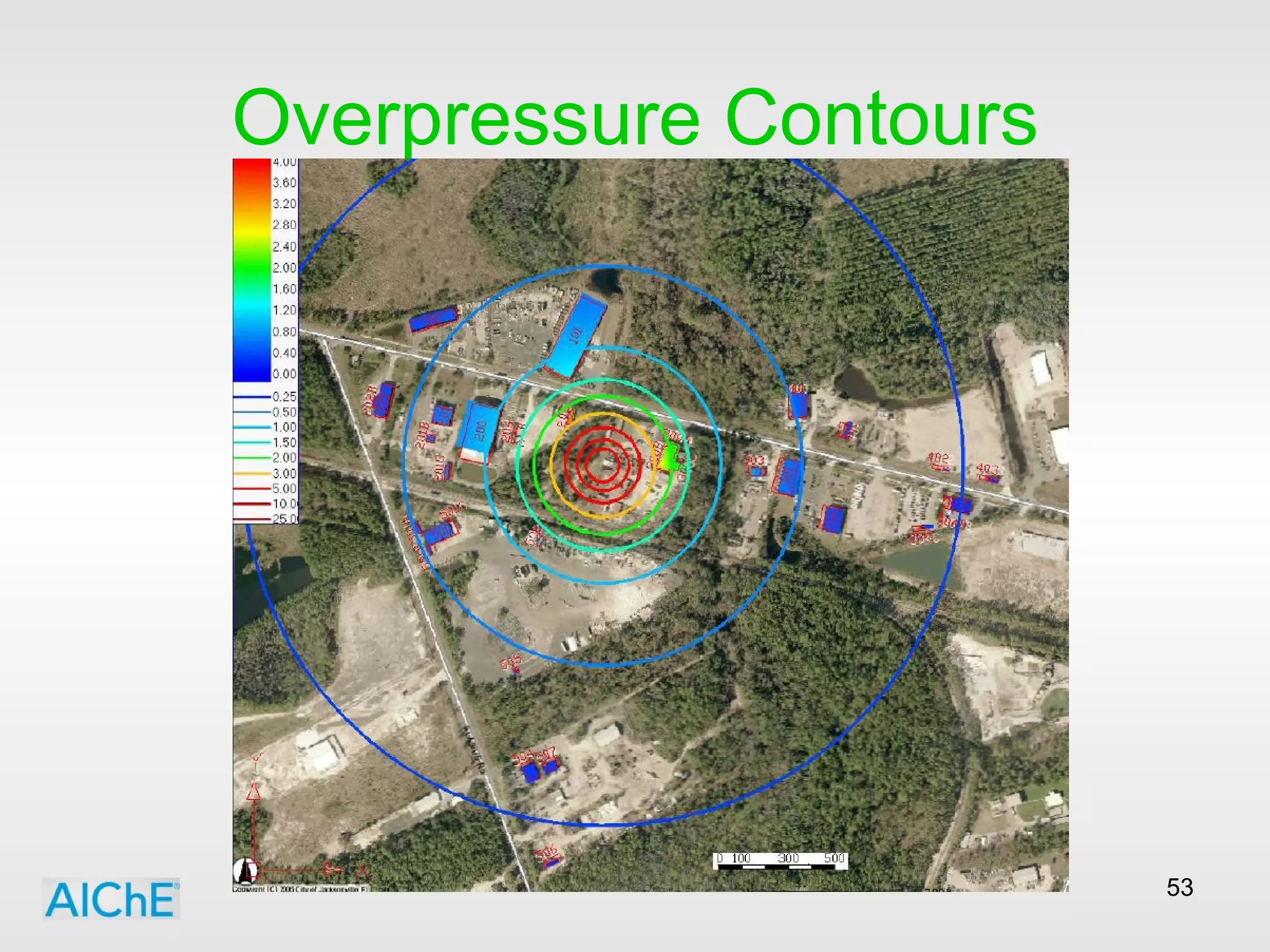
Overpressure Contours
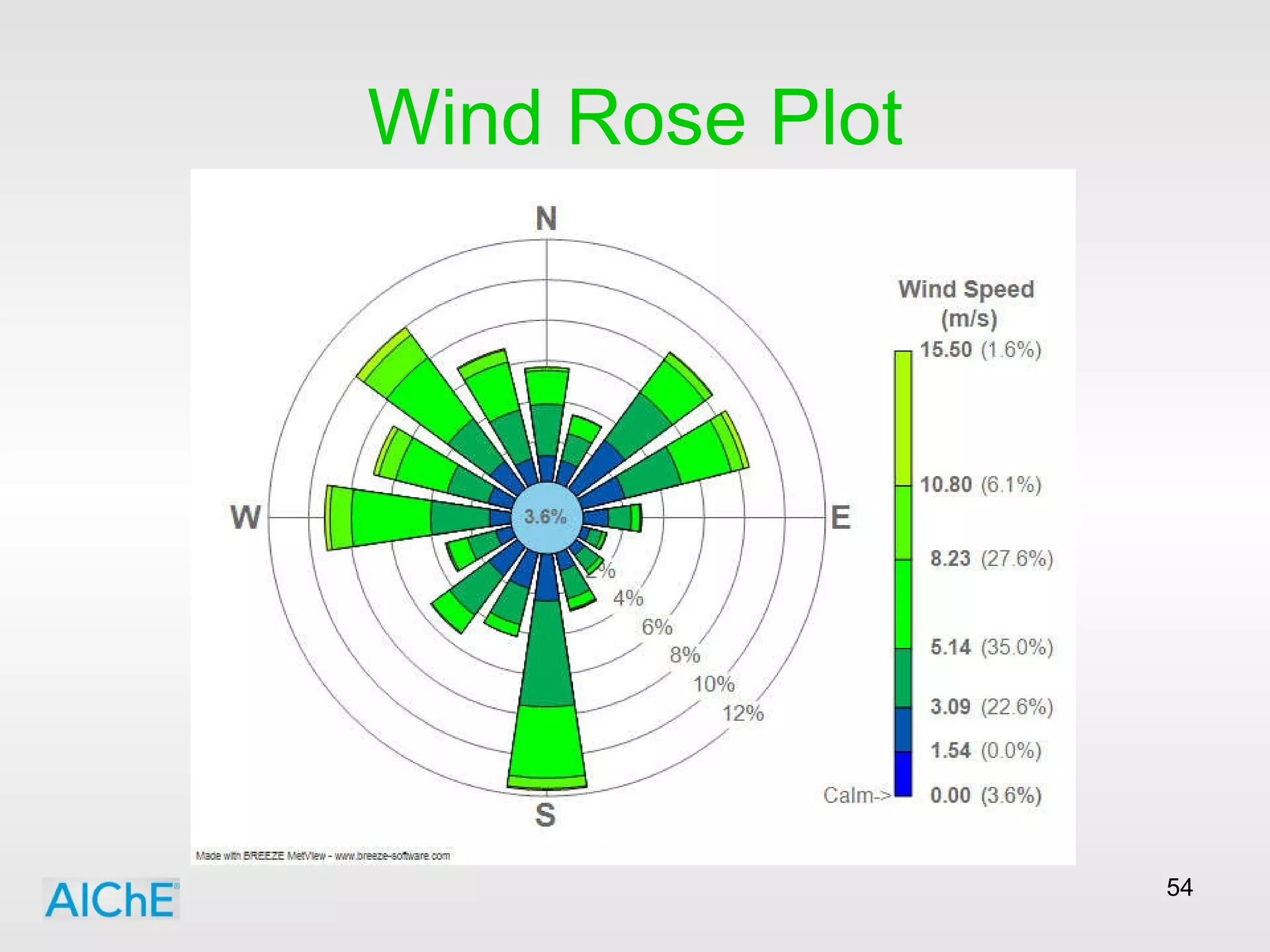
Wind Rose Plot
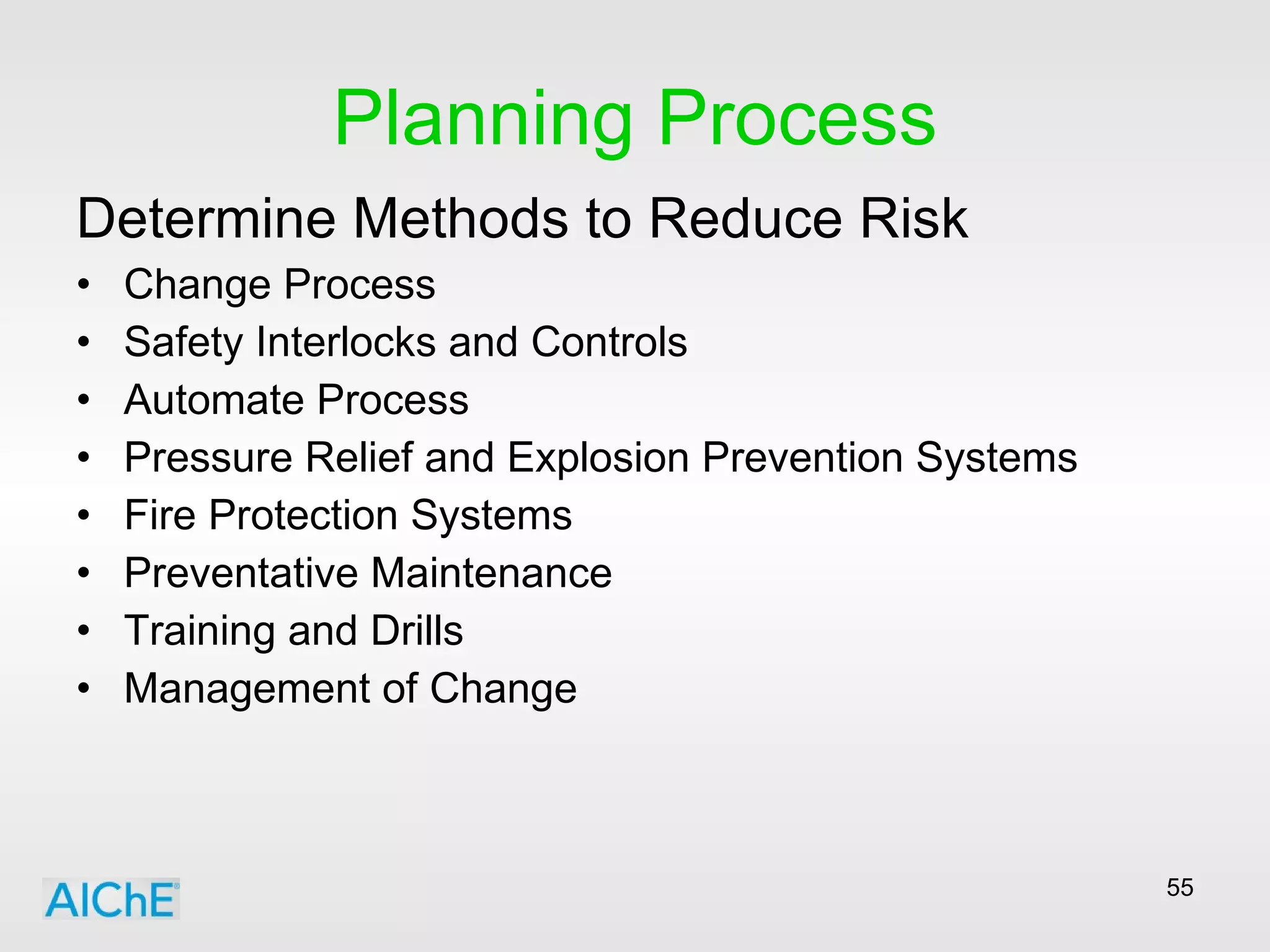
Planning Process Determine Methods to Reduce Risk Change Process Safety Interlocks and Controls Automate Process Pressure Relief and Explosion Prevention Systems Fire Protection Systems Preventative Maintenance Training and Drills  Management of Change
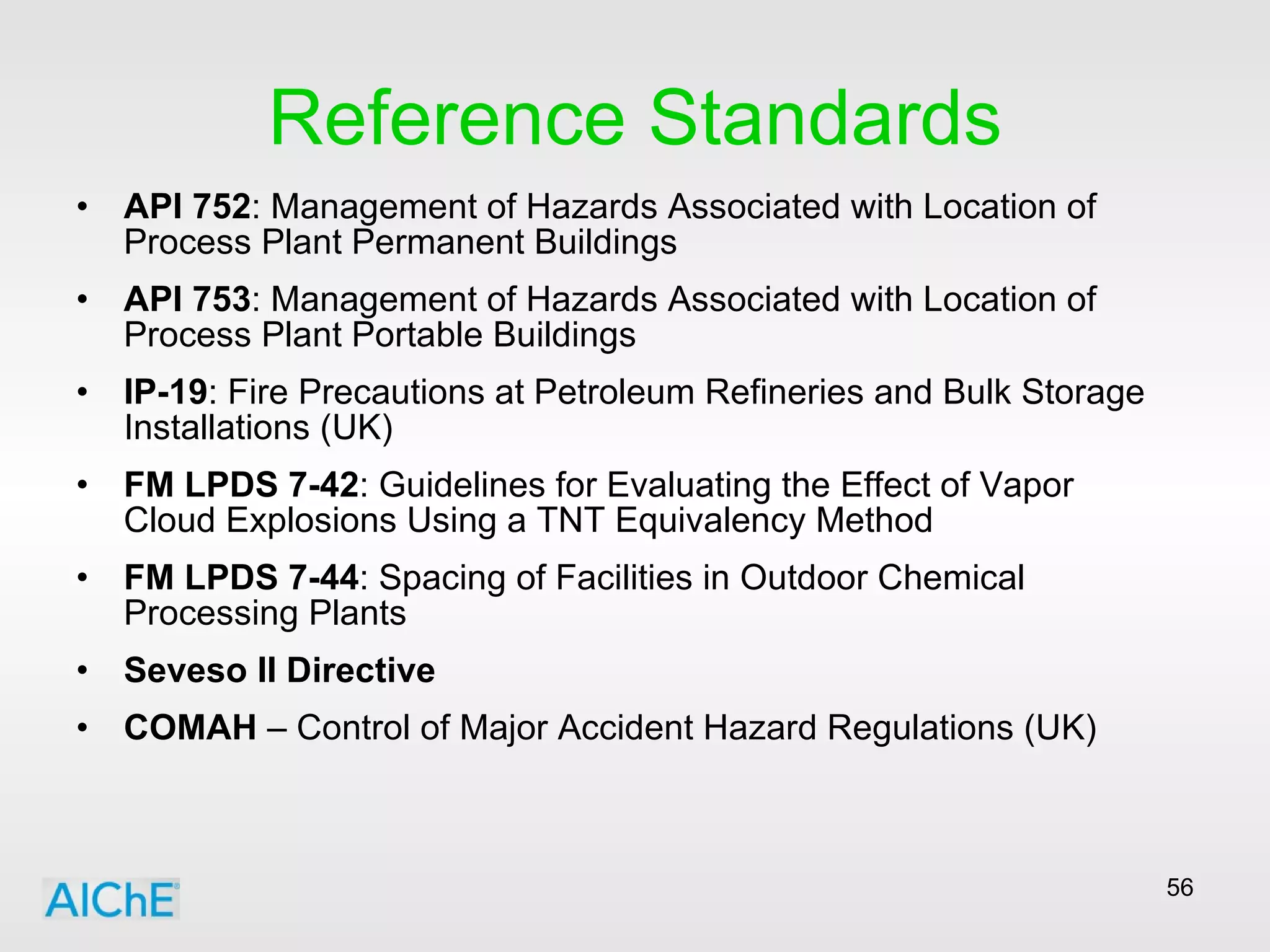
Reference Standards API 752 : Management of Hazards Associated with Location of Process Plant Permanent Buildings  API 753 : Management of Hazards Associated with Location of Process Plant Portable Buildings IP-19 : Fire Precautions at Petroleum Refineries and Bulk Storage Installations (UK) FM LPDS 7-42 : Guidelines for Evaluating the Effect of Vapor Cloud Explosions Using a TNT Equivalency Method FM LPDS 7-44 : Spacing of Facilities in Outdoor Chemical Processing Plants Seveso II Directive COMAH  – Control of Major Accident Hazard Regulations (UK)
Open Discussion Questions??   Call Bob Moser (day or night) at 1.610.888.6920

Ai Ch E Facility Siting Presentation

  • 1.
    Process Safety FacilityPlanning and Siting 23 March 2011
  • 2.
    Facility Planning ExternalLocation of Site / Effects on Community Exterior Effects on Site Internal Location/Arrangement within Site Incidents Risk Assessment Methodology
  • 3.
    Facility Planning Whyis location of site important? Why is proper planning important? Look at the present, learn form the past, and anticipate the future Include proper people in planning process Engineers / Designers Operations Management Emergency Services
  • 4.
    External Siting Typesof Incidents Fires and Explosions Toxic Air Release Spill into Waterways Disruption of Public Wastewater Treatment Plant Groundwater Contamination Normal Air Emissions
  • 5.
    External Siting Locationof a site with respect to surrounding area and community. Evaluate the effects of an incident on areas outside the plant. Evaluate the effects of normal operation on areas outside the plant. NIMBY – Not In My Back Yard
  • 6.
    External Siting Evaluatethe effects of surroundings on the facility. Adjacent Highways/Railways Transport of Hazardous Chemicals Environment Weather
  • 7.
    Incidents Possible Effectsof an Incident Loss of Life Loss of Jobs Business Interruption Increased Consumer Costs from Reduced Supply Increased Costs in Insurance Costs / Premiums Environmental Impacts Negative Impact on Company Reputation
  • 8.
    Incident No. 1Flixborough, UK 16:53 Saturday, June 01, 1974 28 People Killed, 36 Injured Fire on an 8 inch Pipe Bypass Pipe Containing Cyclohexane (150 ºC, 10 bar) ruptured. 40 Tonnes Cyclohexane leaked – 100 to 200 m Vapor Cloud.
  • 9.
    Incident No. 1Flixborough, UK 1,800 buildings within 1 mile radius damaged Fires in area lasted for 10 days Explosion equivalent to 15 Tonnes TNT All 18 people in control room killed 500+ would have been killed during a weekday
  • 10.
    Incident No. 1Flixborough, UK
  • 11.
  • 12.
  • 13.
    Incident No. 2Toulouse, France AZF – Fertilizer Manufacturing and Warehouse September 25, 2001 – Originally thought to be terrorism 300 Tonnes of Ammonium Nitrate Exploded Mislabeled Chemical, Hot & Humid Conditions in Warehouse Crater – 100 ft deep, 650 ft diamter Steel structure found 3 km away Blast measured 3.4 on Richter scale, heard 80 km away
  • 14.
    Incident No. 2Toulouse, France Plant Built in 1924 – Rural Area 2005 Population – Over 400,000 Residential area – 1 km away Schools, University and hospitals evacuated 29 deaths (28 plant, 1 nearby school) 2,500 serious injuries; 8,000 minor injuries City advised people to stay indoors and close windows Two-Thirds city’s windows shattered 40,000 people homeless
  • 15.
  • 16.
    Incident No. 3Buncefield Tank Farm Tank Farm in Hertfordshire, England Incident Occurred on December 11, 2005 Overflow of Filling Gasoline Storage Tank and Resulting Explosion Flammable Cloud – 400m Across Explosion 2.4 on the Richter Scale 23 Storage Tanks on Fire 43 Injured, 0 Fatalities Fire Burned for Several Days
  • 17.
  • 18.
  • 19.
    Incident No. 3View From London
  • 20.
  • 21.
  • 22.
  • 23.
  • 24.
  • 25.
    Incident No. 4Chemie-Pack, Moerdijk, The Netherlands Chemical Packing Plant – 50 Employees Incident Occurred on January 5, 2011 No Immediate Injuries 400,000 L Carcinogenic Chemicals in Storage Flames 40m (130 ft) high Fumes and Smoke reached 3.2km away Company fined in 2006 for fire and safety violations
  • 26.
    Incident No. 4Chemie-Pack, Moerdijk, The Netherlands Shipping on Hollands Diep River was halted for the area A16 and A17 Roads Closed Train Traffic Stopped Fire spread to the nearby Wärtsilä engine factory Government stopped sale of vegetables from nearby farms Children to stay indoors while environmental impact was assessed
  • 27.
  • 28.
  • 29.
  • 30.
  • 31.
  • 32.
  • 33.
    Incident No. 5Port Wentworth, Georgia February 7, 2008 Imperial Sugar Plant Explosion 112 people at the plant -14 Killed, 42 Injured CSB Investigation Poor Equipment Design, Maintenance and Housekeeping Sugar Conveyor was inadequately designed with dust buildup No evacuation drills, Emergency Lighting disabled
  • 34.
  • 35.
  • 36.
  • 37.
    Normal Operations EvaluateAir Emissions Adjacent Waterways Flood Plains Noise Pollution Light Pollution Effects on Traffic Maintenance Infrastructure – Utility Needs Site Security
  • 38.
  • 39.
  • 40.
    Normal Operations TrafficEffects from Facility
  • 41.
    Internal Siting Locationof Facilities within Plant Isolate Critical Buildings and Utilities from Hazards Redundancy on Utilities and Controls Proper Design of Utilities, Buildings and Structures for Overpressures and Fires Proper Level of Emergency Services
  • 42.
    Internal Siting Locationof Facilities within Plant Control Buildings Firefighting Equipment Power Generation Water Utilities Shelter In Place
  • 43.
    Internal Siting Howwill Incident in a Plant Affect: Short Term Operations Long Term Operations Occupied Areas Emergency Services Ability to Evacuate the Site Escalation of Incident
  • 44.
    Internal Siting Locationof Facilities within Plant Heat Flux Consequences Source: IP-19, Table 2.1
  • 45.
    Internal Siting Locationof Facilities within Plant Overpressure Consequences Source: IP-19, Table 2.2
  • 46.
    Planning Process SiteLocation and Layout Perform Risk Assessments on: Process Operations Equipment Site Layout Emergency Operations
  • 47.
    Planning Process Stepsto Risk Assessment Identify the Hazards Identify Who Might be Harmed and How Evaluate the Risks and Methods of Mitigation Record the Findings and Implementation Review the Assessment and Update as Required
  • 48.
    Planning Process Typesof Risk Fire and Explosion Materials and Equipment Hazardous Materials, Maintenance, Proper Selection Personnel and Practices Environment Business Interruption Company Reputation
  • 49.
    Planning Process RiskControl Eliminate the Hazard Use Less Hazardous Chemicals or Process Loss Prevention Prevent Accidents From Occurring Loss Reduction Building Construction, Firefighting Systems Segregation of Exposures Location of Critical Buildings and Processes Transfer of Risk Contract Manufacturing for Materials
  • 50.
    Planning Process DetermineLevel of Acceptable Risk Based on Probability and Consequences of an Incident Industry Standards Corporate Standard Insurance Requirements
  • 51.
    Risk Matrix Source:IP-19, Figure 3.2
  • 52.
    Heat Radiation ContoursSource: IP-19, Figure G.1
  • 53.
  • 54.
  • 55.
    Planning Process DetermineMethods to Reduce Risk Change Process Safety Interlocks and Controls Automate Process Pressure Relief and Explosion Prevention Systems Fire Protection Systems Preventative Maintenance Training and Drills Management of Change
  • 56.
    Reference Standards API752 : Management of Hazards Associated with Location of Process Plant Permanent Buildings API 753 : Management of Hazards Associated with Location of Process Plant Portable Buildings IP-19 : Fire Precautions at Petroleum Refineries and Bulk Storage Installations (UK) FM LPDS 7-42 : Guidelines for Evaluating the Effect of Vapor Cloud Explosions Using a TNT Equivalency Method FM LPDS 7-44 : Spacing of Facilities in Outdoor Chemical Processing Plants Seveso II Directive COMAH – Control of Major Accident Hazard Regulations (UK)
  • 57.
    Open Discussion Questions?? Call Bob Moser (day or night) at 1.610.888.6920