STORY MAPPING
Product Camp Austin 11
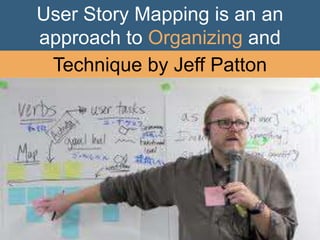
User Story Mapping is an an
approach to Organizing and
Prioritizing user storiesTechnique by Jeff Patton
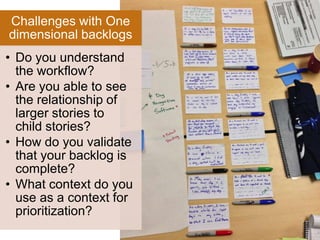
Challenges with One
dimensional backlogs
• Do you understand
the workflow?
• Are you able to see
the relationship of
larger stories to
child stories?
• How do you validate
that your backlog is
complete?
• What context do you
use as a context for
prioritization?
We want to Shift the Process from a
Requirements Delivery Process…
False Assumptions:
1. The customer knows what he wants
2. The developers know how to build it
3. Nothing will change along the way
…To a Requirements Discovery
Process
Reality:
1. The customer discovers what he wants
2. The developers discover how to build it
3. Many things change along the way
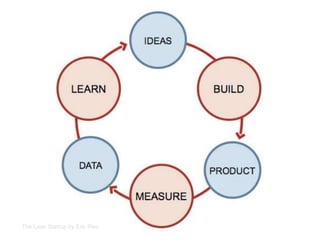
The Lean Startup by Eric Ries
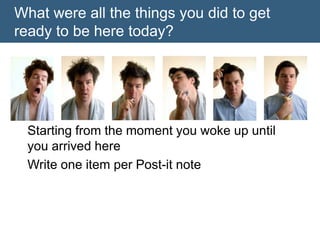
What were all the things you did to get
ready to be here today?
Starting from the moment you woke up until
you arrived here
Write one item per Post-it note
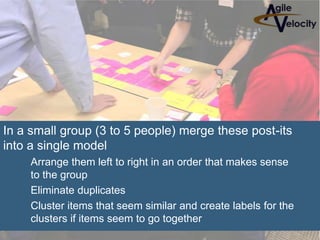
In a small group (3 to 5 people) merge these post-its
into a single model
Arrange them left to right in an order that makes sense
to the group
Eliminate duplicates
Cluster items that seem similar and create labels for the
clusters if items seem to go together
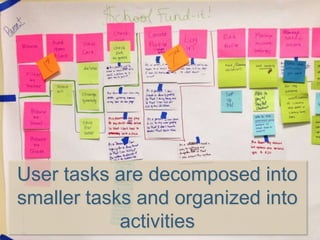
User tasks are decomposed into
smaller tasks and organized into
activities
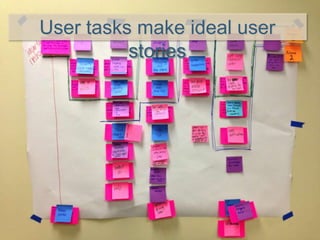
User tasks make ideal user
stories
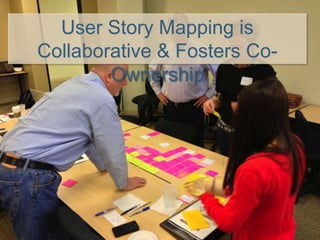
User Story Mapping is
Collaborative & Fosters Co-
Ownership
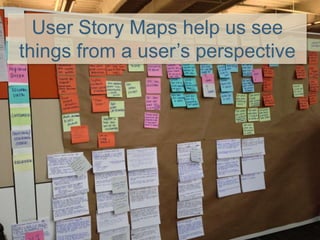
User Story Maps help us see
things from a user’s perspective
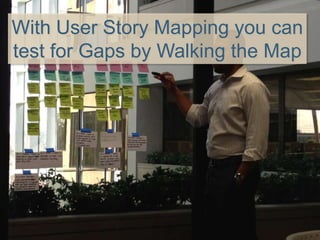
With User Story Mapping you can
test for Gaps by Walking the Map
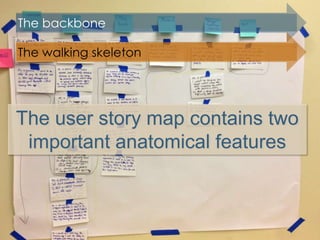
The user story map contains two
important anatomical features
The backbone
The walking skeleton
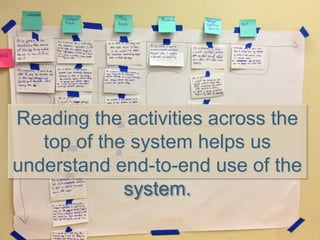
Reading the activities across the
top of the system helps us
understand end-to-end use of the
system.
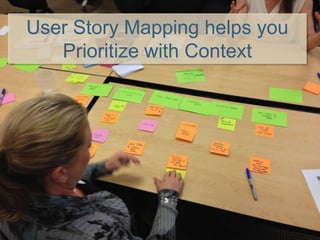
User Story Mapping helps you
Prioritize with Context
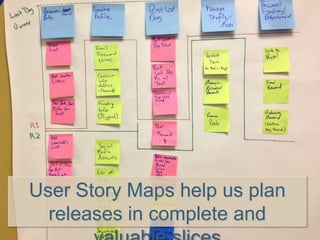
User Story Maps help us plan
releases in complete and
How do you think you could benefit
from User Story Mapping?
Agile Velocity Story Mapping Session from Product Camp Austin 11 #PCATX

Agile Velocity Story Mapping Session from Product Camp Austin 11 #PCATX

  • 1.
  • 3.
    User Story Mappingis an an approach to Organizing and Prioritizing user storiesTechnique by Jeff Patton
  • 4.
    Challenges with One dimensionalbacklogs • Do you understand the workflow? • Are you able to see the relationship of larger stories to child stories? • How do you validate that your backlog is complete? • What context do you use as a context for prioritization?
  • 5.
    We want toShift the Process from a Requirements Delivery Process… False Assumptions: 1. The customer knows what he wants 2. The developers know how to build it 3. Nothing will change along the way
  • 6.
    …To a RequirementsDiscovery Process Reality: 1. The customer discovers what he wants 2. The developers discover how to build it 3. Many things change along the way
  • 7.
    The Lean Startupby Eric Ries
  • 8.
    What were allthe things you did to get ready to be here today? Starting from the moment you woke up until you arrived here Write one item per Post-it note
  • 9.
    In a smallgroup (3 to 5 people) merge these post-its into a single model Arrange them left to right in an order that makes sense to the group Eliminate duplicates Cluster items that seem similar and create labels for the clusters if items seem to go together
  • 10.
    User tasks aredecomposed into smaller tasks and organized into activities
  • 11.
    User tasks makeideal user stories
  • 12.
    User Story Mappingis Collaborative & Fosters Co- Ownership
  • 13.
    User Story Mapshelp us see things from a user’s perspective
  • 14.
    With User StoryMapping you can test for Gaps by Walking the Map
  • 15.
    The user storymap contains two important anatomical features The backbone The walking skeleton
  • 16.
    Reading the activitiesacross the top of the system helps us understand end-to-end use of the system.
  • 17.
    User Story Mappinghelps you Prioritize with Context
  • 18.
    User Story Mapshelp us plan releases in complete and
  • 19.
    How do youthink you could benefit from User Story Mapping?

Editor's Notes

  • #13 Tasks require intentional action on behalf of a tool’s user Tasks have an objective that can be completedTasks decompose into smaller tasksTasks often cluster together into activities of related tasks“Read an email message” is a task, “Managing email” is an activity.
  • #15 Involve the team and stakeholdersStory Maps support the primary intent of user stories, rich discussionShared Discovery
  • #18 The backbone of the application is the list of essential activities the application supportsThe walking skeleton is the software we build that supports the least number of necessary tasks across the full span of user experience
  • #19 Reading the activities across the top of the system helps us understand end-to-end use of the system. (Talk through just these when talking with people with short attention spans.)