2010   Hunton & Williams
        Agile Software Development – How it can go
        wrong

        Purdey Castle
        Associate
1. What is Agile Software Development?


                                         2
Agile Software Development: Key Concepts


   A reaction to “waterfall” models
   Iterative development
   Collaboration / Team work
   Cross functional teams
   Face-to-face communication


                                           3
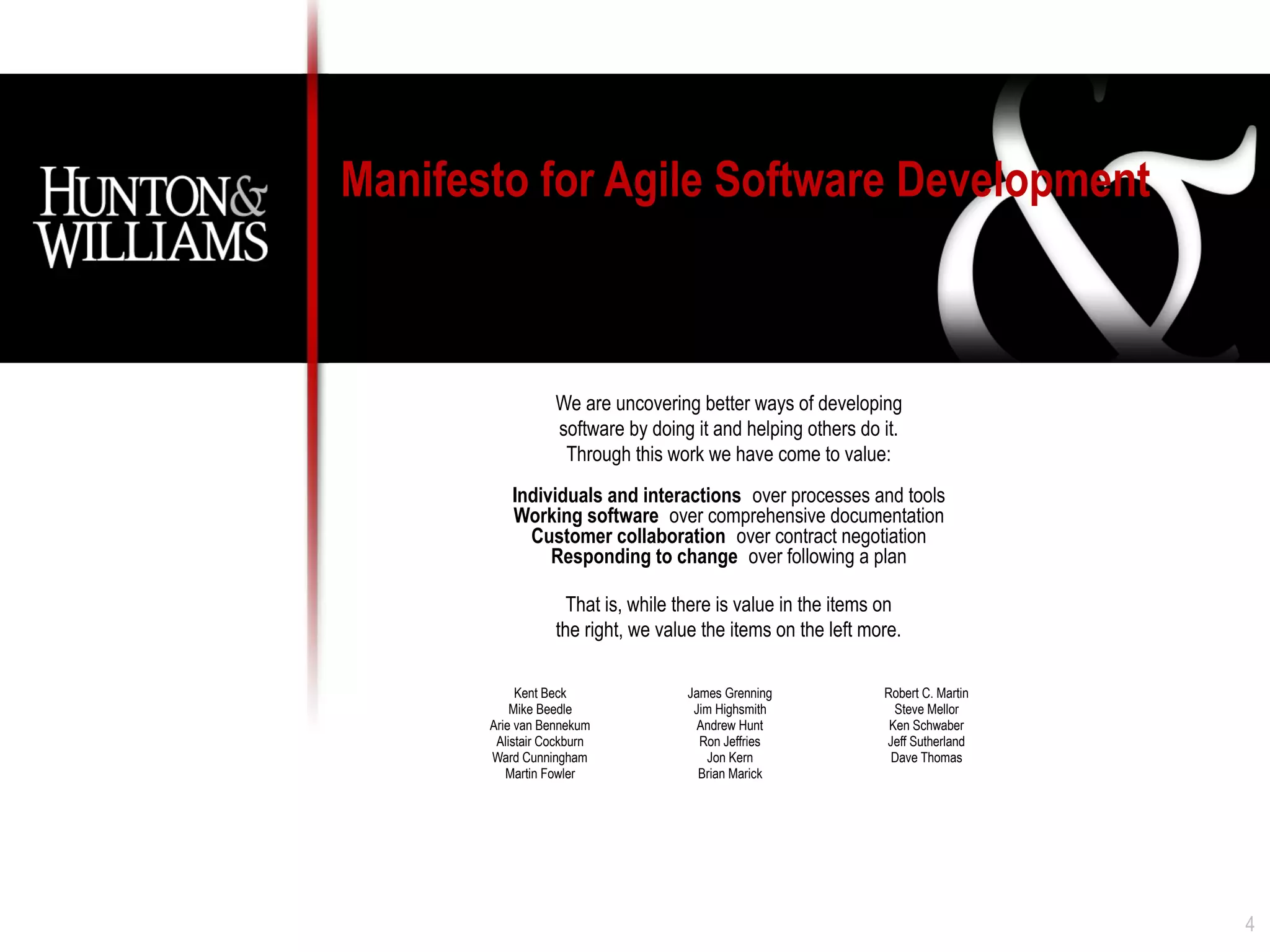
Manifesto for Agile Software Development


                  We are uncovering better ways of developing
                  software by doing it and helping others do it.
                   Through this work we have come to value:
           Individuals and interactions over processes and tools
           Working software over comprehensive documentation
             Customer collaboration over contract negotiation
                Responding to change over following a plan

                    That is, while there is value in the items on
                  the right, we value the items on the left more.

            Kent Beck              James Grenning             Robert C. Martin
           Mike Beedle              Jim Highsmith               Steve Mellor
       Arie van Bennekum             Andrew Hunt               Ken Schwaber
        Alistair Cockburn            Ron Jeffries             Jeff Sutherland
       Ward Cunningham                Jon Kern                 Dave Thomas
          Martin Fowler              Brian Marick


                                                                                 4
Agile Adoption


 Benefits:
   – Enhance ability to manage changing priorities
   – Improve project visibility
   – Improve alignment between IT and business objectives
 Experience with Agile Development Practices - 93%
 Organisations that used Agile Development Practices - 84%
 Company Projects that used Agile Development Practices - 50%
 Had not experienced a failed Agile project - 23%
Source: Agile Development Survey, 2009


                                                                 5
2.   Agile Software Development – How it
     can go wrong


                                           6
What can go wrong?


“Having stakeholders who think that agile means
  changes which do not bring costs..”

“Poor communication channels…”

“Thinking agile means cowboy…”

                                                  7
Case Study: Web Application


 Offshore vendor based in India
 UK customer – replacing existing vendor and looking
  to save money
 Original design not provided by incoming vendor
 UK customer seeking to use Agile Development
  without detailed understanding of Agile methods
 Offshore vendor with limited experience of Agile
  Development

                                                        8
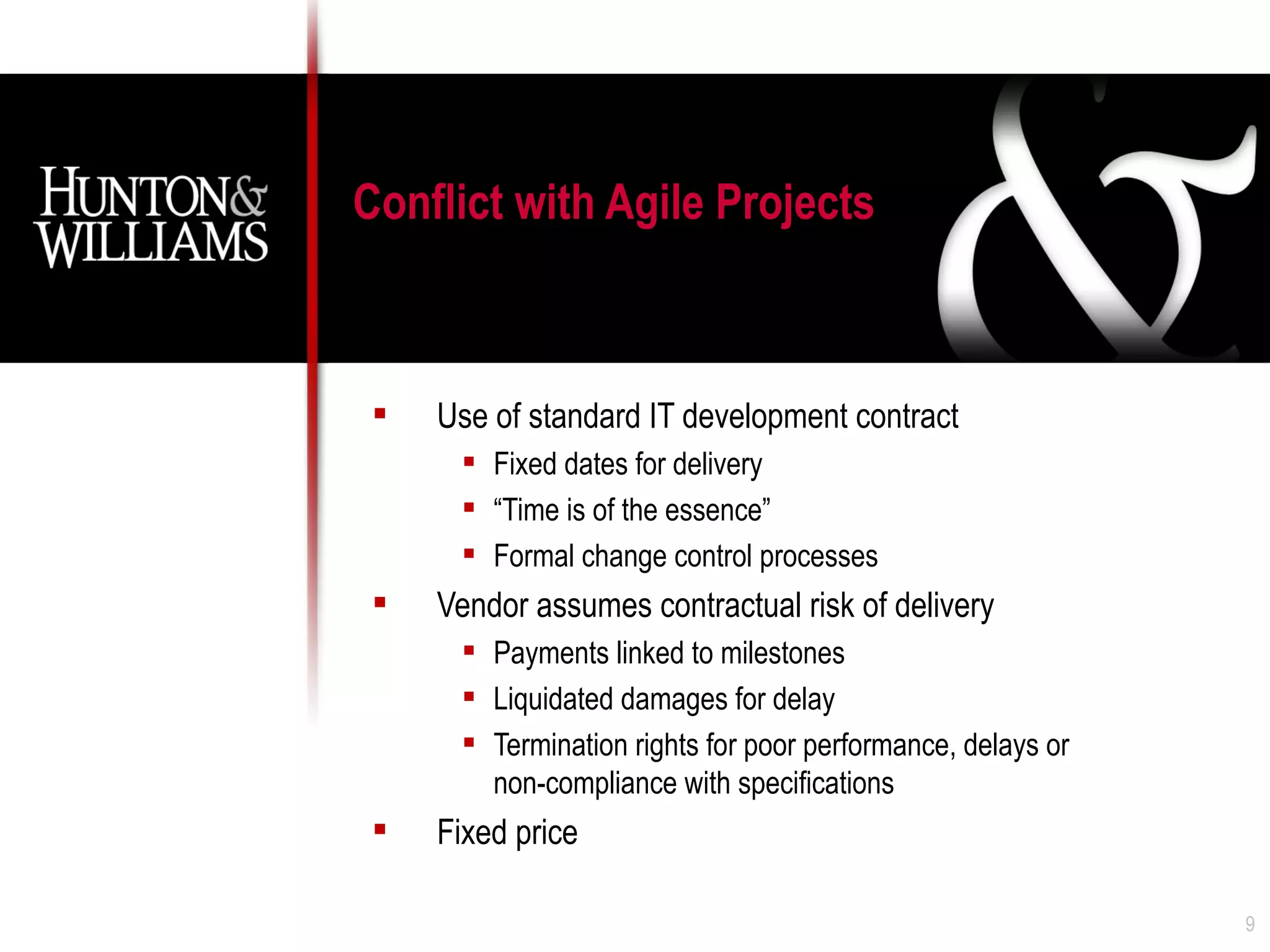
Conflict with Agile Projects


    Use of standard IT development contract
       Fixed dates for delivery
       “Time is of the essence”
       Formal change control processes
    Vendor assumes contractual risk of delivery
       Payments linked to milestones
       Liquidated damages for delay
       Termination rights for poor performance, delays or
        non-compliance with specifications
    Fixed price

                                                             9
3. Possible Solutions


                        10
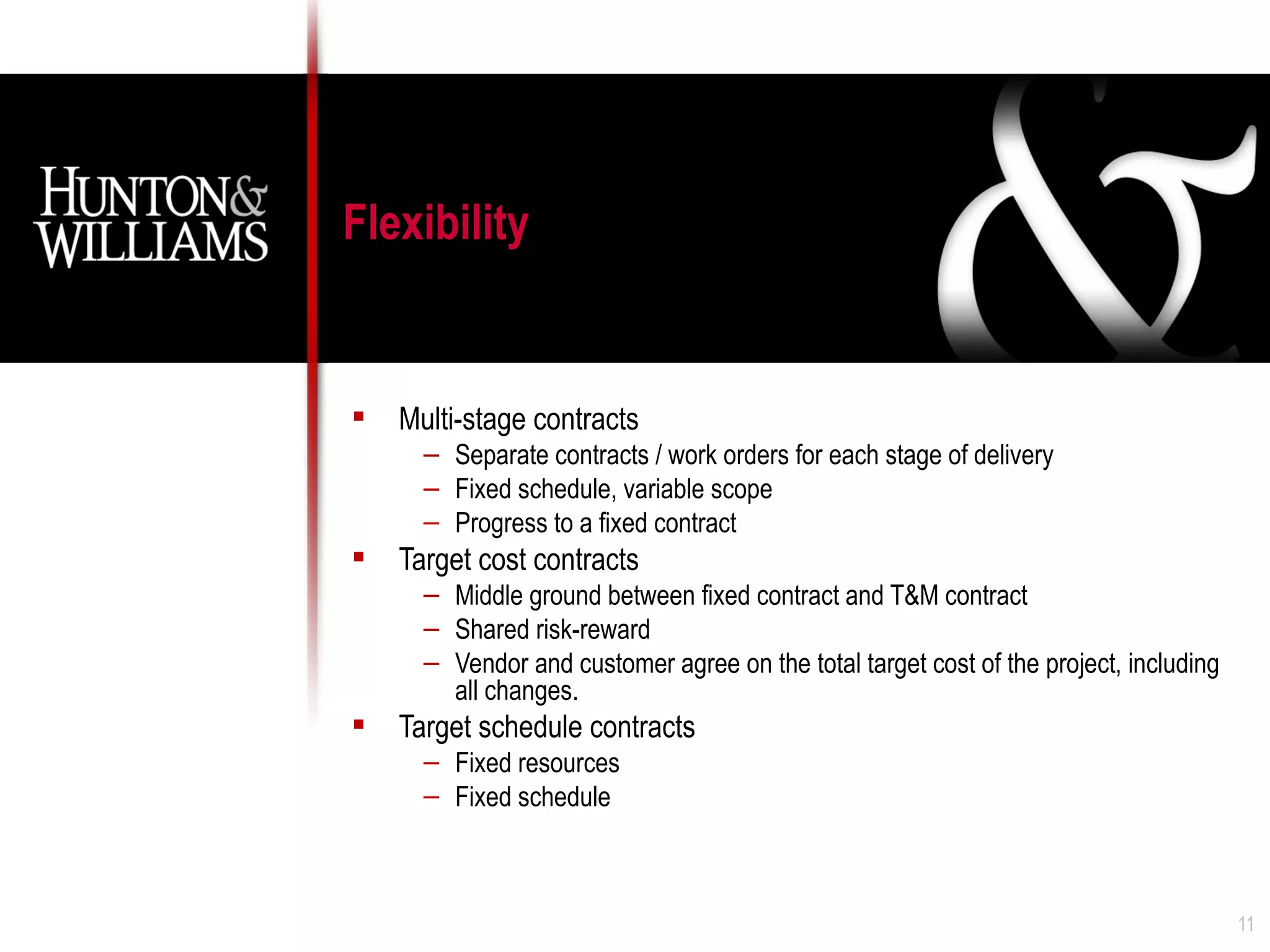
Flexibility


   Multi-stage contracts
      – Separate contracts / work orders for each stage of delivery
      – Fixed schedule, variable scope
      – Progress to a fixed contract
   Target cost contracts
      – Middle ground between fixed contract and T&M contract
      – Shared risk-reward
      – Vendor and customer agree on the total target cost of the project, including
        all changes.
   Target schedule contracts
      – Fixed resources
      – Fixed schedule


                                                                                       11
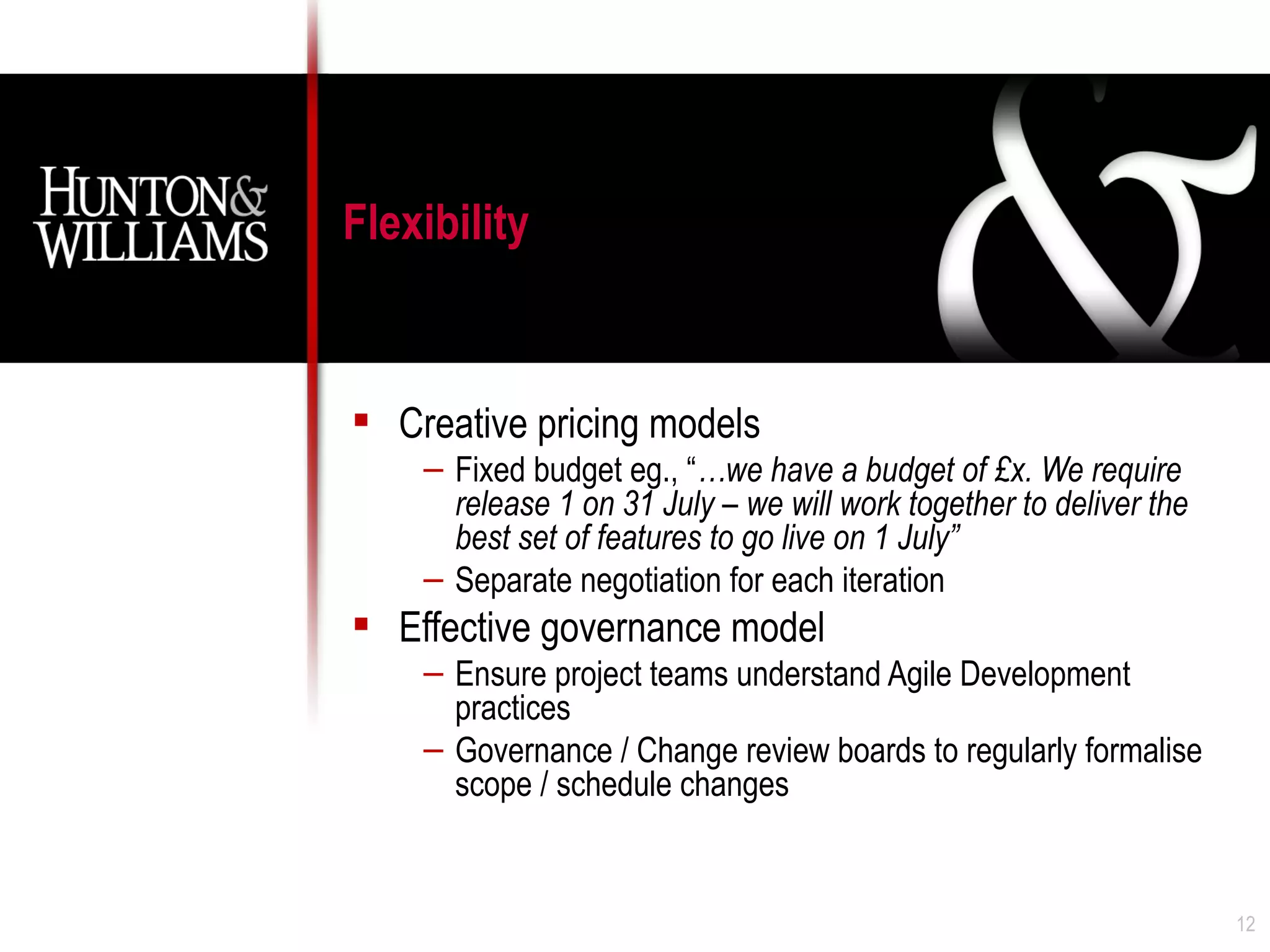
Flexibility


 Creative pricing models
    – Fixed budget eg., “…we have a budget of £x. We require
      release 1 on 31 July – we will work together to deliver the
      best set of features to go live on 1 July”
    – Separate negotiation for each iteration
 Effective governance model
    – Ensure project teams understand Agile Development
      practices
    – Governance / Change review boards to regularly formalise
      scope / schedule changes


                                                                    12
Conclusion


 Parties need to acknowledge that scope cannot be
  fixed in the contract
 Creativity needed around pricing
 Effective governance is essential
 Contract is still essential, but it must be a dynamic and
  flexible document, and used as a guide for a win-win
  relationship – not just a statement of obligations


                                                              13
Questions?


Purdey Castle
Associate
Hunton & Williams
+44 (0) 20 7220 5623
pcastle@hunton.com


                       14

Agile software development how can it go wrong - purdey castle

  • 1.
    2010 Hunton & Williams Agile Software Development – How it can go wrong Purdey Castle Associate
  • 2.
    1. What isAgile Software Development? 2
  • 3.
    Agile Software Development:Key Concepts  A reaction to “waterfall” models  Iterative development  Collaboration / Team work  Cross functional teams  Face-to-face communication 3
  • 4.
    Manifesto for AgileSoftware Development We are uncovering better ways of developing software by doing it and helping others do it. Through this work we have come to value: Individuals and interactions over processes and tools Working software over comprehensive documentation Customer collaboration over contract negotiation Responding to change over following a plan That is, while there is value in the items on the right, we value the items on the left more. Kent Beck James Grenning Robert C. Martin Mike Beedle Jim Highsmith Steve Mellor Arie van Bennekum Andrew Hunt Ken Schwaber Alistair Cockburn Ron Jeffries Jeff Sutherland Ward Cunningham Jon Kern Dave Thomas Martin Fowler Brian Marick 4
  • 5.
    Agile Adoption  Benefits: – Enhance ability to manage changing priorities – Improve project visibility – Improve alignment between IT and business objectives  Experience with Agile Development Practices - 93%  Organisations that used Agile Development Practices - 84%  Company Projects that used Agile Development Practices - 50%  Had not experienced a failed Agile project - 23% Source: Agile Development Survey, 2009 5
  • 6.
    2. Agile Software Development – How it can go wrong 6
  • 7.
    What can gowrong? “Having stakeholders who think that agile means changes which do not bring costs..” “Poor communication channels…” “Thinking agile means cowboy…” 7
  • 8.
    Case Study: WebApplication  Offshore vendor based in India  UK customer – replacing existing vendor and looking to save money  Original design not provided by incoming vendor  UK customer seeking to use Agile Development without detailed understanding of Agile methods  Offshore vendor with limited experience of Agile Development 8
  • 9.
    Conflict with AgileProjects  Use of standard IT development contract  Fixed dates for delivery  “Time is of the essence”  Formal change control processes  Vendor assumes contractual risk of delivery  Payments linked to milestones  Liquidated damages for delay  Termination rights for poor performance, delays or non-compliance with specifications  Fixed price 9
  • 10.
  • 11.
    Flexibility  Multi-stage contracts – Separate contracts / work orders for each stage of delivery – Fixed schedule, variable scope – Progress to a fixed contract  Target cost contracts – Middle ground between fixed contract and T&M contract – Shared risk-reward – Vendor and customer agree on the total target cost of the project, including all changes.  Target schedule contracts – Fixed resources – Fixed schedule 11
  • 12.
    Flexibility  Creative pricingmodels – Fixed budget eg., “…we have a budget of £x. We require release 1 on 31 July – we will work together to deliver the best set of features to go live on 1 July” – Separate negotiation for each iteration  Effective governance model – Ensure project teams understand Agile Development practices – Governance / Change review boards to regularly formalise scope / schedule changes 12
  • 13.
    Conclusion  Parties needto acknowledge that scope cannot be fixed in the contract  Creativity needed around pricing  Effective governance is essential  Contract is still essential, but it must be a dynamic and flexible document, and used as a guide for a win-win relationship – not just a statement of obligations 13
  • 14.
    Questions? Purdey Castle Associate Hunton &Williams +44 (0) 20 7220 5623 pcastle@hunton.com 14