HISTORY
ANCIENT HISTORY
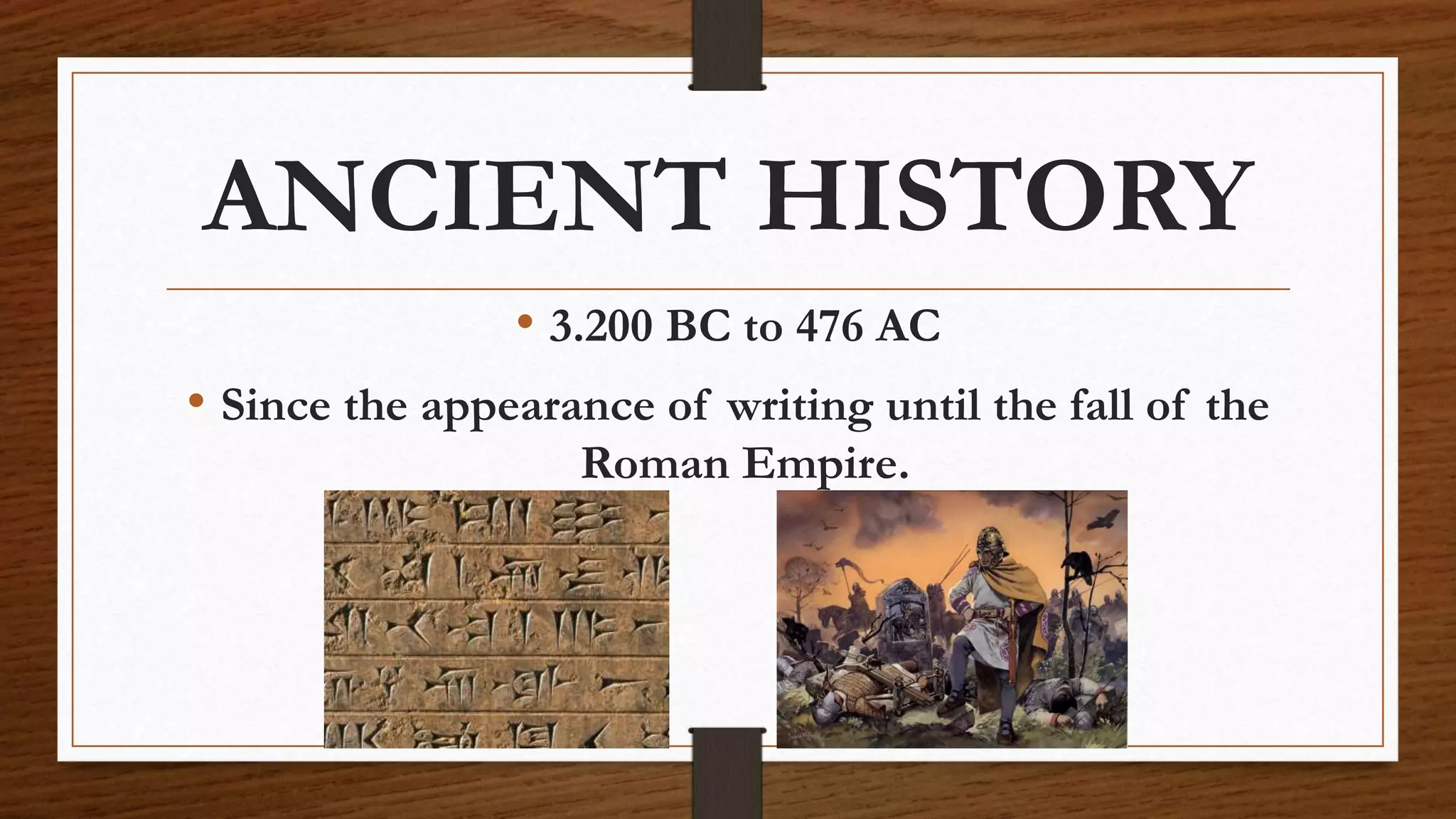
• 3.200 BC to 476 AC
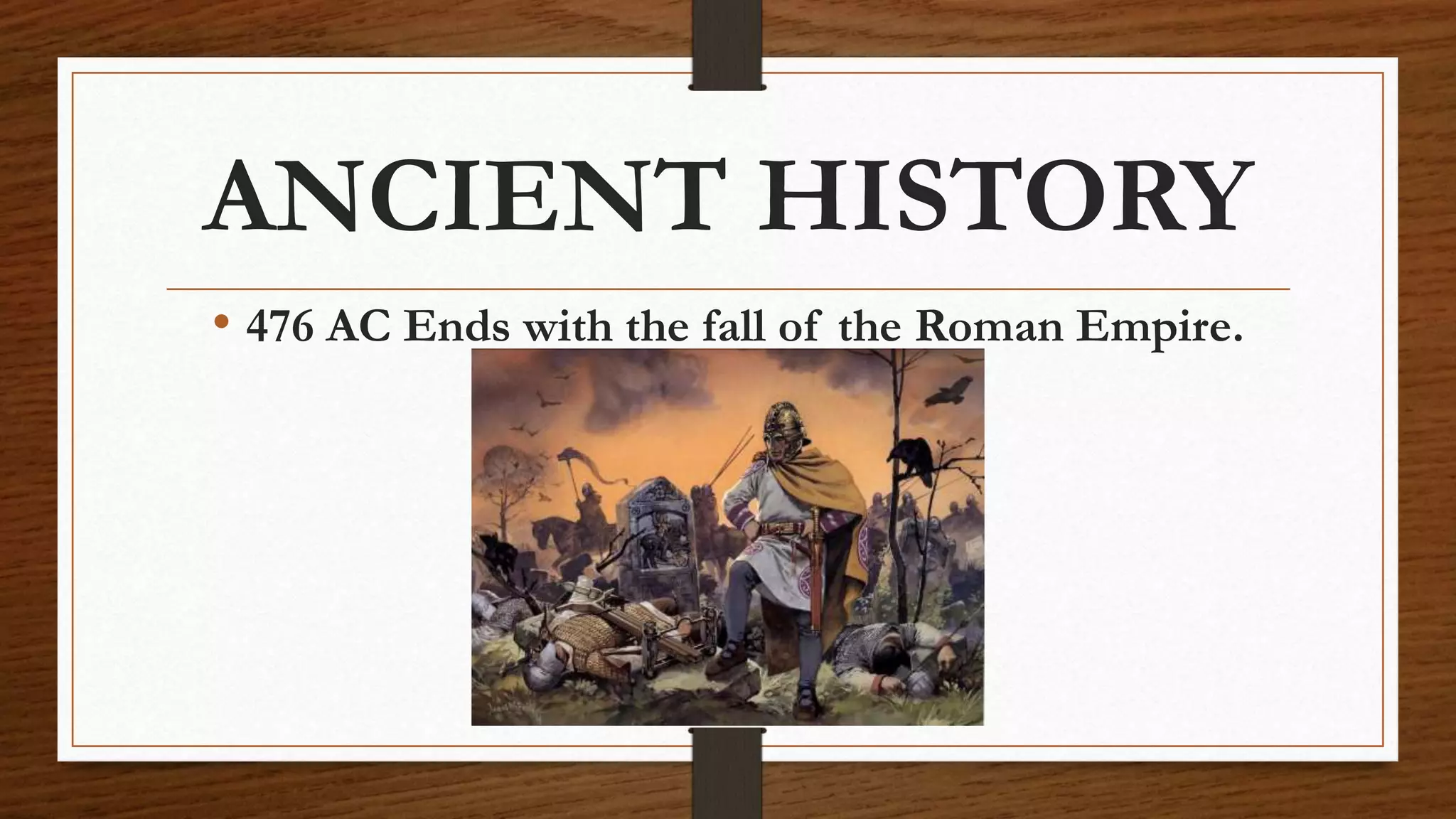
• Since the appearance of writing until the fall of the
Roman Empire.
ANCIENT HISTORY
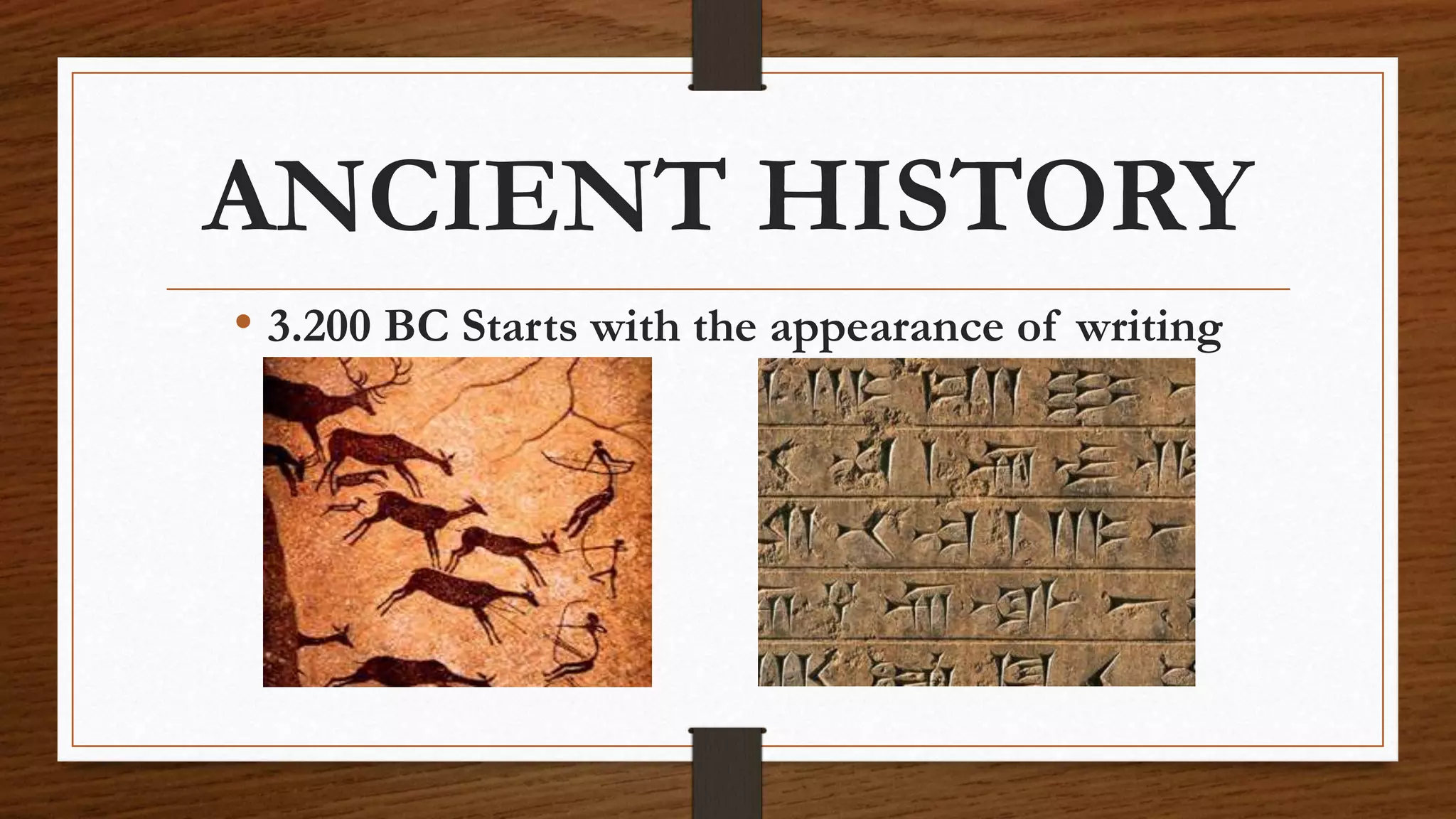
• 3.200 BC Starts with the appearance of writing
ANCIENT HISTORY
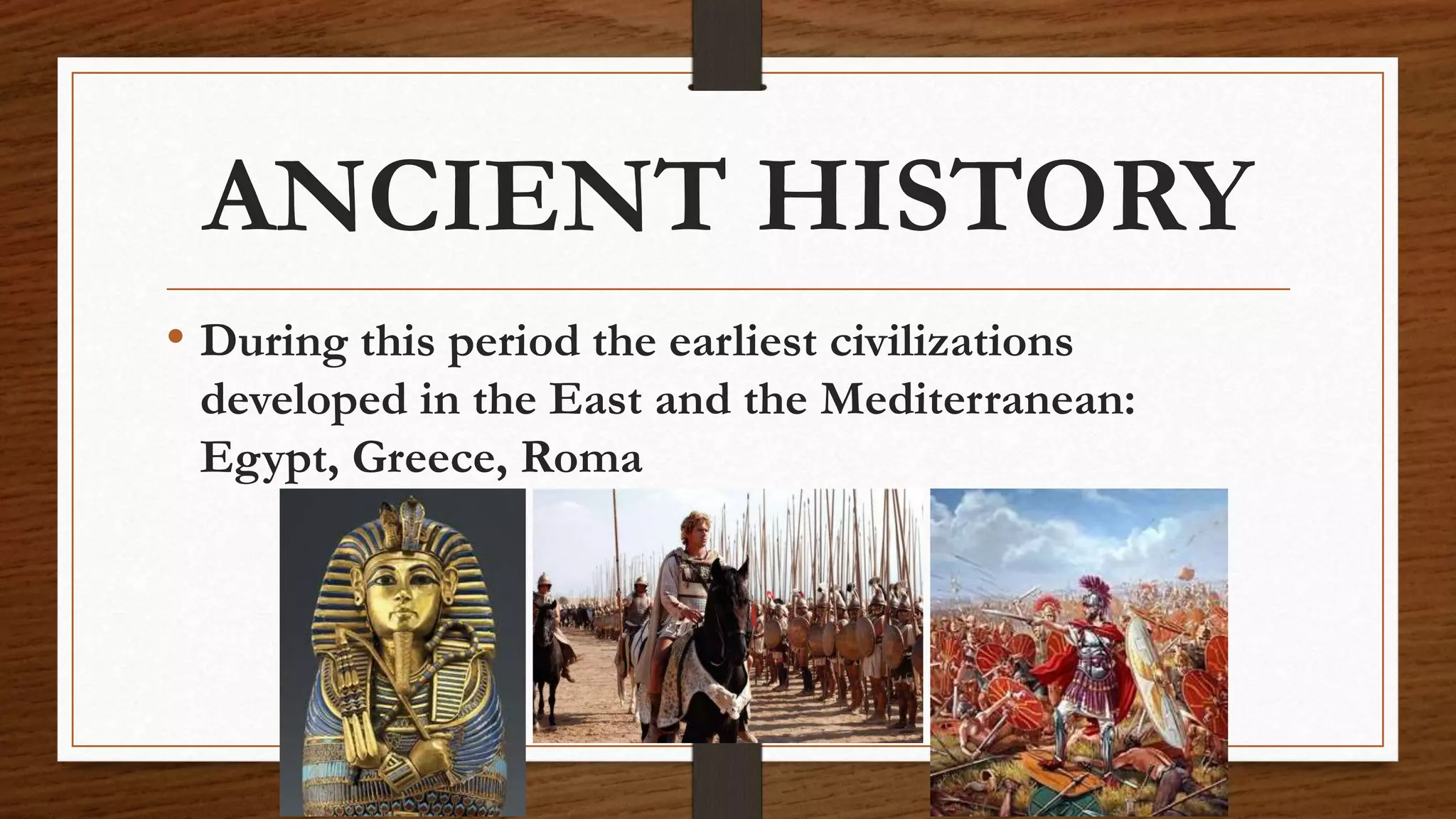
• During this period the earliest civilizations
developed in the East and the Mediterranean:
Egypt, Greece, Roma
ANCIENT HISTORY
• They were predominantly agrarian societies.
• Unified politically in empires.
• Had a hierarchical social organization.
• There was slavery.
ANCIENT HISTORY
• 476 AC Ends with the fall of the Roman Empire.
MIDDLE/MEDIEVAL/POSTCLASSICAL
HISTORY
• 476 to 1492
• Since the fall of the Roman Empire until the
discovery of America
MIDDLE/MEDIEVAL/POSTCLASSICAL
HISTORY
• 476 AC Starts with the fall of the Roman Empire
MIDDLE/MEDIEVAL/POSTCLASSICAL
HISTORY
• Without emperors, feudal kings got greater
importance in each locality.
• The only universal and unified power was the
catholic church.
• The economy was based on agriculture developed by
the serfs who got only the minimum to survive.
MIDDLE/MEDIEVAL/POSTCLASSICAL
HISTORY
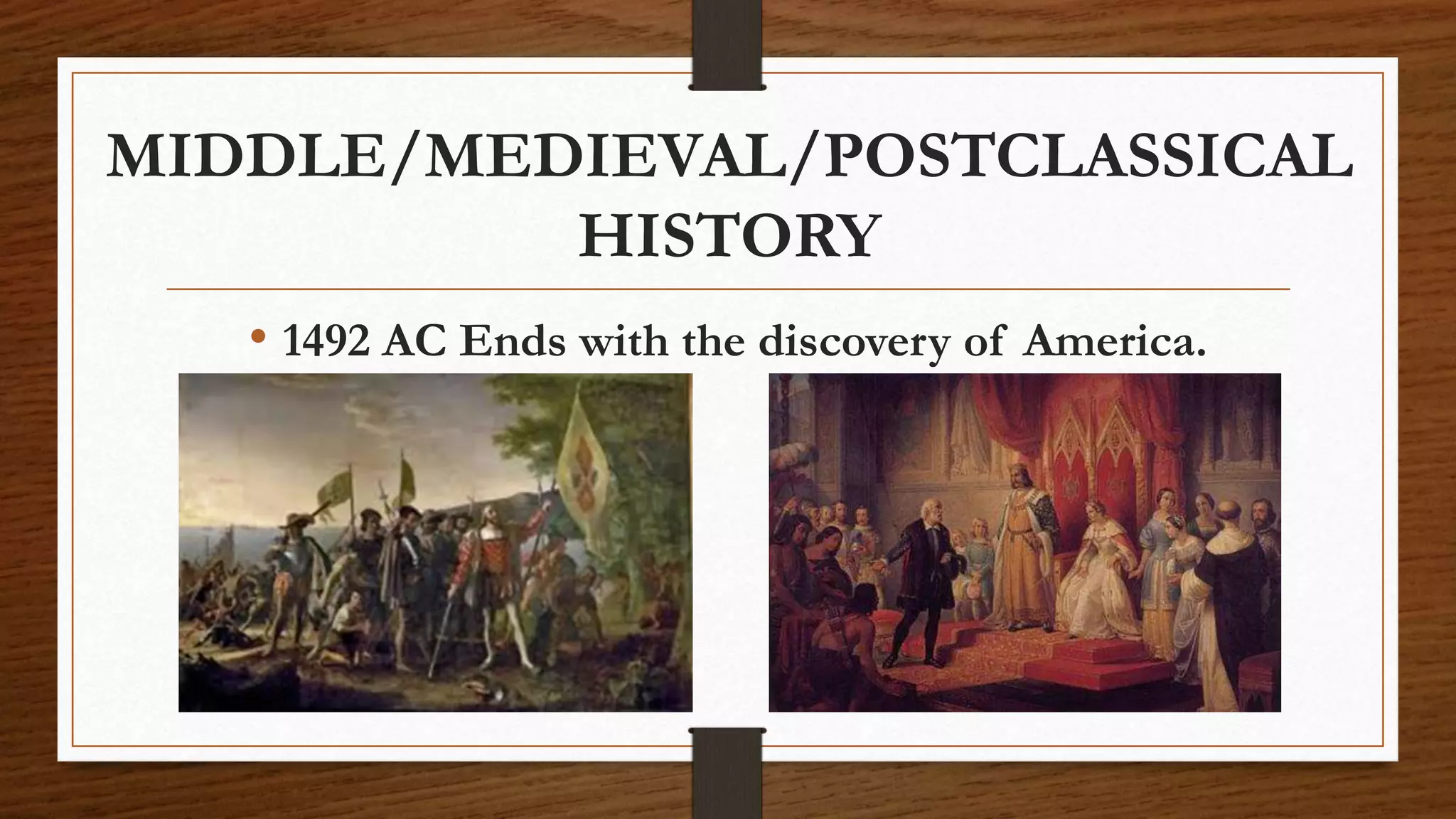
• 1492 AC Ends with the discovery of America.
MODERN HISTORY
• 1492 AC to 1789 AC
• Since the discovery of America until the French
Revolution.
MODERN HISTORY
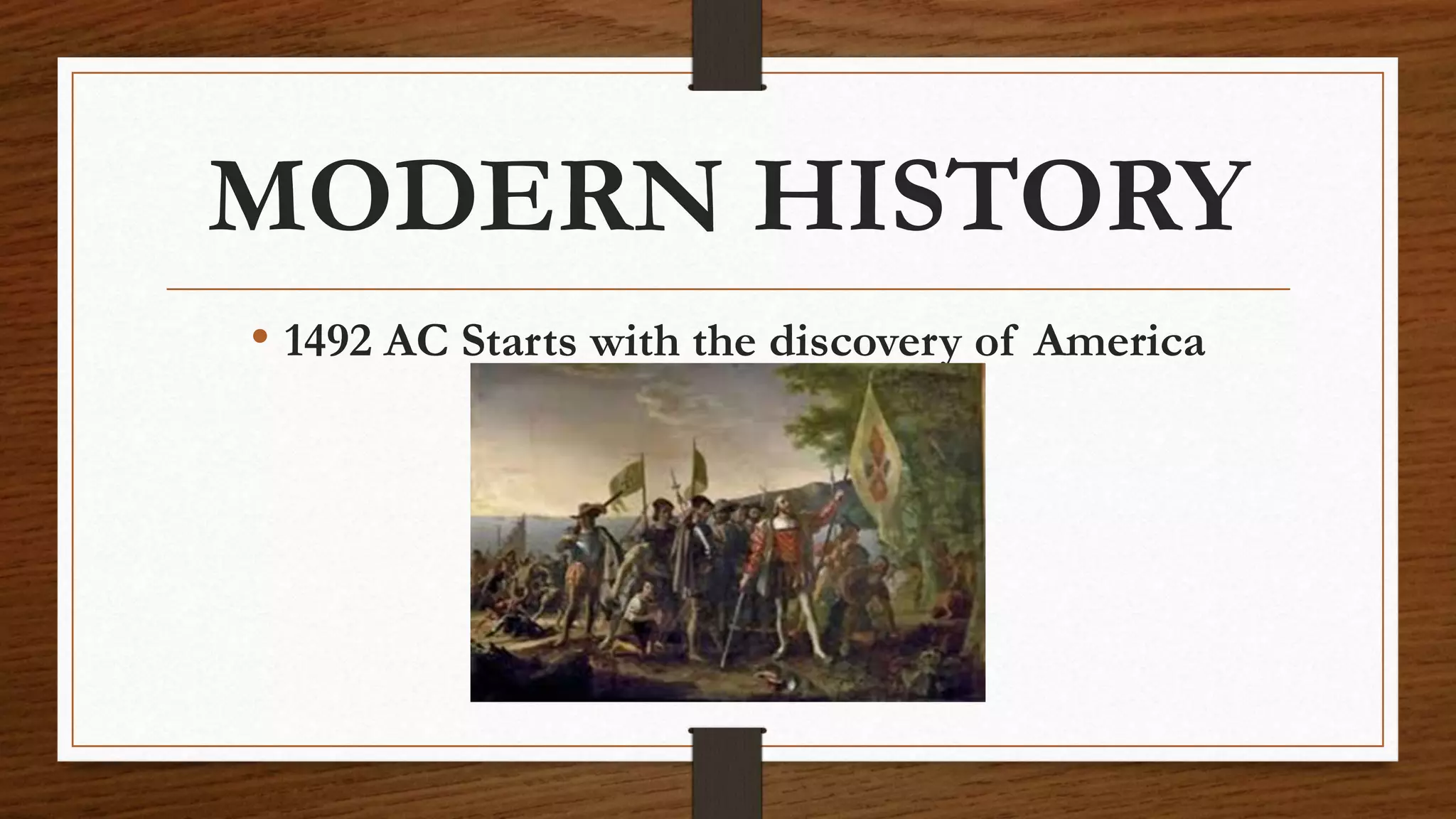
• 1492 AC Starts with the discovery of America
MODERN HISTORY
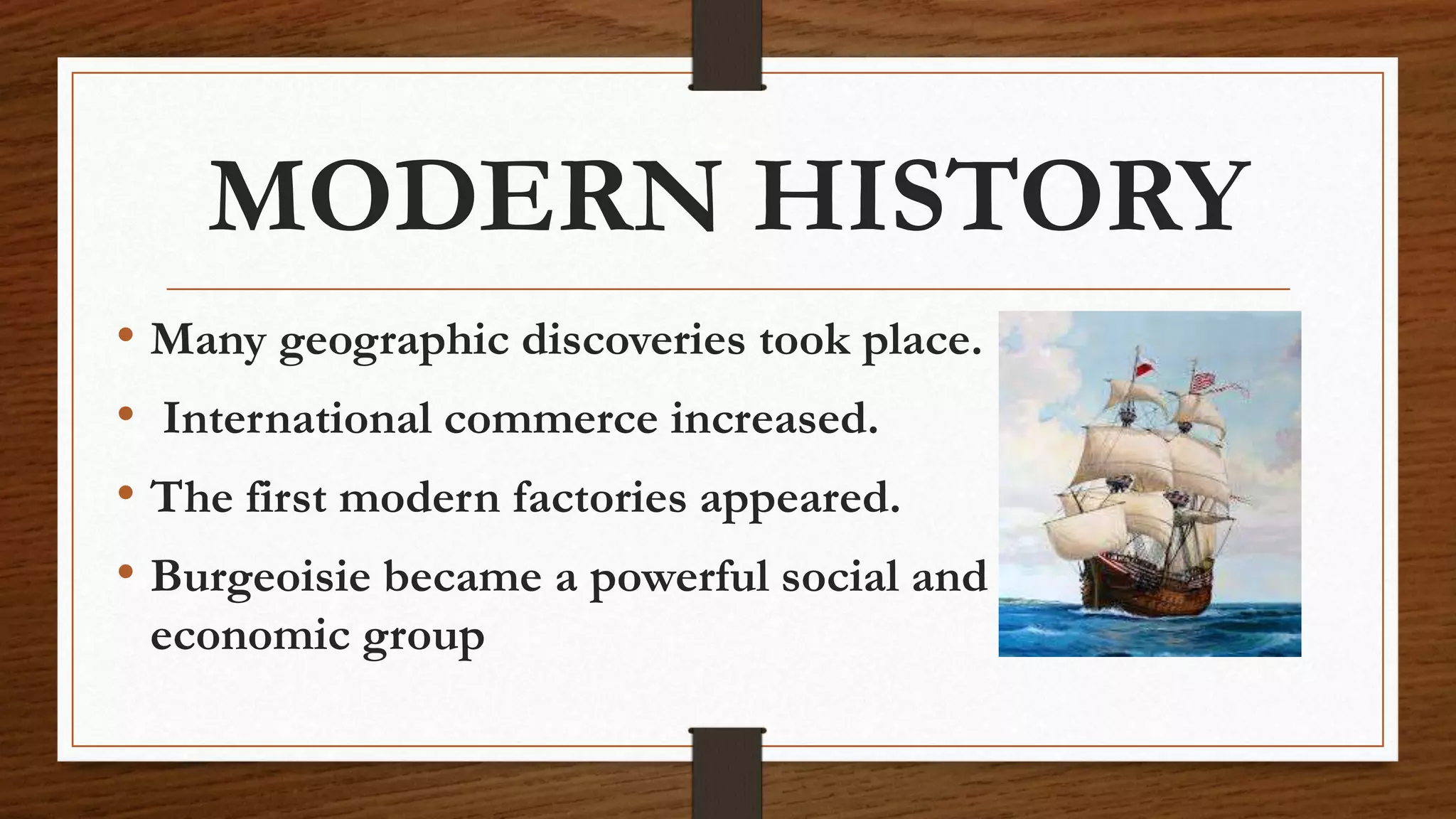
• Many geographic discoveries took place.
• International commerce increased.
• The first modern factories appeared.
• Burgeoisie became a powerful social and
economic group
NOBILITY
Royalty
Upper Class
CLERGY
Church Officials
COMMONERS
BURGEOIS: : Merchants, Doctors, Lawyers and Artisans
BEGARS
PEASANTS
MODERN HISTORY
• 1789 AC Ends with the French Revolution.
CONTEMPORARY AGE
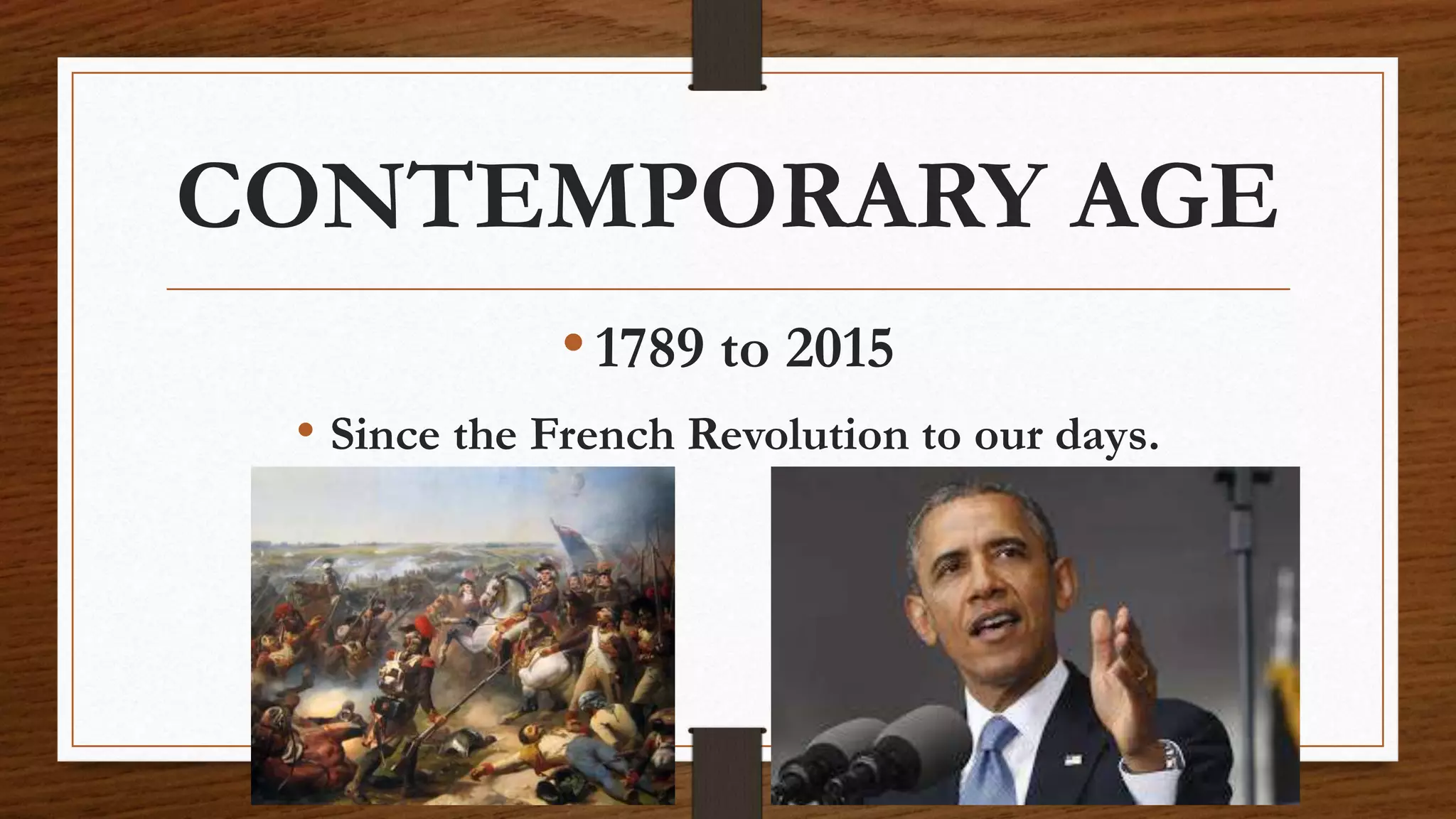
•1789 to 2015
• Since the French Revolution to our days.
CONTEMPORARY AGE
•Industrial revolution.
•American independence.
•World war I.
•World war II.
CONTEMPORARY AGE
•Development of the republican
democracies.
•Socialism.
•Capitalism
CONTEMPORARY AGE
•Progress of science and technology
CONTEMPORARY AGE
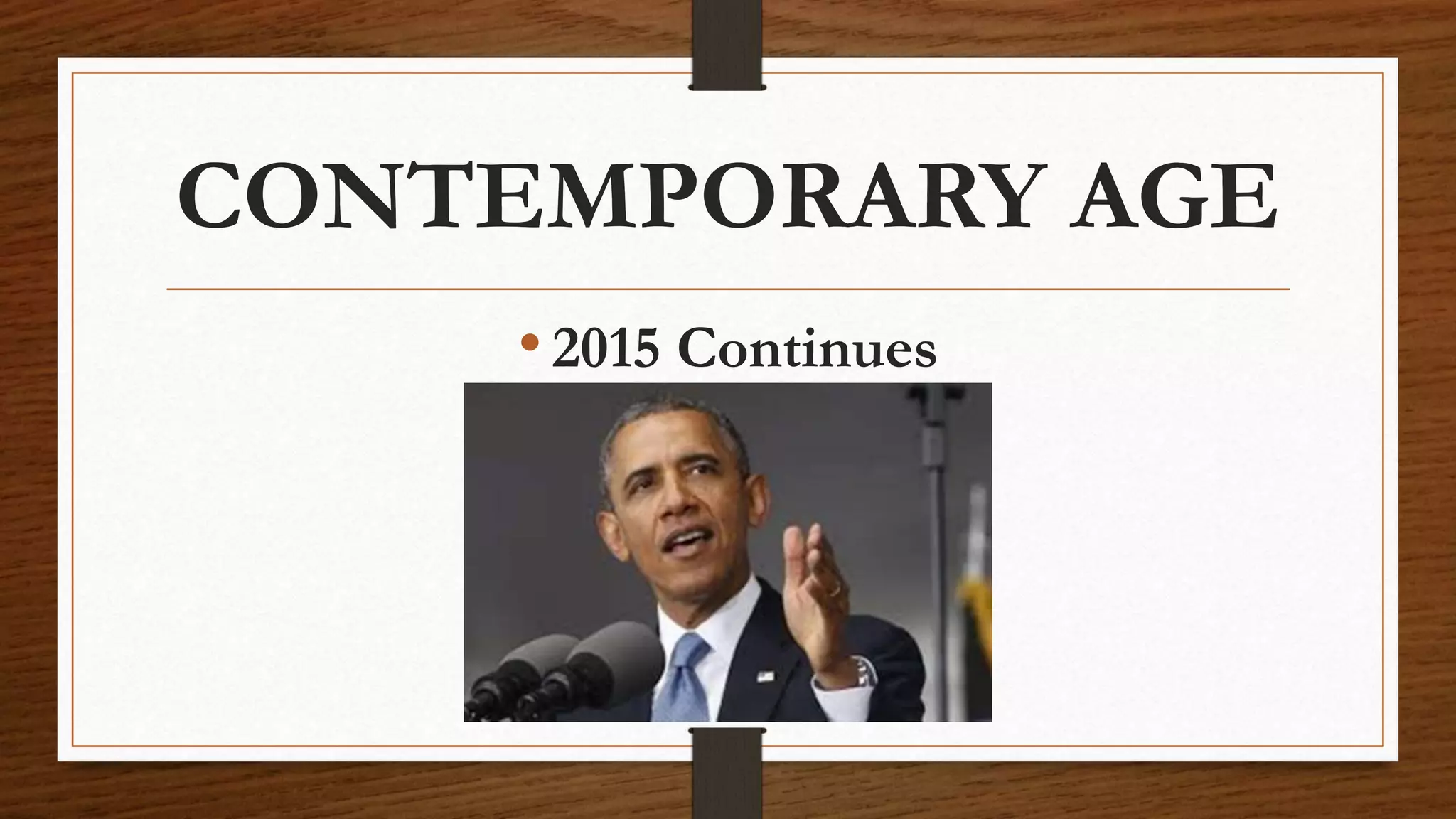
•2015 Continues

Ages of History