
Adopting Analytics for Decision Making
in Coman Bank of India
By
Ankush Roy
Ashitha VS
Atanu Maity
Krishna Bollojula
Shikha Rani Deo
Agenda
• Business background
• Business requirements
• Organization preparedness for analytics
• Your scope of work
• Defining and measuring success
• The next step
History
 Headquartered in Kolkata.
 Incorporated on 11 January 1983 at Kolkata,
West Bengal.
 Operations include retail banking, private
banking, corporate/wholesale banking and
agriculture banking.
Business Overview
 Private banking solutions for individuals and
businesses
 Deposits, loans, investment solutions, payments
and cards
 275 branches and 474 ATM’s across India.
 200 Asset Sales Centers operating out of 15
cities with standardized appraisal and oversight
mechanisms.
Vision
To be the preferred financial solutions provider
excelling in customer delivery through insight,
empowered employees and smart use of
technology.
Mission
To become a strong and innovative bank with
integrity and social responsibility to maximize
customer satisfaction as well as that of the
employees, shareholders and the society.
Agenda
• Business background
• Business Requirements
• Organization preparedness for analytics
• Your scope of work
• Defining and measuring success
• The next step
Business Requirements
• Customer Retention
• Cross selling/Up selling
• Risk assessment and fraud detection
Customer Retention
• Management of customer churn
– Target churn rate of less than 2% in the next 2
years from current level of 4%
• Characteristics of churn
– Moving Away from a particular product OR
– Moving Away from a particular channel
• Branches
• Digital Channels
Customer Retention
• Opportunities
– Improving Operational Efficiency
– Improving Product Design
Cross selling/Up selling
• Cash-in the existing customers
• Target single product customers to 40% of
customer base from current level of 50%.
• Pre-requisite : Single view of the customers with
all their characteristics well defined.
• Alert with the prospects details while
launching/campaigning suitable products
Risk Assessment/Fraud Detection
• Revenue loss of 4% due to bad debts/fraud
– Target less than 2% in the next financial year
• Risk Profiling
– Segment based on repaying capacity
• Existing Customers – Flag the customer
portfolios with characteristics of default
Risk Assessment/Fraud Detection
• Prevent Account Takeover transactions in case
of digital channels
• Balance between point of detection and false
positives
Agenda
• Business background
• Business Requirements
• Organization preparedness for analytics
• Your scope of work
• Defining and measuring success
• The next step
Organization Preparedness
Technology
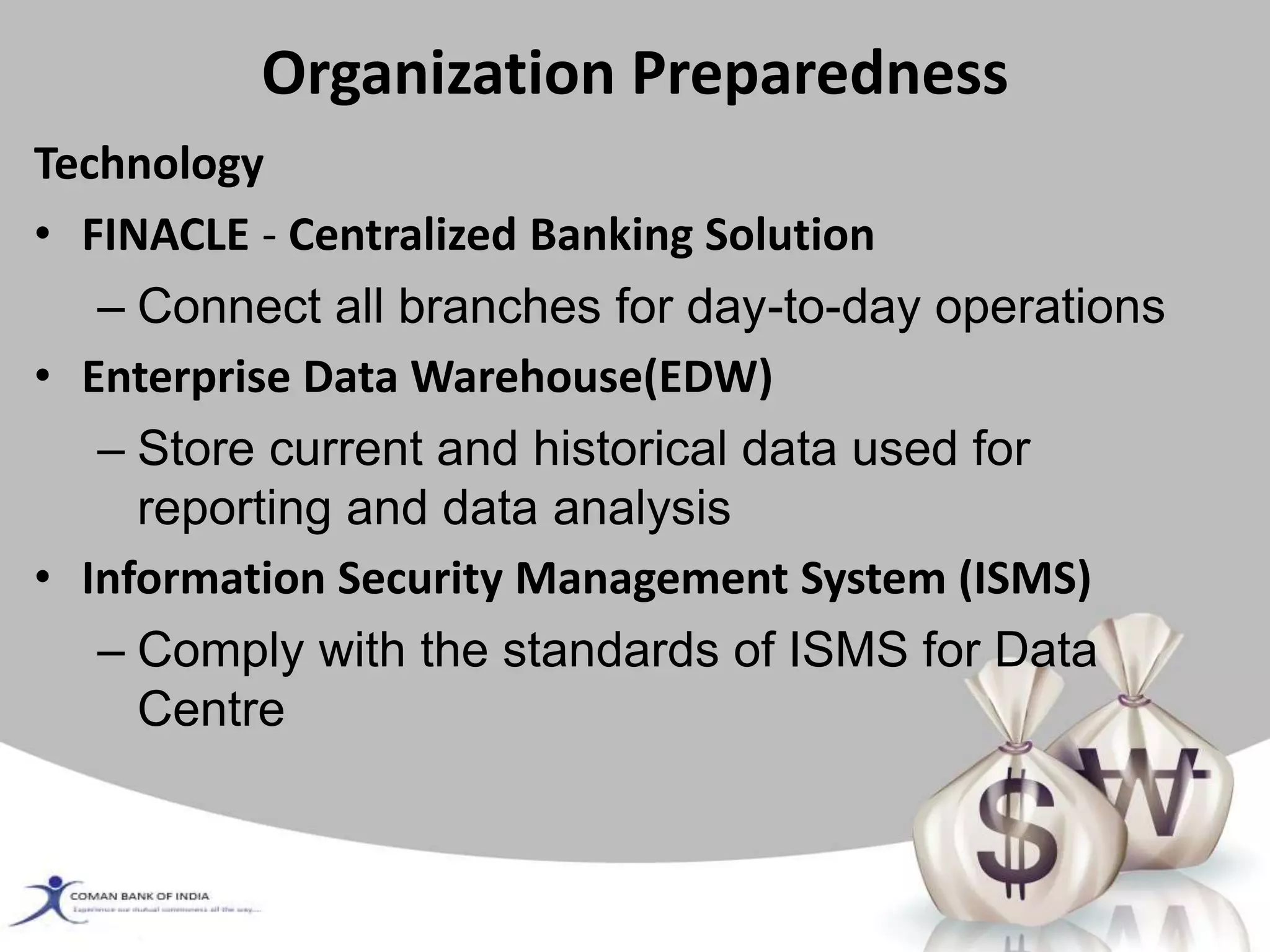
• FINACLE - Centralized Banking Solution
– Connect all branches for day-to-day operations
• Enterprise Data Warehouse(EDW)
– Store current and historical data used for
reporting and data analysis
• Information Security Management System (ISMS)
– Comply with the standards of ISMS for Data
Centre
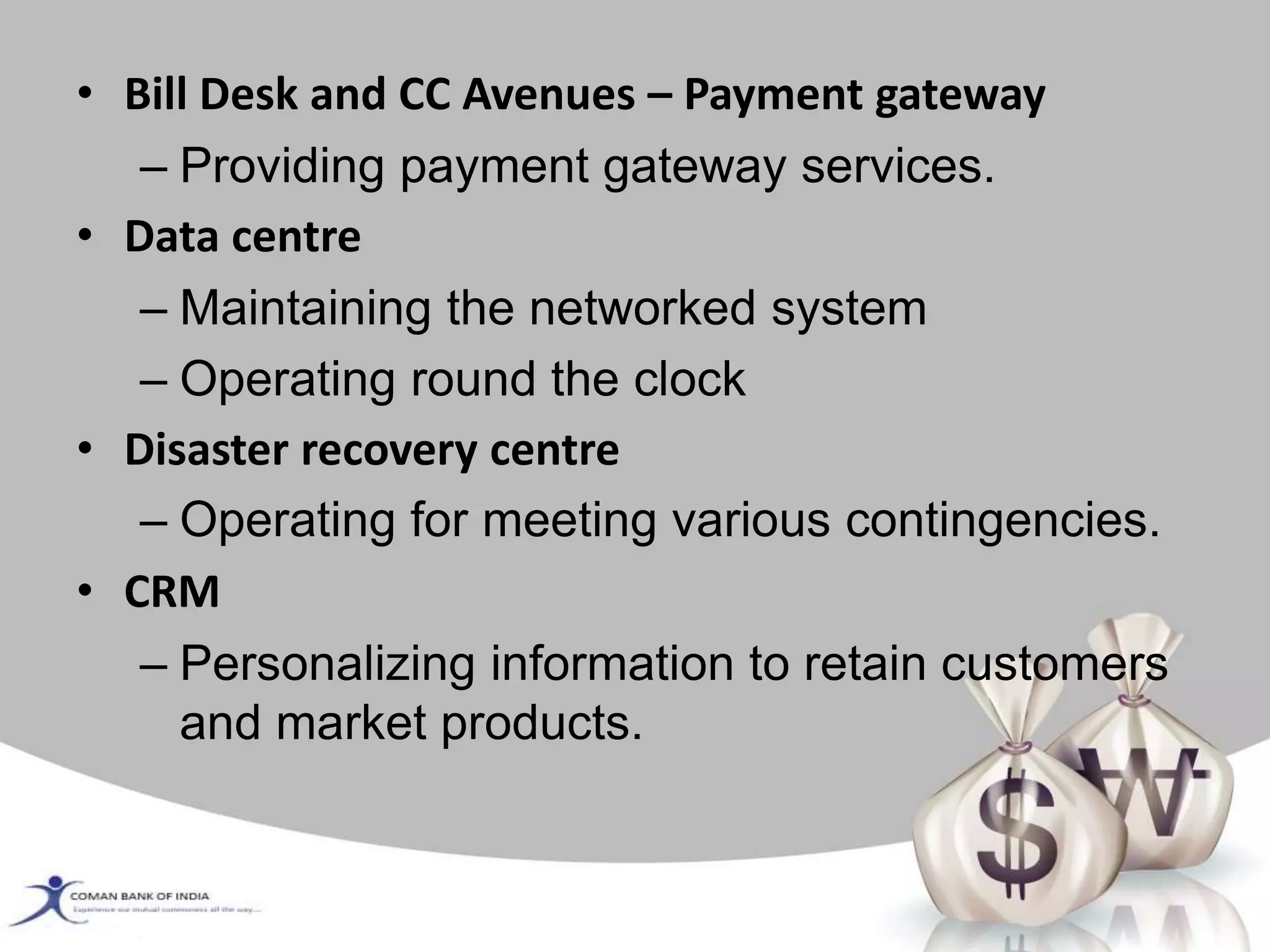
• Bill Desk and CC Avenues – Payment gateway
– Providing payment gateway services.
• Data centre
– Maintaining the networked system
– Operating round the clock
• Disaster recovery centre
– Operating for meeting various contingencies.
• CRM
– Personalizing information to retain customers
and market products.
Culture of Analytics
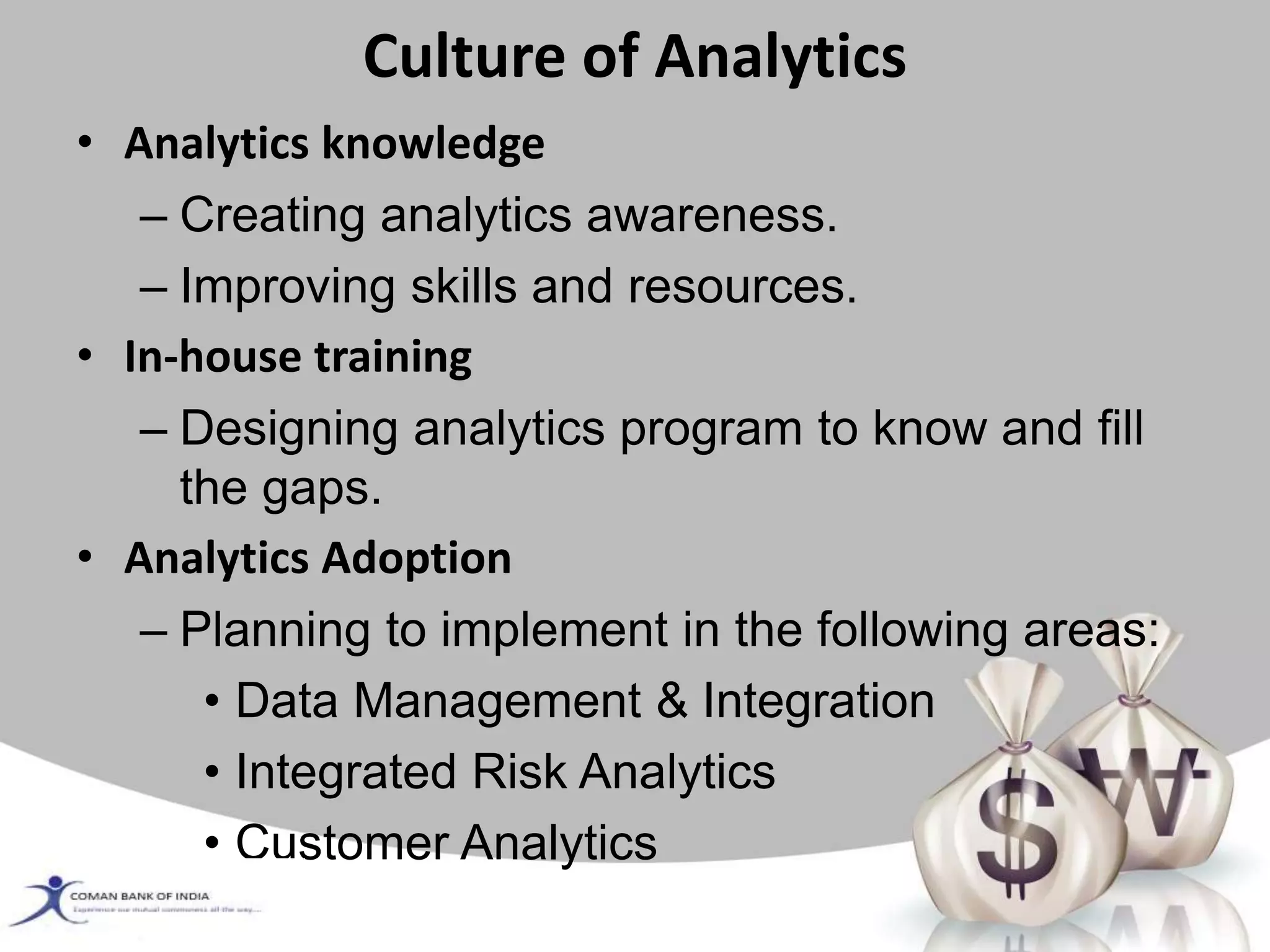
• Analytics knowledge
– Creating analytics awareness.
– Improving skills and resources.
• In-house training
– Designing analytics program to know and fill
the gaps.
• Analytics Adoption
– Planning to implement in the following areas:
• Data Management & Integration
• Integrated Risk Analytics
• Customer Analytics
Agenda
• Business background
• Business Requirements
• Organization preparedness for analytics
• Your scope of work
• Defining and measuring success
• The next step
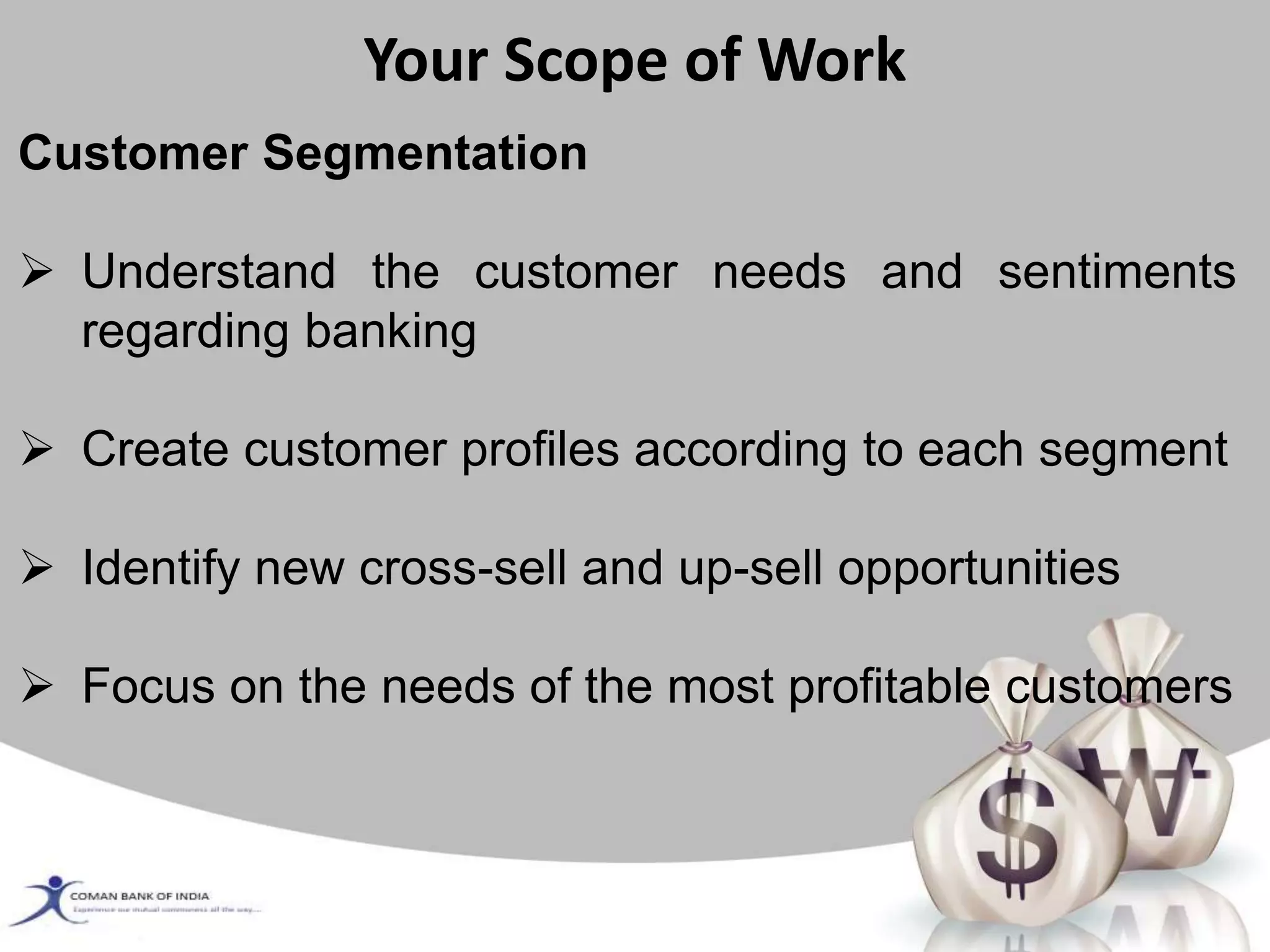
Your Scope of Work
Customer Segmentation
 Understand the customer needs and sentiments
regarding banking
 Create customer profiles according to each segment
 Identify new cross-sell and up-sell opportunities
 Focus on the needs of the most profitable customers
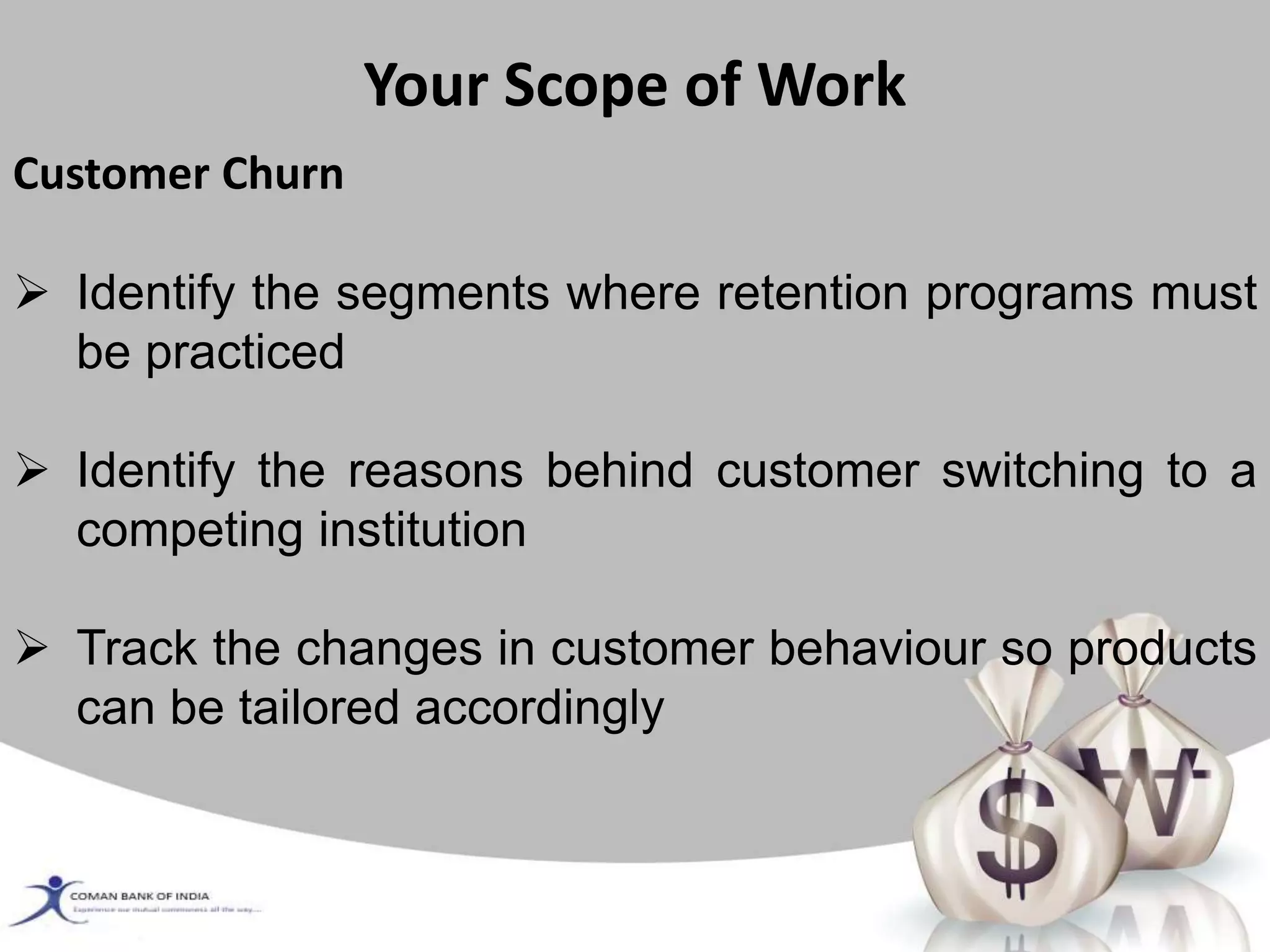
Your Scope of Work
Customer Churn
 Identify the segments where retention programs must
be practiced
 Identify the reasons behind customer switching to a
competing institution
 Track the changes in customer behaviour so products
can be tailored accordingly
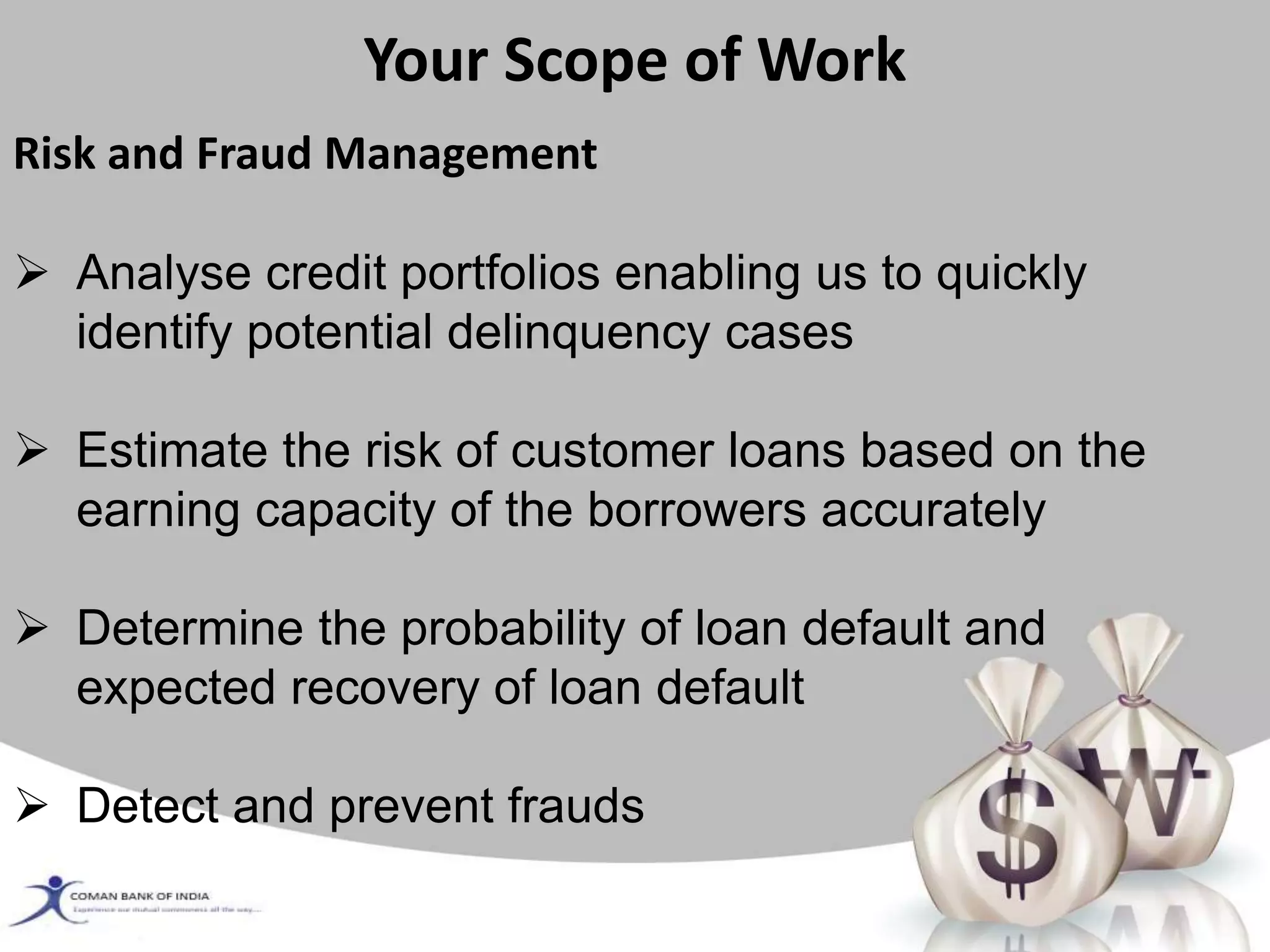
Your Scope of Work
Risk and Fraud Management
 Analyse credit portfolios enabling us to quickly
identify potential delinquency cases
 Estimate the risk of customer loans based on the
earning capacity of the borrowers accurately
 Determine the probability of loan default and
expected recovery of loan default
 Detect and prevent frauds
Agenda
• Business background
• Business Requirements
• Organization preparedness for analytics
• Your scope of work
• Defining and measuring success
• The next step
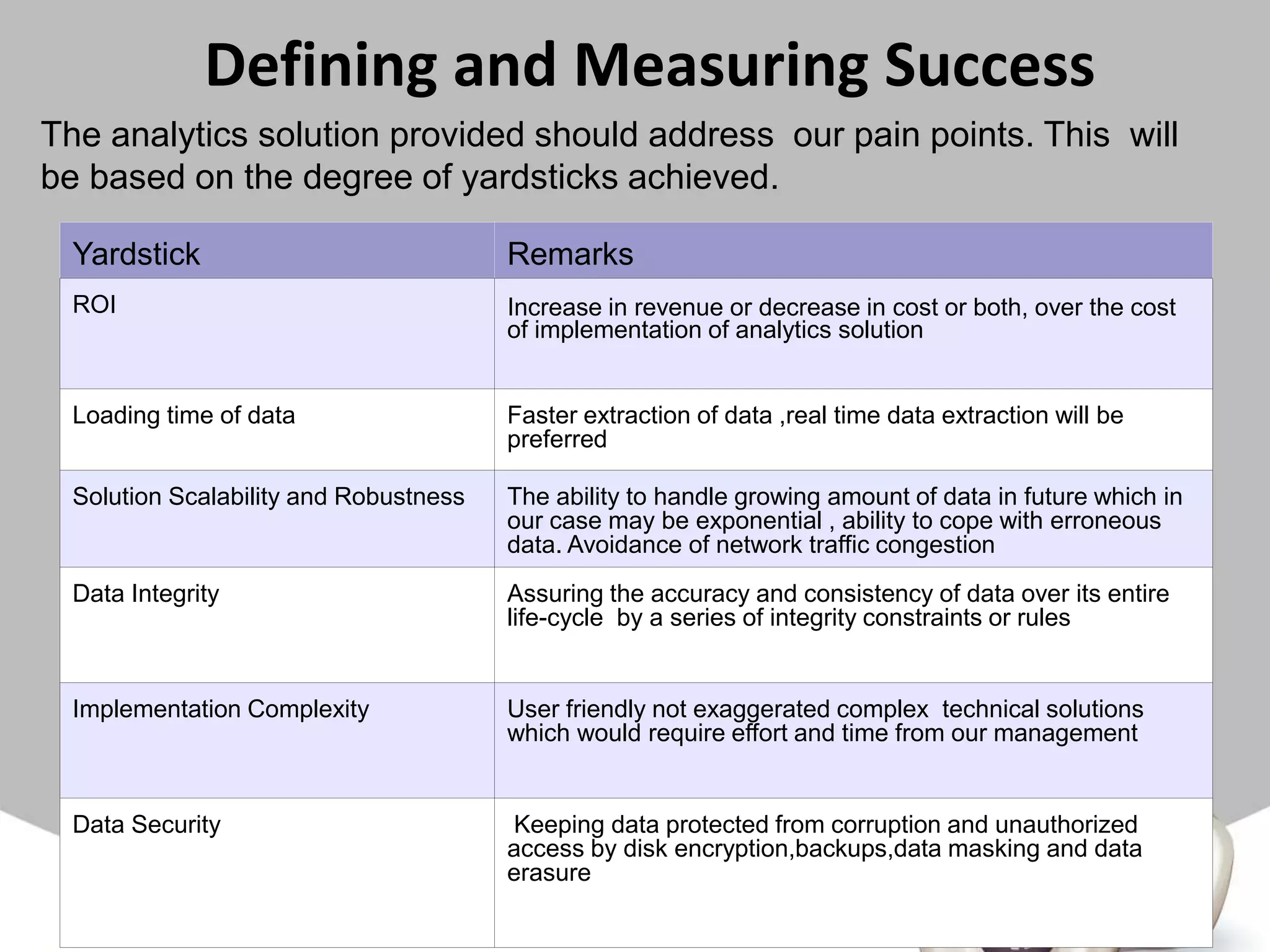
Defining and Measuring Success
The analytics solution provided should address our pain points. This will
be based on the degree of yardsticks achieved.
Yardstick Remarks
ROI Increase in revenue or decrease in cost or both, over the cost
of implementation of analytics solution
Loading time of data Faster extraction of data ,real time data extraction will be
preferred
Solution Scalability and Robustness The ability to handle growing amount of data in future which in
our case may be exponential , ability to cope with erroneous
data. Avoidance of network traffic congestion
Data Integrity Assuring the accuracy and consistency of data over its entire
life-cycle by a series of integrity constraints or rules
Implementation Complexity User friendly not exaggerated complex technical solutions
which would require effort and time from our management
Data Security Keeping data protected from corruption and unauthorized
access by disk encryption,backups,data masking and data
erasure
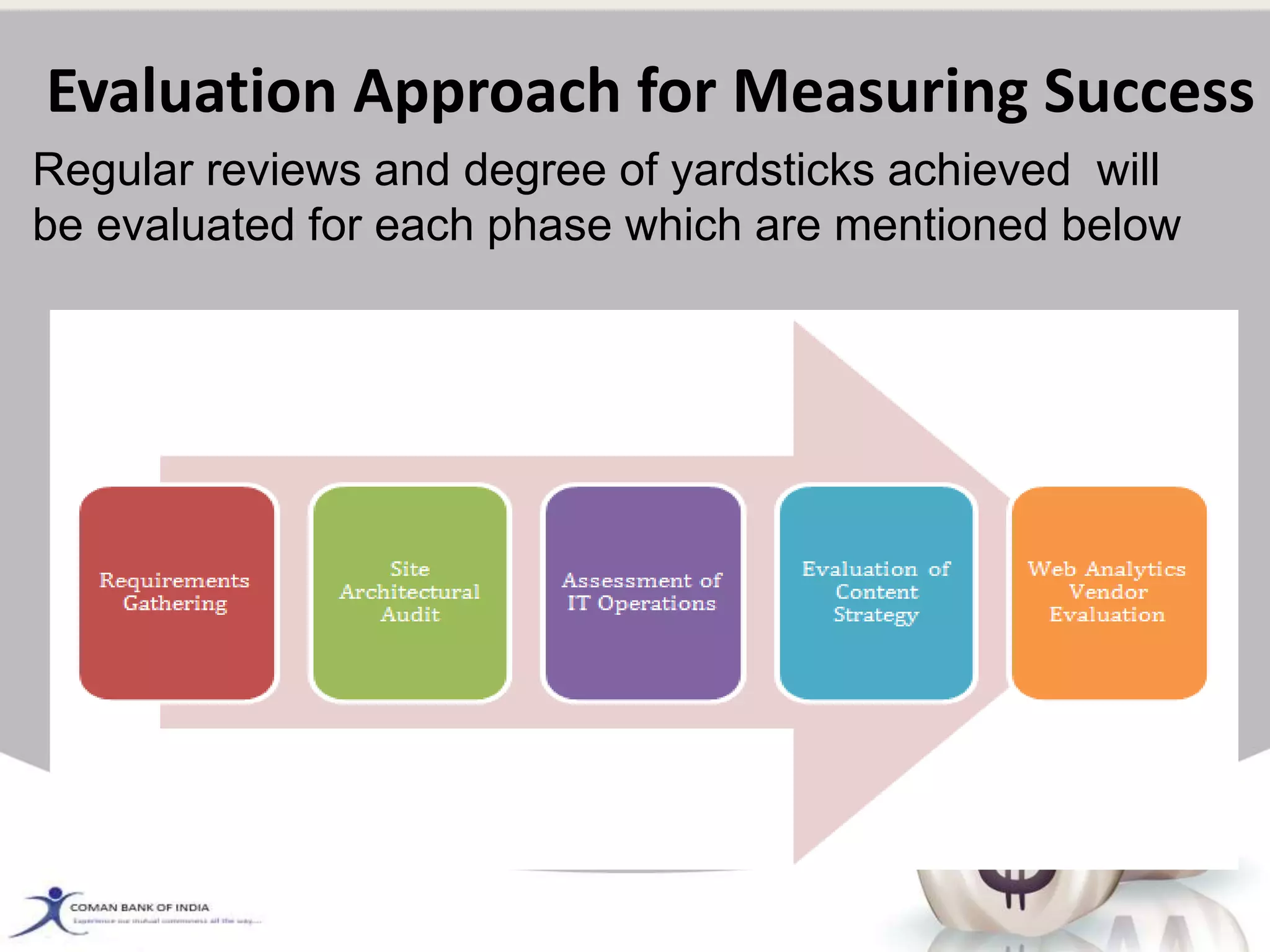
Evaluation Approach for Measuring Success
Regular reviews and degree of yardsticks achieved will
be evaluated for each phase which are mentioned below
Agenda
• Business background
• Business Requirements
• Organization preparedness for analytic
• Your scope of work
• Defining and measuring success
• The next step
• Functional Requirements Document :
Detailed, measurable, consistent and comprehensive system
requirements.
• Proof Of Concept:
Prototype of analytics solution to be designed.
• Business Sign off:
Development sign off by the business owner after reviewing all
documents.
• Final Contract:
Issuance of formal contract to the team providing the best proof
of concept.
The Next Step
Any questions ??

Adopting Analytics for decision making in a bank

  • 1.
    Adopting Analytics forDecision Making in Coman Bank of India By Ankush Roy Ashitha VS Atanu Maity Krishna Bollojula Shikha Rani Deo
  • 2.
    Agenda • Business background •Business requirements • Organization preparedness for analytics • Your scope of work • Defining and measuring success • The next step
  • 3.
    History  Headquartered inKolkata.  Incorporated on 11 January 1983 at Kolkata, West Bengal.  Operations include retail banking, private banking, corporate/wholesale banking and agriculture banking.
  • 4.
    Business Overview  Privatebanking solutions for individuals and businesses  Deposits, loans, investment solutions, payments and cards  275 branches and 474 ATM’s across India.  200 Asset Sales Centers operating out of 15 cities with standardized appraisal and oversight mechanisms.
  • 5.
    Vision To be thepreferred financial solutions provider excelling in customer delivery through insight, empowered employees and smart use of technology. Mission To become a strong and innovative bank with integrity and social responsibility to maximize customer satisfaction as well as that of the employees, shareholders and the society.
  • 6.
    Agenda • Business background •Business Requirements • Organization preparedness for analytics • Your scope of work • Defining and measuring success • The next step
  • 7.
    Business Requirements • CustomerRetention • Cross selling/Up selling • Risk assessment and fraud detection
  • 8.
    Customer Retention • Managementof customer churn – Target churn rate of less than 2% in the next 2 years from current level of 4% • Characteristics of churn – Moving Away from a particular product OR – Moving Away from a particular channel • Branches • Digital Channels
  • 9.
    Customer Retention • Opportunities –Improving Operational Efficiency – Improving Product Design
  • 10.
    Cross selling/Up selling •Cash-in the existing customers • Target single product customers to 40% of customer base from current level of 50%. • Pre-requisite : Single view of the customers with all their characteristics well defined. • Alert with the prospects details while launching/campaigning suitable products
  • 11.
    Risk Assessment/Fraud Detection •Revenue loss of 4% due to bad debts/fraud – Target less than 2% in the next financial year • Risk Profiling – Segment based on repaying capacity • Existing Customers – Flag the customer portfolios with characteristics of default
  • 12.
    Risk Assessment/Fraud Detection •Prevent Account Takeover transactions in case of digital channels • Balance between point of detection and false positives
  • 13.
    Agenda • Business background •Business Requirements • Organization preparedness for analytics • Your scope of work • Defining and measuring success • The next step
  • 14.
    Organization Preparedness Technology • FINACLE- Centralized Banking Solution – Connect all branches for day-to-day operations • Enterprise Data Warehouse(EDW) – Store current and historical data used for reporting and data analysis • Information Security Management System (ISMS) – Comply with the standards of ISMS for Data Centre
  • 15.
    • Bill Deskand CC Avenues – Payment gateway – Providing payment gateway services. • Data centre – Maintaining the networked system – Operating round the clock • Disaster recovery centre – Operating for meeting various contingencies. • CRM – Personalizing information to retain customers and market products.
  • 16.
    Culture of Analytics •Analytics knowledge – Creating analytics awareness. – Improving skills and resources. • In-house training – Designing analytics program to know and fill the gaps. • Analytics Adoption – Planning to implement in the following areas: • Data Management & Integration • Integrated Risk Analytics • Customer Analytics
  • 17.
    Agenda • Business background •Business Requirements • Organization preparedness for analytics • Your scope of work • Defining and measuring success • The next step
  • 18.
    Your Scope ofWork Customer Segmentation  Understand the customer needs and sentiments regarding banking  Create customer profiles according to each segment  Identify new cross-sell and up-sell opportunities  Focus on the needs of the most profitable customers
  • 19.
    Your Scope ofWork Customer Churn  Identify the segments where retention programs must be practiced  Identify the reasons behind customer switching to a competing institution  Track the changes in customer behaviour so products can be tailored accordingly
  • 20.
    Your Scope ofWork Risk and Fraud Management  Analyse credit portfolios enabling us to quickly identify potential delinquency cases  Estimate the risk of customer loans based on the earning capacity of the borrowers accurately  Determine the probability of loan default and expected recovery of loan default  Detect and prevent frauds
  • 21.
    Agenda • Business background •Business Requirements • Organization preparedness for analytics • Your scope of work • Defining and measuring success • The next step
  • 22.
    Defining and MeasuringSuccess The analytics solution provided should address our pain points. This will be based on the degree of yardsticks achieved. Yardstick Remarks ROI Increase in revenue or decrease in cost or both, over the cost of implementation of analytics solution Loading time of data Faster extraction of data ,real time data extraction will be preferred Solution Scalability and Robustness The ability to handle growing amount of data in future which in our case may be exponential , ability to cope with erroneous data. Avoidance of network traffic congestion Data Integrity Assuring the accuracy and consistency of data over its entire life-cycle by a series of integrity constraints or rules Implementation Complexity User friendly not exaggerated complex technical solutions which would require effort and time from our management Data Security Keeping data protected from corruption and unauthorized access by disk encryption,backups,data masking and data erasure
  • 23.
    Evaluation Approach forMeasuring Success Regular reviews and degree of yardsticks achieved will be evaluated for each phase which are mentioned below
  • 24.
    Agenda • Business background •Business Requirements • Organization preparedness for analytic • Your scope of work • Defining and measuring success • The next step
  • 25.
    • Functional RequirementsDocument : Detailed, measurable, consistent and comprehensive system requirements. • Proof Of Concept: Prototype of analytics solution to be designed. • Business Sign off: Development sign off by the business owner after reviewing all documents. • Final Contract: Issuance of formal contract to the team providing the best proof of concept. The Next Step
  • 26.