Sponsored by

Adobe Hacked Again: What
Does It Mean for You?

© 2013 Monterey Technology Group Inc.
Thanks to

www.Lumension.com

Paul Zimski

© 2013 Monterey Technology Group Inc.
Preview of key
points

 What we know
 The risks
 What we can do about it
 Privacy
 Credit card data
 Passwords

What we
know






Adobe sites and cloud services
Adobe ID
Revel
Creative Cloud

 38 million customers/users affected

 Gobs and gobs of source code





ColdFusion
Adobe Reader
Acrobat
PhotoShop
 Obvious identity and privacy issues
 Password practices

 But the source code breaches are what worry me
 Source code integrity

Risks

 Possible to insert arbitrary bad guy code into Adobe products that are then
signed by Adobe and released to the public
 Can you say Trojan horse?

 More 0-day exploits
 Instead of laboriously reverse engineering compiled Adobe code for buffer
overflows, etc
 Analyze the actual source code
What can you
do about it?

 You can’t fix Adobe’s problems, Oracle’s or anyone else
 But you can reduce your exposure to them
 Great examples
 Adobe Acrobat
 Adobe Reader

1. Replace
common,
vulnerable
tools where
possible

 There are awesome free and for pay replacements for both products





Faster
Cheaper
Less irritating to use
Better security
 Obscurity
 Attack surface
 Better coding?

 Not really replacements available for





Flash
Java
Adobe Air
Other Adobe content creation products
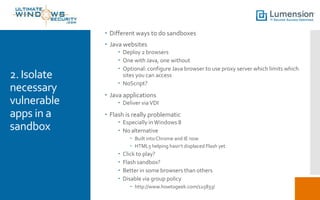
 Different ways to do sandboxes
 Java websites

2. Isolate
necessary
vulnerable
apps in a
sandbox

 Deploy 2 browsers
 One with Java, one without
 Optional: configure Java browser to use proxy server which limits which
sites you can access
 NoScript?

 Java applications
 Deliver via VDI

 Flash is really problematic
 Especially in Windows 8
 No alternative
 Built into Chrome and IE now
 HTML5 helping hasn’t displaced Flash yet






Click to play?
Flash sandbox?
Better in some browsers than others
Disable via group policy
 http://www.howtogeek.com/115833/
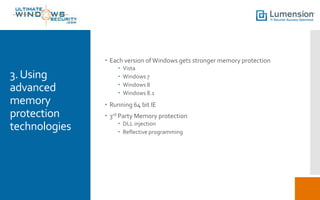
 Each version of Windows gets stronger memory protection

3. Using
advanced
memory
protection
technologies






Vista
Windows 7
Windows 8
Windows 8.1

 Running 64 bit IE
 3rd Party Memory protection
 DLL injection
 Reflective programming
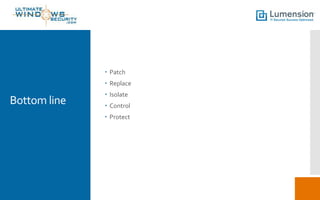
 Patch
 Replace

Bottom line

 Isolate
 Control

 Protect
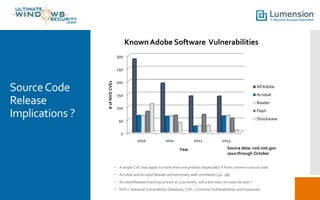
Known Adobe Software Vulnerabilities
300

Source Code
Release
Implications ?

# of NVD CVEs

250
200

All Adobe
Acrobat

150

Reader
100

Flash
Shockwave

50
0
2010

2011

2012
Year

2013
Source data: nvd.nist.gov
2010 through October

 A single CVE may apply to more than one product (especially) if from common source code

 Acrobat and Acrobat Reader are extremely well correlated (.92-.98)
 Acrobat/Release tracking at least at 2010 levels, will a dramatic increase be seen ?
 NVD = National Vulnerability Database, CVE = Common Vulnerabilities and Exposures
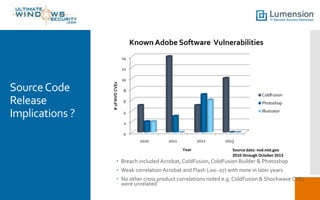
Known Adobe Software Vulnerabilities
14

Source Code
Release
Implications ?

# of NVD CVEs

12
10
8

ColdFusion

6

Photoshop

4

Illustrator

2
0
2010

2011

2012
Year

2013
Source data: nvd.nist.gov
2010 through October 2013

 Breach included Acrobat, ColdFusion, ColdFusion Builder & Photoshop
 Weak correlation Acrobat and Flash (.00-.07) with none in later years
 No other cross product correlations noted e.g. ColdFusion & Shockwave CVEs
were unrelated
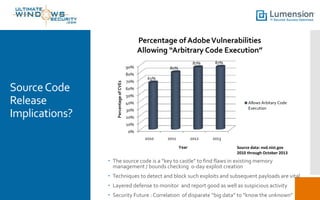
Percentage of Adobe Vulnerabilities
Allowing “Arbitrary Code Execution”
87%

90%

Source Code
Release
Implications?

Percentage of CVEs

80%
70%

87%

80%
65%

60%
50%
Allows Arbitary Code
Execution

40%
30%
20%
10%
0%
2010

2011

2012
Year

2013
Source data: nvd.nist.gov
2010 through October 2013

 The source code is a “key to castle” to find flaws in existing memory
management / bounds checking 0-day exploit creation
 Techniques to detect and block such exploits and subsequent payloads are vital
 Layered defense to monitor and report good as well as suspicious activity
 Security Future : Correlation of disparate “big data” to “know the unknown”
Sponsored by

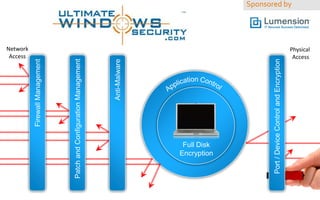
Defense-in-Depth with Lumension
Full Disk
Encryption

Physical
Access

Port / Device Control and Encryption

Anti-Malware

Patch and Configuration Management

Network
Access

Firewall Management

Click to edit
Master title
style

18
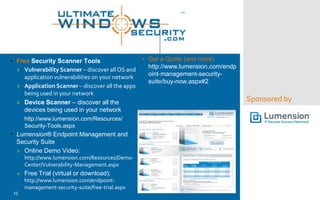
• Free Security Scanner Tools
» Vulnerability Scanner – discover all OS and
application vulnerabilities on your network
» Application Scanner – discover all the apps
being used in your network
» Device Scanner – discover all the
devices being used in your network
http://www.lumension.com/Resources/
Security-Tools.aspx

• Lumension® Endpoint Management and
Security Suite
» Online Demo Video:
http://www.lumension.com/Resources/DemoCenter/Vulnerability-Management.aspx

» Free Trial (virtual or download):
15

http://www.lumension.com/endpointmanagement-security-suite/free-trial.aspx

• Get a Quote (and more)
http://www.lumension.com/endp
oint-management-securitysuite/buy-now.aspx#2

Sponsored by

Adobe Hacked Again: What Does It Mean for You?

  • 1.
    Sponsored by Adobe HackedAgain: What Does It Mean for You? © 2013 Monterey Technology Group Inc.
  • 2.
    Thanks to www.Lumension.com Paul Zimski ©2013 Monterey Technology Group Inc.
  • 3.
    Preview of key points What we know  The risks  What we can do about it
  • 4.
     Privacy  Creditcard data  Passwords What we know     Adobe sites and cloud services Adobe ID Revel Creative Cloud  38 million customers/users affected  Gobs and gobs of source code     ColdFusion Adobe Reader Acrobat PhotoShop
  • 5.
     Obvious identityand privacy issues  Password practices  But the source code breaches are what worry me  Source code integrity Risks  Possible to insert arbitrary bad guy code into Adobe products that are then signed by Adobe and released to the public  Can you say Trojan horse?  More 0-day exploits  Instead of laboriously reverse engineering compiled Adobe code for buffer overflows, etc  Analyze the actual source code
  • 6.
    What can you doabout it?  You can’t fix Adobe’s problems, Oracle’s or anyone else  But you can reduce your exposure to them
  • 7.
     Great examples Adobe Acrobat  Adobe Reader 1. Replace common, vulnerable tools where possible  There are awesome free and for pay replacements for both products     Faster Cheaper Less irritating to use Better security  Obscurity  Attack surface  Better coding?  Not really replacements available for     Flash Java Adobe Air Other Adobe content creation products
  • 8.
     Different waysto do sandboxes  Java websites 2. Isolate necessary vulnerable apps in a sandbox  Deploy 2 browsers  One with Java, one without  Optional: configure Java browser to use proxy server which limits which sites you can access  NoScript?  Java applications  Deliver via VDI  Flash is really problematic  Especially in Windows 8  No alternative  Built into Chrome and IE now  HTML5 helping hasn’t displaced Flash yet     Click to play? Flash sandbox? Better in some browsers than others Disable via group policy  http://www.howtogeek.com/115833/
  • 9.
     Each versionof Windows gets stronger memory protection 3. Using advanced memory protection technologies     Vista Windows 7 Windows 8 Windows 8.1  Running 64 bit IE  3rd Party Memory protection  DLL injection  Reflective programming
  • 10.
     Patch  Replace Bottomline  Isolate  Control  Protect
  • 11.
    Known Adobe SoftwareVulnerabilities 300 Source Code Release Implications ? # of NVD CVEs 250 200 All Adobe Acrobat 150 Reader 100 Flash Shockwave 50 0 2010 2011 2012 Year 2013 Source data: nvd.nist.gov 2010 through October  A single CVE may apply to more than one product (especially) if from common source code  Acrobat and Acrobat Reader are extremely well correlated (.92-.98)  Acrobat/Release tracking at least at 2010 levels, will a dramatic increase be seen ?  NVD = National Vulnerability Database, CVE = Common Vulnerabilities and Exposures
  • 12.
    Known Adobe SoftwareVulnerabilities 14 Source Code Release Implications ? # of NVD CVEs 12 10 8 ColdFusion 6 Photoshop 4 Illustrator 2 0 2010 2011 2012 Year 2013 Source data: nvd.nist.gov 2010 through October 2013  Breach included Acrobat, ColdFusion, ColdFusion Builder & Photoshop  Weak correlation Acrobat and Flash (.00-.07) with none in later years  No other cross product correlations noted e.g. ColdFusion & Shockwave CVEs were unrelated
  • 13.
    Percentage of AdobeVulnerabilities Allowing “Arbitrary Code Execution” 87% 90% Source Code Release Implications? Percentage of CVEs 80% 70% 87% 80% 65% 60% 50% Allows Arbitary Code Execution 40% 30% 20% 10% 0% 2010 2011 2012 Year 2013 Source data: nvd.nist.gov 2010 through October 2013  The source code is a “key to castle” to find flaws in existing memory management / bounds checking 0-day exploit creation  Techniques to detect and block such exploits and subsequent payloads are vital  Layered defense to monitor and report good as well as suspicious activity  Security Future : Correlation of disparate “big data” to “know the unknown”
  • 14.
    Sponsored by Defense-in-Depth withLumension Full Disk Encryption Physical Access Port / Device Control and Encryption Anti-Malware Patch and Configuration Management Network Access Firewall Management Click to edit Master title style 18
  • 15.
    • Free SecurityScanner Tools » Vulnerability Scanner – discover all OS and application vulnerabilities on your network » Application Scanner – discover all the apps being used in your network » Device Scanner – discover all the devices being used in your network http://www.lumension.com/Resources/ Security-Tools.aspx • Lumension® Endpoint Management and Security Suite » Online Demo Video: http://www.lumension.com/Resources/DemoCenter/Vulnerability-Management.aspx » Free Trial (virtual or download): 15 http://www.lumension.com/endpointmanagement-security-suite/free-trial.aspx • Get a Quote (and more) http://www.lumension.com/endp oint-management-securitysuite/buy-now.aspx#2 Sponsored by

Editor's Notes

  • #15 Closing on this slide allows the audience to see the true defense in depth strategy Lumension provides. It is suggested to start from the left side and move to the right, highlighting each module/capability along the way.