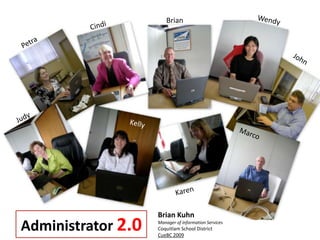
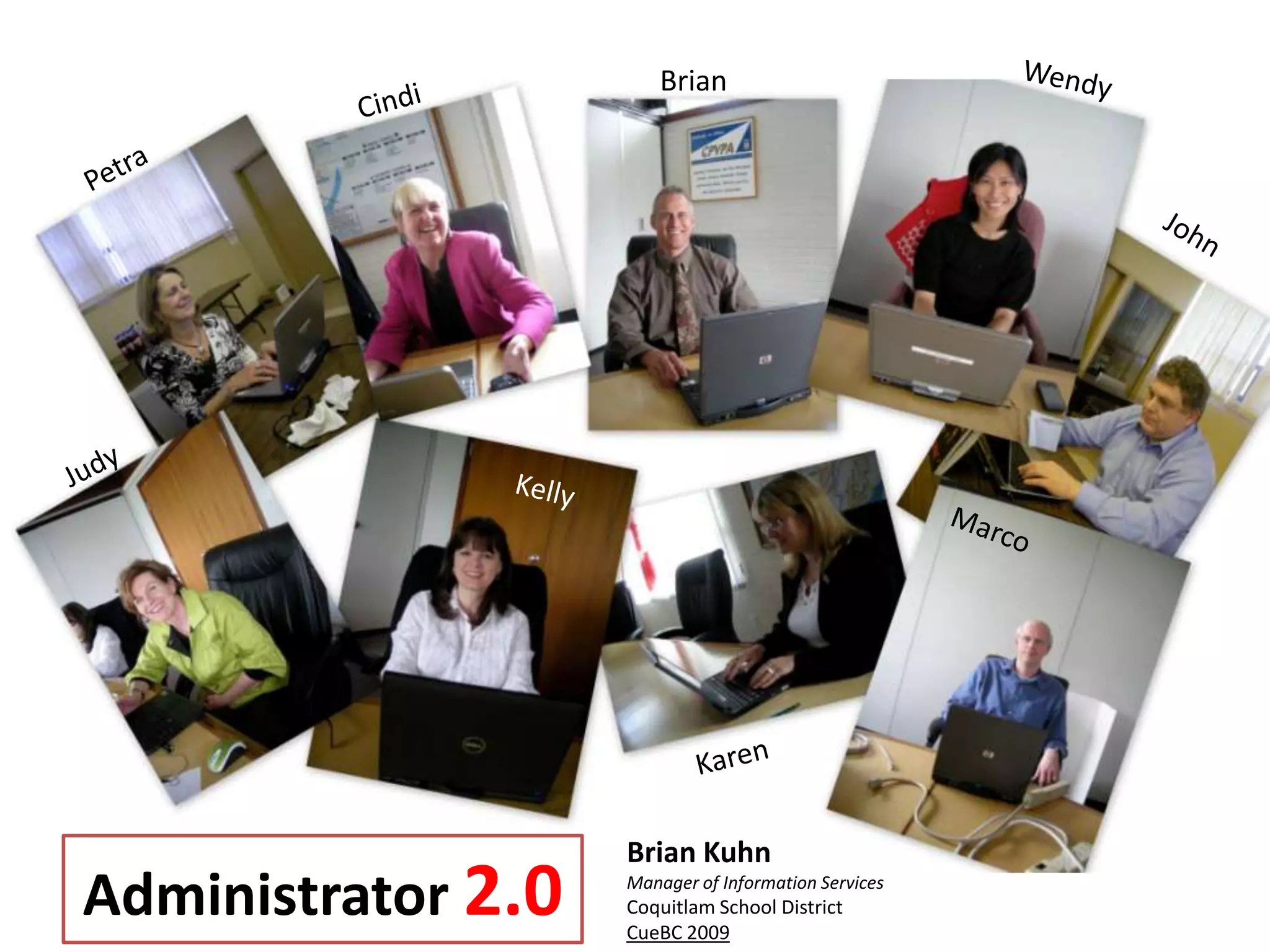
WendyBrianCindiPetraJohnJudyKellyMarcoKarenBrian KuhnManager of Information ServicesCoquitlam School DistrictCueBC 2009Administrator 2.0
School Context: We want to be able to use the technology to the best of our ability - we are the leaders in our schools and we would like to extend our skills in the area of using the technology we use on a daily basis.  By further understanding the technology, we can use it throughout our day with students, staff and parents.   Our increased understanding and utilization of the technology demonstrates that we are learning ’the 21st century’ way.The Proposal: There are a group of administrators who would like to further their knowledge and use of their new Dell Tablets.  This would further our use of the technology that we are using in the schools, and also further our use of technology when we are teaching.  There are so many aspects to the use of the tablets and we are in need of furthering our understanding of them.The Question: In what ways will my leadership skills be improved by my learning the various tools of my tablet?
1. Visionary Leadership. Educational Administrators inspire and lead development and implementation of a shared visionfor comprehensive integration of technology to promote excellence and support transformation throughout the organization.NETS for Administrators: National Educational Technology Standards for Administrators, ©2009, ISTE® (International Society for Technology in Education), www.iste.org. All rights reserved.
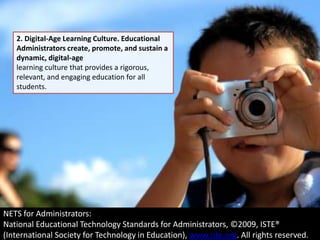
2. Digital-Age Learning Culture. Educational Administrators create, promote, and sustain a dynamic, digital-agelearning culture that provides a rigorous, relevant, and engaging education for all students.NETS for Administrators: National Educational Technology Standards for Administrators, ©2009, ISTE® (International Society for Technology in Education), www.iste.org. All rights reserved.
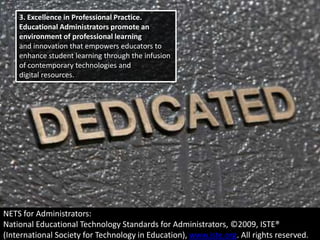
3. Excellence in Professional Practice. Educational Administrators promote an environment of professional learningand innovation that empowers educators to enhance student learning through the infusion of contemporary technologies anddigital resources.NETS for Administrators: National Educational Technology Standards for Administrators, ©2009, ISTE® (International Society for Technology in Education), www.iste.org. All rights reserved.
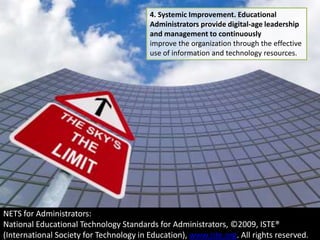
4. Systemic Improvement. Educational Administrators provide digital-age leadership and management to continuouslyimprove the organization through the effective use of information and technology resources.NETS for Administrators: National Educational Technology Standards for Administrators, ©2009, ISTE® (International Society for Technology in Education), www.iste.org. All rights reserved.
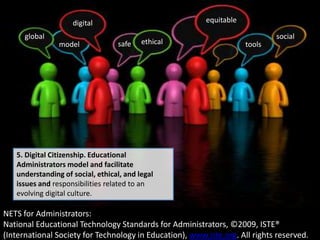
equitabledigitalglobalsocialethicalsafemodeltools5. Digital Citizenship. Educational Administrators model and facilitate understanding of social, ethical, and legal issues and responsibilities related to an evolving digital culture.NETS for Administrators: National Educational Technology Standards for Administrators, ©2009, ISTE® (International Society for Technology in Education), www.iste.org. All rights reserved.
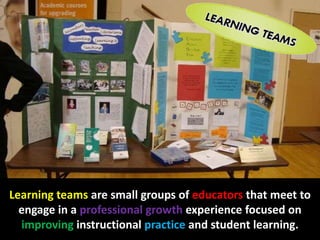
Learning teams are small groups of educators that meet to engage in a professional growth experience focused on improving instructional practice and student learning.
Action Research
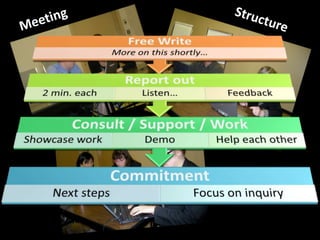
MeetingStructure
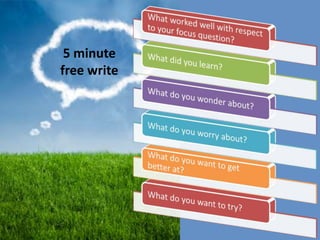
5 minute free write
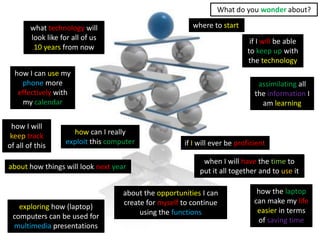
What do you wonder about?where to start what technology will look like for all of us 10 years from nowif I will be able to keep up with the technologyhow I can use my phone more effectively with my calendarassimilating all the information I am learninghow I will keeptrack of all of thishow can I really exploit this computerif I will ever be proficientwhen I will have the time to put it all together and to use itabout how things will look nextyearhow the laptop can make my lifeeasier in terms of saving timeabout the opportunities I can create for myself to continue using the functionsexploring how (laptop) computers can be used for multimedia presentations
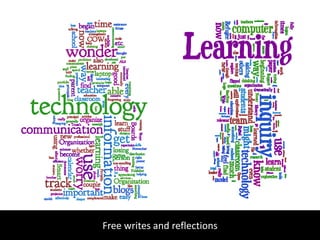
Free writes and reflections
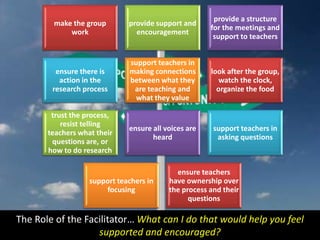
The Role of the Facilitator… What can I do that would help you feel supported and encouraged?
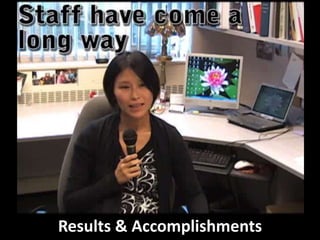
I learned that there’s a lot to learn still!  But at least I’ve got a start on this and am sharing my learning with our school via emails, newsletters and through conversations.  We have also committed to investing some more into technology in the classrooms for teaching…Results…
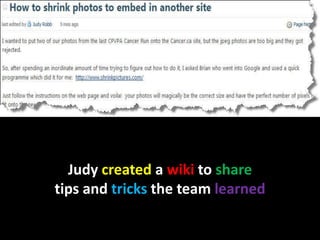
Judy created a wiki to sharetips and tricks the team learned
Petra and others use delicious for social bookmarking
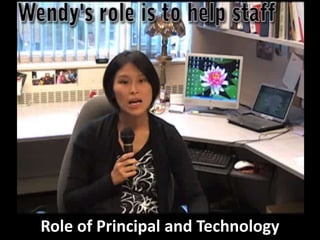
Wendy started to experiment with Twitter
Principals organizing their busylives using calendars
Principals going paperless with Onenote
“Teachers --- even digital natives --- need encouragement and advice”“This is why school leaders must become digital learners”, Education Leadership, October 2009
FearlessLearnersHelpingeachother!

Administrator 2.0 Cue Bc 2009 October

  • 1.
    WendyBrianCindiPetraJohnJudyKellyMarcoKarenBrian KuhnManager ofInformation ServicesCoquitlam School DistrictCueBC 2009Administrator 2.0
  • 2.
    School Context: Wewant to be able to use the technology to the best of our ability - we are the leaders in our schools and we would like to extend our skills in the area of using the technology we use on a daily basis.  By further understanding the technology, we can use it throughout our day with students, staff and parents.   Our increased understanding and utilization of the technology demonstrates that we are learning ’the 21st century’ way.The Proposal: There are a group of administrators who would like to further their knowledge and use of their new Dell Tablets.  This would further our use of the technology that we are using in the schools, and also further our use of technology when we are teaching.  There are so many aspects to the use of the tablets and we are in need of furthering our understanding of them.The Question: In what ways will my leadership skills be improved by my learning the various tools of my tablet?
  • 3.
    1. Visionary Leadership.Educational Administrators inspire and lead development and implementation of a shared visionfor comprehensive integration of technology to promote excellence and support transformation throughout the organization.NETS for Administrators: National Educational Technology Standards for Administrators, ©2009, ISTE® (International Society for Technology in Education), www.iste.org. All rights reserved.
  • 4.
    2. Digital-Age LearningCulture. Educational Administrators create, promote, and sustain a dynamic, digital-agelearning culture that provides a rigorous, relevant, and engaging education for all students.NETS for Administrators: National Educational Technology Standards for Administrators, ©2009, ISTE® (International Society for Technology in Education), www.iste.org. All rights reserved.
  • 5.
    3. Excellence inProfessional Practice. Educational Administrators promote an environment of professional learningand innovation that empowers educators to enhance student learning through the infusion of contemporary technologies anddigital resources.NETS for Administrators: National Educational Technology Standards for Administrators, ©2009, ISTE® (International Society for Technology in Education), www.iste.org. All rights reserved.
  • 6.
    4. Systemic Improvement.Educational Administrators provide digital-age leadership and management to continuouslyimprove the organization through the effective use of information and technology resources.NETS for Administrators: National Educational Technology Standards for Administrators, ©2009, ISTE® (International Society for Technology in Education), www.iste.org. All rights reserved.
  • 7.
    equitabledigitalglobalsocialethicalsafemodeltools5. Digital Citizenship.Educational Administrators model and facilitate understanding of social, ethical, and legal issues and responsibilities related to an evolving digital culture.NETS for Administrators: National Educational Technology Standards for Administrators, ©2009, ISTE® (International Society for Technology in Education), www.iste.org. All rights reserved.
  • 8.
    Learning teams aresmall groups of educators that meet to engage in a professional growth experience focused on improving instructional practice and student learning.
  • 9.
  • 10.
  • 11.
  • 12.
    What do youwonder about?where to start what technology will look like for all of us 10 years from nowif I will be able to keep up with the technologyhow I can use my phone more effectively with my calendarassimilating all the information I am learninghow I will keeptrack of all of thishow can I really exploit this computerif I will ever be proficientwhen I will have the time to put it all together and to use itabout how things will look nextyearhow the laptop can make my lifeeasier in terms of saving timeabout the opportunities I can create for myself to continue using the functionsexploring how (laptop) computers can be used for multimedia presentations
  • 13.
    Free writes andreflections
  • 14.
    The Role ofthe Facilitator… What can I do that would help you feel supported and encouraged?
  • 15.
    I learned thatthere’s a lot to learn still! But at least I’ve got a start on this and am sharing my learning with our school via emails, newsletters and through conversations. We have also committed to investing some more into technology in the classrooms for teaching…Results…
  • 16.
    Judy created awiki to sharetips and tricks the team learned
  • 17.
    Judy created awiki to sharetips and tricks the team learned
  • 18.
    Petra and othersuse delicious for social bookmarking
  • 19.
    Wendy started toexperiment with Twitter
  • 20.
    Principals organizing theirbusylives using calendars
  • 21.
  • 22.
    “Teachers --- evendigital natives --- need encouragement and advice”“This is why school leaders must become digital learners”, Education Leadership, October 2009
  • 23.