Definition
• An Adjective is a part of speech
which describes, identifies, or
quantifies a noun or a pronoun.
• Ex. He was wearing a blue shirt.
• There are seven rooms in the
house.
•Kinds of Adjectives
• There are different kinds of adjectives.
These are:
• 1. Adjectives of quality or Descriptive
Adjectives
• 2. Adjectives of Quantity or Number
• 3.Demonstrative Adjectives
• 4. Possessive Adjectives
• 5.Interrogative Adjectives
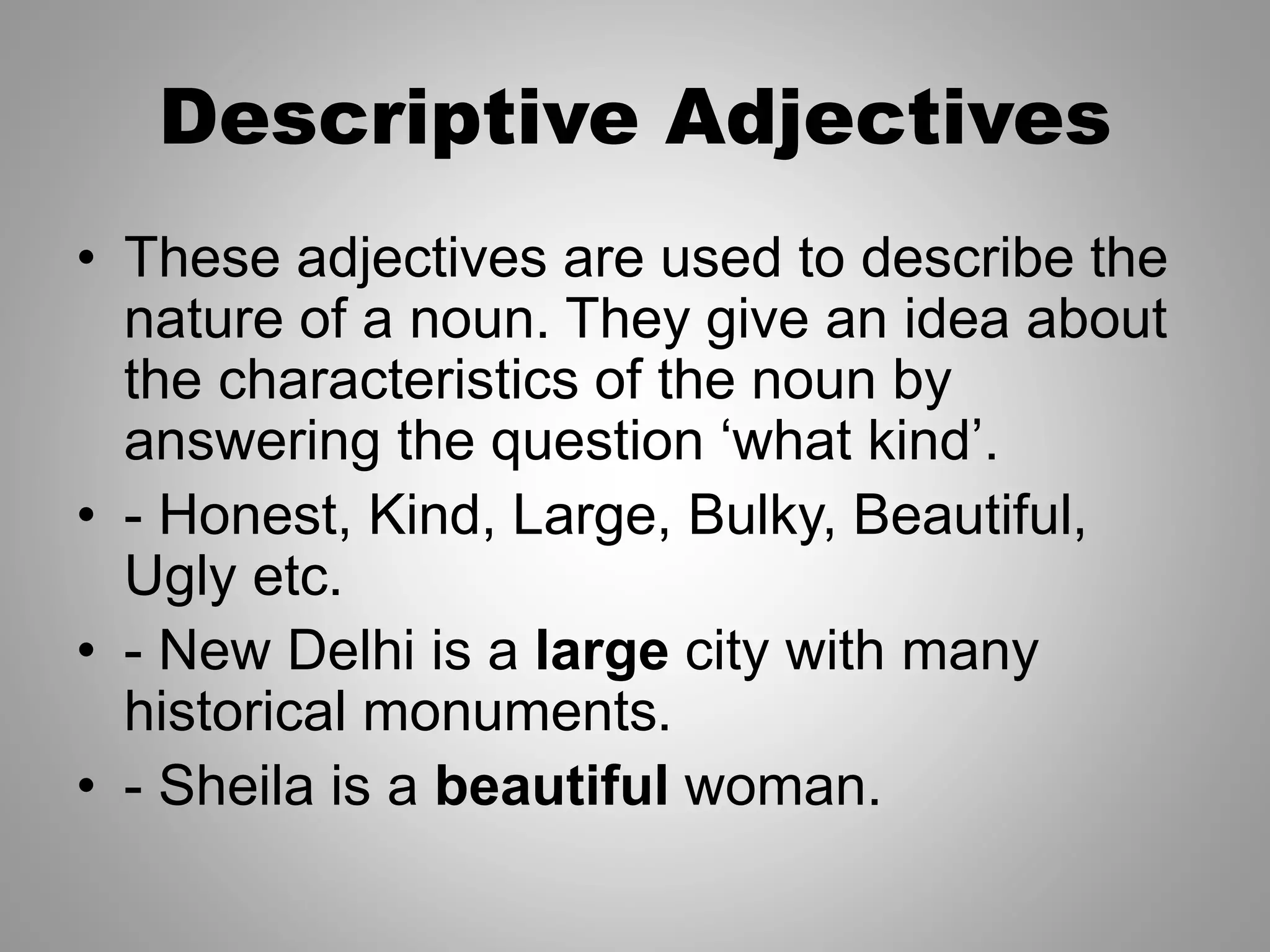
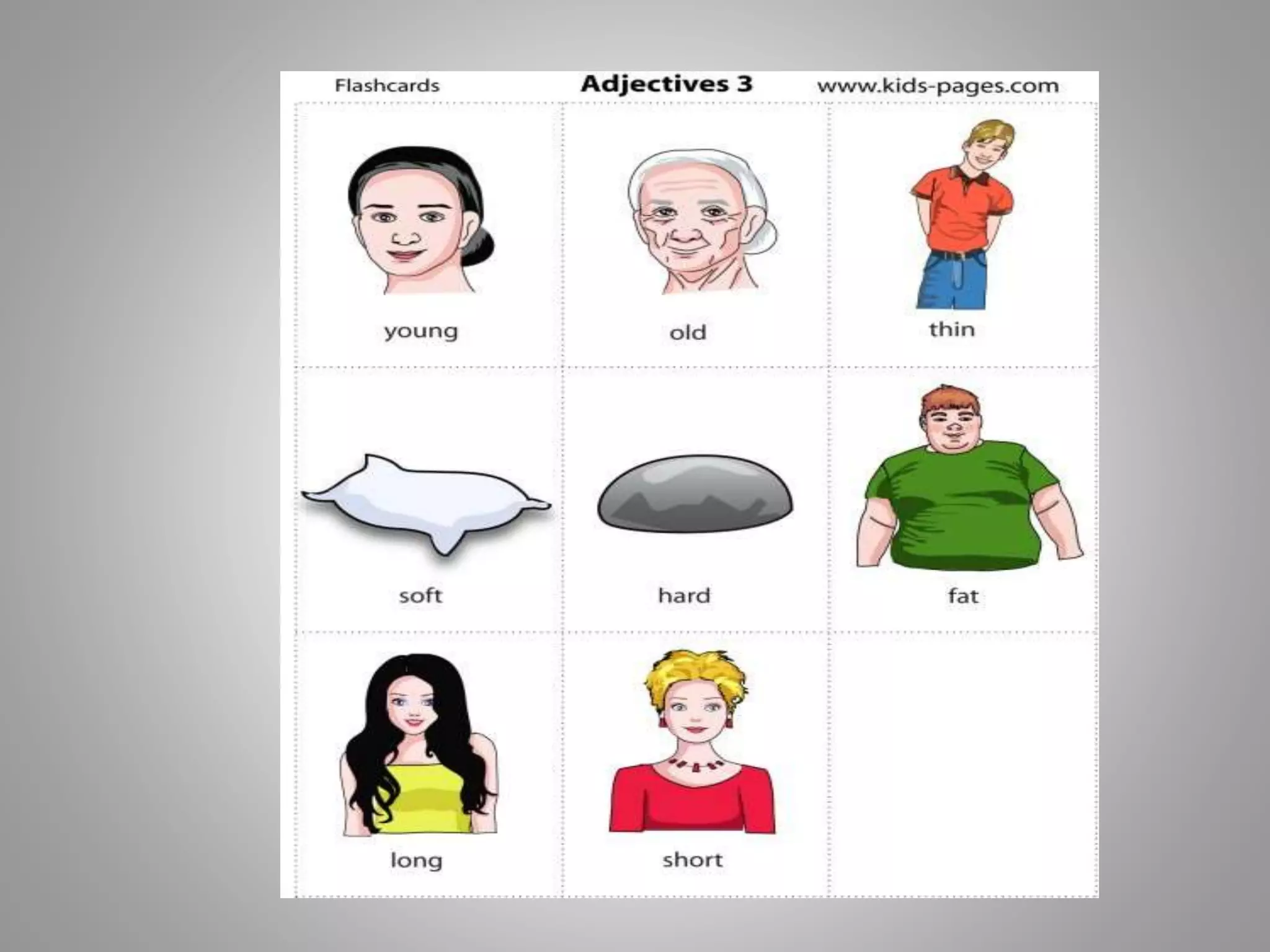
Descriptive Adjectives
• These adjectives are used to describe the
nature of a noun. They give an idea about
the characteristics of the noun by
answering the question ‘what kind’.
• - Honest, Kind, Large, Bulky, Beautiful,
Ugly etc.
• - New Delhi is a large city with many
historical monuments.
• - Sheila is a beautiful woman.
Adjectives of Quantity
• These adjectives help to show the amount or
the approximate amount of the noun or
pronoun. These adjectives do not provide
exact numbers; rather they tell us the amount
of the noun in relative or whole terms.
• All, Half, Many, Few, Little, No, Enough,
Great etc.
• - They have finished most of the rice.
• - Many people came to visit the fair.
Adjectives of Number
• These adjectives are used to show the
number of nouns and their place in an order.
There are three different sections within
adjectives of number:
• 1. Definite Numeral Adjective - Those which
clearly denote an exact number of nouns or
the order of the noun.
• One, Two, Twenty, Thirty-Three etc. also
known as Cardinals.
• First, Second, Third, Seventh etc. also known
as Ordinals.
Adjectives of Number.. Cont.
• Indefinite Numeral Adjective - Those adjectives
that do not give an exact numerical amount but
just give a general idea of the amount.
Some, Many, Few, Any, Several, All etc.
• E.g.: There were many people present at the
meeting.
• Distributive Numeral Adjective -Those
adjectives that are used to refer to individual
nouns within the whole amount.
• Either, Neither, Each, Another, Other etc.
• E.g: Taxes have to be paid by every employed
citizen.
Demonstrative Adjectives
• These adjectives are used to point out or
indicate a particular noun or pronoun using
the adjectives - This, That, These and
Those.
• - That bag belongs to Neil.
• - Try using this paintbrush in art class.
• - I really like those shoes.
• - These flowers are lovely.
Possessive Adjectives
• A possessive adjective expresses
possession of a noun by someone or
something. Possessive adjectives are the
same as possessive pronouns.
• My car is very old.
• Her boyfriend is very friendly.
• Our dog is black.
• Their homework is on the table.
All the possessive
adjectives are listed in the
following table
• Singular
• my
• your
• his
• her
• its
• Plural
• our
• your
• their
• their
• Their
Interrogative Adjectives
• These adjectives are used to ask
questions about nouns or in relation to
nouns, they are - Where, What, Which
and Whose.
• Where did he say he was going?
• What assignment did I miss out on?
• Which is your favorite author?

Adjectives

  • 3.
    Definition • An Adjectiveis a part of speech which describes, identifies, or quantifies a noun or a pronoun. • Ex. He was wearing a blue shirt. • There are seven rooms in the house.
  • 5.
    •Kinds of Adjectives •There are different kinds of adjectives. These are: • 1. Adjectives of quality or Descriptive Adjectives • 2. Adjectives of Quantity or Number • 3.Demonstrative Adjectives • 4. Possessive Adjectives • 5.Interrogative Adjectives
  • 6.
    Descriptive Adjectives • Theseadjectives are used to describe the nature of a noun. They give an idea about the characteristics of the noun by answering the question ‘what kind’. • - Honest, Kind, Large, Bulky, Beautiful, Ugly etc. • - New Delhi is a large city with many historical monuments. • - Sheila is a beautiful woman.
  • 8.
    Adjectives of Quantity •These adjectives help to show the amount or the approximate amount of the noun or pronoun. These adjectives do not provide exact numbers; rather they tell us the amount of the noun in relative or whole terms. • All, Half, Many, Few, Little, No, Enough, Great etc. • - They have finished most of the rice. • - Many people came to visit the fair.
  • 9.
    Adjectives of Number •These adjectives are used to show the number of nouns and their place in an order. There are three different sections within adjectives of number: • 1. Definite Numeral Adjective - Those which clearly denote an exact number of nouns or the order of the noun. • One, Two, Twenty, Thirty-Three etc. also known as Cardinals. • First, Second, Third, Seventh etc. also known as Ordinals.
  • 10.
    Adjectives of Number..Cont. • Indefinite Numeral Adjective - Those adjectives that do not give an exact numerical amount but just give a general idea of the amount. Some, Many, Few, Any, Several, All etc. • E.g.: There were many people present at the meeting. • Distributive Numeral Adjective -Those adjectives that are used to refer to individual nouns within the whole amount. • Either, Neither, Each, Another, Other etc. • E.g: Taxes have to be paid by every employed citizen.
  • 11.
    Demonstrative Adjectives • Theseadjectives are used to point out or indicate a particular noun or pronoun using the adjectives - This, That, These and Those. • - That bag belongs to Neil. • - Try using this paintbrush in art class. • - I really like those shoes. • - These flowers are lovely.
  • 13.
    Possessive Adjectives • Apossessive adjective expresses possession of a noun by someone or something. Possessive adjectives are the same as possessive pronouns. • My car is very old. • Her boyfriend is very friendly. • Our dog is black. • Their homework is on the table.
  • 15.
    All the possessive adjectivesare listed in the following table • Singular • my • your • his • her • its • Plural • our • your • their • their • Their
  • 16.
    Interrogative Adjectives • Theseadjectives are used to ask questions about nouns or in relation to nouns, they are - Where, What, Which and Whose. • Where did he say he was going? • What assignment did I miss out on? • Which is your favorite author?