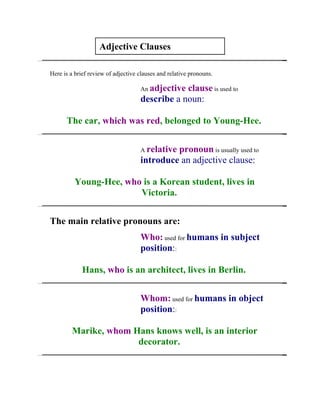
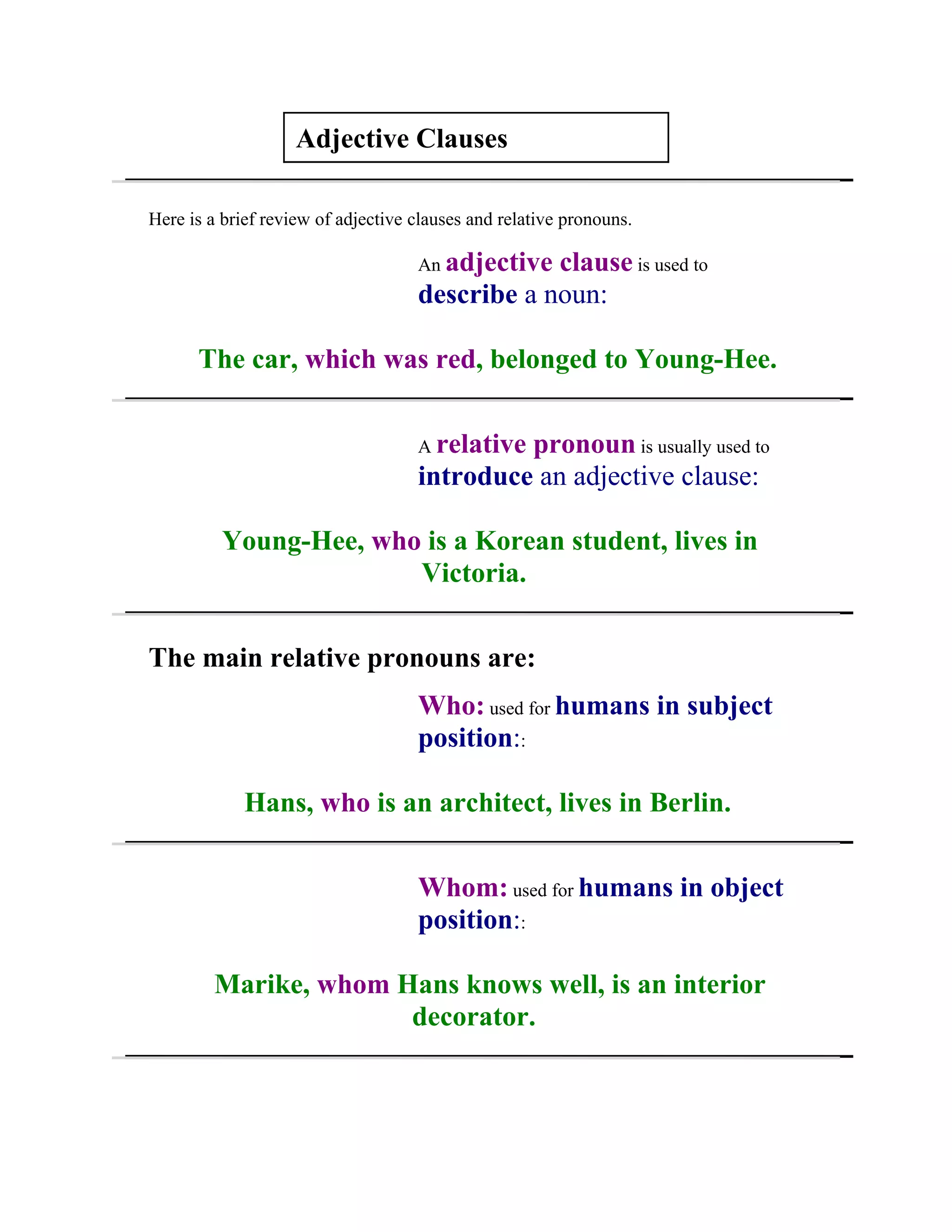
Adjective Clauses

Here is a brief review of adjective clauses and relative pronouns.

                                    An adjectiveclause is used to
                                    describe a noun:

      The car, which was red, belonged to Young-Hee.


                                    A relative
                                             pronoun is usually used to
                                    introduce an adjective clause:

          Young-Hee, who is a Korean student, lives in
                        Victoria.


The main relative pronouns are:
                                    Who: used for humans in subject
                                    position::

             Hans, who is an architect, lives in Berlin.


                                    Whom: used for humans in object
                                    position::

        Marike, whom Hans knows well, is an interior
                      decorator.
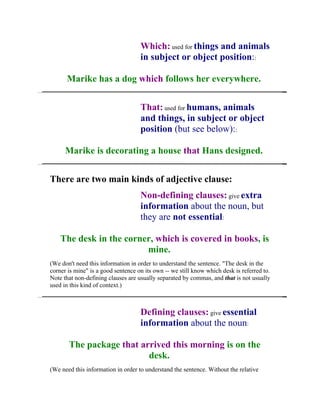
Which: used for things and animals
                                    in subject or object position::

      Marike has a dog which follows her everywhere.


                                    That: used for humans, animals
                                    and things, in subject or object
                                    position (but see below)::

      Marike is decorating a house that Hans designed.


There are two main kinds of adjective clause:
                                    Non-defining clauses: give extra
                                    information about the noun, but
                                    they are not essential:

    The desk in the corner, which is covered in books, is
                         mine.
(We don't need this information in order to understand the sentence. "The desk in the
corner is mine" is a good sentence on its own -- we still know which desk is referred to.
Note that non-defining clauses are usually separated by commas, and that is not usually
used in this kind of context.)


                                    Defining clauses: give essential
                                    information about the noun:

       The package that arrived this morning is on the
                          desk.
(We need this information in order to understand the sentence. Without the relative
clause, we don't know which package is being referred to. Note that that is often used
in defining relative clauses, and they are not separated by commas.)

Adjective clauses1

  • 1.
    Adjective Clauses Here isa brief review of adjective clauses and relative pronouns. An adjectiveclause is used to describe a noun: The car, which was red, belonged to Young-Hee. A relative pronoun is usually used to introduce an adjective clause: Young-Hee, who is a Korean student, lives in Victoria. The main relative pronouns are: Who: used for humans in subject position:: Hans, who is an architect, lives in Berlin. Whom: used for humans in object position:: Marike, whom Hans knows well, is an interior decorator.
  • 2.
    Which: used forthings and animals in subject or object position:: Marike has a dog which follows her everywhere. That: used for humans, animals and things, in subject or object position (but see below):: Marike is decorating a house that Hans designed. There are two main kinds of adjective clause: Non-defining clauses: give extra information about the noun, but they are not essential: The desk in the corner, which is covered in books, is mine. (We don't need this information in order to understand the sentence. "The desk in the corner is mine" is a good sentence on its own -- we still know which desk is referred to. Note that non-defining clauses are usually separated by commas, and that is not usually used in this kind of context.) Defining clauses: give essential information about the noun: The package that arrived this morning is on the desk. (We need this information in order to understand the sentence. Without the relative
  • 3.
    clause, we don'tknow which package is being referred to. Note that that is often used in defining relative clauses, and they are not separated by commas.)