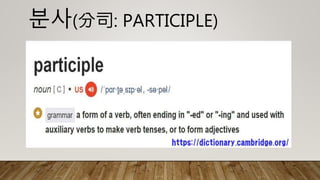
분사(分司: PARTICIPLE)
분사(分司: PARTICIPLE)
• 동사가 –ing 또는 –ed의 형태로
조동사와 함께 쓰여 특정한 시제를 나타내거나
앞뒤의 명사를 꾸며주는 형용사의 역할을 하는 것
분사(分司: PARTICIPLE)
• 현재분사: 동사의 –ing 형태가 문장 속에서 ‘능동’과 ‘진행’의 의미로 쓰인다.
He was reading a book. It was an interesting book.
He stood there reading a book. He is retiring very soon.
• 과거분사: 동사의 –ed 형태가 문장 속에서 ‘수동’과 ‘완료’의 의미로 쓰인다.
He sat surrounded by his children.
Once there lived a man named Robin Hood.
He gave me a watch made in Korea. He is a retired soldier.
분사(分司: PARTICIPLE)
• 분사는 주격보어, 목적격보어로 쓰인다.
He came crying.(SC)
He became excited.(SC)
I felt someone touching my back.(OC)
I felt myself watched all day long.(OC)
I could not make myself understood in English.(OC)
I had my watch mended.(시키다)(OC) I had my watch stolen.(당하다)(OC)
분사구문
• 문장 첫머리가 –ing 또는 –ed 의 형태로 시작되며
‘때, 원인, 이유, 조건, 양보, 동시상황’ 등 부사적 의
미로 해석되는 것
분사구문 만들기
[While] I was walking along the street, / I met an old friend.
종속절(Subordinate/Dependent Clause) 주절(Main/Independent
Clause)
[As] I had nothing to do, / I went to bed earlier.
[If] I meet her, / I will be very glad.
[Though] she is young, / she has much experience.
분사구문 만들기
[While] I was walking along the street, / I met an old friend.
종속절(Subordinate/Dependent Clause) 주절(Main/Independent Clause)
주절과 종속절의 주어 일치 ☞
1. 종속절의 주어 생략 [While] I was walking along the street,
2. 종속설의 be동사 생략 [While] I was walking along the street,
3. 종속절의 접속사 생략 [While] I was walking along the street,
4. 주절 주어 입장에서의 태 확인: 현재분사-능동 / 과거분사-수동
분사구문 만들기
[As] I had nothing to do, / I went to bed earlier.
주절과 종속절의 주어 일치 ☞
1. 종속절의 주어 생략 [As] I had nothing to do,
2. 종속설의 be동사 생략 [As] I had nothing to do, [없음!]
3. 종속절의 접속사 생략 [As] I had nothing to do,
4. 주절 주어 입장에서의 태 확인: 현재분사-능동 / 과거분사-수동
had nothing to do, → Having nothing do, I went to bed earlier.
분사구문 만들기
[If] I meet her, I will be very glad.
주절과 종속절의 주어 일치 ☞
1. 종속절의 주어 생략:
2. 종속설의 be동사 생략:
3. 종속절의 접속사 생략:
4. 주절 주어 입장에서의 태 확인: 현재분사-능동 / 과거분사-수동
If ( ) meet her,
If ( ) meet her,
meet her,
Meeting her, I will be very glad.
분사구문 만들기
[Though] she is young, she has much experience.
주절과 종속절의 주어 일치 ☞
1. 종속절의 주어 생략:
2. 종속설의 be동사 생략:
3. 종속절의 접속사 생략:
4.
Though ( ) is young,
Though ( )( ) young,
Young,
Being young, she has much
experience.
That’s OK. But!
분사구문이란 문장 맨앞이 –ing 또는 –ed 형태인 것
분사구문 만들기 – 수동태
[As] it is written in plain English, this book is very easy to read.
주절과 종속절의 주어 일치 ☞
1. 종속절의 주어 생략:
2. 종속설의 be동사 생략:
3. 종속절의 접속사 생략:
4.
As ( ) is written in plain English,
As ( )( ) written in plain
English,
( )( )( ) written in plain English,
Written in plain English, this book is very easy to
read.
주절 주어 입장에서의 태 확인: 현재분사-능동 / 과거분사-수동
분사구문의 시제 – 단순분사 VS 완료분사
While I was walking along the street, / I met an old friend.
→ Walking along the street,
As I had nothing to do, / I went to bed earlier.
→ Having nothing to do,
Though she is young, / she has much experience.
→ (Being) young,
단순분사
분사구문의 시제 – 단순분사 VS 완료분사
As I have finished the work, I have much free time now.
As I finished the work, I have much free time now.
* 일이 끝난 시점 > 자유로운 시점
→ Having finished the work,
As we lived in the same village for long, I know him very well.
→ Having lived in the same village for long,
* 같은 동네 살았던 시점 > 그에 대해 말하는 시점
완료분사
독립분사구문 – 그래도 지운다!
[As] night was coming on, we left for home.
→ Night coming on,
[As] there was nothing to do, I went to bed earlier.
→ There being nothing to do,
[As] the work had been done, I had nothing to do.
→
[As] it was fine, I could not help going out of home.
→
The work having been done,
It being fine,
무인칭 독립분사구문(관용구) – 닥치고 외운다!
• Generally speaking
• Frankly speaking
• Strictly speaking
• Judging from
• Considering

Participle 01

  • 1.
  • 2.
    분사(分司: PARTICIPLE) • 동사가–ing 또는 –ed의 형태로 조동사와 함께 쓰여 특정한 시제를 나타내거나 앞뒤의 명사를 꾸며주는 형용사의 역할을 하는 것
  • 3.
    분사(分司: PARTICIPLE) • 현재분사:동사의 –ing 형태가 문장 속에서 ‘능동’과 ‘진행’의 의미로 쓰인다. He was reading a book. It was an interesting book. He stood there reading a book. He is retiring very soon. • 과거분사: 동사의 –ed 형태가 문장 속에서 ‘수동’과 ‘완료’의 의미로 쓰인다. He sat surrounded by his children. Once there lived a man named Robin Hood. He gave me a watch made in Korea. He is a retired soldier.
  • 4.
    분사(分司: PARTICIPLE) • 분사는주격보어, 목적격보어로 쓰인다. He came crying.(SC) He became excited.(SC) I felt someone touching my back.(OC) I felt myself watched all day long.(OC) I could not make myself understood in English.(OC) I had my watch mended.(시키다)(OC) I had my watch stolen.(당하다)(OC)
  • 5.
    분사구문 • 문장 첫머리가–ing 또는 –ed 의 형태로 시작되며 ‘때, 원인, 이유, 조건, 양보, 동시상황’ 등 부사적 의 미로 해석되는 것
  • 6.
    분사구문 만들기 [While] Iwas walking along the street, / I met an old friend. 종속절(Subordinate/Dependent Clause) 주절(Main/Independent Clause) [As] I had nothing to do, / I went to bed earlier. [If] I meet her, / I will be very glad. [Though] she is young, / she has much experience.
  • 7.
    분사구문 만들기 [While] Iwas walking along the street, / I met an old friend. 종속절(Subordinate/Dependent Clause) 주절(Main/Independent Clause) 주절과 종속절의 주어 일치 ☞ 1. 종속절의 주어 생략 [While] I was walking along the street, 2. 종속설의 be동사 생략 [While] I was walking along the street, 3. 종속절의 접속사 생략 [While] I was walking along the street, 4. 주절 주어 입장에서의 태 확인: 현재분사-능동 / 과거분사-수동
  • 8.
    분사구문 만들기 [As] Ihad nothing to do, / I went to bed earlier. 주절과 종속절의 주어 일치 ☞ 1. 종속절의 주어 생략 [As] I had nothing to do, 2. 종속설의 be동사 생략 [As] I had nothing to do, [없음!] 3. 종속절의 접속사 생략 [As] I had nothing to do, 4. 주절 주어 입장에서의 태 확인: 현재분사-능동 / 과거분사-수동 had nothing to do, → Having nothing do, I went to bed earlier.
  • 9.
    분사구문 만들기 [If] Imeet her, I will be very glad. 주절과 종속절의 주어 일치 ☞ 1. 종속절의 주어 생략: 2. 종속설의 be동사 생략: 3. 종속절의 접속사 생략: 4. 주절 주어 입장에서의 태 확인: 현재분사-능동 / 과거분사-수동 If ( ) meet her, If ( ) meet her, meet her, Meeting her, I will be very glad.
  • 10.
    분사구문 만들기 [Though] sheis young, she has much experience. 주절과 종속절의 주어 일치 ☞ 1. 종속절의 주어 생략: 2. 종속설의 be동사 생략: 3. 종속절의 접속사 생략: 4. Though ( ) is young, Though ( )( ) young, Young, Being young, she has much experience. That’s OK. But! 분사구문이란 문장 맨앞이 –ing 또는 –ed 형태인 것
  • 11.
    분사구문 만들기 –수동태 [As] it is written in plain English, this book is very easy to read. 주절과 종속절의 주어 일치 ☞ 1. 종속절의 주어 생략: 2. 종속설의 be동사 생략: 3. 종속절의 접속사 생략: 4. As ( ) is written in plain English, As ( )( ) written in plain English, ( )( )( ) written in plain English, Written in plain English, this book is very easy to read. 주절 주어 입장에서의 태 확인: 현재분사-능동 / 과거분사-수동
  • 12.
    분사구문의 시제 –단순분사 VS 완료분사 While I was walking along the street, / I met an old friend. → Walking along the street, As I had nothing to do, / I went to bed earlier. → Having nothing to do, Though she is young, / she has much experience. → (Being) young, 단순분사
  • 13.
    분사구문의 시제 –단순분사 VS 완료분사 As I have finished the work, I have much free time now. As I finished the work, I have much free time now. * 일이 끝난 시점 > 자유로운 시점 → Having finished the work, As we lived in the same village for long, I know him very well. → Having lived in the same village for long, * 같은 동네 살았던 시점 > 그에 대해 말하는 시점 완료분사
  • 14.
    독립분사구문 – 그래도지운다! [As] night was coming on, we left for home. → Night coming on, [As] there was nothing to do, I went to bed earlier. → There being nothing to do, [As] the work had been done, I had nothing to do. → [As] it was fine, I could not help going out of home. → The work having been done, It being fine,
  • 15.
    무인칭 독립분사구문(관용구) –닥치고 외운다! • Generally speaking • Frankly speaking • Strictly speaking • Judging from • Considering