+


    Isolation, Purification,
    and Assay of Wheat Germ
    Acid Phosphatase
    Natalia Manzano
    Wilmarie Morales
    RISE Program
    May 10th, 2012
+
    Introduction
       Wheat germ is a very small part of a wheat kernel.
       Wheat germ is very high in protein.
       It contains around 28% protein and has more protein than can be
        found in most meat products.
       The human body needs protein in order to repair tissue damage
        and to help minerals and nutrients reach our cells.
       It contains more potassium and iron than any other food source.
       It also has calcium, zinc, magnesium, and vitamins A, B1, B3 and
        E.
       Vitamins B1 and 3 are very important to maintain energy levels
        and maintain healthy muscles and organs. Vitamin E is a very
        important antioxidant, prevents heart disease, and is needed to
        strengthen the body’s immune system.  
+
    Acid Phosphatase

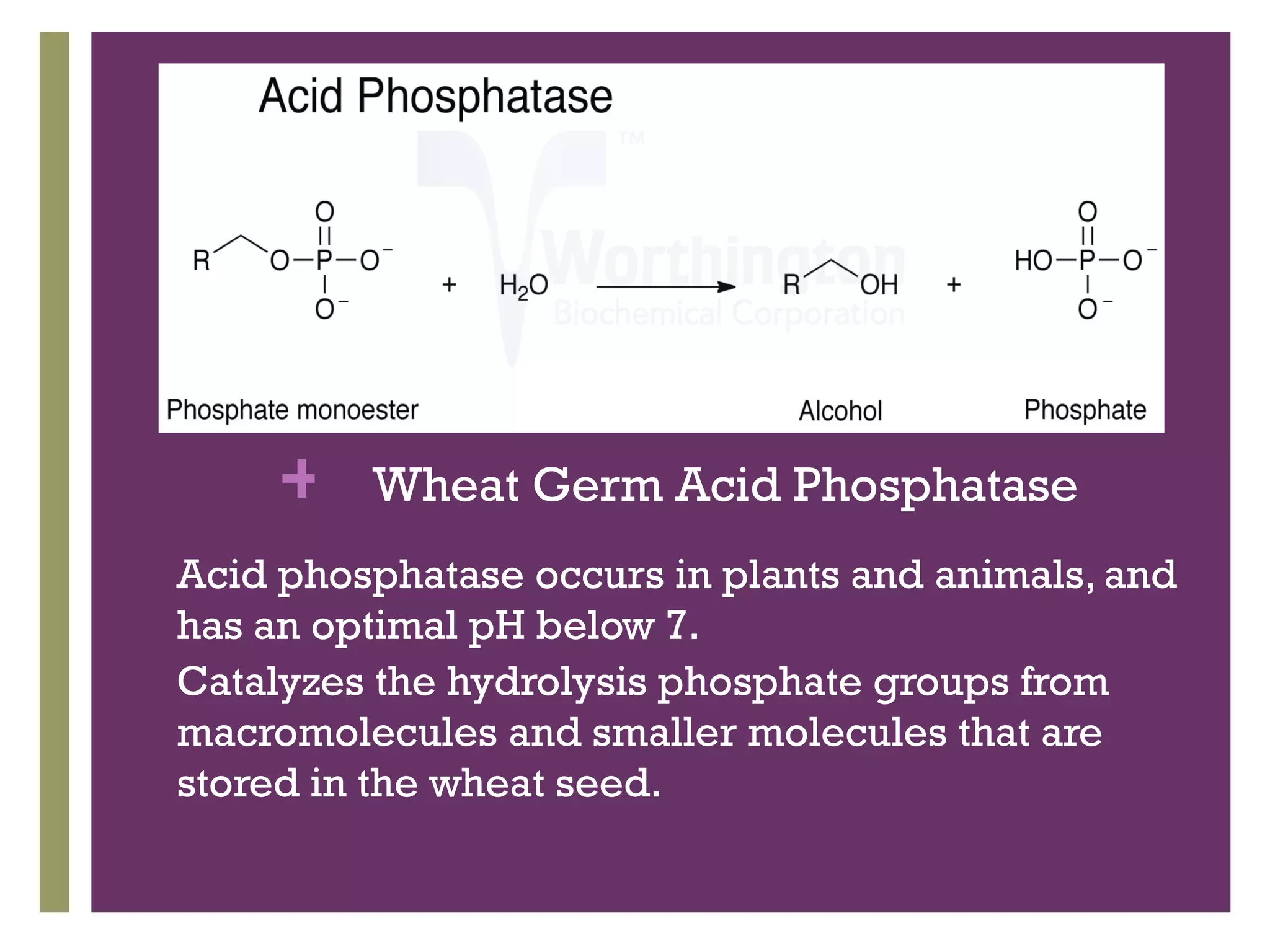
       Acid phosphatase is a type of enzyme used to free attached
        phosphate groups from other molecules during digestion.
       It is basically a phosphomonoesterase, a phosphatase that
        acts on monoesters.
       It is stored in lysosomes and functions when these fuse
        with endosomes.
       Phosphatase enzymes are also used by soil microorganisms
        to access organically bound phosphate nutrients.
       Some plant roots, exude carboxylates that perform acid
        phosphatase activity, helping to mobilise phosphorus in
        nutrient-deficient soils.
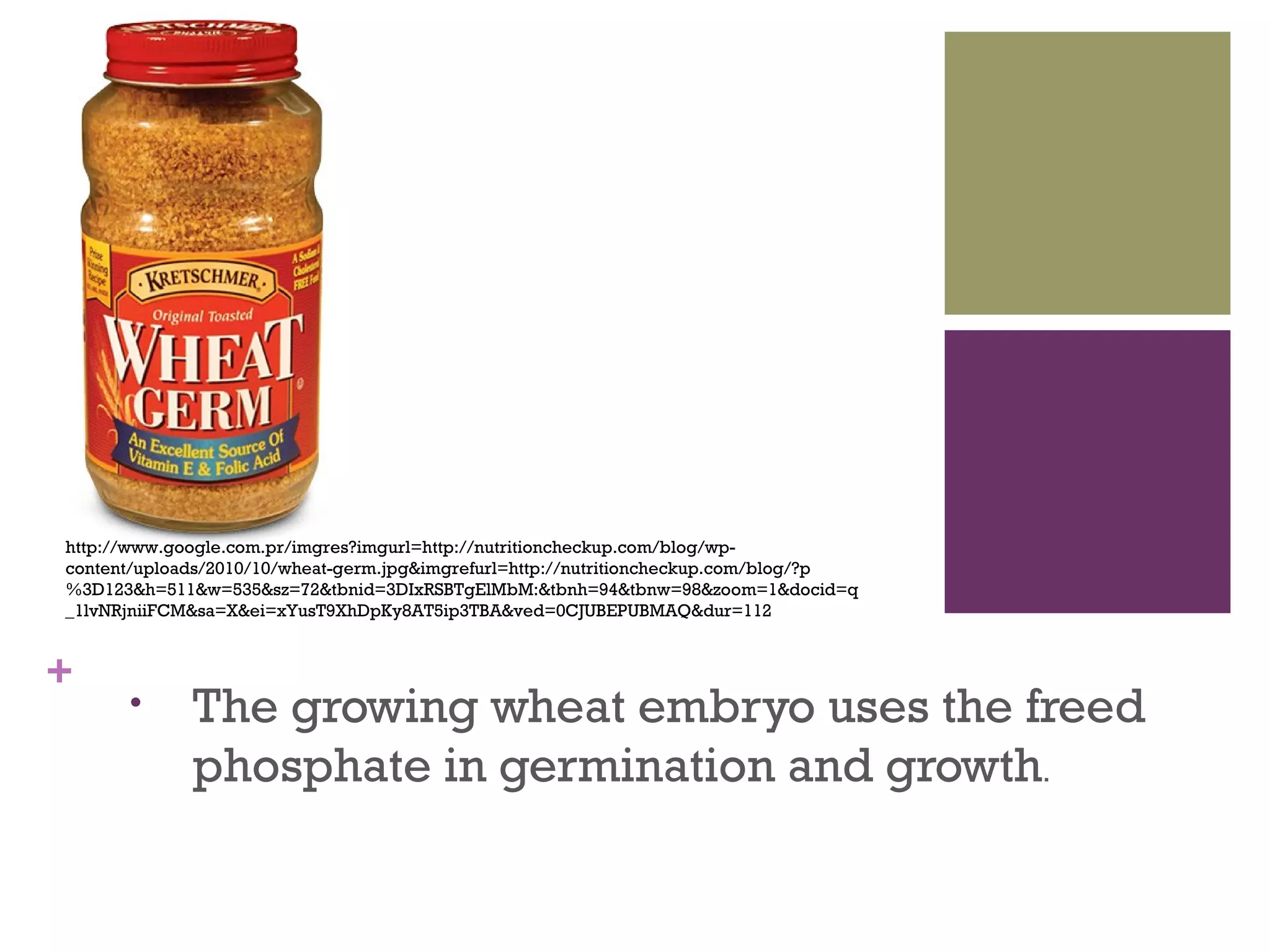
+   Wheat Germ Acid Phosphatase
•   Acid phosphatase occurs in plants and animals, and
    has an optimal pH below 7.
•   Catalyzes the hydrolysis phosphate groups from
    macromolecules and smaller molecules that are
    stored in the wheat seed.
http://www.google.com.pr/imgres?imgurl=http://nutritioncheckup.com/blog/wp-
content/uploads/2010/10/wheat-germ.jpg&imgrefurl=http://nutritioncheckup.com/blog/?p
%3D123&h=511&w=535&sz=72&tbnid=3DIxRSBTgElMbM:&tbnh=94&tbnw=98&zoom=1&docid=q
_1lvNRjniiFCM&sa=X&ei=xYusT9XhDpKy8AT5ip3TBA&ved=0CJUBEPUBMAQ&dur=112


+
      •      The growing wheat embryo uses the freed
             phosphate in germination and growth.
+
    Objectives

     To
       purify and isolate acid phosphatase from
     wheat germ.
     Determine protein concentration using
     Bicinchoninic Acid protein assay.
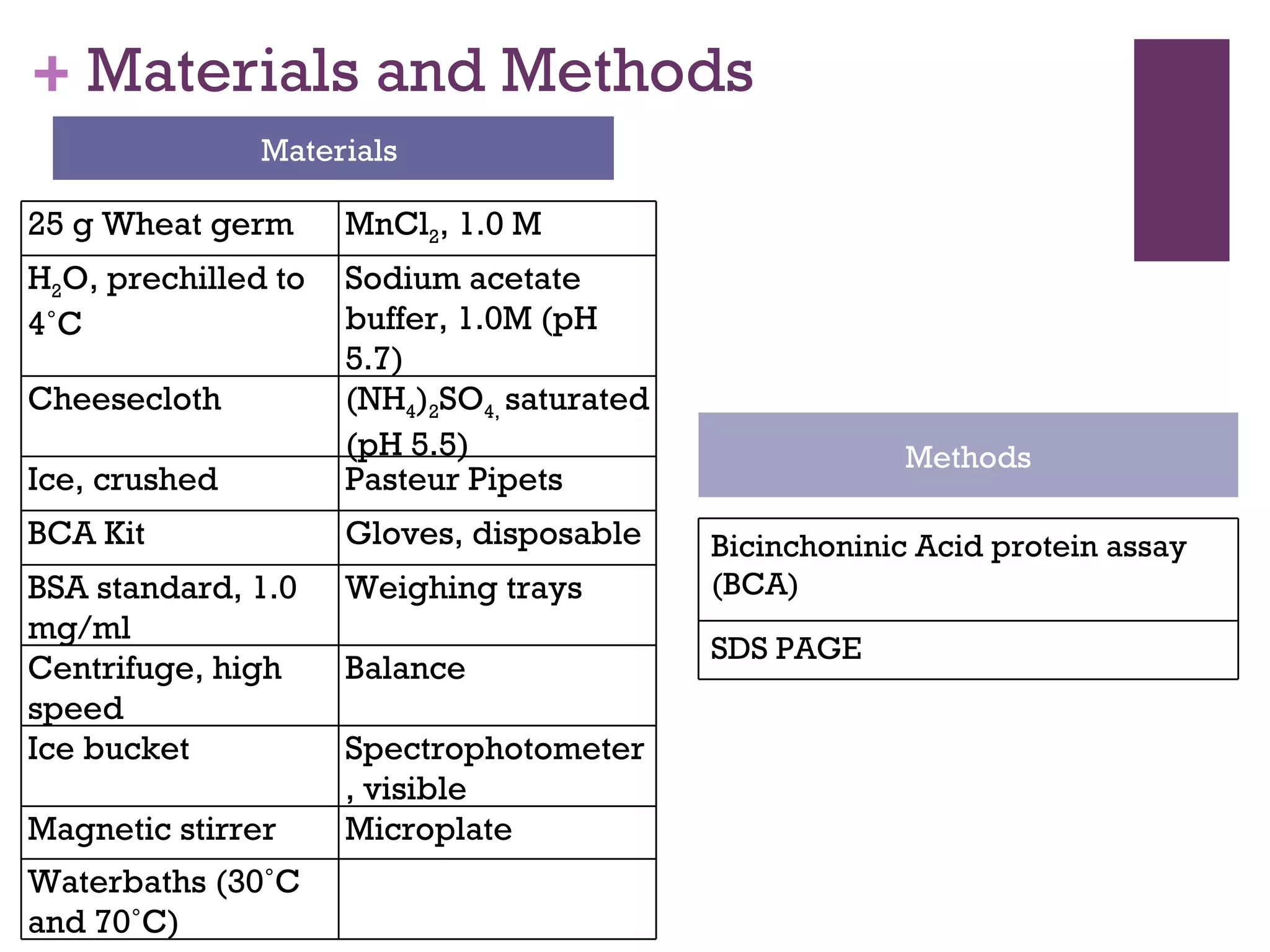
+ Materials and Methods
               Materials

25 g Wheat germ      MnCl2, 1.0 M
H2O, prechilled to   Sodium acetate
4˚C                  buffer, 1.0M (pH
                     5.7)
Cheesecloth          (NH4)2SO4, saturated
                     (pH 5.5)                            Methods
Ice, crushed         Pasteur Pipets
BCA Kit              Gloves, disposable     Bicinchoninic Acid protein assay
BSA standard, 1.0    Weighing trays         (BCA)
mg/ml
                                            SDS PAGE
Centrifuge, high     Balance
speed
Ice bucket           Spectrophotometer
                     , visible
Magnetic stirrer     Microplate
Waterbaths (30˚C      
and 70˚C)
+
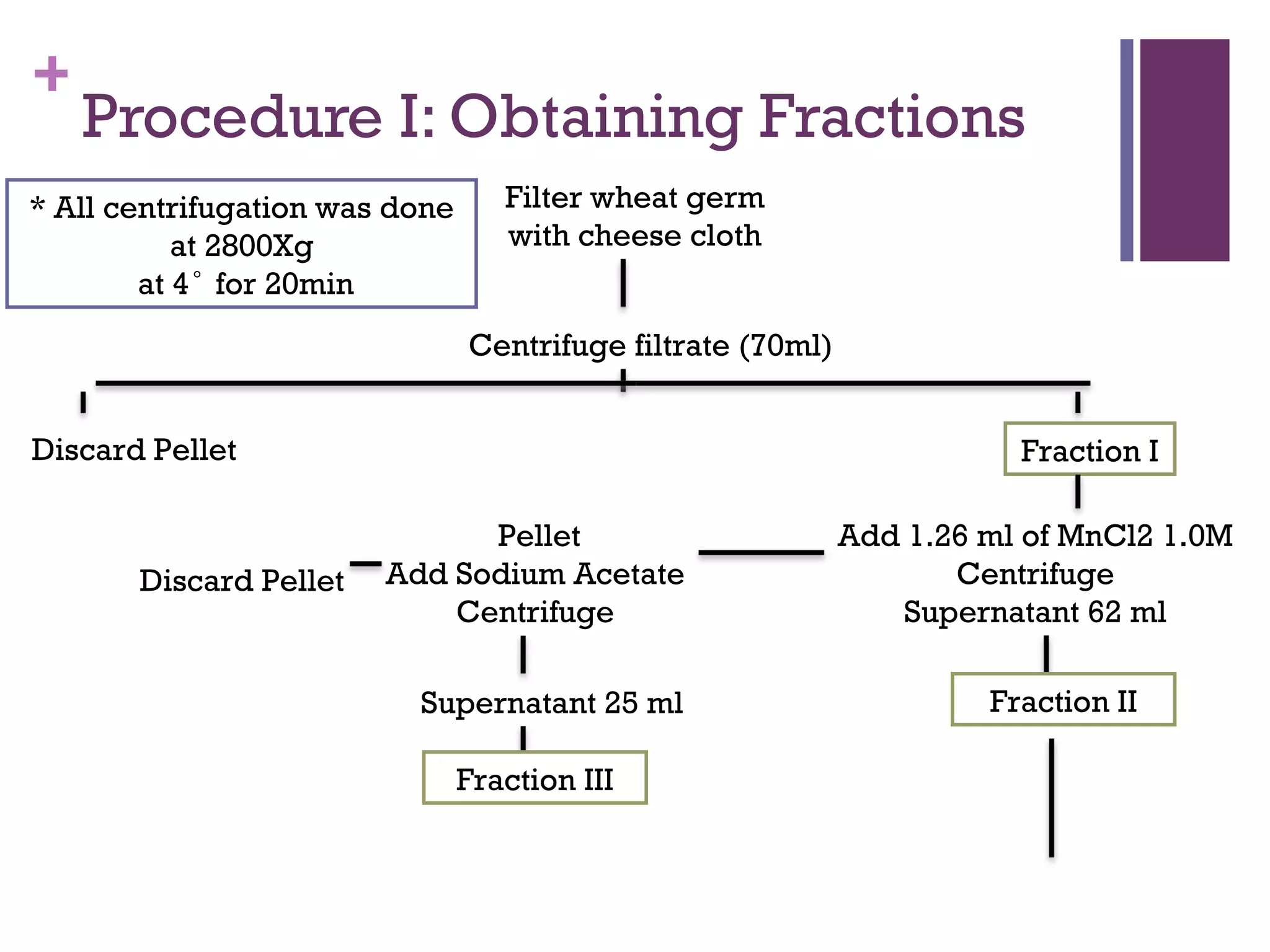
    Procedure I: Obtaining Fractions
* All centrifugation was done      Filter wheat germ
           at 2800Xg               with cheese cloth
        at 4° for 20min
                                Centrifuge filtrate (70ml)


Discard Pellet                                                          Fraction I

                              Pellet                         Add 1.26 ml of MnCl2 1.0M
       Discard Pellet   Add Sodium Acetate                          Centrifuge
                            Centrifuge                           Supernatant 62 ml

                          Supernatant 25 ml                           Fraction II

                                Fraction III
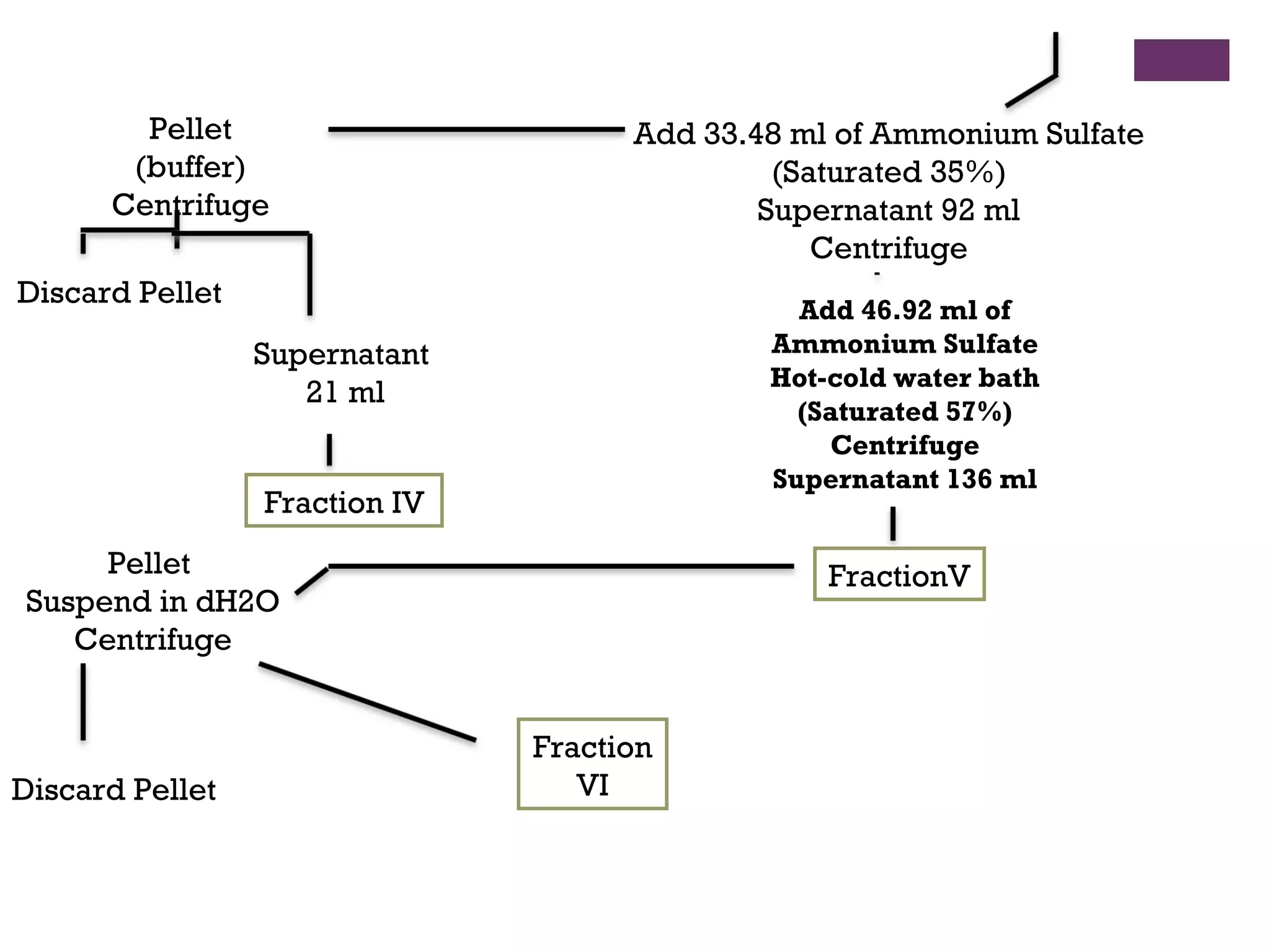
Pellet                       Add 33.48 ml of Ammonium Sulfate
       (buffer)                               (Saturated 35%)
      Centrifuge                             Supernatant 92 ml
                                                 Centrifuge
Discard Pellet
                                               Add 46.92 ml of
                 Supernatant                 Ammonium Sulfate
                                             Hot-cold water bath
                    21 ml
                                               (Saturated 57%)
                                                 Centrifuge
                                             Supernatant 136 ml
                 Fraction IV
     Pellet                                      FractionV
Suspend in dH2O
   Centrifuge


                               Fraction
Discard Pellet                    VI
+ BCA Assay
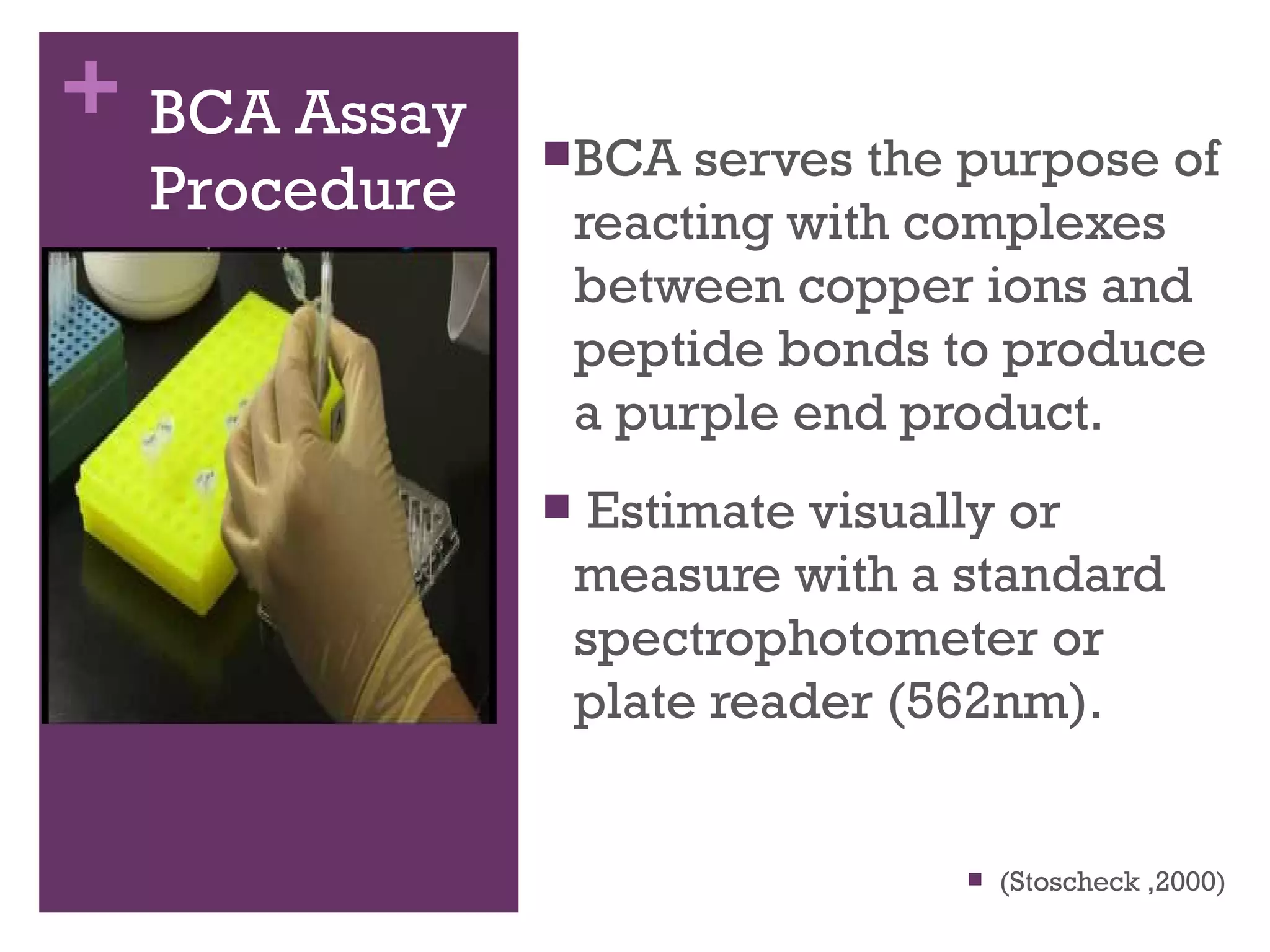
                 BCA    serves the purpose of
   Procedure        reacting with complexes
                    between copper ions and
                    peptide bonds to produce
Procedure II:       a purple end product.
BCA Assay           Estimate visually or
                    measure with a standard
                    spectrophotometer or
                    plate reader (562nm).


                                      (Stoscheck ,2000)
+


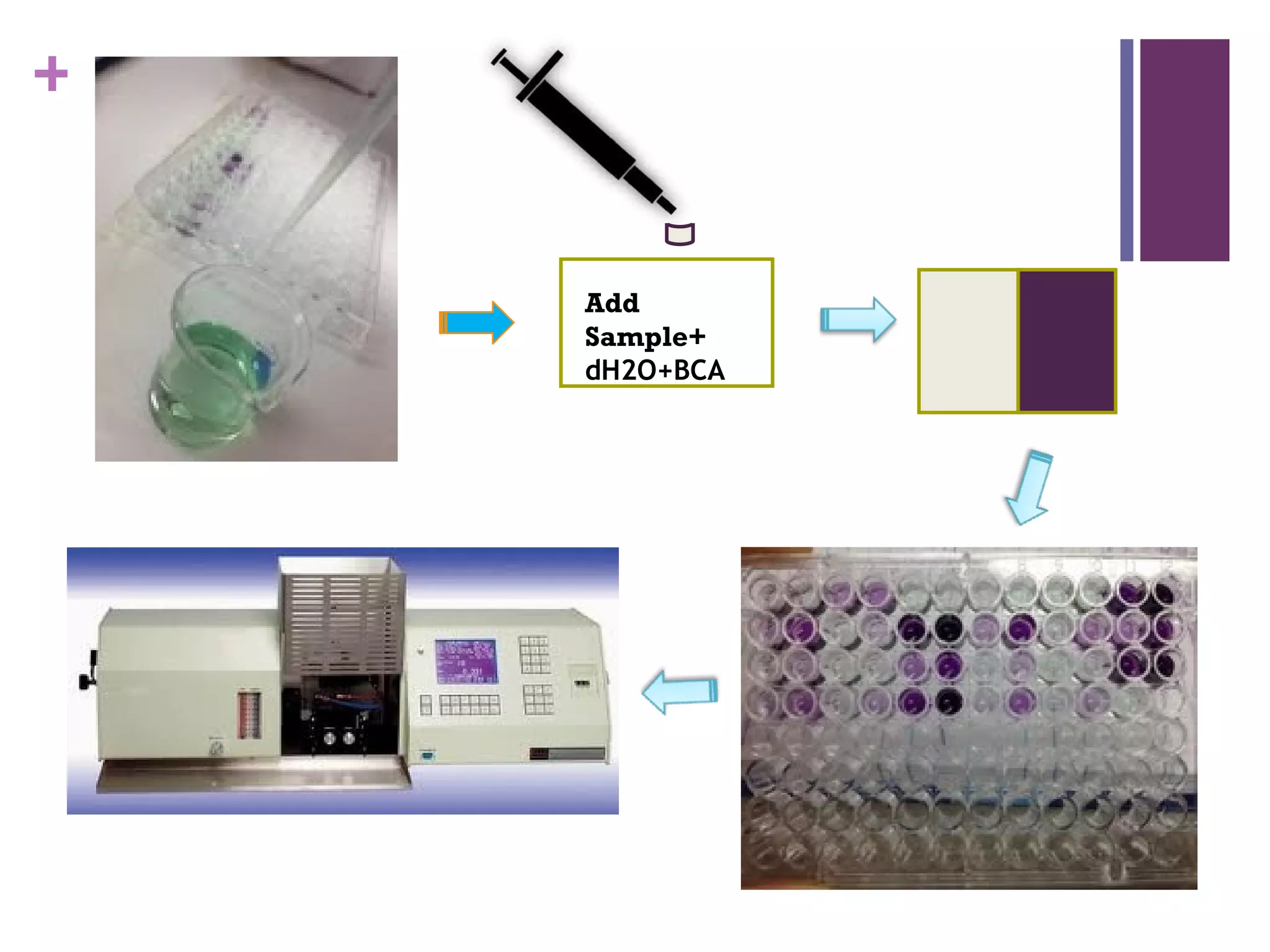
    Add
    Sample+
    dH2O+BCA
+
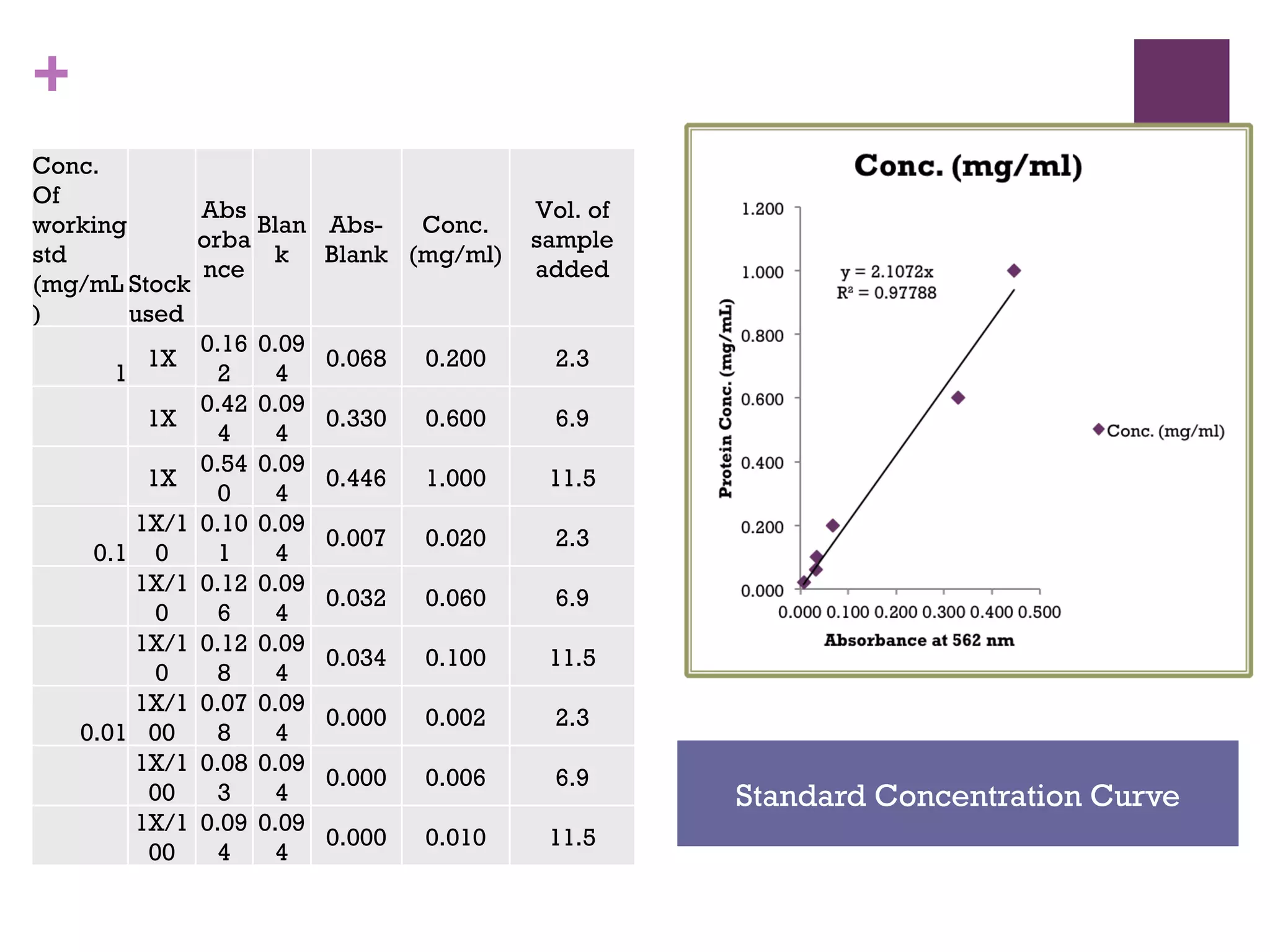
Conc.
Of
              Abs                         Vol. of
working            Blan   Abs-   Conc.
              orba                        sample
std                 k     Blank (mg/ml)
              nce                         added
(mg/mL Stock
)        used
              0.16 0.09
          1X              0.068   0.200     2.3
       1        2    4
              0.42 0.09
          1X              0.330   0.600     6.9
                4    4
              0.54 0.09
          1X              0.446   1.000    11.5
                0    4
         1X/1 0.10 0.09
                          0.007   0.020     2.3
     0.1 0      1    4
         1X/1 0.12 0.09
                          0.032   0.060     6.9
           0    6    4
         1X/1 0.12 0.09
                          0.034   0.100    11.5
           0    8    4
         1X/1 0.07 0.09
                          0.000   0.002     2.3
    0.01 00     8    4
         1X/1 0.08 0.09
                          0.000   0.006     6.9
           00   3    4                              Standard Concentration Curve
         1X/1 0.09 0.09
                          0.000   0.010    11.5
           00   4    4
+
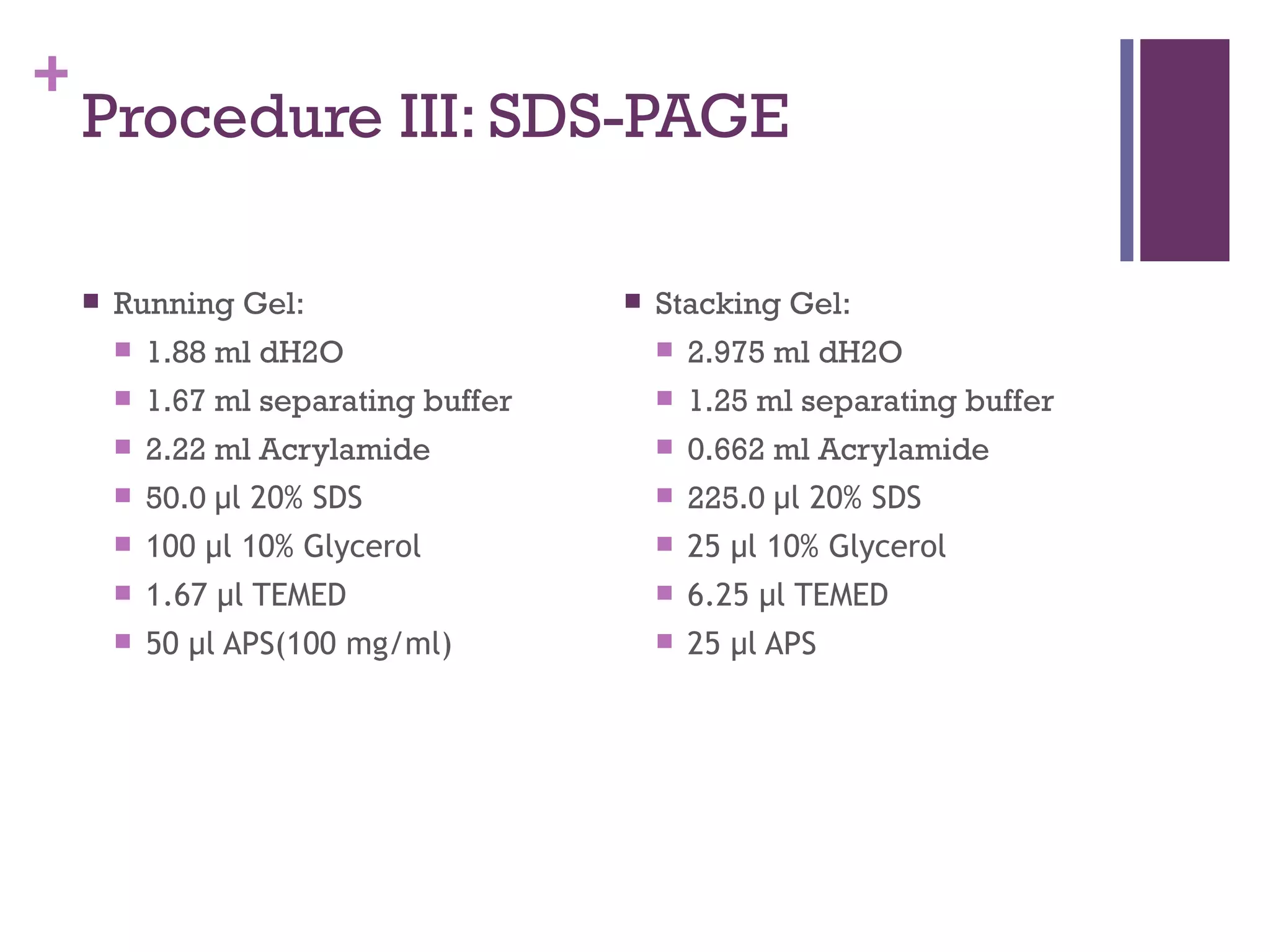
    Procedure III: SDS-PAGE

       Running Gel:                       Stacking Gel:
           1.88 ml dH2O                       2.975 ml dH2O
           1.67 ml separating buffer          1.25 ml separating buffer
           2.22 ml Acrylamide                 0.662 ml Acrylamide
           50.0 µl 20% SDS                    225.0 µl 20% SDS
           100 µl 10% Glycerol                25 µl 10% Glycerol
           1.67 µl TEMED                      6.25 µl TEMED
           50 µl APS(100 mg/ml)               25 µl APS
+
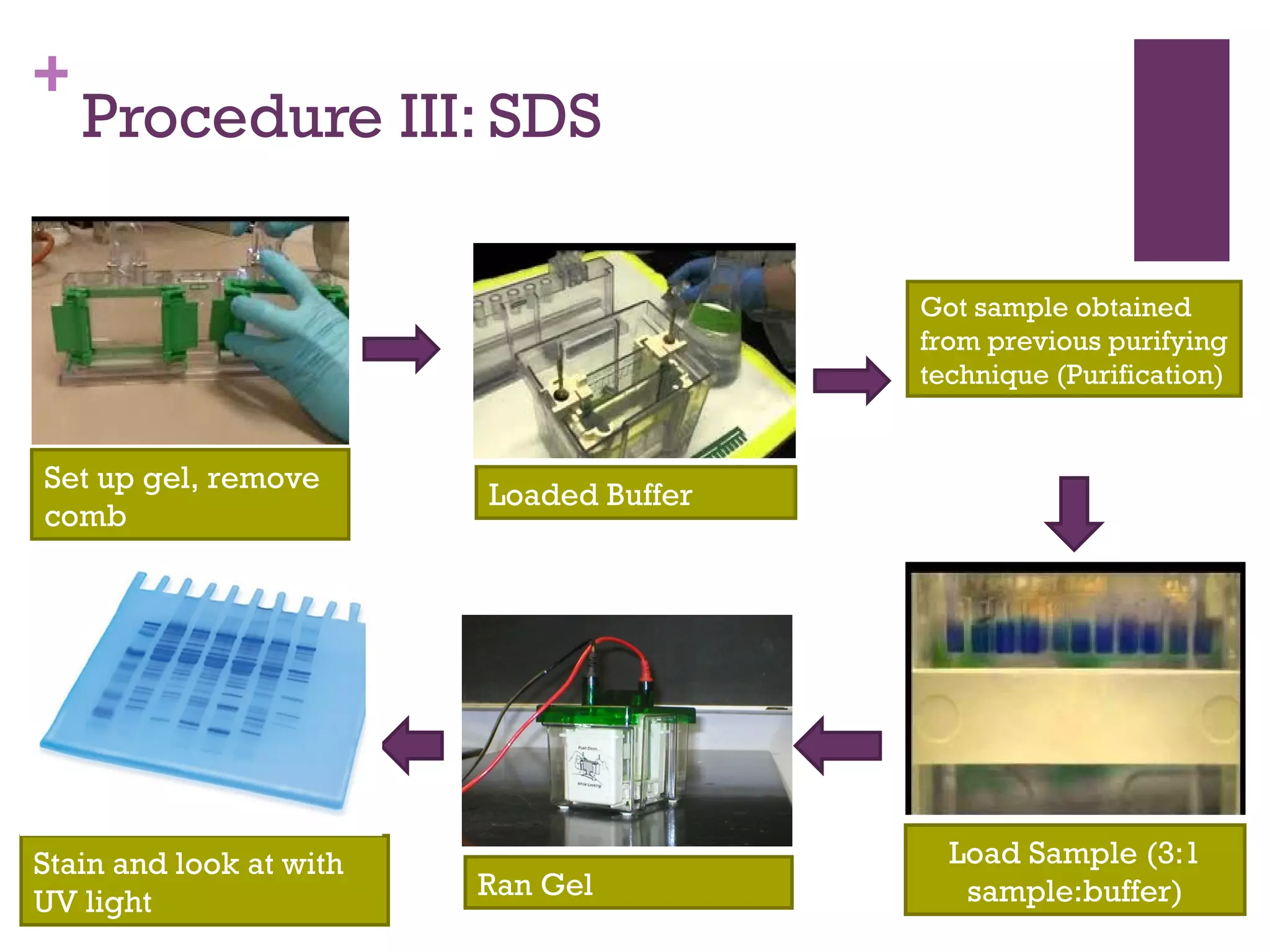
    Procedure III: SDS

                                         Got sample obtained
                                         from previous purifying
                                         technique (Purification)


Set up gel, remove
                         Loaded Buffer
comb


Stain and look at with                     Load Sample (3:1
                         Ran Gel            sample:buffer)
UV light
+   Results
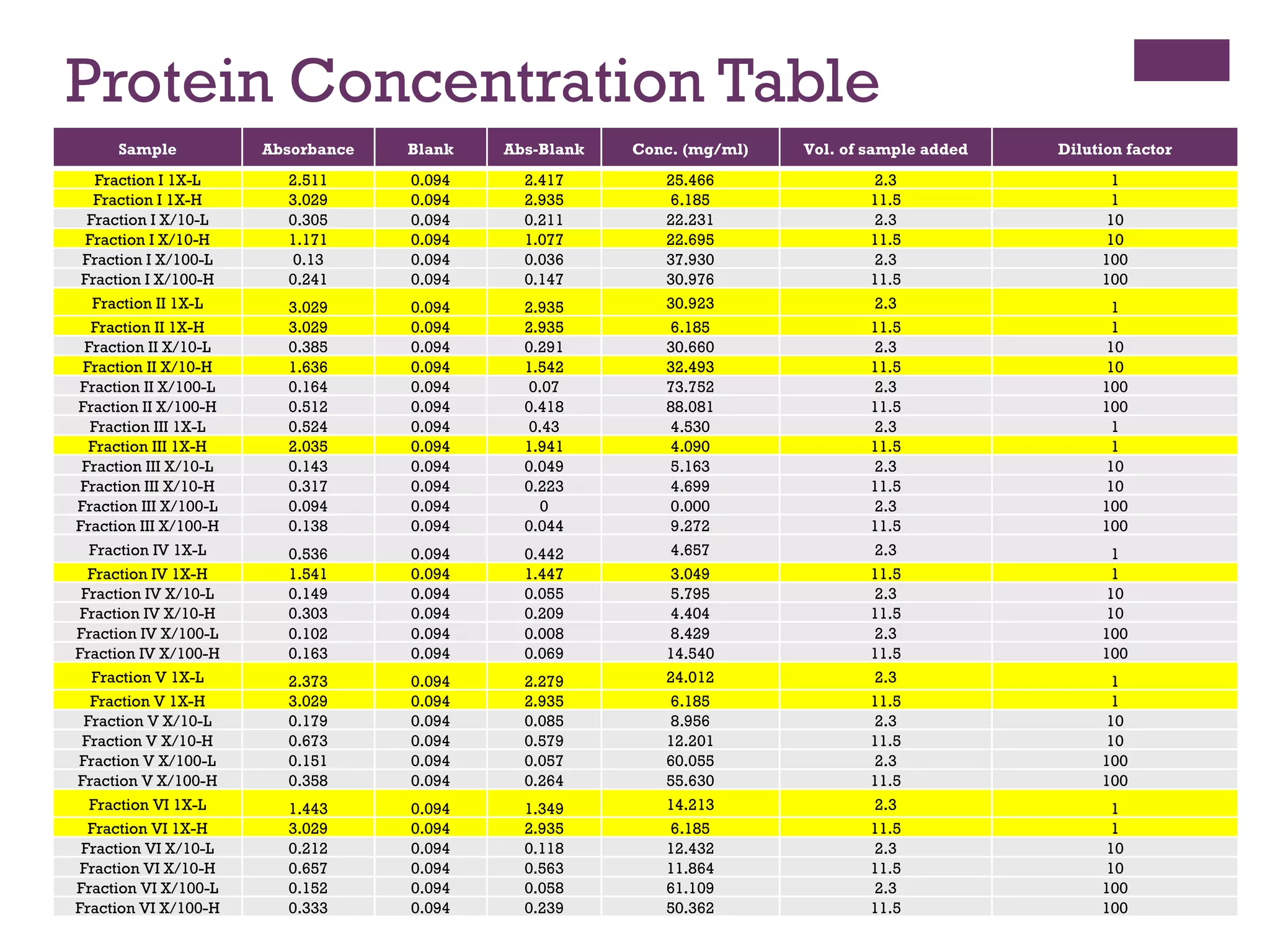
Protein Concentration Table
     Sample            Absorbance   Blank   Abs-Blank   Conc. (mg/ml)   Vol. of sample added   Dilution factor
  Fraction I 1X-L        2.511      0.094     2.417        25.466               2.3                  1
  Fraction I 1X-H        3.029      0.094     2.935        6.185                11.5                 1
 Fraction I X/10-L       0.305      0.094     0.211        22.231               2.3                 10
Fraction I X/10-H        1.171      0.094     1.077        22.695               11.5                10
Fraction I X/100-L       0.13       0.094     0.036        37.930               2.3                 100
Fraction I X/100-H       0.241      0.094     0.147        30.976               11.5                100
  Fraction II 1X-L       3.029      0.094     2.935        30.923               2.3                  1
  Fraction II 1X-H       3.029      0.094     2.935        6.185                11.5                 1
 Fraction II X/10-L      0.385      0.094     0.291        30.660               2.3                 10
 Fraction II X/10-H      1.636      0.094     1.542        32.493               11.5                10
Fraction II X/100-L      0.164      0.094     0.07         73.752               2.3                 100
Fraction II X/100-H      0.512      0.094     0.418        88.081               11.5                100
  Fraction III 1X-L      0.524      0.094     0.43         4.530                2.3                  1
  Fraction III 1X-H      2.035      0.094     1.941        4.090                11.5                 1
 Fraction III X/10-L     0.143      0.094     0.049        5.163                2.3                 10
Fraction III X/10-H      0.317      0.094     0.223        4.699                11.5                10
Fraction III X/100-L     0.094      0.094       0          0.000                2.3                 100
Fraction III X/100-H     0.138      0.094     0.044        9.272                11.5                100
 Fraction IV 1X-L        0.536      0.094     0.442         4.657               2.3                  1
  Fraction IV 1X-H       1.541      0.094     1.447        3.049                11.5                 1
 Fraction IV X/10-L      0.149      0.094     0.055        5.795                2.3                 10
 Fraction IV X/10-H      0.303      0.094     0.209        4.404                11.5                10
Fraction IV X/100-L      0.102      0.094     0.008        8.429                2.3                 100
Fraction IV X/100-H      0.163      0.094     0.069        14.540               11.5                100
  Fraction V 1X-L        2.373      0.094     2.279        24.012               2.3                  1
  Fraction V 1X-H        3.029      0.094     2.935        6.185                11.5                 1
 Fraction V X/10-L       0.179      0.094     0.085        8.956                2.3                 10
Fraction V X/10-H        0.673      0.094     0.579        12.201               11.5                10
Fraction V X/100-L       0.151      0.094     0.057        60.055               2.3                 100
Fraction V X/100-H       0.358      0.094     0.264        55.630               11.5                100
  Fraction VI 1X-L       1.443      0.094     1.349        14.213               2.3                  1
  Fraction VI 1X-H       3.029      0.094     2.935        6.185                11.5                 1
 Fraction VI X/10-L      0.212      0.094     0.118        12.432               2.3                 10
 Fraction VI X/10-H      0.657      0.094     0.563        11.864               11.5                10
Fraction VI X/100-L      0.152      0.094     0.058        61.109               2.3                 100
Fraction VI X/100-H      0.333      0.094     0.239        50.362               11.5                100
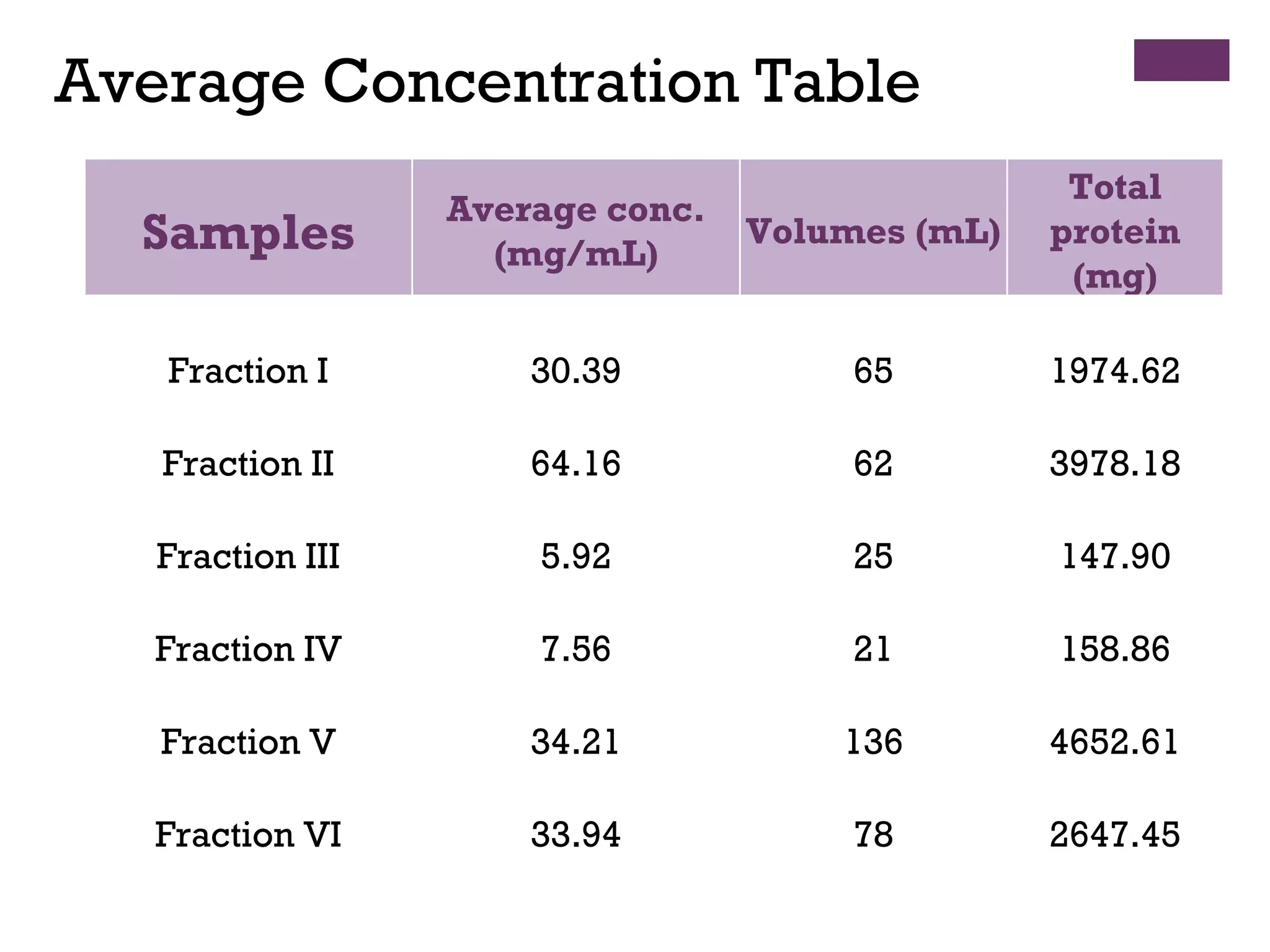
Average Concentration Table
                                                              Total
                      Average conc.
  Samples               (mg/mL)
                                          Volumes (mL)       protein
                                                              (mg)

   Fraction I             30.39                65            1974.62

   Fraction II            64.16                62            3978.18

   Fraction III           5.92                 25            147.90

   Fraction IV            7.56                 21            158.86

   Fraction V             34.21               136            4652.61

   Fraction VI            33.94                78            2647.45
                                                          
+
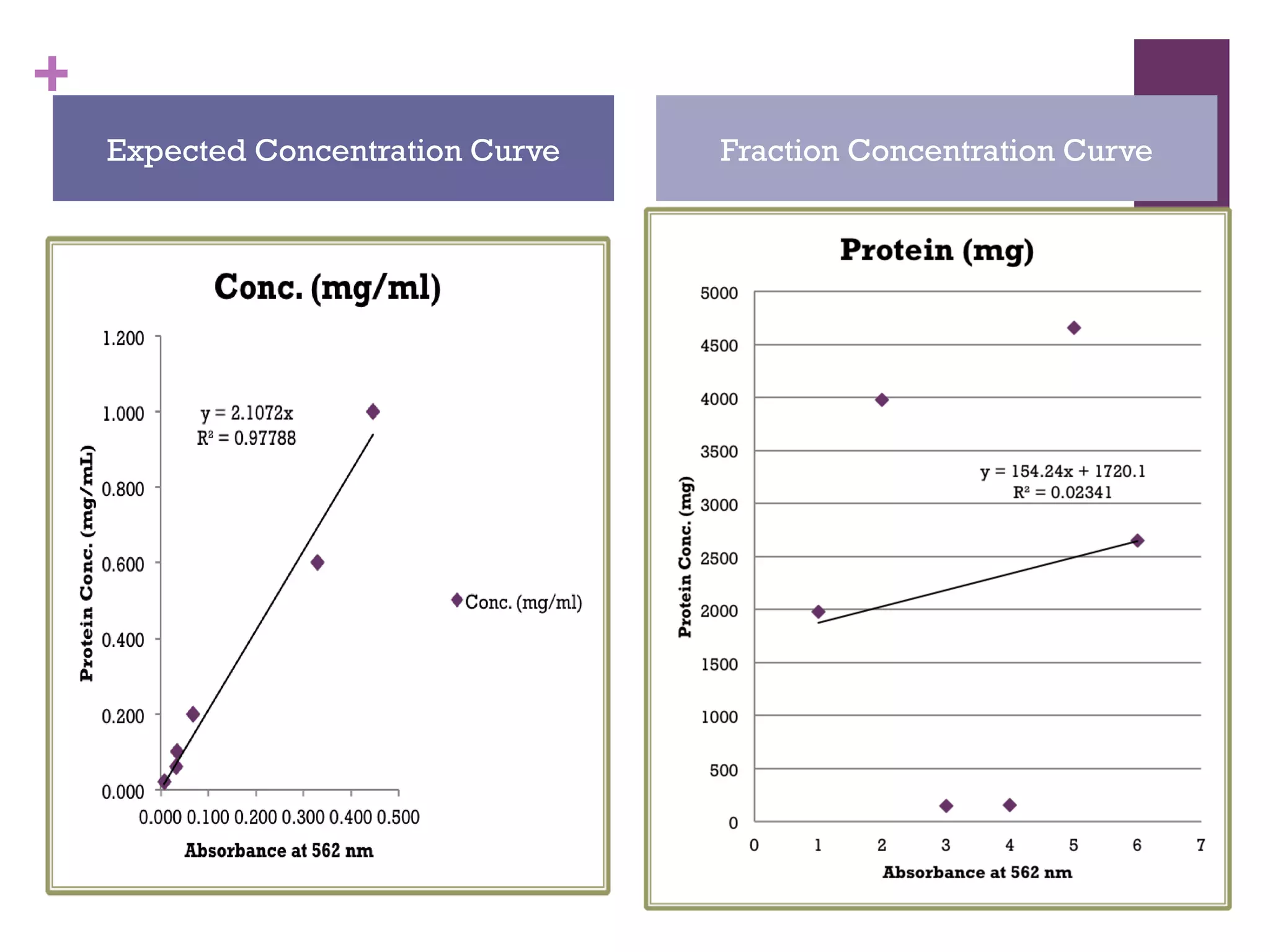
    Expected Concentration Curve   Fraction Concentration Curve
+
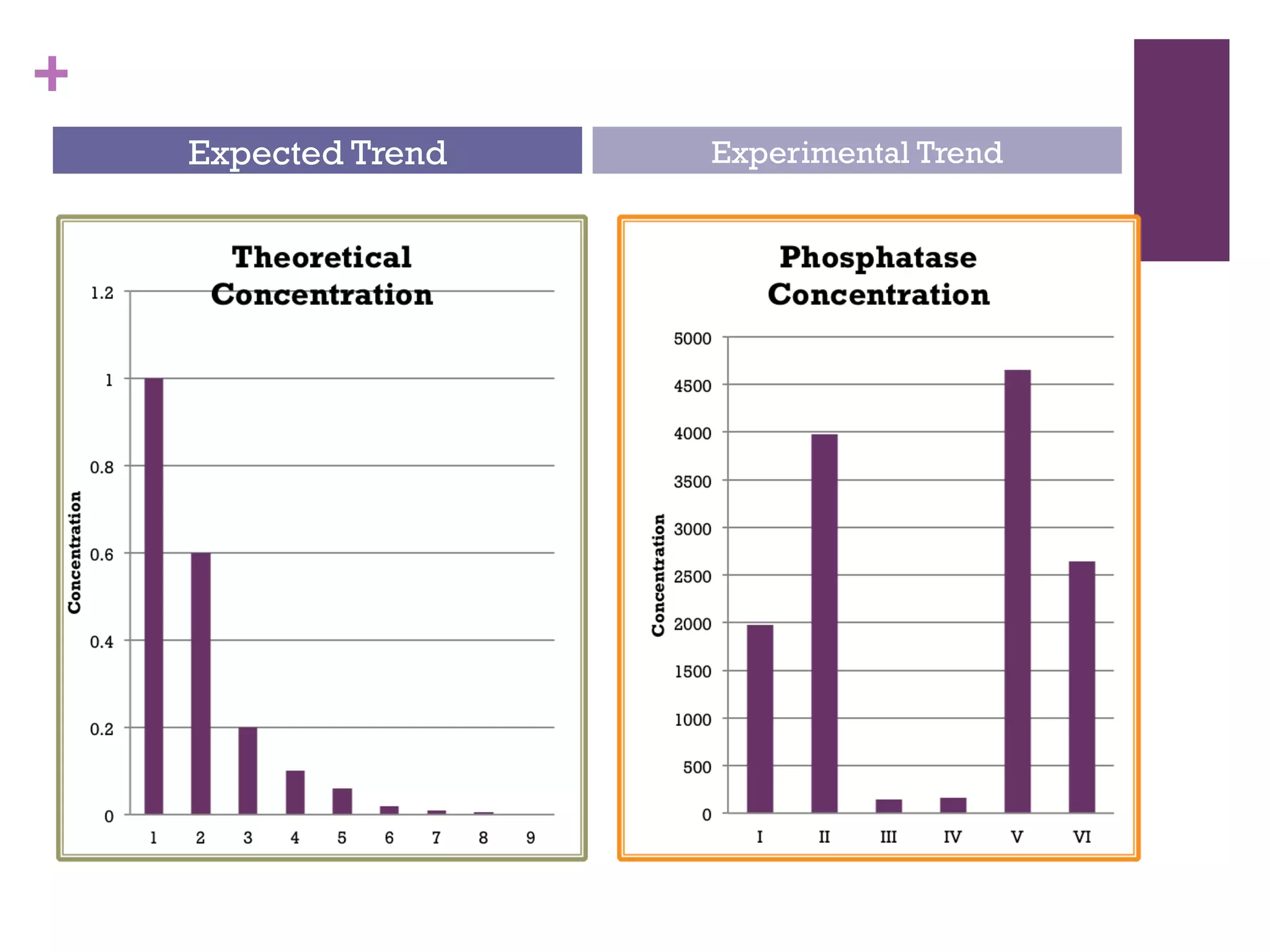
    Expected Trend   Experimental Trend
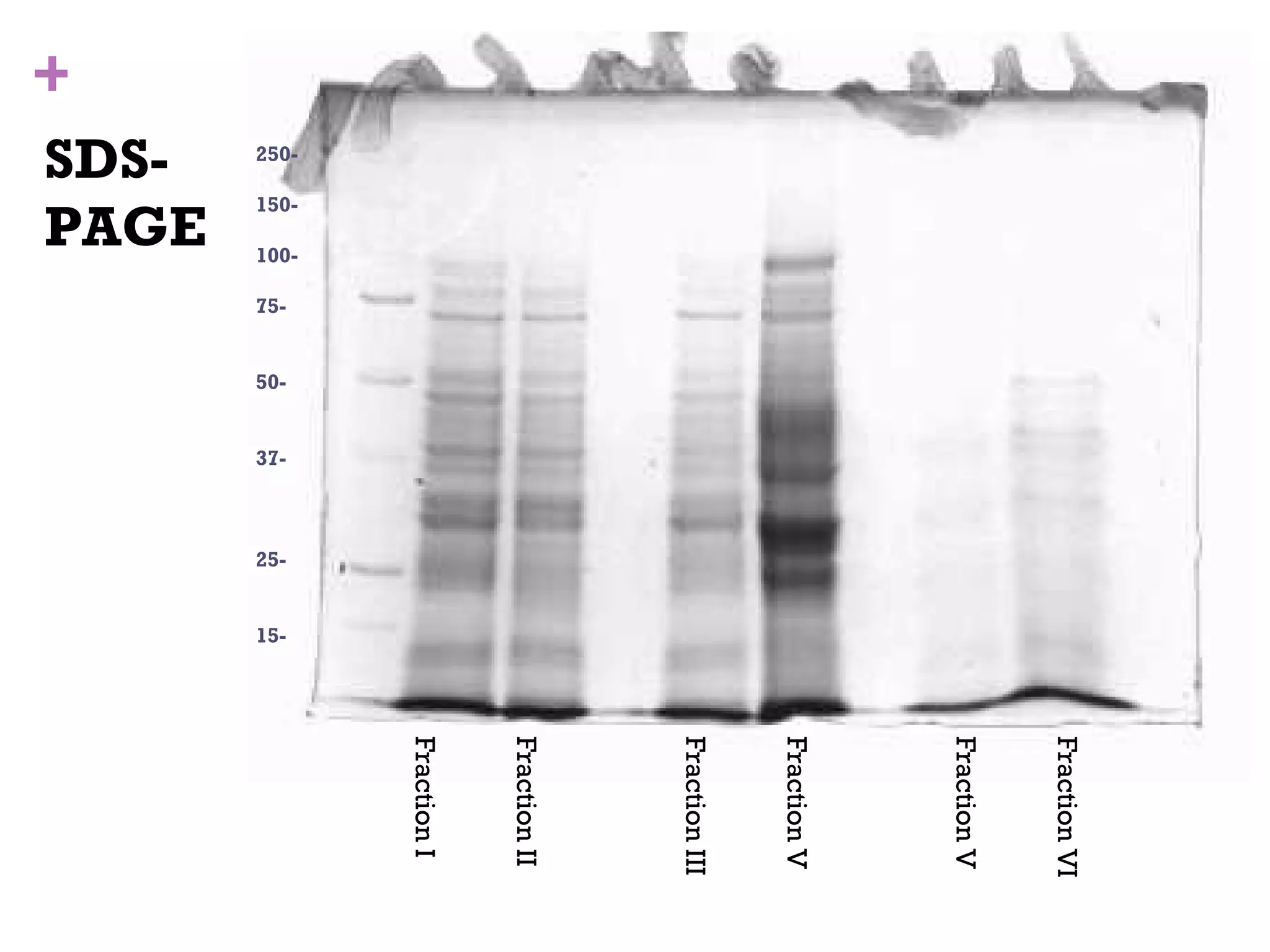
Fraction VI
                                                       Fraction V
                                                       Fraction V
                                                       Fraction III
                                                       Fraction II
                                                       Fraction I
    250-

           150-

                  100-

                         75-


                               50-


                                     37-


                                           25-


                                                 15-
    PAGE
    SDS-
+
+
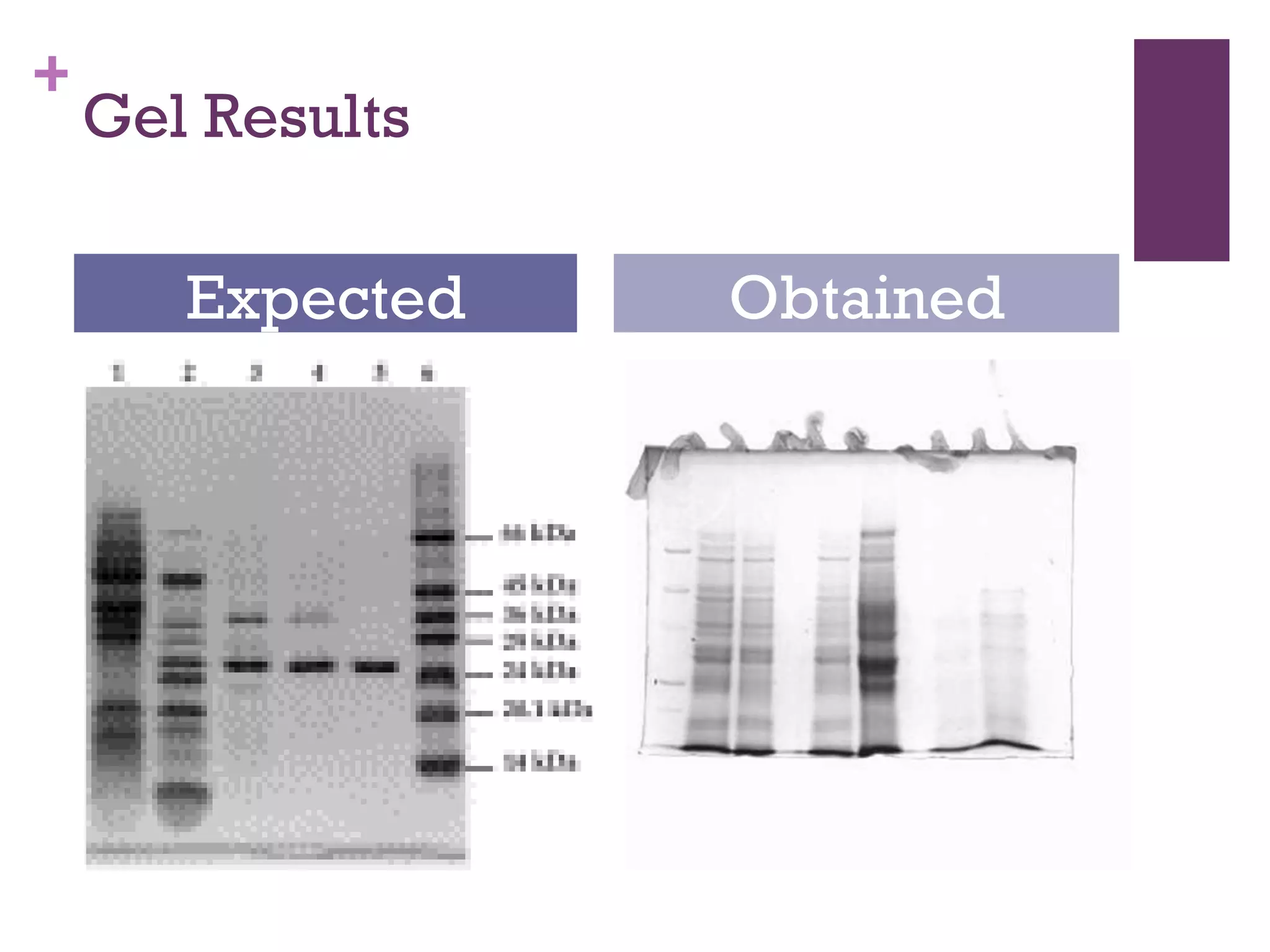
    Gel Results

       Expected   Obtained
+
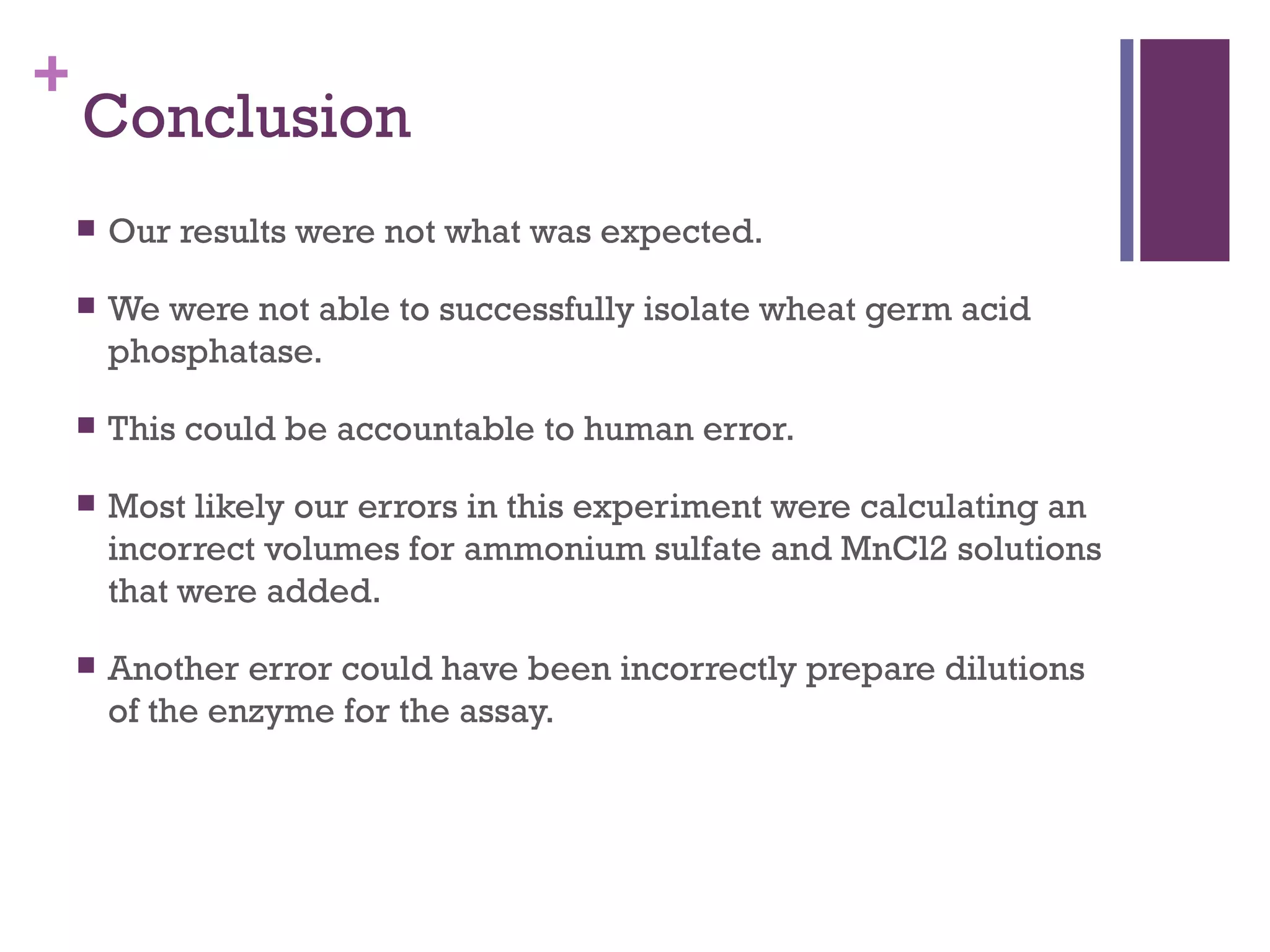
    Conclusion
       Our results were not what was expected.

       We were not able to successfully isolate wheat germ acid
        phosphatase.

       This could be accountable to human error.

       Most likely our errors in this experiment were calculating an
        incorrect volumes for ammonium sulfate and MnCl2 solutions
        that were added.

       Another error could have been incorrectly prepare dilutions
        of the enzyme for the assay.
+
    Acknowledgements

            RISE   Program
          Vibha    Bansal PhD
          Edmarie   Martinez
        Vivian   Rodriguez Cruz
       Alexandra   Rosado Burgos
+
    References
   1. Stoscheck ,2000. CM. Quantitation of Protein. Methods in
    Enzymology, 50-69.

   2. Yasuaki Kawarasaki, Hideo Nakano, Tsuneo Yamane, 1999.
    Purification and some properties of wheat germ acid
    phosphatases. Elsvier
    [http://www.sciencedirect.com/science/article/pii/016894529604
    4779]

   3. Ke-Xue Zhu,Hui-Ming Zhou, and Hai-Feng Qian, 2008. Proteins
    Extracted from Defatted Wheat Germ: Nutritional and Structural
    Properties
    [http://cerealchemistry.aaccnet.org/doi/abs/10.1094/CC-83-0069
    ]

   4. VERJEE Z. H. M., 1969. Isolation of Three Acid Phosphatases from
    Wheat Germ. European J. Biochem., 439-44.
+   Questions?

adfb[oadf

  • 1.
    + Isolation, Purification, and Assay of Wheat Germ Acid Phosphatase Natalia Manzano Wilmarie Morales RISE Program May 10th, 2012
  • 2.
    + Introduction  Wheat germ is a very small part of a wheat kernel.  Wheat germ is very high in protein.  It contains around 28% protein and has more protein than can be found in most meat products.  The human body needs protein in order to repair tissue damage and to help minerals and nutrients reach our cells.  It contains more potassium and iron than any other food source.  It also has calcium, zinc, magnesium, and vitamins A, B1, B3 and E.  Vitamins B1 and 3 are very important to maintain energy levels and maintain healthy muscles and organs. Vitamin E is a very important antioxidant, prevents heart disease, and is needed to strengthen the body’s immune system.  
  • 3.
    + Acid Phosphatase  Acid phosphatase is a type of enzyme used to free attached phosphate groups from other molecules during digestion.  It is basically a phosphomonoesterase, a phosphatase that acts on monoesters.  It is stored in lysosomes and functions when these fuse with endosomes.  Phosphatase enzymes are also used by soil microorganisms to access organically bound phosphate nutrients.  Some plant roots, exude carboxylates that perform acid phosphatase activity, helping to mobilise phosphorus in nutrient-deficient soils.
  • 4.
    + Wheat Germ Acid Phosphatase • Acid phosphatase occurs in plants and animals, and has an optimal pH below 7. • Catalyzes the hydrolysis phosphate groups from macromolecules and smaller molecules that are stored in the wheat seed.
  • 5.
  • 6.
    + Objectives  To purify and isolate acid phosphatase from wheat germ.  Determine protein concentration using Bicinchoninic Acid protein assay.
  • 7.
    + Materials andMethods Materials 25 g Wheat germ MnCl2, 1.0 M H2O, prechilled to Sodium acetate 4˚C buffer, 1.0M (pH 5.7) Cheesecloth (NH4)2SO4, saturated (pH 5.5) Methods Ice, crushed Pasteur Pipets BCA Kit Gloves, disposable Bicinchoninic Acid protein assay BSA standard, 1.0 Weighing trays (BCA) mg/ml SDS PAGE Centrifuge, high Balance speed Ice bucket Spectrophotometer , visible Magnetic stirrer Microplate Waterbaths (30˚C   and 70˚C)
  • 8.
    + Procedure I: Obtaining Fractions * All centrifugation was done Filter wheat germ at 2800Xg with cheese cloth at 4° for 20min Centrifuge filtrate (70ml) Discard Pellet Fraction I Pellet Add 1.26 ml of MnCl2 1.0M Discard Pellet Add Sodium Acetate Centrifuge Centrifuge Supernatant 62 ml Supernatant 25 ml Fraction II Fraction III
  • 9.
    Pellet Add 33.48 ml of Ammonium Sulfate (buffer) (Saturated 35%) Centrifuge Supernatant 92 ml Centrifuge Discard Pellet Add 46.92 ml of Supernatant Ammonium Sulfate Hot-cold water bath 21 ml (Saturated 57%) Centrifuge Supernatant 136 ml Fraction IV Pellet FractionV Suspend in dH2O Centrifuge Fraction Discard Pellet VI
  • 10.
    + BCA Assay  BCA serves the purpose of Procedure reacting with complexes between copper ions and peptide bonds to produce Procedure II: a purple end product. BCA Assay  Estimate visually or measure with a standard spectrophotometer or plate reader (562nm).  (Stoscheck ,2000)
  • 11.
    + Add Sample+ dH2O+BCA
  • 12.
    + Conc. Of Abs Vol. of working Blan Abs- Conc. orba sample std k Blank (mg/ml) nce added (mg/mL Stock ) used 0.16 0.09 1X 0.068 0.200 2.3 1 2 4 0.42 0.09 1X 0.330 0.600 6.9 4 4 0.54 0.09 1X 0.446 1.000 11.5 0 4 1X/1 0.10 0.09 0.007 0.020 2.3 0.1 0 1 4 1X/1 0.12 0.09 0.032 0.060 6.9 0 6 4 1X/1 0.12 0.09 0.034 0.100 11.5 0 8 4 1X/1 0.07 0.09 0.000 0.002 2.3 0.01 00 8 4 1X/1 0.08 0.09 0.000 0.006 6.9 00 3 4 Standard Concentration Curve 1X/1 0.09 0.09 0.000 0.010 11.5 00 4 4
  • 13.
    + Procedure III: SDS-PAGE  Running Gel:  Stacking Gel:  1.88 ml dH2O  2.975 ml dH2O  1.67 ml separating buffer  1.25 ml separating buffer  2.22 ml Acrylamide  0.662 ml Acrylamide  50.0 µl 20% SDS  225.0 µl 20% SDS  100 µl 10% Glycerol  25 µl 10% Glycerol  1.67 µl TEMED  6.25 µl TEMED  50 µl APS(100 mg/ml)  25 µl APS
  • 14.
    + Procedure III: SDS Got sample obtained from previous purifying technique (Purification) Set up gel, remove Loaded Buffer comb Stain and look at with Load Sample (3:1 Ran Gel sample:buffer) UV light
  • 15.
    + Results
  • 16.
    Protein Concentration Table Sample Absorbance Blank Abs-Blank Conc. (mg/ml) Vol. of sample added Dilution factor Fraction I 1X-L 2.511 0.094 2.417 25.466 2.3 1 Fraction I 1X-H 3.029 0.094 2.935 6.185 11.5 1 Fraction I X/10-L 0.305 0.094 0.211 22.231 2.3 10 Fraction I X/10-H 1.171 0.094 1.077 22.695 11.5 10 Fraction I X/100-L 0.13 0.094 0.036 37.930 2.3 100 Fraction I X/100-H 0.241 0.094 0.147 30.976 11.5 100 Fraction II 1X-L 3.029 0.094 2.935 30.923 2.3 1 Fraction II 1X-H 3.029 0.094 2.935 6.185 11.5 1 Fraction II X/10-L 0.385 0.094 0.291 30.660 2.3 10 Fraction II X/10-H 1.636 0.094 1.542 32.493 11.5 10 Fraction II X/100-L 0.164 0.094 0.07 73.752 2.3 100 Fraction II X/100-H 0.512 0.094 0.418 88.081 11.5 100 Fraction III 1X-L 0.524 0.094 0.43 4.530 2.3 1 Fraction III 1X-H 2.035 0.094 1.941 4.090 11.5 1 Fraction III X/10-L 0.143 0.094 0.049 5.163 2.3 10 Fraction III X/10-H 0.317 0.094 0.223 4.699 11.5 10 Fraction III X/100-L 0.094 0.094 0 0.000 2.3 100 Fraction III X/100-H 0.138 0.094 0.044 9.272 11.5 100 Fraction IV 1X-L 0.536 0.094 0.442 4.657 2.3 1 Fraction IV 1X-H 1.541 0.094 1.447 3.049 11.5 1 Fraction IV X/10-L 0.149 0.094 0.055 5.795 2.3 10 Fraction IV X/10-H 0.303 0.094 0.209 4.404 11.5 10 Fraction IV X/100-L 0.102 0.094 0.008 8.429 2.3 100 Fraction IV X/100-H 0.163 0.094 0.069 14.540 11.5 100 Fraction V 1X-L 2.373 0.094 2.279 24.012 2.3 1 Fraction V 1X-H 3.029 0.094 2.935 6.185 11.5 1 Fraction V X/10-L 0.179 0.094 0.085 8.956 2.3 10 Fraction V X/10-H 0.673 0.094 0.579 12.201 11.5 10 Fraction V X/100-L 0.151 0.094 0.057 60.055 2.3 100 Fraction V X/100-H 0.358 0.094 0.264 55.630 11.5 100 Fraction VI 1X-L 1.443 0.094 1.349 14.213 2.3 1 Fraction VI 1X-H 3.029 0.094 2.935 6.185 11.5 1 Fraction VI X/10-L 0.212 0.094 0.118 12.432 2.3 10 Fraction VI X/10-H 0.657 0.094 0.563 11.864 11.5 10 Fraction VI X/100-L 0.152 0.094 0.058 61.109 2.3 100 Fraction VI X/100-H 0.333 0.094 0.239 50.362 11.5 100
  • 17.
    Average Concentration Table Total Average conc. Samples (mg/mL) Volumes (mL) protein (mg) Fraction I 30.39 65 1974.62 Fraction II 64.16 62 3978.18 Fraction III 5.92 25 147.90 Fraction IV 7.56 21 158.86 Fraction V 34.21 136 4652.61 Fraction VI 33.94 78 2647.45      
  • 18.
    + Expected Concentration Curve Fraction Concentration Curve
  • 19.
    + Expected Trend Experimental Trend
  • 20.
    Fraction VI Fraction V Fraction V Fraction III Fraction II Fraction I 250- 150- 100- 75- 50- 37- 25- 15- PAGE SDS- +
  • 21.
    + Gel Results Expected Obtained
  • 22.
    + Conclusion  Our results were not what was expected.  We were not able to successfully isolate wheat germ acid phosphatase.  This could be accountable to human error.  Most likely our errors in this experiment were calculating an incorrect volumes for ammonium sulfate and MnCl2 solutions that were added.  Another error could have been incorrectly prepare dilutions of the enzyme for the assay.
  • 23.
    + Acknowledgements RISE Program Vibha Bansal PhD Edmarie Martinez Vivian Rodriguez Cruz Alexandra Rosado Burgos
  • 24.
    + References  1. Stoscheck ,2000. CM. Quantitation of Protein. Methods in Enzymology, 50-69.  2. Yasuaki Kawarasaki, Hideo Nakano, Tsuneo Yamane, 1999. Purification and some properties of wheat germ acid phosphatases. Elsvier [http://www.sciencedirect.com/science/article/pii/016894529604 4779]  3. Ke-Xue Zhu,Hui-Ming Zhou, and Hai-Feng Qian, 2008. Proteins Extracted from Defatted Wheat Germ: Nutritional and Structural Properties [http://cerealchemistry.aaccnet.org/doi/abs/10.1094/CC-83-0069 ]  4. VERJEE Z. H. M., 1969. Isolation of Three Acid Phosphatases from Wheat Germ. European J. Biochem., 439-44.
  • 25.
    + Questions?