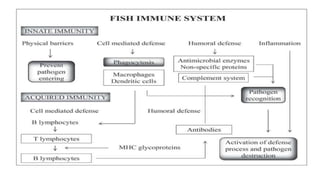
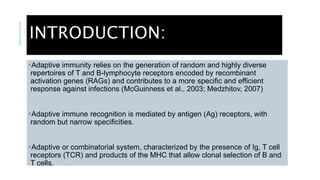
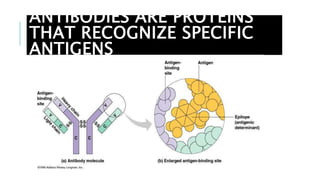
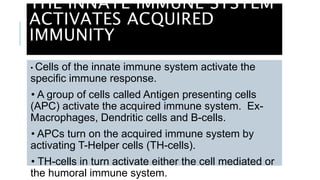
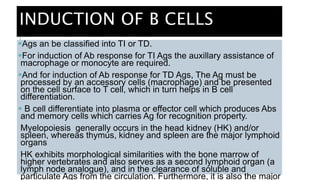
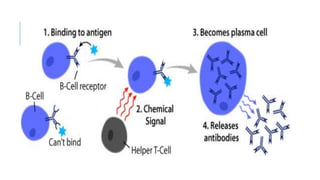
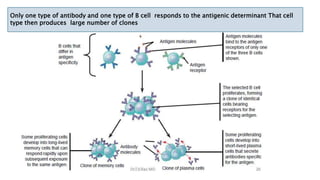
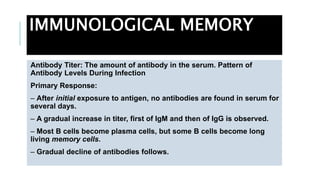
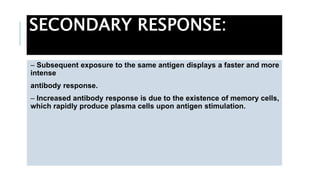
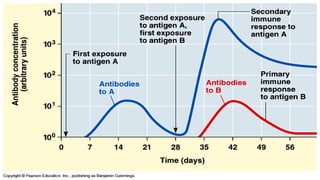
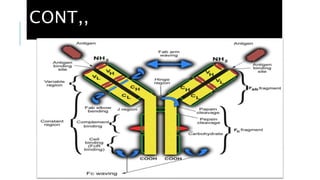
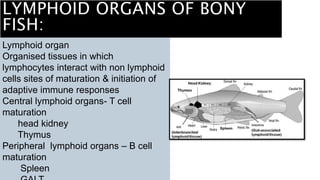
The document discusses adaptive humoral immunity and the antibody-mediated immune response in fish. It notes that adaptive immunity relies on generating diverse repertoires of B and T cell receptors. Upon exposure to an antigen, B cells produce antibodies that are specific proteins that bind the antigen. Memory B cells are also produced to facilitate a faster secondary response upon re-exposure. Fish have three main antibody classes - IgM, IgD, and IgT, with IgM being the predominant systemic antibody and IgT playing an important role in mucosal immunity. The structure and function of antibodies in fish are generally similar to those in mammals.

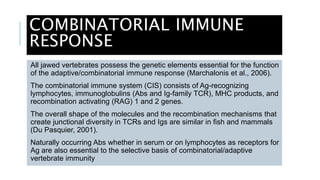
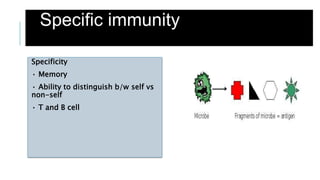
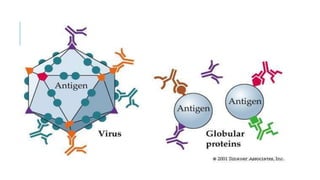
![SPECIFIC DEFENCE
MECHANISM
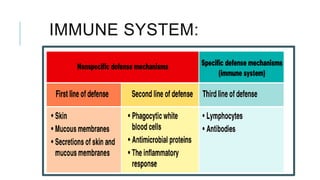
Lymphocyte, is the immunocompetent cell.
Which is responsible for initiating and mediating the :
1. Humoral immunity- production of soluble antibody
[immunoglobulin]
2. Cell-mediated immunity (CMI) responses which are
mediated by a variety of cells including lymphocytes and
macrophages.
3. Immunological memory constitutes an adaptive change in
the lymphoid cell populations.](https://image.slidesharecdn.com/adaptivehumoralimmunity-180615074007/85/Adaptive-humoral-immunity-11-320.jpg)



![White spot syndrome_disease[1]](https://cdn.slidesharecdn.com/ss_thumbnails/whitespotsyndromedisease1-171203104243-thumbnail.jpg?width=640&height=640&fit=bounds)


