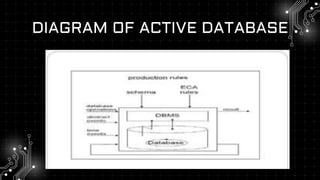
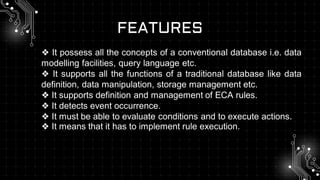
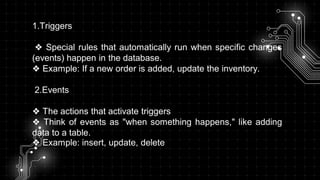
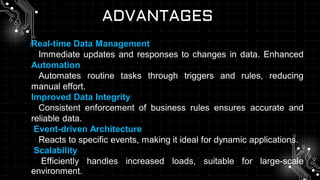
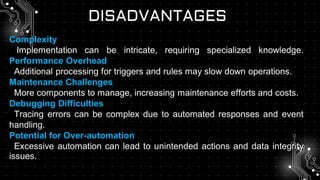
An active database automatically responds to data changes using triggers and rules, enhancing functionality beyond traditional databases. It features support for event-driven architectures, real-time data management, and automation but also introduces complexities in implementation and maintenance. While it provides benefits such as immediate updates and improved data integrity, it may also lead to performance overhead and potential over-automation issues.




![제 23회 보아즈(BOAZ) 빅데이터 컨퍼런스 - [MBOAX] : ABSA를 활용한 소비자 반응 분석 기반 운영 효율화 대시보드 설계](https://cdn.slidesharecdn.com/ss_thumbnails/3-1boaz23rdconferencemboax-260203102709-9d519923-thumbnail.jpg?width=640&height=640&fit=bounds)


