Downloaded 12 times
![Available online at www.sciencedirect.com
Acta Materialia 59 (2011) 6449–6462
www.elsevier.com/locate/actamat
Dislocation and twin substructure evolution during strain hardening
of an Fe–22 wt.% Mn–0.6 wt.% C TWIP steel observed
by electron channeling contrast imaging
I. Gutierrez-Urrutia ⇑, D. Raabe
Max-Planck-Institut fur Eisenforschung, Max-Planck Str. 1, D-40237 Dusseldorf, Germany
¨ ¨
Received 11 March 2011; received in revised form 3 July 2011; accepted 4 July 2011
Available online 29 July 2011
Abstract
We study the kinetics of the substructure evolution and its correspondence to the strain hardening evolution of an Fe–22 wt.%
Mn–0.6 wt.% C TWIP steel during tensile deformation by means of electron channeling contrast imaging (ECCI) combined with electron
backscatter diffraction (EBSD). The contribution of twin and dislocation substructures to strain hardening is evaluated in terms of a
dislocation mean free path approach involving several microstructure parameters, such as the characteristic average twin spacing and
the dislocation substructure size. The analysis reveals that at the early stages of deformation (strain below 0.1 true strain) the dislocation
substructure provides a high strain hardening rate with hardening coefficients of about G/40 (G is the shear modulus). At intermediate
strains (below 0.3 true strain), the dislocation mean free path refinement due to deformation twinning results in a high strain rate with a
hardening coefficient of about G/30. Finally, at high strains (above 0.4 true strain), the limited further refinement of the dislocation and
twin substructures reduces the capability for trapping more dislocations inside the microstructure and, hence, the strain hardening
decreases. Grains forming dislocation cells develop a self-organized and dynamically refined dislocation cell structure which follows
the similitude principle but with a smaller similitude constant than that found in medium to high stacking fault energy alloys. We attri-
bute this difference to the influence of the stacking fault energy on the mechanism of cell formation.
Ó 2011 Acta Materialia Inc. Published by Elsevier Ltd. All rights reserved.
Keywords: Strain hardening; Electron channeling contrast imaging; Austenitic steel; Dislocation structures; Deformation twinning
1. Introduction (TRIP) [1,2], twinning-induced plasticity (TWIP) [1,3–8]
or microband-induced plasticity (MBIP) [9,10]. The activa-
High-manganese steels have received much interest in tion of these mechanisms is strongly dependent on the
recent years due to their outstanding mechanical properties stacking fault energy. TRIP is observed in very low stack-
combining high strength and ductility. This property pro- ing fault steels (below 20 mJ mÀ2) and is associated with
file is attributed to their high strain hardening capacity. the transformation of austenite (fcc phase) into e-martens-
High-manganese steels are typically austenitic steels, i.e. ite (hexagonal close-packed phase), which in turn further
face-centered cubic (fcc) alloys, with a high Mn content acts as nucleus of a0 -martensite (body-centered cubic or
(above 20% wt.%) and additions of elements such as car- tetragonal phase) [11,12]. TWIP is observed in medium
bon (<1 wt.%), silicon (<3 wt.%) and aluminum stacking fault energy steels (20–40 mJ mÀ2) and is charac-
(<10 wt.%). This steel grade exhibit different hardening terized by the formation of deformation twins with nano-
mechanisms, such as transformation-induced plasticity meter thickness. MBIP has been recently reported in steel
grades with high stacking fault energy ($90 mJ mÀ2) and
⇑ Corresponding author. Tel.: +49 2116792 211; fax: +49 2115792333. is attributed to the formation of microbands, which are
E-mail address: i.gutierrez@mpie.de (I. Gutierrez-Urrutia). in-grain shear zones that are confined by geometrically nec-
1359-6454/$36.00 Ó 2011 Acta Materialia Inc. Published by Elsevier Ltd. All rights reserved.
doi:10.1016/j.actamat.2011.07.009](https://image.slidesharecdn.com/acta-59-2011-eccifemnc-1318078778-phpapp02-111008080138-phpapp02/85/Acta-59-2011-E-C-C-I-Fe-Mn-C-1-320.jpg)
![Available online at www.sciencedirect.com
Acta Materialia 59 (2011) 6449–6462
www.elsevier.com/locate/actamat
Dislocation and twin substructure evolution during strain hardening
of an Fe–22 wt.% Mn–0.6 wt.% C TWIP steel observed
by electron channeling contrast imaging
I. Gutierrez-Urrutia ⇑, D. Raabe
Max-Planck-Institut fur Eisenforschung, Max-Planck Str. 1, D-40237 Dusseldorf, Germany
¨ ¨
Received 11 March 2011; received in revised form 3 July 2011; accepted 4 July 2011
Available online 29 July 2011
Abstract
We study the kinetics of the substructure evolution and its correspondence to the strain hardening evolution of an Fe–22 wt.%
Mn–0.6 wt.% C TWIP steel during tensile deformation by means of electron channeling contrast imaging (ECCI) combined with electron
backscatter diffraction (EBSD). The contribution of twin and dislocation substructures to strain hardening is evaluated in terms of a
dislocation mean free path approach involving several microstructure parameters, such as the characteristic average twin spacing and
the dislocation substructure size. The analysis reveals that at the early stages of deformation (strain below 0.1 true strain) the dislocation
substructure provides a high strain hardening rate with hardening coefficients of about G/40 (G is the shear modulus). At intermediate
strains (below 0.3 true strain), the dislocation mean free path refinement due to deformation twinning results in a high strain rate with a
hardening coefficient of about G/30. Finally, at high strains (above 0.4 true strain), the limited further refinement of the dislocation and
twin substructures reduces the capability for trapping more dislocations inside the microstructure and, hence, the strain hardening
decreases. Grains forming dislocation cells develop a self-organized and dynamically refined dislocation cell structure which follows
the similitude principle but with a smaller similitude constant than that found in medium to high stacking fault energy alloys. We attri-
bute this difference to the influence of the stacking fault energy on the mechanism of cell formation.
Ó 2011 Acta Materialia Inc. Published by Elsevier Ltd. All rights reserved.
Keywords: Strain hardening; Electron channeling contrast imaging; Austenitic steel; Dislocation structures; Deformation twinning
1. Introduction (TRIP) [1,2], twinning-induced plasticity (TWIP) [1,3–8]
or microband-induced plasticity (MBIP) [9,10]. The activa-
High-manganese steels have received much interest in tion of these mechanisms is strongly dependent on the
recent years due to their outstanding mechanical properties stacking fault energy. TRIP is observed in very low stack-
combining high strength and ductility. This property pro- ing fault steels (below 20 mJ mÀ2) and is associated with
file is attributed to their high strain hardening capacity. the transformation of austenite (fcc phase) into e-martens-
High-manganese steels are typically austenitic steels, i.e. ite (hexagonal close-packed phase), which in turn further
face-centered cubic (fcc) alloys, with a high Mn content acts as nucleus of a0 -martensite (body-centered cubic or
(above 20% wt.%) and additions of elements such as car- tetragonal phase) [11,12]. TWIP is observed in medium
bon (<1 wt.%), silicon (<3 wt.%) and aluminum stacking fault energy steels (20–40 mJ mÀ2) and is charac-
(<10 wt.%). This steel grade exhibit different hardening terized by the formation of deformation twins with nano-
mechanisms, such as transformation-induced plasticity meter thickness. MBIP has been recently reported in steel
grades with high stacking fault energy ($90 mJ mÀ2) and
⇑ Corresponding author. Tel.: +49 2116792 211; fax: +49 2115792333. is attributed to the formation of microbands, which are
E-mail address: i.gutierrez@mpie.de (I. Gutierrez-Urrutia). in-grain shear zones that are confined by geometrically nec-
1359-6454/$36.00 Ó 2011 Acta Materialia Inc. Published by Elsevier Ltd. All rights reserved.
doi:10.1016/j.actamat.2011.07.009](https://image.slidesharecdn.com/acta-59-2011-eccifemnc-1318078778-phpapp02-111008080138-phpapp02/75/Acta-59-2011-E-C-C-I-Fe-Mn-C-1-2048.jpg)
![6450 I. Gutierrez-Urrutia, D. Raabe / Acta Materialia 59 (2011) 6449–6462
essary boundaries or conventional grain boundaries. These the so-characterized substructure to the strain hardening
microstructure features (e-martensite plates, deformation is analyzed in terms of the dislocation mean free path
twins and microbands) lead to a remarkable variety of approach involving several microstructure parameters,
strain hardening phenomena as they all act as effective such as the characteristic average twin spacing and the dis-
obstacles for dislocation glide. High-manganese TWIP location substructure length scale.
steels are characterized by a hierarchical microstructure
refinement that includes complex dislocation and twin sub- 2. Experimental
structures, and their interactions. Although there are some
previous studies on the strain hardening behavior in TWIP The TWIP steel used in this study had the chemical com-
steels, the details of the underlying kinetics of the substruc- position Fe–22 wt.% Mn–0.6 wt.% C. The material was
ture evolution and its correspondence to the stress–strain melted in an induction furnace under an Ar atmosphere
and strain hardening evolution is not yet fully understood. and cast into round bars of 25 mm diameter. To avoid
Most of these works analyze strain hardening in terms of a Mn segregation [26], samples were swaged to 20% area
dislocation mean free path (MFP) approach, focusing reduction at 1000 °C and subsequently solution-treated
essentially on a single microstructure parameter, namely, for 4 h at 1100 °C under Ar. Thereafter, samples were
the twin spacing [3,13–17]. These works attribute the high hot-rolled to 75% engineering thickness at 1000 °C fol-
strain hardening rate at intermediate strains (0.1–0.2 true lowed by air cooling. The hot-rolled material showed a
strain) to twin spacing refinement. The increasing density fully austenitic structure with an average grain size of
of deformation twin boundaries and the strong effect they 50 lm, which remained stable during deformation at room
have on dislocation glide leads to the so-called “dynamic temperature.
Hall–Petch effect”. However, our analysis reveals that the Tensile tests were carried out at room temperature at an
deformed microstructure of these alloys is too complicated initial strain rate of 5 Â 10À4 sÀ1. In addition to tensile test-
to be reduced to a single microstructure parameter and, ing to failure, interrupted tensile tests to true strains of
therefore, a detailed analysis of the contribution of disloca- e = 0.05, 0.10, 0.30 and 0.40 were performed to study the
tion and twin substructures, as well as their interactions, to microstructural evolution as a function of strain. The ten-
strain hardening is required. sile bone-shaped samples had an 8 mm gage length, 2 mm
One important limitation in the characterization of gage width and 1 mm gage thickness. The monotonic ten-
TWIP steels is the complexity of the microstructure, which sile deformation experiments were carried out on a tensile
involves features of different length scales: deformation test instrument (Kammrath & Weiss GmbH, Dortmund,
twins with thicknesses of some tens of nanometers Germany) equipped with a digital image correlation
[3,16,18] and dislocation substructures extending over sev- (DIC) system (ARAMIS system, GOM-Gesellschaft fur ¨
eral micrometers. As a consequence of this scale discrep- Optische Messtechnik mbH, 38106 Braunschweig, Ger-
ancy, quantitative microstructure characterization by many) to measure the local and macroscopic strain distri-
conventional electron microscopy techniques such as elec- bution. Details of this set-up are described in Ref. [27].
tron backscatter diffraction (EBSD) or transmission elec- The surface pattern required for DIC was obtained as
tron microscopy (TEM) is limited due to the angular explained in Ref. [6]. Averaged engineering strain values
resolution (EBSD) and the small field of view (TEM), were retrieved from the corresponding strain maps and
respectively. In this study, therefore, we make use of elec- used to calculate the true stress–strain values.
tron channeling contrast imaging (ECCI), which is con- Microstructures of the tensile deformed TWIP steel were
ducted in a scanning electron microscope (SEM), to examined by two types of scanning electron microscopy
perform a quantitative characterization of the deformation techniques, namely, electron back scatter diffraction
microstructure of TWIP steel. The ECCI technique has (EBSD) and electron channeling contrast imaging (ECCI).
been established as an excellent tool for examining complex The EBSD technique was used to analyze the local crystal-
deformation microstructures of metallic materials, reveal- lographic texture together with the dislocation and twin
ing microstructure features such as deformation twins, substructure. Orientation maps were taken in a 6500 F
stacking faults and complex dislocation arrangements from JEOL field emission gun-scanning electron microscope
a wide field of view directly in the SEM [6,19–25]. The rea- equipped with a TSL OIM EBSD system at 15 kV acceler-
son for the recent improvement in the ECCI technique lies ation voltage and with a working distance of 15 mm. EBSD
in its combination with EBSD. This allows us to efficiently maps are displayed as inverse pole figure (IPF) maps in the
identify optimum contrast conditions and, therefore, pro- direction of the tensile axis (TA). The ECCI technique was
duce ECCI images of crystal defects under controlled dif- used to image deformation twins and dislocation substruc-
fraction conditions [24]. tures, as introduced in a previous work on TWIP steels [6].
The present study aims at understanding the strain hard- A recently reported new set-up for ECCI [24] was used in
ening behavior of an Fe22 wt.% Mn–0.6 wt.% C TWIP this study to obtain ECCI images under controlled diffrac-
steel through a complete quantitative characterization of tion conditions, enabling an enhanced dislocation and
the dislocation and twin substructure evolution via an interface contrast. The set-up makes use of the EBSD tech-
EBSD-optimized ECCI approach. The contribution of nique for orienting the crystal into optimal diffraction con-](https://image.slidesharecdn.com/acta-59-2011-eccifemnc-1318078778-phpapp02-111008080138-phpapp02/85/Acta-59-2011-E-C-C-I-Fe-Mn-C-2-320.jpg)
![I. Gutierrez-Urrutia, D. Raabe / Acta Materialia 59 (2011) 6449–6462 6451
ditions. ECCI images were obtained with optimum con- (a) 0.06
trast by orienting the matrix crystal exactly in the Bragg
condition for a high-intensity reflection and exciting the 0.05 G/20
corresponding diffraction vector in a “two-beam” condi-
(dσ/dε) (MPa)
0.04
tion. ECCI observations were carried out in a Zeiss Cross-
(dσ/dε)/G
beam instrument (XB 1540; Carl Zeiss SMT AG, G/30
0.03
Germany) consisting of a Gemini-type field emission gun
G/40
electron column and a focused ion beam device (Orsay 0.02 G/50
Physics). ECCI was performed at 10 kV acceleration volt-
age and a working distance of 6 mm, using a solid-state 0.01 G/100
four-quadrant BSE detector. The microscope was run in
A B C D E
the “high current” mode and an objective lens aperture 0
of 120 lm was used. 0 200 400 600 800 1000 1200
True stress
3. Results
(b) 0.06
3.1. Strain hardening 0.05 G/20
Fig. 1 shows a set of true stress–strain curves of the Fe– 0.04
(dσ/dε) (MPa)
(dσ/dε)/G
22 wt.% Mn–0.6 wt.% C TWIP steel tensile deformed at a
G/30
strain rate of 5 Â 10À4 sÀ1. We include here both the com- 0.03
plete and interrupted tensile tests. The TWIP steel exhibits G/40
0.02 G/50
excellent mechanical properties, combining high strength
(ultimate tensile strength of 1.1 GPa) and ductility (elonga- 0.01 G/100
tion to failure of 50%). It is important to note that between A B C D E
0.1 and 0.2 true strain the stress–strain curve assumes a 0
slightly concave shape, i.e. at this strain level secondary 0 0.1 0.2 0.3 0.4 0.5 0.6
strain hardening effects seem to occur. True strain
Fig. 2 shows the normalized strain hardening rate (nor- Fig. 2. Normalized strain hardening rate (normalized by the shear
malized by the shear modulus) vs. flow stress (a) and true modulus) vs. true stress (a) and true strain (b) of tensile deformed Fe–
strain (b) of the tensile deformed material. Arrows indicate 22 wt.% Mn–0.6 wt.% C TWIP steel.
the different deformation stages described in the subse-
quent section. The main features revealed in Fig. 2 are,
first, the remarkably high overall strain hardening rate stage is followed by a high strain hardening rate at higher
and, second, the fact that the curve reveals a minimum at deformations. Typically, structural metallic alloys reveal a
intermediate strains (0.06–0.1 true strain). This hardening monotonous decay of the strain hardening rate as a func-
tion of strain. More specifically, in the current study five
different deformation stages can be clearly distinguished
1200 in the evolution of the strain hardening rate with the true
stress. The first stage, referred to as stage A, is character-
1000 ized by a continuous decrease in the strain hardening rate
until 270 MPa. This stage is similar to the stage III harden-
True Stress (MPa)
800 ing regime of fcc metals with high stacking fault energy,
such as copper and aluminum [28]. At this stress level,
the strain hardening coefficient is about G/40, where G is
600
the shear modulus. The hardening rate remains almost con-
5% stant with a strain hardening coefficient of about G/40 dur-
400 10% ing a small stress increment until 360 MPa (stage B). With
30% increasing stress, the strain hardening rate increases gradu-
200 40% ally, reaching a strain hardening coefficient of about G/30
Complete at 630 MPa (stage C). With further stress, the strain hard-
0 ening rate is nearly constant, with a strain hardening coef-
0 0.1 0.2 0.3 0.4 0.5 0.6 ficient of about G/30 up to a stress level of 800 MPa (stage
True Strain D). Finally, the strain hardening rate decreases until rup-
ture (stage E). It should be pointed out that the labeling
Fig. 1. True stress–true strain curves of Fe–22 wt.% Mn–0.6 wt.% C
TWIP steel corresponding to interrupted and complete (i.e. until rupture) of the hardening stages used in this work must not be con-
tensile tests. Initial strain rate: 5 Â 10À4 sÀ1. fused with the classical hardening stage analysis used for](https://image.slidesharecdn.com/acta-59-2011-eccifemnc-1318078778-phpapp02-111008080138-phpapp02/85/Acta-59-2011-E-C-C-I-Fe-Mn-C-3-320.jpg)
![6452 I. Gutierrez-Urrutia, D. Raabe / Acta Materialia 59 (2011) 6449–6462
single crystals and polycrystals, which does not reveal a and sharpen slightly further during the ongoing deforma-
minimum in strain hardening after the classical stage III tion. Similar textures have been previously observed in ten-
hardening regime. sile deformed TWIP steels at room temperature [16,29].
3.2. Texture evolution 3.3. Evolution of the dislocation and twin substructure
In its initial hot-rolled and homogenized state the mate- At the early stage of deformation (strain below a true
rial showed a fully austenitic structure, which remained sta- strain of 0.1), the microstructure mainly consists of disloca-
ble during deformation at room temperature. No evidence tion substructures, with very few deformation twins. In this
of e-martensite was detected by EBSD on the tensile regime, the twinned area fraction is about 0.001 (Fig. 4a
deformed samples. Fig. 3 shows the texture evolution of and b). Parts (a) and (b) of the figure show ECCI images
the TWIP steel during tensile deformation. Fig. 3a shows of deformed microstructures of TWIP steels at 0.05 true
the IPF for the crystal direction along the TA of the initial strain/310 MPa and 0.1 true strain/380 MPa, respectively.
material, revealing a weak texture before the tensile test. These stress levels fall into stage B of strain hardening.
Fig. 3b–e shows the textures in terms of TA-IPFs of the The micrographs reveal that less than 20% of all grains
steel deformed to 0.05, 0.10, 0.30 and 0.40 true strain, contain deformation twins, which are mainly distributed
respectively. We observe that the texture sharpens slightly along a single active twinning system (the primary twin sys-
during tensile deformation. At 0.3 true strain, the texture tem). At this stage of deformation, planar arrangements of
is characterized by two strong components, namely dislocations consisting of dense dislocation layers forming
h1 1 1i//TA and h0 0 1i//TA, which both remain stable on planes corresponding to the most active slip systems
Fig. 3. IPFs along the TA direction of Fe–22 wt.% Mn–0.6 wt.% C TWIP steel in different states: as hot-rolled (a); tensile deformed to 0.05 true strain (b);
0.1 true strain (c); 0.3 true strain (d); 0.4 true strain (e).](https://image.slidesharecdn.com/acta-59-2011-eccifemnc-1318078778-phpapp02-111008080138-phpapp02/85/Acta-59-2011-E-C-C-I-Fe-Mn-C-4-320.jpg)
![I. Gutierrez-Urrutia, D. Raabe / Acta Materialia 59 (2011) 6449–6462 6453
Fig. 4. ECCI images of deformed microstructures at 0.05 true strain (a)
and 0.1 true strain (b), respectively.
are visible, as illustrated in the ECCI image in Fig. 5a.
These dislocation substructures are referred to as highly
dense dislocation walls (HDDWs) [30–32]. HDDWs are
dislocation boundaries with a high dislocation density
and a rotational component separating regions with differ-
ent combinations of simultaneously operating glide sys-
tems. HDDWs appear in the ECCI images under the
corresponding Bragg condition as bright straight compact
layers penetrating the whole grain. This dislocation pattern
is similar to that obtained in bright-field TEM images of Fig. 5. ECCI images of deformed microstructure at the early stages of
HDDWs in medium-to-high stacking fault energy metals deformation (strain below 0.1 true strain). (a) HDDWs along the
(À1 1 À1) slip plane on a sample tensile deformed to 0.05 true strain.
[30,31]. However, the contrast in ECCI imaging is reverted The ECCI image was obtained by orienting the grain into Bragg condition
compared to that obtained in bright-field TEM due to the using the (1 1 À1)g vector (arrow). (b) DCs and HDDW structures in a
electron channeling mechanism and the diffraction condi- sample tensile deformed to 0.1 true strain. The ECCI image was obtained
tions used to image dislocation substructures. In particular, by orienting the grain into Bragg condition using the (1 À1 1)g vector
Fig. 5a shows an example of HDDWs formed along the (arrow). (c) Details of the DC structure on a sample tensile deformed to
0.05 true strain. The ECCI image was obtained by orienting the grain into
(À1 1 À1) slip plane on a sample that was tensile deformed Bragg condition using the (À1 À1 1)g vector (arrow).
to 0.05 true strain. The ECCI-based slip trace analysis was
conducted by an accompanying EBSD map in the same
area. HDDWs have been observed in medium-to-high tions lead to a checkerboard-type pattern, which is com-
stacking fault energy metals [30,31] as well as in low stack- monly observed in low stacking fault energy metals
ing fault energy alloys [33,34]. [33,34]. Wavy slip promotes the formation of equiaxed dis-
With further straining (to 0.1 true strain), a heteroge- location cells (DCs) similar to those observed in medium-
neous dislocation substructure is formed due to the multi- to-high stacking fault energy metals [30,32]. These disloca-
ple character of slip (planar and wavy), as illustrated in tion substructures appear in ECCI images under the cur-
Fig. 5b. Planar slip promotes the formation of structures rent diffraction conditions as bright globular structures
created by the intersection of HDDWs on two different slip with a sharp boundary contrast. This dislocation pattern
planes, referred to as HDDW structures. These intersec- is similar to that obtained in bright-field TEM, as shown](https://image.slidesharecdn.com/acta-59-2011-eccifemnc-1318078778-phpapp02-111008080138-phpapp02/85/Acta-59-2011-E-C-C-I-Fe-Mn-C-5-320.jpg)
![6454 I. Gutierrez-Urrutia, D. Raabe / Acta Materialia 59 (2011) 6449–6462
in a previous work [24]. As discussed before, the contrast in I grains, which are characterized by a low deformation
ECCI is reverted to that in bright-field TEM due to the twinning activity; type II grains, which contain a well-
electron channeling mechanism and the diffraction condi- developed twin substructure along one active twinning sys-
tions used to image dislocation substructures. The ECCI tem (the primary twin system according to the highest Sch-
image shown in Fig. 5c reveals in detail dislocation cells mid factor); and type III grains, which build up a well-
with sizes ranging between 500 and 1000 nm formed at developed twin substructure along more than one active
0.05 true strain. At this strain, the average size of the dislo- twinning system (primary and secondary twin systems).
cation substructure (both HDDW structures and DCs) is We define primary twin systems as those systems with the
750 nm. With further strain (0.1 true strain), the disloca- highest Schmid factor. The other twin systems are referred
tion substructure is refined to an average size of 650 nm. to as secondary twin systems. The evolution of the grain
At a true strain of 0.3, the twinning activity increases area fraction, the average size of dislocation substructures
remarkably, leading to the development of a well-defined and the average twin spacing of each type of grain are
twin substructure. At this stage, most of the grains contain shown in Table 1.
deformation twins that are active in several systems (up to
three twinning systems in the same grain are observed), and 3.4. Orientation dependence of the dislocation and twin
only around 10% of the grains are free of deformation substructure
twins. With further straining, the twin activity increases
slightly. Fig. 6a and b shows ECCI images of the twin sub- The grain orientation dependence of the twin substruc-
structure formed at 0.3 true strain/720 MPa (stage D of ture was analyzed via EBSD mapping in 150 individual
strain hardening) and 0.4 true strain/920 MPa (stage E of grains/subgrains of a sample tensile deformed to 0.3 true
strain hardening), respectively. These images show the for- strain. About 10 regions were characterized for each
mation of a well-defined twin substructure that penetrates grain/subgrain. The average orientation is plotted in the
the grains and subgrains. These crystals have sizes in the TA-IPF of Fig. 7, with red, green and blue dots corre-
range between 10 and 40 lm. It can be also seen that even sponding to type I, II and III grains, respectively. The data
at high strains some grain regions remain free of deforma- reveal that the different types of twin substructures
tion twins. At this stage (0.3–0.4 true strain), we can sys- observed are characteristic of specific orientation compo-
tematically distinguish three types of grains/subgrains nents: type I grains (low twinning activity) are oriented
according to the twin substructure occurring in them: type close to h0 0 1i//TA directions within an angular range of
approximately 15°; type II grains (primary twin system
active) are oriented along the line between h0 0 1i//TA
and h1 1 1i//TA directions; and type III grains (primary
and secondary twin systems active) are oriented close to
h1 1 1i//TA directions within an angular range of approxi-
mately 15°.
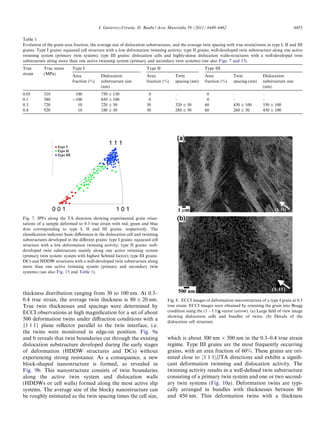
Figs. 8–10 show ECCI images of type I, II and III
grains, respectively. Type I grains occur less frequently
with an area fraction of about 10%. These grains/subgrains
are oriented close to h0 0 1i//TA directions and exhibit low
deformation twinning activity, as is evident from the small
amount of twin bundles (Fig. 8a). These bundles are nucle-
ated at grain boundaries and do not extend further up to
the opposite grain boundary, but they only grow a few
microns into the grain interior without impinging on other
interfaces. Type I grains contain a fine equiaxed dislocation
cell structure, with an average cell size of 220 nm at 0.3 true
strain (Fig. 8b). Further straining (0.4 true strain) leads to a
slight refinement of the cell size to an average value of
180 nm. Type II grains, with an area fraction of about
30%, exhibit significant deformation twinning activity.
These grains/subgrains are oriented along the line between
the h0 0 1i//TA and h1 1 1i//TA crystallographic direc-
tions. They contain a lamellar twin structure along a pri-
mary twinning system, as shown in Fig. 9a. At 0.3 true
strain, the average twin spacing is 320 ± 50 nm, which is
slightly reduced to 280 ± 50 nm with increasing deforma-
Fig. 6. ECCI images of deformation microstructures at 0.3 true strain (a) tion to 0.4 true strain. Fig. 9b shows that the lamellar twin
and 0.4 true strain (b), respectively. structure is formed by single deformation twins, with a](https://image.slidesharecdn.com/acta-59-2011-eccifemnc-1318078778-phpapp02-111008080138-phpapp02/85/Acta-59-2011-E-C-C-I-Fe-Mn-C-6-320.jpg)
![6456 I. Gutierrez-Urrutia, D. Raabe / Acta Materialia 59 (2011) 6449–6462
Fig. 9. ECCI images of deformation microstructure of a type II grain at Fig. 10. ECCI images of deformation microstructure of a type III grain at
0.3 true strain. (a) Large field of view image showing a lamellar twin 0.3 true strain. (a) Large field of view image showing a multiple twin
structure. The ECCI image was obtained by orienting the grain into Bragg structure with dislocation substructures. The ECCI image was obtained by
condition using the (1 1 À1)g vector (arrow). (b) Details of the lamellar orienting the grain into Bragg condition using the (1 À1 1)g vector
twin structure. Dislocation boundaries are visible in areas with large twin (arrow). (b) Details of the dislocation substructure consisting of HDDWs
spacing. The ECCI image was obtained by orienting the grain into Bragg and DCs. The ECCI image was obtained by orienting the grain into Bragg
condition using the (1 À1 1)g vector (arrow). condition using the (À1 1 1)g vector (arrow).
between 20 and 60 nm are only observed on secondary twin the ECCI images quantitatively reveal, during the early
systems, as illustrated in Fig. 10b. Apparent twin thick- stages of deformation (strain below 0.1 true strain) the
nesses were measured from ECCI images and corrected deformed microstructure is formed by DCs and highly
values were then determined by means of a stereological dense dislocation arrangements (HDDWs and HDDW
correction considering the corresponding tilting conditions. structures). ECCI images reveal dislocation patterns that
Fig. 10a and b reveals that these crystals contain a refined are similar to those found in TEM observations on disloca-
dislocation substructure, consisting of HDDW structures tion substructures in low-to-medium stacking fault energy
and DCs with an average size of 550 nm at 0.3 true strain. metals [30–33]. In particular, the characteristic dislocation
With further deformation (0.4 true strain), the structure is cell pattern observed by ECCI in the present FeMn alloy
refined to an average value of 450 nm. Fig. 10 also reveals was confirmed by TEM in a previous work [24]. The dislo-
that the dislocation–twin interaction is similar to that cation substructures can be classified according to the char-
occurring in type II grains. As a consequence, a rhom- acter of the observed slip patterns, namely wavy or planar.
boid-shaped nanostructure of twin boundaries and disloca- The planar slip character in fcc metals is known to be
tion walls (HDDWs or cell walls) is formed. The evolution mainly promoted by decreasing stacking fault energy,
of this nanostructure is further favored by twin–twin inter- increasing friction stress and the occurrence of short-range
sections due to the activation of multiple twin systems. ordering [35,36]. In the present TWIP steel, where ordering
has not been observed, the two parameters that can pro-
4. Discussion mote planar slip are predominantly the friction stress
(r0 = 157 MPa [17], which is higher than for materials
4.1. Evolution of the dislocation and twin substructure exhibiting planar slip such as stainless steels [37,38]) and
the stacking fault energy (22 mJ mÀ2 [39]). The latter effect
Two important aspects of the substructure evolution promotes slip via Shockley partial dislocations. These can
during tensile testing are quantitatively examined in this only cross-slip after stress- and thermally assisted local
study, namely the dislocation and twin substructures. As recombination, hence the planar slip prevalence in](https://image.slidesharecdn.com/acta-59-2011-eccifemnc-1318078778-phpapp02-111008080138-phpapp02/85/Acta-59-2011-E-C-C-I-Fe-Mn-C-8-320.jpg)
![I. Gutierrez-Urrutia, D. Raabe / Acta Materialia 59 (2011) 6449–6462 6457
materials with low stacking fault energy. With increasing of HDDWs are formed with a specific crystallographic ori-
strain (strain above 0.3 true strain), planar dislocation entation. One set of HDDWs is formed along the (1 À1 1)
structures are further developed in grains that are charac- slip plane. The other set is formed along the (1 À1 À1) slip
terized by a limited number of active slip systems, i.e. type plane within a range of 10°. The present observations on
II and III grains. Wavy dislocation structures are promoted HDDWs agree with previous results obtained in low stack-
in grains when a high number of slip planes are activated ing fault energy alloys, such as Hadfield steel [33,34]. Our
and dislocation cross-slip is enabled [30,40], such as in type result suggests that in type III grains there are two active
I grains. Interestingly, in high stacking fault energy metals, slip systems in the same slip plane that account for a large
such as pure aluminum, a similar crystallographic orienta- fraction of the total slip in the respective crystal [42].
tion dependence of the dislocation substructure was In a previous work [6], we have shown that in the pres-
observed, as in the present Fe–Mn alloy [41]. This finding ent alloy, when tensile deformed to a high true strain of 0.3,
suggests that dislocation cell formation is promoted in sim- only grains with either a highly favorable or unfavorable
ilar crystal orientations in both low and high stacking fault orientation for twinning follow the Schmid behavior. These
energy metals, although the characteristic mechanism of grains correspond to crystals oriented close to the h1 1 1i//
cell formation may well be different, as discussed below. TA and h0 0 1i//TA directions, respectively. This result
Regarding the formation of HDDWs in type III grains, indicates that in the present twin substructure only type
the slip trace analysis conducted in 10 grains through com- III and I grains follow the Schmid behavior. The rest of
bined ECCI and EBSD analysis reveals that most of the the crystals, viz. type II grains with a lamellar twin struc-
HDDWs are boundaries with a specific crystallographic ture, do not fulfill Schmid’s law when considering the mac-
orientation. Fig. 11a shows an example of HDDWs lying roscopic load. We also observe that local stress
along two slip systems. The simulated diffraction pattern concentrations at grain boundaries (e.g. those caused by
of the crystallographic orientation obtained from EBSD the impingement of deformation twins formed in a neigh-
is shown in Fig. 11b. The grain is oriented close to the boring grain on a grain boundary) can promote twinning
(3 À1 À2) direction. Trace analysis reveals that the two sets in unfavorably oriented grains. These stresses can be high
enough to activate the twin system with the highest Schmid
factor (primary twin system). The developed twin substruc-
ture may hinder the growth of deformation twins on sec-
ondary twin systems because the stress required to build
up a secondary twin substructure is probably too high to
be attained during tensile deformation. As a consequence,
only primary deformation twin is activated, resulting in a
lamellar twin structure. This effect is similar to the well-
known effect of overshooting in slip due to latent
hardening.
It is worth noting the relatively small mechanical resis-
tance that dislocation boundaries (cell walls and HDDWs)
have against twin boundaries that cut through them. If we
consider that the interaction is stress controlled, this obser-
vation indicates that dislocation boundaries have a small
influence on the stress required for twin dislocations to pass
through them. This is supported by the fact that mechani-
cal twins, once nucleated, practically always penetrate
grains to the opposite grain boundary. This behavior can
be discussed in terms of the self-stresses that characterize
the leading twin edge. Mechanical twins in fcc metals are
formed by the passage of edge-type Shockley partial dislo-
cations on successive twinning planes. These partials form
inclined arrays at the twin–matrix interface. Therefore, a
twin can be described by a field of discrete partial disloca-
tions where the long-range field resembles that of a pile-up
configuration of partials [43–45]. Kamat et al. [44] have
shown that under usual deformation conditions a twin
resembles a discontinuous tilt wall formed by inclined
Fig. 11. Trace analysis of the crystallographic orientation of the align-
pile-ups. This means that a growing twin can be considered
ment of HDDWs by using a combination of ECCI and EBSD. (a) ECCI
image of HDDWs. (b) Simulated diffraction pattern of the corresponding as a coordinated movement of partial dislocations that pre-
crystal orientation. The crystal orientation is close to the (3 À1 À2) serve their characteristic arrangement. The partial disloca-
direction//TA. tions in this array are spaced by a value of h (Fig. 12a). The](https://image.slidesharecdn.com/acta-59-2011-eccifemnc-1318078778-phpapp02-111008080138-phpapp02/85/Acta-59-2011-E-C-C-I-Fe-Mn-C-9-320.jpg)
![6458 I. Gutierrez-Urrutia, D. Raabe / Acta Materialia 59 (2011) 6449–6462
Poisson ratio, N is the number of dislocations in the twin
tip array and c is the stacking fault energy. Assuming a dis-
placement x of the Burgers vector b, the force is: F/b $ GN/
p(1 À m) + c. This force is much higher than the self-stress
field of a dislocation boundary or the back-driving force
created by a forest reaction product [48], and consequently
the trailing partial is pushed back to its position within the
twin tip.
4.2. Scaling law for dislocation cell sizes
Fig. 13 shows the variation in average size of dislocation
substructures with true stress in type I and type III grains.
The figure reveals that the refinement in the dislocation
substructure in type III grains (HDDW structures and
DCs) is less significant than that observed in type I grains
(DCs). This is attributed to the activation of twinning in
type III grains. As slip and twinning are two competing
deformation mechanisms, the strain accommodated by slip
is remarkably reduced and therefore the dislocation sub-
structure is less refined. The figure also reveals that the var-
iation in average size of the DCs in type I grains follows the
relationship r = k/D, where r is the true stress, k is a con-
stant and D is the cell size. This is a widely observed empir-
ical relationship that has been established in the framework
of the mesh-length theory of work hardening [40]. Accord-
ing to this theory, dislocations tend to arrange into struc-
tures which minimize the elastic energy per unit length of
Fig. 12. Schematic representation of the leading edge of a deformation
twin formed by a set of Shockley partials separated by distance h. (a) Twin the dislocation line (low energy dislocation configurations).
tip in local mechanical equilibrium. (b) Twin tip out of local mechanical One characteristic substructure type of arrangement, viz.
equilibrium with the leading partial dislocation being retarded and dislocation cell formation, minimizes the elastic energy
displaced by x. The local Peach–Koehler forces on this dislocation are per unit length of dislocation line through this relationship.
in the GPa range, so the local mechanical equilibrium will push such a
In particular, the following relationship between the flow
retarded dislocation back into the array against the obstacle force (such as
from a forest interaction). stress and the cell size has been proposed for cell-forming
metals [40], and is known as the “similitude principle”:
s ¼ s0 þ KGb=D ð1Þ
collective and highly coordinate movement of partial dislo-
cations can be driven, for example, by screw dislocation where s is the flow stress, s0 is the friction shear stress, K is
poles [46,47]. We suggest that the required highly coordi- the similitude constant, G is the shear modulus, b is the
nate slip of partials is the reason for the relatively unim- Burgers vector and D is the cell size. Fig. 14 shows relation
peded penetration of deformation twins through existing
dislocation arrangements compared to an equivalent set
of partial dislocations in non-coordinated motion. When 104
one of the partials is retarded due to a forest dislocation Type III
interaction between the twin tip and the dislocation sub- Type I
structure in front of it, and thus deviates from its ideal
Size (nm)
position within the twin tip, the local Peach–Koehler force
1000
by the other partials assembled in the twin tip array
becomes very high and pushes it back into the required dis-
location configuration. For example, the force, F, on the
displaced partial dislocation (displacement, x) of the twin
yield stress
tip depicted in Fig. 12b due to partials of the twin tip array 100
can be considered as the force provided by two superdislo- 200 400 600 800 1000
cations having a magnitude Nb, where N is the number of True stress (MPa)
dislocations in the twin tip array and b is the Burgers vec- Fig. 13. Variation of the average size of the dislocation substructure with
tor. Accordingly, the force F can be written as: F/b $ GbN/ the true stress in type I grains (DCs, black symbols) and type III grains
xp(1 À m) + c, where G is the shear modulus, m is the (dislocation cells plus HDDW structures, open symbols).](https://image.slidesharecdn.com/acta-59-2011-eccifemnc-1318078778-phpapp02-111008080138-phpapp02/85/Acta-59-2011-E-C-C-I-Fe-Mn-C-10-320.jpg)
![I. Gutierrez-Urrutia, D. Raabe / Acta Materialia 59 (2011) 6449–6462 6459
(1) for the present TWIP steel using r0 = 157 MPa [17], metals and therefore a different similitude constant K is ob-
b = 2.5 Â 10À10 m [15] and G = 65 GPa [15]. s was ob- tained. Similar observations were recently reported in cop-
tained from r assuming a Schmid factor m of 0.41, which per [49]. The material had been strained by cyclic
corresponds to h0 0 1i//TA orientations. From this dia- deformation and a similar constant to that in the present
gram a value for the constant K of 3.7 is obtained. This va- study was found [49]. In their work, the authors attributed
lue is smaller than the commonly reported value for fcc the low value of the similitude constant K to a higher stor-
metals (medium-to-high stacking fault energy metals), age rate of dislocations when compared to monotonic
which ranges between 7 and 8 [49]. Although there are deformation. Although this aspect, viz. the high dislocation
few studies on dislocation cell kinetics in low stacking fault density, must also be taken into account in low stacking
energy alloys, a small value of the constant K between 2.0 fault energy alloys due to the reduced activity of disloca-
and 2.9 has been reported for 316 L austenitic stainless tion cross-slip, its effect on the mechanism of dislocation
steel [49,50], which is close to that obtained in the present cell formation is not clear.
study.
According to the mesh-length theory of work hardening, 4.3. Strain hardening
any fcc metal should develop a dislocation cell structure,
according to the criterion: Strain hardening of the Fe–22 wt.% Mn–0.6 wt.% C
2 5 TWIP steel is characterized by a remarkably high strain
10 6 G=ðs À s0 Þ 6 10 ð2Þ
hardening above a true stress of 270 MPa. Microstructure
where G is the shear modulus, s is the resolved shear stress observations conducted by ECCI confirm that this is attrib-
and s0 is the friction stress. For the present steel, the term uted to both dislocation accumulation and twin substruc-
G/(s À s0) ranges between 1.7 Â 102 and 1 Â 103, hence a ture formation.
dislocation cell structure is formed. However, it must be Stage A hardening in the present alloy is characterized
noted that this theory only accounts for dislocation cell for- by a decrease in the strain hardening rate. It reveals similar
mation on the basis of a low energy configuration criterion; features to the conventional stage III hardening regime
it does not provide any detail on the kinetic mechanism of observed in high stacking fault energy metals [28], and also
cell formation. Several observations revealed that disloca- agrees with previous studies on strain hardening of low
tion cell formation is closely connected with the cross-slip stacking fault energy metals [52]. This observation suggests
ability of screw dislocations [48,51]. Cross-slip plays an that this stage can be attributed to the prevalence of
important role in this process through the rearrangement dynamic recovery processes, such as cross-slip and annihi-
of screw dislocations in terms of the activation of second- lation of screw dislocations of opposite signs. The micro-
ary slip and annihilation of screw dislocations of opposite structure observations indicate that stage B hardening,
sign. The localized maneuvers of partial dislocations to which is characterized by a constant strain hardening rate
transfer dislocation screw segments from one plane to a with a hardening coefficient of about G/40, can be attrib-
cross-slip plane depends on the stacking fault energy uted to the evolution of the dislocation substructure con-
[48,51]. Consequently, the stacking fault energy has an sisting of DCs and HDDW structures. The value of the
important influence on the characteristic mechanism of dis- strain hardening coefficient observed in this regime is much
location cell formation. For this reason, the mechanism of higher than the typical value of G/200 observed for multi-
cell formation in the present TWIP steel may be different to ple slip in common fcc metals [28] but is similar to that
that occurring in medium-to-high stacking fault energy reported for Hadfield steels (G/20–G/30 [33,34]). These
alloys contain dislocation arrangements organized in
HDDWs that act as effective obstacles against dislocation
5.6 motion. Some portion of the blocked dislocations can
become trapped by the boundaries, thereby increasing their
4.8 dislocation density (i.e. the wall thickness). In the present
4 alloy the presence of weaker obstacles (DCs) may result
-3
K=3.7
(τ-τ )/G x 10
in less strain hardening. The present study hence shows
3.2
for the first time the important effect of dislocation sub-
2.4 structures on the strain hardening behavior in a TWIP
0
1.6 steel.
The development of a dense twin substructure upon
0.8 ongoing straining results in a further drastic decrease in
0 the MFP. Consequently, strain hardening increases up to
a hardening coefficient of about G/30, leading to stage C
0 5 10 15 hardening. The microstructure observations reveal that
-3
b/D (x10 ) twin boundaries cut through the existing dislocation sub-
Fig. 14. Plot of the relation (s À s0)/G = Kb/D for average dislocation cell structure, resulting in further microstructure refinement.
sizes in type I grains. Twin boundaries act as strong obstacles to dislocation](https://image.slidesharecdn.com/acta-59-2011-eccifemnc-1318078778-phpapp02-111008080138-phpapp02/85/Acta-59-2011-E-C-C-I-Fe-Mn-C-11-320.jpg)
![6460 I. Gutierrez-Urrutia, D. Raabe / Acta Materialia 59 (2011) 6449–6462
motion, serving as efficient sites for dislocation accumula- (a) 400
tion similar to grain boundaries. This effect is referred to 350
Flow stress (MPa)
as a “dynamic Hall–Petch effect”, and has been reported 300
in many fcc metals containing deformation twins 250
[3,15,16,52,53].
200
To obtain a better understanding of the influence of
150
both dislocation and twin substructures to stage C harden-
ing, we evaluate the contribution of the different types of 100
grains (types I, II and III) to the flow stress at 0.3 true 50
strain using an MFP approach. This strain level corre- 0
sponds to the onset of stage D, where the highest strain friction Type I Type II Type III
stress
hardening is obtained. The contribution of type I grains
(cell forming grains) to the flow stress is provided by rela-
tion (1). Type II grains develop a block structure formed by
(b) 700
600
twin boundaries and dislocation boundaries. As the aver-
Flow stress (MPa)
age twin spacing is around half the average spacing 500
between dislocation boundaries, we consider the average 400
twin spacing to be the dominant microstructural correla-
300
tion length in the overall MFP for mobile dislocations.
Accordingly, we assume that the contribution of type II 200
grains to the flow stress can be described in terms of a 100
Hall–Petch-type relation [52]: 0
1=2 Type I Type II Type III
r ¼ r0 þ K HÀP =ðktwin Þ ð3Þ
where r0 is the friction stress, KH–P is the Hall–Petch con- Fig. 15. (a) Contribution of the friction stress and type I, II and III grains
to the flow stress at 0.3 true strain. (b) Intrinsic strength of type I, II and
stant for twinning and ktwin is the average twin spacing.
type III grains at 0.3 true strain. Type I grains: equiaxed cell structure with
Type III grains develop a block structure formed by twin a low deformation twinning activity; type II grains: well-developed twin
and dislocation boundaries (HDDWs and cell walls). As substructure along one active twinning system (primary twin system); type
a first approximation, we consider only the smallest obsta- III grains: DCs and HDDW structures with a well-developed twin
cle spacing, which is the average twin spacing of one of the substructure along more than one active twinning system (primary and
secondary twin systems) (see also Fig. 7 and Table 1).
active twinning system. We therefore assume that the con-
tribution of type III grains to the flow stress is also pro- stress of 735 MPa at 0.3 true strain. This value is close to
vided by relation (3), with ktwin being the smallest the experimentally observed flow stress value of 720 MPa.
average twin spacing of the active twin system. Considering Two important findings can be drawn from this estimate.
these three contributions, the expression for the flow stress First, the strain hardening of a TWIP steel can be analyzed in
can be written as: terms of the MFP approach. This result agrees with published
models on the hardening behavior of TWIP steels [13,14,17].
1=2
r ¼ r0 þ fI GKbM=D þ fII K HÀP =ðkII Þ
twin Second, we have identified the different microstructure
parameters controlling strain hardening in this material,
þ fIII K HÀP =ðkIII Þ1=2
twin ð4Þ
namely, the average dislocation cell size in type I grains, the
where r0 is the friction stress, fI, fII and fIII are the area average twin spacing in type II grains and the smallest aver-
fractions of type I, II and III grains, respectively, G is the age twin spacing of the active twin system in type III grains.
shear modulus, b is the Burgers vector, K is a constant, Fig. 15a shows the contribution to the flow stress of each term
M is the Taylor factor, D is the average cell size, KH–P is occurring in relation (4). The figure reveals that the most sig-
the Hall–Petch constant for twinning, kII is the average
twin nificant contribution to the flow stress is provided by the twin
twin spacing in type II grains, and kIII is the smallest aver-
twin substructure (type II and III grains) with about 70% contri-
age twin spacing of an active twin system in type III grains. bution to the overall flow stress. In particular, type III crys-
The area fraction, average size of dislocation substructures tals, which are the most frequently occurring grains,
and average twin spacing of each type of grain are shown in provide the highest contribution. Interestingly, the contribu-
Table 1. Assuming r0 = 157 MPa [17], b = 2.5 Â 10À10 m tion of the dislocation substructure, which is mainly provided
[15], G = 65 GPa [15], K = 3.7 (calculated in the previous by type I grains, is still noticeable, with about 8% of the flow
section), M = 2.44 (Taylor factor for type I grains) and stress. This analysis clarifies the influence of the main micro-
KH–P = 357 MPa lm1/2 [17] (a previous work has shown structure features, namely dislocation and twin substructures,
that in the present TWIP steel the Hall–Petch constant on the high strain hardening rate of TWIP steels. It shows
for twinning is similar to that for slip [6]), and taking the that the high strain hardening rate observed in stage C is
microstructure parameters shown in Table 1, yields a flow mainly attributed to the MFP refinement due to deformation](https://image.slidesharecdn.com/acta-59-2011-eccifemnc-1318078778-phpapp02-111008080138-phpapp02/85/Acta-59-2011-E-C-C-I-Fe-Mn-C-12-320.jpg)
![I. Gutierrez-Urrutia, D. Raabe / Acta Materialia 59 (2011) 6449–6462 6461
twinning in type II and III grains. If we only consider the 5. Conclusions
intrinsic strength of each type of grain, we find that type II
crystals (with a lamellar twin structure) are the hardest grains We have investigated the underlying defect topology
(Fig. 15b). Interestingly, this figure reveals that at this defor- and kinetics of substructure evolution and its correspon-
mation stage type I grains (cell forming grains) exhibit an dence to the strain hardening evolution of an Fe–22 wt.%
even higher strength than type III grains (multiple twin struc- Mn–0.6 wt.% C TWIP steel during tensile deformation by
ture). This result supports the previous finding of the signifi- means of ECCI and EBSD. We draw the following
cant contribution of dislocation substructures on strain conclusions:
hardening in the present TWIP steel.
With further straining, the refinement of the twin spac- – At the early stages of plastic deformation (below 0.1 true
ing proceeds, leading to a further reduction in the disloca- strain), the microstructure consists of dislocation cells
tion MFP and a gradual decrease in the strain hardening and highly dense dislocation arrangements. These dislo-
rate. The hardening coefficient of stage D is still high (G/ cation substructures are strong barriers to dislocation
30), indicating the gradual refinement of the MFP, as also glide and result in a high strain hardening with a hard-
revealed by Table 1. Above a true stress of 800 MPa, in ening coefficient of about G/40. This result underlines
stage E, strain hardening steadily decreases, indicating the importance of dislocation substructures at the early
the reduced capability for trapping more dislocations inside stages of strain hardening in TWIP steels.
the refined microstructure. The work hardening capability – At intermediate strains (0.1–0.3 true strain), a well-
is determined not only by the MFP but also by the specific defined deformation twin substructure is developed.
strengthening effect of the deformation twins when they act Twinning depends on the crystallographic grain orien-
as obstacles against dislocation motion. In the present tation. We classify the microstructure in this regime
FeMn alloy, deformation twins are arranged in bundles. according to its twin substructure into three groups,
Microstructure observations reveal that the bundle density referred to as types I, II and III. We quantify strain
and thickness increase gradually with strain. This indicates hardening in terms of a dislocation mean free path
that the number of deformation twins arranged in bundles approach. The different microstructure parameters con-
increases with the strain as well. These bundles are even trolling strain hardening in this regime are: the average
stronger obstacles to dislocation glide than single twins dislocation cell size in type I grains; the average twin
because the critical stress required to carry plastic deforma- spacing in type II grains; and the smallest average twin
tion across the twin bundle is much higher than that spacing of an active twin system in type III grains. The
required to penetrate a single twin due to the small inter- analysis shows that the refinement in the dislocation
face spacing. Another result supporting the increasing twin mean free path due to deformation twinning in type
strength with deformation is the high density of sessile dis- II and III grains results in a high strain rate with a
locations found within twin lamellae in an Fe–20 wt.% hardening coefficient of about G/30.
Mn–1.2 wt.% C TWIP steel [7,18]. The accumulation of – At high strains (above 0.4 true strain), the reduced fur-
sessile dislocations within the twin is attributed to disloca- ther refinement of the dislocation and twin substructure
tion reactions between Shockley partials and twin disloca- together with the increasing strengthening effect of the
tions. These sessile dislocations are potential obstacles to individual deformation twins as obstacles to dislocation
dislocation motion and can provide not only a hardening glide reduce the capability for trapping more disloca-
mechanism within deformation twins but also an increase tions, hence the strain hardening decreases.
in the critical stress required to induce plastic deformation – The cell structure formed in type I grains follows the
across the twin as well. Furthermore, in the present TWIP similitude principle s=s0 + KGb/D with a similitude
steel, Shockley partial-twin dislocation interactions can be constant of K = 3.7. This value is smaller than the value
enhanced by the interaction between HDDWs and cell of 7–8 that is typically observed in medium-to-high
boundaries with twin boundaries. Accordingly, we suggest stacking fault alloys. We attribute this difference to the
that, in the present TWIP steel, deformation twins contain influence of the stacking fault energy on the mechanism
a high dislocation density as well. As the dislocation den- of cell formation.
sity is increased by dislocation storage through interac-
tions, the dislocation density will increase with further
deformation. These two aspects associated with the role Acknowledgements
of deformation twins, namely the arrangement in twin bun-
dles and the high dislocation density within them, increase The authors would like to acknowledge the financial
the stress required to transfer plastic deformation across support by the German Research Foundation (Deutsche
deformation twins and therefore limit the further work Forschungsgemeinschaft DFG) within the framework of
hardening capacity at high strains in this material. the SFB 761 “steel ab initio”.](https://image.slidesharecdn.com/acta-59-2011-eccifemnc-1318078778-phpapp02-111008080138-phpapp02/85/Acta-59-2011-E-C-C-I-Fe-Mn-C-13-320.jpg)
![6462 I. Gutierrez-Urrutia, D. Raabe / Acta Materialia 59 (2011) 6449–6462
References [27] Raabe D, Sachtleber M, Zhao Z, Roters F, Zaefferer S. Acta Mater
2001;49:3433.
[1] Grassel O, Kruger L, Frommeyer G, Meyer LW. Int J Plast
¨ ¨ [28] Kocks UF, Mecking H. Prog Mater Sci 2003;48:171.
2000;16:1391. [29] Ueji R, Tsuchida N, Terada D, Tsuji N, Tanaka Y, Takemura A,
[2] Lu Y, Hutchinson B, Molodov DA, Gottstein G. Acta Mater
¨ et al. Scripta Mater 2008;59:963.
2010;58:3079. [30] Bay B, Hansen N, Hughes DA, Kuhlmann-Wilsdorf D. Acta Metall
[3] Jin JE, Lee YK. Mater Sci Eng A 2009;527:157. Mater 1992;40:205.
[4] Kim JK, Chen L, Kim HS, Kim SK, Estrin Y, Cooman BCD. Metall [31] Hansen N. Scripta Metall Mater 1992;27:1447.
Mater Trans A 2009;40:3147. [32] Hansen N, Jensen DJ. Philos Trans Roy Soc 1999;357:1447.
[5] Curtze S, Kuokkala VT. Acta Mater 2010;58:5129. [33] Canadinc D, Sehitoglu H, Maier HJ, Chumlyakov YI. Acta Mater
[6] Gutierrez-Urrutia I, Zaefferer S, Raabe D. Mater Sci Eng A 2005;53:1831.
2010;527:3552. [34] Canadinc D, Sehitoglu H, Maier HJ. Mater Sci Eng A 2007;454–
[7] Idrissi H, Renard K, Schryvers D, Jacques PJ. Scripta Mater 455:662.
2010;63:961. [35] Gerold V, Karnthaler HP. Acta Metall 1989;37:2177.
[8] Lu Y, Molodov DA, Gottstein G. Acta Mater 2011;59:3229.
¨ [36] Hong SI, Laird C. Acta Metall Mater 1990;38:1581.
[9] Yoo JD, Park KT. Mater Sci Eng A 2008;496:417. [37] Kassner ME, Miller AK, Sherby OD. Metall Trans A 1982;13:1977.
[10] Yoo JD, Hwang SW, Park KT. Metall Mater Trans A 2009;40:1520. [38] Lo KH, Shek CH, Lai JKL. Mater Sci Eng R 2009;65:39.
[11] Olson GB, Cohen M. Metall Trans A 1976;7:1897. [39] Bracke L, Kestens L, Penning J. Scripta Mater 2009;61:220.
[12] Olson GB, Cohen M. Metall Trans A 1976;7:1905. [40] Kuhlmann-Wilsdorf D. Mater Sci Eng A 1989;113:1.
[13] Allain S, Chateau JP, Bouaziz O. Mater Sci Eng A 2004;387–389:143. [41] Hansen N, Huang X. Acta Mater 1998;46:1827.
[14] Shiekhelsouk MN, Favier V, Inal K, Cherkaoui M. Int J Plast [42] Winther G, Jensen DJ, Hansen N. Acta Mater 1997;45:5059.
2009;25:105. [43] Mitchell TE, Hirth JP. Acta Metall Mater 1991;39:1711.
[15] Bouaziz O, Allain S, Scott C. Scripta Mater 2008;58:484. [44] Kamat SV, Hirth JP, Mullner P. Philos Mag A 1996;73:669.
¨
[16] Barbier D, Gey N, Allain S, Bozzolo N, Humbert M. Mater Sci Eng [45] Mullner P, Solenthaler C, Speidel MO. Acta Metall Mater
¨
A 2009;500:196. 1994;42:1727.
[17] Sevillano JG. Scripta Mater 2009;60:336. [46] Christian JW, Mahajan S. Prog Mater Sci 1995;39:1.
[18] Idrissi H, Renard K, Ryelandt L, Schryvers D, Jacques PJ. Acta [47] Niewczas M. In: Nabarro FRN, Hirth JP, editors. Dislocations in
Mater 2010;58:2464. solids, vol. 13. Amsterdam: Elsevier B.V.; 2007.
[19] Ng BC, Simkin BA, Crimp MA. Mater Sci Eng A 1997;239–240:150. [48] Hirth JP, Lothe J. Theory of dislocations. 2nd ed. New York: John
[20] Wilkinson AJ, Hirsch PB. Micron 1997;28:279. Wiley and Sons; 1982.
[21] Ng BC, Simkin BA, Crimp MA. Ultramicroscopy 1998;75:137. [49] Sauzay M, Kubin LP. Prog Mater Sci 2011;56:725.
[22] Ahmed J, Roberts SG, Wilkinson AJ. Philos Mag 2006;86:4965. [50] Feaugas X. Acta Mater 1999;47:3617.
[23] Crimp MA. Microsc Res Tech 2006;69:374. [51] Jackson PJ. Prog Mater Sci 1985;29:139.
[24] Gutierrez-Urrutia I, Zaefferer S, Raabe D. Scripta Mater 2009;61:737. [52] Asgari S, El-Danaf E, Kalidindi SR, Doherty RD. Metall Mater
[25] Weidner A, Martin S, Klemm V, Martin U, Biermann H. Scripta Trans A 1997;28:1781.
Mater 2011;64:513. [53] Karaman I, Sehitoglu H, Maier HJ, Chumlyakov YI. Acta Mater
[26] Senk D, Emmerich H, Rezende J, Siquieri R. Adv Eng Mater 2001;49:3919.
2007;9:695.](https://image.slidesharecdn.com/acta-59-2011-eccifemnc-1318078778-phpapp02-111008080138-phpapp02/85/Acta-59-2011-E-C-C-I-Fe-Mn-C-14-320.jpg)

This document analyzes the strain hardening behavior of an Fe-22wt.% Mn-0.6wt.% C twinning-induced plasticity (TWIP) steel under tensile deformation. Electron channeling contrast imaging (ECCI) combined with electron backscatter diffraction (EBSD) is used to characterize the evolution of dislocation and twin substructures. The analysis reveals that strain hardening occurs in five stages with different rates that are correlated to the refinement of the dislocation and twin substructures. At high strains, limited further refinement of these substructures reduces strain hardening capabilities.


