ACT 171 2011-2012 VERBAL DE-ESCALATION   AND  RESTORATIVE JUSTICE
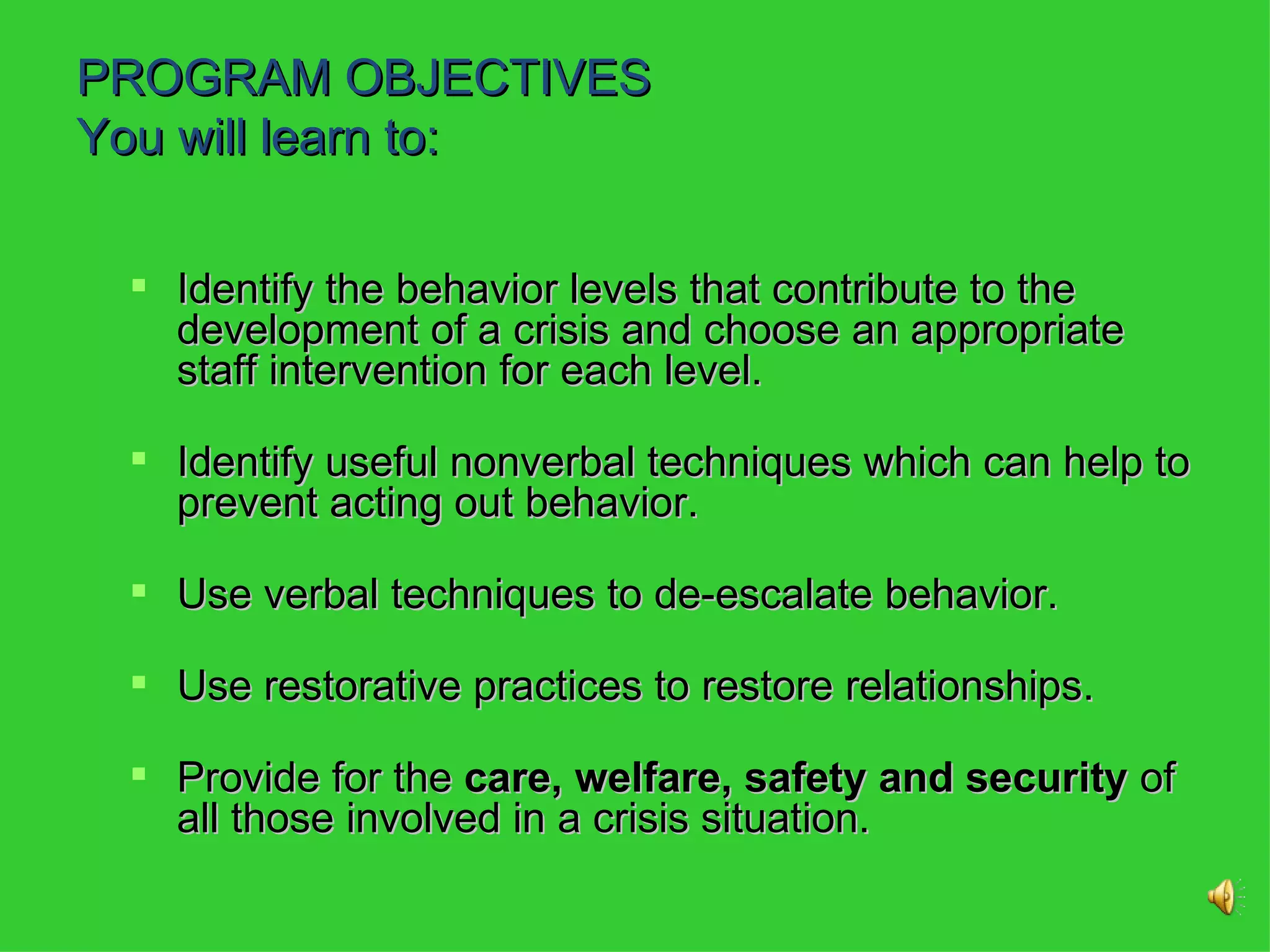
PROGRAM OBJECTIVES You will learn to: Identify the behavior levels that contribute to the development of a crisis and choose an appropriate staff intervention for each level. Identify useful nonverbal techniques which can help to prevent acting out behavior. Use verbal techniques to de-escalate behavior. Use restorative practices to restore relationships. Provide for the  care, welfare, safety and security  of all those involved in a crisis situation.
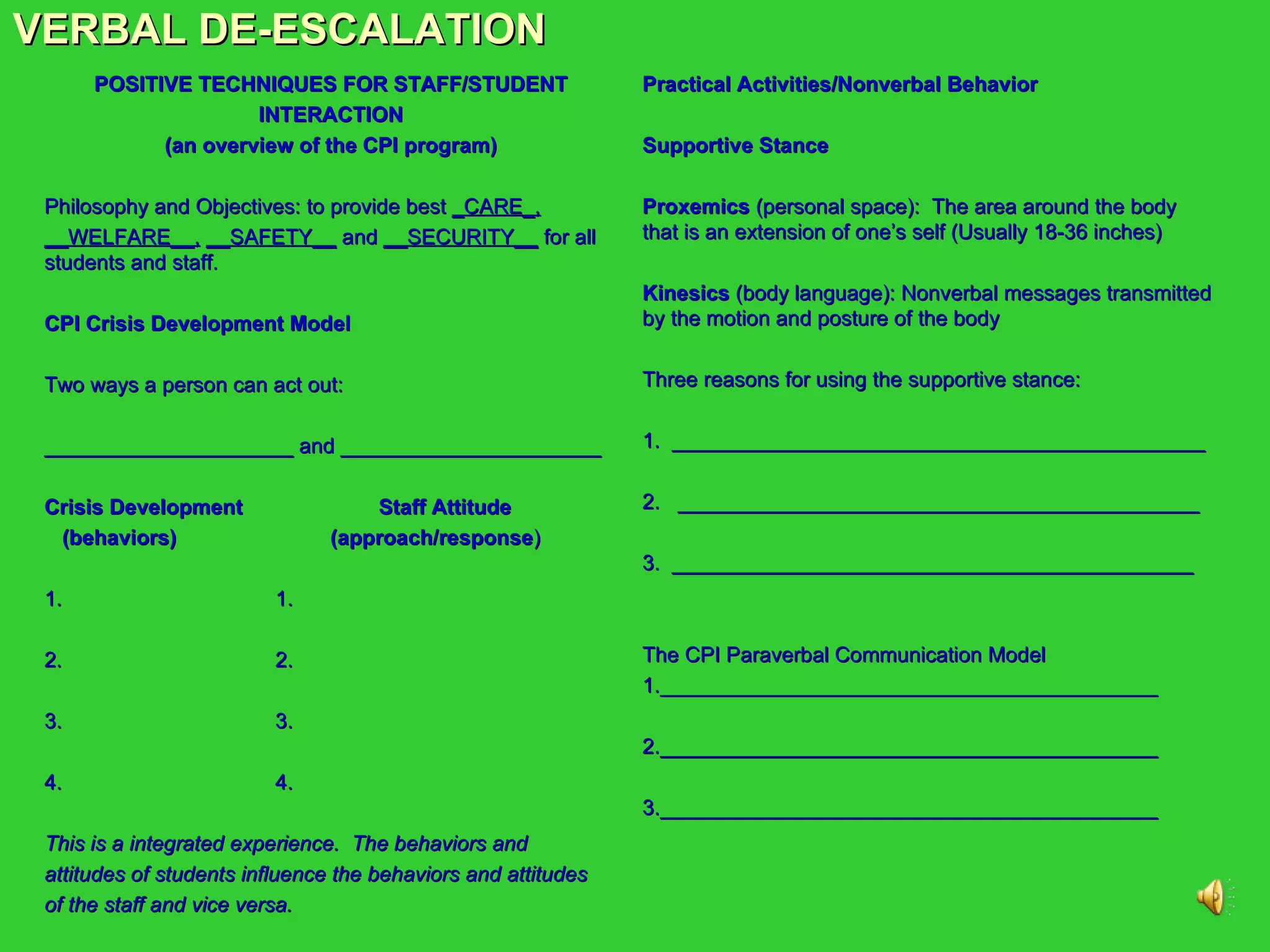
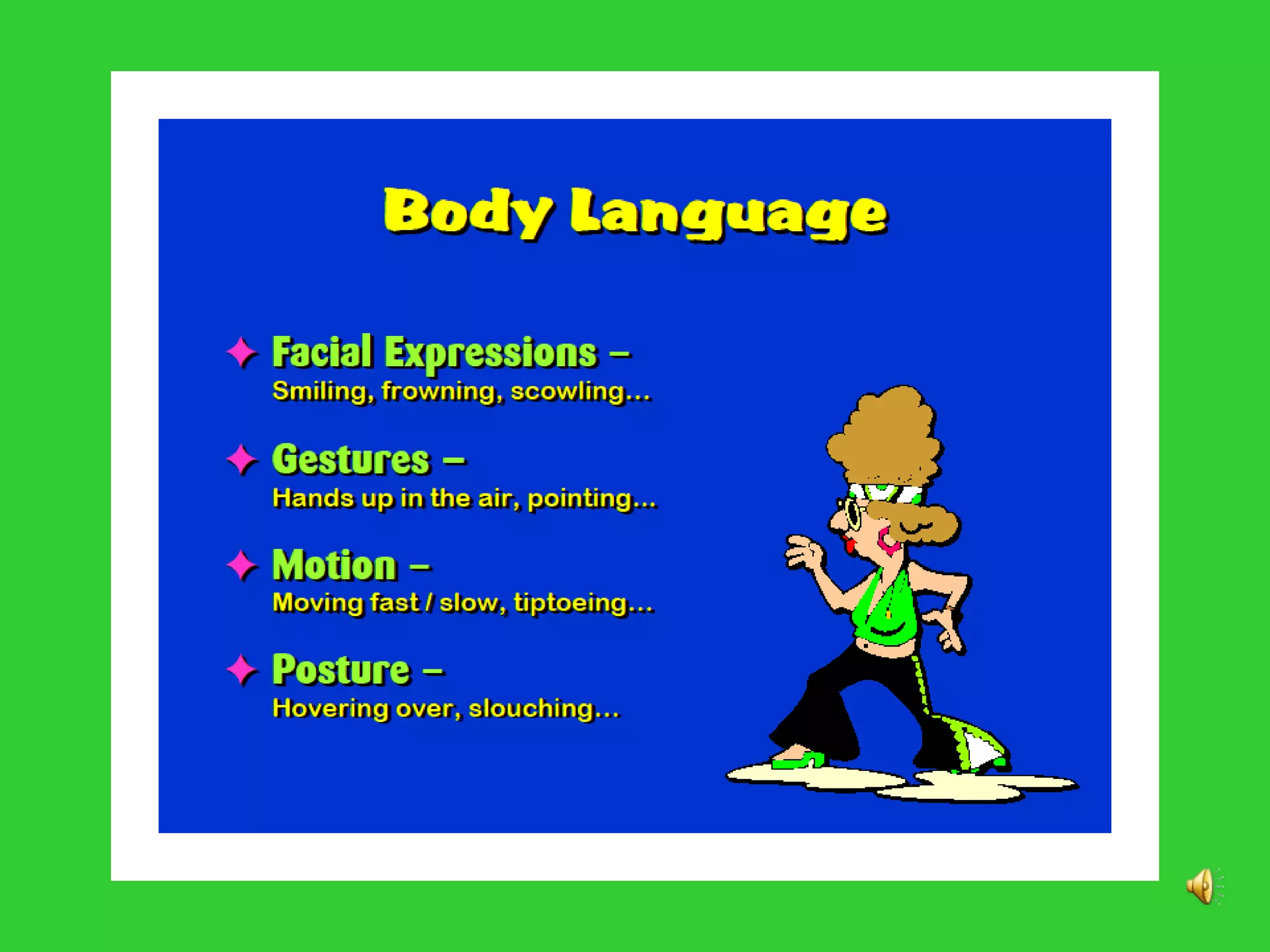
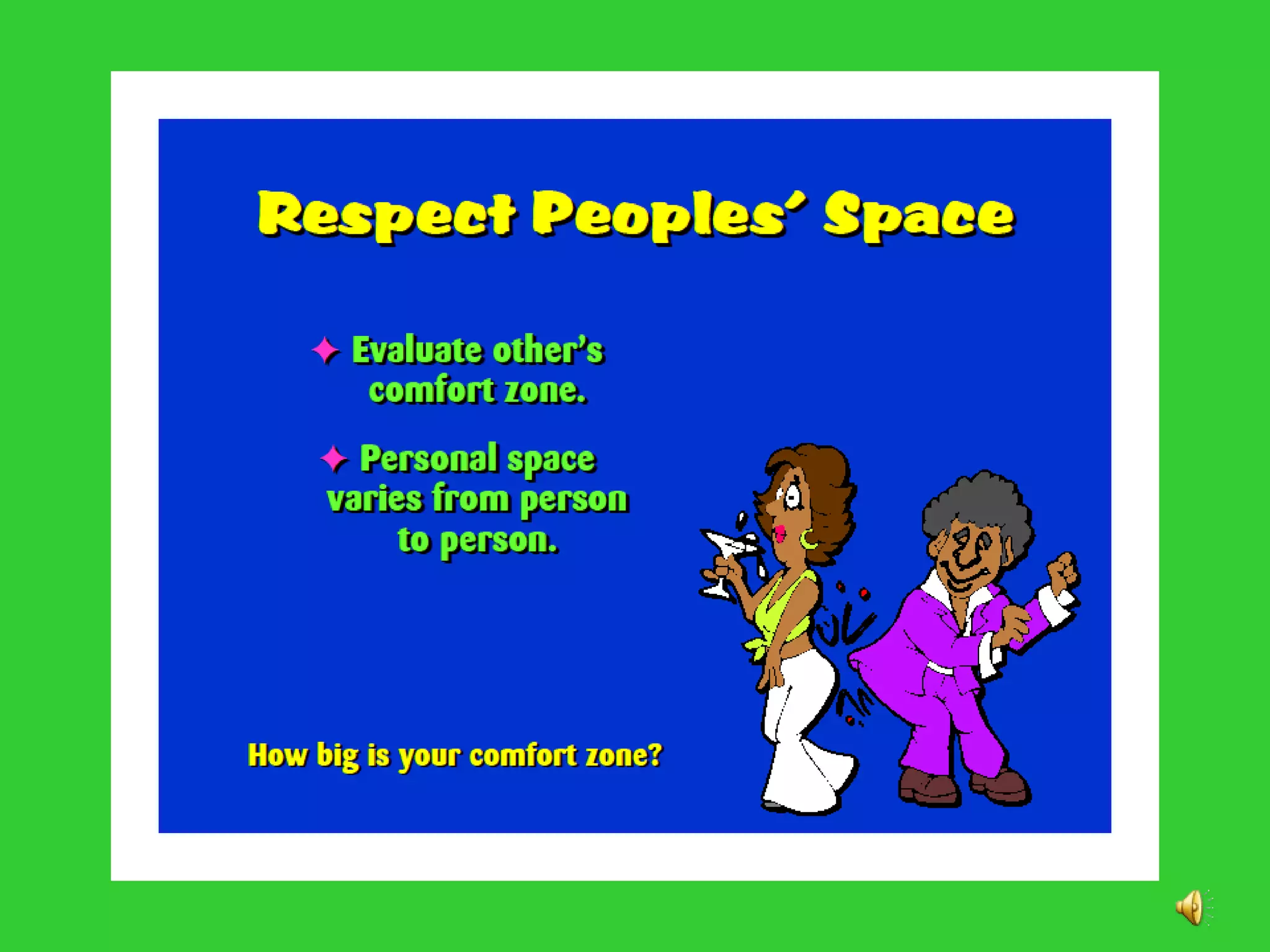
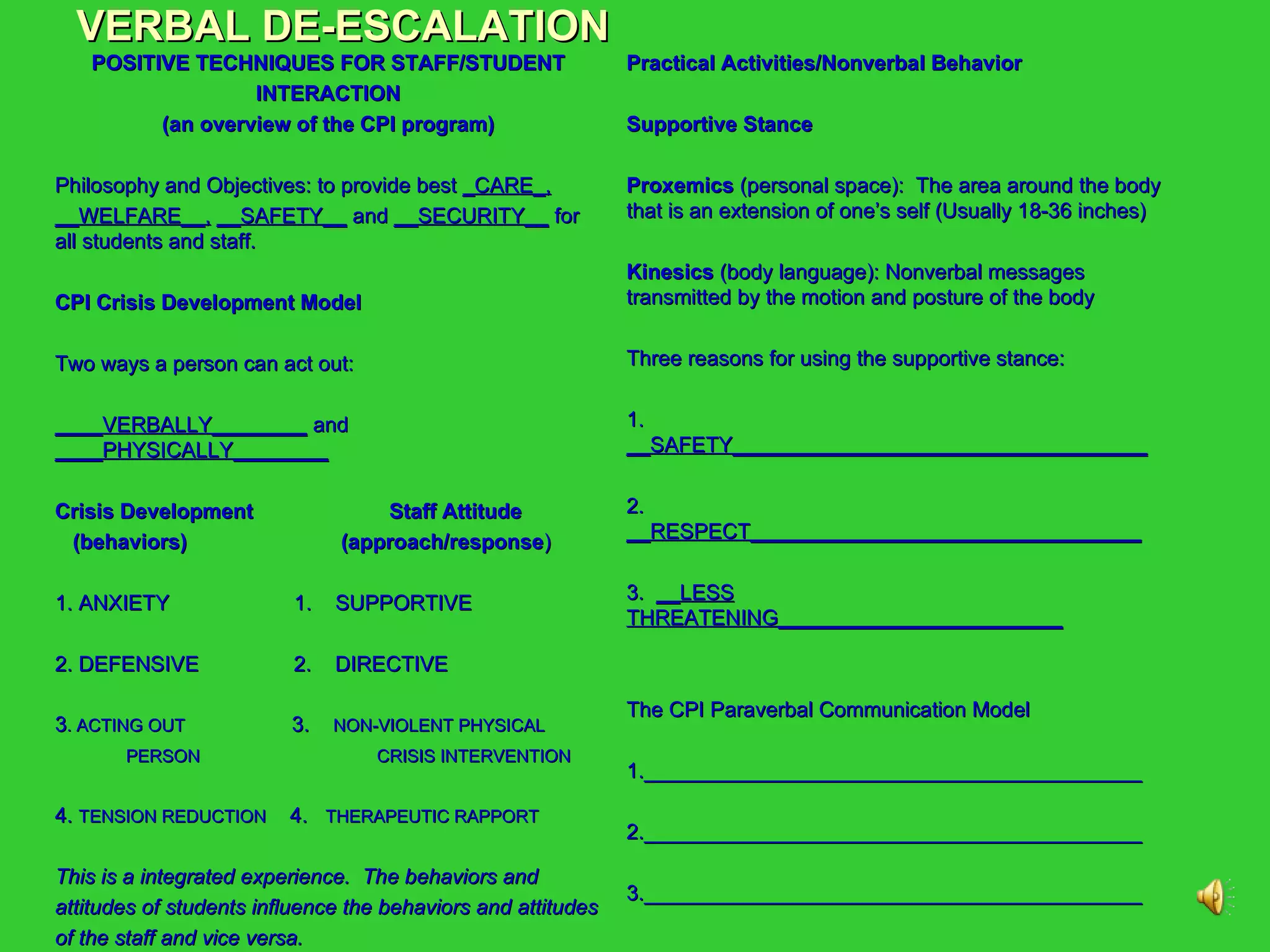
VERBAL DE-ESCALATION POSITIVE TECHNIQUES FOR STAFF/STUDENT INTERACTION (an overview of the CPI program) Philosophy and Objectives: to provide best  _CARE_, __WELFARE__,   __SAFETY__  and  __SECURITY__  for all students and staff. CPI Crisis Development Model Two ways a person can act out: _____________________ and ______________________ Crisis Development  Staff Attitude (behaviors)  (approach/response ) 1.  1. 2.  2. 3.  3. 4.  4. This is a integrated experience.  The behaviors and attitudes of students influence the behaviors and attitudes of the staff and vice versa. Practical Activities/Nonverbal Behavior Supportive Stance Proxemics  (personal space):  The area around the body that is an extension of one’s self (Usually 18-36 inches) Kinesics  (body language): Nonverbal messages transmitted by the motion and posture of the body Three reasons for using the supportive stance: 1.  _____________________________________________ 2.  ____________________________________________ 3.  ____________________________________________ The CPI Paraverbal Communication Model 1.__________________________________________ 2.__________________________________________ 3.__________________________________________


Woman without her man is nothing
 
VERBAL DE-ESCALATION POSITIVE TECHNIQUES FOR STAFF/STUDENT INTERACTION (an overview of the CPI program) Philosophy and Objectives: to provide best  _CARE_, __WELFARE__,   __SAFETY__  and  __SECURITY__  for all students and staff. CPI Crisis Development Model Two ways a person can act out: ____VERBALLY________  and  ____PHYSICALLY________ Crisis Development  Staff Attitude (behaviors)  (approach/response ) 1.  1. 2.  2. 3.  3. 4.  4. This is a integrated experience.  The behaviors and attitudes of students influence the behaviors and attitudes of the staff and vice versa. Practical Activities/Nonverbal Behavior Supportive Stance Proxemics  (personal space):  The area around the body that is an extension of one’s self (Usually 18-36 inches) Kinesics  (body language): Nonverbal messages transmitted by the motion and posture of the body Three reasons for using the supportive stance: 1.  _____________________________________________ 2.  ____________________________________________ 3.  ____________________________________________ The CPI Paraverbal Communication Model 1.__________________________________________ 2.__________________________________________ 3.__________________________________________
VERBAL DE-ESCALATION POSITIVE TECHNIQUES FOR STAFF/STUDENT INTERACTION (an overview of the CPI program) Philosophy and Objectives: to provide best  _CARE_, __WELFARE__,   __SAFETY__  and  __SECURITY__  for all students and staff. CPI Crisis Development Model Two ways a person can act out: ____VERBALLY________  and  ____PHYSICALLY________ Crisis Development  Staff Attitude (behaviors)  (approach/response ) 1.  ANXIETY  1.  SUPPORTIVE 2.  DEFENSIVE  2.  DIRECTIVE 3.  3. 4.  4. This is a integrated experience.  The behaviors and attitudes of students influence the behaviors and attitudes of the staff and vice versa. Practical Activities/Nonverbal Behavior Supportive Stance Proxemics  (personal space):  The area around the body that is an extension of one’s self (Usually 18-36 inches) Kinesics  (body language): Nonverbal messages transmitted by the motion and posture of the body Three reasons for using the supportive stance: 1.  ____________________________________________ 2.  ____________________________________________ 3.  ____________________________________________ The CPI Paraverbal Communication Model 1.__________________________________________ 2.__________________________________________ 3.__________________________________________
 
VERBAL DE-ESCALATION POSITIVE TECHNIQUES FOR STAFF/STUDENT INTERACTION (an overview of the CPI program) Philosophy and Objectives: to provide best  _CARE_, __WELFARE__,   __SAFETY__  and  __SECURITY__  for all students and staff. CPI Crisis Development Model Two ways a person can act out: ____VERBALLY________  and  ____PHYSICALLY________ Crisis Development  Staff Attitude (behaviors)  (approach/response ) 1.  ANXIETY  1.  SUPPORTIVE 2.  DEFENSIVE  2.  DIRECTIVE 3.  ACTING OUT   3.  NON-VIOLENT PHYSICAL PERSON  CRISIS INTERVENTION   4.  TENSION REDUCTION   4.  THERAPEUTIC RAPPORT This is a integrated experience.  The behaviors and attitudes of students influence the behaviors and attitudes of the staff and vice versa. Practical Activities/Nonverbal Behavior Supportive Stance Proxemics  (personal space):  The area around the body that is an extension of one’s self (Usually 18-36 inches) Kinesics  (body language): Nonverbal messages transmitted by the motion and posture of the body Three reasons for using the supportive stance: 1.  ____________________________________________ 2.  ____________________________________________ 3.  ____________________________________________ The CPI Paraverbal Communication Model 1.__________________________________________ 2.__________________________________________ 3.__________________________________________


VERBAL DE-ESCALATION POSITIVE TECHNIQUES FOR STAFF/STUDENT INTERACTION (an overview of the CPI program) Philosophy and Objectives: to provide best  _CARE_, __WELFARE__,   __SAFETY__  and  __SECURITY__  for all students and staff. CPI Crisis Development Model Two ways a person can act out: ____VERBALLY________  and  ____PHYSICALLY________ Crisis Development  Staff Attitude (behaviors)  (approach/response ) 1. ANXIETY  1.  SUPPORTIVE 2. DEFENSIVE  2.  DIRECTIVE 3 . ACTING OUT   3.  NON-VIOLENT PHYSICAL PERSON  CRISIS INTERVENTION   4.  TENSION REDUCTION   4.  THERAPEUTIC RAPPORT This is a integrated experience.  The behaviors and attitudes of students influence the behaviors and attitudes of the staff and vice versa. Practical Activities/Nonverbal Behavior Supportive Stance Proxemics  (personal space):  The area around the body that is an extension of one’s self (Usually 18-36 inches) Kinesics  (body language): Nonverbal messages transmitted by the motion and posture of the body Three reasons for using the supportive stance: 1.  __SAFETY___________________________________ 2.  __RESPECT_________________________________ 3.  __LESS THREATENING________________________ The CPI Paraverbal Communication Model 1.__________________________________________ 2.__________________________________________ 3.__________________________________________
VERBAL DE-ESCALATION POSITIVE TECHNIQUES FOR STAFF/STUDENT INTERACTION (an overview of the CPI program) Philosophy and Objectives: to provide best  _CARE_, __WELFARE__,   __SAFETY__  and  __SECURITY__  for all students and staff. CPI Crisis Development Model Two ways a person can act out: ____VERBALLY________  and  ____PHYSICALLY________ Crisis Development  Staff Attitude (behaviors)  (approach/response ) 1. ANXIETY  1.  SUPPORTIVE 2. DEFENSIVE  2.  DIRECTIVE 3. ACTING OUT   3.  NON-VIOLENT PHYSICAL PERSON  CRISIS INTERVENTION   4.  TENSION REDUCTION   4.  THERAPEUTIC RAPPORT This is a integrated experience.  The behaviors and attitudes of students influence the behaviors and attitudes of the staff and vice versa. Practical Activities/Nonverbal Behavior Supportive Stance Proxemics  (personal space):  The area around the body that is an extension of one’s self (Usually 18-36 inches) Kinesics  (body language): Nonverbal messages transmitted by the motion and posture of the body Three reasons for using the supportive stance: 1.  __SAFETY___________________________________ 2.  __RESPECT_________________________________ 3.  __LESS THREATENING________________________ The CPI Paraverbal Communication Model 1.__ TONE_________________________________ 2.__ VOLUME______________________________ 3.__ CADENCE _____________________________


Restorative Justice
What is Restorative Justice? Represents a philosophy and a process that acknowledges that when a student does harm, it effects the person(s) they hurt, the community and themselves. When using restorative measures, an attempt is made to repair the harm caused by one person to another and to the community so that order is restored for everyone
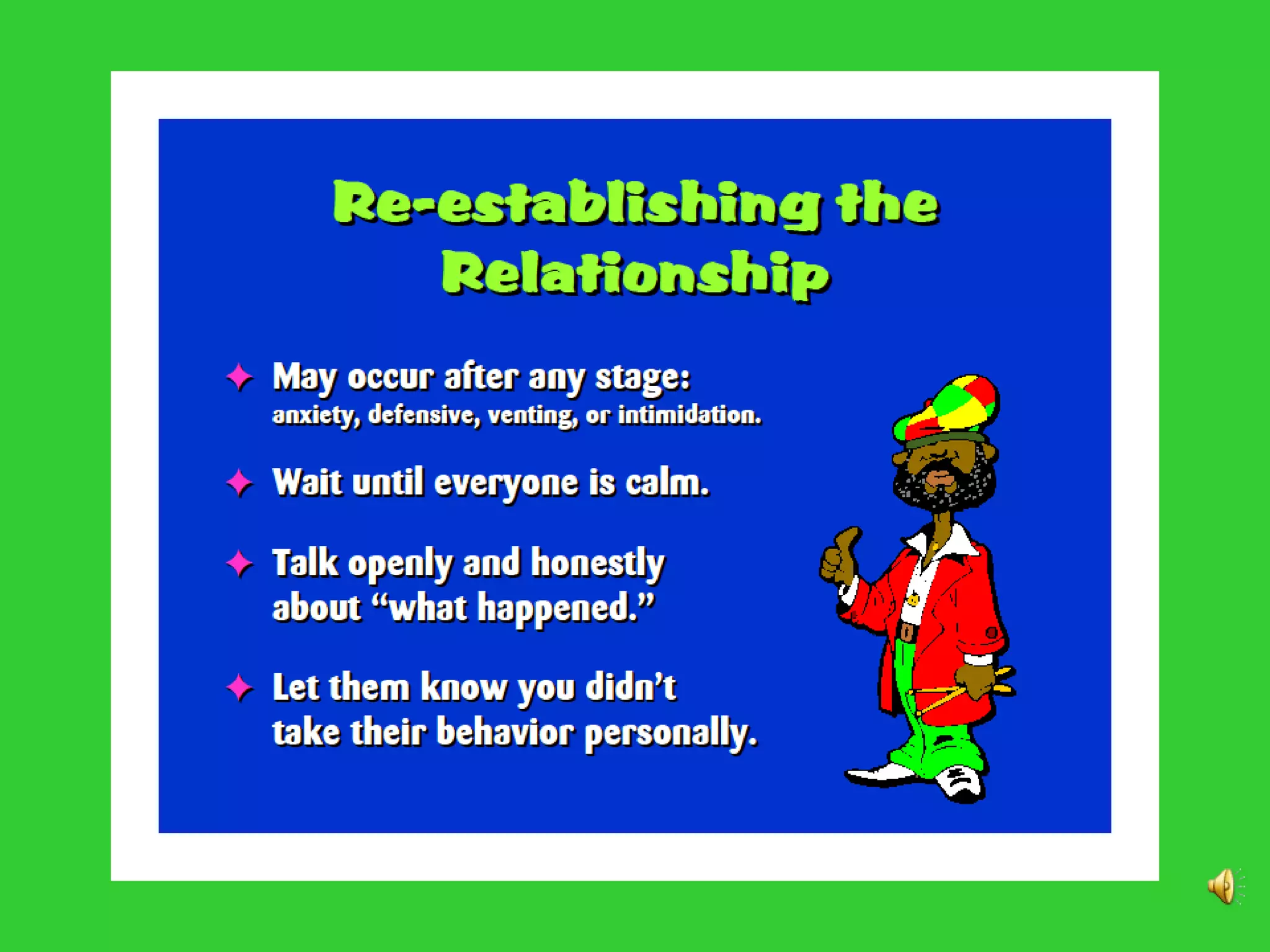
Focusing on the harms of the incident instead of the broken rule Understanding that these harms create responsibilities for the offender to remedy to the best of their ability Re-establishing broken relationships Showing equal concern for the welfare of the victim and the offender Key Principles of Restorative Justice
Restorative Justice Process Victim of the infraction addresses the offender directly to hold them accountable Offender given chance to explain actions Victim and Offender invited to decide how the offender can make amends
Restorative Justice:  Misbehavior is an Opportunity to Learn I am more than my mistakes, and I am not a bad person My actions affect people and relationships There are consequences for breaking rules “ Owning” my mistakes is worth doing I can change my behavior in the future, and am likely to do so once I understand how my actions hurt others, the community and myself
Restorative Justice:  Misbehavior is an Opportunity to Learn If I make mistakes, I am still part of the community and I will have opportunities  to repair the harm I have caused I am capable of finding ways to fix what I have done I will be supported and guided by adults in repairing the harm and changing my behavior.  Adults care about me and will not give up on me when I make mistakes.
 
 
Please click on the black box below to view a short video explaining how “Restorative Practices” works in a school setting.
 

Act 171 2011 2012 with sound

  • 1.
    ACT 171 2011-2012VERBAL DE-ESCALATION AND RESTORATIVE JUSTICE
  • 2.
    PROGRAM OBJECTIVES Youwill learn to: Identify the behavior levels that contribute to the development of a crisis and choose an appropriate staff intervention for each level. Identify useful nonverbal techniques which can help to prevent acting out behavior. Use verbal techniques to de-escalate behavior. Use restorative practices to restore relationships. Provide for the care, welfare, safety and security of all those involved in a crisis situation.
  • 3.
    VERBAL DE-ESCALATION POSITIVETECHNIQUES FOR STAFF/STUDENT INTERACTION (an overview of the CPI program) Philosophy and Objectives: to provide best _CARE_, __WELFARE__, __SAFETY__ and __SECURITY__ for all students and staff. CPI Crisis Development Model Two ways a person can act out: _____________________ and ______________________ Crisis Development Staff Attitude (behaviors) (approach/response ) 1. 1. 2. 2. 3. 3. 4. 4. This is a integrated experience. The behaviors and attitudes of students influence the behaviors and attitudes of the staff and vice versa. Practical Activities/Nonverbal Behavior Supportive Stance Proxemics (personal space): The area around the body that is an extension of one’s self (Usually 18-36 inches) Kinesics (body language): Nonverbal messages transmitted by the motion and posture of the body Three reasons for using the supportive stance: 1. _____________________________________________ 2. ____________________________________________ 3. ____________________________________________ The CPI Paraverbal Communication Model 1.__________________________________________ 2.__________________________________________ 3.__________________________________________
  • 4.
  • 5.
  • 6.
  • 7.
    Woman without herman is nothing
  • 8.
  • 9.
    VERBAL DE-ESCALATION POSITIVETECHNIQUES FOR STAFF/STUDENT INTERACTION (an overview of the CPI program) Philosophy and Objectives: to provide best _CARE_, __WELFARE__, __SAFETY__ and __SECURITY__ for all students and staff. CPI Crisis Development Model Two ways a person can act out: ____VERBALLY________ and ____PHYSICALLY________ Crisis Development Staff Attitude (behaviors) (approach/response ) 1. 1. 2. 2. 3. 3. 4. 4. This is a integrated experience. The behaviors and attitudes of students influence the behaviors and attitudes of the staff and vice versa. Practical Activities/Nonverbal Behavior Supportive Stance Proxemics (personal space): The area around the body that is an extension of one’s self (Usually 18-36 inches) Kinesics (body language): Nonverbal messages transmitted by the motion and posture of the body Three reasons for using the supportive stance: 1. _____________________________________________ 2. ____________________________________________ 3. ____________________________________________ The CPI Paraverbal Communication Model 1.__________________________________________ 2.__________________________________________ 3.__________________________________________
  • 10.
    VERBAL DE-ESCALATION POSITIVETECHNIQUES FOR STAFF/STUDENT INTERACTION (an overview of the CPI program) Philosophy and Objectives: to provide best _CARE_, __WELFARE__, __SAFETY__ and __SECURITY__ for all students and staff. CPI Crisis Development Model Two ways a person can act out: ____VERBALLY________ and ____PHYSICALLY________ Crisis Development Staff Attitude (behaviors) (approach/response ) 1. ANXIETY 1. SUPPORTIVE 2. DEFENSIVE 2. DIRECTIVE 3. 3. 4. 4. This is a integrated experience. The behaviors and attitudes of students influence the behaviors and attitudes of the staff and vice versa. Practical Activities/Nonverbal Behavior Supportive Stance Proxemics (personal space): The area around the body that is an extension of one’s self (Usually 18-36 inches) Kinesics (body language): Nonverbal messages transmitted by the motion and posture of the body Three reasons for using the supportive stance: 1. ____________________________________________ 2. ____________________________________________ 3. ____________________________________________ The CPI Paraverbal Communication Model 1.__________________________________________ 2.__________________________________________ 3.__________________________________________
  • 11.
  • 12.
    VERBAL DE-ESCALATION POSITIVETECHNIQUES FOR STAFF/STUDENT INTERACTION (an overview of the CPI program) Philosophy and Objectives: to provide best _CARE_, __WELFARE__, __SAFETY__ and __SECURITY__ for all students and staff. CPI Crisis Development Model Two ways a person can act out: ____VERBALLY________ and ____PHYSICALLY________ Crisis Development Staff Attitude (behaviors) (approach/response ) 1. ANXIETY 1. SUPPORTIVE 2. DEFENSIVE 2. DIRECTIVE 3. ACTING OUT 3. NON-VIOLENT PHYSICAL PERSON CRISIS INTERVENTION 4. TENSION REDUCTION 4. THERAPEUTIC RAPPORT This is a integrated experience. The behaviors and attitudes of students influence the behaviors and attitudes of the staff and vice versa. Practical Activities/Nonverbal Behavior Supportive Stance Proxemics (personal space): The area around the body that is an extension of one’s self (Usually 18-36 inches) Kinesics (body language): Nonverbal messages transmitted by the motion and posture of the body Three reasons for using the supportive stance: 1. ____________________________________________ 2. ____________________________________________ 3. ____________________________________________ The CPI Paraverbal Communication Model 1.__________________________________________ 2.__________________________________________ 3.__________________________________________
  • 13.
  • 14.
  • 15.
  • 16.
  • 17.
  • 18.
  • 19.
    VERBAL DE-ESCALATION POSITIVETECHNIQUES FOR STAFF/STUDENT INTERACTION (an overview of the CPI program) Philosophy and Objectives: to provide best _CARE_, __WELFARE__, __SAFETY__ and __SECURITY__ for all students and staff. CPI Crisis Development Model Two ways a person can act out: ____VERBALLY________ and ____PHYSICALLY________ Crisis Development Staff Attitude (behaviors) (approach/response ) 1. ANXIETY 1. SUPPORTIVE 2. DEFENSIVE 2. DIRECTIVE 3 . ACTING OUT 3. NON-VIOLENT PHYSICAL PERSON CRISIS INTERVENTION 4. TENSION REDUCTION 4. THERAPEUTIC RAPPORT This is a integrated experience. The behaviors and attitudes of students influence the behaviors and attitudes of the staff and vice versa. Practical Activities/Nonverbal Behavior Supportive Stance Proxemics (personal space): The area around the body that is an extension of one’s self (Usually 18-36 inches) Kinesics (body language): Nonverbal messages transmitted by the motion and posture of the body Three reasons for using the supportive stance: 1. __SAFETY___________________________________ 2. __RESPECT_________________________________ 3. __LESS THREATENING________________________ The CPI Paraverbal Communication Model 1.__________________________________________ 2.__________________________________________ 3.__________________________________________
  • 20.
    VERBAL DE-ESCALATION POSITIVETECHNIQUES FOR STAFF/STUDENT INTERACTION (an overview of the CPI program) Philosophy and Objectives: to provide best _CARE_, __WELFARE__, __SAFETY__ and __SECURITY__ for all students and staff. CPI Crisis Development Model Two ways a person can act out: ____VERBALLY________ and ____PHYSICALLY________ Crisis Development Staff Attitude (behaviors) (approach/response ) 1. ANXIETY 1. SUPPORTIVE 2. DEFENSIVE 2. DIRECTIVE 3. ACTING OUT 3. NON-VIOLENT PHYSICAL PERSON CRISIS INTERVENTION 4. TENSION REDUCTION 4. THERAPEUTIC RAPPORT This is a integrated experience. The behaviors and attitudes of students influence the behaviors and attitudes of the staff and vice versa. Practical Activities/Nonverbal Behavior Supportive Stance Proxemics (personal space): The area around the body that is an extension of one’s self (Usually 18-36 inches) Kinesics (body language): Nonverbal messages transmitted by the motion and posture of the body Three reasons for using the supportive stance: 1. __SAFETY___________________________________ 2. __RESPECT_________________________________ 3. __LESS THREATENING________________________ The CPI Paraverbal Communication Model 1.__ TONE_________________________________ 2.__ VOLUME______________________________ 3.__ CADENCE _____________________________
  • 21.
  • 22.
  • 23.
  • 24.
  • 25.
  • 26.
  • 27.
  • 28.
    What is RestorativeJustice? Represents a philosophy and a process that acknowledges that when a student does harm, it effects the person(s) they hurt, the community and themselves. When using restorative measures, an attempt is made to repair the harm caused by one person to another and to the community so that order is restored for everyone
  • 29.
    Focusing on theharms of the incident instead of the broken rule Understanding that these harms create responsibilities for the offender to remedy to the best of their ability Re-establishing broken relationships Showing equal concern for the welfare of the victim and the offender Key Principles of Restorative Justice
  • 30.
    Restorative Justice ProcessVictim of the infraction addresses the offender directly to hold them accountable Offender given chance to explain actions Victim and Offender invited to decide how the offender can make amends
  • 31.
    Restorative Justice: Misbehavior is an Opportunity to Learn I am more than my mistakes, and I am not a bad person My actions affect people and relationships There are consequences for breaking rules “ Owning” my mistakes is worth doing I can change my behavior in the future, and am likely to do so once I understand how my actions hurt others, the community and myself
  • 32.
    Restorative Justice: Misbehavior is an Opportunity to Learn If I make mistakes, I am still part of the community and I will have opportunities to repair the harm I have caused I am capable of finding ways to fix what I have done I will be supported and guided by adults in repairing the harm and changing my behavior. Adults care about me and will not give up on me when I make mistakes.
  • 33.
  • 34.
  • 35.
    Please click onthe black box below to view a short video explaining how “Restorative Practices” works in a school setting.
  • 36.