Acne
PowerPoint Template
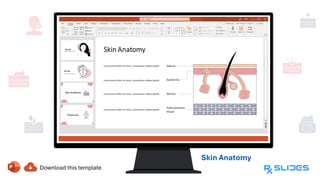
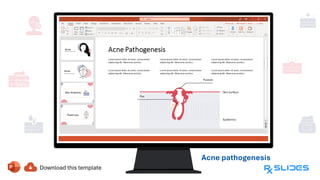
Skin Anatomy
including the details
of the skin layers
illustration which
are Sebum,
Epidermis, Dermis,
and Subcutaneous
tissue
Definition
disorder of the hair
follicles and
sebaceous glands
that become
clogged leading to
pimples and cysts
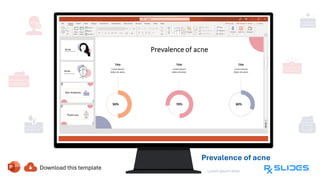
Prevalence of acne
Lorem ipsum dolor
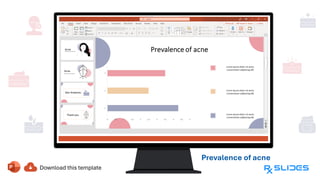
Prevalence of acne
Acne is estimated
to affect 9.4% of
the global
population
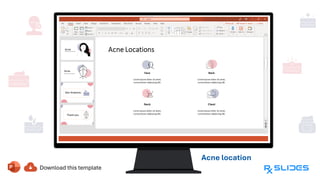
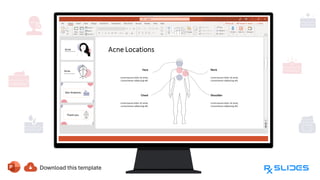
Acne location
Location of
acne includes
face, back,
neck, and
chest
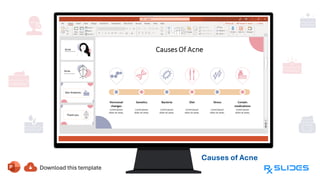
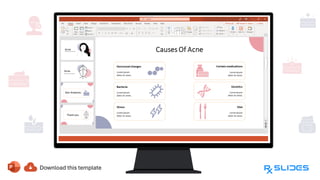
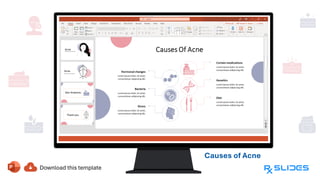
Causes of Acne
Hormonal
changes,
Genetics,
Stress, Diet,
Certain
medications,
and Bacteria
are all
explained
Causes of Acne
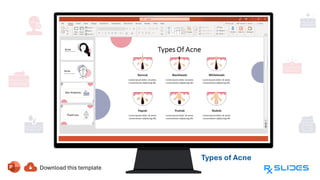
Types of Acne
Blackheads,
Whiteheads, Papules,
Pustules, and
Nodules
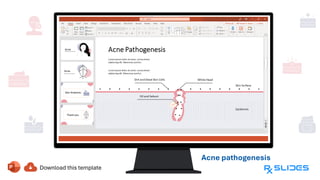
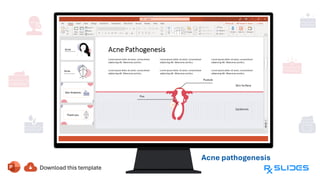
Acne pathogenesis
explains how
acne different
types are
formed
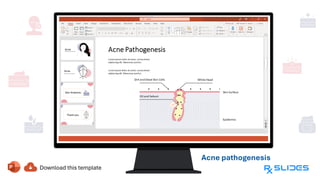
pores become
clogged turning
into white
heads
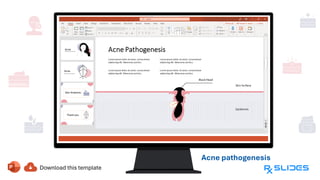
Acne pathogenesis
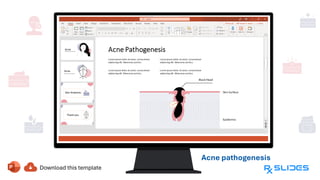
whiteheads can
turn into
blackheads with
open pores
Acne pathogenesis
Acne pathogenesis
Acne pathogenesis
Acne pathogenesis
Acne pathogenesis
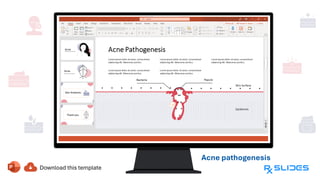
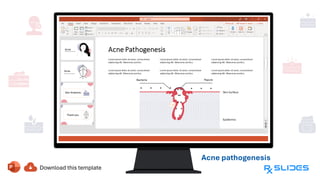
When
clogged
pores
become
infected,
they turn into
papules.
Acne pathogenesis
When fighting
the infection,
they turn into
pustules
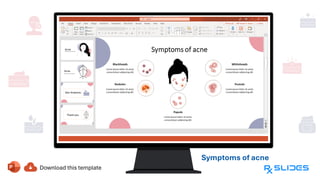
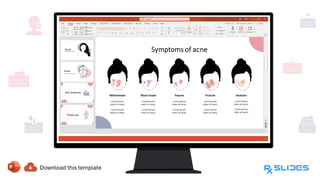
Symptoms of acne
Blackheads,
Whiteheads,
Papule, Pustule,
and Nodules
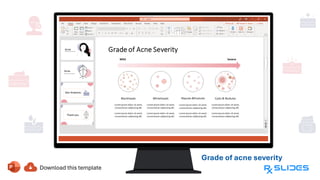
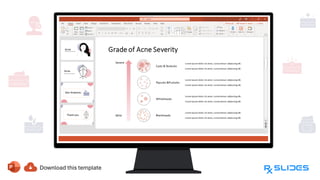
Grade of acne severity
Severity from mild
to severe are
(Blackheads,
Whiteheads,
Papules and
pustules, and
Cysts and
nodules)
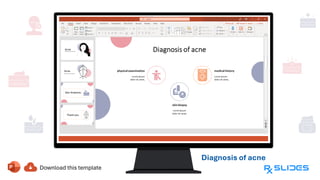
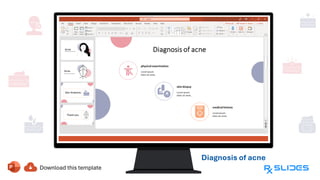
Diagnosis of acne
medical history,
Skin biopsy,
and Physical
examination
Diagnosis of acne
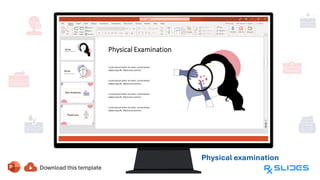
Physical examination
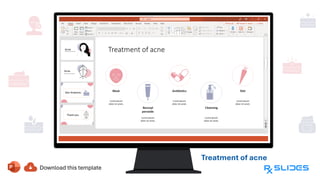
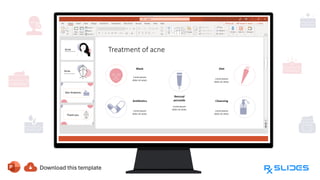
Treatment of acne
Cleansing,
Antibiotics,
Benzoyl
peroxide,
Mask, and
Diet
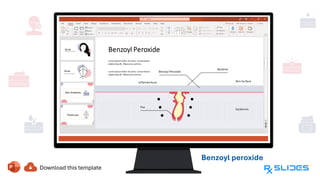
Benzoyl peroxide
Benzoyl peroxide is
good for all types of
acne, including cysts,
blackheads and
whiteheads, but it's
particularly great at
treating inflammatory
cystic acne.
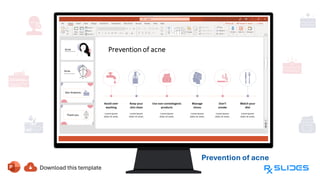
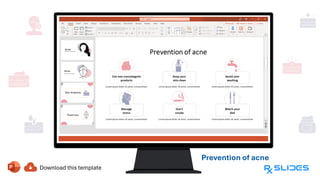
Prevention of acne
Avoiding
washing,
keeping your
skin clean,
managing
stress, using
non-
comedogenic
products,
don’t
smoking, and
watching
your diet
Prevention of acne

Acne Vulgaris