ACID-BASE DISORDERS-1
Anantha Chaitanya J
Final Year MBBS
BGS GIMS
1
Overview
1. Acid-Base Buffer systems in the body.
2. Acid-Base Equation.
3. Respiratory Acidosis.
4. Metabolic Alkalosis.
5. Case Diagnosis Quiz!
2
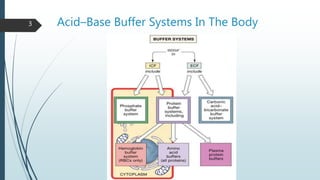
Acid–Base Buffer Systems In The Body3
Acid-Base Equation
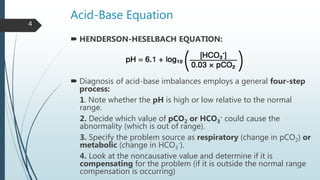
 HENDERSON-HESELBACH EQUATION:
 Diagnosis of acid-base imbalances employs a general four-step
process:
1. Note whether the pH is high or low relative to the normal
range.
2. Decide which value of pCO2 or HCO3
- could cause the
abnormality (which is out of range).
3. Specify the problem source as respiratory (change in pCO2) or
metabolic (change in HCO3
-).
4. Look at the noncausative value and determine if it is
compensating for the problem (if it is outside the normal range
compensation is occurring)
4
Acid-Base Disorders
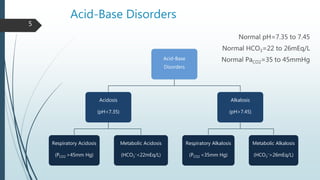
Normal pH=7.35 to 7.45
Normal HCO3=22 to 26mEq/L
Normal PaCO2=35 to 45mmHgAcid-Base
Disorders
Acidosis
(pH<7.35)
Respiratory Acidosis
(PCO2 >45mm Hg)
Metabolic Acidosis
(HCO3
–<22mEq/L)
Alkalosis
(pH>7.45)
Respiratory Alkalosis
(PCO2 <35mm Hg)
Metabolic Alkalosis
(HCO3
–>26mEq/L)
5
Respiratory Acidosis-Definition
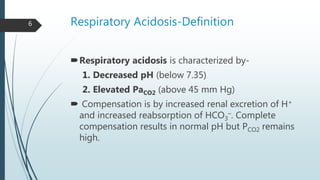
Respiratory acidosis is characterized by-
1. Decreased pH (below 7.35)
2. Elevated PaCO2 (above 45 mm Hg)
 Compensation is by increased renal excretion of H+
and increased reabsorption of HCO3
–. Complete
compensation results in normal pH but PCO2 remains
high.
6
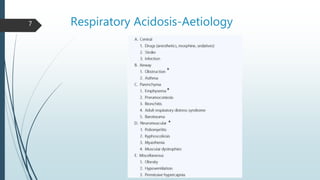
Respiratory Acidosis-Aetiology
*
*
*
7
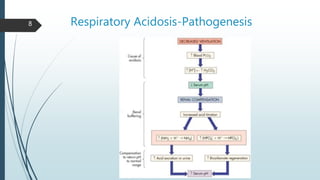
Respiratory Acidosis-Pathogenesis8
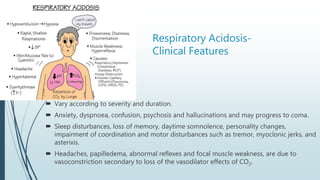
Respiratory Acidosis-
Clinical Features
 Vary according to severity and duration.
 Anxiety, dyspnoea, confusion, psychosis and hallucinations and may progress to coma.
 Sleep disturbances, loss of memory, daytime somnolence, personality changes,
impairment of coordination and motor disturbances such as tremor, myoclonic jerks, and
asterixis.
 Headaches, papilledema, abnormal reflexes and focal muscle weakness, are due to
vasoconstriction secondary to loss of the vasodilator effects of CO2.
9
Respiratory Acidosis-Diagnosis
Arterial Blood Gas Analysis-High levels of CO2.
Electrolytes-Na+, K+, Cl- and bicarbonate. One or
more of the electrolytes will be increased or
decreased.
Lung Function Tests-Reduced.
Chest X-Ray-Injuries or other problems.
10
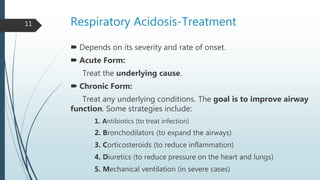
Respiratory Acidosis-Treatment
 Depends on its severity and rate of onset.
 Acute Form:
Treat the underlying cause.
 Chronic Form:
Treat any underlying conditions. The goal is to improve airway
function. Some strategies include:
1. Antibiotics (to treat infection)
2. Bronchodilators (to expand the airways)
3. Corticosteroids (to reduce inflammation)
4. Diuretics (to reduce pressure on the heart and lungs)
5. Mechanical ventilation (in severe cases)
11
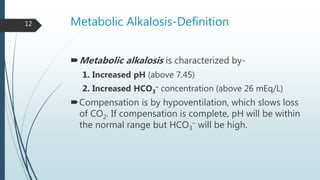
Metabolic Alkalosis-Definition
Metabolic alkalosis is characterized by-
1. Increased pH (above 7.45)
2. Increased HCO3
– concentration (above 26 mEq/L)
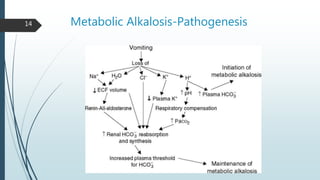
Compensation is by hypoventilation, which slows loss
of CO2. If compensation is complete, pH will be within
the normal range but HCO3
– will be high.
12
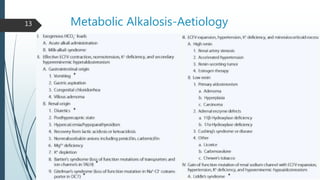
Metabolic Alkalosis-Aetiology
*
*
*
**
13
Metabolic Alkalosis-Pathogenesis14
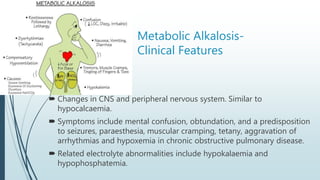
Metabolic Alkalosis-
Clinical Features
 Changes in CNS and peripheral nervous system. Similar to
hypocalcaemia.
 Symptoms include mental confusion, obtundation, and a predisposition
to seizures, paraesthesia, muscular cramping, tetany, aggravation of
arrhythmias and hypoxemia in chronic obstructive pulmonary disease.
 Related electrolyte abnormalities include hypokalaemia and
hypophosphatemia.
15
Metabolic Alkalosis-Diagnosis
Arterial blood gas Analysis-Elevated carbon dioxide
level.
Electrolytes-
1. Serum Potassium- Hypokalaemia.
2. Serum Calcium- Decreased serum ionized Ca2+ levels.
16
Metabolic Alkalosis-Treatment
Primarily directed at correcting the underlying
stimulus for HCO3
- generation.
IV fluids- 0.9%NaCl:
1. Replenishes Cl-
2. Acidic fluid.
3. Without Cl-, H+ retention and HCO3 excretion not
possible.
K+ supplementation.
17
Case Diagnosis Quiz
18
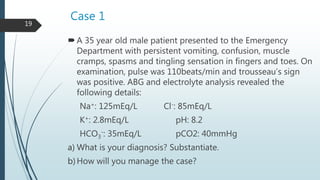
Case 1
A 35 year old male patient presented to the Emergency
Department with persistent vomiting, confusion, muscle
cramps, spasms and tingling sensation in fingers and toes. On
examination, pulse was 110beats/min and trousseau’s sign
was positive. ABG and electrolyte analysis revealed the
following details:
Na+: 125mEq/L Cl-: 85mEq/L
K+: 2.8mEq/L pH: 8.2
HCO3
-: 35mEq/L pCO2: 40mmHg
a) What is your diagnosis? Substantiate.
b)How will you manage the case?
19
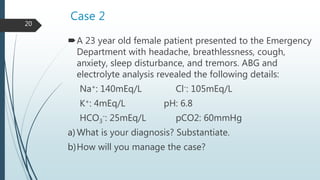
Case 2
A 23 year old female patient presented to the Emergency
Department with headache, breathlessness, cough,
anxiety, sleep disturbance, and tremors. ABG and
electrolyte analysis revealed the following details:
Na+: 140mEq/L Cl-: 105mEq/L
K+: 4mEq/L pH: 6.8
HCO3
-: 25mEq/L pCO2: 60mmHg
a) What is your diagnosis? Substantiate.
b)How will you manage the case?
20
Bibliography
Harrison’s Principles Of Internal Medicine, 19th
Edition.
SRB’s Manual Of Surgery, 5th Edition.
21
Thank You
22

Acid base disorders

  • 1.
    ACID-BASE DISORDERS-1 Anantha ChaitanyaJ Final Year MBBS BGS GIMS 1
  • 2.
    Overview 1. Acid-Base Buffersystems in the body. 2. Acid-Base Equation. 3. Respiratory Acidosis. 4. Metabolic Alkalosis. 5. Case Diagnosis Quiz! 2
  • 3.
  • 4.
    Acid-Base Equation  HENDERSON-HESELBACHEQUATION:  Diagnosis of acid-base imbalances employs a general four-step process: 1. Note whether the pH is high or low relative to the normal range. 2. Decide which value of pCO2 or HCO3 - could cause the abnormality (which is out of range). 3. Specify the problem source as respiratory (change in pCO2) or metabolic (change in HCO3 -). 4. Look at the noncausative value and determine if it is compensating for the problem (if it is outside the normal range compensation is occurring) 4
  • 5.
    Acid-Base Disorders Normal pH=7.35to 7.45 Normal HCO3=22 to 26mEq/L Normal PaCO2=35 to 45mmHgAcid-Base Disorders Acidosis (pH<7.35) Respiratory Acidosis (PCO2 >45mm Hg) Metabolic Acidosis (HCO3 –<22mEq/L) Alkalosis (pH>7.45) Respiratory Alkalosis (PCO2 <35mm Hg) Metabolic Alkalosis (HCO3 –>26mEq/L) 5
  • 6.
    Respiratory Acidosis-Definition Respiratory acidosisis characterized by- 1. Decreased pH (below 7.35) 2. Elevated PaCO2 (above 45 mm Hg)  Compensation is by increased renal excretion of H+ and increased reabsorption of HCO3 –. Complete compensation results in normal pH but PCO2 remains high. 6
  • 7.
  • 8.
  • 9.
    Respiratory Acidosis- Clinical Features Vary according to severity and duration.  Anxiety, dyspnoea, confusion, psychosis and hallucinations and may progress to coma.  Sleep disturbances, loss of memory, daytime somnolence, personality changes, impairment of coordination and motor disturbances such as tremor, myoclonic jerks, and asterixis.  Headaches, papilledema, abnormal reflexes and focal muscle weakness, are due to vasoconstriction secondary to loss of the vasodilator effects of CO2. 9
  • 10.
    Respiratory Acidosis-Diagnosis Arterial BloodGas Analysis-High levels of CO2. Electrolytes-Na+, K+, Cl- and bicarbonate. One or more of the electrolytes will be increased or decreased. Lung Function Tests-Reduced. Chest X-Ray-Injuries or other problems. 10
  • 11.
    Respiratory Acidosis-Treatment  Dependson its severity and rate of onset.  Acute Form: Treat the underlying cause.  Chronic Form: Treat any underlying conditions. The goal is to improve airway function. Some strategies include: 1. Antibiotics (to treat infection) 2. Bronchodilators (to expand the airways) 3. Corticosteroids (to reduce inflammation) 4. Diuretics (to reduce pressure on the heart and lungs) 5. Mechanical ventilation (in severe cases) 11
  • 12.
    Metabolic Alkalosis-Definition Metabolic alkalosisis characterized by- 1. Increased pH (above 7.45) 2. Increased HCO3 – concentration (above 26 mEq/L) Compensation is by hypoventilation, which slows loss of CO2. If compensation is complete, pH will be within the normal range but HCO3 – will be high. 12
  • 13.
  • 14.
  • 15.
    Metabolic Alkalosis- Clinical Features Changes in CNS and peripheral nervous system. Similar to hypocalcaemia.  Symptoms include mental confusion, obtundation, and a predisposition to seizures, paraesthesia, muscular cramping, tetany, aggravation of arrhythmias and hypoxemia in chronic obstructive pulmonary disease.  Related electrolyte abnormalities include hypokalaemia and hypophosphatemia. 15
  • 16.
    Metabolic Alkalosis-Diagnosis Arterial bloodgas Analysis-Elevated carbon dioxide level. Electrolytes- 1. Serum Potassium- Hypokalaemia. 2. Serum Calcium- Decreased serum ionized Ca2+ levels. 16
  • 17.
    Metabolic Alkalosis-Treatment Primarily directedat correcting the underlying stimulus for HCO3 - generation. IV fluids- 0.9%NaCl: 1. Replenishes Cl- 2. Acidic fluid. 3. Without Cl-, H+ retention and HCO3 excretion not possible. K+ supplementation. 17
  • 18.
  • 19.
    Case 1 A 35year old male patient presented to the Emergency Department with persistent vomiting, confusion, muscle cramps, spasms and tingling sensation in fingers and toes. On examination, pulse was 110beats/min and trousseau’s sign was positive. ABG and electrolyte analysis revealed the following details: Na+: 125mEq/L Cl-: 85mEq/L K+: 2.8mEq/L pH: 8.2 HCO3 -: 35mEq/L pCO2: 40mmHg a) What is your diagnosis? Substantiate. b)How will you manage the case? 19
  • 20.
    Case 2 A 23year old female patient presented to the Emergency Department with headache, breathlessness, cough, anxiety, sleep disturbance, and tremors. ABG and electrolyte analysis revealed the following details: Na+: 140mEq/L Cl-: 105mEq/L K+: 4mEq/L pH: 6.8 HCO3 -: 25mEq/L pCO2: 60mmHg a) What is your diagnosis? Substantiate. b)How will you manage the case? 20
  • 21.
    Bibliography Harrison’s Principles OfInternal Medicine, 19th Edition. SRB’s Manual Of Surgery, 5th Edition. 21
  • 22.