DR MARIA LIVANOU
ACCEPTANCE & COMMITMENT THERAPY (ACT)
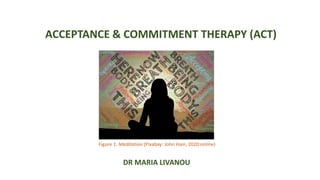
Figure 1: Meditation (Pixabay: John Hain, 2020:online)
AIMS
 Overview of ACT
 Basic principles - therapeutic elements - techniques
 ACT is a type of behavior therapy
 It’s about acting in line with your goals or wishes or core values
 It’s about changing what you do (not what you feel or think)
WHAT IS ACT?
Because ultimately
it is about taking
action, altering
one’s own behavior
 A therapy that aims at changing the way the person interacts with
(or relates to) thoughts and feelings by creating contexts in which
unhelpful functions are diminished.
 e.g., in ACT a negative thought is noticed or observed or acknowledged; it can
be repeated out loud, focusing on its sound; the person could ‘label’ the
process of thinking (“I am having the thought that I will fail my assignment”).
 By doing so, the literal quality of the thought is weakened, as is the
tendency to treat it as what it refers to (“I will indeed fail my
assignment”) rather than what it is directly experienced to be (e.g.,
the thought “I will fail”).
WHAT IS ACT?
 It’s a “third-way” (or third generation) behavioural therapy,
together with Dialectical Behaviour Therapy, Mindfulness-based
Cognitive Therapy and Compassion-focused therapy
 Even though it is considered to be a relatively new intervention,
it stems from a therapeutic approach called “Comprehensive
Distancing”, known since the 1980ies (Zettle & Hayes, 1986;
Hays et al, 2006)
WHAT IS ACT?
ACT: BASIC PREMISES (a) - RIGIDITY
 Psychological problems and emotional distress often result from
psychological rigidity.
 i.e., cognitive fusion and avoidance
ACT: BASIC PREMISES (b) - RIGIDITY
Cognitive fusion: a state in which our negative thoughts dominate our
behavior and where negative thoughts are accepted as real events
 the content of negative thoughts seems real, behavioural
options seem limited and thoughts that are about the past or
the future affect directly the here-and-now
Avoidance: Experiential avoidance aims at changing the intensity,
form, or frequency of negative thoughts, feelings, bodily sensations,
or memories (Hayes et al, 1996).
ACT: BASIC PREMISES (c) – THE ROLE OF LANGUAGE AND THOUGHT
Rigidity is reflected in the way that language and cognition interact
with direct contingencies
This way of interaction is associated with inability to persist or
change in the service of long-term valued ends.
 Psychological inflexibility: emerges from weak or unhelpful contextual
control over language processes.
(Hays et al., 2006)
ACT: BASIC PREMISES (d) – FROM RIGIDITY TO FLEXIBILITY
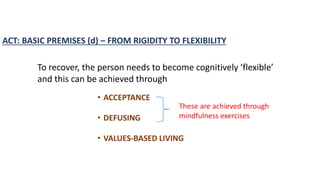
To recover, the person needs to become cognitively ‘flexible’
and this can be achieved through
• ACCEPTANCE
• DEFUSING
• VALUES-BASED LIVING
These are achieved through
mindfulness exercises
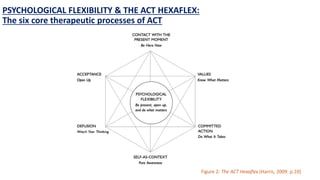
PSYCHOLOGICAL FLEXIBILITY & THE ACT HEXAFLEX:
The six core therapeutic processes of ACT
Figure 2: The ACT Hexaflex (Harris, 2009: p.10)
“…to maximise the human potential for a rich and
meaningful life, while effectively managing the pain
that inevitably goes with it.” (Harris, 2009, p. 3)
WHAT IS THE GOAL OF ACT?
MAIN THERAPEUTIC ELEMENTS OF ACT
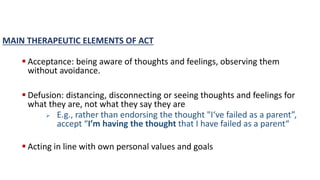
 Acceptance: being aware of thoughts and feelings, observing them
without avoidance.
 Defusion: distancing, disconnecting or seeing thoughts and feelings for
what they are, not what they say they are
 E.g., rather than endorsing the thought "I‘ve failed as a parent”,
accept “I’m having the thought that I have failed as a parent“
 Acting in line with own personal values and goals
Some ‘basic challenges’ in life need to be considered as
constant:
 Life is difficult
 A full human life comes with the full range of emotions,
both pleasant and painful
 A normal human mind naturally amplifies psychological
suffering
ACCEPTANCE (a)
ACCEPTANCE (b)
 Resisting or trying to push away (or trying to numb) pain, emotional
distress and / or negative thoughts tends to make things worse
 Pain, emotional distress and negative thoughts can be accepted and
experienced, being fully conscious / aware that they are an
experience that one has to live through, rather than a permanent
state
 Acceptance is an acknowledgement of and a willingness to allow
these experiences
Openness, awareness
DEFUSION
Understanding and accepting that thoughts and feelings may
or may not be true or important
 true → Whatever is happening, is not happening in the physical
world but it’s only words or mental pictures
 important → We can choose how much attention to pay to it
(Harris, 2009)
EXAMPLES
Cognitive fusion → Cognitive defusion:
 “I’ll make a fool of myself if I participate in this presentation” →“I’m having the
thought that I’ll make a fool of myself if I participate in this presentation.”
 “I can’t get out of my house” →“I’m having the thought that I can’t get out of
my house.”
Avoidance →Values-based action:
 “I want to be a person who controls their life choices. I will make the
presentation / get out of my house, even though I am having the thought ….”
COMMITMENT & VALUES-BASED LIVING:
The importance of values
 Values give meaning and purpose to our life. They are linked with what really matters,
so being clear about our values, means being clear about what really matters.
 Values guide our lives; they often reflect our hopes about how we would like to be
now, or how we would like to be remembered when we are no longer here
 Values are not just personal goals or things we want to achieve
 It is important to be aware of our values
 E.g. family, parenthood, friendship, careers, connecting with nature, healthy
living, community service
COMMITMENT & VALUES-BASED LIVING:
The need for behaviour change
 Acceptance, defusion and being present are not ends in themselves.
They merely help the person think clearly and take the path they need
to take (for a life that is consistent with their own values).
 ACT encourages people to take action linked to chosen values.
COMMITMENT & VALUES-BASED LIVING:
What is the difference between GOALS and VALUES?
• A value is an abstract concept that cannot be achieved as an
object, whereas concrete goals (that are consistent with values)
can be achieved.
• Like other behavioural interventions (e.g., exposure), ACT involves
homework exercises and tasks that are linked to short, medium,
and long-term behavioural goals.
 Clarifies values – goals / clarifies what is important and meaningful (gets us to revisit
our values and consider what is inspiring or meaningful to us and motivates us to act
in a way that can enrich and enhance our life).
 Promotes psychological flexibility, i.e., the ability to adapt to changes and balance
competing necessities and roles (Kashdan & Rottenberg, 2010)
 Teaches mindfulness skills to help us engage fully with thoughts and feelings and
cope with them (without avoiding )
 Focuses on helping us achieve values-congruent living (rather than symptom-free
living)
How does ACT help?
 What do we know about the effectiveness of ACT?
 Check the literature for evidence (case studies, uncontrolled and
controlled clinical studies, RCTs and systematic reviews or meta-
analyses)
 What kind of mental health difficulties did the people in these studies
have? (depression? anxiety?)
EFFECTIVENESS:
Independent study
 Core principles of ACT:
• 1) Accept what is out of your personal control
• 2) Commit to taking action that enriches your life.
 Basic premises: psychological inflexibility (the role of cognitive fusion
and avoidance)
 Interventions: mindfulness elements (acceptance, defusion) and values-
based action
SUMMARY
REFERENCES
 Harris, R. (2009). ACT made simple. An Easy-to-Read Primer on Acceptance and
Commitment Therapy. Oakland, CA: New Harbinger Publications.
 Hayes SC, Wilson KG, Gifford EV, Follette VM, Strosahl K. Experiential avoidance and
behavioral disorders: A functional dimensional approach to diagnosis and
treatment. Journal of Consulting and Clinical Psychology. 1996;64:1152–1168.
 Hayes, SC., Luoma, JB, Bond, FW, Masuda, A., Lillis, J. (2006). Acceptance and
Commitment Therapy: Model, processes and outcomes". Psychology Faculty
Publications. 101. https://scholarworks.gsu.edu/psych_facpub/101
 Kashdan, T., & Rottenberg, J. (2010). Psychological flexibility as a fundamental aspect
of health Clinical Psychology Review, 30 (7), 865-878
 Zettle, R. D., & Hayes, S. C. (1986). Dysfunctional control by client verbal behavior:
The context of reason giving. The Analysis of Verbal Behavior, 4, 30-38.

Acceptance and Commitment Therapy LECTURE NOTES.pptx

  • 1.
    DR MARIA LIVANOU ACCEPTANCE& COMMITMENT THERAPY (ACT) Figure 1: Meditation (Pixabay: John Hain, 2020:online)
  • 2.
    AIMS  Overview ofACT  Basic principles - therapeutic elements - techniques
  • 3.
     ACT isa type of behavior therapy  It’s about acting in line with your goals or wishes or core values  It’s about changing what you do (not what you feel or think) WHAT IS ACT? Because ultimately it is about taking action, altering one’s own behavior
  • 4.
     A therapythat aims at changing the way the person interacts with (or relates to) thoughts and feelings by creating contexts in which unhelpful functions are diminished.  e.g., in ACT a negative thought is noticed or observed or acknowledged; it can be repeated out loud, focusing on its sound; the person could ‘label’ the process of thinking (“I am having the thought that I will fail my assignment”).  By doing so, the literal quality of the thought is weakened, as is the tendency to treat it as what it refers to (“I will indeed fail my assignment”) rather than what it is directly experienced to be (e.g., the thought “I will fail”). WHAT IS ACT?
  • 5.
     It’s a“third-way” (or third generation) behavioural therapy, together with Dialectical Behaviour Therapy, Mindfulness-based Cognitive Therapy and Compassion-focused therapy  Even though it is considered to be a relatively new intervention, it stems from a therapeutic approach called “Comprehensive Distancing”, known since the 1980ies (Zettle & Hayes, 1986; Hays et al, 2006) WHAT IS ACT?
  • 6.
    ACT: BASIC PREMISES(a) - RIGIDITY  Psychological problems and emotional distress often result from psychological rigidity.  i.e., cognitive fusion and avoidance
  • 7.
    ACT: BASIC PREMISES(b) - RIGIDITY Cognitive fusion: a state in which our negative thoughts dominate our behavior and where negative thoughts are accepted as real events  the content of negative thoughts seems real, behavioural options seem limited and thoughts that are about the past or the future affect directly the here-and-now Avoidance: Experiential avoidance aims at changing the intensity, form, or frequency of negative thoughts, feelings, bodily sensations, or memories (Hayes et al, 1996).
  • 8.
    ACT: BASIC PREMISES(c) – THE ROLE OF LANGUAGE AND THOUGHT Rigidity is reflected in the way that language and cognition interact with direct contingencies This way of interaction is associated with inability to persist or change in the service of long-term valued ends.  Psychological inflexibility: emerges from weak or unhelpful contextual control over language processes. (Hays et al., 2006)
  • 9.
    ACT: BASIC PREMISES(d) – FROM RIGIDITY TO FLEXIBILITY To recover, the person needs to become cognitively ‘flexible’ and this can be achieved through • ACCEPTANCE • DEFUSING • VALUES-BASED LIVING These are achieved through mindfulness exercises
  • 10.
    PSYCHOLOGICAL FLEXIBILITY &THE ACT HEXAFLEX: The six core therapeutic processes of ACT Figure 2: The ACT Hexaflex (Harris, 2009: p.10)
  • 11.
    “…to maximise thehuman potential for a rich and meaningful life, while effectively managing the pain that inevitably goes with it.” (Harris, 2009, p. 3) WHAT IS THE GOAL OF ACT?
  • 12.
    MAIN THERAPEUTIC ELEMENTSOF ACT  Acceptance: being aware of thoughts and feelings, observing them without avoidance.  Defusion: distancing, disconnecting or seeing thoughts and feelings for what they are, not what they say they are  E.g., rather than endorsing the thought "I‘ve failed as a parent”, accept “I’m having the thought that I have failed as a parent“  Acting in line with own personal values and goals
  • 13.
    Some ‘basic challenges’in life need to be considered as constant:  Life is difficult  A full human life comes with the full range of emotions, both pleasant and painful  A normal human mind naturally amplifies psychological suffering ACCEPTANCE (a)
  • 14.
    ACCEPTANCE (b)  Resistingor trying to push away (or trying to numb) pain, emotional distress and / or negative thoughts tends to make things worse  Pain, emotional distress and negative thoughts can be accepted and experienced, being fully conscious / aware that they are an experience that one has to live through, rather than a permanent state  Acceptance is an acknowledgement of and a willingness to allow these experiences Openness, awareness
  • 15.
    DEFUSION Understanding and acceptingthat thoughts and feelings may or may not be true or important  true → Whatever is happening, is not happening in the physical world but it’s only words or mental pictures  important → We can choose how much attention to pay to it (Harris, 2009)
  • 16.
    EXAMPLES Cognitive fusion →Cognitive defusion:  “I’ll make a fool of myself if I participate in this presentation” →“I’m having the thought that I’ll make a fool of myself if I participate in this presentation.”  “I can’t get out of my house” →“I’m having the thought that I can’t get out of my house.” Avoidance →Values-based action:  “I want to be a person who controls their life choices. I will make the presentation / get out of my house, even though I am having the thought ….”
  • 17.
    COMMITMENT & VALUES-BASEDLIVING: The importance of values  Values give meaning and purpose to our life. They are linked with what really matters, so being clear about our values, means being clear about what really matters.  Values guide our lives; they often reflect our hopes about how we would like to be now, or how we would like to be remembered when we are no longer here  Values are not just personal goals or things we want to achieve  It is important to be aware of our values  E.g. family, parenthood, friendship, careers, connecting with nature, healthy living, community service
  • 18.
    COMMITMENT & VALUES-BASEDLIVING: The need for behaviour change  Acceptance, defusion and being present are not ends in themselves. They merely help the person think clearly and take the path they need to take (for a life that is consistent with their own values).  ACT encourages people to take action linked to chosen values.
  • 19.
    COMMITMENT & VALUES-BASEDLIVING: What is the difference between GOALS and VALUES? • A value is an abstract concept that cannot be achieved as an object, whereas concrete goals (that are consistent with values) can be achieved. • Like other behavioural interventions (e.g., exposure), ACT involves homework exercises and tasks that are linked to short, medium, and long-term behavioural goals.
  • 20.
     Clarifies values– goals / clarifies what is important and meaningful (gets us to revisit our values and consider what is inspiring or meaningful to us and motivates us to act in a way that can enrich and enhance our life).  Promotes psychological flexibility, i.e., the ability to adapt to changes and balance competing necessities and roles (Kashdan & Rottenberg, 2010)  Teaches mindfulness skills to help us engage fully with thoughts and feelings and cope with them (without avoiding )  Focuses on helping us achieve values-congruent living (rather than symptom-free living) How does ACT help?
  • 21.
     What dowe know about the effectiveness of ACT?  Check the literature for evidence (case studies, uncontrolled and controlled clinical studies, RCTs and systematic reviews or meta- analyses)  What kind of mental health difficulties did the people in these studies have? (depression? anxiety?) EFFECTIVENESS: Independent study
  • 22.
     Core principlesof ACT: • 1) Accept what is out of your personal control • 2) Commit to taking action that enriches your life.  Basic premises: psychological inflexibility (the role of cognitive fusion and avoidance)  Interventions: mindfulness elements (acceptance, defusion) and values- based action SUMMARY
  • 23.
    REFERENCES  Harris, R.(2009). ACT made simple. An Easy-to-Read Primer on Acceptance and Commitment Therapy. Oakland, CA: New Harbinger Publications.  Hayes SC, Wilson KG, Gifford EV, Follette VM, Strosahl K. Experiential avoidance and behavioral disorders: A functional dimensional approach to diagnosis and treatment. Journal of Consulting and Clinical Psychology. 1996;64:1152–1168.  Hayes, SC., Luoma, JB, Bond, FW, Masuda, A., Lillis, J. (2006). Acceptance and Commitment Therapy: Model, processes and outcomes". Psychology Faculty Publications. 101. https://scholarworks.gsu.edu/psych_facpub/101  Kashdan, T., & Rottenberg, J. (2010). Psychological flexibility as a fundamental aspect of health Clinical Psychology Review, 30 (7), 865-878  Zettle, R. D., & Hayes, S. C. (1986). Dysfunctional control by client verbal behavior: The context of reason giving. The Analysis of Verbal Behavior, 4, 30-38.