The Use of Accelerated Reader inThe Use of Accelerated Reader in
Elementary School: The Influence ofElementary School: The Influence of
Training and Association with CriterionTraining and Association with Criterion
Reference Competency Tests inReference Competency Tests in
ReadingReading
by: Jaime Rearleyby: Jaime Rearley
Ed.S. DefenseEd.S. Defense
Georgia Southern UniversityGeorgia Southern University
April 30, 2014April 30, 2014
BackgroundBackground
• The elementary (7) and middle (3) schools in Liberty County
use the program in conjunction with Star Reading. Reading
tends to be an area of strength for Liberty County’s elementary
schools.
• The Georgia Department of Education’s CRCT Statewide Score
System Summaries show between the years of 2011-2013 that
89.2% and up to 94.6% of the students in grades third through
fifth met or exceeded the standard in reading (“Georgia
Department of Education: School Report Cards,” n.d.).
Background (cont.)Background (cont.)
• The professional learning course taught the
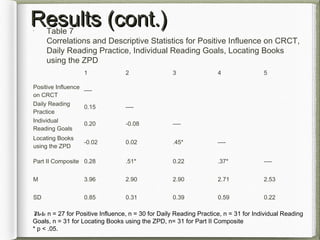
best practices for using the software, such
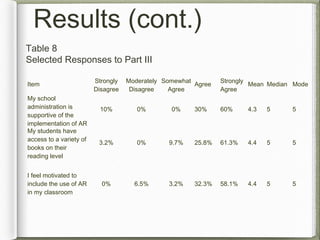
as using the Zone of Proximal Development
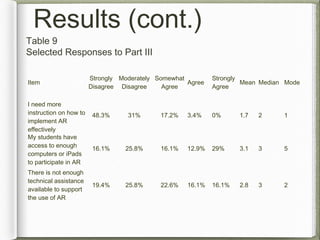
to set individual reading goals and
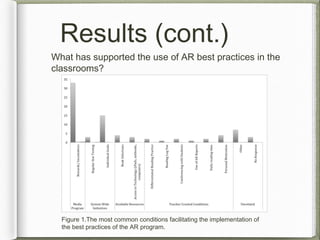
scheduling daily guided reading time
(Rearley, 2011, 2012, 2013).
• This course was delivered to teachers at
five different schools over a three year
period in Liberty County, 2011-2013.
Problem StatementProblem Statement
• Purchasing access to Accelerated Reader is a large yearly
investment for Liberty County School System.
• Training has been conducted with various elementary school
teachers on how to properly implement the program, using
the best prescribed practices.
• Hundreds of elementary school students are affected by the
use of this program in Liberty County.
• The researcher wanted to learn how the program is being
implemented, the perception of its effectiveness, and the
conditions that facilitate or hinder its use.
LiteratureLiterature
ReviewReview
The research surroundingThe research surrounding
the effectiveness of AR isthe effectiveness of AR is
sometimes contradictory. Thesometimes contradictory. The
What Works ClearinghouseWhat Works Clearinghouse
found only two studies, Bullockfound only two studies, Bullock
(2005) and Nunnery and Ross(2005) and Nunnery and Ross
(2007), that met the Adolescent(2007), that met the Adolescent
Literacy Review Protocol.Literacy Review Protocol.
(Holstman, Little reader)
Literature Review (cont.)Literature Review (cont.)
• The method of implementation can have a positive or
negative impact.Thompson, Madhuri, and Taylor
(2008) found “reading programs that may have worked
effectively in one setting may fail in another setting if
they are used incorrectly” (p. 559).
• Watts (2004) believed AR had a negative effect on
students’ motivation to read.
Literature Review (cont.)Literature Review (cont.)
• There were some positive findings…
• Middle school students read less if AR was not in use according to
Pavonetti, Brimmer, and Cipielewski (2002).
• Topping and Sanders (2000) found students’ performance on the
Tennessee Value-Added Assessment System increased as the level of AR
use increased.
• A failing school in Kansas adopted the Reading Renaissance, the best
classroom practices of Accelerated Reader, and began achieving a
Standard of Excellence in reading (Pfeiffer, 2011).
• When Magnolia Consulting (2010) was hired by Renaissance Learning, Inc.
to conduct a mixed methods study on the effectiveness of using the AR best
practices, the instructional reading levels of the treatment students
appeared to increase during the study.
Research QuestionsResearch Questions
• How have the AR best
practices been implemented
in the classroom?
• How do teachers associate
the use of AR best practices
with student performance on
the CRCT?
• What has supported or
hindered the use of the AR
best practices in
classrooms?
(Baxter, Reading aloud to children)
MethodsMethods
ParticipantsParticipants
Thirty-nine of forty-four eligibleThirty-nine of forty-four eligible
elementary school teachers working inelementary school teachers working in
Liberty county were invited to participate inLiberty county were invited to participate in
this study. To be eligible for the study thethis study. To be eligible for the study the
teachers had to currently be teaching in ateachers had to currently be teaching in a
Liberty County elementary school andLiberty County elementary school and
have successfully completed the thehave successfully completed the the
professional learning course, Gettingprofessional learning course, Getting
Result with AR between the years of 2011-Result with AR between the years of 2011-
2013, (Rearley, 2011, 2012, 2013). Thirty-2013, (Rearley, 2011, 2012, 2013). Thirty-
one teachers from five different publicone teachers from five different public
elementary schools in Liberty Countyelementary schools in Liberty County
responded to the questionnaire.responded to the questionnaire.
(Prantham Books, Vision: A book in every child’s hand)
Methods (cont.)Methods (cont.)
•
Instrumentation
• The researcher developed an online questionnaire via
SurveyMonkey (1999) using open and closed-ended
questions.
• The questionnaire was based on a self-assessment rubric for
implementation of the best AR practices.
ProceduresProcedures
• TThe questionnaire was field tested.he questionnaire was field tested.
• Eligible participants were then invited viaEligible participants were then invited via
email and letter to respond to anemail and letter to respond to an
anonymous questionnaire during a twoanonymous questionnaire during a two
week window.week window.
• Reminder emails were sent every threeReminder emails were sent every three
days.days.
• The introduction of the questionnaireThe introduction of the questionnaire
explained that completion of theexplained that completion of the
questionnaire served as consent toquestionnaire served as consent to
participate in the study.participate in the study.
AnalysisAnalysis
How have the AR best practices been implemented in the
classroom?
•Each response in part II of the questionnaire was given a
weight. Rarely was one. Occasional was two. Frequently was
three.
•The weights were used to calculate the mean, mode.
median, and standard deviation for each question.
Analysis (cont.)Analysis (cont.)
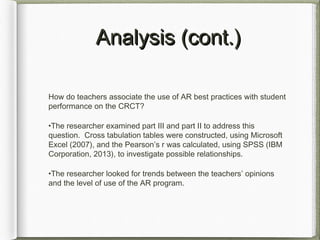
How do teachers associate the use of AR best practices with student
performance on the CRCT?
•The researcher examined part III and part II to address this
question. Cross tabulation tables were constructed, using Microsoft
Excel (2007), and the Pearson’s r was calculated, using SPSS (IBM
Corporation, 2013), to investigate possible relationships.
•The researcher looked for trends between the teachers’ opinions
and the level of use of the AR program.
Analysis (cont.)Analysis (cont.)
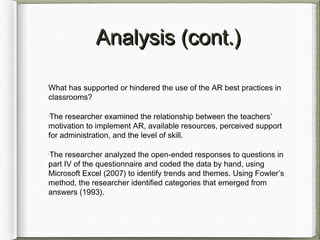
What has supported or hindered the use of the AR best practices in
classrooms?
•
The researcher examined the relationship between the teachers’
motivation to implement AR, available resources, perceived support
for administration, and the level of skill.
•
The researcher analyzed the open-ended responses to questions in
part IV of the questionnaire and coded the data by hand, using
Microsoft Excel (2007) to identify trends and themes. Using Fowler’s
method, the researcher identified categories that emerged from
answers (1993).
ResultsResults
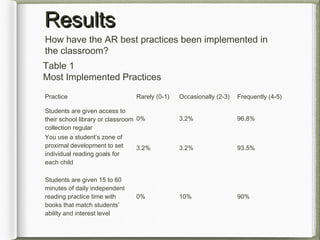
Table 1
Most Implemented Practices
Practice Rarely (0-1) Occasionally (2-3) Frequently (4-5)
Students are given access to
their school library or classroom
collection regular
0% 3.2% 96.8%
You use a student’s zone of
proximal development to set
individual reading goals for
each child
3.2% 3.2% 93.5%
Students are given 15 to 60
minutes of daily independent
reading practice time with
books that match students’
ability and interest level
0% 10% 90%
How have the AR best practices been implemented in
the classroom?
Results (cont.)Results (cont.)
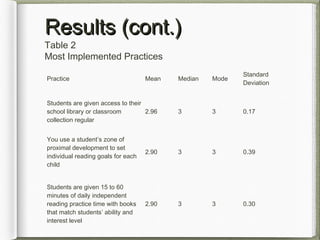
Table 2
Most Implemented Practices
Practice Mean Median Mode
Standard
Deviation
Students are given access to their
school library or classroom
collection regular
2.96 3 3 0.17
You use a student’s zone of
proximal development to set
individual reading goals for each
child
2.90 3 3 0.39
Students are given 15 to 60
minutes of daily independent
reading practice time with books
that match students’ ability and
interest level
2.90 3 3 0.30
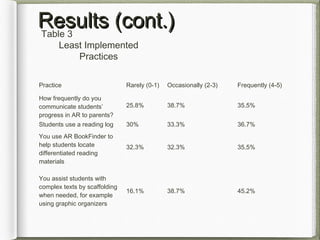
Results (cont.)Results (cont.)Table 3
Least Implemented
Practices
Practice Rarely (0-1) Occasionally (2-3) Frequently (4-5)
How frequently do you
communicate students’
progress in AR to parents?
25.8% 38.7% 35.5%
Students use a reading log 30% 33.3% 36.7%
You use AR BookFinder to
help students locate
differentiated reading
materials
32.3% 32.3% 35.5%
You assist students with
complex texts by scaffolding
when needed, for example
using graphic organizers
16.1% 38.7% 45.2%
Results (cont.)Results (cont.)
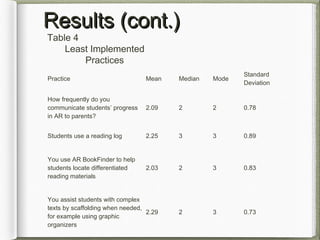
Table 4
Least Implemented
Practices
Practice Mean Median Mode
Standard
Deviation
How frequently do you
communicate students’ progress
in AR to parents?
2.09 2 2 0.78
Students use a reading log 2.25 3 3 0.89
You use AR BookFinder to help
students locate differentiated
reading materials
2.03 2 3 0.83
You assist students with complex
texts by scaffolding when needed,
for example using graphic
organizers
2.29 2 3 0.73
Results (cont.)Results (cont.)
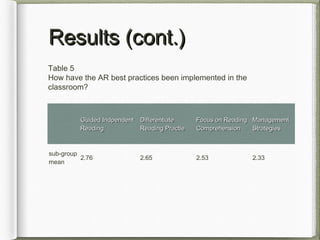
Table 5
How have the AR best practices been implemented in the
classroom?
Guided IndpendentGuided Indpendent
ReadingReading
DifferentiateDifferentiate
Reading PractieReading Practie
Focus on ReadingFocus on Reading
ComprehensionComprehension
ManagementManagement
StrategiesStrategies
sub-group
mean
2.76 2.65 2.53 2.33
Results (cont.)Results (cont.)
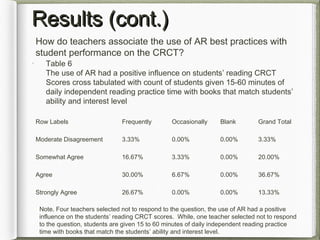
•
Table 6
The use of AR had a positive influence on students’ reading CRCT
Scores cross tabulated with count of students given 15-60 minutes of
daily independent reading practice time with books that match students’
ability and interest level
Row Labels Frequently Occasionally Blank Grand Total
Moderate Disagreement 3.33% 0.00% 0.00% 3.33%
Somewhat Agree 16.67% 3.33% 0.00% 20.00%
Agree 30.00% 6.67% 0.00% 36.67%
Strongly Agree 26.67% 0.00% 0.00% 13.33%
Note. Four teachers selected not to respond to the question, the use of AR had a positive
influence on the students’ reading CRCT scores. While, one teacher selected not to respond
to the question, students are given 15 to 60 minutes of daily independent reading practice
time with books that match the students’ ability and interest level.
How do teachers associate the use of AR best practices with
student performance on the CRCT?
Results (cont.)Results (cont.)•
Table 7
Correlations and Descriptive Statistics for Positive Influence on CRCT,
Daily Reading Practice, Individual Reading Goals, Locating Books
using the ZPD
1 2 3 4 5
Positive Influence
on CRCT
—-
Daily Reading
Practice
0.15 —-
Individual
Reading Goals
0.20 -0.08 —-
Locating Books
using the ZPD
-0.02 0.02 .45* —-
Part II Composite 0.28 .51* 0.22 .37* —-
M 3.96 2.90 2.90 2.71 2.53
SD 0.85 0.31 0.39 0.59 0.22
Note. n = 27 for Positive Influence, n = 30 for Daily Reading Practice, n = 31 for Individual Reading
Goals, n = 31 for Locating Books using the ZPD, n= 31 for Part II Composite
* p < .05.
Results (cont.)
Item
Strongly
Disagree
Moderately
Disagree
Somewhat
Agree
Agree
Strongly
Agree
Mean Median Mode
My school
administration is
supportive of the
implementation of AR
10% 0% 0% 30% 60% 4.3 5 5
My students have
access to a variety of
books on their
reading level
3.2% 0% 9.7% 25.8% 61.3% 4.4 5 5
I feel motivated to
include the use of AR
in my classroom
0% 6.5% 3.2% 32.3% 58.1% 4.4 5 5
Table 8
Selected Responses to Part III
Results (cont.)
Item
Strongly
Disagree
Moderately
Disagree
Somewhat
Agree
Agree
Strongly
Agree
Mean Median Mode
I need more
instruction on how to
implement AR
effectively
48.3% 31% 17.2% 3.4% 0% 1.7 2 1
My students have
access to enough
computers or iPads
to participate in AR
16.1% 25.8% 16.1% 12.9% 29% 3.1 3 5
There is not enough
technical assistance
available to support
the use of AR
19.4% 25.8% 22.6% 16.1% 16.1% 2.8 3 2
Table 9
Selected Responses to Part III
Results (cont.)
Figure 1.The most common conditions facilitating the implementation of
the best practices of the AR program.
What has supported the use of AR best practices in the
classrooms?
Results (cont.)
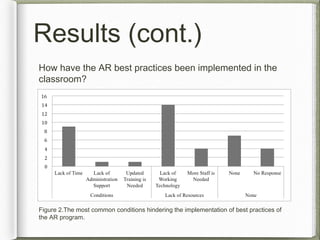
Figure 2.The most common conditions hindering the implementation of best practices of
the AR program.
How have the AR best practices been implemented in the
classroom?
Discussion
How have the AR best practices been implemented in
the classroom?
• The independent guided reading practices was the
most implemented sub-group.
• Frequent access to books
• Daily reading time
• Individual reading goals
Discussion (cont.)
How do teachers associate the use of the AR best
practices with student performance on the CRCT?
• Teachers tended to have a positive opinion of AR.
• There was not a statistically significant relationship
existed between the implementation AR and the
perception of AR’s influence on the CRCT.
• It appeared that teachers valued the reading practice,
but may not attribute AR to successful performance on
the CRCT.
Discussion (cont.)
What has supported or hindered use of AR best
practices in classrooms?
•The main stress felt by teachers was a lack of
resources.
•Other common concerns dealt with a lack of time
and staff.
•Teachers mentioned the media centers’ positive
incentives 33 times and felt the positive incentives
motivated students to read.
•The second most common support mentioned was
the use of individual reading goals.
Limitations
• A serious limitation is the that the questionnaire had no
guidance for validity.
• The time between the completion of the training and the
research study may have impacted how the participants
responded on the questionnaire.
• A potential bias for the trainer/ researcher may have
influenced the responders.
• All participants were volunteers. It is possible that the
teachers that selected not to volunteer may have had
negative opinions and selected not to share them. This
would impact the internal validity.
• The results of this study may only be applied to the
Liberty County due to the specific nature of the course
and conditions. This may impact the external validity.
Conclusion
How have AR best practices been implemented in the
classrooms?
•The researcher found the teachers in Liberty County have a
positive opinion of AR.
•The implementation varies from very high to minimal
depending on the best practice in question.
Conclusion
How do teachers associate the use of the best practices
with student performance on the CRCT?
•A statistically significant relationship does not appear to exist
between the perceived impact of AR on the CRCT and the
implemented AR best practices.
•Teachers identified more conditions that facilitated the
implementation of the AR program and less hinderances.
•The need for additional training appeared to be very low.
Conclusion
What has supported or hindered the use of AR best
practices in the classroom?
•Teachers identified more conditions that facilitated the
implementation of the AR program and less hindrances.
•Teachers completing the training appeared to be confident in
their implementation of the program and motivated to
implement the program.
Recommendations
• School and system level administration may benefit from
the data collected during this study. An executive
summary of the study findings should be made available
to both stakeholders.
• The value placed on the incentives programs and the
book collections available in the media centers needs to
be made available to building level and system level
administrators.
Recommendations
(cont.)
• The perception of the teachers and the use of the
program was positive in most cases.
• Training has left a positive impact on the teachers.
It would beneficial to teachers at other schools and
at the middle schools.
• The need for updated and more reliable technology
must be considered in future budgeting for the
schools and district. New equipment is needed.
SourcesSources
Baxter, J. (Photographer). (2005, February 23). Reading aloud to children [Web Photo]. Retrieved from
https://www.flickr.com/photos/judybaxter/5484879/in/photolist-u7sT-97uoyF-7ysSqb-4avnSd-4VoQ4Q-4VjB4x-5aCog5-9v1F5L-8Dm48r-dtroJc-zMjJQ-dzbQJR-cvBCfW-4VkawM
Bullock, J.C. (2005). Effects of Accelerated Reader on the reading performance of third, fourth, fifith-grade students in one wester Oregon elementary school (Doctor
dissertation, University of Oregon). Dissertation Abstracts International, 66(07A), 56-2529.
Fowler, F. (1993). Survey research methods. (2nd ed., Vol. 1). London, England: Sage Publishing, Inc.
Georgia Department of Education: School report cards [Website]. (n.d.). Retrieved September 6, 2013, from http://www.gadoe.org/Curriculum-Instruction-and-
Assessment/Assessment/Pages/CRCT-Statewide-Scores.aspx
Holstman, M. (Photographer). (2010, January 25). Little reader [Print Photo]. Retrieved from https://www.flickr.com/photos/holtsman/4305510994/in/photolist-u7sT-
97uoyF-7ysSqb-4avnSd-4VoQ4Q-4VjB4x-5aCog5-9v1F5L-8Dm48r-dtroJc-zMjJQ-dzbQJR-cvBCfW-4VkawM-4RJMgs-4VmmA2-4RJMYN-dU4kxX-83T9eu-
5j2qXw-5iX95P-5iX96k-aTTXxi-4REBuB-4REBLK-4Vmm8r-4REB5v-8QZsxN-8uQ9sa-617vfm-6dd8YS-5kRRTA-9sd7k4-4VrvTW-4VrvRo-9guaJE-4VrvZJ-
68mAXC-68hpcM-68mB8G-68mBaC-68mAYo-fYuAwf-8FMPPw-8FMPPh-8FMPPJ-8FMPPq-7FuTmD-gaNSpX-b4Ac92/
IBM Corp. Released 2013. IBM SPSS Statistics for Windows, Version 22.0. Armonk, NY: IBM Corp.
Institute of Education Sciences (2008). What works clearinghouse intervention report. Retrieved November 2, 2011, from
http://ies.ed.gov/ncee/wwc/pdf/intervention_reports/wwc_accelreader_101408.pdf
Krathwohl, D. (1998). Methods of educational & social science research: An integrated approach. New York: Longman.
Magnolia Consulting. (2010). A final report for the evaluation of Renaissance Learning’s Accelerated Reader program. Charlottesville, VA: Author.
Microsoft. (2007). Microsoft Excel [Computer software]. Redmond, Washington: Microsoft.
SourcesSources
Morgan, D.L. (1997). Focus groups as qualitative research (2nd ed.). Thousand Oaks, CA: Sage.
Morrow, L.M. (1996). Motivating reading and writing diverse classrooms (NCTE Research Rep. No. 28) Urbana, IL: national Council on Teachers of English.
Nunnery, J.A., & Ross, S.M. (2007). The effects of the School Renaissance program on student achievement in reading and mathematics. Research in the Schools, 14(1),
40-59.
Pavonetti, L. M., Brimmer, K. M., & Cipielewski, J. F. (2002). Accelerated Reader: What are the lasting effects on the reading habits of middle school students exposed to
Accelerated Reader in elementary grades? Journal of Adolescent & Adult Literacy, 46(4), 300. Retrieved from EBSCOhost.
Pfeiffer, C. (2011). Achieving a standard of reading excellence in Kansas. Knowledge Quest, 39(4), 60-67. Retrieved from EBSCOhost.
Pratham Books. (2008, September 15). Vision: A book in every child’s hand. {Print Photo]. Retrieved from
https://www.flickr.com/photos/prathambooks/3291764099/in/photolist-9hrRxn-aTTW96-61T9Mr-61Spg8-61Spa2-61SskF-7ysSqb-aMqTii-61Sqvi-61WBwS-
61WBbh-61SqKK-61WBod-61WAPo-61WCWb-61SrC8-61Sr7r-61Sq4X-61WB6m-61WCYN-61Spna-61WCZN-61SpZF-61Ssbr-61WDnG-61WBqJ-61WCnU-
61WA8w-61WBjd-61SqQ2-61WCMj-61WAWN-61WBn3-61SpoT-61SqFM-61Sr2M-61SqBT-61Ssug-61WCzh-61Sq46-61SqkT-61SqMc-61WD6U-61WDdS-
61WAYS-61WD7Y-61WDjA-61SrPe-61WASJ-61SppV/
Renaissance Learning, Inc. (2007). Getting results with Accelerated Reader. Wisconsin Rapids, WI: Renaissance Learning.
Renaissance Learning, Inc. (2013a). Renaissance Place [Software]. Retrieved from https://hosted123.renlearn.com/55673/default.aspx
Renaissance Learning, Inc. (2013b). Accelerated Reader implementation progression. Wisconsin Rapids, WI: Author.
Renaissance Learning, Inc. (2013c). Renaissance Place: District administrator dashboard [Data file]. Retrieved from https://hosted123.renlearn.com/dashboardclientsvc/
SurveyMonkey (1999). Date Retrieved November 3, 2013 from https://www.surveymonkey.com
Thompson, G., Madhuri, M., & Taylor, D. (2008). How the Accelerated Reader program can become counterproductive for high school students. Journal of Adolescent &
Adult Literacy, 51(7), 550-560. doi:10.1598/JAAL.51.7.3
Topping, K. J., & Sanders, W. L. (2000). Teacher effectiveness and computer assessment of reading: Relating value-added and learning information systems data. School
Effectiveness and School Improvement, 11(3), 305–337.
Watts, B. (2004). Accelerated Reader: Its motivational effects on advanced adolescent readers. Masters Abstracts International, 43(02), 386. (UMI No. 1423331)

Accelerated Reader and Best Practices

  • 1.
    The Use ofAccelerated Reader inThe Use of Accelerated Reader in Elementary School: The Influence ofElementary School: The Influence of Training and Association with CriterionTraining and Association with Criterion Reference Competency Tests inReference Competency Tests in ReadingReading by: Jaime Rearleyby: Jaime Rearley Ed.S. DefenseEd.S. Defense Georgia Southern UniversityGeorgia Southern University April 30, 2014April 30, 2014
  • 2.
    BackgroundBackground • The elementary(7) and middle (3) schools in Liberty County use the program in conjunction with Star Reading. Reading tends to be an area of strength for Liberty County’s elementary schools. • The Georgia Department of Education’s CRCT Statewide Score System Summaries show between the years of 2011-2013 that 89.2% and up to 94.6% of the students in grades third through fifth met or exceeded the standard in reading (“Georgia Department of Education: School Report Cards,” n.d.).
  • 3.
    Background (cont.)Background (cont.) •The professional learning course taught the best practices for using the software, such as using the Zone of Proximal Development to set individual reading goals and scheduling daily guided reading time (Rearley, 2011, 2012, 2013). • This course was delivered to teachers at five different schools over a three year period in Liberty County, 2011-2013.
  • 4.
    Problem StatementProblem Statement •Purchasing access to Accelerated Reader is a large yearly investment for Liberty County School System. • Training has been conducted with various elementary school teachers on how to properly implement the program, using the best prescribed practices. • Hundreds of elementary school students are affected by the use of this program in Liberty County. • The researcher wanted to learn how the program is being implemented, the perception of its effectiveness, and the conditions that facilitate or hinder its use.
  • 5.
    LiteratureLiterature ReviewReview The research surroundingTheresearch surrounding the effectiveness of AR isthe effectiveness of AR is sometimes contradictory. Thesometimes contradictory. The What Works ClearinghouseWhat Works Clearinghouse found only two studies, Bullockfound only two studies, Bullock (2005) and Nunnery and Ross(2005) and Nunnery and Ross (2007), that met the Adolescent(2007), that met the Adolescent Literacy Review Protocol.Literacy Review Protocol. (Holstman, Little reader)
  • 6.
    Literature Review (cont.)LiteratureReview (cont.) • The method of implementation can have a positive or negative impact.Thompson, Madhuri, and Taylor (2008) found “reading programs that may have worked effectively in one setting may fail in another setting if they are used incorrectly” (p. 559). • Watts (2004) believed AR had a negative effect on students’ motivation to read.
  • 7.
    Literature Review (cont.)LiteratureReview (cont.) • There were some positive findings… • Middle school students read less if AR was not in use according to Pavonetti, Brimmer, and Cipielewski (2002). • Topping and Sanders (2000) found students’ performance on the Tennessee Value-Added Assessment System increased as the level of AR use increased. • A failing school in Kansas adopted the Reading Renaissance, the best classroom practices of Accelerated Reader, and began achieving a Standard of Excellence in reading (Pfeiffer, 2011). • When Magnolia Consulting (2010) was hired by Renaissance Learning, Inc. to conduct a mixed methods study on the effectiveness of using the AR best practices, the instructional reading levels of the treatment students appeared to increase during the study.
  • 8.
    Research QuestionsResearch Questions •How have the AR best practices been implemented in the classroom? • How do teachers associate the use of AR best practices with student performance on the CRCT? • What has supported or hindered the use of the AR best practices in classrooms? (Baxter, Reading aloud to children)
  • 9.
    MethodsMethods ParticipantsParticipants Thirty-nine of forty-foureligibleThirty-nine of forty-four eligible elementary school teachers working inelementary school teachers working in Liberty county were invited to participate inLiberty county were invited to participate in this study. To be eligible for the study thethis study. To be eligible for the study the teachers had to currently be teaching in ateachers had to currently be teaching in a Liberty County elementary school andLiberty County elementary school and have successfully completed the thehave successfully completed the the professional learning course, Gettingprofessional learning course, Getting Result with AR between the years of 2011-Result with AR between the years of 2011- 2013, (Rearley, 2011, 2012, 2013). Thirty-2013, (Rearley, 2011, 2012, 2013). Thirty- one teachers from five different publicone teachers from five different public elementary schools in Liberty Countyelementary schools in Liberty County responded to the questionnaire.responded to the questionnaire. (Prantham Books, Vision: A book in every child’s hand)
  • 10.
    Methods (cont.)Methods (cont.) • Instrumentation •The researcher developed an online questionnaire via SurveyMonkey (1999) using open and closed-ended questions. • The questionnaire was based on a self-assessment rubric for implementation of the best AR practices.
  • 11.
    ProceduresProcedures • TThe questionnairewas field tested.he questionnaire was field tested. • Eligible participants were then invited viaEligible participants were then invited via email and letter to respond to anemail and letter to respond to an anonymous questionnaire during a twoanonymous questionnaire during a two week window.week window. • Reminder emails were sent every threeReminder emails were sent every three days.days. • The introduction of the questionnaireThe introduction of the questionnaire explained that completion of theexplained that completion of the questionnaire served as consent toquestionnaire served as consent to participate in the study.participate in the study.
  • 12.
    AnalysisAnalysis How have theAR best practices been implemented in the classroom? •Each response in part II of the questionnaire was given a weight. Rarely was one. Occasional was two. Frequently was three. •The weights were used to calculate the mean, mode. median, and standard deviation for each question.
  • 13.
    Analysis (cont.)Analysis (cont.) Howdo teachers associate the use of AR best practices with student performance on the CRCT? •The researcher examined part III and part II to address this question. Cross tabulation tables were constructed, using Microsoft Excel (2007), and the Pearson’s r was calculated, using SPSS (IBM Corporation, 2013), to investigate possible relationships. •The researcher looked for trends between the teachers’ opinions and the level of use of the AR program.
  • 14.
    Analysis (cont.)Analysis (cont.) Whathas supported or hindered the use of the AR best practices in classrooms? • The researcher examined the relationship between the teachers’ motivation to implement AR, available resources, perceived support for administration, and the level of skill. • The researcher analyzed the open-ended responses to questions in part IV of the questionnaire and coded the data by hand, using Microsoft Excel (2007) to identify trends and themes. Using Fowler’s method, the researcher identified categories that emerged from answers (1993).
  • 15.
    ResultsResults Table 1 Most ImplementedPractices Practice Rarely (0-1) Occasionally (2-3) Frequently (4-5) Students are given access to their school library or classroom collection regular 0% 3.2% 96.8% You use a student’s zone of proximal development to set individual reading goals for each child 3.2% 3.2% 93.5% Students are given 15 to 60 minutes of daily independent reading practice time with books that match students’ ability and interest level 0% 10% 90% How have the AR best practices been implemented in the classroom?
  • 16.
    Results (cont.)Results (cont.) Table2 Most Implemented Practices Practice Mean Median Mode Standard Deviation Students are given access to their school library or classroom collection regular 2.96 3 3 0.17 You use a student’s zone of proximal development to set individual reading goals for each child 2.90 3 3 0.39 Students are given 15 to 60 minutes of daily independent reading practice time with books that match students’ ability and interest level 2.90 3 3 0.30
  • 17.
    Results (cont.)Results (cont.)Table3 Least Implemented Practices Practice Rarely (0-1) Occasionally (2-3) Frequently (4-5) How frequently do you communicate students’ progress in AR to parents? 25.8% 38.7% 35.5% Students use a reading log 30% 33.3% 36.7% You use AR BookFinder to help students locate differentiated reading materials 32.3% 32.3% 35.5% You assist students with complex texts by scaffolding when needed, for example using graphic organizers 16.1% 38.7% 45.2%
  • 18.
    Results (cont.)Results (cont.) Table4 Least Implemented Practices Practice Mean Median Mode Standard Deviation How frequently do you communicate students’ progress in AR to parents? 2.09 2 2 0.78 Students use a reading log 2.25 3 3 0.89 You use AR BookFinder to help students locate differentiated reading materials 2.03 2 3 0.83 You assist students with complex texts by scaffolding when needed, for example using graphic organizers 2.29 2 3 0.73
  • 19.
    Results (cont.)Results (cont.) Table5 How have the AR best practices been implemented in the classroom? Guided IndpendentGuided Indpendent ReadingReading DifferentiateDifferentiate Reading PractieReading Practie Focus on ReadingFocus on Reading ComprehensionComprehension ManagementManagement StrategiesStrategies sub-group mean 2.76 2.65 2.53 2.33
  • 20.
    Results (cont.)Results (cont.) • Table6 The use of AR had a positive influence on students’ reading CRCT Scores cross tabulated with count of students given 15-60 minutes of daily independent reading practice time with books that match students’ ability and interest level Row Labels Frequently Occasionally Blank Grand Total Moderate Disagreement 3.33% 0.00% 0.00% 3.33% Somewhat Agree 16.67% 3.33% 0.00% 20.00% Agree 30.00% 6.67% 0.00% 36.67% Strongly Agree 26.67% 0.00% 0.00% 13.33% Note. Four teachers selected not to respond to the question, the use of AR had a positive influence on the students’ reading CRCT scores. While, one teacher selected not to respond to the question, students are given 15 to 60 minutes of daily independent reading practice time with books that match the students’ ability and interest level. How do teachers associate the use of AR best practices with student performance on the CRCT?
  • 21.
    Results (cont.)Results (cont.)• Table7 Correlations and Descriptive Statistics for Positive Influence on CRCT, Daily Reading Practice, Individual Reading Goals, Locating Books using the ZPD 1 2 3 4 5 Positive Influence on CRCT —- Daily Reading Practice 0.15 —- Individual Reading Goals 0.20 -0.08 —- Locating Books using the ZPD -0.02 0.02 .45* —- Part II Composite 0.28 .51* 0.22 .37* —- M 3.96 2.90 2.90 2.71 2.53 SD 0.85 0.31 0.39 0.59 0.22 Note. n = 27 for Positive Influence, n = 30 for Daily Reading Practice, n = 31 for Individual Reading Goals, n = 31 for Locating Books using the ZPD, n= 31 for Part II Composite * p < .05.
  • 22.
    Results (cont.) Item Strongly Disagree Moderately Disagree Somewhat Agree Agree Strongly Agree Mean MedianMode My school administration is supportive of the implementation of AR 10% 0% 0% 30% 60% 4.3 5 5 My students have access to a variety of books on their reading level 3.2% 0% 9.7% 25.8% 61.3% 4.4 5 5 I feel motivated to include the use of AR in my classroom 0% 6.5% 3.2% 32.3% 58.1% 4.4 5 5 Table 8 Selected Responses to Part III
  • 23.
    Results (cont.) Item Strongly Disagree Moderately Disagree Somewhat Agree Agree Strongly Agree Mean MedianMode I need more instruction on how to implement AR effectively 48.3% 31% 17.2% 3.4% 0% 1.7 2 1 My students have access to enough computers or iPads to participate in AR 16.1% 25.8% 16.1% 12.9% 29% 3.1 3 5 There is not enough technical assistance available to support the use of AR 19.4% 25.8% 22.6% 16.1% 16.1% 2.8 3 2 Table 9 Selected Responses to Part III
  • 24.
    Results (cont.) Figure 1.Themost common conditions facilitating the implementation of the best practices of the AR program. What has supported the use of AR best practices in the classrooms?
  • 25.
    Results (cont.) Figure 2.Themost common conditions hindering the implementation of best practices of the AR program. How have the AR best practices been implemented in the classroom?
  • 26.
    Discussion How have theAR best practices been implemented in the classroom? • The independent guided reading practices was the most implemented sub-group. • Frequent access to books • Daily reading time • Individual reading goals
  • 27.
    Discussion (cont.) How doteachers associate the use of the AR best practices with student performance on the CRCT? • Teachers tended to have a positive opinion of AR. • There was not a statistically significant relationship existed between the implementation AR and the perception of AR’s influence on the CRCT. • It appeared that teachers valued the reading practice, but may not attribute AR to successful performance on the CRCT.
  • 28.
    Discussion (cont.) What hassupported or hindered use of AR best practices in classrooms? •The main stress felt by teachers was a lack of resources. •Other common concerns dealt with a lack of time and staff. •Teachers mentioned the media centers’ positive incentives 33 times and felt the positive incentives motivated students to read. •The second most common support mentioned was the use of individual reading goals.
  • 29.
    Limitations • A seriouslimitation is the that the questionnaire had no guidance for validity. • The time between the completion of the training and the research study may have impacted how the participants responded on the questionnaire. • A potential bias for the trainer/ researcher may have influenced the responders. • All participants were volunteers. It is possible that the teachers that selected not to volunteer may have had negative opinions and selected not to share them. This would impact the internal validity. • The results of this study may only be applied to the Liberty County due to the specific nature of the course and conditions. This may impact the external validity.
  • 30.
    Conclusion How have ARbest practices been implemented in the classrooms? •The researcher found the teachers in Liberty County have a positive opinion of AR. •The implementation varies from very high to minimal depending on the best practice in question.
  • 31.
    Conclusion How do teachersassociate the use of the best practices with student performance on the CRCT? •A statistically significant relationship does not appear to exist between the perceived impact of AR on the CRCT and the implemented AR best practices. •Teachers identified more conditions that facilitated the implementation of the AR program and less hinderances. •The need for additional training appeared to be very low.
  • 32.
    Conclusion What has supportedor hindered the use of AR best practices in the classroom? •Teachers identified more conditions that facilitated the implementation of the AR program and less hindrances. •Teachers completing the training appeared to be confident in their implementation of the program and motivated to implement the program.
  • 33.
    Recommendations • School andsystem level administration may benefit from the data collected during this study. An executive summary of the study findings should be made available to both stakeholders. • The value placed on the incentives programs and the book collections available in the media centers needs to be made available to building level and system level administrators.
  • 34.
    Recommendations (cont.) • The perceptionof the teachers and the use of the program was positive in most cases. • Training has left a positive impact on the teachers. It would beneficial to teachers at other schools and at the middle schools. • The need for updated and more reliable technology must be considered in future budgeting for the schools and district. New equipment is needed.
  • 35.
    SourcesSources Baxter, J. (Photographer).(2005, February 23). Reading aloud to children [Web Photo]. Retrieved from https://www.flickr.com/photos/judybaxter/5484879/in/photolist-u7sT-97uoyF-7ysSqb-4avnSd-4VoQ4Q-4VjB4x-5aCog5-9v1F5L-8Dm48r-dtroJc-zMjJQ-dzbQJR-cvBCfW-4VkawM Bullock, J.C. (2005). Effects of Accelerated Reader on the reading performance of third, fourth, fifith-grade students in one wester Oregon elementary school (Doctor dissertation, University of Oregon). Dissertation Abstracts International, 66(07A), 56-2529. Fowler, F. (1993). Survey research methods. (2nd ed., Vol. 1). London, England: Sage Publishing, Inc. Georgia Department of Education: School report cards [Website]. (n.d.). Retrieved September 6, 2013, from http://www.gadoe.org/Curriculum-Instruction-and- Assessment/Assessment/Pages/CRCT-Statewide-Scores.aspx Holstman, M. (Photographer). (2010, January 25). Little reader [Print Photo]. Retrieved from https://www.flickr.com/photos/holtsman/4305510994/in/photolist-u7sT- 97uoyF-7ysSqb-4avnSd-4VoQ4Q-4VjB4x-5aCog5-9v1F5L-8Dm48r-dtroJc-zMjJQ-dzbQJR-cvBCfW-4VkawM-4RJMgs-4VmmA2-4RJMYN-dU4kxX-83T9eu- 5j2qXw-5iX95P-5iX96k-aTTXxi-4REBuB-4REBLK-4Vmm8r-4REB5v-8QZsxN-8uQ9sa-617vfm-6dd8YS-5kRRTA-9sd7k4-4VrvTW-4VrvRo-9guaJE-4VrvZJ- 68mAXC-68hpcM-68mB8G-68mBaC-68mAYo-fYuAwf-8FMPPw-8FMPPh-8FMPPJ-8FMPPq-7FuTmD-gaNSpX-b4Ac92/ IBM Corp. Released 2013. IBM SPSS Statistics for Windows, Version 22.0. Armonk, NY: IBM Corp. Institute of Education Sciences (2008). What works clearinghouse intervention report. Retrieved November 2, 2011, from http://ies.ed.gov/ncee/wwc/pdf/intervention_reports/wwc_accelreader_101408.pdf Krathwohl, D. (1998). Methods of educational & social science research: An integrated approach. New York: Longman. Magnolia Consulting. (2010). A final report for the evaluation of Renaissance Learning’s Accelerated Reader program. Charlottesville, VA: Author. Microsoft. (2007). Microsoft Excel [Computer software]. Redmond, Washington: Microsoft.
  • 36.
    SourcesSources Morgan, D.L. (1997).Focus groups as qualitative research (2nd ed.). Thousand Oaks, CA: Sage. Morrow, L.M. (1996). Motivating reading and writing diverse classrooms (NCTE Research Rep. No. 28) Urbana, IL: national Council on Teachers of English. Nunnery, J.A., & Ross, S.M. (2007). The effects of the School Renaissance program on student achievement in reading and mathematics. Research in the Schools, 14(1), 40-59. Pavonetti, L. M., Brimmer, K. M., & Cipielewski, J. F. (2002). Accelerated Reader: What are the lasting effects on the reading habits of middle school students exposed to Accelerated Reader in elementary grades? Journal of Adolescent & Adult Literacy, 46(4), 300. Retrieved from EBSCOhost. Pfeiffer, C. (2011). Achieving a standard of reading excellence in Kansas. Knowledge Quest, 39(4), 60-67. Retrieved from EBSCOhost. Pratham Books. (2008, September 15). Vision: A book in every child’s hand. {Print Photo]. Retrieved from https://www.flickr.com/photos/prathambooks/3291764099/in/photolist-9hrRxn-aTTW96-61T9Mr-61Spg8-61Spa2-61SskF-7ysSqb-aMqTii-61Sqvi-61WBwS- 61WBbh-61SqKK-61WBod-61WAPo-61WCWb-61SrC8-61Sr7r-61Sq4X-61WB6m-61WCYN-61Spna-61WCZN-61SpZF-61Ssbr-61WDnG-61WBqJ-61WCnU- 61WA8w-61WBjd-61SqQ2-61WCMj-61WAWN-61WBn3-61SpoT-61SqFM-61Sr2M-61SqBT-61Ssug-61WCzh-61Sq46-61SqkT-61SqMc-61WD6U-61WDdS- 61WAYS-61WD7Y-61WDjA-61SrPe-61WASJ-61SppV/ Renaissance Learning, Inc. (2007). Getting results with Accelerated Reader. Wisconsin Rapids, WI: Renaissance Learning. Renaissance Learning, Inc. (2013a). Renaissance Place [Software]. Retrieved from https://hosted123.renlearn.com/55673/default.aspx Renaissance Learning, Inc. (2013b). Accelerated Reader implementation progression. Wisconsin Rapids, WI: Author. Renaissance Learning, Inc. (2013c). Renaissance Place: District administrator dashboard [Data file]. Retrieved from https://hosted123.renlearn.com/dashboardclientsvc/ SurveyMonkey (1999). Date Retrieved November 3, 2013 from https://www.surveymonkey.com Thompson, G., Madhuri, M., & Taylor, D. (2008). How the Accelerated Reader program can become counterproductive for high school students. Journal of Adolescent & Adult Literacy, 51(7), 550-560. doi:10.1598/JAAL.51.7.3 Topping, K. J., & Sanders, W. L. (2000). Teacher effectiveness and computer assessment of reading: Relating value-added and learning information systems data. School Effectiveness and School Improvement, 11(3), 305–337. Watts, B. (2004). Accelerated Reader: Its motivational effects on advanced adolescent readers. Masters Abstracts International, 43(02), 386. (UMI No. 1423331)

Editor's Notes

  • #4 Renaissance Learning, Inc. corporate trainers conducted district training for the media specialists in 2011. The media coordinator crafted a professional learning course for elementary school teachers, based on the corporate training and the booklet, Getting Results with Accelerated Reader (Renaissance Learning, Inc., 2007).
  • #6 According to a study conducted by Bullock, including grades 3-5 in an Oregon elementary school, students using AR did not show statistically significant growth on the Dynamic Indicators of Basic Early Literacy Skills assessment (2005). The results of Nunnery and Ross’s study were conflicting. Positive and significant effects could be found for fifth grade students using the program. However, the effects for eighth graders were not statistically significant (2007).
  • #7 In their study high school students resented the graded requirement of AR and the limited amount of time to read in class. The reduced book selection added to their frustration.
  • #11 The questionnaire addressed four areas: guided independent reading, differentiated reading practice, focus on reading comprehension, and management strategies. The Accelerated Reader Implementation Progression (Renaissance Learning, 2013b) aligned to the content taught in the professional learning course delivered by the researcher
  • #12 To “establish content validity” and “improve questions, format, and scales” it was tested with two eligible teachers from the target population prior to inviting the larger target population to participate (Creswell, 2003, p. 158).
  • #13 Krathwohl (1998) suggests that numbers are more precise and descriptive when dealing with social science research.
  • #14 Krathwohl suggests using the “simplest applicable analysis” to ensure data will be “understood by a wider audience” (1998, p. 371).
  • #16 Most teachers frequently gave students access to books and frequently set individual reading goals. The second most frequent practice was setting individual reading goals using the student’s ZPD. A high percentage of students were given daily independent reading practice time.
  • #17 The standard deviation for these questions was very low, indicating the high level of agreement.
  • #18 Many of the least implemented practices dealt with management of the program. The use of AR BookFinder and scaffolding tools were two exceptions.
  • #19 The standard deviation for these questions was high, indicating the low level of agreement.
  • #20 The researcher found the guided independent reading practices to the be the most implemented. The least implemented practices were the management strategies. The practices least implemented were very specific to the implementation of the AR program. Many of the teachers were less likely to implement management tools like reading logs and scaffolding tools like graphic organizers. Teachers were also less likely to frequently communicate AR progress to parents.
  • #21 The percentage of teachers frequently building in the daily reading practice time was 90%, however the percentage of teachers agreeing that AR has a positive influence on reading CRCT scores was not as high. For this item, implementation appeared to be higher than the belief in the influence of the program.
  • #22 There is not a statistically significant association between the teachers’ perception of the positive influence of AR on the CRCT and the practice of scheduling daily reading practice, using individual reading goals with students, or using the ZPD to locate books. Results showed that the belief that AR had a positive impact on the CRCT was not associated with the implementation of daily reading practice, the use of individual reading goals, or using the ZPD to locate books. A composite score was calculate for part II by finding the mean for each participant’s responses to questions in part II of the questionnaire. The association between the influence on the CRCT and the implementation of the selected practices was not found to be significant. A significant positive relationship did however, exist between the decision to set individual reading goals for students and assist students with locating books using their ZPD.
  • #23 Krathwohl (1998) suggests that it is common to assign values to response scales. It enables the researcher to measure attributes using an interval scale. Strongly disagree-1; Moderately disagree-2; somewhat agree- 3; Agree-4; Strongly Agree-5 The majority of teachers felt their administration was supportive. The majority of teachers felt motivated to implement the AR program. A majority of the teachers also felt the students has access to a variety of books. The mean and mode for each of these items was 5. The most common response for each of the items was strongly agree.
  • #24 Based on the responses to the questionnaire, there does not appear to be a strong desire for more training. Only 3.4% agreed and 17.2% somewhat agreed that more training was needed. The most common response to this items was strongly disagree. 29% of the teachers strongly agreed there were enough computers and ipads for student use. The responses to this question were mixed. 25.80% of the teachers moderately disagreed that their students had access to computers and iPads. Teachers were divided on their opinion of how much technical assistance was available. The most common response was moderately disagree.
  • #25 The most common response related back to the methods of positive reinforcement facilitated by the school’s media specialists. Weekly prize drawings, fun events, awards, AR stores, and parties were some example of encouragement used. There were 33 references made. Teachers mentioned the use of individual reading goals as a condition that facilitated the reading program. This was the second most common response. The researcher created an other category for rare and unrelated conditions. Some keywords grouped into this category were using AR shelf markers, learning styles inventory, and meetings. Some teachers also mentioned their own motivation to implement the program and the books selection available to students as conditions that facilitated the use of the program.
  • #26 Four teachers skipped this question and seven teachers noted none. The most common response was the lack of working technology or limited access to the working technology. Fourteen references were made to this. Words like outdated, unreliable and limited access were used by the teachers. The second most common response was related to the lack of time available. This was mentioned nine times. the demands of the common core curriculum and scaffolding the the common core texts were mentioned as the key focus by one of the teachers. The third most common response was the need for more staff. This was a concern for teachers working with younger students. The students needed more help with using the software. One of the teachers mentioned using the help of older students to compensate for the lack of adult assistance.
  • #27 Morrow (1998) explained that students engaging in additional reading time in class showed higher reading comprehension gains. Teachers responded that the 96.8% allowed students to visit the library or classroom book collection frequently. The most common practice was related to book access. A high percentage, 90%, of the teachers build daily independent reading time into the school day frequently Teachers also mentioned access to a variety of books as a condition that facilitated the use of AR. More than half of the teachers also felt students should have access to the variety of books on students’ individual reading levels.
  • #28 Teachers participating in the study appeared had an overall positive view of the program and were motivated to implement selected practices. Over 40% agreeing and over 29% strongly agreeing that AR had a positive impact on the CRCT reading comprehension score. The perception of the program’s influence appeared to be positive, but this did not translate into a statistically significant relationship. A high percentage, 90%, of teachers appeared to implement daily independent reading practice blocks frequently, but the percentage of teachers strongly agreeing that AR has a positive impact on the reading comprehension scores on the CRCT was low at only 26.67%
  • #29 The most common concern was a lack of working technology. Due to economic conditions, the budget for technology and paraprofessionals was reduced in the last few years. Classroom teachers have been feeling the brunt of this reduction. The introduction and demands of the newly implemented Common Core curriculum has also demanding more time. The most common theme identified during coding the open responses was the support of the media program. It appeared that teachers agreed with individual goals and the encouragement provided by others to motivate students to read. One teacher said it best, “The AR parties for the students who meet their goals each nine weeks is a major motivator. Without the parties, I don’t know that the students would participate as they do, especially the struggling readers.” It appears the teachers have been motivated to implement the program although their perception of its impact is small. The training and media program support and facilitation may have influenced their actions.
  • #30 Following Fowler’s suggestion (1993), the researcher conducted a pre-test of the self-administration questionnaire with a group of potential responders to increase the validity of the tool. Closed-ended questions with ordinal scale response options in part I, II, and III the questionnaire attempted to “help respondents to make better estimates” (Fowler, 1993, p. 89). To counteract this possible bias, the questions included on the questionnaire focused on implementation of the skills instead of asking about the training experience. The researcher monitored the responses during the questionnaire window to see if a shift in tone occurred toward the end of the window.
  • #31 The elementary schools in Liberty County have a history of successful performance on the reading portion of the CRCT. Over 95% of the students in each elementary school in Liberty County participate in AR (Renaissance Learning, Inc., 2013c). A population of forty-four elementary school teachers spanning five schools were trained between the years of 2011-2013 on the best practices for implementing the AR program. Thirty-one elementary teachers responded to an anonymous online questionnaire.
  • #35 Based on questionnaire responses, and open-ended responses most teachers felt prepared to implement the AR program. The training provided appeared to be effective.