Download as PDF, PPTX




















This document discusses encouraging academic integrity in online learning. It explores common ways that students cheat, such as plagiarism, dishonest collaboration, and extreme cheating using technology. It also provides suggestions for designing "un-cheatable" tasks that allow students to demonstrate their knowledge through alternative assessments and addressing different learning styles. These include using audio discussions, visual concept maps, reflective forums, and kinesthetic multi-media products. The document emphasizes designing relevant and choice-based assessments for online students.
Discusses the importance of academic integrity beyond plagiarism, emphasizes inclusive strategies, and acknowledges contributors to the topic.
Explores what constitutes cheating, reasons students cheat, excuses they make, and different forms of dishonest collaboration.
Describes how students misuse technology for cheating, including dishonest collaboration, extreme methods, and the impact of digital tools.
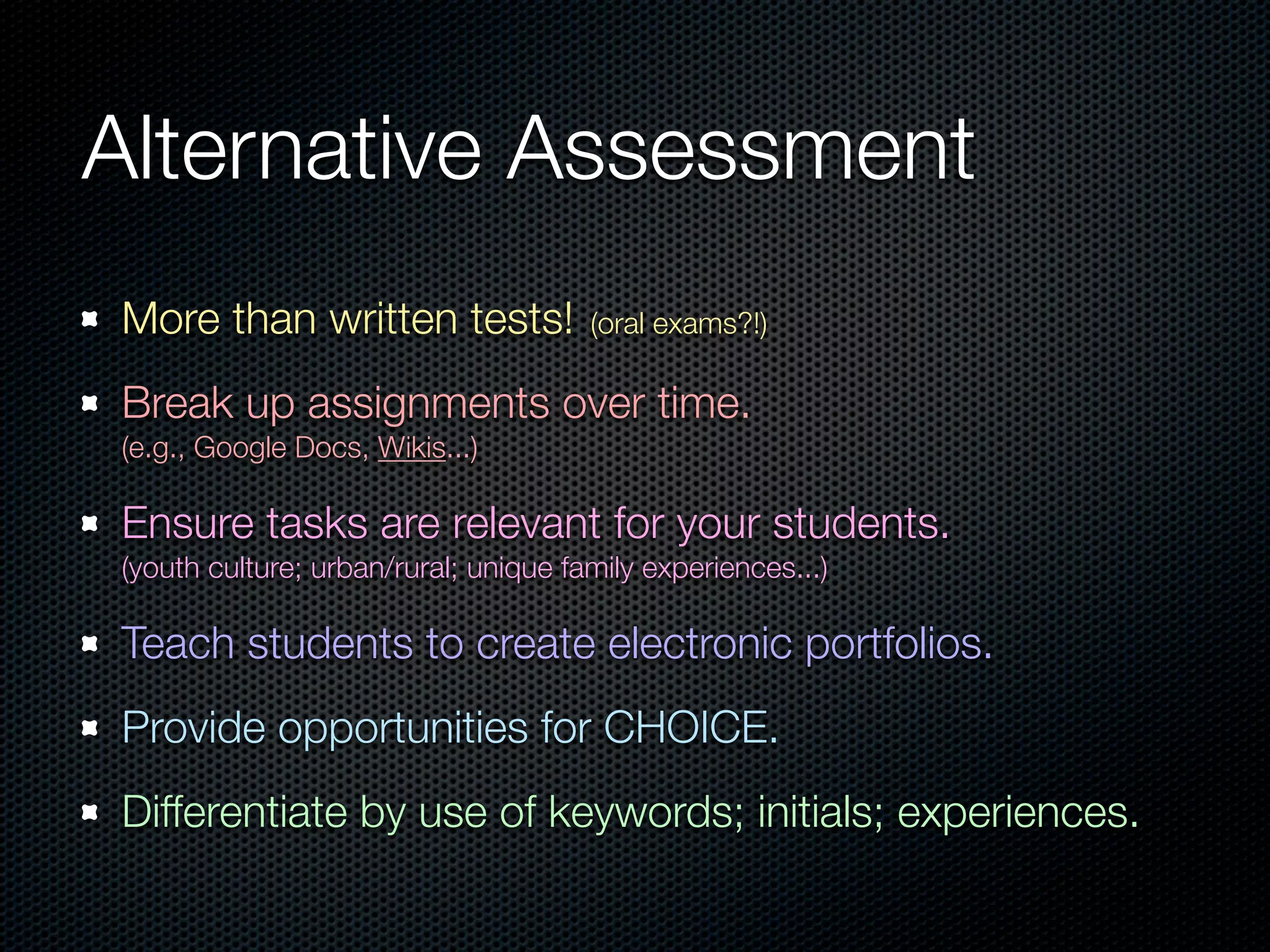
Highlights the significance of attribution in academic integrity and suggests practical methods for maintaining integrity through alternative assessments.
Focuses on designing un-cheatable tasks by differentiating assignments and utilizing students' unique experiences and skills.
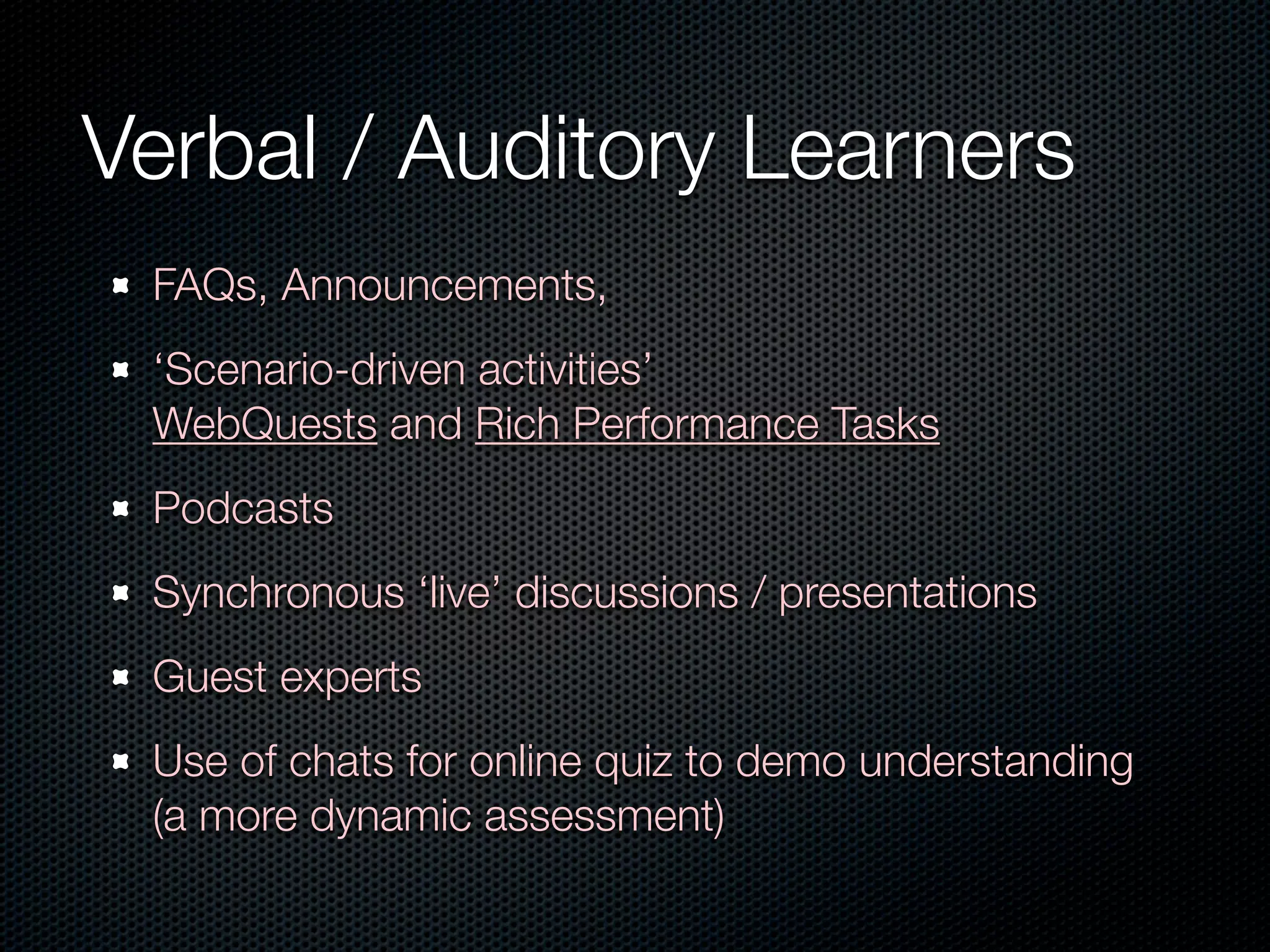
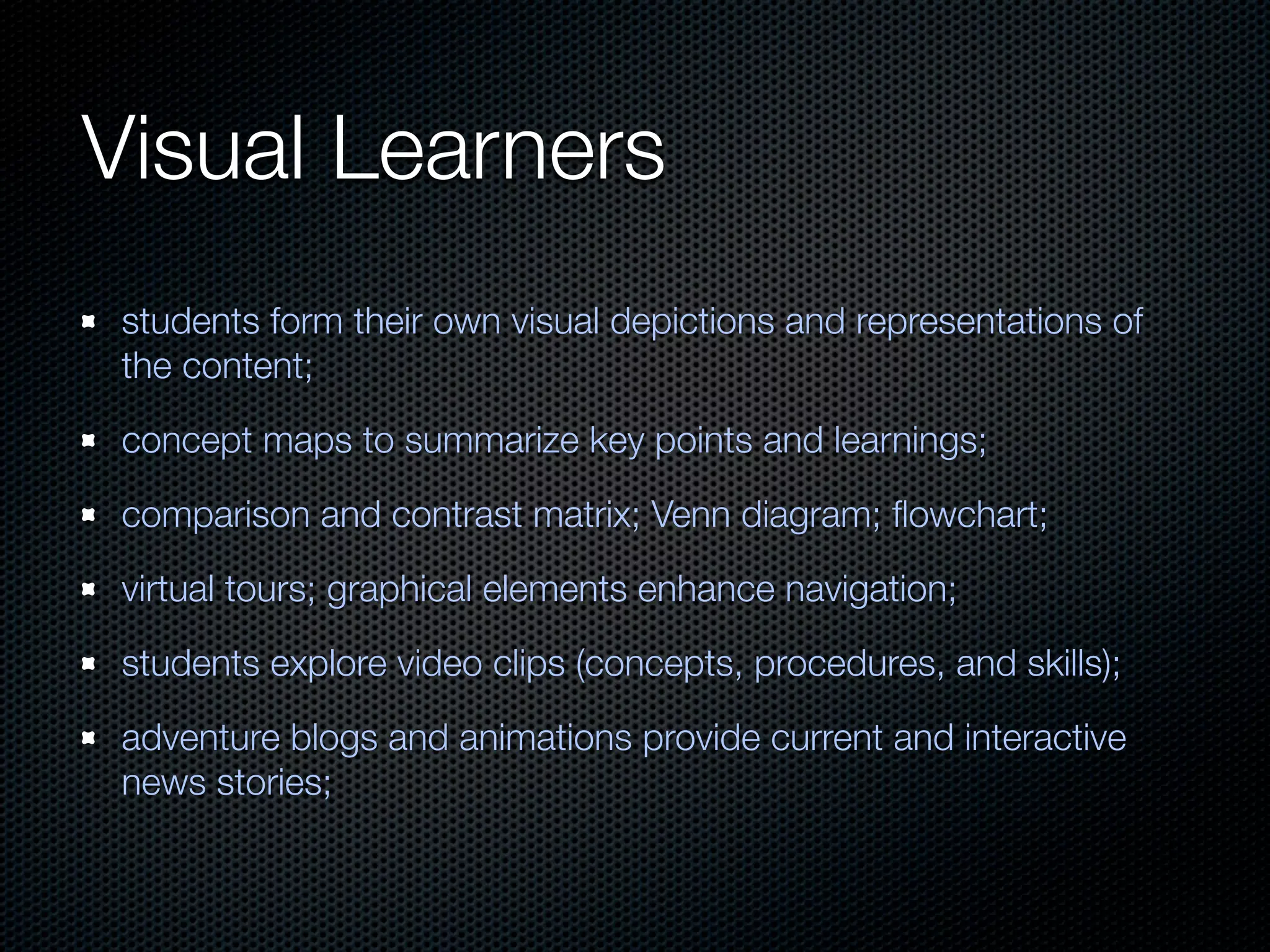
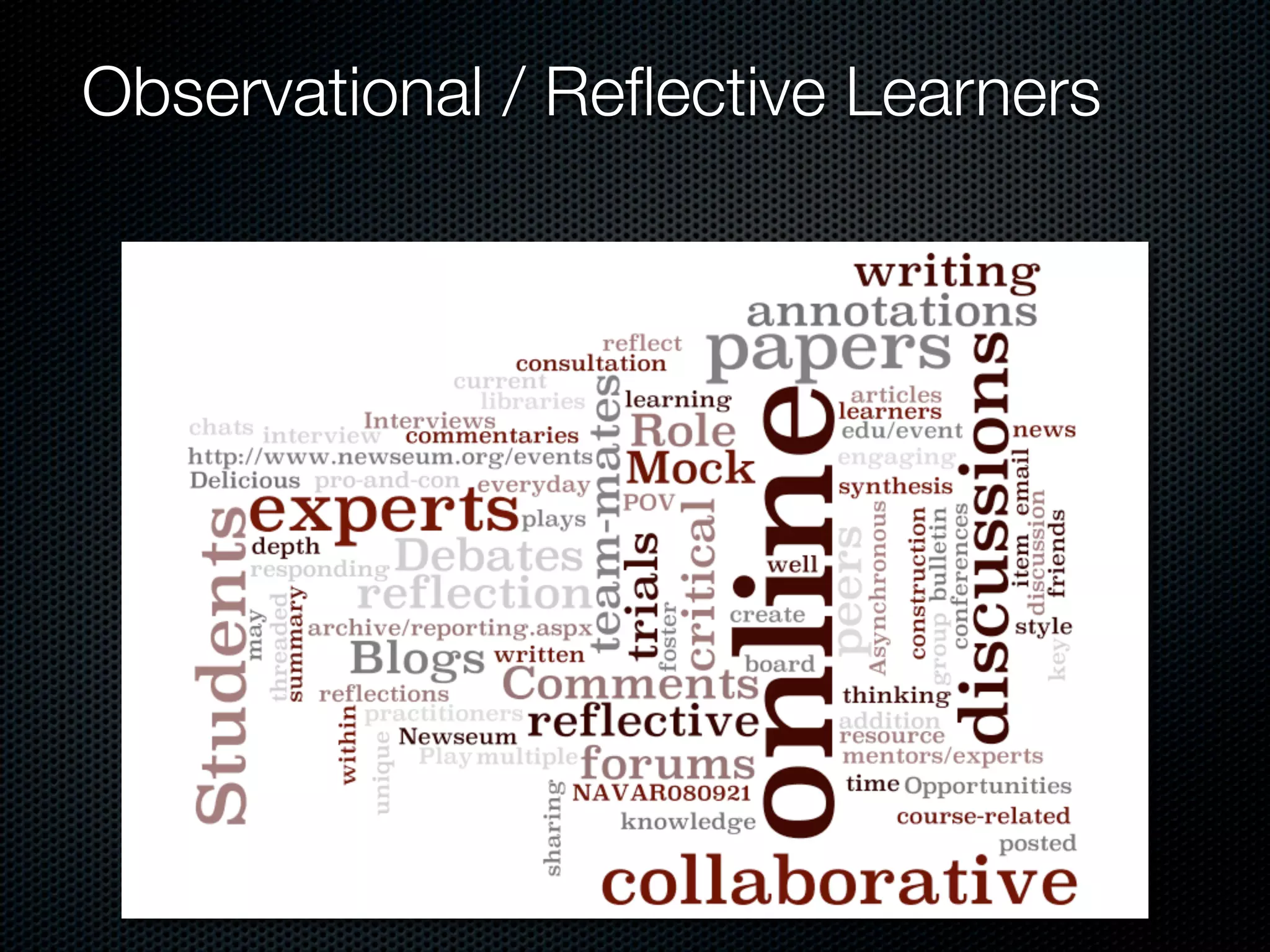
Addresses various learning styles, providing tailored strategies for auditory, visual, observational, and kinesthetic learners to engage them effectively.
Quotes from David Wiley encompassing the responsibilities of educators in upholding academic integrity in their learning environments.


